Game Aesthetics and
    Branding
     James Pearmain
        @artjimp
Why are Aesthetics so important
  Visuals provide the main connection between the
                  game and player.

Design impacts how users perceive information, learn,
  and assign value to a product - people perceive
         attractive things as more useable.

    Bring the game to life – make it relatable and
                     immersive
The Illusion of a game

 When designing a game we are creating an illusion.

Players must believe the game is “real” and get caught
              up in its world to enjoy it.

  If the illusion is broken the player will lose interest.
The Illusion of a game
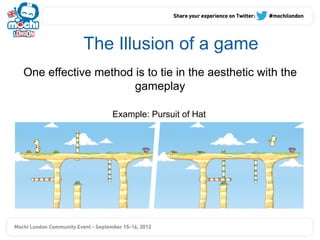
One effective method is to tie in the aesthetic with the
                     gameplay

                  Example: Pursuit of Hat
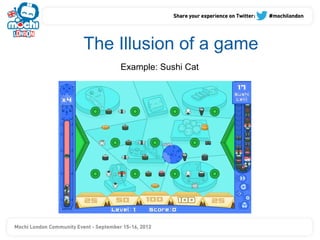
The Illusion of a game
    Example: Sushi Cat
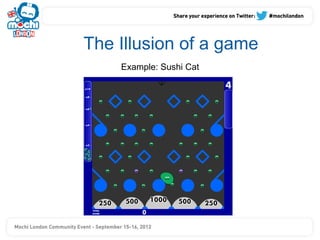
The Illusion of a game
    Example: Sushi Cat
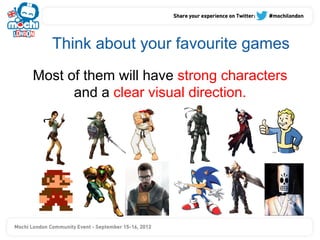
Think about your favourite games
Most of them will have strong characters
      and a clear visual direction.
Why are characters so effective?

•  Encourages the player to relate with the game.

•  “A game can be more fun when you get the chance to act and be
   like your ideal self. The attraction to playing videogames and what
   makes them fun is that it gives people the chance to think about a
   role they would ideally like to take and then get a chance to play that
   role.” - Dr. Przybylski.


•  Catharsis – Emotionally involves the player.
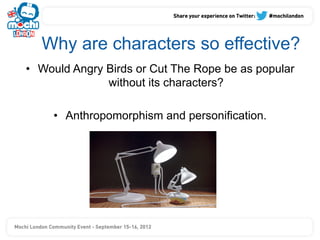
Why are characters so effective?
•  Would Angry Birds or Cut The Rope be as popular
               without its characters?

     •  Anthropomorphism and personification.
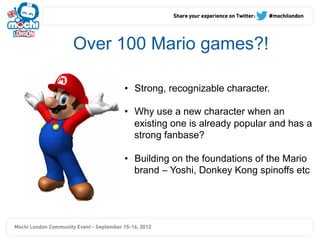
Over 100 Mario games?!

     •  Strong, recognizable character.

     •  Why use a new character when an
        existing one is already popular and has a
        strong fanbase?

     •  Building on the foundations of the Mario
        brand – Yoshi, Donkey Kong spinoffs etc
Sequelitis
•  People are more likely to play a game with
   characters they recognize than something new.

•  Sequels are a great way to guarantee a certain level
   of success…

•  …but they can crush creativity and are less
   enjoyable to make.
Building on previous success
•  Conflict: You want to build on the success of your
   previous games - but also make something totally
   new and different.

•  Reuse and build upon characters.
•  Evolve ideas.
•  Make a totally different game but use the same
   game world and brand it as a sequel or spinoff.
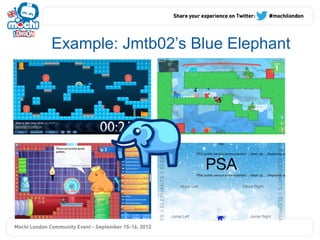
Example: Jmtb02’s Blue Elephant
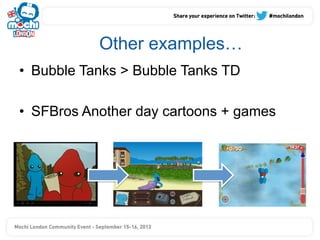
Other examples…
•  Bubble Tanks > Bubble Tanks TD

•  SFBros Another day cartoons + games
Art for your games

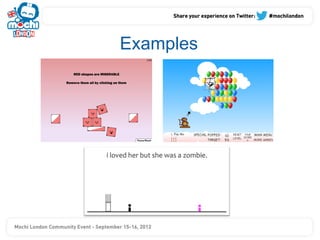
   •  You don’t need stunning art for your
      games, just a clear visual direction.

•  Players will accept simple art as long as it
   makes sense in the context of the game.
Examples
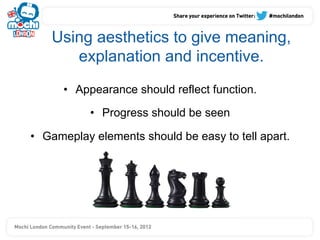
Using aesthetics to give meaning,
       explanation and incentive.
      •  Appearance should reflect function.

           •  Progress should be seen

•  Gameplay elements should be easy to tell apart.
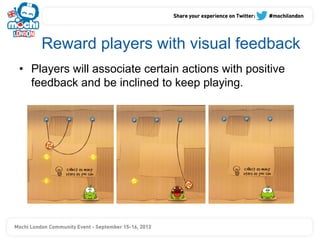
Reward players with visual feedback
•  Players will associate certain actions with positive
   feedback and be inclined to keep playing.
Gold Stars
•  Reward players for every positive action.


•  The size of the reward should reflect the difficulty of the task
  achieved.


•  Don’t spoil your audience – too much reward will confuse
  players and reduce the sense of achievement and
  satisfaction.
Variation is key
•  Visual variety will keep players from becoming
   bored.

•  If both gameplay and visuals are repetitive
   eventually the illusion is broken.

•  Different level themes, time of day, seasons, other
   purely aesthetic changes will improve the attention
   span of a player.
Thanks for listening!


         Any Questions?


@artjimp – jimp.uk@gmail.com -www.artjimp.com

Game Aesthetics & Branding by James Pearmain (Jimp)

  • 1.
    Game Aesthetics and Branding James Pearmain @artjimp
  • 2.
    Why are Aestheticsso important Visuals provide the main connection between the game and player. Design impacts how users perceive information, learn, and assign value to a product - people perceive attractive things as more useable. Bring the game to life – make it relatable and immersive
  • 3.
    The Illusion ofa game When designing a game we are creating an illusion. Players must believe the game is “real” and get caught up in its world to enjoy it. If the illusion is broken the player will lose interest.
  • 4.
    The Illusion ofa game One effective method is to tie in the aesthetic with the gameplay Example: Pursuit of Hat
  • 5.
    The Illusion ofa game Example: Sushi Cat
  • 6.
    The Illusion ofa game Example: Sushi Cat
  • 7.
    Think about yourfavourite games Most of them will have strong characters and a clear visual direction.
  • 8.
    Why are charactersso effective? •  Encourages the player to relate with the game. •  “A game can be more fun when you get the chance to act and be like your ideal self. The attraction to playing videogames and what makes them fun is that it gives people the chance to think about a role they would ideally like to take and then get a chance to play that role.” - Dr. Przybylski. •  Catharsis – Emotionally involves the player.
  • 9.
    Why are charactersso effective? •  Would Angry Birds or Cut The Rope be as popular without its characters? •  Anthropomorphism and personification.
  • 10.
    Over 100 Mariogames?! •  Strong, recognizable character. •  Why use a new character when an existing one is already popular and has a strong fanbase? •  Building on the foundations of the Mario brand – Yoshi, Donkey Kong spinoffs etc
  • 11.
    Sequelitis •  People aremore likely to play a game with characters they recognize than something new. •  Sequels are a great way to guarantee a certain level of success… •  …but they can crush creativity and are less enjoyable to make.
  • 12.
    Building on previoussuccess •  Conflict: You want to build on the success of your previous games - but also make something totally new and different. •  Reuse and build upon characters. •  Evolve ideas. •  Make a totally different game but use the same game world and brand it as a sequel or spinoff.
  • 13.
  • 14.
    Other examples… •  BubbleTanks > Bubble Tanks TD •  SFBros Another day cartoons + games
  • 15.
    Art for yourgames •  You don’t need stunning art for your games, just a clear visual direction. •  Players will accept simple art as long as it makes sense in the context of the game.
  • 16.
  • 17.
    Using aesthetics togive meaning, explanation and incentive. •  Appearance should reflect function. •  Progress should be seen •  Gameplay elements should be easy to tell apart.
  • 18.
    Reward players withvisual feedback •  Players will associate certain actions with positive feedback and be inclined to keep playing.
  • 19.
    Gold Stars •  Rewardplayers for every positive action. •  The size of the reward should reflect the difficulty of the task achieved. •  Don’t spoil your audience – too much reward will confuse players and reduce the sense of achievement and satisfaction.
  • 20.
    Variation is key • Visual variety will keep players from becoming bored. •  If both gameplay and visuals are repetitive eventually the illusion is broken. •  Different level themes, time of day, seasons, other purely aesthetic changes will improve the attention span of a player.
  • 21.
    Thanks for listening! Any Questions? @artjimp – jimp.uk@gmail.com -www.artjimp.com