ITIL® and SIAM: An Example ITIL-based Model for Effective Service Integration and Management - Webinar
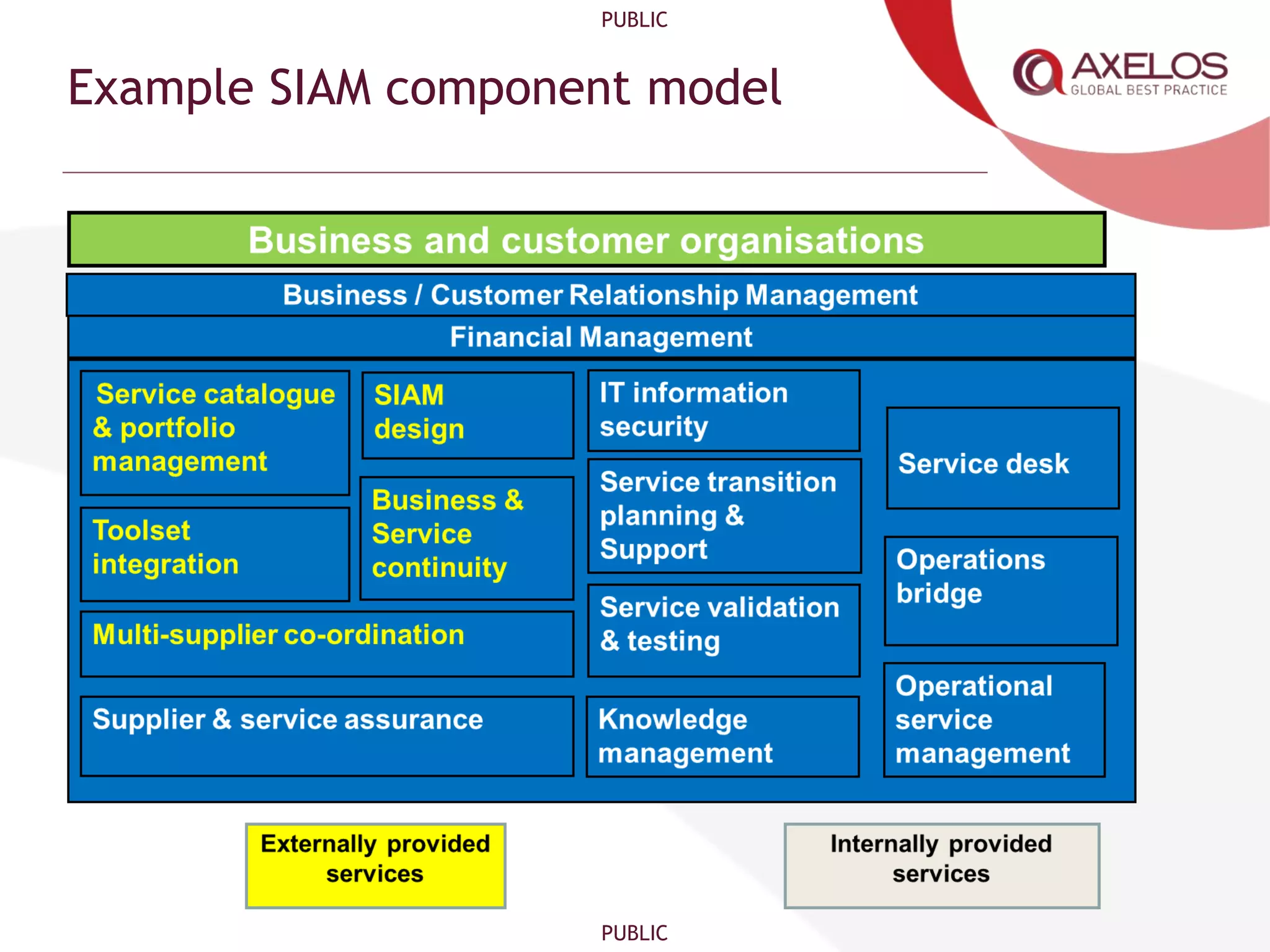
This document presents an example model for Service Integration and Management (SIAM) based on ITIL best practices. It defines SIAM as an approach to manage and coordinate services from multiple providers. The model has several key components, including core SIAM capabilities, business relationship management, and operational components. It also provides examples of how common ITIL processes could be adapted for a SIAM approach, such as having a SIAM process owner and integrating change management. The overall model is intended to help organizations design and implement an effective SIAM approach for managing services from multiple external providers.
PUBLIC
PUBLIC
Definition
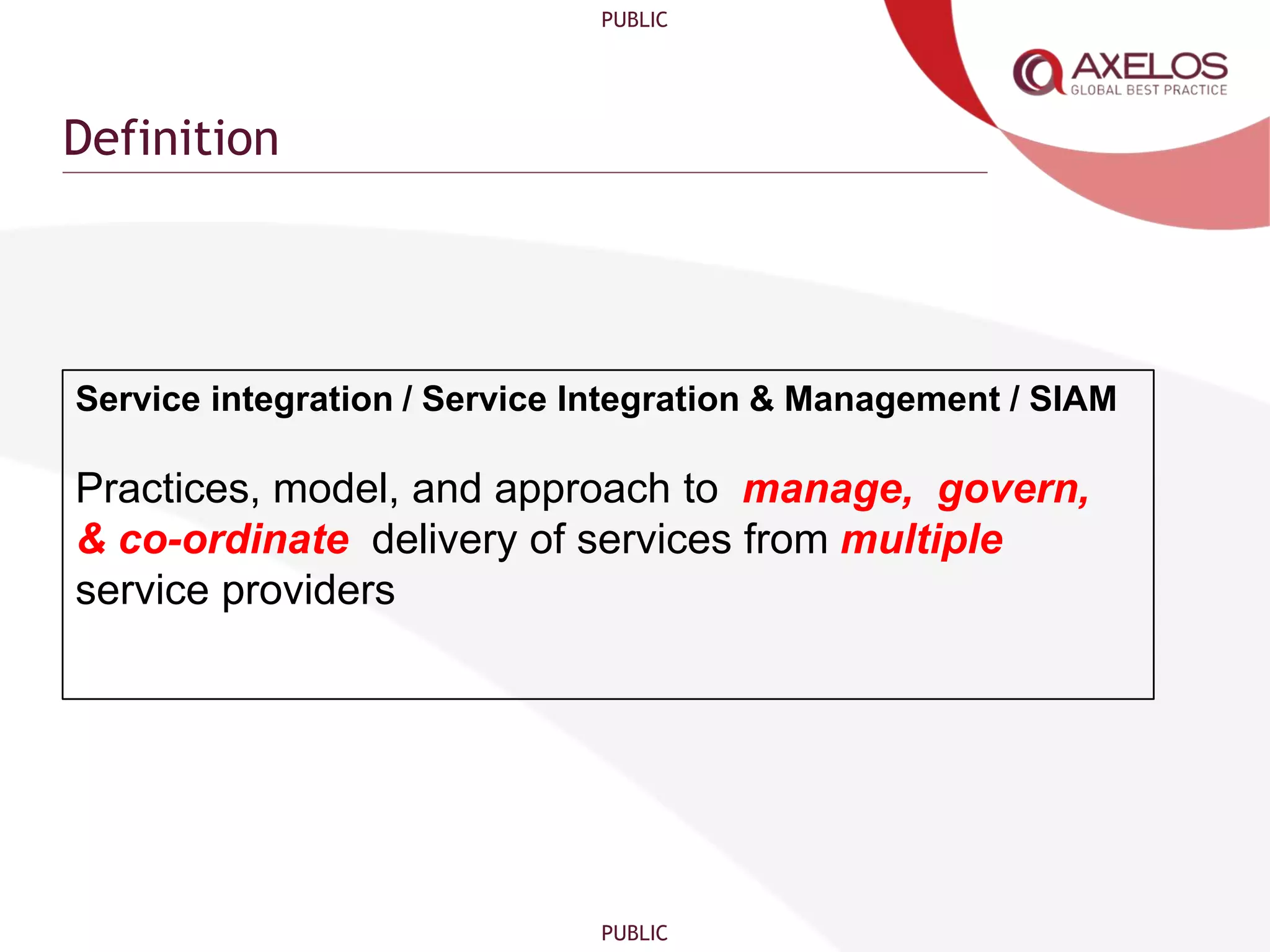
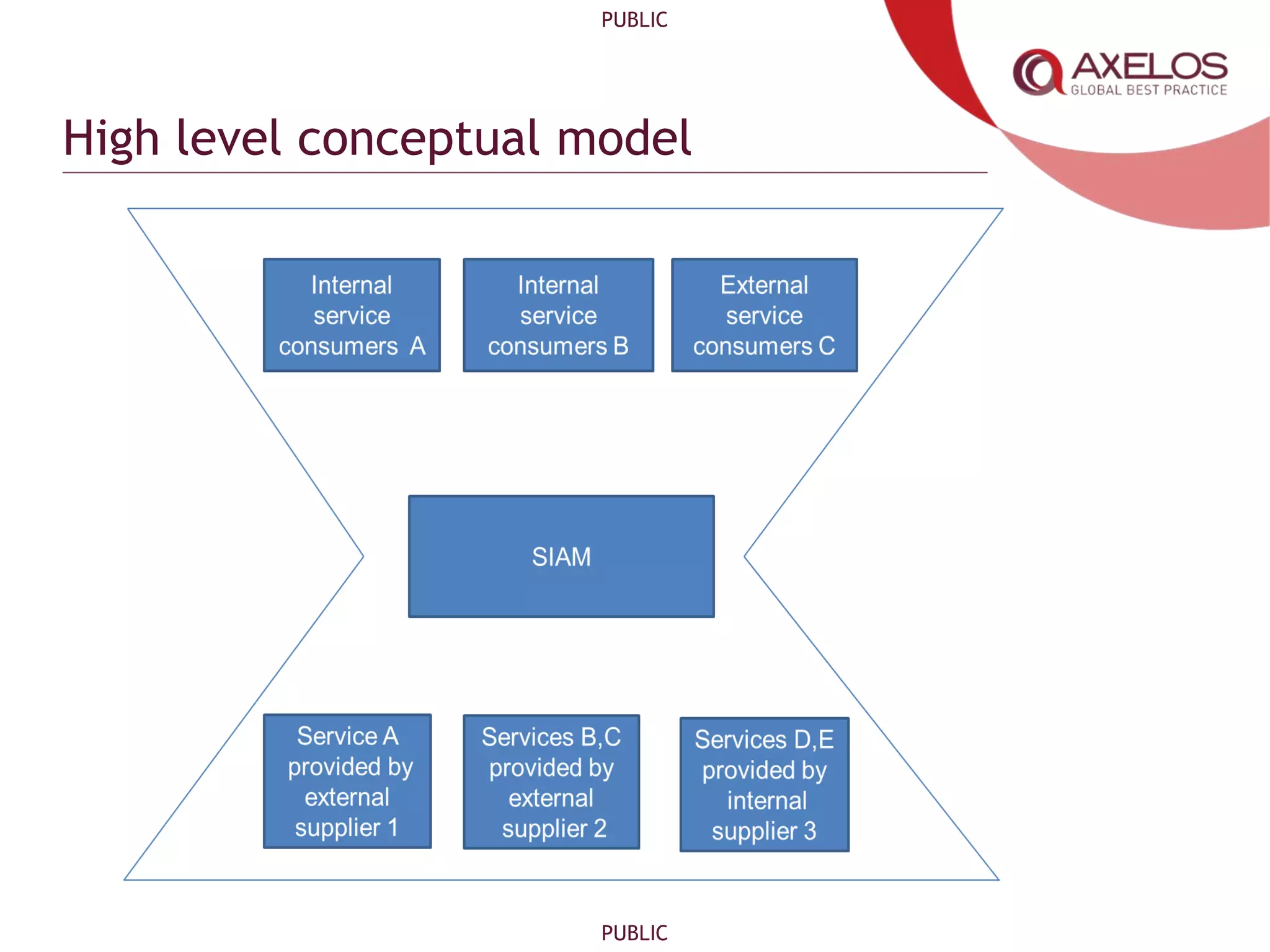
Service integration /Service Integration & Management / SIAM
Practices, model, and approach to manage, govern,
& co-ordinate delivery of services from multiple
service providers
5.
PUBLIC
PUBLIC
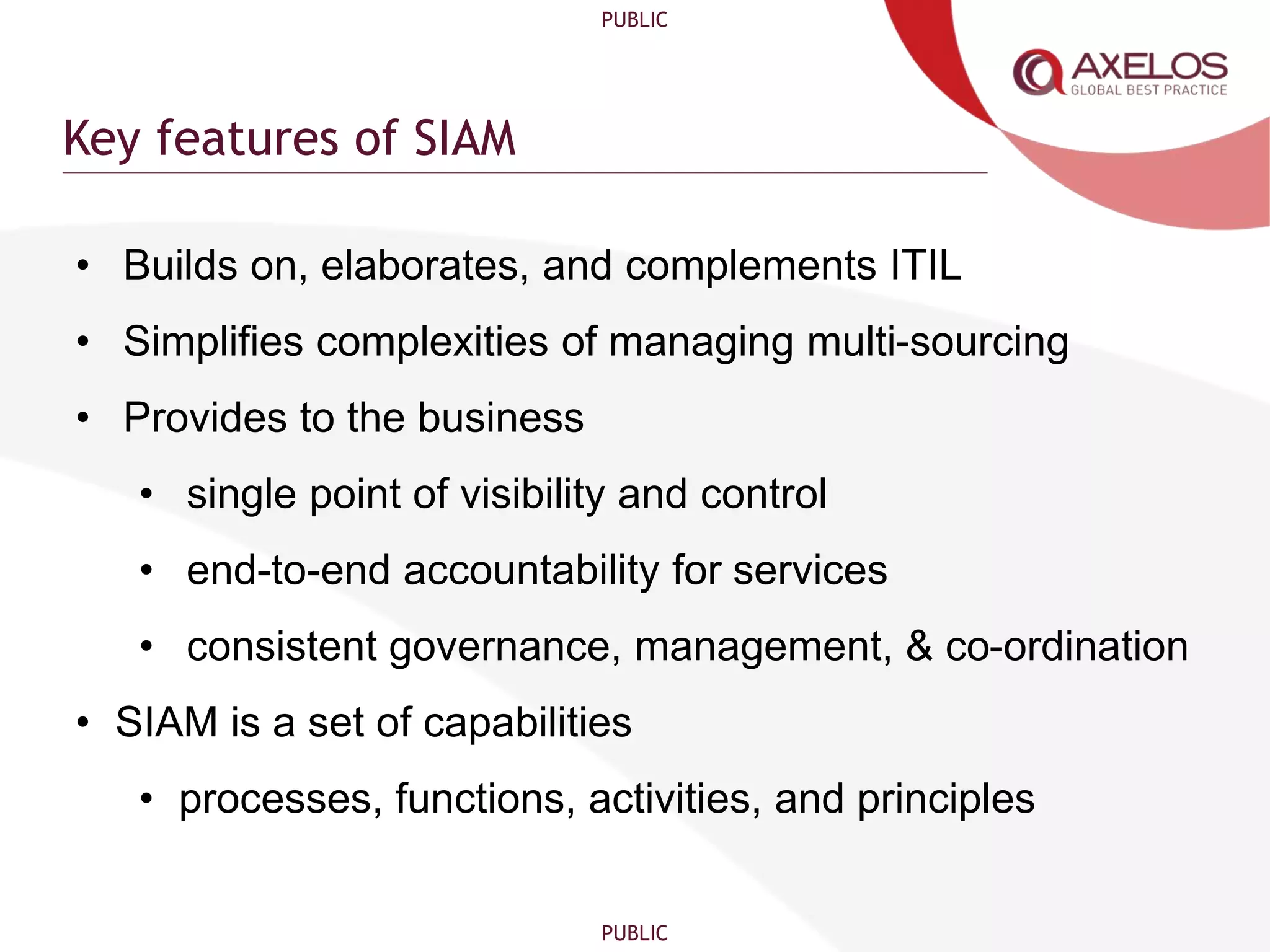
Key features ofSIAM
• Builds on, elaborates, and complements ITIL
• Simplifies complexities of managing multi-sourcing
• Provides to the business
• single point of visibility and control
• end-to-end accountability for services
• consistent governance, management, & co-ordination
• SIAM is a set of capabilities
• processes, functions, activities, and principles
PUBLIC
PUBLIC
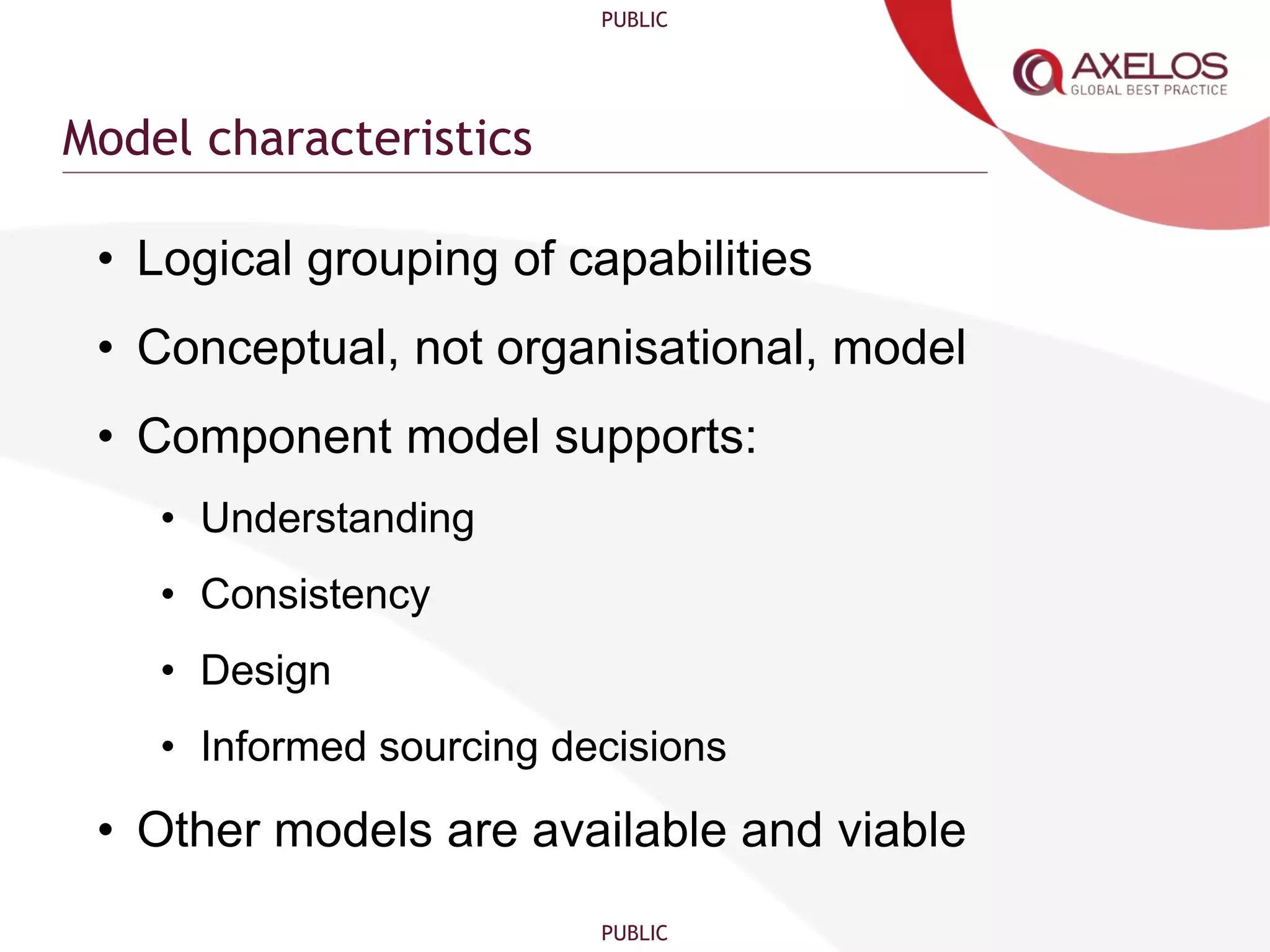
Model characteristics
• Logicalgrouping of capabilities
• Conceptual, not organisational, model
• Component model supports:
• Understanding
• Consistency
• Design
• Informed sourcing decisions
• Other models are available and viable
PUBLIC
PUBLIC
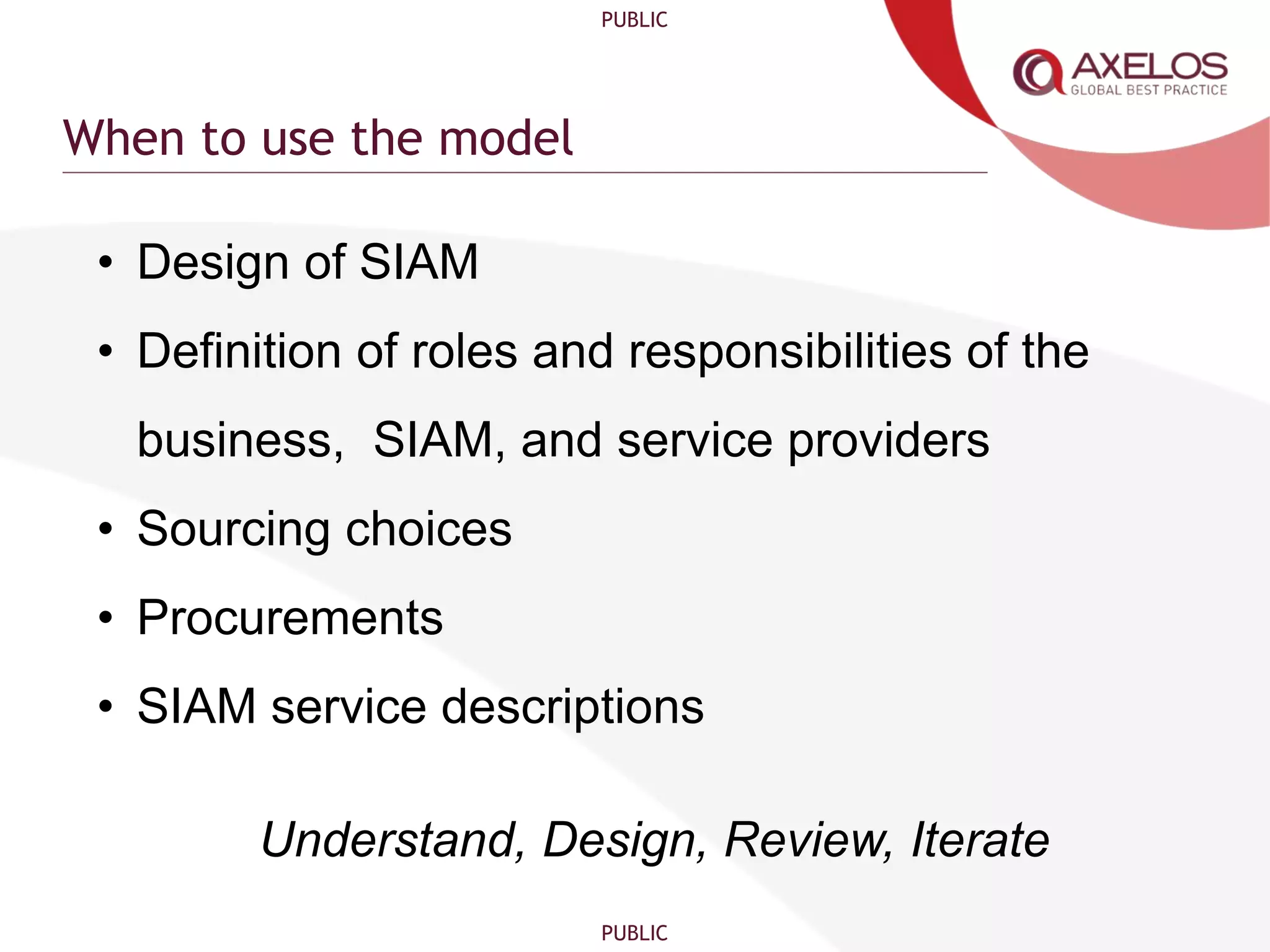
When to usethe model
• Design of SIAM
• Definition of roles and responsibilities of the
business, SIAM, and service providers
• Sourcing choices
• Procurements
• SIAM service descriptions
Understand, Design, Review, Iterate
PUBLIC
PUBLIC
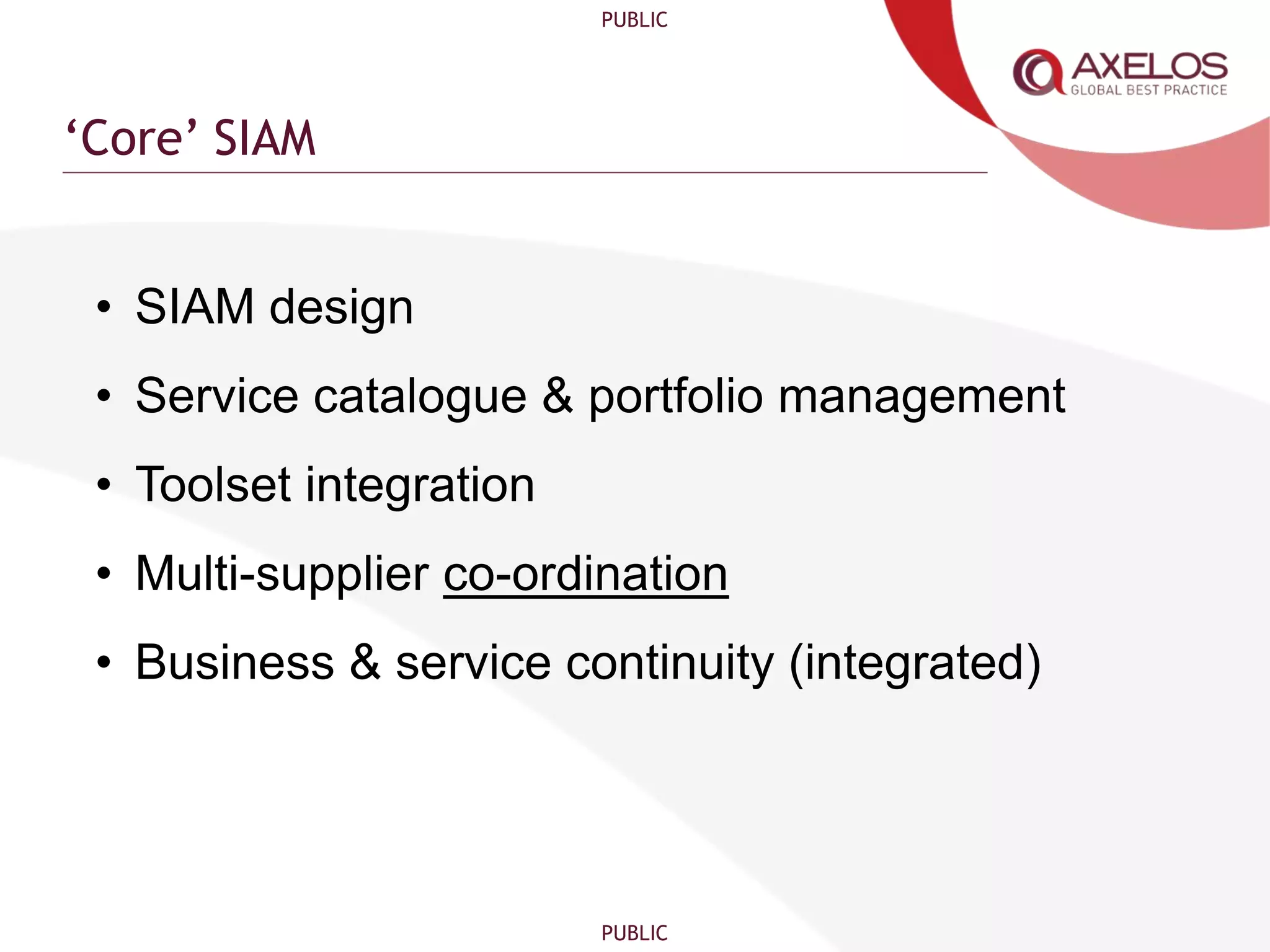
‘Core’ SIAM
• SIAMdesign
• Service catalogue & portfolio management
• Toolset integration
• Multi-supplier co-ordination
• Business & service continuity (integrated)
13.
PUBLIC
PUBLIC
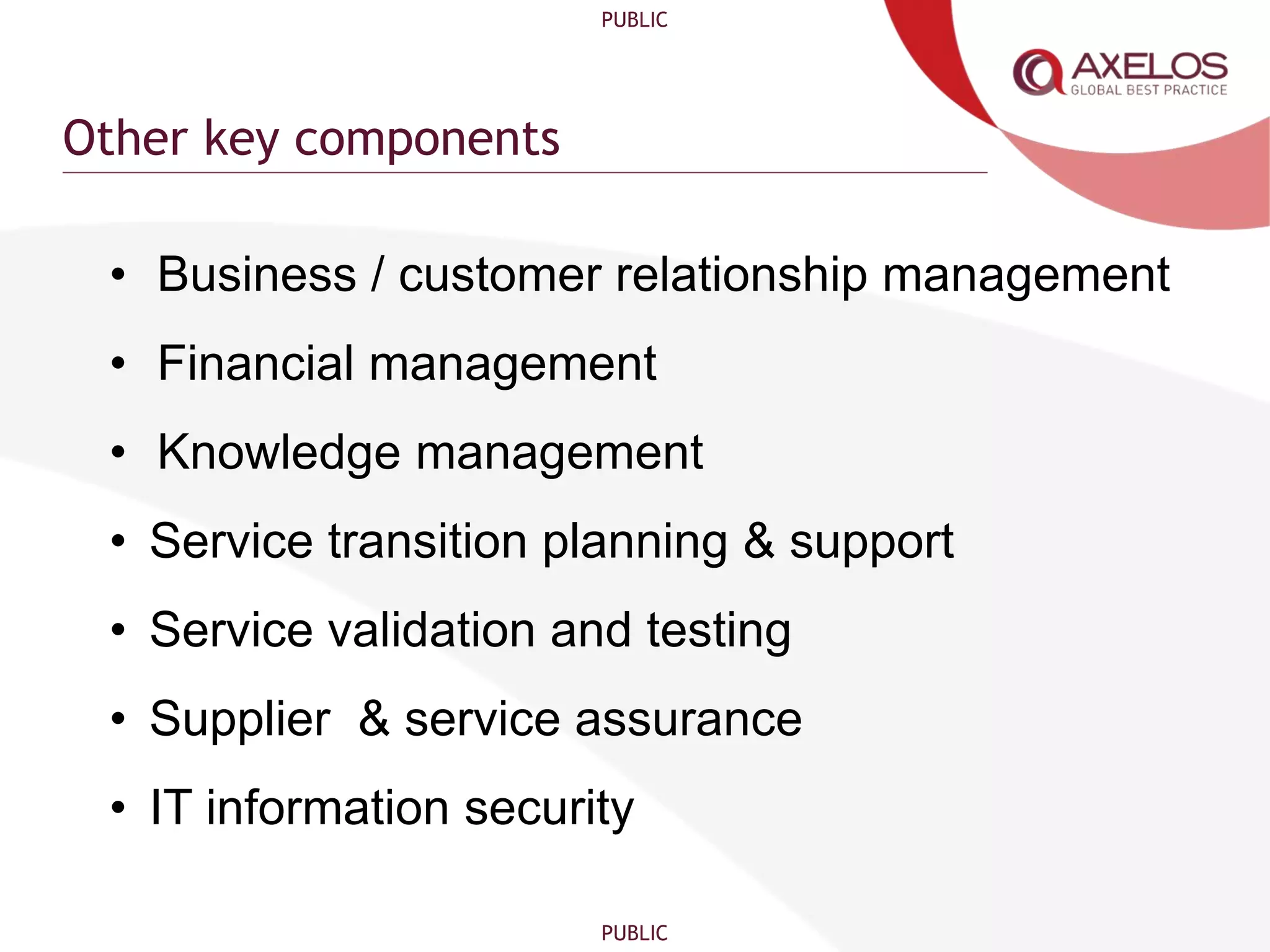
Other key components
•Business / customer relationship management
• Financial management
• Knowledge management
• Service transition planning & support
• Service validation and testing
• Supplier & service assurance
• IT information security
14.
PUBLIC
PUBLIC
‘Operational’ components
• Servicedesk
Can be centralised or devolved, dependent on service
landscape
• Operational service management
DO NOT flow up from external providers to the SIAM
• Operations bridge
PUBLIC
PUBLIC
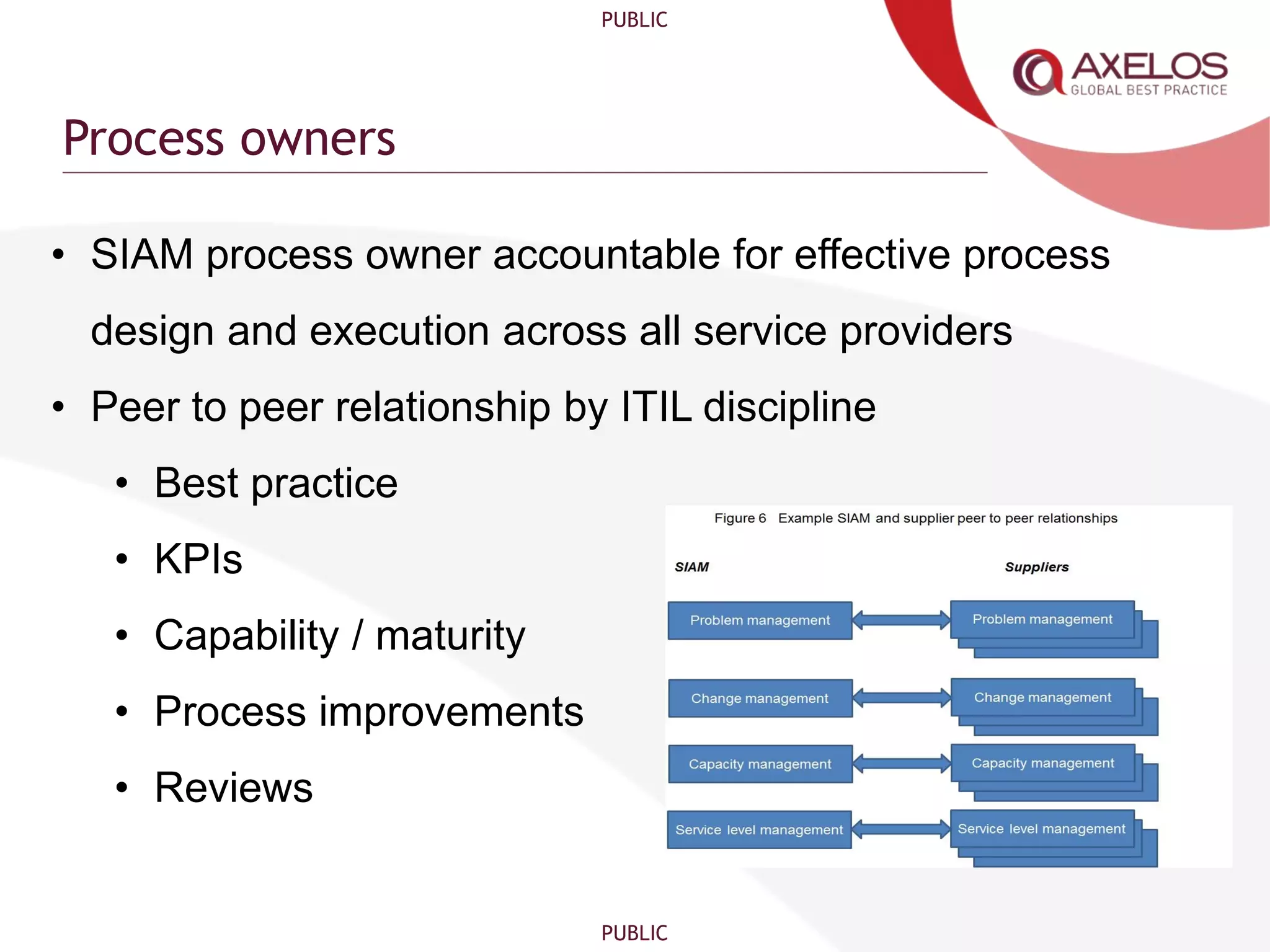
Process owners
• SIAMprocess owner accountable for effective process
design and execution across all service providers
• Peer to peer relationship by ITIL discipline
• Best practice
• KPIs
• Capability / maturity
• Process improvements
• Reviews
17.
PUBLIC
PUBLIC
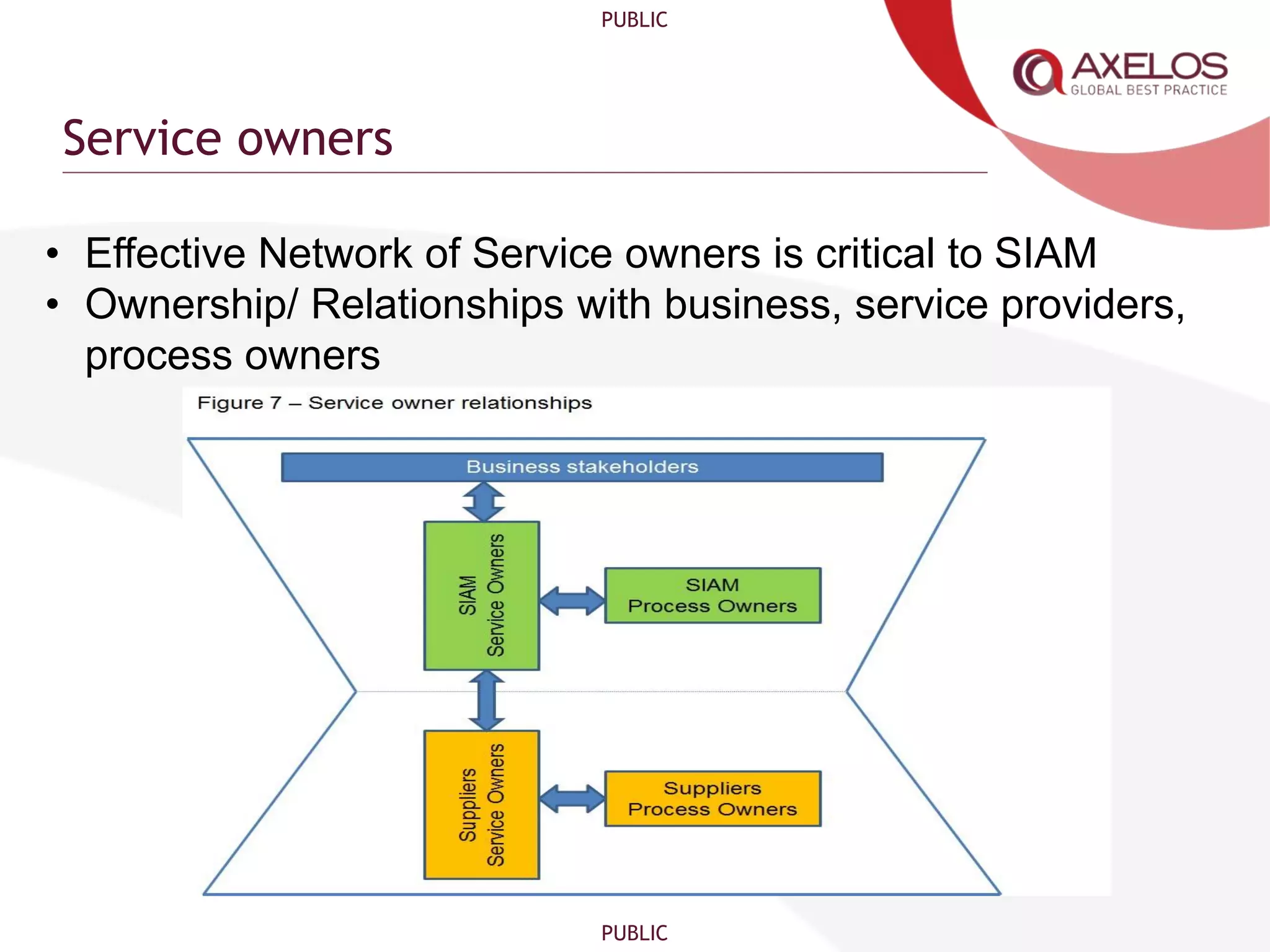
Service owners
• EffectiveNetwork of Service owners is critical to SIAM
• Ownership/ Relationships with business, service providers,
process owners
18.
PUBLIC
PUBLIC
Configuration management
• SIAMCMDB should only hold information it needs
• Challenge the need to have a single CMDB of all assets across
all services
• SIAM CMDB typically holds info on
• Business services
• Services provided by service providers
• Service providers
• Service and provider dependencies
19.
PUBLIC
PUBLIC
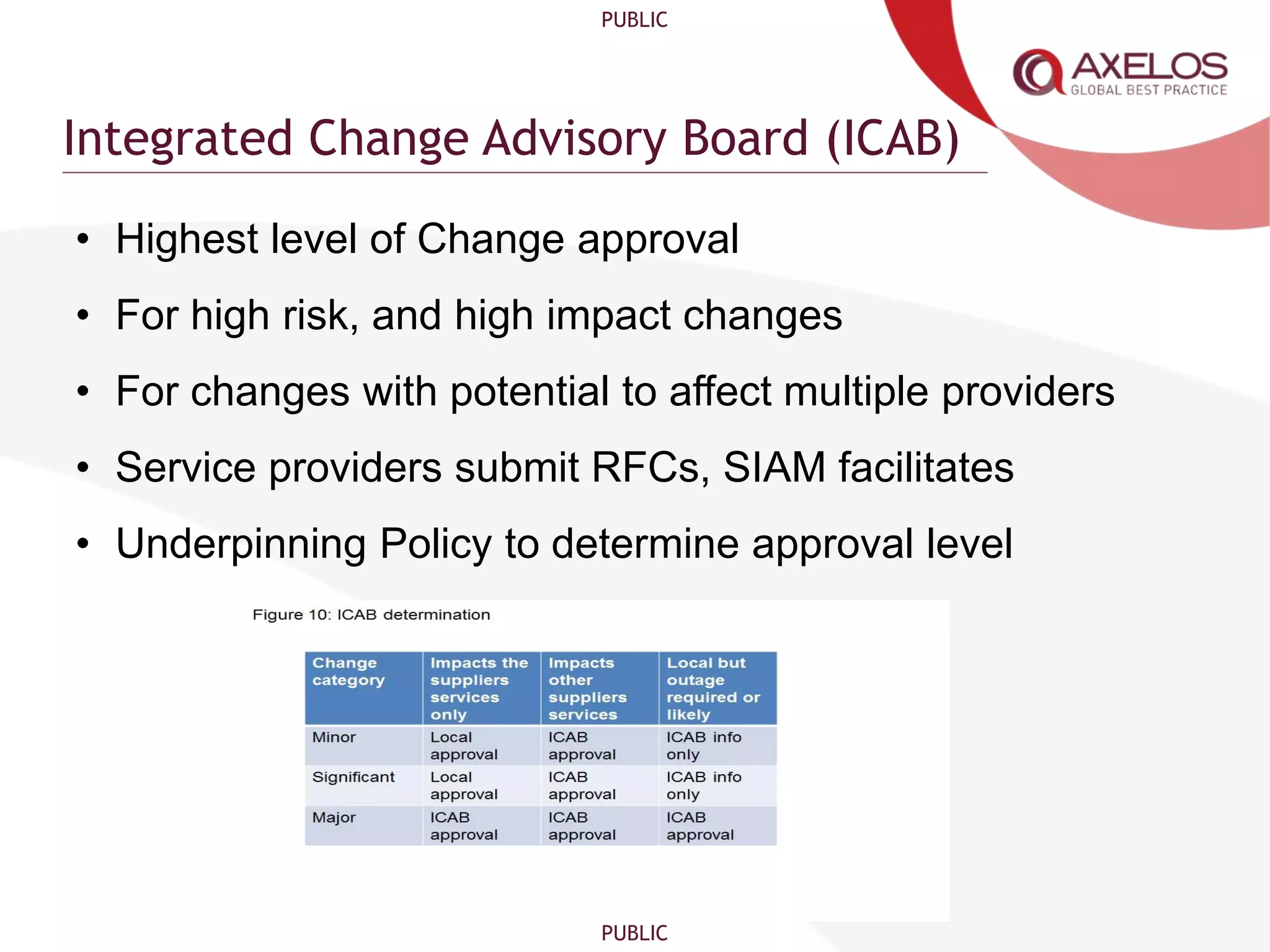
Integrated Change AdvisoryBoard (ICAB)
• Highest level of Change approval
• For high risk, and high impact changes
• For changes with potential to affect multiple providers
• Service providers submit RFCs, SIAM facilitates
• Underpinning Policy to determine approval level
20.
PUBLIC
PUBLIC
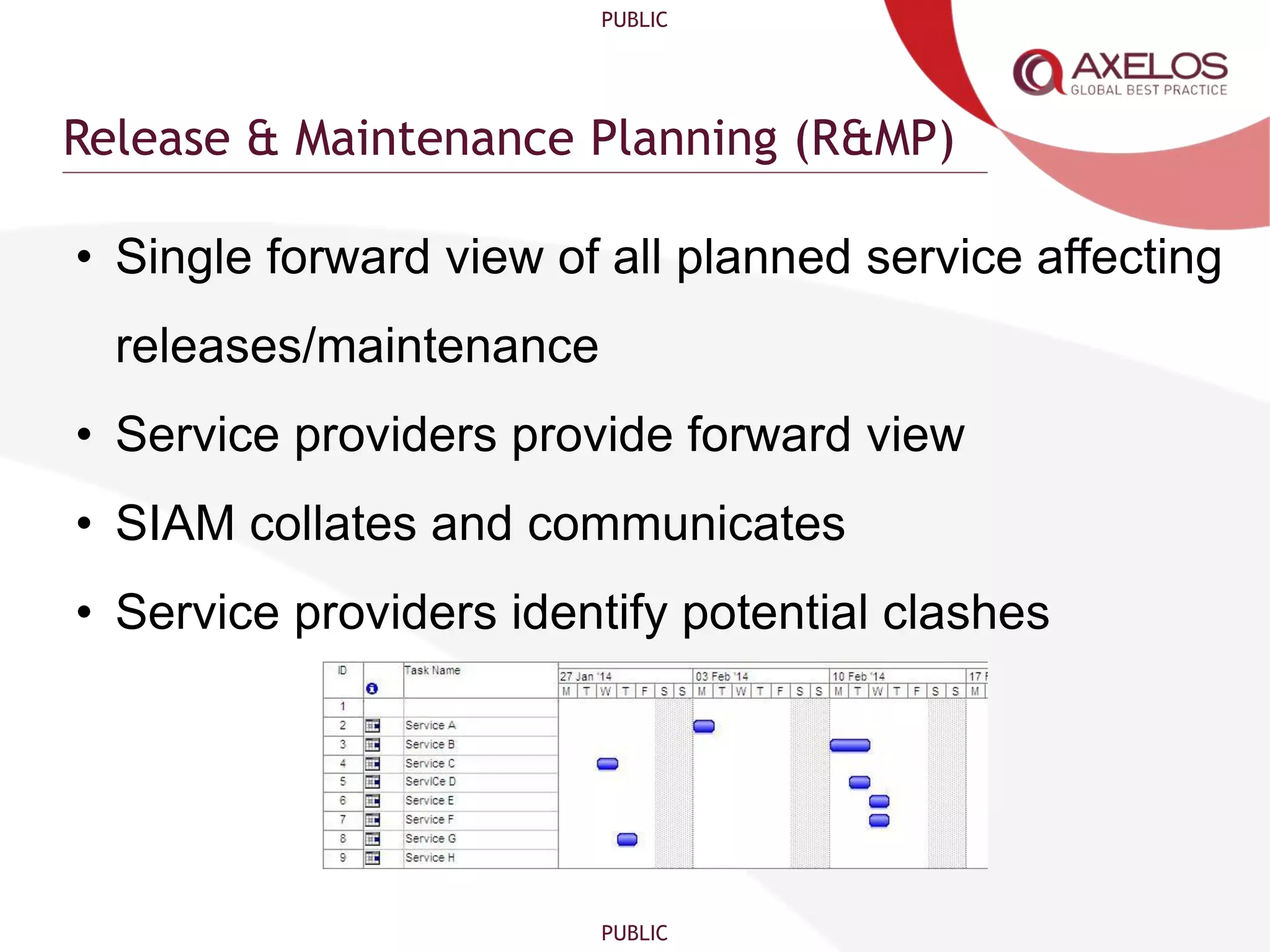
Release & MaintenancePlanning (R&MP)
• Single forward view of all planned service affecting
releases/maintenance
• Service providers provide forward view
• SIAM collates and communicates
• Service providers identify potential clashes
21.
PUBLIC
PUBLIC
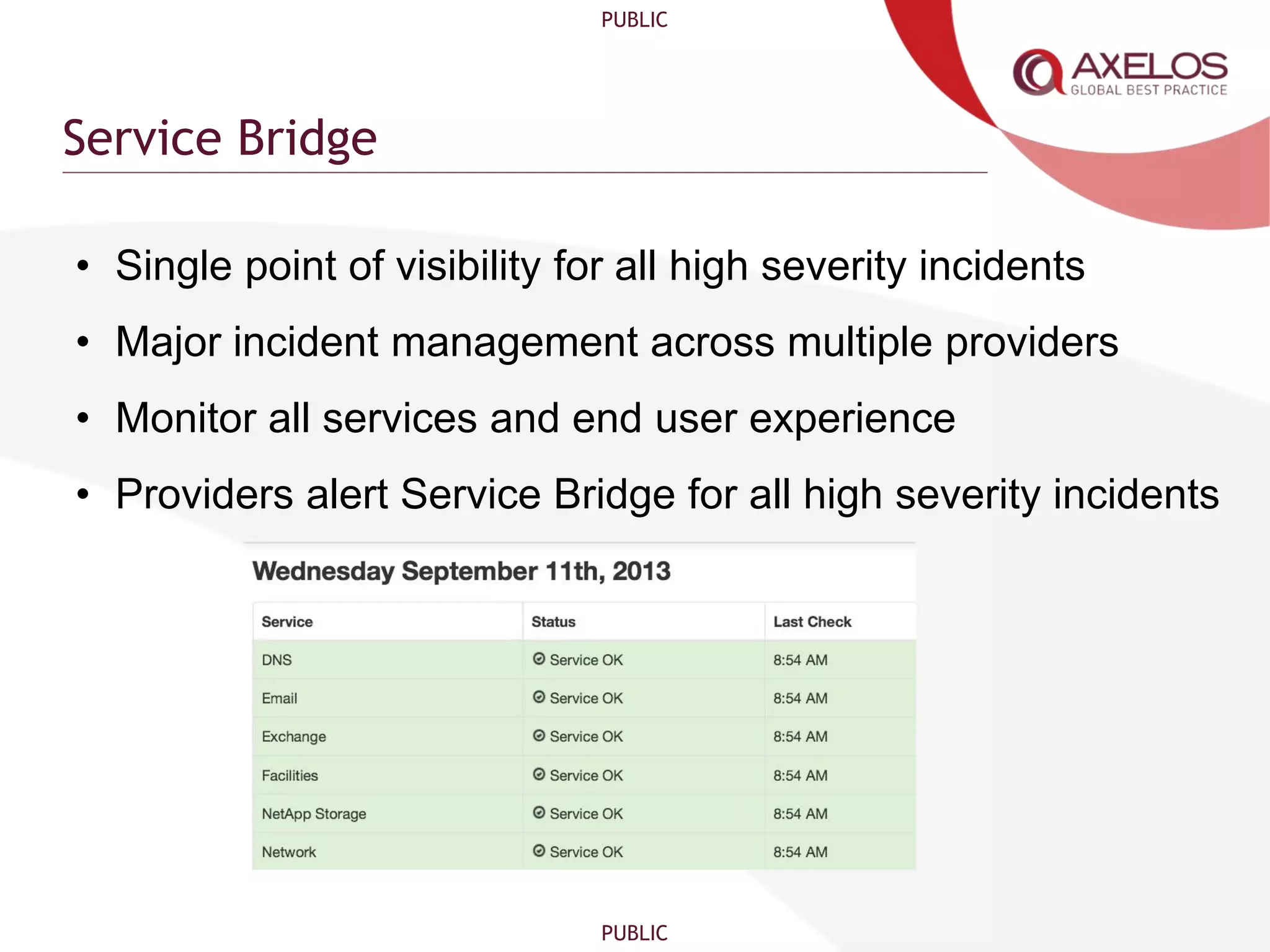
Service Bridge
• Singlepoint of visibility for all high severity incidents
• Major incident management across multiple providers
• Monitor all services and end user experience
• Providers alert Service Bridge for all high severity incidents
22.
PUBLIC
PUBLIC
Capacity management
• SIAMmanages business capacity
• Service providers manage component capacity
• SIAM and service providers jointly manage service capacity
• SIAM maintains the model that maps forecast demand to
forecast provider service capacity
23.
PUBLIC
PUBLIC
6. Q andA
SIAM and ITIL Whitepaper
https://www.axelos.com/case-studies-and-white-papers/introduction-
to-service-integration-management
Example model for effective SIAM Whitepaper
https://www.axelos.com/case-studies-and-white-papers/an-example-
itil-based-model-for-effective-siam
@ITILspecialist
Uk.linkedin.com/in/itilexpert/