BASIC NATURE OF TOURISM
CHARACTERISTICS OF TOURISM
PRODUCT
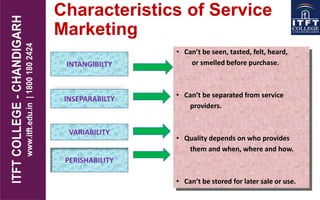
Characteristics of Service
Marketing
• Can’t be seen, tasted, felt, heard,
or smelled before purchase.
• Can’t be separated from service
providers.
• Quality depends on who provides
them and when, where and how.
• Can’t be stored for later sale or use.
INTANGIBILTY
INSEPARABILTY
VARIABILITY
PERISHABILITY
Intangible
• Unlike a tangible product, say, a motor car
or refrigerator, no transfer of ownership of
goods is involved in tourism. The product
here cannot be seen or inspected before its
purchase.
• Instead, certain facilities, installations, items of
equipment are made available for a specified time and
for a specified use. For example, a seat in an aero
plane is provided only for a specified time.
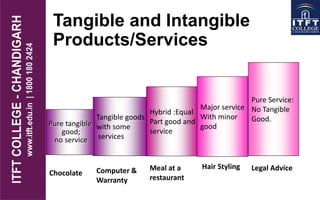
Tangible and Intangible
Products/Services
Tangible goods
with some
services
Hybrid :Equal
Part good and
service
Major service
With minor
good
Pure Service:
No Tangible
Good.
Pure tangible
good;
no service
Chocolate Computer &
Warranty
Meal at a
restaurant
Hair Styling Legal Advice
VARIABILITY
• Services are highly variable
• Services are produced and consumed
simultaneously.
• Service consistency depends on the service
provider’s skill.
• Lack of consistency a major source of customer
disappointment.
• Guest expectations are different.
“Quality can not be controlled; must be produced”
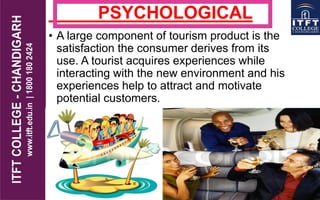
PSYCHOLOGICAL
• A large component of tourism product is the
satisfaction the consumer derives from its
use. A tourist acquires experiences while
interacting with the new environment and his
experiences help to attract and motivate
potential customers.
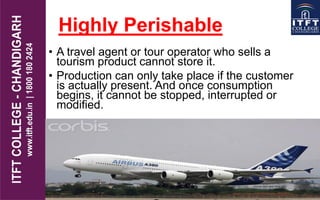
Highly Perishable
• A travel agent or tour operator who sells a
tourism product cannot store it.
• Production can only take place if the customer
is actually present. And once consumption
begins, it cannot be stopped, interrupted or
modified.
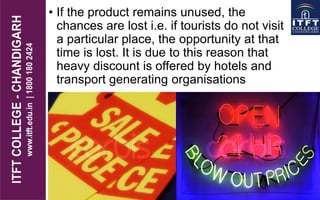
• If the product remains unused, the
chances are lost i.e. if tourists do not visit
a particular place, the opportunity at that
time is lost. It is due to this reason that
heavy discount is offered by hotels and
transport generating organisations
Perishability
Lack of ability to inventory
Lack of ability to inventory – services can not
be stored
 Capacity and demand must be successfully
managed
 Involve customer in the service delivery
system
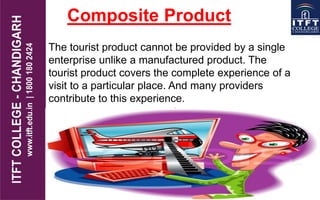
Composite Product
The tourist product cannot be provided by a single
enterprise unlike a manufactured product. The
tourist product covers the complete experience of a
visit to a particular place. And many providers
contribute to this experience.
For instance, airline supplies seats, a hotel
provides rooms and restaurants,travel agents
make bookings for stay and sightseeing, etc.
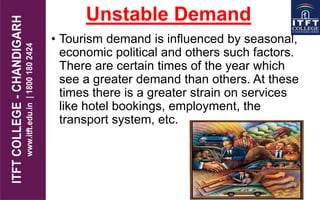
Unstable Demand
• Tourism demand is influenced by seasonal,
economic political and others such factors.
There are certain times of the year which
see a greater demand than others. At these
times there is a greater strain on services
like hotel bookings, employment, the
transport system, etc.
Fixed supply in the short
run
• The tourism product unlike a
manufactured product cannot be brought
to the consumer; the consumer must go to
the product. This requires an in-depth
study of users’ behaviour, taste
preferences, likes and dislikes so that
expectations and realities coincide for the
maximum satisfaction of the consumer.
Absence of ownership
• You neither own the automobile nor the
driver of the vehicle. Similarly, hotel
rooms, airline tickets, etc. can be used but
not owned. These services can be bought
for consumption but ownership remains
with the provider of the service. So, a
dance can be enjoyed by viewing it, but
the dancer cannot be owned.
Heterogeneous
• Tourism is not a homogeneous product since it
tends to vary in standard and quality over time,
unlike a T.V set or any other manufactured product.
A package tour or even a flight on an aircraft can’t
be consistent at all times. The reason is that this
product is a service and services are people based.
RISKY
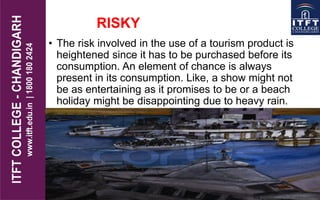
• The risk involved in the use of a tourism product is
heightened since it has to be purchased before its
consumption. An element of chance is always
present in its consumption. Like, a show might not
be as entertaining as it promises to be or a beach
holiday might be disappointing due to heavy rain.
MARKETABLE
Tourism product is marketed at two levels. At
the first level, national and regional
organisations engage in persuading potential
tourists to visit the
country or a certain region.
At the second level, the various individual
firms providing tourist services, market
their own components of the total tourist
product to persuade potential tourists to
visit that region for which they are
responsible.
CHARACTERSTICS OF
SERVICE
1. Service is an experience for
the customer.
2. Service is a performance by
an employee or product
3. When service is delivered, the guest
and service provider are both part
of the transaction
4. Service quality is difficult to control
and evaluate.
5. The customer and the organization
often measure quality of service
differently
6. When service is delivered, there
can be no recall of the guest’s
experience
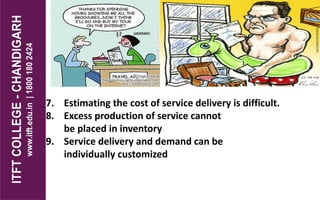
7. Estimating the cost of service delivery is difficult.
8. Excess production of service cannot
be placed in inventory
9. Service delivery and demand can be
individually customized
10. Successful service delivery can be
achieved with different viewpoints
11. When purchasing services there is
limited or no ownership
12. Service has an aspect of time
13. Service is often provided as a value
added to a physical product.
ITFT-Basic Nature Of Tourism Services

ITFT-Basic Nature Of Tourism Services

  • 1.
  • 2.
  • 3.
    Characteristics of Service Marketing •Can’t be seen, tasted, felt, heard, or smelled before purchase. • Can’t be separated from service providers. • Quality depends on who provides them and when, where and how. • Can’t be stored for later sale or use. INTANGIBILTY INSEPARABILTY VARIABILITY PERISHABILITY
  • 4.
    Intangible • Unlike atangible product, say, a motor car or refrigerator, no transfer of ownership of goods is involved in tourism. The product here cannot be seen or inspected before its purchase.
  • 5.
    • Instead, certainfacilities, installations, items of equipment are made available for a specified time and for a specified use. For example, a seat in an aero plane is provided only for a specified time.
  • 6.
    Tangible and Intangible Products/Services Tangiblegoods with some services Hybrid :Equal Part good and service Major service With minor good Pure Service: No Tangible Good. Pure tangible good; no service Chocolate Computer & Warranty Meal at a restaurant Hair Styling Legal Advice
  • 7.
    VARIABILITY • Services arehighly variable • Services are produced and consumed simultaneously. • Service consistency depends on the service provider’s skill. • Lack of consistency a major source of customer disappointment. • Guest expectations are different. “Quality can not be controlled; must be produced”
  • 8.
    PSYCHOLOGICAL • A largecomponent of tourism product is the satisfaction the consumer derives from its use. A tourist acquires experiences while interacting with the new environment and his experiences help to attract and motivate potential customers.
  • 9.
    Highly Perishable • Atravel agent or tour operator who sells a tourism product cannot store it. • Production can only take place if the customer is actually present. And once consumption begins, it cannot be stopped, interrupted or modified.
  • 10.
    • If theproduct remains unused, the chances are lost i.e. if tourists do not visit a particular place, the opportunity at that time is lost. It is due to this reason that heavy discount is offered by hotels and transport generating organisations
  • 11.
    Perishability Lack of abilityto inventory Lack of ability to inventory – services can not be stored  Capacity and demand must be successfully managed  Involve customer in the service delivery system
  • 12.
    Composite Product The touristproduct cannot be provided by a single enterprise unlike a manufactured product. The tourist product covers the complete experience of a visit to a particular place. And many providers contribute to this experience.
  • 13.
    For instance, airlinesupplies seats, a hotel provides rooms and restaurants,travel agents make bookings for stay and sightseeing, etc.
  • 14.
    Unstable Demand • Tourismdemand is influenced by seasonal, economic political and others such factors. There are certain times of the year which see a greater demand than others. At these times there is a greater strain on services like hotel bookings, employment, the transport system, etc.
  • 15.
    Fixed supply inthe short run • The tourism product unlike a manufactured product cannot be brought to the consumer; the consumer must go to the product. This requires an in-depth study of users’ behaviour, taste preferences, likes and dislikes so that expectations and realities coincide for the maximum satisfaction of the consumer.
  • 16.
    Absence of ownership •You neither own the automobile nor the driver of the vehicle. Similarly, hotel rooms, airline tickets, etc. can be used but not owned. These services can be bought for consumption but ownership remains with the provider of the service. So, a dance can be enjoyed by viewing it, but the dancer cannot be owned.
  • 17.
    Heterogeneous • Tourism isnot a homogeneous product since it tends to vary in standard and quality over time, unlike a T.V set or any other manufactured product. A package tour or even a flight on an aircraft can’t be consistent at all times. The reason is that this product is a service and services are people based.
  • 18.
    RISKY • The riskinvolved in the use of a tourism product is heightened since it has to be purchased before its consumption. An element of chance is always present in its consumption. Like, a show might not be as entertaining as it promises to be or a beach holiday might be disappointing due to heavy rain.
  • 19.
    MARKETABLE Tourism product ismarketed at two levels. At the first level, national and regional organisations engage in persuading potential tourists to visit the country or a certain region.
  • 20.
    At the secondlevel, the various individual firms providing tourist services, market their own components of the total tourist product to persuade potential tourists to visit that region for which they are responsible.
  • 22.
    CHARACTERSTICS OF SERVICE 1. Serviceis an experience for the customer. 2. Service is a performance by an employee or product 3. When service is delivered, the guest and service provider are both part of the transaction
  • 23.
    4. Service qualityis difficult to control and evaluate. 5. The customer and the organization often measure quality of service differently 6. When service is delivered, there can be no recall of the guest’s experience
  • 24.
    7. Estimating thecost of service delivery is difficult. 8. Excess production of service cannot be placed in inventory 9. Service delivery and demand can be individually customized
  • 25.
    10. Successful servicedelivery can be achieved with different viewpoints 11. When purchasing services there is limited or no ownership 12. Service has an aspect of time 13. Service is often provided as a value added to a physical product.