COLLEGE OF ENGINEERING & TECHNOLOGY, AKOLA
DEPARTMENT OF MECHANICAL ENGINEERING
SEMINAR ON
INTERNATIONAL THERMONUCLEAR EXPERIMENTAL
REACTOR (ITER)
PRESENTED BY
MR.MOHD KAMRAN IQBAL
UNDER THE GUIDANCE OF
PROF. S.B. INGLE
1
CONTENTS
 Introduction
 Need for energy
 Sources of energy
 Fusion
 Working
 Objective
 Members
 Timeline
 Safety
 Conclusion 2
INTRODUCTION
WHAT IS ITER?
 ITER Stands for International Thermonuclear
Experimental Reactor
 The World is about to construct the next step in
fusion development, a device called ITER
 ITER will demonstrate the scientific and
technological feasibility of fusion energy for
peaceful purposes
 ITER will produce 500 MW of fusion power with in
input power of just 50MW
 Cost, including R&D, is 10 billion Euros
3
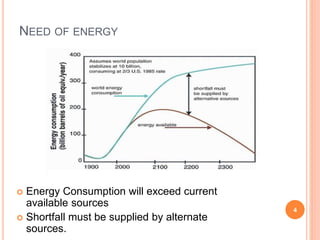
NEED OF ENERGY
 Energy Consumption will exceed current
available sources
 Shortfall must be supplied by alternate
sources.
4
WHAT SOURCES DO WE HAVE?
 Nuclear Fission
 Fossil Fuels
 Renewable
 Nuclear Fusion
5
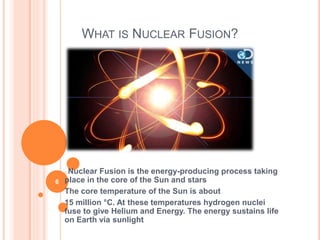
WHAT IS NUCLEAR FUSION?
oNuclear Fusion is the energy-producing process taking
place in the core of the Sun and stars
The core temperature of the Sun is about
15 million °C. At these temperatures hydrogen nuclei
fuse to give Helium and Energy. The energy sustains life
on Earth via sunlight
6
FUSION REACTIONS
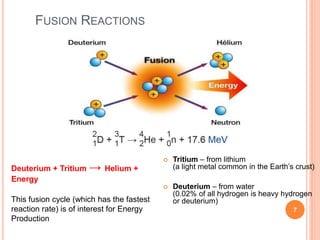
 Tritium – from lithium
(a light metal common in the Earth’s crust)
 Deuterium – from water
(0.02% of all hydrogen is heavy hydrogen
or deuterium)
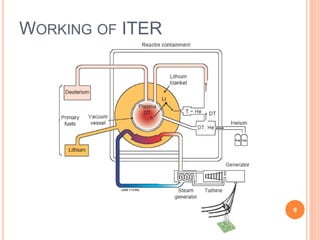
Deuterium + Tritium → Helium +
Energy
This fusion cycle (which has the fastest
reaction rate) is of interest for Energy
Production
7
ADVANTAGES OF FUSION ENERGY
 Abundant energy-1 gram of fusion fuels = 8 tons
of oil
 No CO₂
 No long-lived radioactive waste
 Limited risk of proliferation
 Cost
8
WORKING OF ITER
9
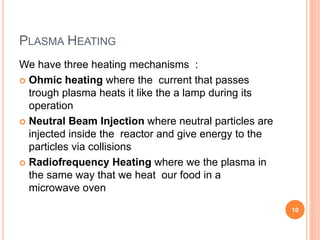
PLASMA HEATING
We have three heating mechanisms :
 Ohmic heating where the current that passes
trough plasma heats it like the a lamp during its
operation
 Neutral Beam Injection where neutral particles are
injected inside the reactor and give energy to the
particles via collisions
 Radiofrequency Heating where we the plasma in
the same way that we heat our food in a
microwave oven
10
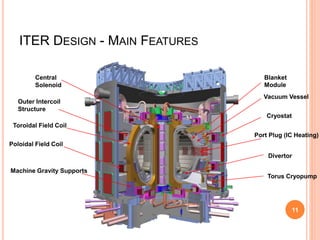
ITER DESIGN - MAIN FEATURES
Divertor
Central
Solenoid
Outer Intercoil
Structure
Toroidal Field Coil
Poloidal Field Coil
Machine Gravity Supports
Blanket
Module
Vacuum Vessel
Cryostat
Port Plug (IC Heating)
Torus Cryopump
11
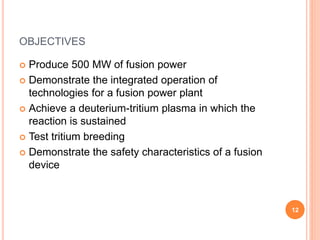
OBJECTIVES
 Produce 500 MW of fusion power
 Demonstrate the integrated operation of
technologies for a fusion power plant
 Achieve a deuterium-tritium plasma in which the
reaction is sustained
 Test tritium breeding
 Demonstrate the safety characteristics of a fusion
device
12
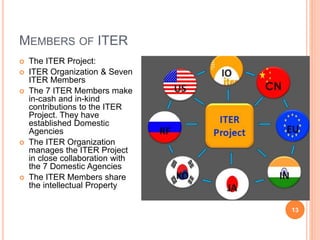
MEMBERS OF ITER
 The ITER Project:
 ITER Organization & Seven
ITER Members
 The 7 ITER Members make
in-cash and in-kind
contributions to the ITER
Project. They have
established Domestic
Agencies
 The ITER Organization
manages the ITER Project
in close collaboration with
the 7 Domestic Agencies
 The ITER Members share
the intellectual Property
13
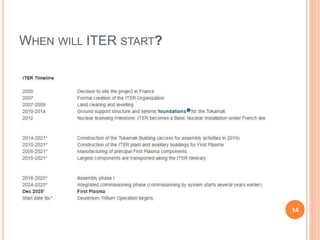
WHEN WILL ITER START?
14
ITER’S SAFETY
 Except from tritium we do not have any radioactive
materials inside the reactor.
 Any second inside the reactor there is less than a
gram of fuel . The reaction can not continue unless
we have fuel.
 After keeping in safety the components of the
installation for 100 they are as radioactive as a
plant that produces energy from coal.
15
ADVANTAGES
 ten times the power it consumes
 provide a large-scale energy source with basic fuels
 very low global impact on the environment
 Operation would not require the transport of radio-
active materials
 There is no long-lasting radioactive waste
16
DISADVANTAGES
 Cost is high
 Long implementation time
 Intense neutron bombardment may damage the
superconducting magnets
17
CONCLUSION
 Fusion can be alternative for other Non
conventional sources
 Help us to learn more about burning plasma
 Fusion can be the answer for our search of clean
and dependable source of energy for future
18

ITER (International thermonuclear experimental reactor)

  • 1.
    COLLEGE OF ENGINEERING& TECHNOLOGY, AKOLA DEPARTMENT OF MECHANICAL ENGINEERING SEMINAR ON INTERNATIONAL THERMONUCLEAR EXPERIMENTAL REACTOR (ITER) PRESENTED BY MR.MOHD KAMRAN IQBAL UNDER THE GUIDANCE OF PROF. S.B. INGLE 1
  • 2.
    CONTENTS  Introduction  Needfor energy  Sources of energy  Fusion  Working  Objective  Members  Timeline  Safety  Conclusion 2
  • 3.
    INTRODUCTION WHAT IS ITER? ITER Stands for International Thermonuclear Experimental Reactor  The World is about to construct the next step in fusion development, a device called ITER  ITER will demonstrate the scientific and technological feasibility of fusion energy for peaceful purposes  ITER will produce 500 MW of fusion power with in input power of just 50MW  Cost, including R&D, is 10 billion Euros 3
  • 4.
    NEED OF ENERGY Energy Consumption will exceed current available sources  Shortfall must be supplied by alternate sources. 4
  • 5.
    WHAT SOURCES DOWE HAVE?  Nuclear Fission  Fossil Fuels  Renewable  Nuclear Fusion 5
  • 6.
    WHAT IS NUCLEARFUSION? oNuclear Fusion is the energy-producing process taking place in the core of the Sun and stars The core temperature of the Sun is about 15 million °C. At these temperatures hydrogen nuclei fuse to give Helium and Energy. The energy sustains life on Earth via sunlight 6
  • 7.
    FUSION REACTIONS  Tritium– from lithium (a light metal common in the Earth’s crust)  Deuterium – from water (0.02% of all hydrogen is heavy hydrogen or deuterium) Deuterium + Tritium → Helium + Energy This fusion cycle (which has the fastest reaction rate) is of interest for Energy Production 7
  • 8.
    ADVANTAGES OF FUSIONENERGY  Abundant energy-1 gram of fusion fuels = 8 tons of oil  No CO₂  No long-lived radioactive waste  Limited risk of proliferation  Cost 8
  • 9.
  • 10.
    PLASMA HEATING We havethree heating mechanisms :  Ohmic heating where the current that passes trough plasma heats it like the a lamp during its operation  Neutral Beam Injection where neutral particles are injected inside the reactor and give energy to the particles via collisions  Radiofrequency Heating where we the plasma in the same way that we heat our food in a microwave oven 10
  • 11.
    ITER DESIGN -MAIN FEATURES Divertor Central Solenoid Outer Intercoil Structure Toroidal Field Coil Poloidal Field Coil Machine Gravity Supports Blanket Module Vacuum Vessel Cryostat Port Plug (IC Heating) Torus Cryopump 11
  • 12.
    OBJECTIVES  Produce 500MW of fusion power  Demonstrate the integrated operation of technologies for a fusion power plant  Achieve a deuterium-tritium plasma in which the reaction is sustained  Test tritium breeding  Demonstrate the safety characteristics of a fusion device 12
  • 13.
    MEMBERS OF ITER The ITER Project:  ITER Organization & Seven ITER Members  The 7 ITER Members make in-cash and in-kind contributions to the ITER Project. They have established Domestic Agencies  The ITER Organization manages the ITER Project in close collaboration with the 7 Domestic Agencies  The ITER Members share the intellectual Property 13
  • 14.
    WHEN WILL ITERSTART? 14
  • 15.
    ITER’S SAFETY  Exceptfrom tritium we do not have any radioactive materials inside the reactor.  Any second inside the reactor there is less than a gram of fuel . The reaction can not continue unless we have fuel.  After keeping in safety the components of the installation for 100 they are as radioactive as a plant that produces energy from coal. 15
  • 16.
    ADVANTAGES  ten timesthe power it consumes  provide a large-scale energy source with basic fuels  very low global impact on the environment  Operation would not require the transport of radio- active materials  There is no long-lasting radioactive waste 16
  • 17.
    DISADVANTAGES  Cost ishigh  Long implementation time  Intense neutron bombardment may damage the superconducting magnets 17
  • 18.
    CONCLUSION  Fusion canbe alternative for other Non conventional sources  Help us to learn more about burning plasma  Fusion can be the answer for our search of clean and dependable source of energy for future 18