Transition Management
Process, Trends and Challenges – an Operational perspective

Pankaj Sharma, PMP
Certified Outsourcing Professional
Contents
Definitions
Service Transition and Transition Deployment
Trends
Challenges
Transition Management and Service Management
Success Factors
Best Practices

Page 2
Key Terms
Transition
Implementation
Transformation

Module 9

Page 3
Definition of Key Terms
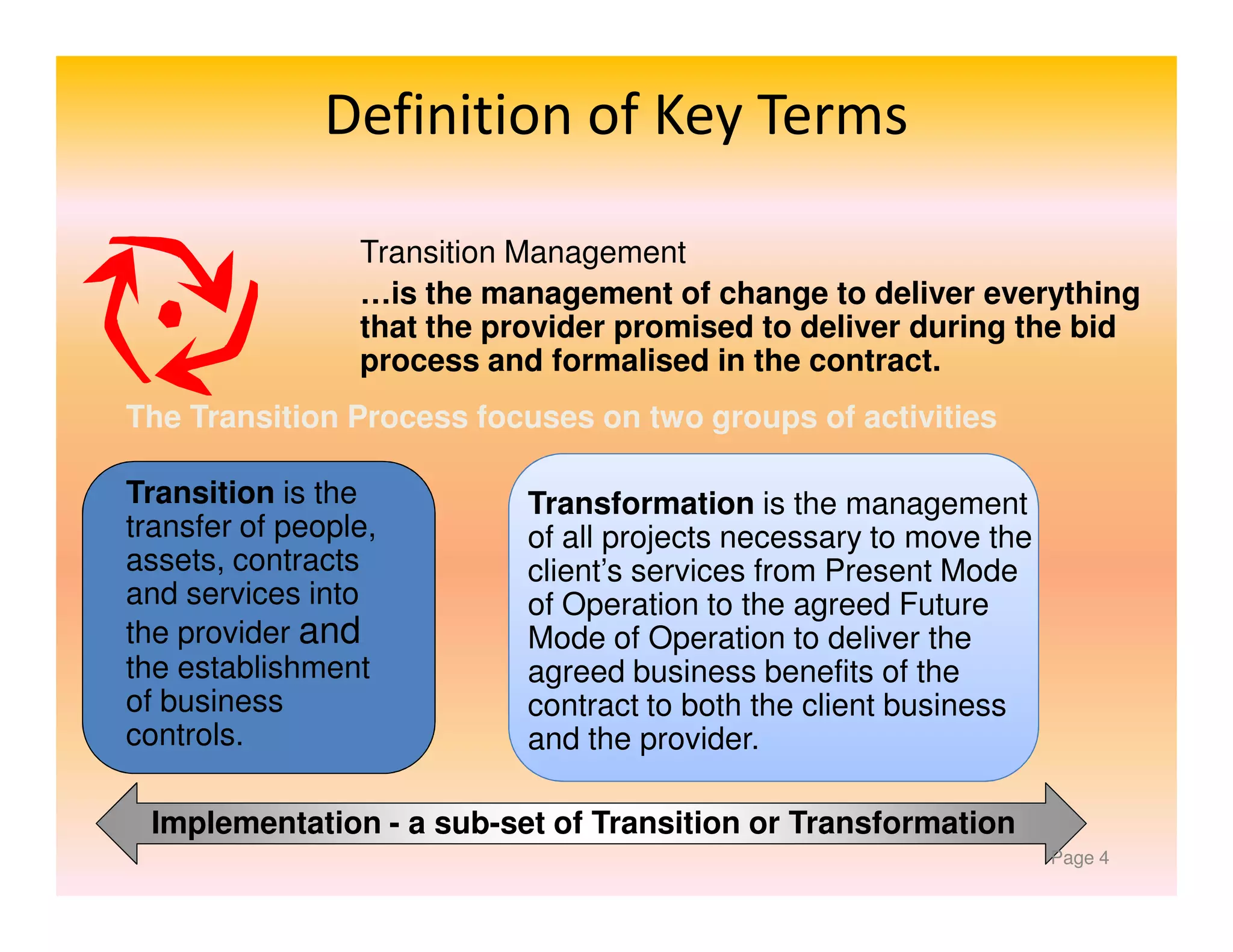
Transition Management
…is the management of change to deliver everything
that the provider promised to deliver during the bid
process and formalised in the contract.
The Transition Process focuses on two groups of activities
Transition is the
transfer of people,
assets, contracts
and services into
the provider and
the establishment
of business
controls.

Transformation is the management
of all projects necessary to move the
client’s services from Present Mode
of Operation to the agreed Future
Mode of Operation to deliver the
agreed business benefits of the
contract to both the client business
and the provider.

Implementation - a sub-set of Transition or Transformation
Page 4
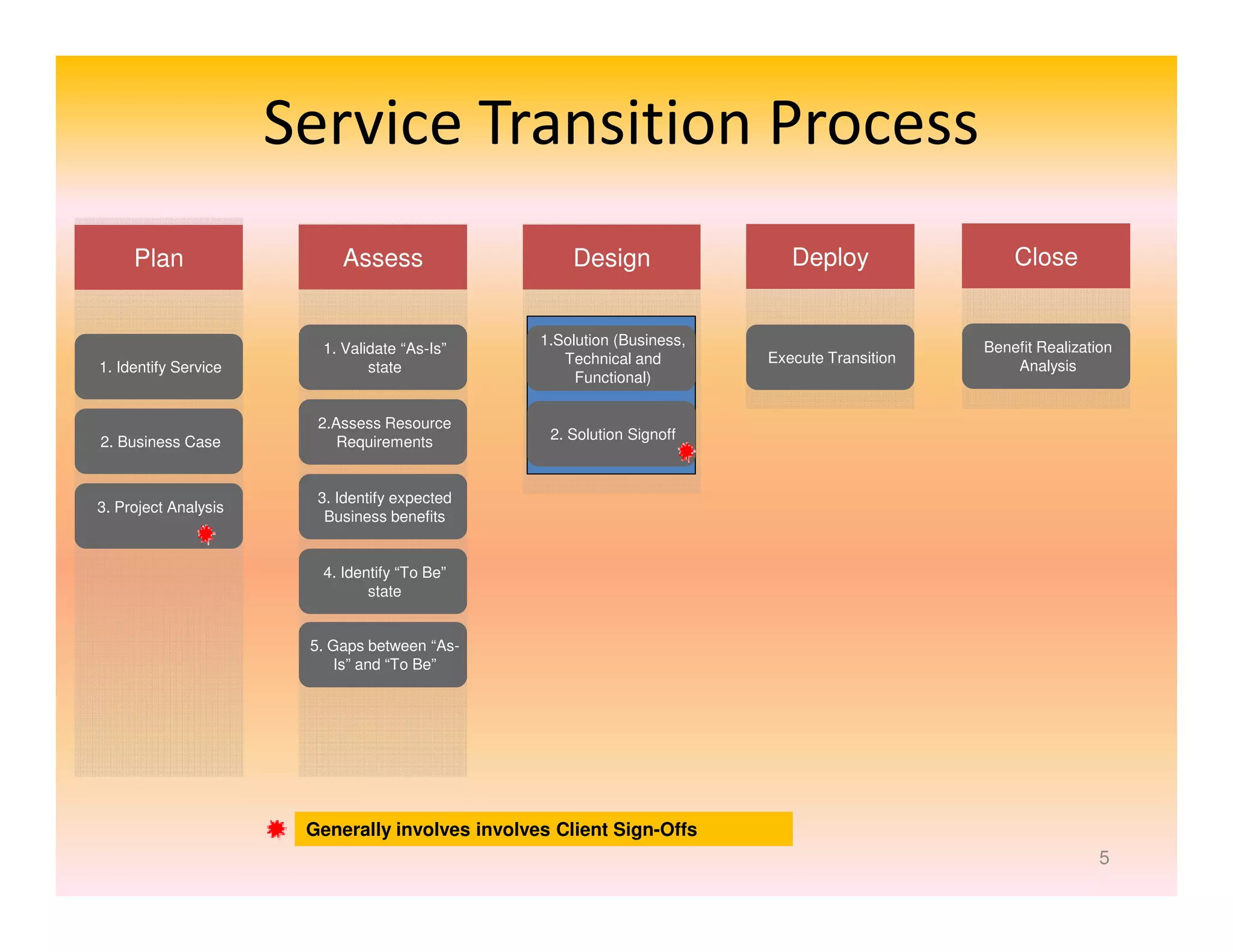
Service Transition Process
Plan

Assess

Design

Deploy

Close

1. Identify Service

1. Validate “As-Is”
state

1.Solution (Business,
Technical and
Functional)

Execute Transition

Benefit Realization
Analysis

2. Business Case

2.Assess Resource
Requirements

2. Solution Signoff

3. Project Analysis

3. Identify expected
Business benefits

4. Identify “To Be”
state

5. Gaps between “AsIs” and “To Be”

Generally involves involves Client Sign-Offs
5
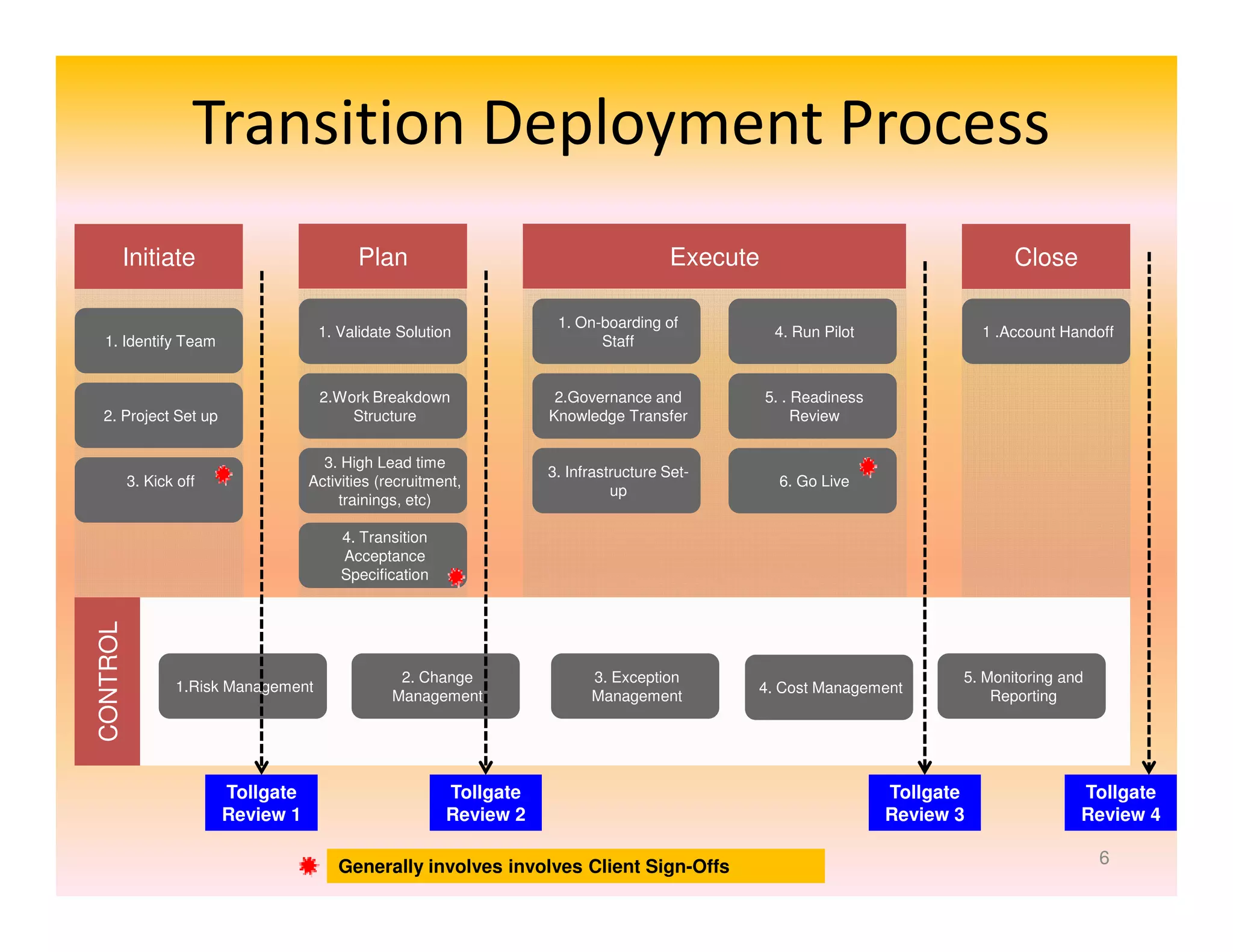
Transition Deployment Process
Plan

Initiate

Execute

Close

1. Validate Solution

1. On-boarding of
Staff

4. Run Pilot

2.Work Breakdown
Structure

2.Governance and
Knowledge Transfer

5. . Readiness
Review

3. High Lead time
Activities (recruitment,
trainings, etc)

3. Infrastructure Setup

6. Go Live

1. Identify Team

2. Project Set up

3. Kick off

1 .Account Handoff

CONTROL

4. Transition
Acceptance
Specification

1.Risk Management

Tollgate
Review 1

2. Change
Management

3. Exception
Management

Tollgate
Review 2
Generally involves involves Client Sign-Offs

4. Cost Management

5. Monitoring and
Reporting

Tollgate
Review 3

Tollgate
Review 4
6
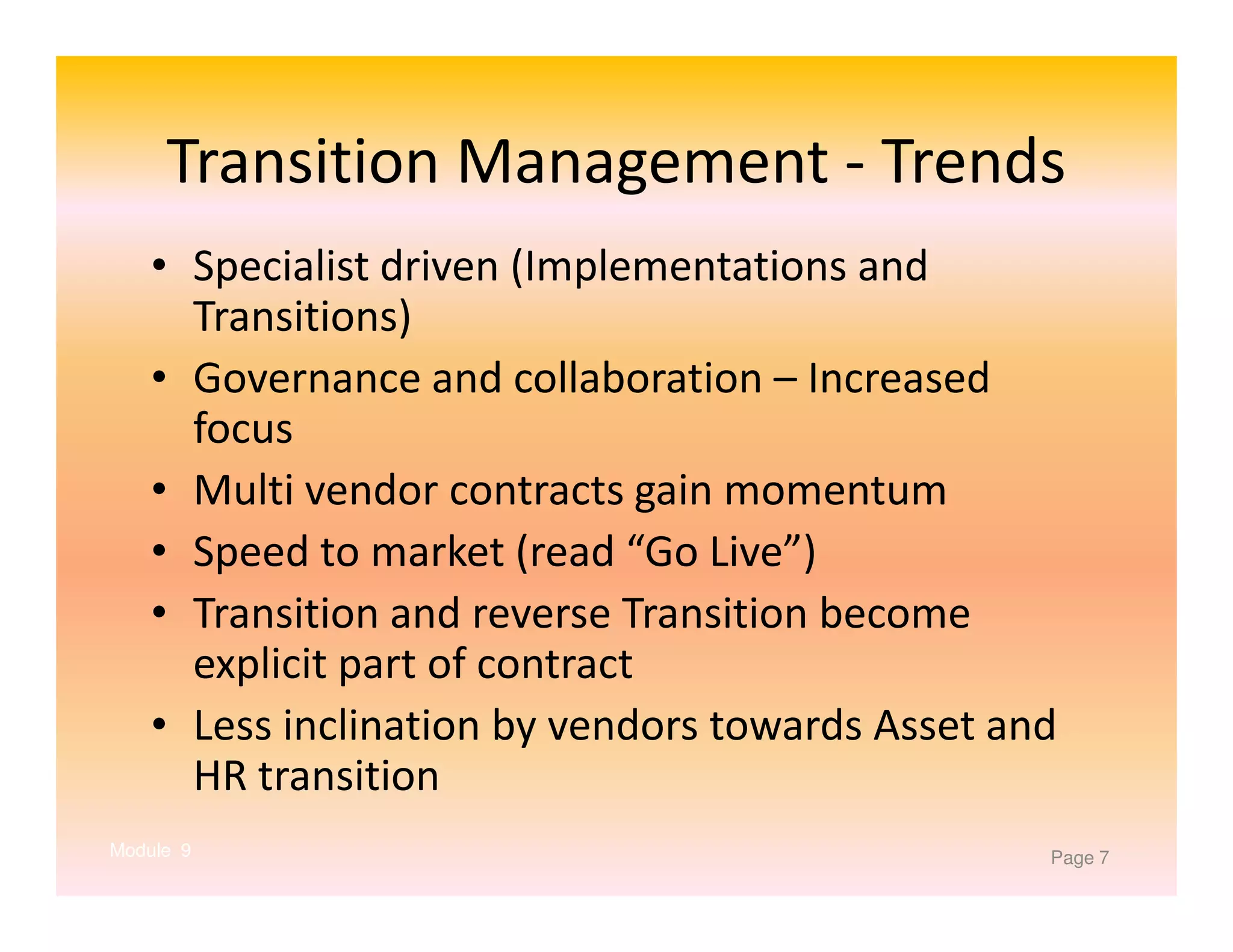
Transition Management - Trends
• Specialist driven (Implementations and
Transitions)
• Governance and collaboration – Increased
focus
• Multi vendor contracts gain momentum
• Speed to market (read “Go Live”)
• Transition and reverse Transition become
explicit part of contract
• Less inclination by vendors towards Asset and
HR transition
Module 9

Page 7
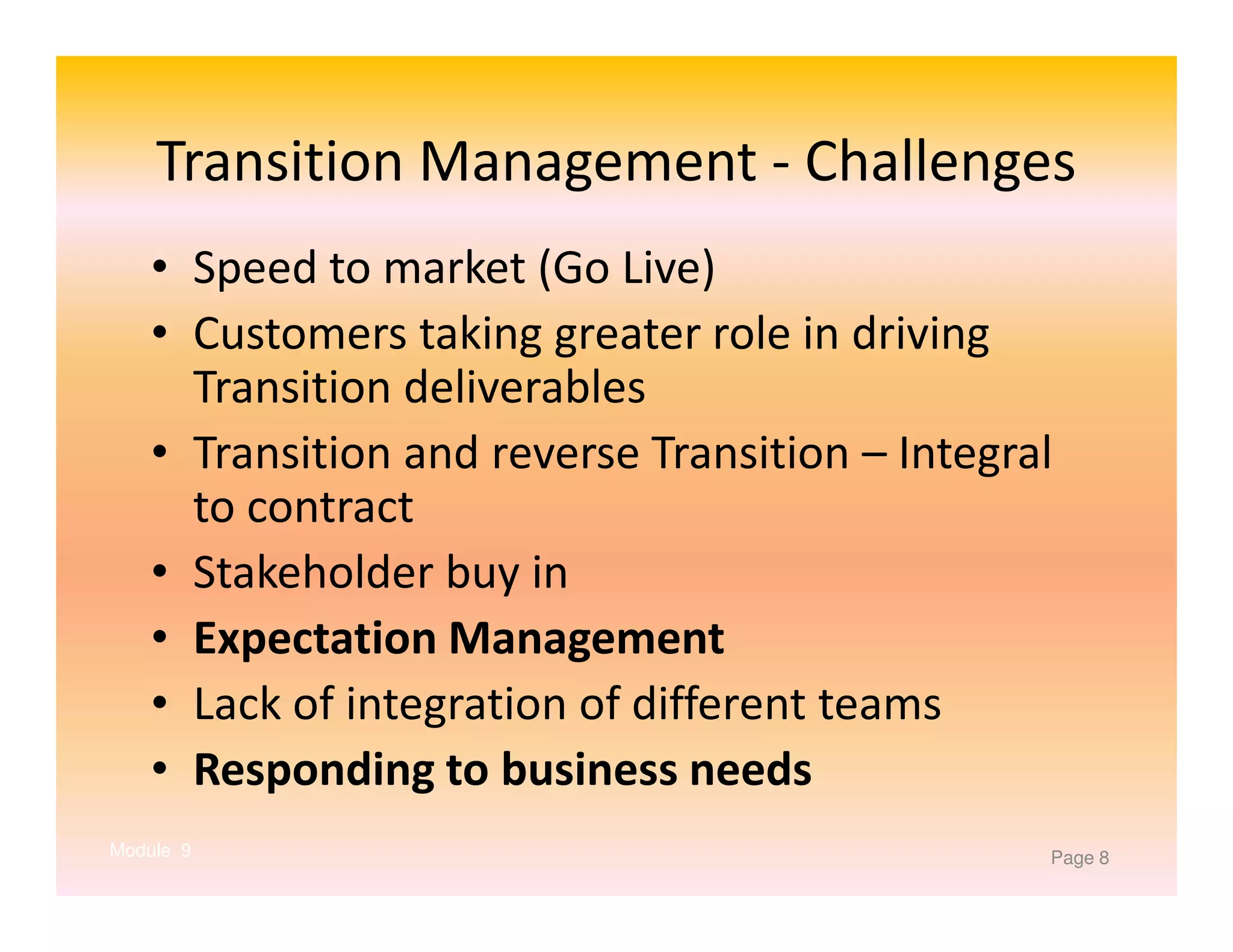
Transition Management - Challenges
• Speed to market (Go Live)
• Customers taking greater role in driving
Transition deliverables
• Transition and reverse Transition – Integral
to contract
• Stakeholder buy in
• Expectation Management
• Lack of integration of different teams
• Responding to business needs
Module 9

Page 8
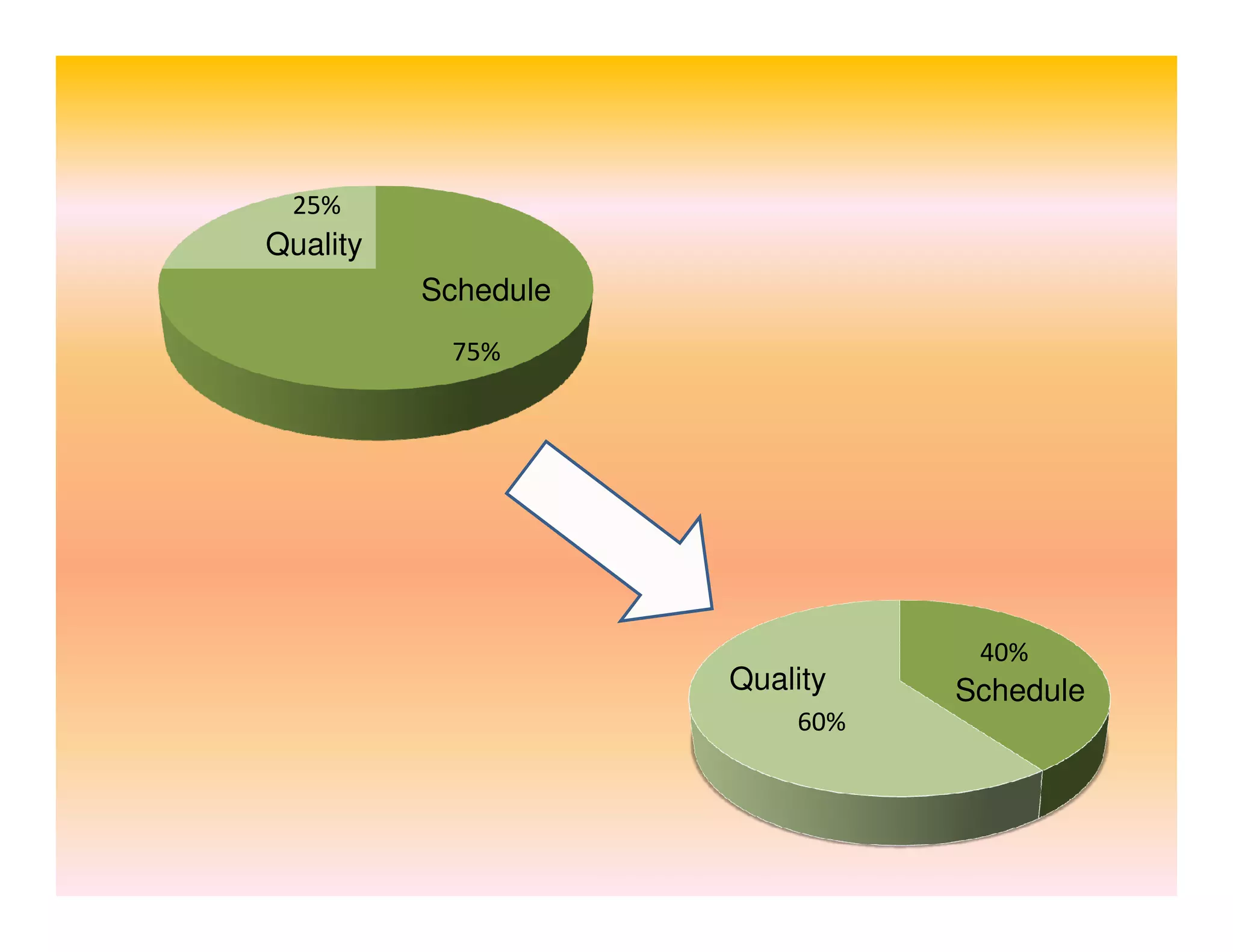
25%

Quality
Schedule
75%

40%

Quality
60%

Schedule
Transition Management and IT Service
Management
• Mostly ignored process part of Service
Management
• Can make or break business relationships
• Sows seeds of a successful service delivery
(early incorporation of service management
principles)

Module 9

Page 10
Transitions may not succeed if…
•
•
•
•
•
•
•
•

Transition planning is not a key activity on the project plan for all outsourcing management
teams (policy, idea, assessment, Implementation and management)
Transition planning is done in a vacuum and doesn’t have a “buy-in” by all parties involved –
customer, service provider’s sales and delivery teams
Transition plan is not fully developed and documented and is not a part of the contract
Transition plan does not cover all aspects of the outsourcing engagement (people, processes,
assets and financial) and all phases – from contracting through governance
Transition management team are either not involved in developing the original solution that
was sold to the customer (and became the basis for the contract) or have a longer term
accountability to create stability of operations
Change management is not considered a vital part of transition management
Developing relationships does not get its due
Integration with other lifecycle stages is missing

Page 11
Best Practices
•
•
•
•
•

Quality Assurance and Improvement
Dedicated resources
Robust Change Management process
Early involvement
Acceptance Criterion

Page 12
Page 13

It transition management an operational perspective

  • 1.
    Transition Management Process, Trendsand Challenges – an Operational perspective Pankaj Sharma, PMP Certified Outsourcing Professional
  • 2.
    Contents Definitions Service Transition andTransition Deployment Trends Challenges Transition Management and Service Management Success Factors Best Practices Page 2
  • 3.
  • 4.
    Definition of KeyTerms Transition Management …is the management of change to deliver everything that the provider promised to deliver during the bid process and formalised in the contract. The Transition Process focuses on two groups of activities Transition is the transfer of people, assets, contracts and services into the provider and the establishment of business controls. Transformation is the management of all projects necessary to move the client’s services from Present Mode of Operation to the agreed Future Mode of Operation to deliver the agreed business benefits of the contract to both the client business and the provider. Implementation - a sub-set of Transition or Transformation Page 4
  • 5.
    Service Transition Process Plan Assess Design Deploy Close 1.Identify Service 1. Validate “As-Is” state 1.Solution (Business, Technical and Functional) Execute Transition Benefit Realization Analysis 2. Business Case 2.Assess Resource Requirements 2. Solution Signoff 3. Project Analysis 3. Identify expected Business benefits 4. Identify “To Be” state 5. Gaps between “AsIs” and “To Be” Generally involves involves Client Sign-Offs 5
  • 6.
    Transition Deployment Process Plan Initiate Execute Close 1.Validate Solution 1. On-boarding of Staff 4. Run Pilot 2.Work Breakdown Structure 2.Governance and Knowledge Transfer 5. . Readiness Review 3. High Lead time Activities (recruitment, trainings, etc) 3. Infrastructure Setup 6. Go Live 1. Identify Team 2. Project Set up 3. Kick off 1 .Account Handoff CONTROL 4. Transition Acceptance Specification 1.Risk Management Tollgate Review 1 2. Change Management 3. Exception Management Tollgate Review 2 Generally involves involves Client Sign-Offs 4. Cost Management 5. Monitoring and Reporting Tollgate Review 3 Tollgate Review 4 6
  • 7.
    Transition Management -Trends • Specialist driven (Implementations and Transitions) • Governance and collaboration – Increased focus • Multi vendor contracts gain momentum • Speed to market (read “Go Live”) • Transition and reverse Transition become explicit part of contract • Less inclination by vendors towards Asset and HR transition Module 9 Page 7
  • 8.
    Transition Management -Challenges • Speed to market (Go Live) • Customers taking greater role in driving Transition deliverables • Transition and reverse Transition – Integral to contract • Stakeholder buy in • Expectation Management • Lack of integration of different teams • Responding to business needs Module 9 Page 8
  • 9.
  • 10.
    Transition Management andIT Service Management • Mostly ignored process part of Service Management • Can make or break business relationships • Sows seeds of a successful service delivery (early incorporation of service management principles) Module 9 Page 10
  • 11.
    Transitions may notsucceed if… • • • • • • • • Transition planning is not a key activity on the project plan for all outsourcing management teams (policy, idea, assessment, Implementation and management) Transition planning is done in a vacuum and doesn’t have a “buy-in” by all parties involved – customer, service provider’s sales and delivery teams Transition plan is not fully developed and documented and is not a part of the contract Transition plan does not cover all aspects of the outsourcing engagement (people, processes, assets and financial) and all phases – from contracting through governance Transition management team are either not involved in developing the original solution that was sold to the customer (and became the basis for the contract) or have a longer term accountability to create stability of operations Change management is not considered a vital part of transition management Developing relationships does not get its due Integration with other lifecycle stages is missing Page 11
  • 12.
    Best Practices • • • • • Quality Assuranceand Improvement Dedicated resources Robust Change Management process Early involvement Acceptance Criterion Page 12
  • 13.