IT SERVICE MANAGEMENT (ITSM)
LUSUNGU MKANDAWIRE
MARCH 13, 2015
IIAM IT AUDIT
ESSENTIALS
WORKSHOP
AGENDA
 What is IT Service Management
 Core ITSM Components
 Auditing ITSM
OBJECTIVES
 Provide an overview of IT Service Management and
describe its importance
 Describe approaches to auditing IT Service
Management
WHAT IS IT SERVICE MANAGEMENT
 A process-based framework for the support and
delivery of quality IT Services.
 A Structured approach to Managing the
Relationships between IT Service Providers and
their Customers.
 Similar in Concept to PMBOK(Project
Management) and CMMI
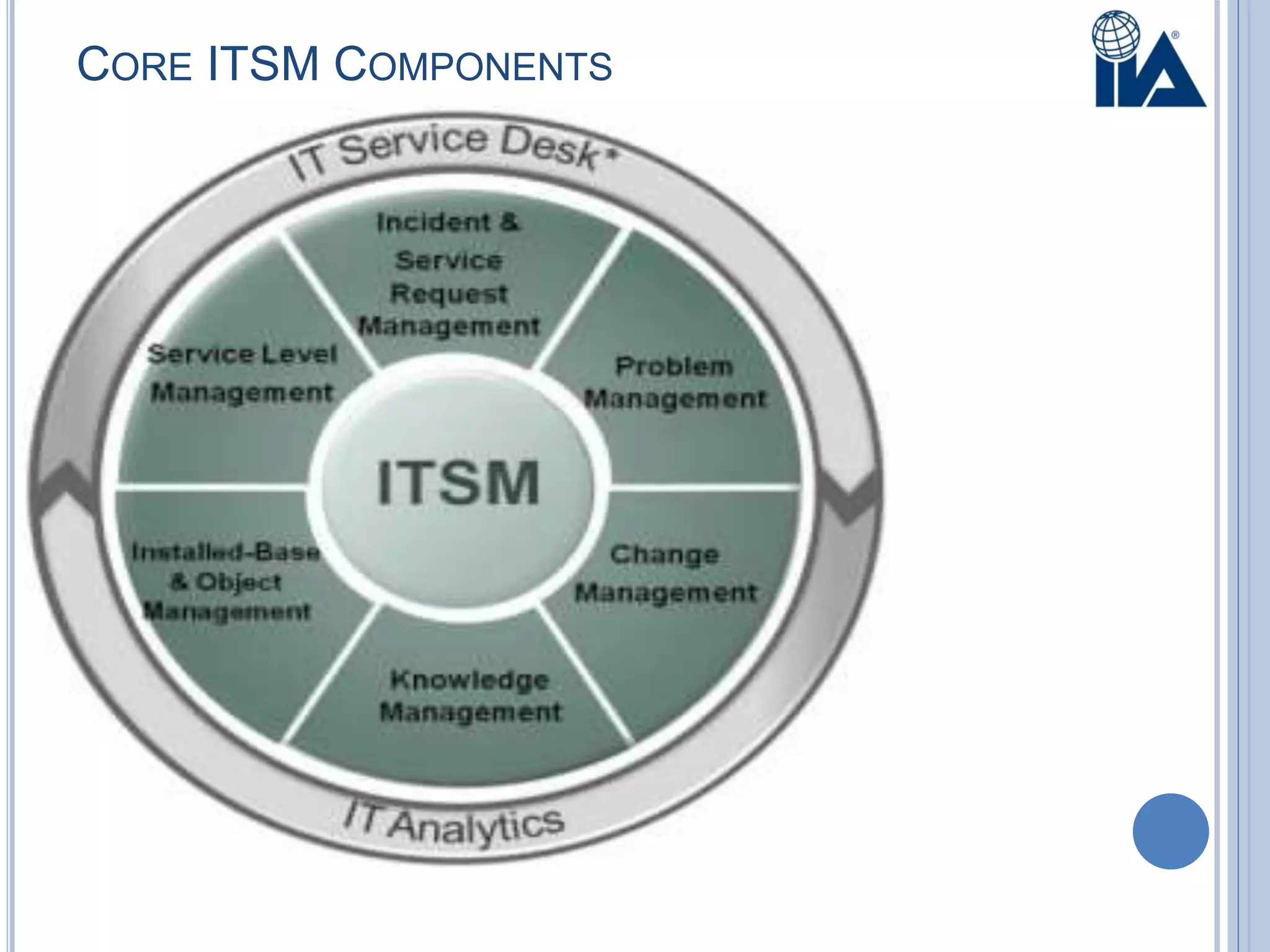
CORE ITSM COMPONENTS
Service Level Management
Change Management
Incident Management
Problem Management
CORE ITSM COMPONENTS
Service Level Management
Service-level management is the monitoring and
management of the quality of service(QoS) of an entity's
key performance indicators(KPIs)
 Service Level Agreement (SLA)
 An agreement between an IT service provider and a
customer.
 The SLA describes the IT service, documents service
level targets, and specifies the responsibilities of the
IT service provider and the customer.
CORE ITSM COMPONENTS
Change Management
 The Process responsible for controlling the
Lifecycle of all Changes.
 The primary objective of Change Management is
to enable beneficial Changes to be made, with
minimum disruption to IT Services.
CORE ITSM COMPONENTS
Incident Management
The Process responsible for managing the
Lifecycle of all Incidents.
The primary Objective of Incident
Management is to return the IT Service to
Users as quickly as possible.
CORE ITSM COMPONENTS
Problem Management
The Process responsible for managing the
Lifecycle of all Problems.
The primary Objectives of Problem
Management are to prevent Incidents from
happening and to minimize the Impact of
Incidents that cannot be prevented.
AUDITING ITSM
 Service Level Management
 IT Financial Management
 Capacity Management
 IT Service Continuity Management
 Availability Management
 Information Security Management
Thank You!
Lusungu Mkandawire
Lusungu.Mkandawire@mw.airtel.com
265999989153
www.linkedin.com/pub/lusungu-mkandawire/57/102/283
https://twitter.com/MLusungu

It service management

  • 1.
    IT SERVICE MANAGEMENT(ITSM) LUSUNGU MKANDAWIRE MARCH 13, 2015 IIAM IT AUDIT ESSENTIALS WORKSHOP
  • 2.
    AGENDA  What isIT Service Management  Core ITSM Components  Auditing ITSM
  • 3.
    OBJECTIVES  Provide anoverview of IT Service Management and describe its importance  Describe approaches to auditing IT Service Management
  • 4.
    WHAT IS ITSERVICE MANAGEMENT  A process-based framework for the support and delivery of quality IT Services.  A Structured approach to Managing the Relationships between IT Service Providers and their Customers.  Similar in Concept to PMBOK(Project Management) and CMMI
  • 5.
  • 6.
    CORE ITSM COMPONENTS ServiceLevel Management Change Management Incident Management Problem Management
  • 7.
    CORE ITSM COMPONENTS ServiceLevel Management Service-level management is the monitoring and management of the quality of service(QoS) of an entity's key performance indicators(KPIs)  Service Level Agreement (SLA)  An agreement between an IT service provider and a customer.  The SLA describes the IT service, documents service level targets, and specifies the responsibilities of the IT service provider and the customer.
  • 8.
    CORE ITSM COMPONENTS ChangeManagement  The Process responsible for controlling the Lifecycle of all Changes.  The primary objective of Change Management is to enable beneficial Changes to be made, with minimum disruption to IT Services.
  • 9.
    CORE ITSM COMPONENTS IncidentManagement The Process responsible for managing the Lifecycle of all Incidents. The primary Objective of Incident Management is to return the IT Service to Users as quickly as possible.
  • 10.
    CORE ITSM COMPONENTS ProblemManagement The Process responsible for managing the Lifecycle of all Problems. The primary Objectives of Problem Management are to prevent Incidents from happening and to minimize the Impact of Incidents that cannot be prevented.
  • 11.
    AUDITING ITSM  ServiceLevel Management  IT Financial Management  Capacity Management  IT Service Continuity Management  Availability Management  Information Security Management
  • 12.