IT Security DOs and DON’Ts
From your helpful IT Team
A note for you
We have created this presentation for you, the outstanding employee who has
IT security on the brain.

We want to help you spread the word about IT security, so we’re giving you our
top 10 IT Security DOs and DON’Ts to help you in that effort.

Take this content and tailor it to your business. Use it for new employee
training, quarterly IT updates, or even general company meetings. It’s up to you.

And we’d love to hear your feedback on how we can make this better.
Visit www.sophos.com/staysafefeedback

Your friends @ SOPHOS
1. Don’t be tricked into giving
away confidential information
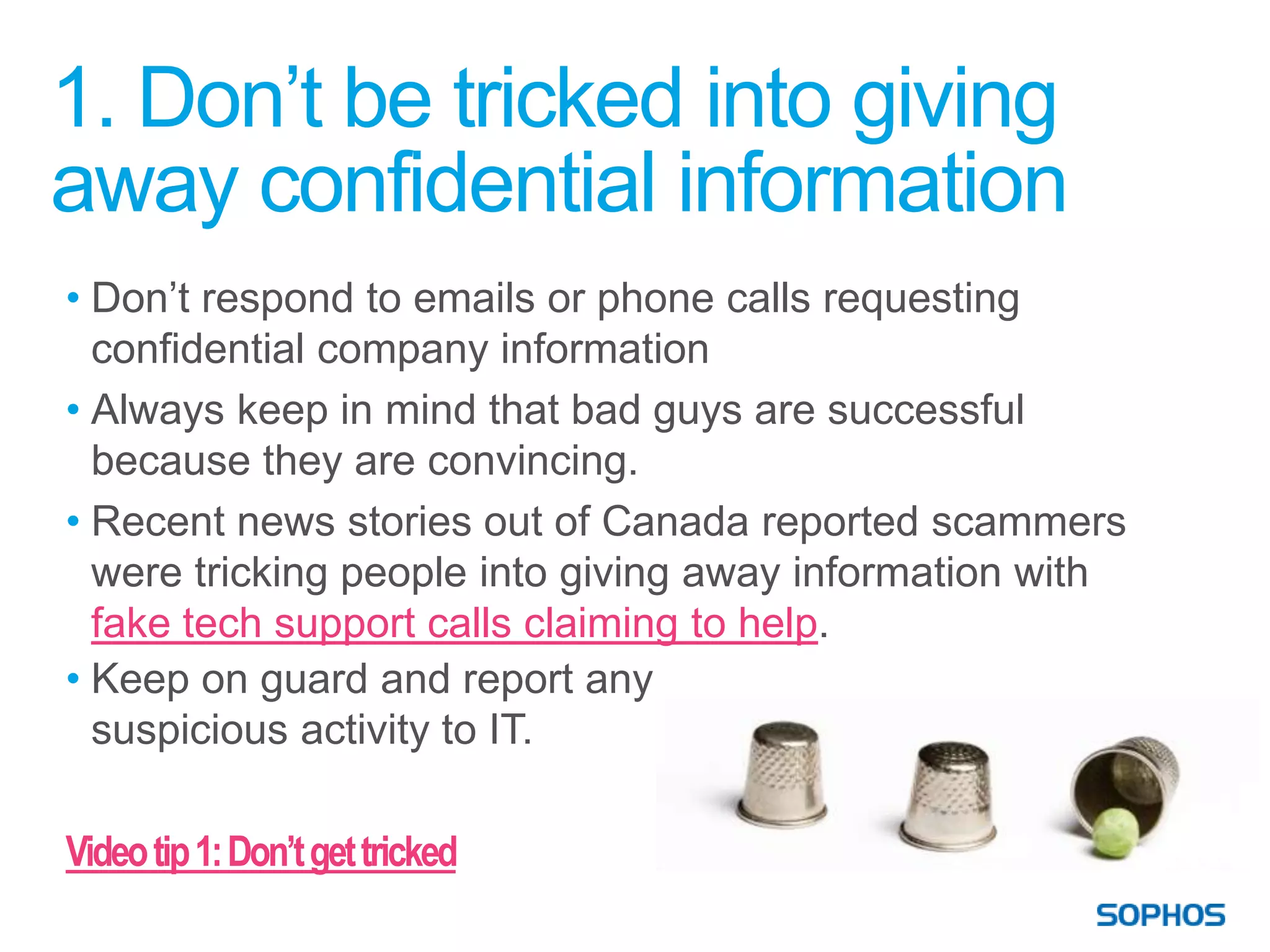
• Don’t respond to emails or phone calls requesting
  confidential company information
• Always keep in mind that bad guys are successful
  because they are convincing.
• Recent news stories out of Canada reported scammers
  were tricking people into giving away information with
  fake tech support calls claiming to help.
• Keep on guard and report any
  suspicious activity to IT.

Video tip 1: Don’t get tricked
2. Don’t use an unprotected
computer
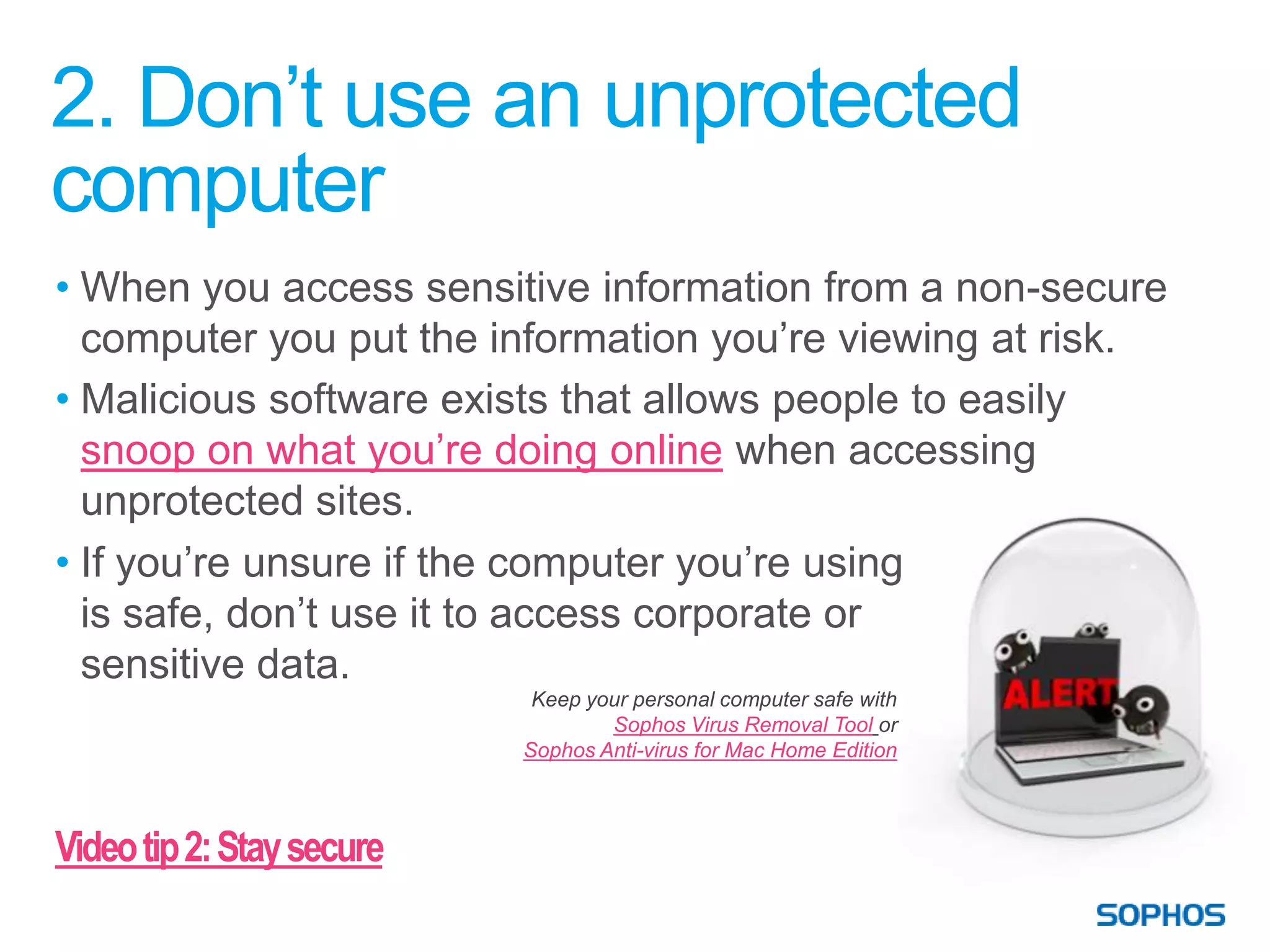
• When you access sensitive information from a non-secure
  computer you put the information you’re viewing at risk.
• Malicious software exists that allows people to easily
  snoop on what you’re doing online when accessing
  unprotected sites.
• If you’re unsure if the computer you’re using
  is safe, don’t use it to access corporate or
  sensitive data.
                            Keep your personal computer safe with
                                   Sophos Virus Removal Tool or
                           Sophos Anti-virus for Mac Home Edition


Video tip 2: Stay secure
3. Don’t leave sensitive info lying
around the office
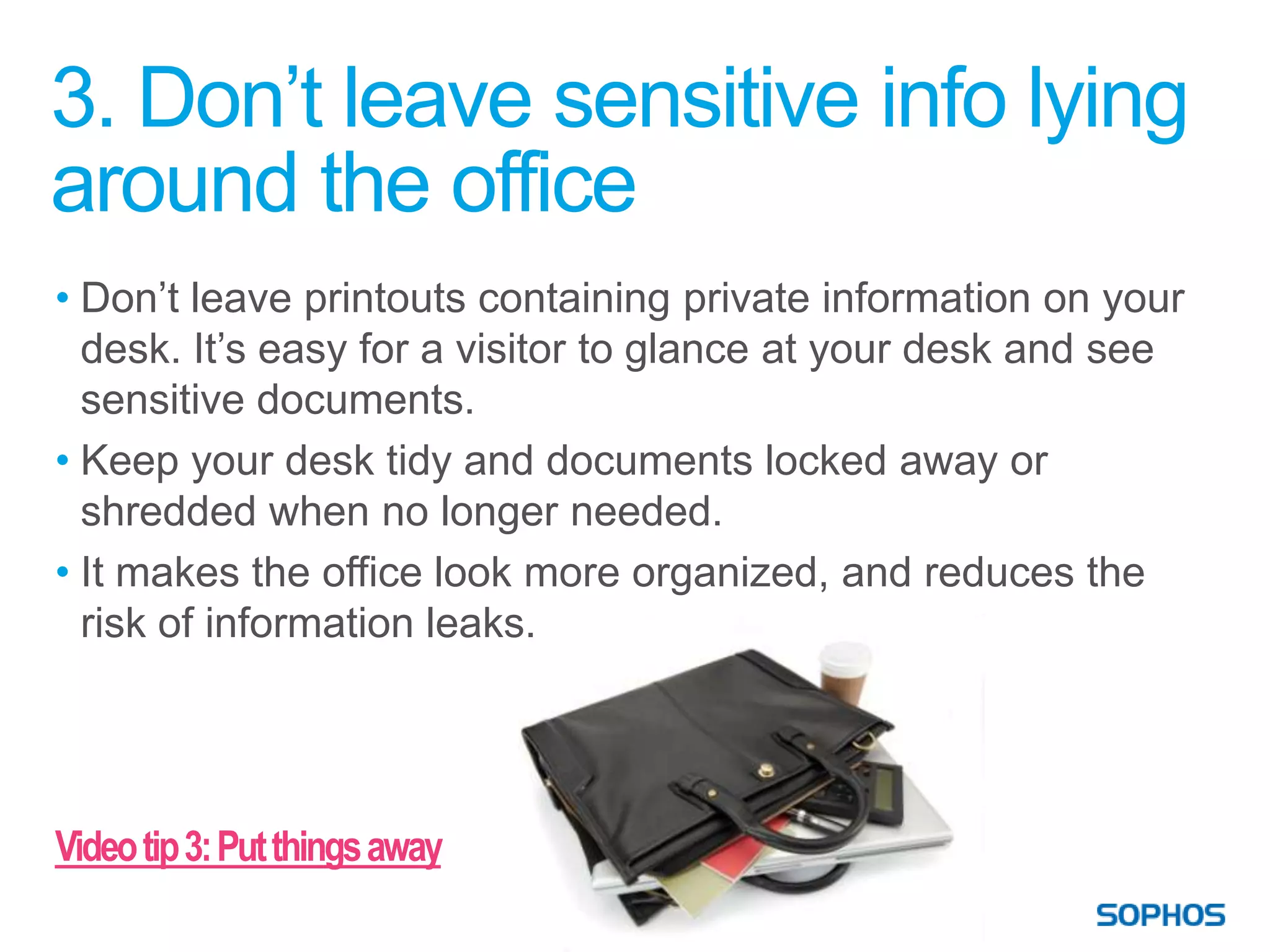
• Don’t leave printouts containing private information on your
  desk. It’s easy for a visitor to glance at your desk and see
  sensitive documents.
• Keep your desk tidy and documents locked away or
  shredded when no longer needed.
• It makes the office look more organized, and reduces the
  risk of information leaks.


Video tip 3: Put things away
4. Lock your computer and
mobile phone when not in use
• Always lock your computer and mobile phone when you’re
  not using them. You work on important things, and we want
  to make sure they stay safe and secure.
• Locking these devices keeps both your personal
  information and the company’s data and contacts safe
  from prying eyes.


Video tip 4: Lock it
5. Stay alert and report suspicious
activity
• Sometimes suspicious activity isn’t as obvious as we think.
• A recent news story reported that a supermarket manager,
  who was randomly befriended by a mysterious woman on
  Facebook, ended up on a “date” with two men who
  overpowered him and robbed his store.
• Be cautious of people you don't know
  asking for things, especially online.
• Always report any suspicious activity
  to IT. If something goes wrong, the
  faster we know about it, the faster we
  can deal with it.
Video tip 5: Stay alert
6. Password-protect sensitive
files and devices
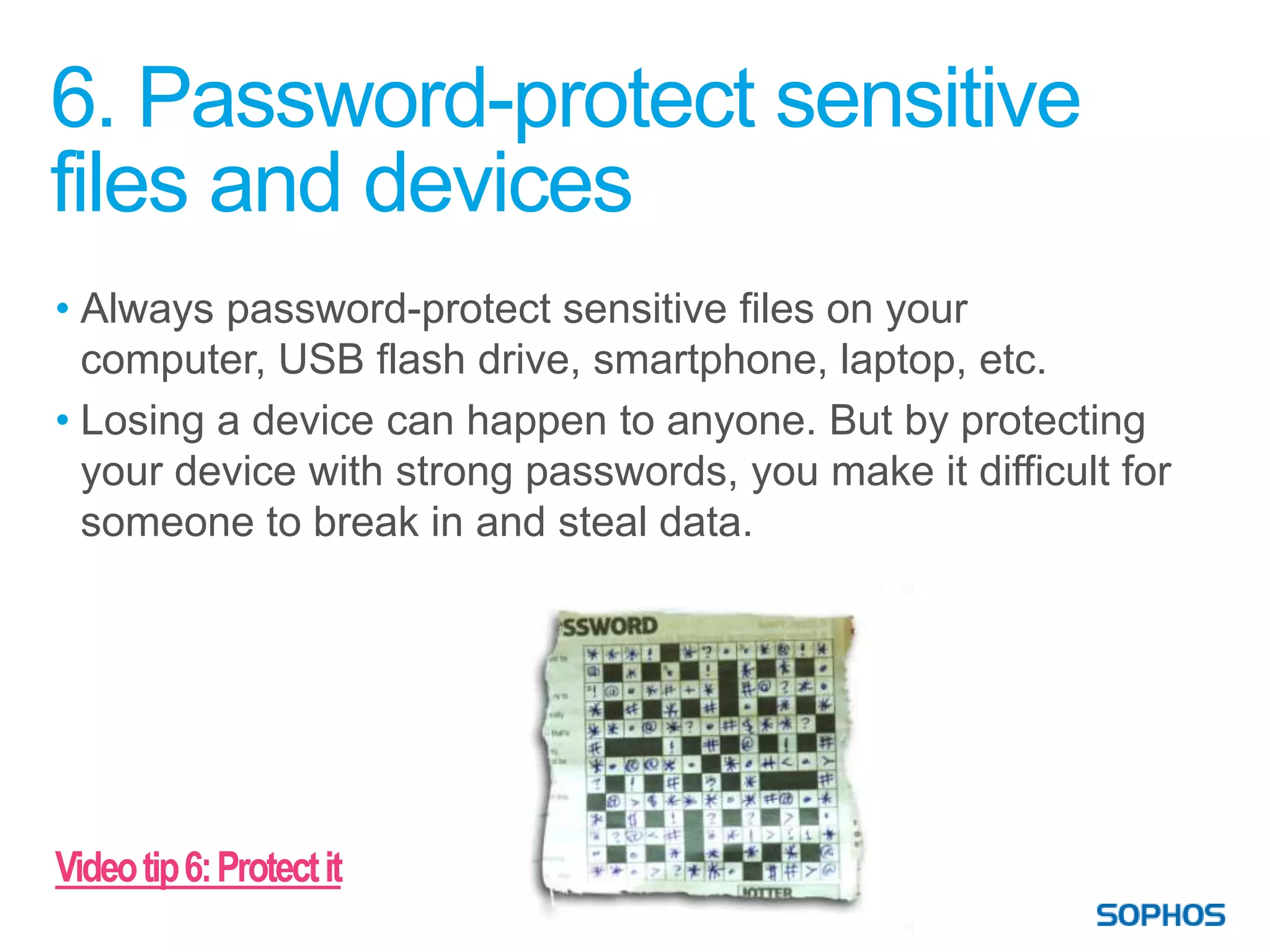
• Always password-protect sensitive files on your
  computer, USB flash drive, smartphone, laptop, etc.
• Losing a device can happen to anyone. But by protecting
  your device with strong passwords, you make it difficult for
  someone to break in and steal data.


Video tip 6: Protect it
7. Always use hard-to-guess
passwords
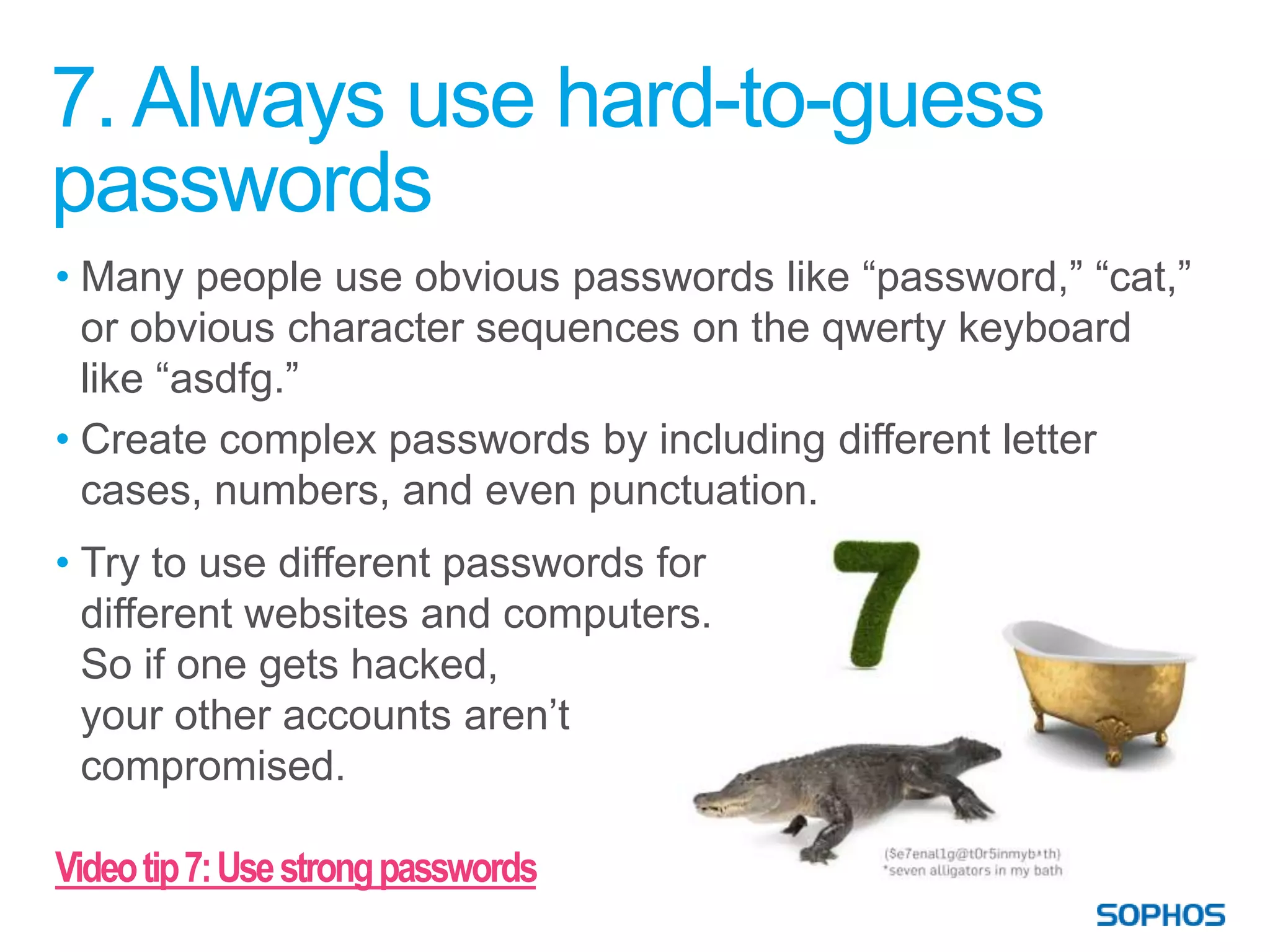
• Many people use obvious passwords like “password,” “cat,”
  or obvious character sequences on the qwerty keyboard
  like “asdfg.”
• Create complex passwords by including different letter
  cases, numbers, and even punctuation.
• Try to use different passwords for
  different websites and computers.
  So if one gets hacked,
  your other accounts aren’t
  compromised.

Video tip 7: Use strong passwords
8. Be cautious of suspicious
emails and links
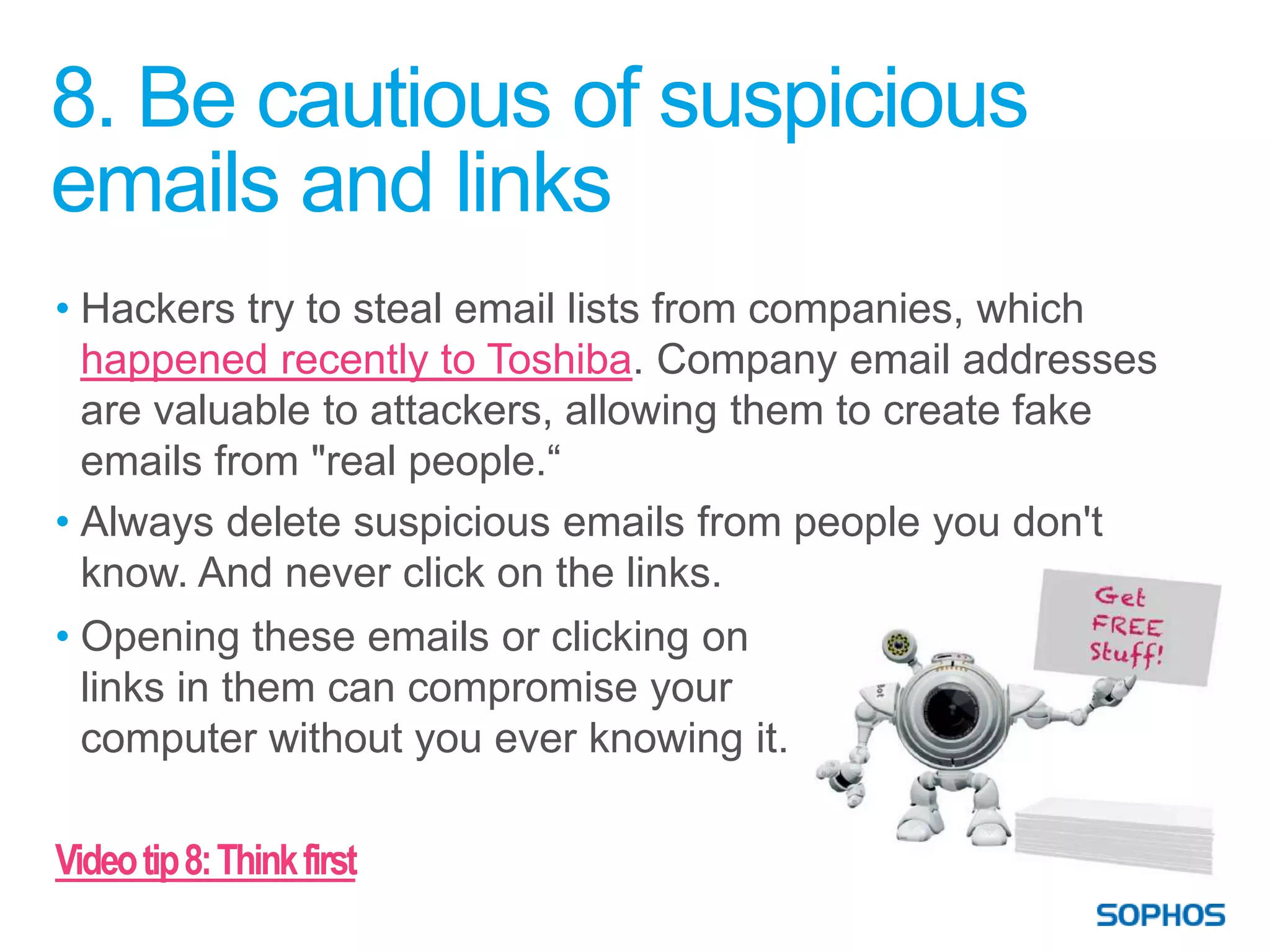
• Hackers try to steal email lists from companies, which
  happened recently to Toshiba. Company email addresses
  are valuable to attackers, allowing them to create fake
  emails from "real people.“
• Always delete suspicious emails from people you don't
  know. And never click on the links.
• Opening these emails or clicking on
  links in them can compromise your
  computer without you ever knowing it.

Video tip 8: Think first
9. Don’t plug in personal devices
without the OK from IT
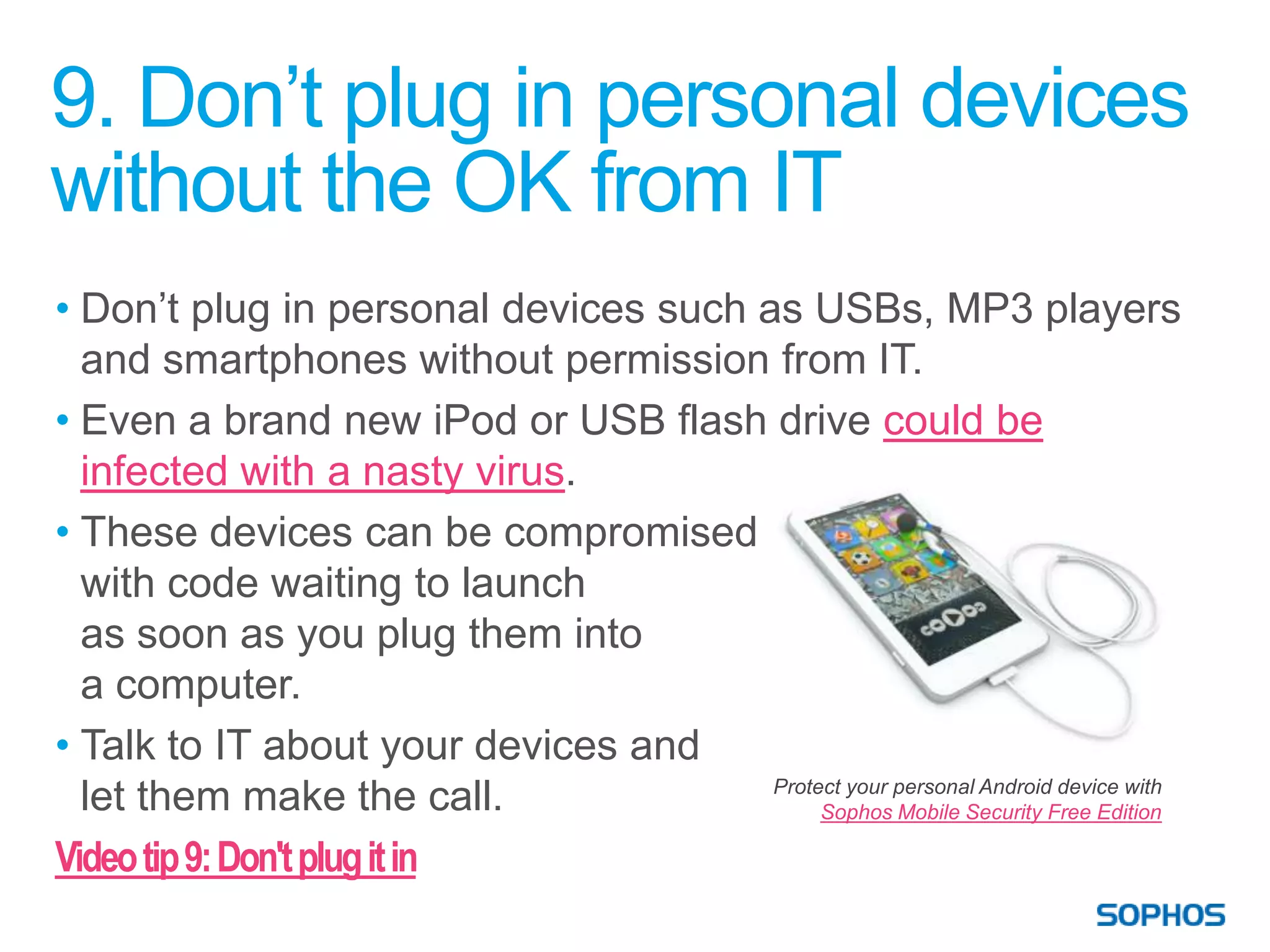
• Don’t plug in personal devices such as USBs, MP3 players
  and smartphones without permission from IT.
• Even a brand new iPod or USB flash drive could be
  infected with a nasty virus.
• These devices can be compromised
  with code waiting to launch
  as soon as you plug them into
  a computer.
• Talk to IT about your devices and
                                       Protect your personal Android device with
  let them make the call.                   Sophos Mobile Security Free Edition

Video tip 9: Don't plug it in
10. Don’t install unauthorized
programs on your work computer
• Malicious applications often pose as legitimate programs
  like games, tools or even antivirus software.
• They aim to fool you into infecting your computer
  or network.
• If you like an application and think it will be useful,
  contact us and we’ll look into it for you.


Video tip 10: Don’t install it
Get more
IT Security DOs and DON’Ts
View the online handbook at www.sophos.com/securitytips

Get quick tips to create strong passwords


Connect with us:
facebook.com/securitybysophos
twitter.com/Sophos_News
Sophos on Google+
linkedin.com/company/sophos

IT Security DOs and DON'Ts

  • 1.
    IT Security DOsand DON’Ts From your helpful IT Team
  • 2.
    A note foryou We have created this presentation for you, the outstanding employee who has IT security on the brain. We want to help you spread the word about IT security, so we’re giving you our top 10 IT Security DOs and DON’Ts to help you in that effort. Take this content and tailor it to your business. Use it for new employee training, quarterly IT updates, or even general company meetings. It’s up to you. And we’d love to hear your feedback on how we can make this better. Visit www.sophos.com/staysafefeedback Your friends @ SOPHOS
  • 3.
    1. Don’t betricked into giving away confidential information • Don’t respond to emails or phone calls requesting confidential company information • Always keep in mind that bad guys are successful because they are convincing. • Recent news stories out of Canada reported scammers were tricking people into giving away information with fake tech support calls claiming to help. • Keep on guard and report any suspicious activity to IT. Video tip 1: Don’t get tricked
  • 4.
    2. Don’t usean unprotected computer • When you access sensitive information from a non-secure computer you put the information you’re viewing at risk. • Malicious software exists that allows people to easily snoop on what you’re doing online when accessing unprotected sites. • If you’re unsure if the computer you’re using is safe, don’t use it to access corporate or sensitive data. Keep your personal computer safe with Sophos Virus Removal Tool or Sophos Anti-virus for Mac Home Edition Video tip 2: Stay secure
  • 5.
    3. Don’t leavesensitive info lying around the office • Don’t leave printouts containing private information on your desk. It’s easy for a visitor to glance at your desk and see sensitive documents. • Keep your desk tidy and documents locked away or shredded when no longer needed. • It makes the office look more organized, and reduces the risk of information leaks. Video tip 3: Put things away
  • 6.
    4. Lock yourcomputer and mobile phone when not in use • Always lock your computer and mobile phone when you’re not using them. You work on important things, and we want to make sure they stay safe and secure. • Locking these devices keeps both your personal information and the company’s data and contacts safe from prying eyes. Video tip 4: Lock it
  • 7.
    5. Stay alertand report suspicious activity • Sometimes suspicious activity isn’t as obvious as we think. • A recent news story reported that a supermarket manager, who was randomly befriended by a mysterious woman on Facebook, ended up on a “date” with two men who overpowered him and robbed his store. • Be cautious of people you don't know asking for things, especially online. • Always report any suspicious activity to IT. If something goes wrong, the faster we know about it, the faster we can deal with it. Video tip 5: Stay alert
  • 8.
    6. Password-protect sensitive filesand devices • Always password-protect sensitive files on your computer, USB flash drive, smartphone, laptop, etc. • Losing a device can happen to anyone. But by protecting your device with strong passwords, you make it difficult for someone to break in and steal data. Video tip 6: Protect it
  • 9.
    7. Always usehard-to-guess passwords • Many people use obvious passwords like “password,” “cat,” or obvious character sequences on the qwerty keyboard like “asdfg.” • Create complex passwords by including different letter cases, numbers, and even punctuation. • Try to use different passwords for different websites and computers. So if one gets hacked, your other accounts aren’t compromised. Video tip 7: Use strong passwords
  • 10.
    8. Be cautiousof suspicious emails and links • Hackers try to steal email lists from companies, which happened recently to Toshiba. Company email addresses are valuable to attackers, allowing them to create fake emails from "real people.“ • Always delete suspicious emails from people you don't know. And never click on the links. • Opening these emails or clicking on links in them can compromise your computer without you ever knowing it. Video tip 8: Think first
  • 11.
    9. Don’t plugin personal devices without the OK from IT • Don’t plug in personal devices such as USBs, MP3 players and smartphones without permission from IT. • Even a brand new iPod or USB flash drive could be infected with a nasty virus. • These devices can be compromised with code waiting to launch as soon as you plug them into a computer. • Talk to IT about your devices and Protect your personal Android device with let them make the call. Sophos Mobile Security Free Edition Video tip 9: Don't plug it in
  • 12.
    10. Don’t installunauthorized programs on your work computer • Malicious applications often pose as legitimate programs like games, tools or even antivirus software. • They aim to fool you into infecting your computer or network. • If you like an application and think it will be useful, contact us and we’ll look into it for you. Video tip 10: Don’t install it
  • 13.
    Get more IT SecurityDOs and DON’Ts View the online handbook at www.sophos.com/securitytips Get quick tips to create strong passwords Connect with us: facebook.com/securitybysophos twitter.com/Sophos_News Sophos on Google+ linkedin.com/company/sophos