
INFORMATION SYSTEMSDATABASE MANAGEMENT (PART 2)Prepared by: Jan Wong
The Learning OutcomesIdentify the differences between databasesExplain how you can interactwith web databasesDiscuss the responsibilities of web analysts and administrators
The KeywordsData Security
Backup and log
Recovery utility
Data model
Relational database
Relationship
Structured Query Language
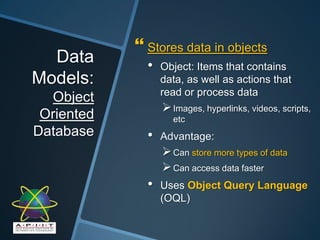
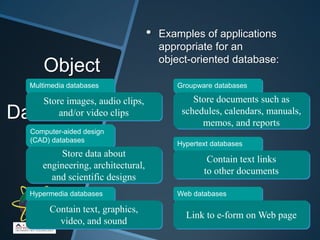
Object Oriented Database
Data Warehouse
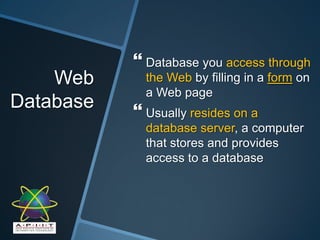
Web Database
Database AdministrationData SecurityDBMS provides means to ensure only authorized users can access dataAccess privileges define activities that specific user or group of users can performRead-only privileges - user can view data, but cannot change itFull-update privileges  - user can view and change data
Recovery UtilityUses logs and/or backups to restore database when it is damaged or destroyed2 types:Rollforward— DBMS uses log to re-enter changes made to database since last save or backupAlso called forward recoveryRollback — DBMS uses log to undo any changes made to database during a certain period of timeAlso called backward recovery
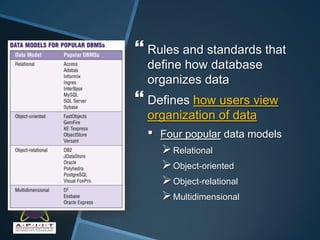
Data ModelRules and standards that define how database organizes dataDefines how users view organization of dataFour popular data modelsRelationalObject-orientedObject-relationalMultidimensional
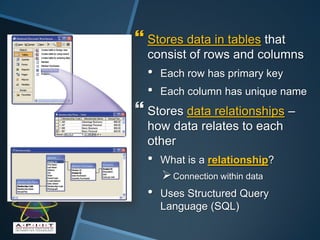
Stores data in tables that consist of rows and columnsEach row has primary keyEach column has unique nameStores data relationships – how data relates to each otherWhat is a relationship?Connection within dataUses Structured Query Language (SQL)Data Models: Relational Database
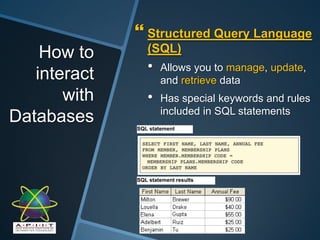
Structured Query Language (SQL)Allows you to manage, update, and retrieve dataHas special keywords and rules included in SQL statementsHow to interact with DatabasesSQL statementSQL statement results

IS CH2 Database Management (p2)