International Research Journal of Engineering and Technology (IRJET) e-ISSN: 2395-0056
Volume: 06 Issue: 12 | Dec 2019 www.irjet.net p-ISSN: 2395-0072
© 2019, IRJET | Impact Factor value: 7.34 | ISO 9001:2008 Certified Journal | Page 1145
Fake Profile Identification using Machine Learning
Samala Durga Prasad Reddy
Mahatma Gandhi Institute of Technology, Computer Science and Engineering, Hyderabad, Telangana, India
---------------------------------------------------------------------***----------------------------------------------------------------------
Abstract - In the present generation, the social life of
everyone has become associated with online social networks.
These sites have made a drastic change in the way we pursue
our social life. Making friends and keeping in contact with
them and their updates has become easier. But with their
rapid growth, many problems like fake profiles, online
impersonation have also grown. There are no feasible
solutions exist to control these problems. In this paper, I came
up with a framework with which the automatic identification
of fake profiles is possible and is efficient. This framework uses
classification techniques like Random Forest Classifier to
classify the profiles into fake or genuine classes. As this is an
automatic detection method, it can be applied easily by online
social networks that have millions of profiles whose profiles
cannot be examined manually.
Key Words: Social Media, Facebook, Random Forest
Classifier, Classification, Framework, and Dataset.
1. INTRODUCTION
Social networking site is a website where each user has a
profile and can keep in contact with friends, share their
updates, meet new people who have the same interests.
These Online Social Networks (OSN) use web2.0technology,
which allows users to interact with each other. Social
networking sites are growing rapidly and changing the way
people keep in contact with each other. The online
communities bring people with the same interests together
which makes users easier to make new friends.
1.1. History
These social networking sites starting with
http://www.sixdegrees.com in 1997 then came
http://www.makeoutclub.com in 2000. Sixdegrees.com
couldn’t survive much and closed very soon but new sites
like myspace, LinkedIn, Bebo became successful and
Facebook was launched in 2004 and presently it is the
largest social networking site in the world.
1.2. Social Impact
In the present generation, the social life of everyone has
become associated with online social networks. These sites
have made a drastic change in the way we pursue our social
life. Adding new friends and keeping in contact with them
and their updates has become easier. Onlinesocial networks
have an impact on science, education, grassrootsorganizing,
employment, business, etc. Researchers have been studying
these online social networks to see the impact they make on
the people. Teachers can teach the students easily through
this making a friendly environmentforthestudentstostudy,
teachers nowadays teachers are getting themselves familiar
with these sites bringing online classroom pages, giving
homework, making discussions, etc. which improves
education a lot. The employers can use these social
networking sites to employ the people who are talented and
interested in the work, their background check can be done
easily using this. Most of the OSN is free but some charge the
membership fee and uses this for business purposes andthe
rest of them raise money by using the advertising. This can
be used by the government to get the opinions of the public
quickly. The examples of these social networking sites are
sixdegrees.com, The Sphere, Nexopia which is used in
Canada, Bebo, Hi5, Facebook, MySpace, Twitter, LinkedIn,
Google+, Orkut, Tuenti used in Spain, Nasza-Klasa in Poland,
Cyworld mostly used in Asia, etc. are some of the popular
social networking sites.
2. Objective
In today’s online social networks there have been a lot of
problems like fake profiles, online impersonation, etc. To
date, no one has come up with a feasible solution to these
problems. In this project, I intend to give a framework with
which the automatic detection offakeprofilescanbedone so
that the social life of people become secured and by using
this automatic detection technique we can make it easierfor
the sites to manage the huge number of profiles, which can’t
be done manually.
3. LITERATURE SURVEY
Various fake record recognition methodologies depend on
the investigation of individual interpersonal organization
profiles, with the point of distinguishing the qualities or a
combination thereof that help in recognizing the legitimate
and the fake records. In particular, various features are
extracted from the profiles and posts, and afterthatMachine
learning algorithms are used so as to construct a classifier
equipped for recognizing fake records.
For instance, Nazir et al. (2010) [1] describes recognizing
and describing phantom profiles in online social gaming
applications. The article analysesa Facebook application,the
online game “Fighters club”, known to provide incentives
and gaming advantage to those users who invite their peers
into the game. The authors contend that by giving such
impetuses the game motivates its players to make fake
profiles. By presenting those fake profiles into the game, the
International Research Journal of Engineering and Technology (IRJET) e-ISSN: 2395-0056
Volume: 06 Issue: 12 | Dec 2019 www.irjet.net p-ISSN: 2395-0072
© 2019, IRJET | Impact Factor value: 7.34 | ISO 9001:2008 Certified Journal | Page 1146
user would increase a motivating force of an incentive for
him/herself.
Adikari and Dutta (2014) [2] depict recognizable proof of
fake profiles on LinkedIn. The paper demonstrates that fake
profiles can be recognized with 84% exactness and 2.44%
false negative, utilizing constrained profile information as
input. Techniques, for example, neural networks, SVMs, and
Principal component analysis are applied. Among others,
highlights, for example, the number of languages spoken,
training, abilities, suggestions, interests, and awards are
utilized. Qualities of profiles, known to be fake, posted on
uncommon sites are utilized as a ground truth.
Chu et al. (2010) [3] go for separating Twitter accounts
operated by humans, bots, or cyborgs (i.e., bots and people
working in concert). As a part of the detection problem
formulation, the Identification of spamming records is
acknowledged with the assistance of an Orthogonal Sparse
Bigram (OSB) text classifier that uses pairs of words as
features.
Stringhini et al. (2013) [4] analyze Twitter supporter
markets. They describe the qualities of Twitter devotee
advertises and group the clients of the business sectors. The
authors argue that therearetwomajorkindsofaccountswho
pursuethe“client”:fakeaccounts(“sybils”),andcompromised
accounts, proprietors of which don’t presume that their
followers rundown is expanding. Clientsofadherentmarkets
might be famous people or legislators, meaning to give the
appearance of having a bigger fan base, or might be
cybercriminals, going for making their record look
progressively authentic, so they can rapidly spread malware
what’s more, spam. Thomas et al. (2013) [5] examine black
market accounts utilized for distributing Twitter spam.
De Cristofaro et al. (2014) [6] investigate Facebook like
cultivates by conveying honeypot pages. Viswanath et al.
(2014) [7] identify black market Facebook records based on
the examination of anomalies in their like behavior. Farooqi
et al. (2015)
[6] explore two black hat online commercial centers, SEO
Clerks and My Cheap Jobs. Fayazi et al. (2015) think about
manipulation in the online review.
Table 1: Profile-based methods for Identifying Social Media Accounts
International Research Journal of Engineering and Technology (IRJET) e-ISSN: 2395-0056
Volume: 06 Issue: 12 | Dec 2019 www.irjet.net p-ISSN: 2395-0072
© 2019, IRJET | Impact Factor value: 7.34 | ISO 9001:2008 Certified Journal | Page 1147
4. PROPOSED FRAMEWORK
4. 1. Overview
Each profile (or account) in a social network contains lots of
information such as gender, no. of friends, no. of comments,
education, work, etc. Some of this information is private and
some are public. Since private information is not accessible
so, we have used only the information that is public to
determine the fake profilesinthesocial network.However,if
our proposed scheme is used by the social networking
companies itself then they can use the privateinformation of
the profiles for detection without violating any privacy
issues. We have considered this information as features of a
profile for the classification of fake and real profiles. The
steps that we have followed for the identification of fake
profiles are as follows.
1. First, all the features are selected on which the
classification algorithm is applied. Proper care should be
taken while choosing features such as features that should
not be dependent on other features and those features
should be chosen which can increase the efficiency of the
classification.
2. After proper selection of attributes, the dataset of
previously identified fake and real profiles are needed for
the training purpose of the classification algorithm. Wehave
made the real profile dataset whereas the fake profile
dataset is provided by the Barracuda Labs, a privately held
company providing security, networking and storage
solutions based on network appliances and cloud services.
3. The attributes selected in step 1 are needed to be
extracted from the profiles (fake and genuine).Forthe social
networking companies which want to implement our
scheme don’t need to follow the scrapping process, they can
easily extract the features fromtheirdatabase. Weapplied to
scrap off the profiles since no social network dataset is
available publicly for the research purpose of detecting the
fake profiles.
4. After this, the dataset of fake and real profiles are
prepared. From this dataset, 80% of both profiles (real and
fake) are used to prepare a training dataset and 20% of both
profiles are used to prepare a testing dataset. We find the
efficiency of the classification algorithm using the training
dataset containing 922 profiles and a testing dataset
containing 240 profiles.
5. After the preparation of the training and the testing
dataset, the training dataset is feed to the classification
algorithm. It learns from the training algorithm and is
expected to give correct class levels for the testing dataset.
6. The levels from the testing dataset are removed and are
left for determination by the trained classifier.Theefficiency
of the classifier is calculated by calculating the no. of correct
predictions divided by total no. of predictions.Wehaveused
three classification algorithms and have compared the
efficiency of the classification of these algorithms.
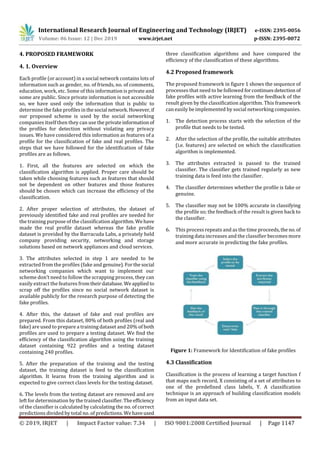
4.2 Proposed framework
The proposed framework in figure 1 shows the sequence of
processes that need to be followed forcontinuesdetection of
fake profiles with active learning from the feedback of the
result given by the classification algorithm. This framework
can easily be implemented by social networking companies.
1. The detection process starts with the selection of the
profile that needs to be tested.
2. After the selection of the profile, the suitable attributes
(i.e. features) are selected on which the classification
algorithm is implemented.
3. The attributes extracted is passed to the trained
classifier. The classifier gets trained regularly as new
training data is feed into the classifier.
4. The classifier determines whether the profile is fake or
genuine.
5. The classifier may not be 100% accurate in classifying
the profile so; the feedback of the result is given back to
the classifier.
6. This process repeats and as the time proceeds,the no.of
training data increases and the classifier becomes more
and more accurate in predicting the fake profiles.
Figure 1: Framework for Identification of fake profiles
4.3 Classification
Classification is the process of learning a target function f
that maps each record, X consisting of a set of attributes to
one of the predefined class labels, Y. A classification
technique is an approach of building classification models
from an input data set.
International Research Journal of Engineering and Technology (IRJET) e-ISSN: 2395-0056
Volume: 06 Issue: 12 | Dec 2019 www.irjet.net p-ISSN: 2395-0072
© 2019, IRJET | Impact Factor value: 7.34 | ISO 9001:2008 Certified Journal | Page 1148
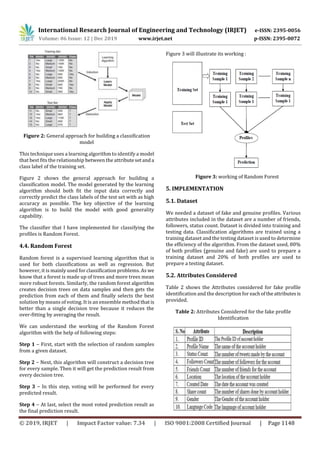
Figure 2: General approach for building a classification
model
This technique uses a learning algorithm to identify a model
that best fits the relationship between the attributesetanda
class label of the training set.
Figure 2 shows the general approach for building a
classification model. The model generated by the learning
algorithm should both fit the input data correctly and
correctly predict the class labels of the test set with as high
accuracy as possible. The key objective of the learning
algorithm is to build the model with good generality
capability.
The classifier that I have implemented for classifying the
profiles is Random Forest.
4.4. Random Forest
Random forest is a supervised learning algorithm that is
used for both classifications as well as regression. But
however, it is mainly used for classification problems. As we
know that a forest is made up of trees and more trees mean
more robust forests. Similarly, the random forest algorithm
creates decision trees on data samples and then gets the
prediction from each of them and finally selects the best
solution by means of voting. It is an ensemble method that is
better than a single decision tree because it reduces the
over-fitting by averaging the result.
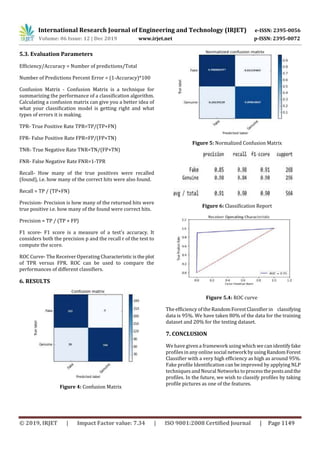
We can understand the working of the Random Forest
algorithm with the help of following steps:
Step 1 − First, start with the selection of random samples
from a given dataset.
Step 2 − Next, this algorithm will construct a decision tree
for every sample. Then it will get the prediction result from
every decision tree.
Step 3 − In this step, voting will be performed for every
predicted result.
Step 4 − At last, select the most voted prediction result as
the final prediction result.
Figure 3 will illustrate its working :
Figure 3: working of Random Forest
5. IMPLEMENTATION
5.1. Dataset
We needed a dataset of fake and genuine profiles. Various
attributes included in the dataset are a number of friends,
followers, status count. Dataset is divided into training and
testing data. Classification algorithms are trained using a
training dataset and the testing dataset is used to determine
the efficiency of the algorithm. From the dataset used, 80%
of both profiles (genuine and fake) are used to prepare a
training dataset and 20% of both profiles are used to
prepare a testing dataset.
5.2. Attributes Considered
Table 2 shows the Attributes considered for fake profile
identification and the description for eachoftheattributesis
provided.
Table 2: Attributes Considered for the fake profile
Identification
International Research Journal of Engineering and Technology (IRJET) e-ISSN: 2395-0056
Volume: 06 Issue: 12 | Dec 2019 www.irjet.net p-ISSN: 2395-0072
© 2019, IRJET | Impact Factor value: 7.34 | ISO 9001:2008 Certified Journal | Page 1149
5.3. Evaluation Parameters
Efficiency/Accuracy = Number of predictions/Total
Number of Predictions Percent Error = (1-Accuracy)*100
Confusion Matrix - Confusion Matrix is a technique for
summarizing the performance of a classification algorithm.
Calculating a confusion matrix can give you a better idea of
what your classification model is getting right and what
types of errors it is making.
TPR- True Positive Rate TPR=TP/(TP+FN)
FPR- False Positive Rate FPR=FP/(FP+TN)
TNR- True Negative Rate TNR=TN/(FP+TN)
FNR- False Negative Rate FNR=1-TPR
Recall- How many of the true positives were recalled
(found), i.e. how many of the correct hits were also found.
Recall = TP / (TP+FN)
Precision- Precision is how many of the returned hits were
true positive i.e. how many of the found were correct hits.
Precision = TP / (TP + FP)
F1 score- F1 score is a measure of a test's accuracy. It
considers both the precision p and the recall r of the test to
compute the score.
ROC Curve- The Receiver Operating Characteristic isthe plot
of TPR versus FPR. ROC can be used to compare the
performances of different classifiers.
6. RESULTS
Figure 4: Confusion Matrix
Figure 5: Normalized Confusion Matrix
Figure 6: Classification Report
Figure 5.4: ROC curve
The efficiency of the RandomForestClassifier in classifying
data is 95%. We have taken 80% of the data for the training
dataset and 20% for the testing dataset.
7. CONCLUSION
We have given a framework using which wecan identifyfake
profiles in any online social network byusingRandomForest
Classifier with a very high efficiency as high as around 95%.
Fake profile Identification can be improved by applying NLP
techniques and Neural Networks toprocessthepostsandthe
profiles. In the future, we wish to classify profiles by taking
profile pictures as one of the features.
International Research Journal of Engineering and Technology (IRJET) e-ISSN: 2395-0056
Volume: 06 Issue: 12 | Dec 2019 www.irjet.net p-ISSN: 2395-0072
© 2019, IRJET | Impact Factor value: 7.34 | ISO 9001:2008 Certified Journal | Page 1150
ACKNOWLEDGEMENT
I am gratefultonumerouspeoplewhohavecontributedto
shaping this research paper. At the outset, I would like to
express my sincere thanks to Professor Dr. A. Nagesh for his
advice during my research paperwork. As my supervisor, he
has constantly encouraged me to remain focused on
achieving my goal. I sincerely thank everyone who has
provided us with new ideas, constructive criticism, and their
invaluable time. Last but not least; I would like to thank all
my colleagues and friends for their help and cooperation.
REFERENCES
[1] Nazir, Atif, Saqib Raza, Chen-Nee Chuah, Burkhard
Schipper, and C. A. Davis. “Ghostbusting Facebook:
Detecting and Characterizing Phantom Profiles in
Online Social Gaming Applications.”In WOSN.2010.
[2] Adikari, Shalinda, and Kaushik Dutta. “Identifying
Fake Profiles in LinkedIn.” In PACIS, p. 278. 2014.
[3] Chu, Zi, Steven Gianvecchio, Haining Wang, and
Sushil Jajodia. “Who is tweeting on Twitter: human,
bot, or cyborg?.” In Proceedings of the 26th annual
computer security applications conference, pp. 21-
30. ACM, 2010.
[4] Stringhini, Gianluca, Gang Wang, Manuel Egele,
Christopher Kruegel, Giovanni Vigna, Haitao Zheng,
and Ben Y. Zhao. “Follow the green: growth and
dynamics in twitter follower markets.” In
Proceedings of the 2013 conference on Internet
measurement conference, pp. 163-176. ACM,2013.
[5] Thomas, Kurt, Damon McCoy, ChrisGrier,Alek Kolcz,
and Vern Paxson. “Trafficking FraudulentAccounts:
The Role of the Underground Market in Twitter
Spam and Abuse.” In Presented as part of the 22nd
{USENIX} Security Symposium ({USENIX} Security
13), pp. 195-210. 2013.
[6] Farooqi, Gohar Irfan, Emiliano De Cristofaro, Arik
Friedman, Guillaume Jourjon, Mohamed Ali Kaafar,
M. Zubair Shafiq, and Fareed Zaffar. “Characterizing
Seller-Driven Black-Hat Marketplaces.” arXiv
preprint arXiv: 1505.01637 (2015).
[7] Viswanath, Bimal, M. Ahmad Bashir, Mark Crovella,
Saikat Guha, Krishna P. Gummadi, Balachander
Krishnamurthy, and Alan Mislove. “Towards
detecting anomalous user behavior in online social
networks.” In 23rd {USENIX} Security Symposium
({USENIX} Security 14), pp. 223-238. 2014.
BIOGRAPHY
Samala Durga Prasad Reddy
Currently pursuing a Bachelor of
Technology in Computer Science and
Engineering from Mahatma Gandhi
Institute of Technology, Hyderabad,
Telangana, India.

IRJET- Fake Profile Identification using Machine Learning

  • 1.
    International Research Journalof Engineering and Technology (IRJET) e-ISSN: 2395-0056 Volume: 06 Issue: 12 | Dec 2019 www.irjet.net p-ISSN: 2395-0072 © 2019, IRJET | Impact Factor value: 7.34 | ISO 9001:2008 Certified Journal | Page 1145 Fake Profile Identification using Machine Learning Samala Durga Prasad Reddy Mahatma Gandhi Institute of Technology, Computer Science and Engineering, Hyderabad, Telangana, India ---------------------------------------------------------------------***---------------------------------------------------------------------- Abstract - In the present generation, the social life of everyone has become associated with online social networks. These sites have made a drastic change in the way we pursue our social life. Making friends and keeping in contact with them and their updates has become easier. But with their rapid growth, many problems like fake profiles, online impersonation have also grown. There are no feasible solutions exist to control these problems. In this paper, I came up with a framework with which the automatic identification of fake profiles is possible and is efficient. This framework uses classification techniques like Random Forest Classifier to classify the profiles into fake or genuine classes. As this is an automatic detection method, it can be applied easily by online social networks that have millions of profiles whose profiles cannot be examined manually. Key Words: Social Media, Facebook, Random Forest Classifier, Classification, Framework, and Dataset. 1. INTRODUCTION Social networking site is a website where each user has a profile and can keep in contact with friends, share their updates, meet new people who have the same interests. These Online Social Networks (OSN) use web2.0technology, which allows users to interact with each other. Social networking sites are growing rapidly and changing the way people keep in contact with each other. The online communities bring people with the same interests together which makes users easier to make new friends. 1.1. History These social networking sites starting with http://www.sixdegrees.com in 1997 then came http://www.makeoutclub.com in 2000. Sixdegrees.com couldn’t survive much and closed very soon but new sites like myspace, LinkedIn, Bebo became successful and Facebook was launched in 2004 and presently it is the largest social networking site in the world. 1.2. Social Impact In the present generation, the social life of everyone has become associated with online social networks. These sites have made a drastic change in the way we pursue our social life. Adding new friends and keeping in contact with them and their updates has become easier. Onlinesocial networks have an impact on science, education, grassrootsorganizing, employment, business, etc. Researchers have been studying these online social networks to see the impact they make on the people. Teachers can teach the students easily through this making a friendly environmentforthestudentstostudy, teachers nowadays teachers are getting themselves familiar with these sites bringing online classroom pages, giving homework, making discussions, etc. which improves education a lot. The employers can use these social networking sites to employ the people who are talented and interested in the work, their background check can be done easily using this. Most of the OSN is free but some charge the membership fee and uses this for business purposes andthe rest of them raise money by using the advertising. This can be used by the government to get the opinions of the public quickly. The examples of these social networking sites are sixdegrees.com, The Sphere, Nexopia which is used in Canada, Bebo, Hi5, Facebook, MySpace, Twitter, LinkedIn, Google+, Orkut, Tuenti used in Spain, Nasza-Klasa in Poland, Cyworld mostly used in Asia, etc. are some of the popular social networking sites. 2. Objective In today’s online social networks there have been a lot of problems like fake profiles, online impersonation, etc. To date, no one has come up with a feasible solution to these problems. In this project, I intend to give a framework with which the automatic detection offakeprofilescanbedone so that the social life of people become secured and by using this automatic detection technique we can make it easierfor the sites to manage the huge number of profiles, which can’t be done manually. 3. LITERATURE SURVEY Various fake record recognition methodologies depend on the investigation of individual interpersonal organization profiles, with the point of distinguishing the qualities or a combination thereof that help in recognizing the legitimate and the fake records. In particular, various features are extracted from the profiles and posts, and afterthatMachine learning algorithms are used so as to construct a classifier equipped for recognizing fake records. For instance, Nazir et al. (2010) [1] describes recognizing and describing phantom profiles in online social gaming applications. The article analysesa Facebook application,the online game “Fighters club”, known to provide incentives and gaming advantage to those users who invite their peers into the game. The authors contend that by giving such impetuses the game motivates its players to make fake profiles. By presenting those fake profiles into the game, the
  • 2.
    International Research Journalof Engineering and Technology (IRJET) e-ISSN: 2395-0056 Volume: 06 Issue: 12 | Dec 2019 www.irjet.net p-ISSN: 2395-0072 © 2019, IRJET | Impact Factor value: 7.34 | ISO 9001:2008 Certified Journal | Page 1146 user would increase a motivating force of an incentive for him/herself. Adikari and Dutta (2014) [2] depict recognizable proof of fake profiles on LinkedIn. The paper demonstrates that fake profiles can be recognized with 84% exactness and 2.44% false negative, utilizing constrained profile information as input. Techniques, for example, neural networks, SVMs, and Principal component analysis are applied. Among others, highlights, for example, the number of languages spoken, training, abilities, suggestions, interests, and awards are utilized. Qualities of profiles, known to be fake, posted on uncommon sites are utilized as a ground truth. Chu et al. (2010) [3] go for separating Twitter accounts operated by humans, bots, or cyborgs (i.e., bots and people working in concert). As a part of the detection problem formulation, the Identification of spamming records is acknowledged with the assistance of an Orthogonal Sparse Bigram (OSB) text classifier that uses pairs of words as features. Stringhini et al. (2013) [4] analyze Twitter supporter markets. They describe the qualities of Twitter devotee advertises and group the clients of the business sectors. The authors argue that therearetwomajorkindsofaccountswho pursuethe“client”:fakeaccounts(“sybils”),andcompromised accounts, proprietors of which don’t presume that their followers rundown is expanding. Clientsofadherentmarkets might be famous people or legislators, meaning to give the appearance of having a bigger fan base, or might be cybercriminals, going for making their record look progressively authentic, so they can rapidly spread malware what’s more, spam. Thomas et al. (2013) [5] examine black market accounts utilized for distributing Twitter spam. De Cristofaro et al. (2014) [6] investigate Facebook like cultivates by conveying honeypot pages. Viswanath et al. (2014) [7] identify black market Facebook records based on the examination of anomalies in their like behavior. Farooqi et al. (2015) [6] explore two black hat online commercial centers, SEO Clerks and My Cheap Jobs. Fayazi et al. (2015) think about manipulation in the online review. Table 1: Profile-based methods for Identifying Social Media Accounts
  • 3.
    International Research Journalof Engineering and Technology (IRJET) e-ISSN: 2395-0056 Volume: 06 Issue: 12 | Dec 2019 www.irjet.net p-ISSN: 2395-0072 © 2019, IRJET | Impact Factor value: 7.34 | ISO 9001:2008 Certified Journal | Page 1147 4. PROPOSED FRAMEWORK 4. 1. Overview Each profile (or account) in a social network contains lots of information such as gender, no. of friends, no. of comments, education, work, etc. Some of this information is private and some are public. Since private information is not accessible so, we have used only the information that is public to determine the fake profilesinthesocial network.However,if our proposed scheme is used by the social networking companies itself then they can use the privateinformation of the profiles for detection without violating any privacy issues. We have considered this information as features of a profile for the classification of fake and real profiles. The steps that we have followed for the identification of fake profiles are as follows. 1. First, all the features are selected on which the classification algorithm is applied. Proper care should be taken while choosing features such as features that should not be dependent on other features and those features should be chosen which can increase the efficiency of the classification. 2. After proper selection of attributes, the dataset of previously identified fake and real profiles are needed for the training purpose of the classification algorithm. Wehave made the real profile dataset whereas the fake profile dataset is provided by the Barracuda Labs, a privately held company providing security, networking and storage solutions based on network appliances and cloud services. 3. The attributes selected in step 1 are needed to be extracted from the profiles (fake and genuine).Forthe social networking companies which want to implement our scheme don’t need to follow the scrapping process, they can easily extract the features fromtheirdatabase. Weapplied to scrap off the profiles since no social network dataset is available publicly for the research purpose of detecting the fake profiles. 4. After this, the dataset of fake and real profiles are prepared. From this dataset, 80% of both profiles (real and fake) are used to prepare a training dataset and 20% of both profiles are used to prepare a testing dataset. We find the efficiency of the classification algorithm using the training dataset containing 922 profiles and a testing dataset containing 240 profiles. 5. After the preparation of the training and the testing dataset, the training dataset is feed to the classification algorithm. It learns from the training algorithm and is expected to give correct class levels for the testing dataset. 6. The levels from the testing dataset are removed and are left for determination by the trained classifier.Theefficiency of the classifier is calculated by calculating the no. of correct predictions divided by total no. of predictions.Wehaveused three classification algorithms and have compared the efficiency of the classification of these algorithms. 4.2 Proposed framework The proposed framework in figure 1 shows the sequence of processes that need to be followed forcontinuesdetection of fake profiles with active learning from the feedback of the result given by the classification algorithm. This framework can easily be implemented by social networking companies. 1. The detection process starts with the selection of the profile that needs to be tested. 2. After the selection of the profile, the suitable attributes (i.e. features) are selected on which the classification algorithm is implemented. 3. The attributes extracted is passed to the trained classifier. The classifier gets trained regularly as new training data is feed into the classifier. 4. The classifier determines whether the profile is fake or genuine. 5. The classifier may not be 100% accurate in classifying the profile so; the feedback of the result is given back to the classifier. 6. This process repeats and as the time proceeds,the no.of training data increases and the classifier becomes more and more accurate in predicting the fake profiles. Figure 1: Framework for Identification of fake profiles 4.3 Classification Classification is the process of learning a target function f that maps each record, X consisting of a set of attributes to one of the predefined class labels, Y. A classification technique is an approach of building classification models from an input data set.
  • 4.
    International Research Journalof Engineering and Technology (IRJET) e-ISSN: 2395-0056 Volume: 06 Issue: 12 | Dec 2019 www.irjet.net p-ISSN: 2395-0072 © 2019, IRJET | Impact Factor value: 7.34 | ISO 9001:2008 Certified Journal | Page 1148 Figure 2: General approach for building a classification model This technique uses a learning algorithm to identify a model that best fits the relationship between the attributesetanda class label of the training set. Figure 2 shows the general approach for building a classification model. The model generated by the learning algorithm should both fit the input data correctly and correctly predict the class labels of the test set with as high accuracy as possible. The key objective of the learning algorithm is to build the model with good generality capability. The classifier that I have implemented for classifying the profiles is Random Forest. 4.4. Random Forest Random forest is a supervised learning algorithm that is used for both classifications as well as regression. But however, it is mainly used for classification problems. As we know that a forest is made up of trees and more trees mean more robust forests. Similarly, the random forest algorithm creates decision trees on data samples and then gets the prediction from each of them and finally selects the best solution by means of voting. It is an ensemble method that is better than a single decision tree because it reduces the over-fitting by averaging the result. We can understand the working of the Random Forest algorithm with the help of following steps: Step 1 − First, start with the selection of random samples from a given dataset. Step 2 − Next, this algorithm will construct a decision tree for every sample. Then it will get the prediction result from every decision tree. Step 3 − In this step, voting will be performed for every predicted result. Step 4 − At last, select the most voted prediction result as the final prediction result. Figure 3 will illustrate its working : Figure 3: working of Random Forest 5. IMPLEMENTATION 5.1. Dataset We needed a dataset of fake and genuine profiles. Various attributes included in the dataset are a number of friends, followers, status count. Dataset is divided into training and testing data. Classification algorithms are trained using a training dataset and the testing dataset is used to determine the efficiency of the algorithm. From the dataset used, 80% of both profiles (genuine and fake) are used to prepare a training dataset and 20% of both profiles are used to prepare a testing dataset. 5.2. Attributes Considered Table 2 shows the Attributes considered for fake profile identification and the description for eachoftheattributesis provided. Table 2: Attributes Considered for the fake profile Identification
  • 5.
    International Research Journalof Engineering and Technology (IRJET) e-ISSN: 2395-0056 Volume: 06 Issue: 12 | Dec 2019 www.irjet.net p-ISSN: 2395-0072 © 2019, IRJET | Impact Factor value: 7.34 | ISO 9001:2008 Certified Journal | Page 1149 5.3. Evaluation Parameters Efficiency/Accuracy = Number of predictions/Total Number of Predictions Percent Error = (1-Accuracy)*100 Confusion Matrix - Confusion Matrix is a technique for summarizing the performance of a classification algorithm. Calculating a confusion matrix can give you a better idea of what your classification model is getting right and what types of errors it is making. TPR- True Positive Rate TPR=TP/(TP+FN) FPR- False Positive Rate FPR=FP/(FP+TN) TNR- True Negative Rate TNR=TN/(FP+TN) FNR- False Negative Rate FNR=1-TPR Recall- How many of the true positives were recalled (found), i.e. how many of the correct hits were also found. Recall = TP / (TP+FN) Precision- Precision is how many of the returned hits were true positive i.e. how many of the found were correct hits. Precision = TP / (TP + FP) F1 score- F1 score is a measure of a test's accuracy. It considers both the precision p and the recall r of the test to compute the score. ROC Curve- The Receiver Operating Characteristic isthe plot of TPR versus FPR. ROC can be used to compare the performances of different classifiers. 6. RESULTS Figure 4: Confusion Matrix Figure 5: Normalized Confusion Matrix Figure 6: Classification Report Figure 5.4: ROC curve The efficiency of the RandomForestClassifier in classifying data is 95%. We have taken 80% of the data for the training dataset and 20% for the testing dataset. 7. CONCLUSION We have given a framework using which wecan identifyfake profiles in any online social network byusingRandomForest Classifier with a very high efficiency as high as around 95%. Fake profile Identification can be improved by applying NLP techniques and Neural Networks toprocessthepostsandthe profiles. In the future, we wish to classify profiles by taking profile pictures as one of the features.
  • 6.
    International Research Journalof Engineering and Technology (IRJET) e-ISSN: 2395-0056 Volume: 06 Issue: 12 | Dec 2019 www.irjet.net p-ISSN: 2395-0072 © 2019, IRJET | Impact Factor value: 7.34 | ISO 9001:2008 Certified Journal | Page 1150 ACKNOWLEDGEMENT I am gratefultonumerouspeoplewhohavecontributedto shaping this research paper. At the outset, I would like to express my sincere thanks to Professor Dr. A. Nagesh for his advice during my research paperwork. As my supervisor, he has constantly encouraged me to remain focused on achieving my goal. I sincerely thank everyone who has provided us with new ideas, constructive criticism, and their invaluable time. Last but not least; I would like to thank all my colleagues and friends for their help and cooperation. REFERENCES [1] Nazir, Atif, Saqib Raza, Chen-Nee Chuah, Burkhard Schipper, and C. A. Davis. “Ghostbusting Facebook: Detecting and Characterizing Phantom Profiles in Online Social Gaming Applications.”In WOSN.2010. [2] Adikari, Shalinda, and Kaushik Dutta. “Identifying Fake Profiles in LinkedIn.” In PACIS, p. 278. 2014. [3] Chu, Zi, Steven Gianvecchio, Haining Wang, and Sushil Jajodia. “Who is tweeting on Twitter: human, bot, or cyborg?.” In Proceedings of the 26th annual computer security applications conference, pp. 21- 30. ACM, 2010. [4] Stringhini, Gianluca, Gang Wang, Manuel Egele, Christopher Kruegel, Giovanni Vigna, Haitao Zheng, and Ben Y. Zhao. “Follow the green: growth and dynamics in twitter follower markets.” In Proceedings of the 2013 conference on Internet measurement conference, pp. 163-176. ACM,2013. [5] Thomas, Kurt, Damon McCoy, ChrisGrier,Alek Kolcz, and Vern Paxson. “Trafficking FraudulentAccounts: The Role of the Underground Market in Twitter Spam and Abuse.” In Presented as part of the 22nd {USENIX} Security Symposium ({USENIX} Security 13), pp. 195-210. 2013. [6] Farooqi, Gohar Irfan, Emiliano De Cristofaro, Arik Friedman, Guillaume Jourjon, Mohamed Ali Kaafar, M. Zubair Shafiq, and Fareed Zaffar. “Characterizing Seller-Driven Black-Hat Marketplaces.” arXiv preprint arXiv: 1505.01637 (2015). [7] Viswanath, Bimal, M. Ahmad Bashir, Mark Crovella, Saikat Guha, Krishna P. Gummadi, Balachander Krishnamurthy, and Alan Mislove. “Towards detecting anomalous user behavior in online social networks.” In 23rd {USENIX} Security Symposium ({USENIX} Security 14), pp. 223-238. 2014. BIOGRAPHY Samala Durga Prasad Reddy Currently pursuing a Bachelor of Technology in Computer Science and Engineering from Mahatma Gandhi Institute of Technology, Hyderabad, Telangana, India.