FAKE NEWS
DETECTION
Harshda Ghai, Suncity School
Pragya Singhal, The Shri Ram School Aravali
Ananya Grover, Amity International School, Noida
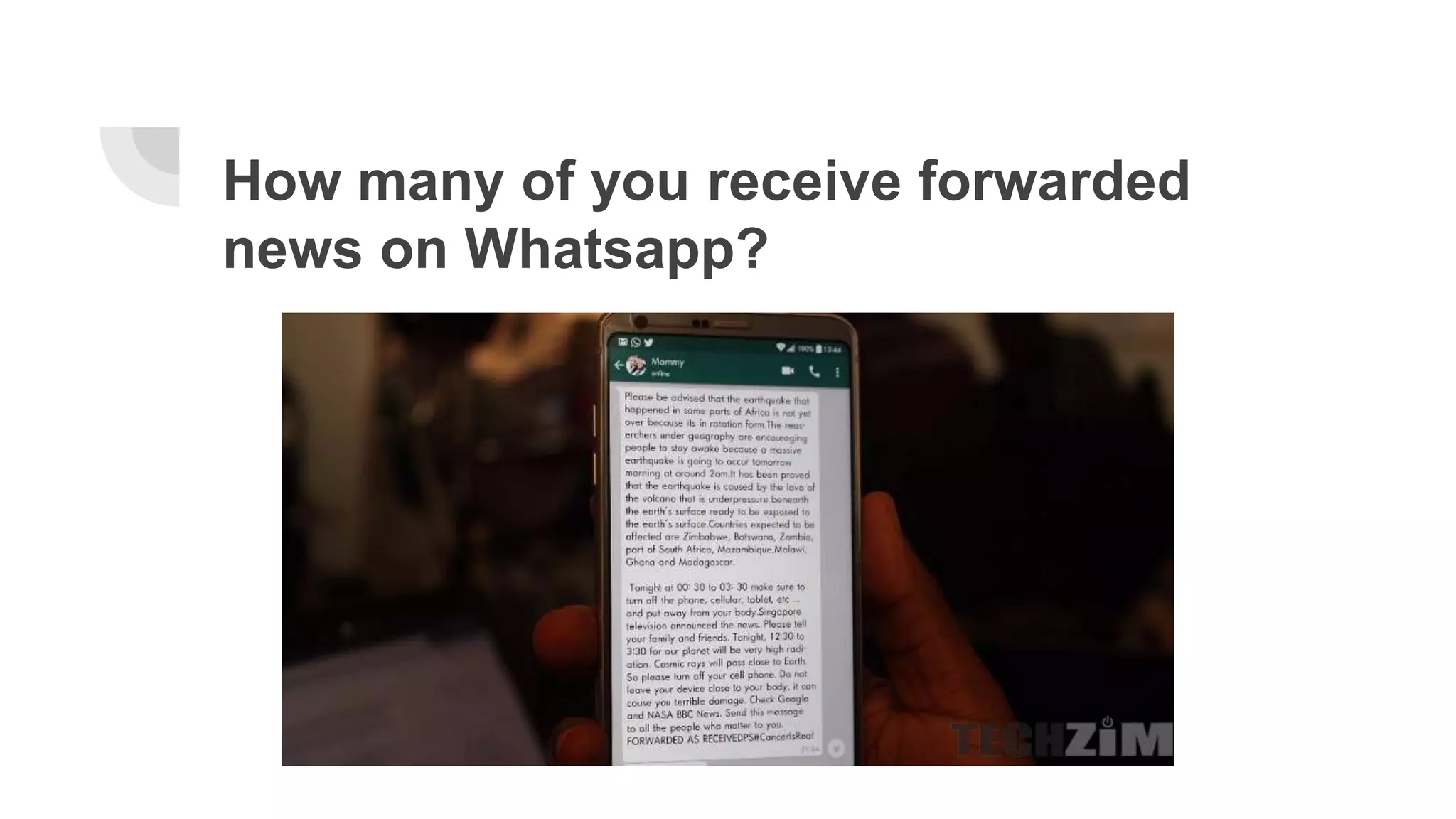
How many of you receive forwarded
news on Whatsapp?
How many of you verify each and every
piece of news you read before believing it?
Research shows that 1 in 2 Indians receives
fake news via Whatsapp and Facebook
As per a survey by Social Media Matters and Institute for Governance, Policies and Politics
SO WHY IS IDENTIFYING FAKE NEWS IMPORTANT?
Because when we don’t, we can be fooled or manipulated- into worsening existing stereotypes,
getting worried about fake disease epidemics, or even influencing whom we vote for.
How we set up our problem and data
● We input the domain names, HTML
codes, and labels (0- true, 1-fake) of
2002 news websites to train the model.
● Then we used 309 examples to test it.
The output were labels of either 0 or 1
i.e. real or fake.
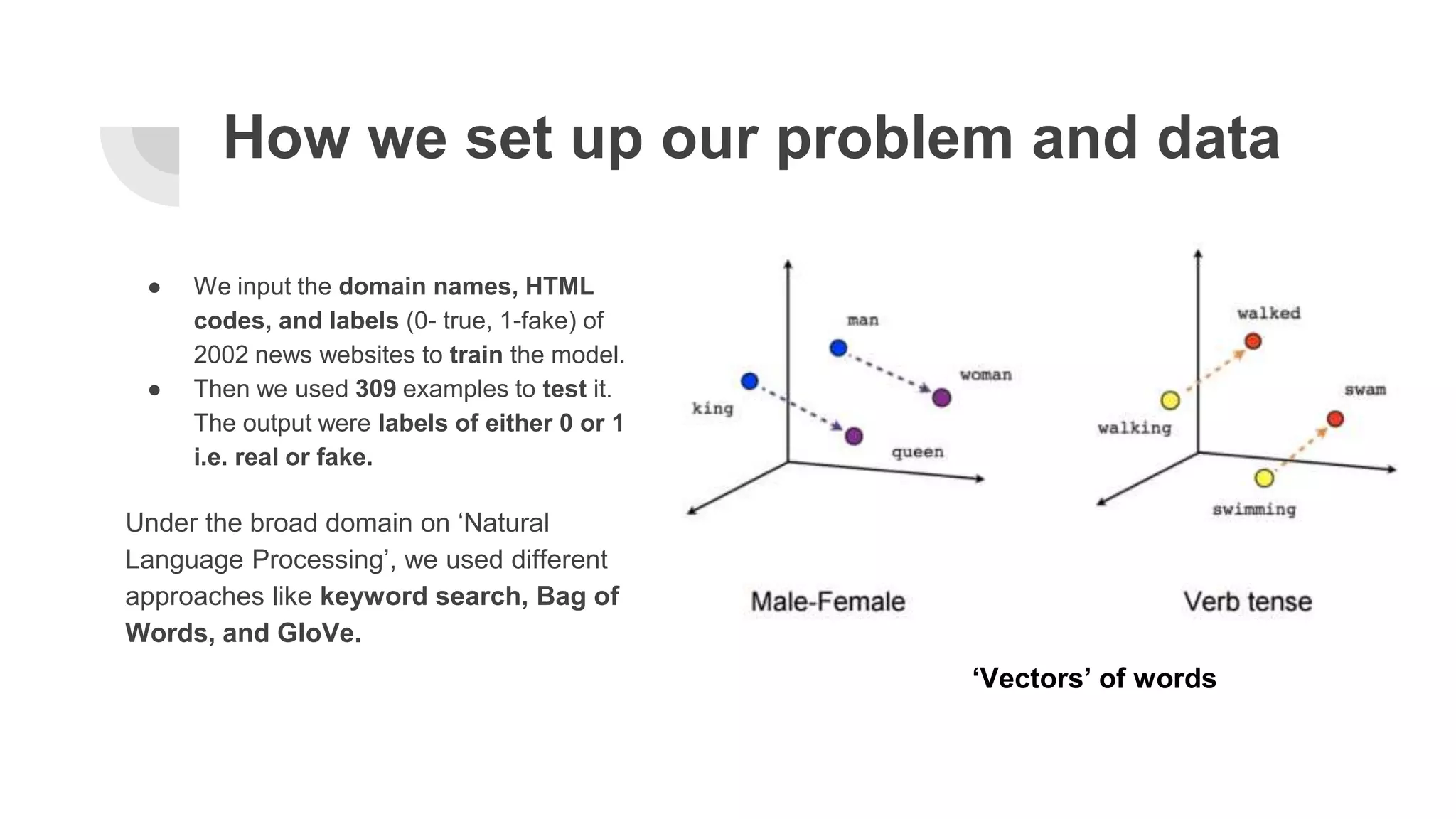
Under the broad domain on ‘Natural
Language Processing’, we used different
approaches like keyword search, Bag of
Words, and GloVe.
‘Vectors’ of words
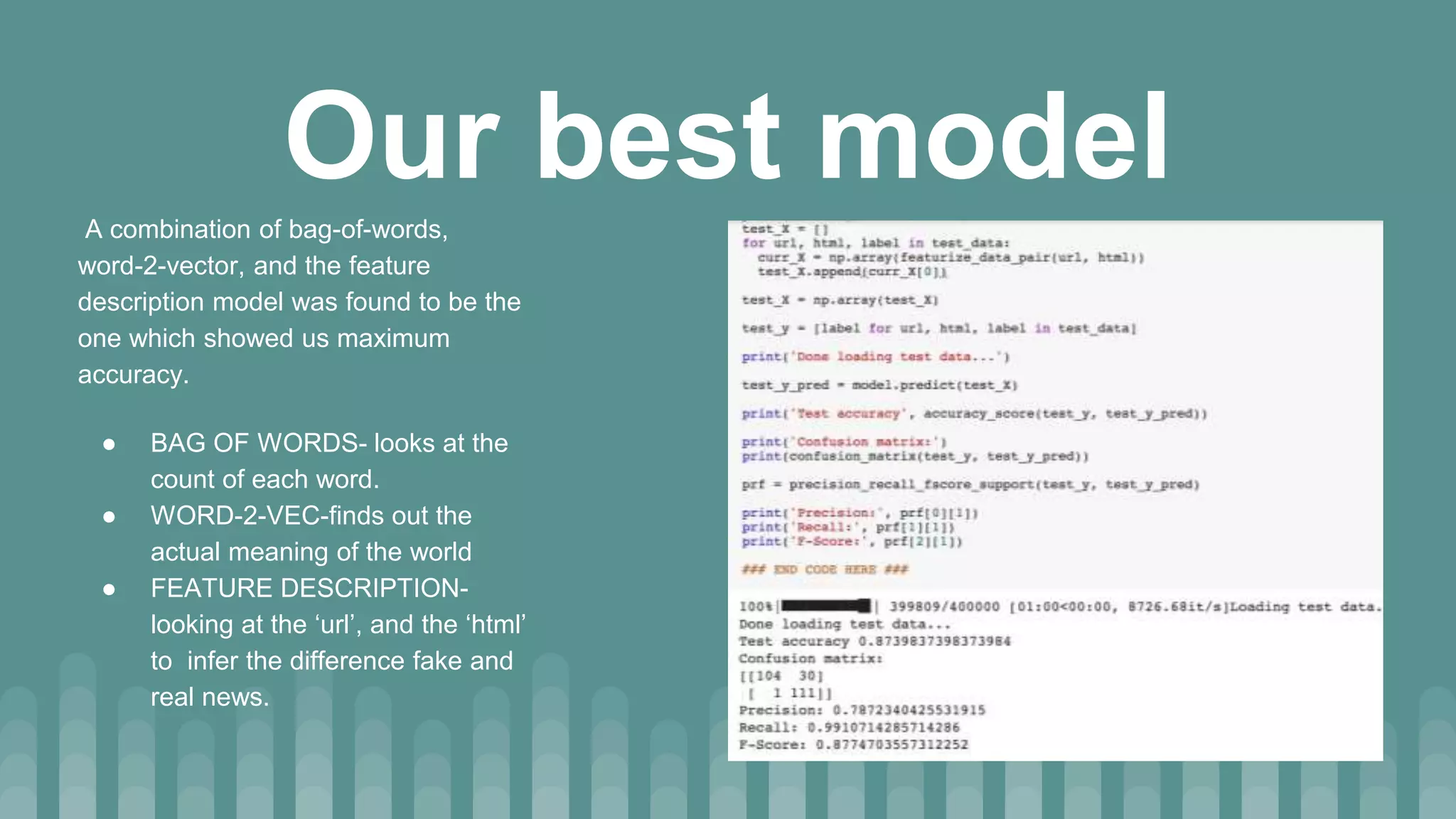
Our best modelA combination of bag-of-words,
word-2-vector, and the feature
description model was found to be the
one which showed us maximum
accuracy.
● BAG OF WORDS- looks at the
count of each word.
● WORD-2-VEC-finds out the
actual meaning of the world
● FEATURE DESCRIPTION-
looking at the ‘url’, and the ‘html’
to infer the difference fake and
real news.
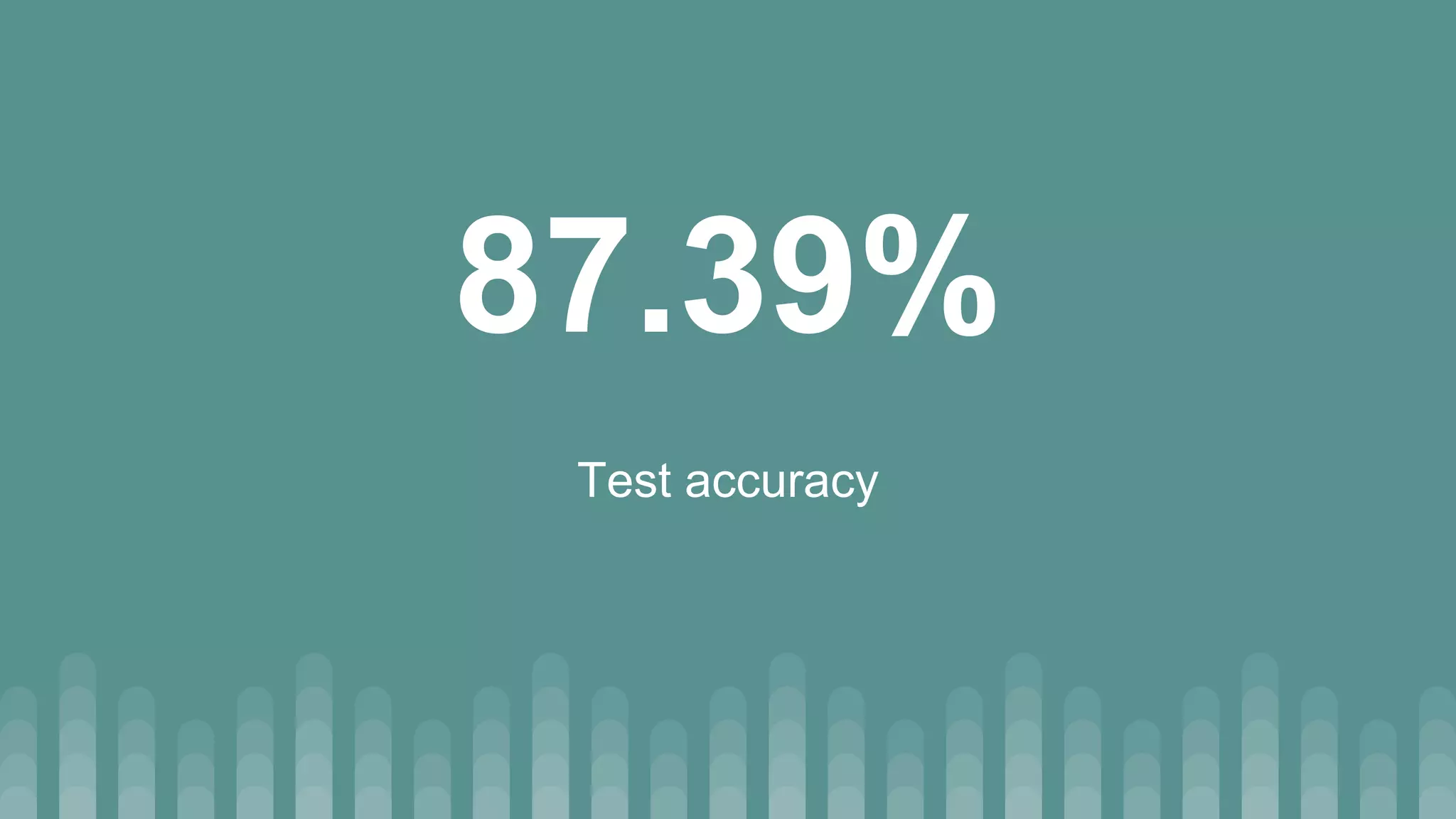
87.39%
Test accuracy
To improve:
● Instead of using only 16 features, we changed to using 616 features in our
word-2-vec model, which was one of the key factors for improving our
accuracy
● Using controversial words which were seen to appear more in fake news
than in real. Eg. bombing, terrorist, Trump
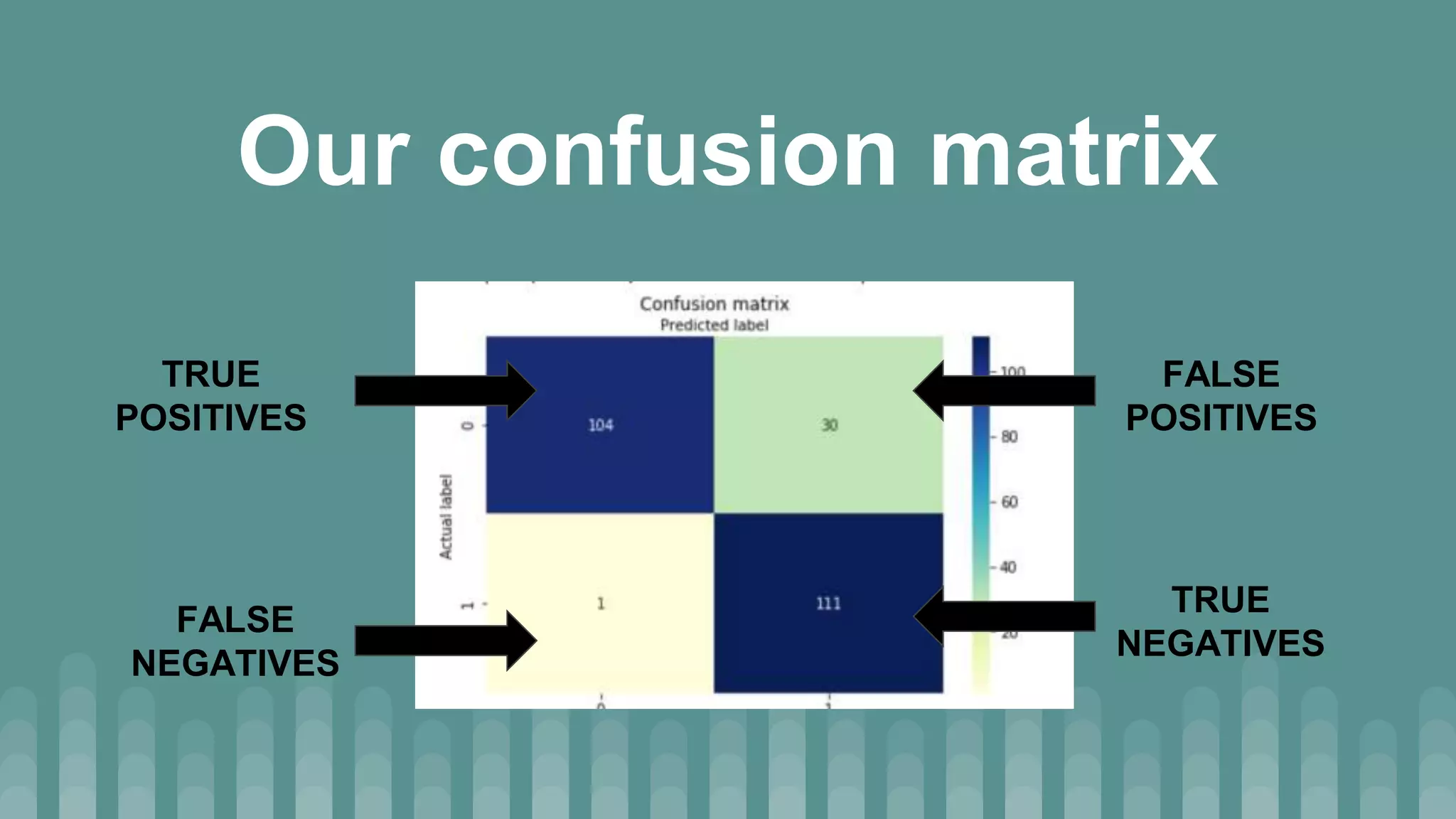
Our confusion matrix
TRUE
POSITIVES
TRUE
NEGATIVES
FALSE
POSITIVES
FALSE
NEGATIVES
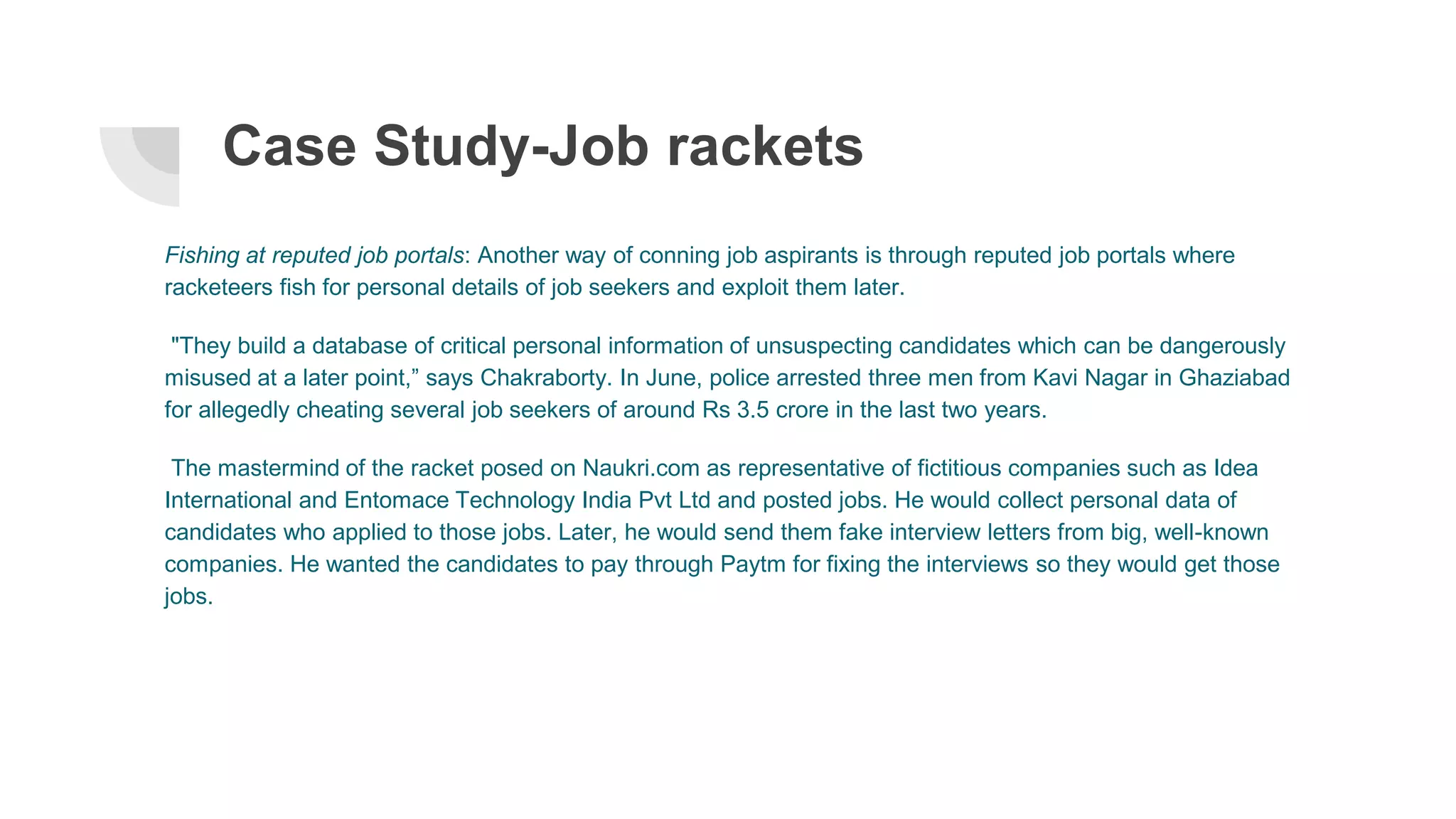
Real-World Applications
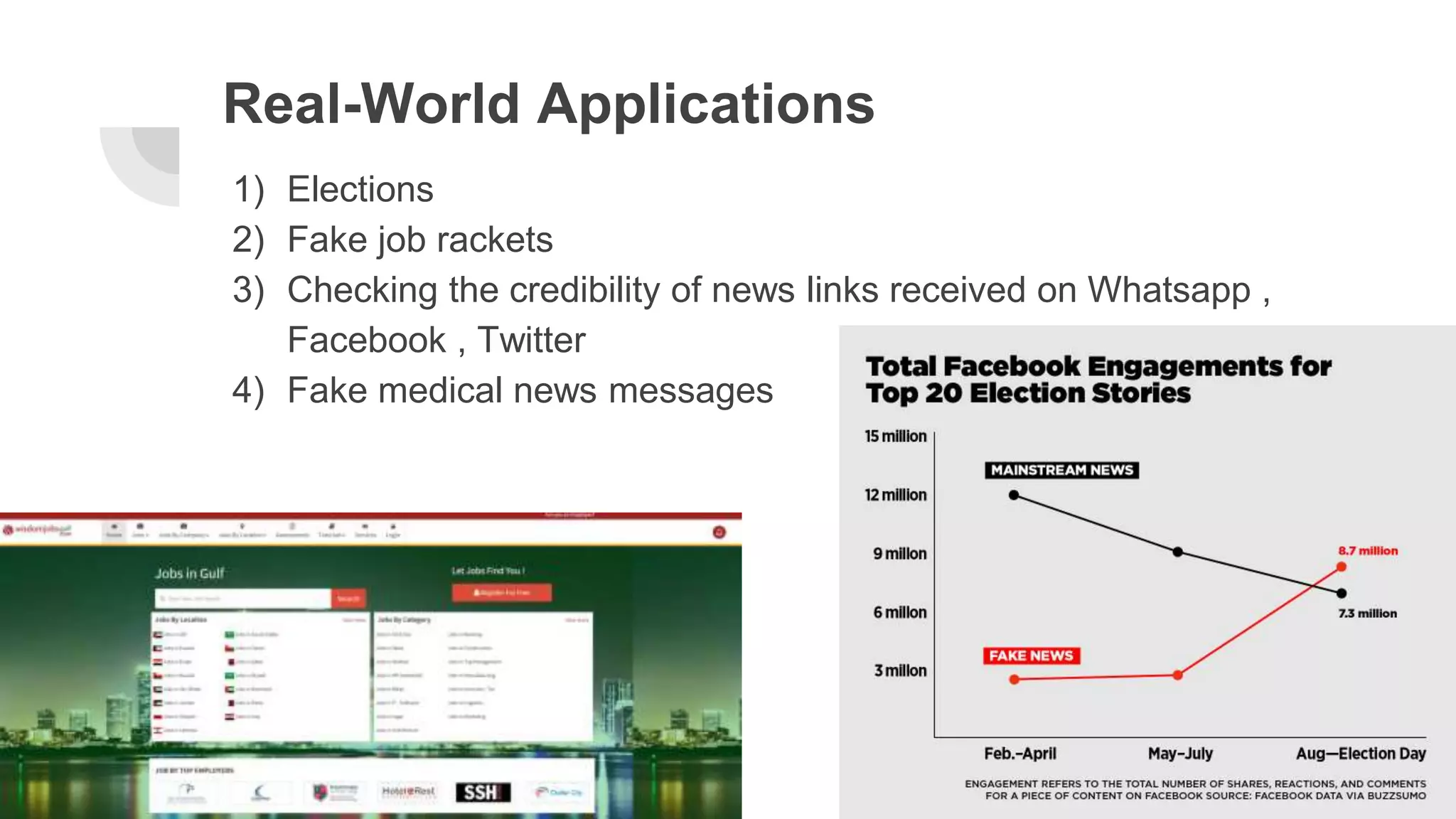
1) Elections
2) Fake job rackets
3) Checking the credibility of news links received on Whatsapp ,
Facebook , Twitter
4) Fake medical news messages
Case Study-Job rackets
Fishing at reputed job portals: Another way of conning job aspirants is through reputed job portals where
racketeers fish for personal details of job seekers and exploit them later.
"They build a database of critical personal information of unsuspecting candidates which can be dangerously
misused at a later point,” says Chakraborty. In June, police arrested three men from Kavi Nagar in Ghaziabad
for allegedly cheating several job seekers of around Rs 3.5 crore in the last two years.
The mastermind of the racket posed on Naukri.com as representative of fictitious companies such as Idea
International and Entomace Technology India Pvt Ltd and posted jobs. He would collect personal data of
candidates who applied to those jobs. Later, he would send them fake interview letters from big, well-known
companies. He wanted the candidates to pay through Paytm for fixing the interviews so they would get those
jobs.
Real-World Implementation
To implement this in real life, we can make a mobile app or a
Whatsapp-integrated feature.
Users would simply enter the link of a news website and be able to
verify whether a news website is true or fake.
In the future, our improved model could also consider individual
news stories and not just the news website as a whole.
Acknowledgements
Inspirit AI – Dehli Instructors:
Tyler Bonnen, B.S.
Sehj Kashyap, B.S.
Artem Trotsyuk, B.S.
Peter Washington, B.S., M.S.
Nisheeth Ranjan, B.S., M.S.
Debajyoti Datta, B.S., M.S.
The Shri Ram School, Aravali
Family and Friends
Thank you!

Fake news detection project

  • 1.
    FAKE NEWS DETECTION Harshda Ghai,Suncity School Pragya Singhal, The Shri Ram School Aravali Ananya Grover, Amity International School, Noida
  • 2.
    How many ofyou receive forwarded news on Whatsapp?
  • 3.
    How many ofyou verify each and every piece of news you read before believing it?
  • 4.
    Research shows that1 in 2 Indians receives fake news via Whatsapp and Facebook As per a survey by Social Media Matters and Institute for Governance, Policies and Politics SO WHY IS IDENTIFYING FAKE NEWS IMPORTANT? Because when we don’t, we can be fooled or manipulated- into worsening existing stereotypes, getting worried about fake disease epidemics, or even influencing whom we vote for.
  • 6.
    How we setup our problem and data ● We input the domain names, HTML codes, and labels (0- true, 1-fake) of 2002 news websites to train the model. ● Then we used 309 examples to test it. The output were labels of either 0 or 1 i.e. real or fake. Under the broad domain on ‘Natural Language Processing’, we used different approaches like keyword search, Bag of Words, and GloVe. ‘Vectors’ of words
  • 7.
    Our best modelAcombination of bag-of-words, word-2-vector, and the feature description model was found to be the one which showed us maximum accuracy. ● BAG OF WORDS- looks at the count of each word. ● WORD-2-VEC-finds out the actual meaning of the world ● FEATURE DESCRIPTION- looking at the ‘url’, and the ‘html’ to infer the difference fake and real news.
  • 8.
  • 9.
    To improve: ● Insteadof using only 16 features, we changed to using 616 features in our word-2-vec model, which was one of the key factors for improving our accuracy ● Using controversial words which were seen to appear more in fake news than in real. Eg. bombing, terrorist, Trump
  • 10.
  • 11.
    Real-World Applications 1) Elections 2)Fake job rackets 3) Checking the credibility of news links received on Whatsapp , Facebook , Twitter 4) Fake medical news messages
  • 12.
    Case Study-Job rackets Fishingat reputed job portals: Another way of conning job aspirants is through reputed job portals where racketeers fish for personal details of job seekers and exploit them later. "They build a database of critical personal information of unsuspecting candidates which can be dangerously misused at a later point,” says Chakraborty. In June, police arrested three men from Kavi Nagar in Ghaziabad for allegedly cheating several job seekers of around Rs 3.5 crore in the last two years. The mastermind of the racket posed on Naukri.com as representative of fictitious companies such as Idea International and Entomace Technology India Pvt Ltd and posted jobs. He would collect personal data of candidates who applied to those jobs. Later, he would send them fake interview letters from big, well-known companies. He wanted the candidates to pay through Paytm for fixing the interviews so they would get those jobs.
  • 13.
    Real-World Implementation To implementthis in real life, we can make a mobile app or a Whatsapp-integrated feature. Users would simply enter the link of a news website and be able to verify whether a news website is true or fake. In the future, our improved model could also consider individual news stories and not just the news website as a whole.
  • 14.
    Acknowledgements Inspirit AI –Dehli Instructors: Tyler Bonnen, B.S. Sehj Kashyap, B.S. Artem Trotsyuk, B.S. Peter Washington, B.S., M.S. Nisheeth Ranjan, B.S., M.S. Debajyoti Datta, B.S., M.S. The Shri Ram School, Aravali Family and Friends
  • 15.