IPv6 – Delegations,
Deployments and Trends
ION Islamabad
January 25, 2017
Pubudu Jayasinghe
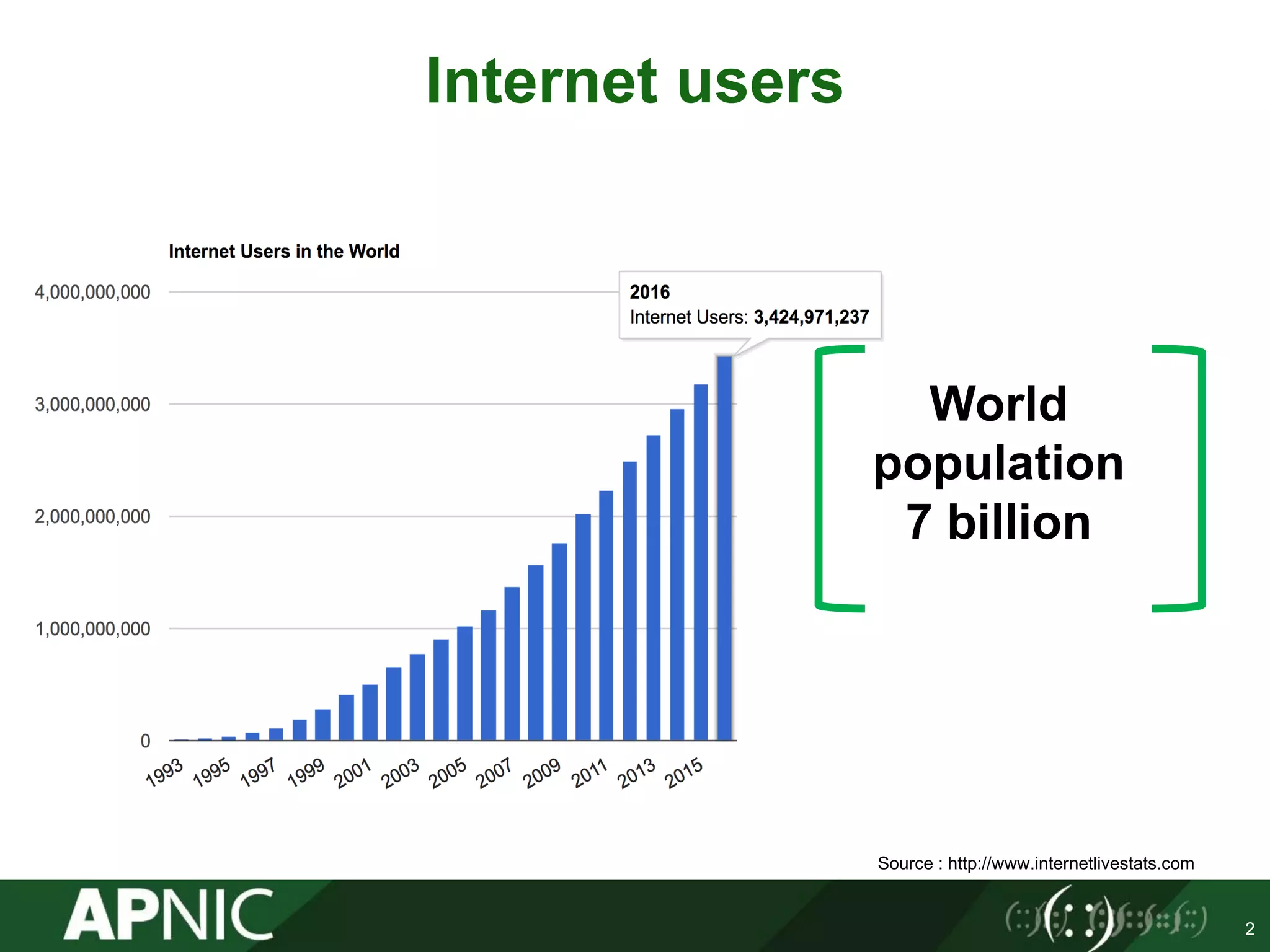
Internet users
2
Source : http://www.internetlivestats.com
World
population
7 billion
3
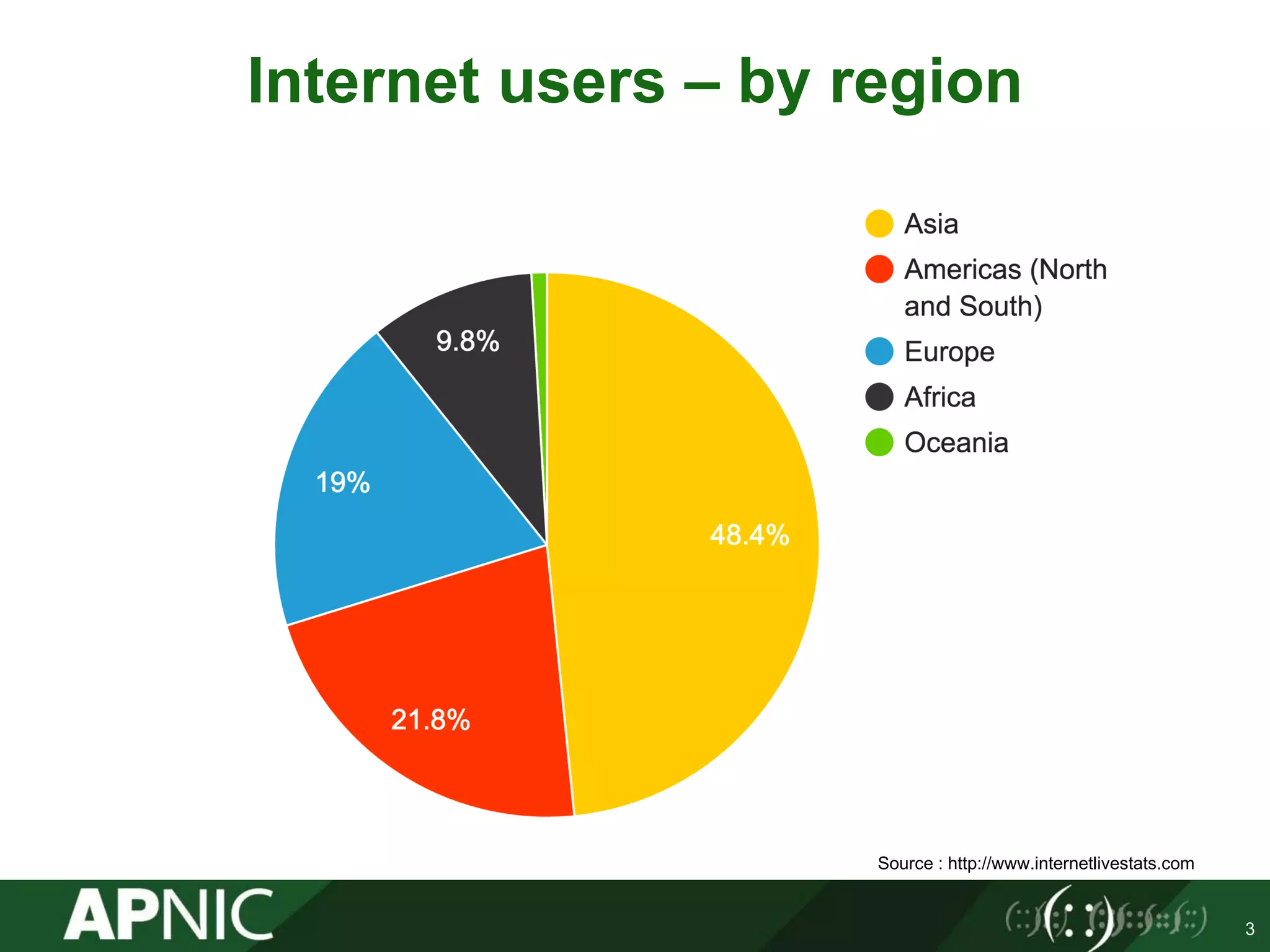
Source : http://www.internetlivestats.com
Internet users – by region
4
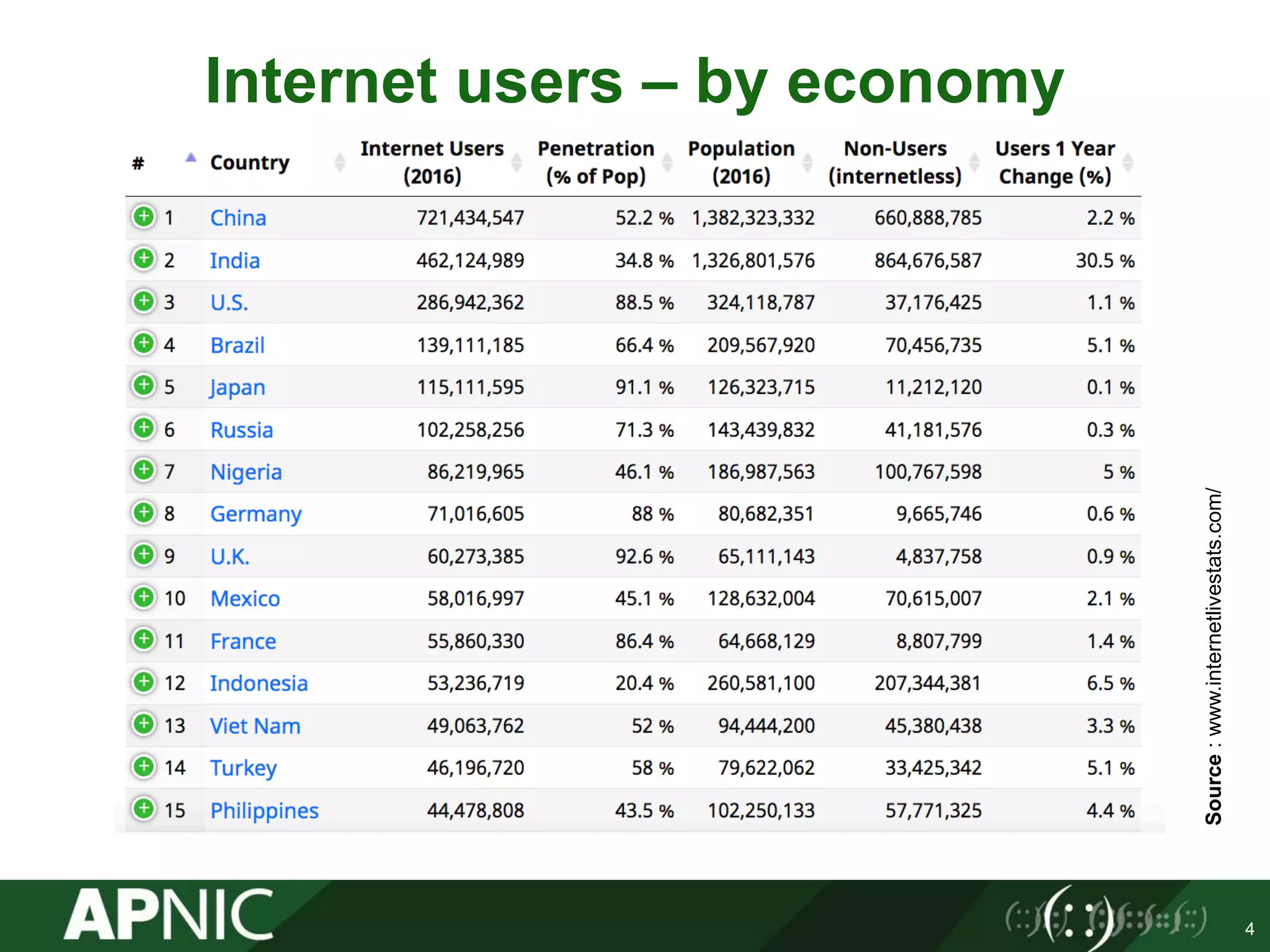
Internet users – by economy
Source:www.internetlivestats.com/
5
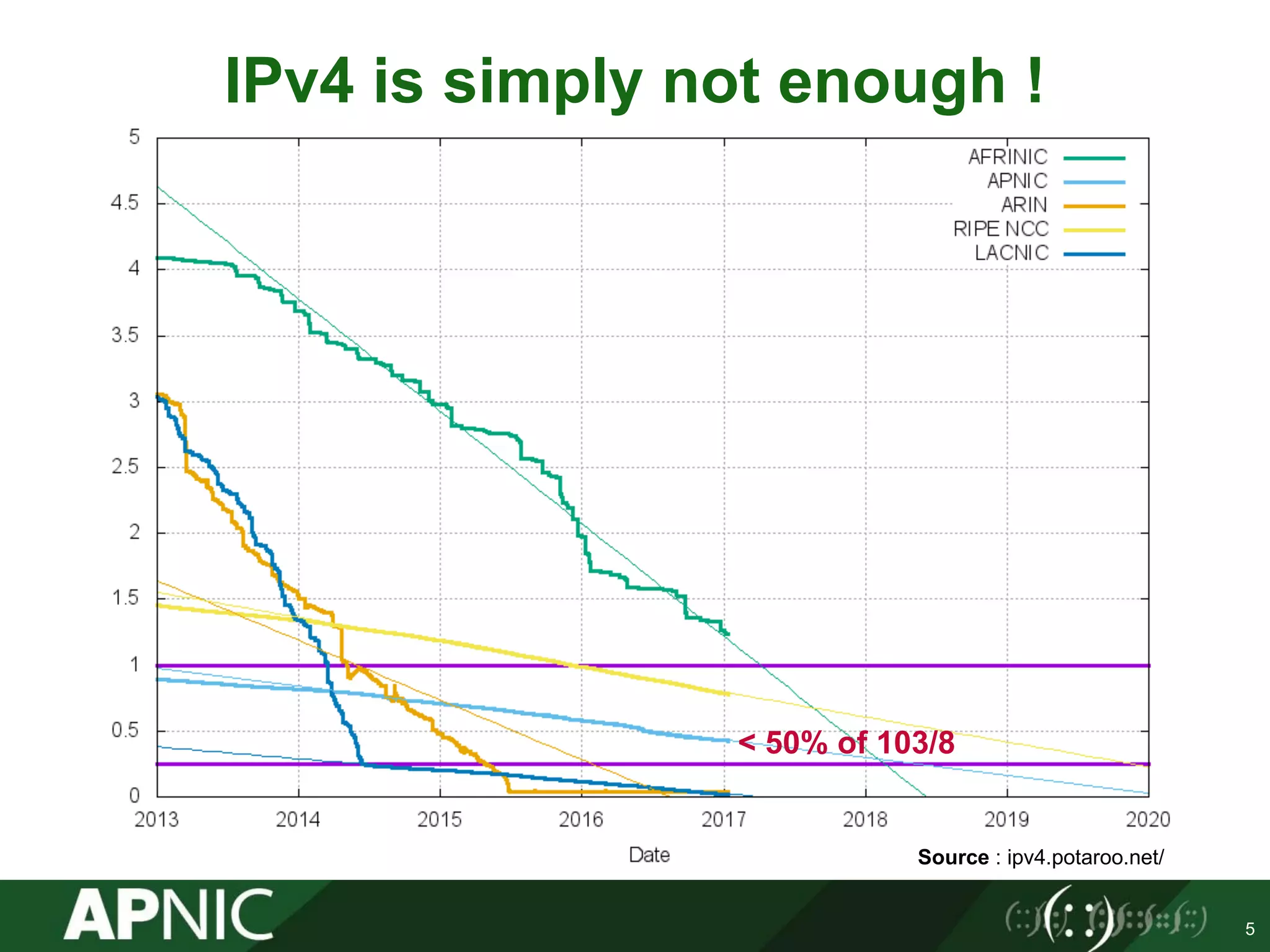
< 50% of 103/8
IPv4 is simply not enough !
Source : ipv4.potaroo.net/
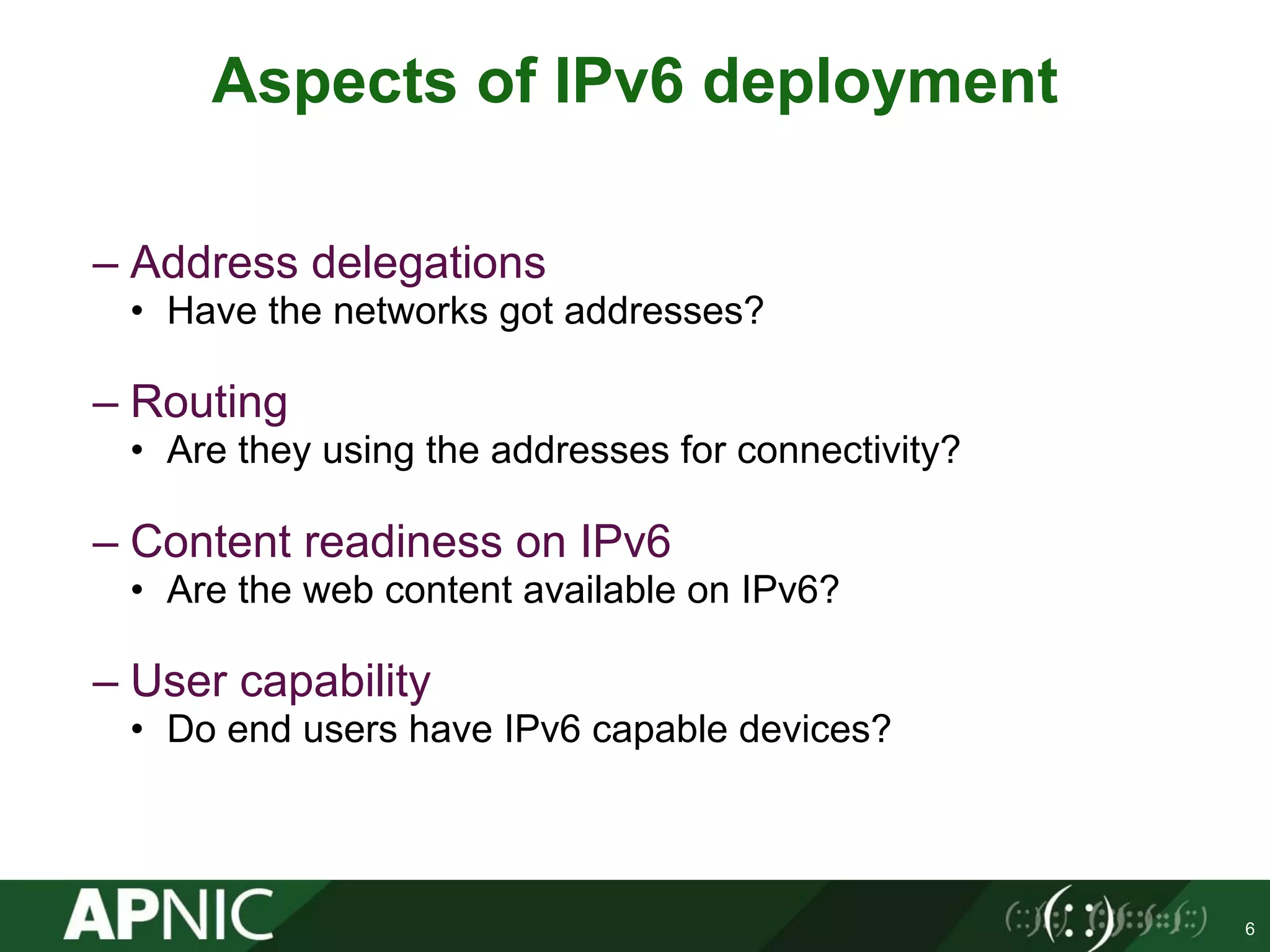
– Address delegations
• Have the networks got addresses?
– Routing
• Are they using the addresses for connectivity?
– Content readiness on IPv6
• Are the web content available on IPv6?
– User capability
• Do end users have IPv6 capable devices?
6
Aspects of IPv6 deployment
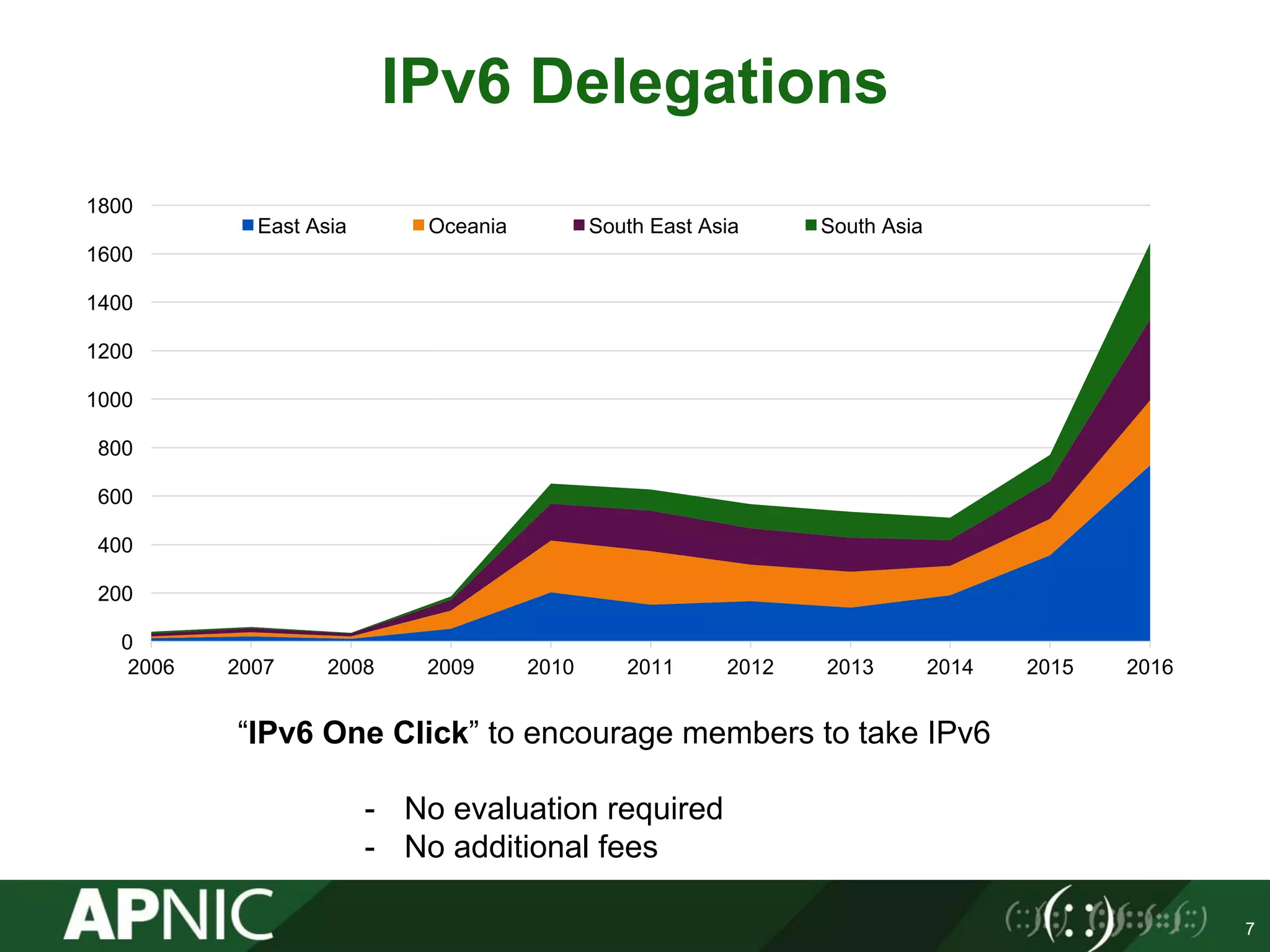
IPv6 Delegations
7
“IPv6 One Click” to encourage members to take IPv6
- No evaluation required
- No additional fees
0
200
400
600
800
1000
1200
1400
1600
1800
2006 2007 2008 2009 2010 2011 2012 2013 2014 2015 2016
East Asia Oceania South East Asia South Asia
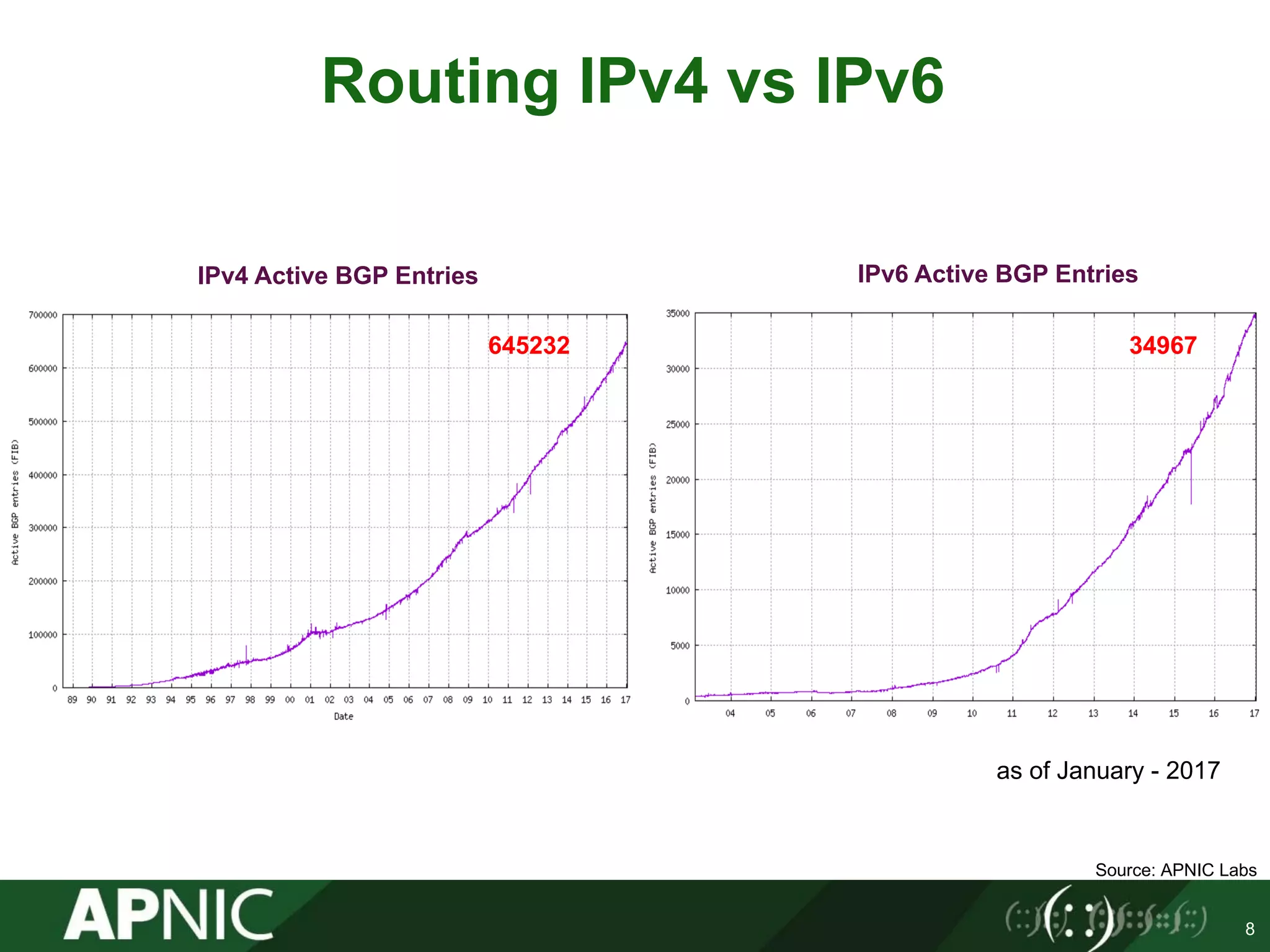
Routing IPv4 vs IPv6
8
Source: APNIC Labs
34967
IPv6 Active BGP Entries
645232
IPv4 Active BGP Entries
as of January - 2017
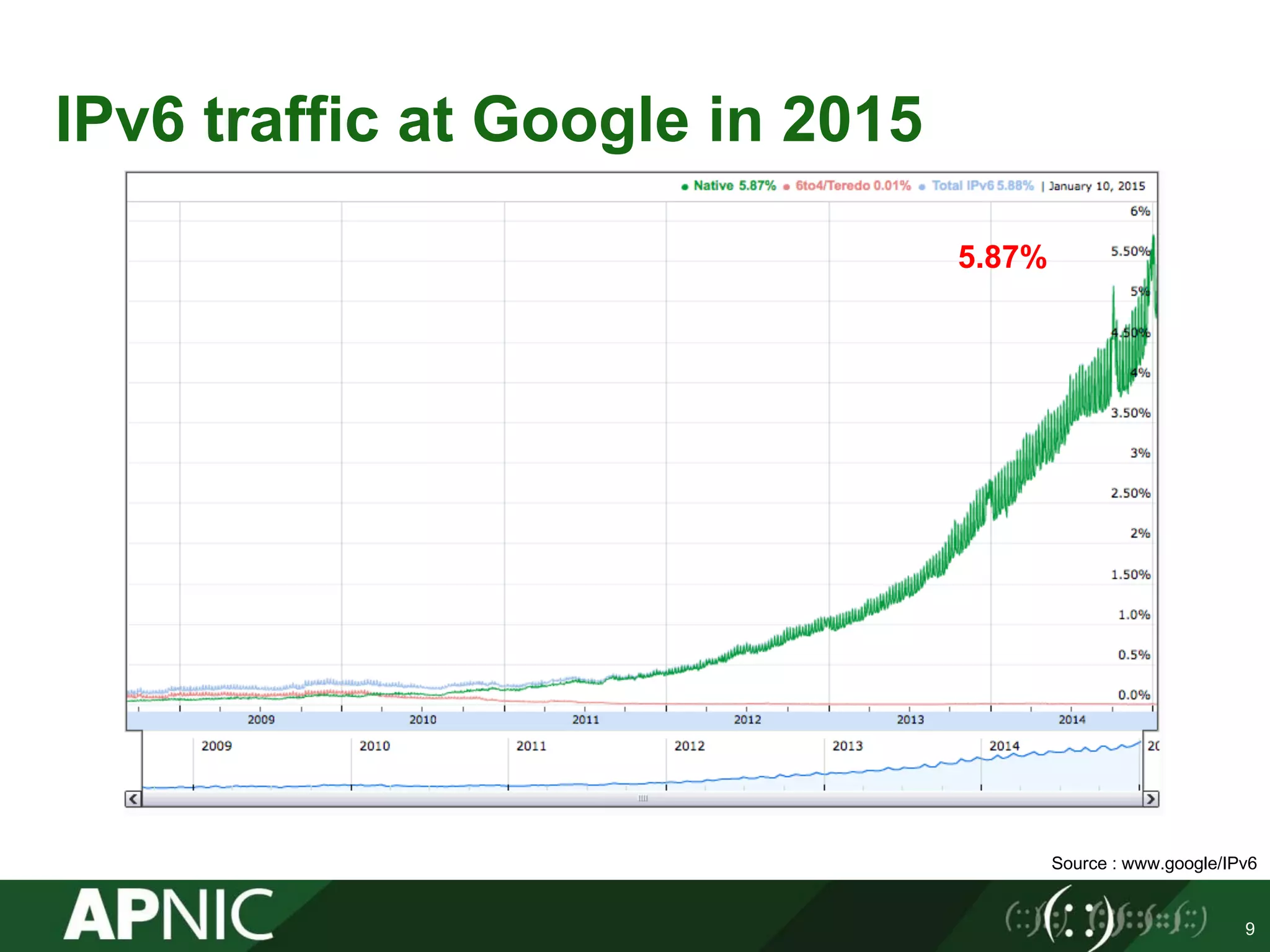
IPv6 traffic at Google in 2015
9
Source : www.google/IPv6
5.87%
10
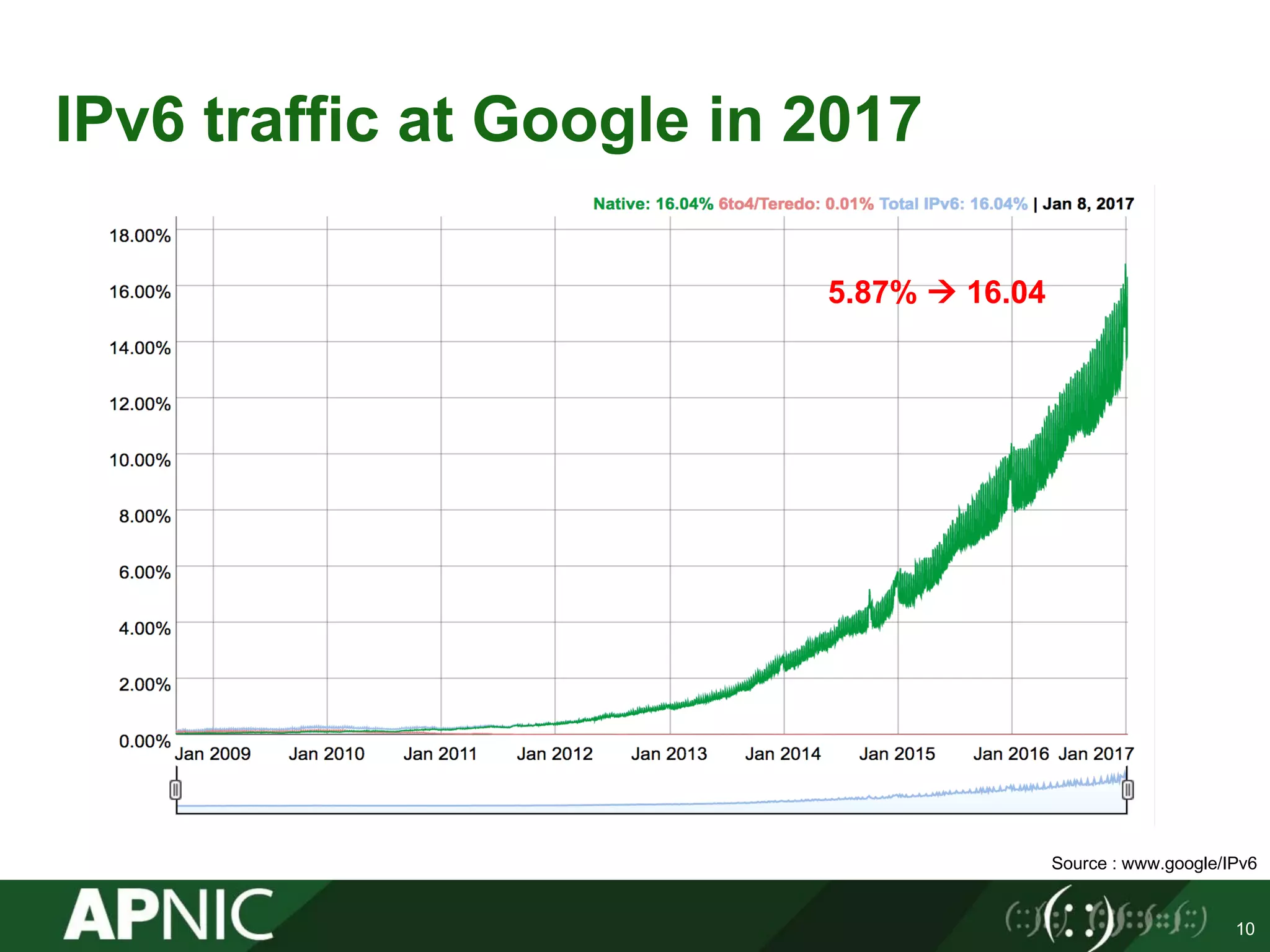
IPv6 traffic at Google in 2017
5.87% à 16.04
Source : www.google/IPv6
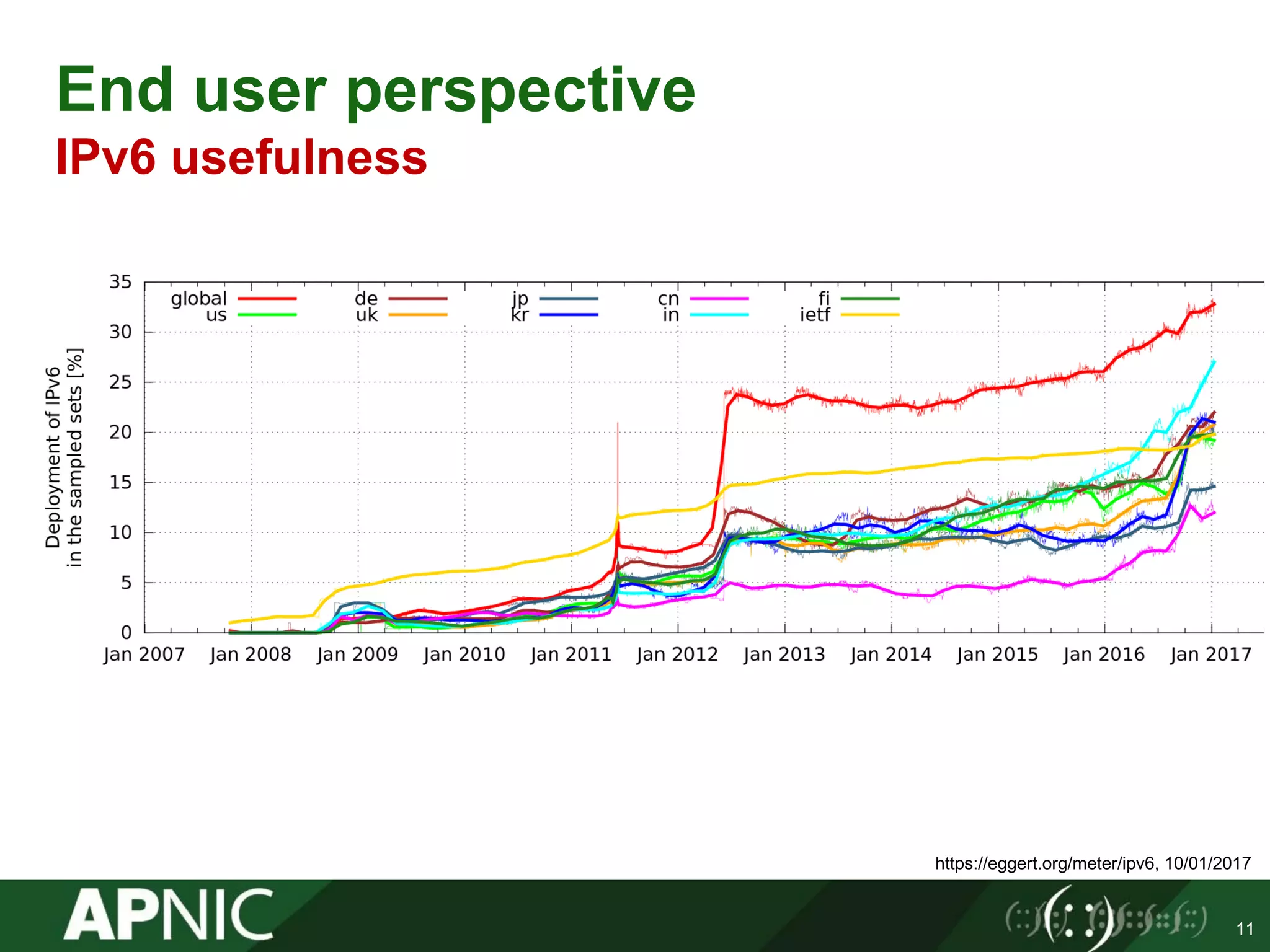
End user perspective
IPv6 usefulness
11
https://eggert.org/meter/ipv6, 10/01/2017
IPv6 @ APNIC Labs
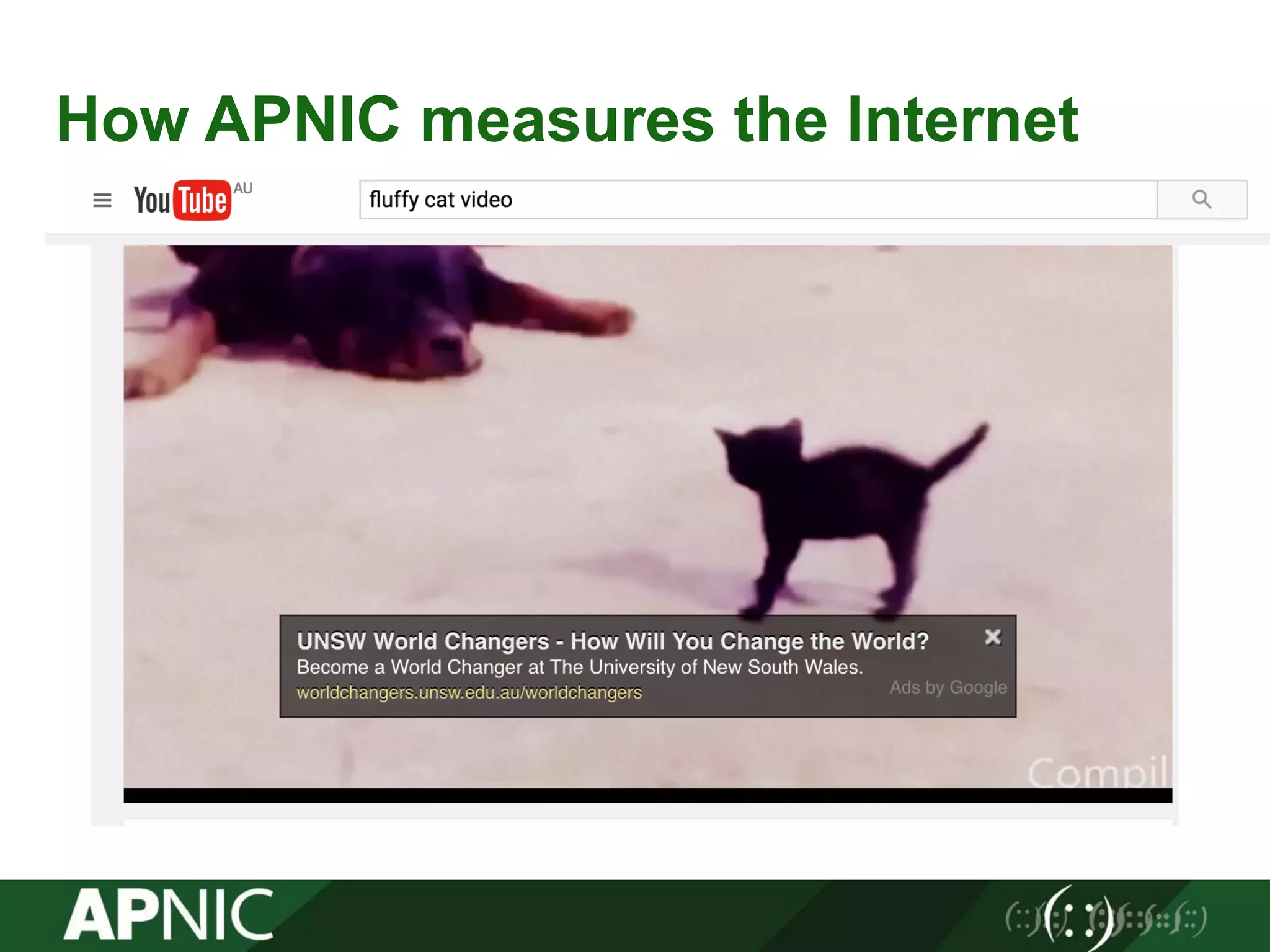
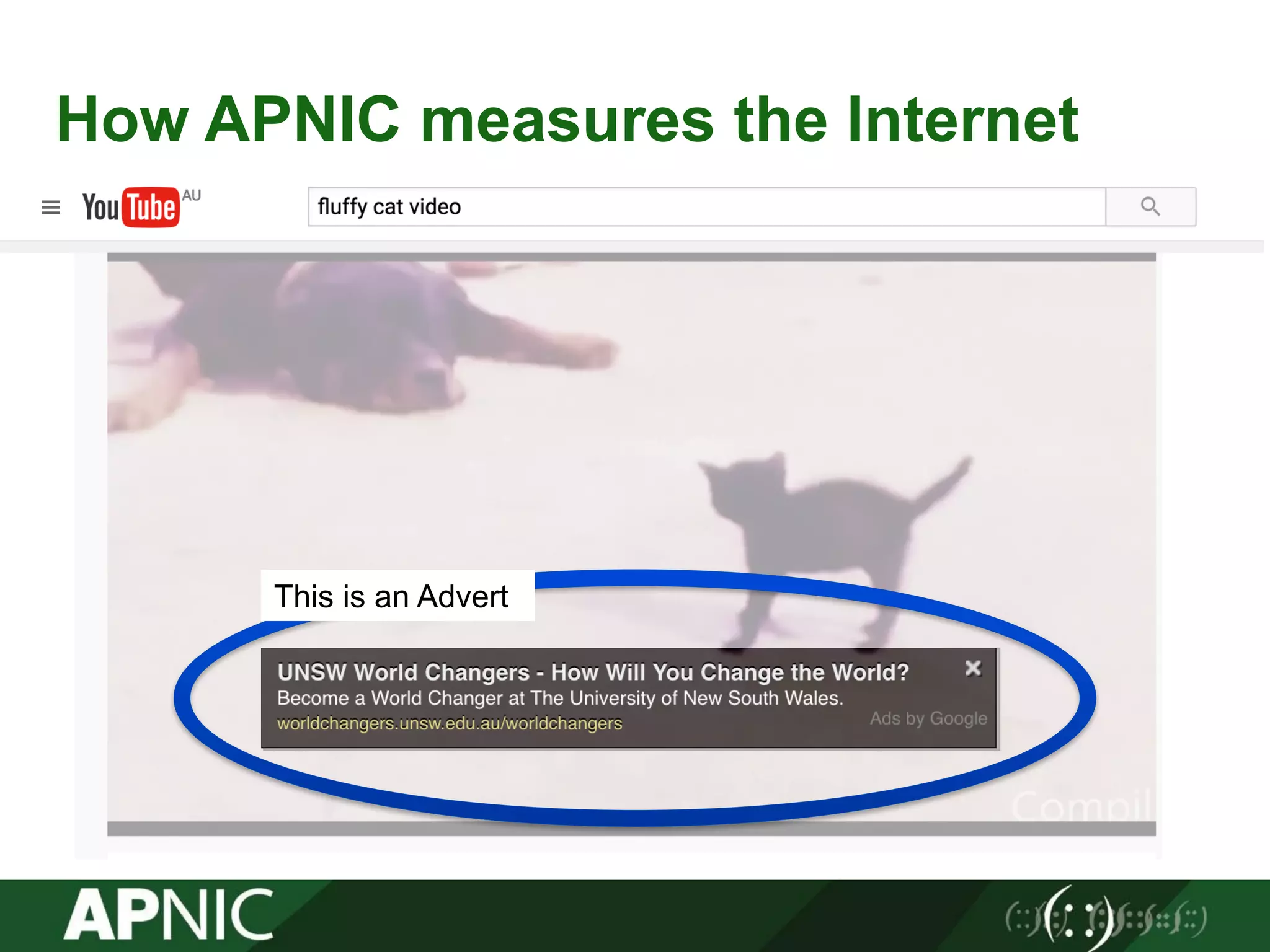
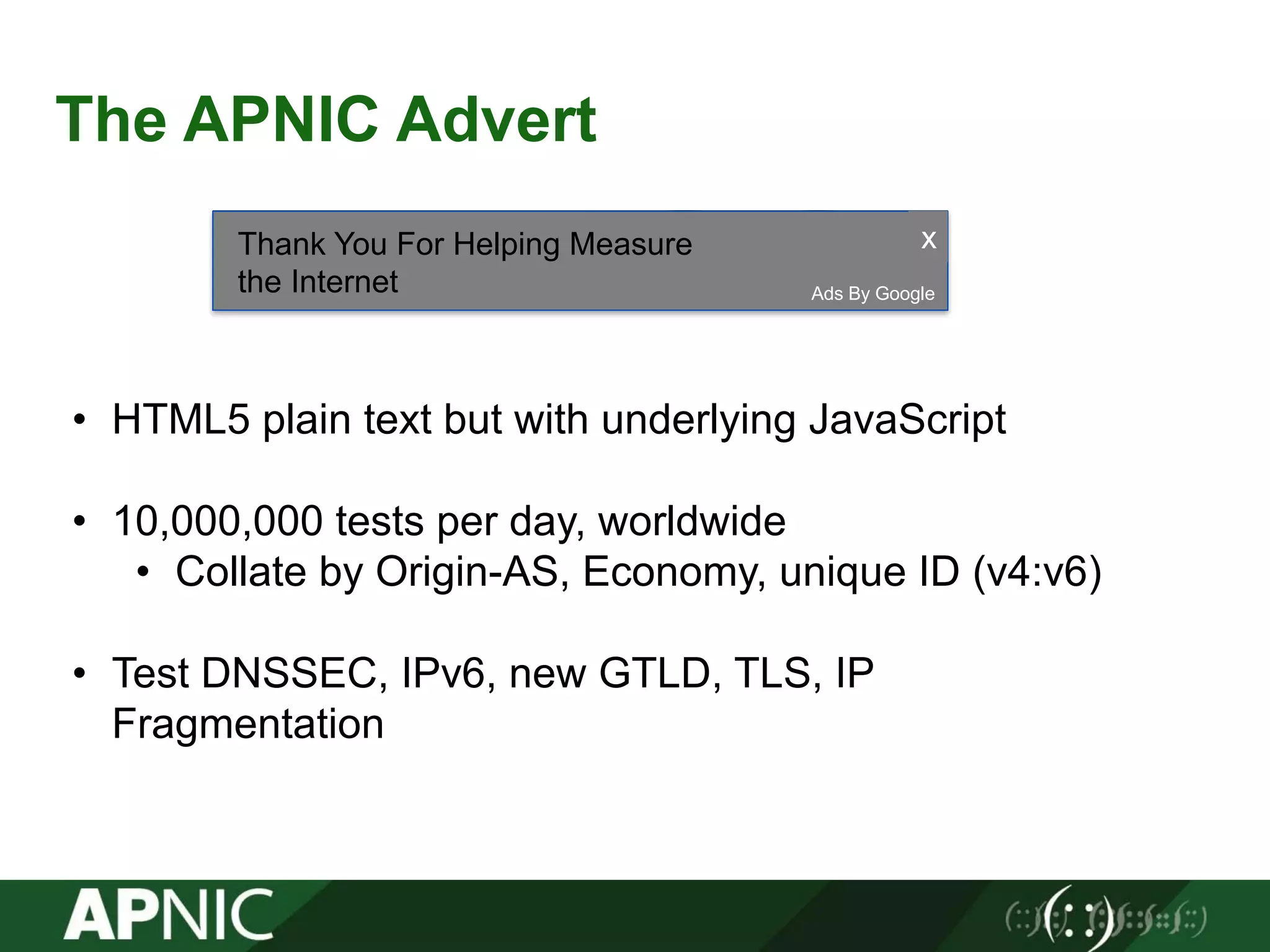
How APNIC measures the Internet
This is an Advert
The APNIC Advert
Ads By Google
xThank You For Helping Measure
the Internet
• HTML5 plain text but with underlying JavaScript
• 10,000,000 tests per day, worldwide
• Collate by Origin-AS, Economy, unique ID (v4:v6)
• Test DNSSEC, IPv6, new GTLD, TLS, IP
Fragmentation
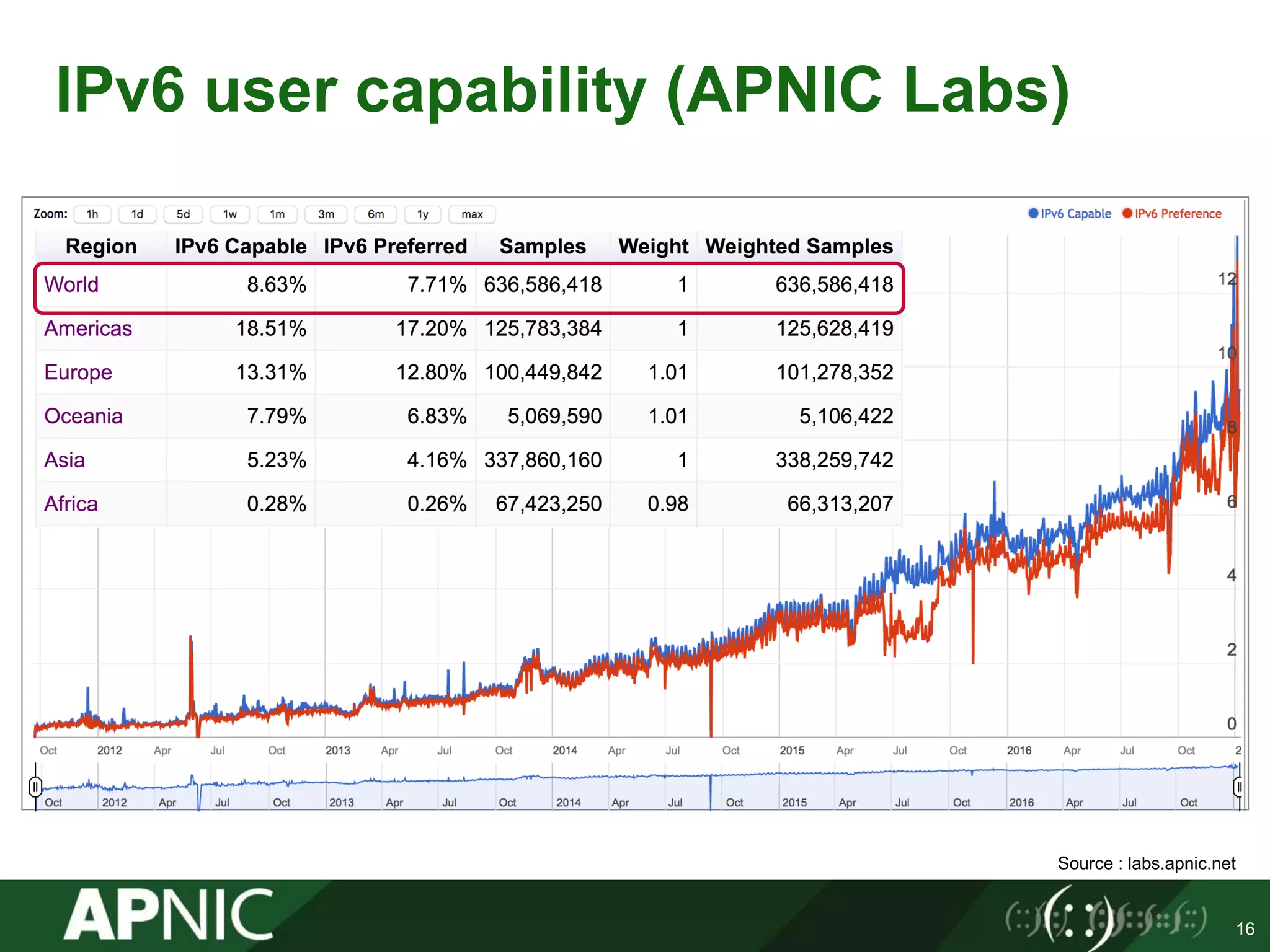
IPv6 user capability (APNIC Labs)
16
Source : labs.apnic.net
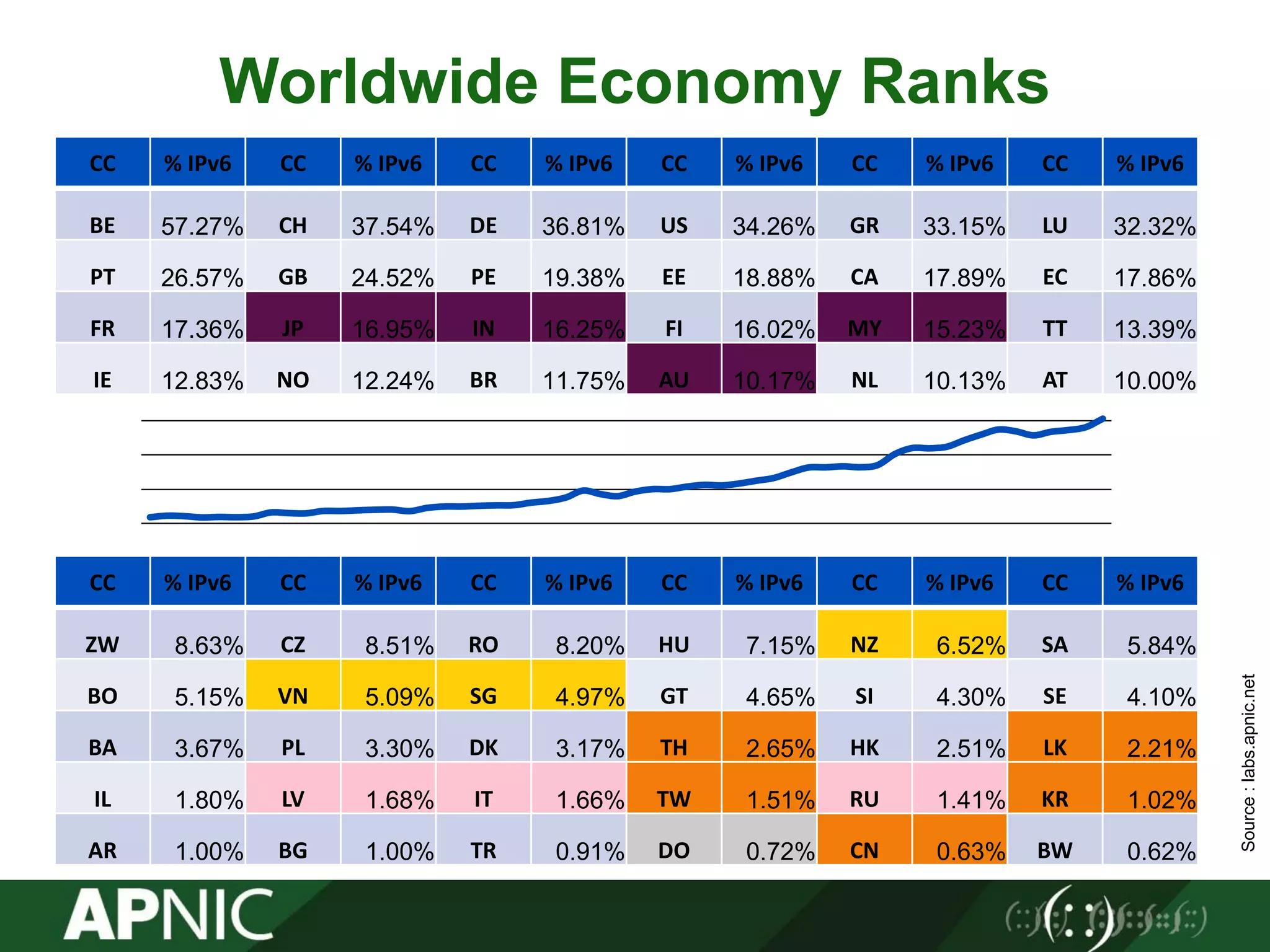
Worldwide Economy Ranks
CC %	IPv6 CC %	IPv6 CC %	IPv6 CC % IPv6 CC %	IPv6 CC %	IPv6
BE 57.27% CH 37.54% DE 36.81% US 34.26% GR 33.15% LU 32.32%
PT 26.57% GB 24.52% PE 19.38% EE 18.88% CA 17.89% EC 17.86%
FR 17.36% JP 16.95% IN 16.25% FI 16.02% MY 15.23% TT 13.39%
IE 12.83% NO 12.24% BR 11.75% AU 10.17% NL 10.13% AT 10.00%
CC %	IPv6 CC %	IPv6 CC %	IPv6 CC % IPv6 CC %	IPv6 CC %	IPv6
ZW 8.63% CZ 8.51% RO 8.20% HU 7.15% NZ 6.52% SA 5.84%
BO 5.15% VN 5.09% SG 4.97% GT 4.65% SI 4.30% SE 4.10%
BA 3.67% PL 3.30% DK 3.17% TH 2.65% HK 2.51% LK 2.21%
IL 1.80% LV 1.68% IT 1.66% TW 1.51% RU 1.41% KR 1.02%
AR 1.00% BG 1.00% TR 0.91% DO 0.72% CN 0.63% BW 0.62%
Source:labs.apnic.net
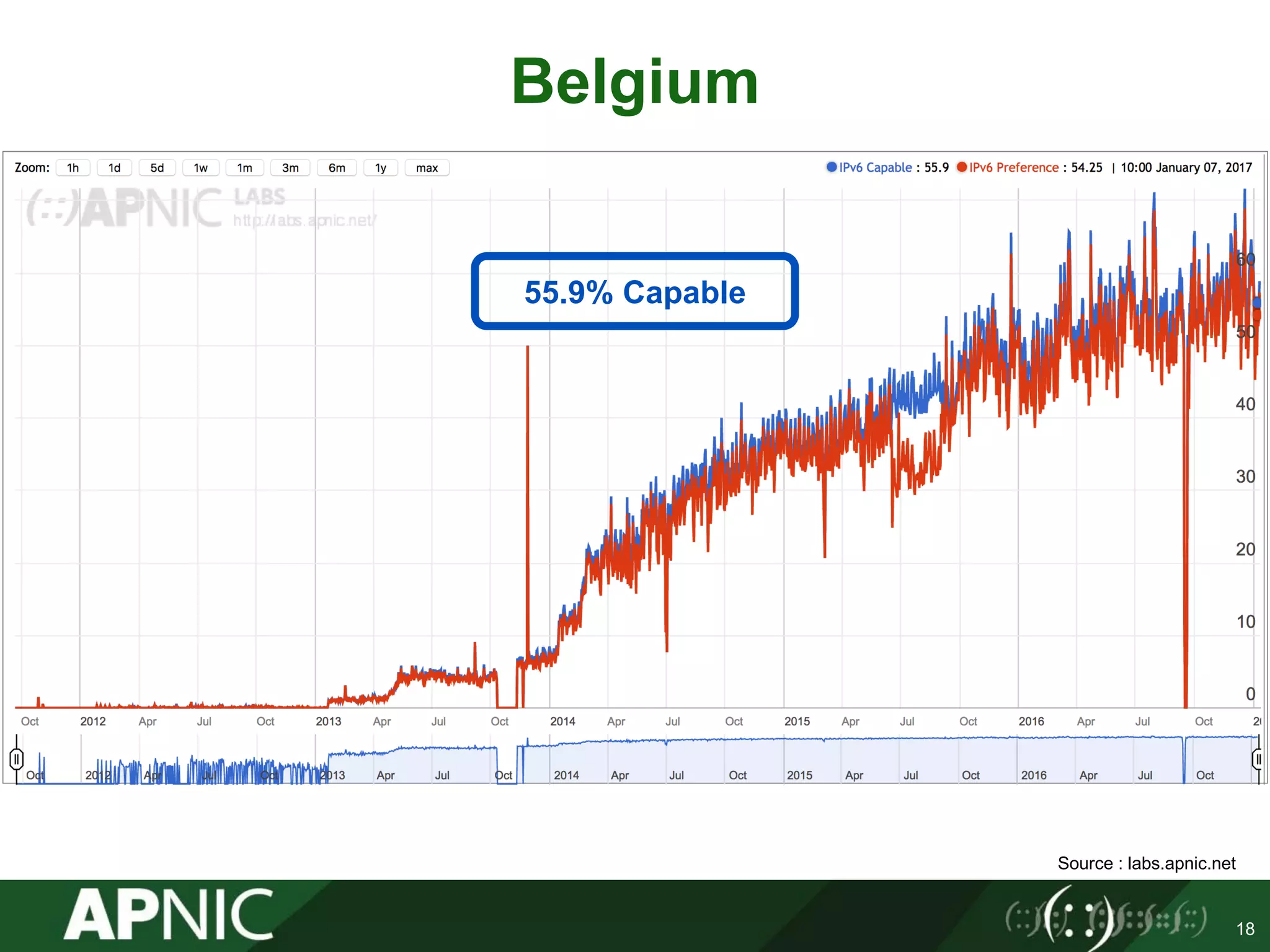
Belgium
18
55.9% Capable
Source : labs.apnic.net
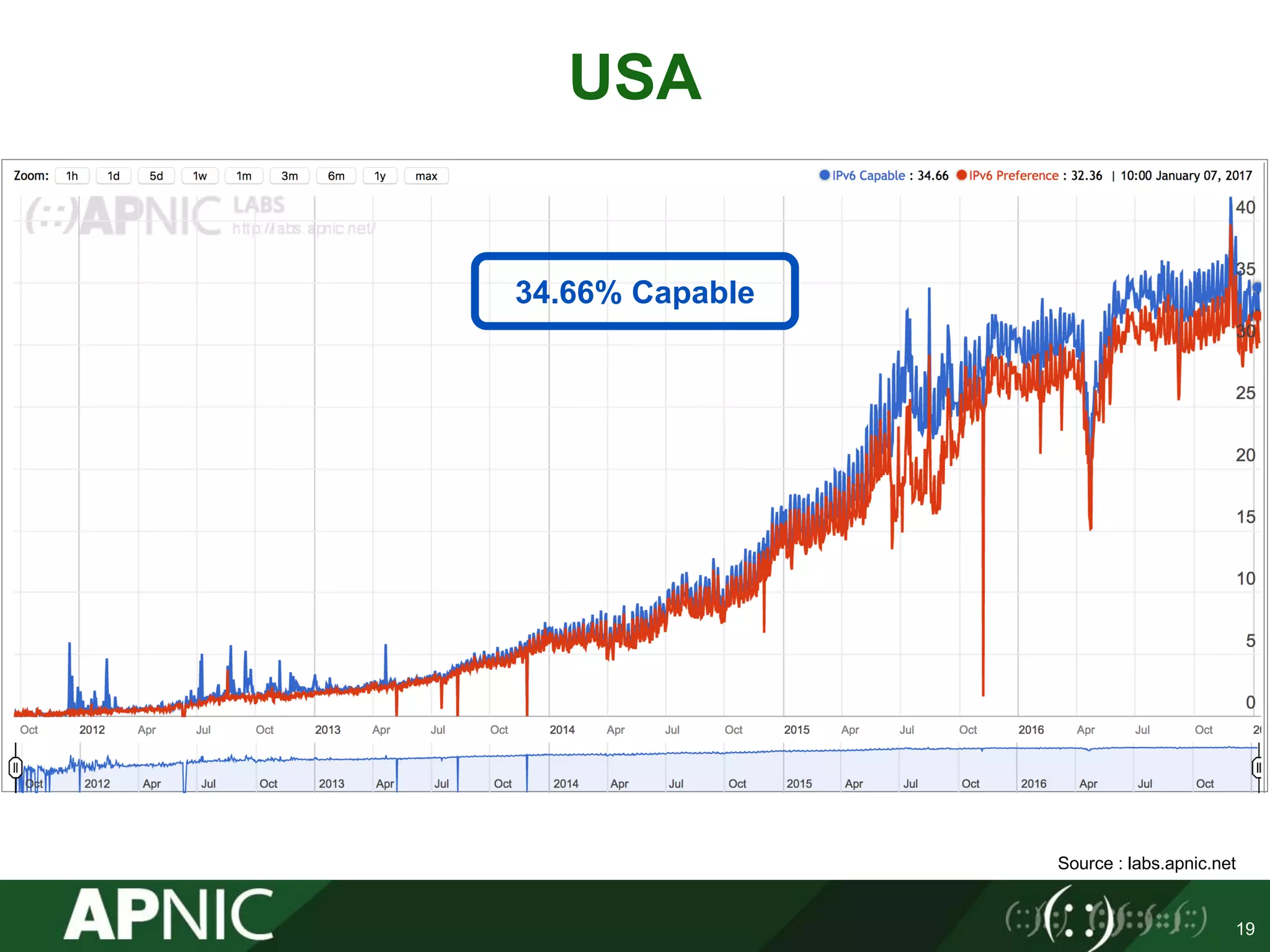
USA
19
34.66% Capable
Source : labs.apnic.net
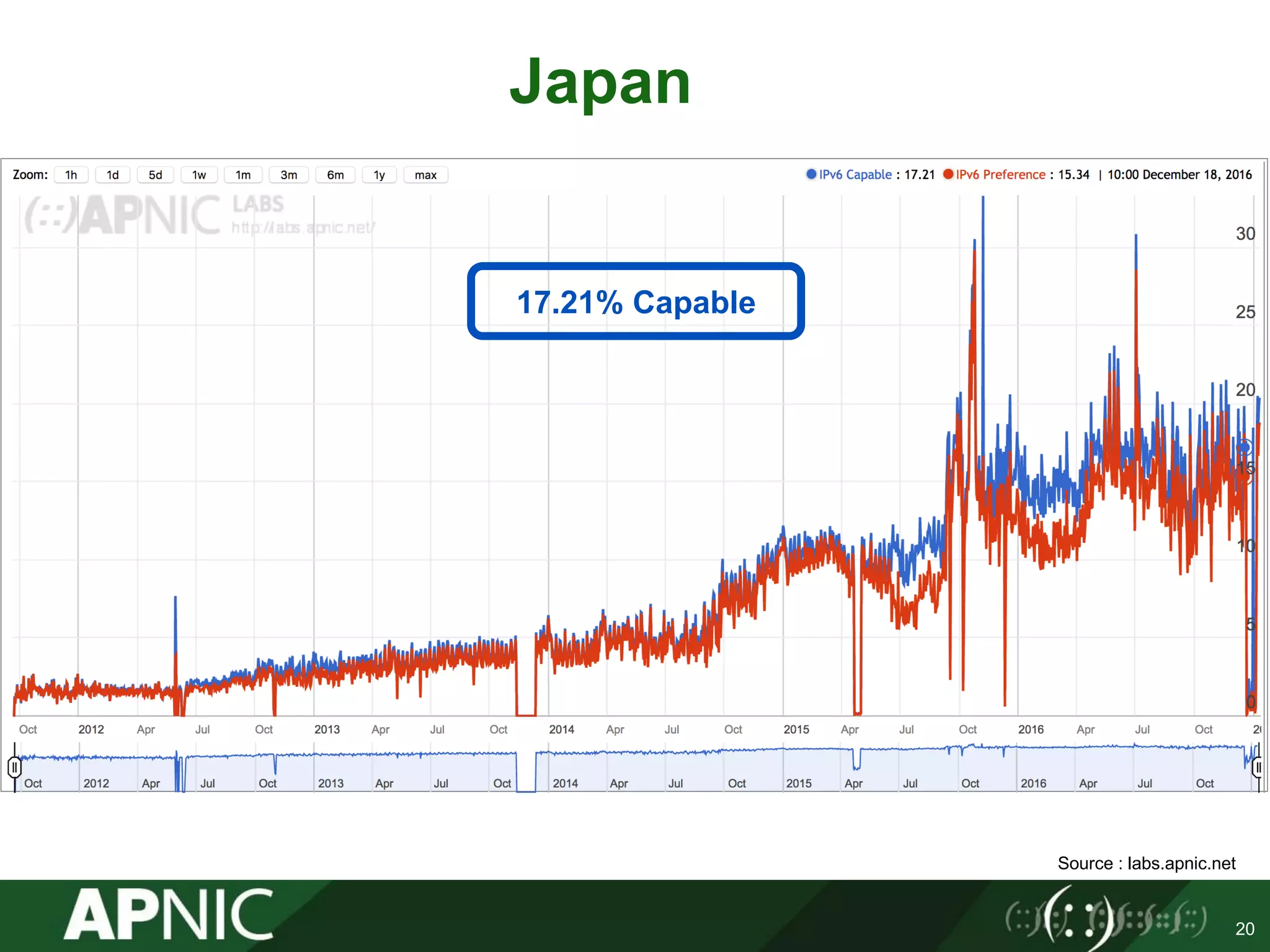
Japan
20
17.21% Capable
Source : labs.apnic.net
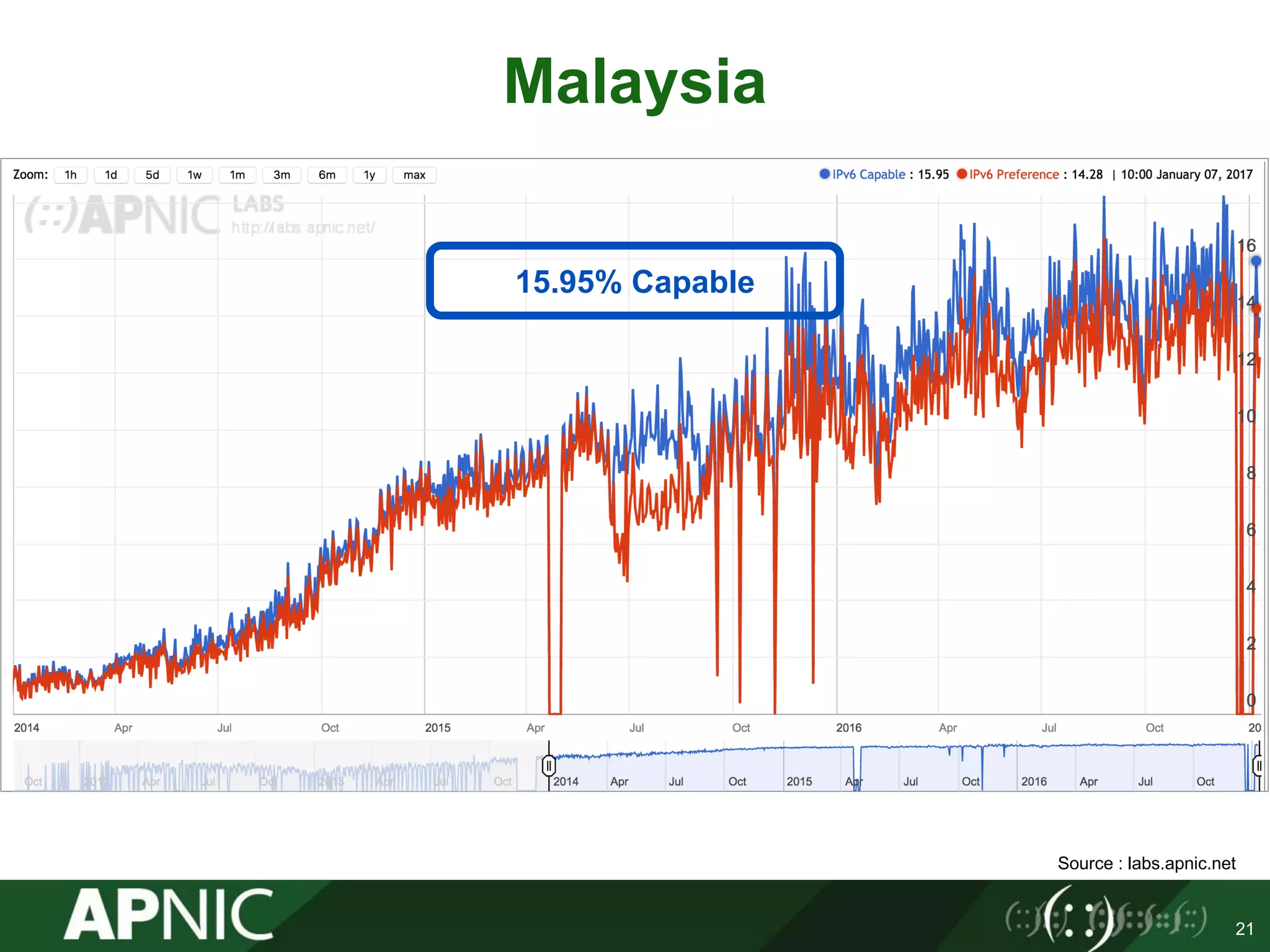
Malaysia
21
15.95% Capable
Source : labs.apnic.net
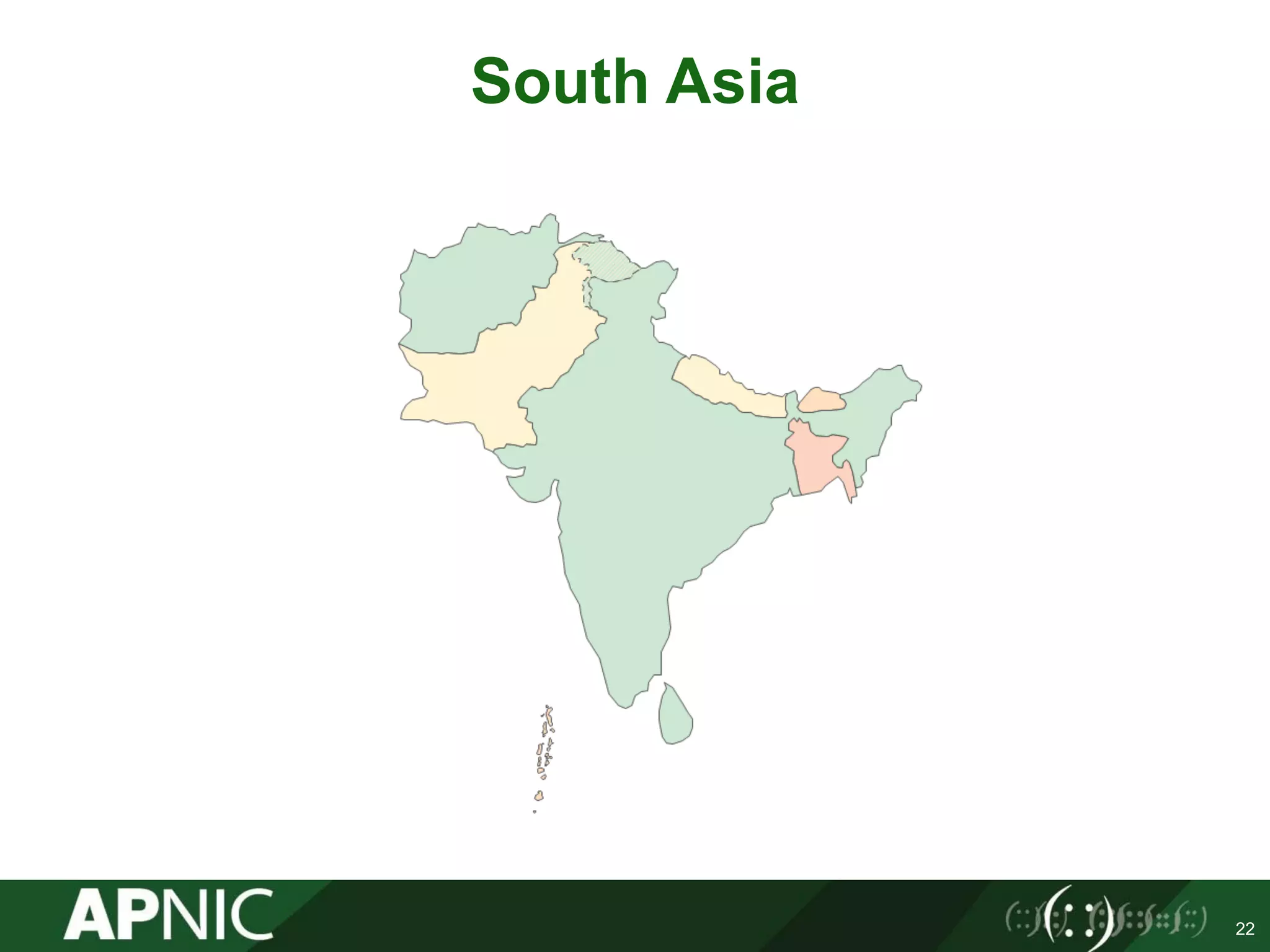
22
South Asia
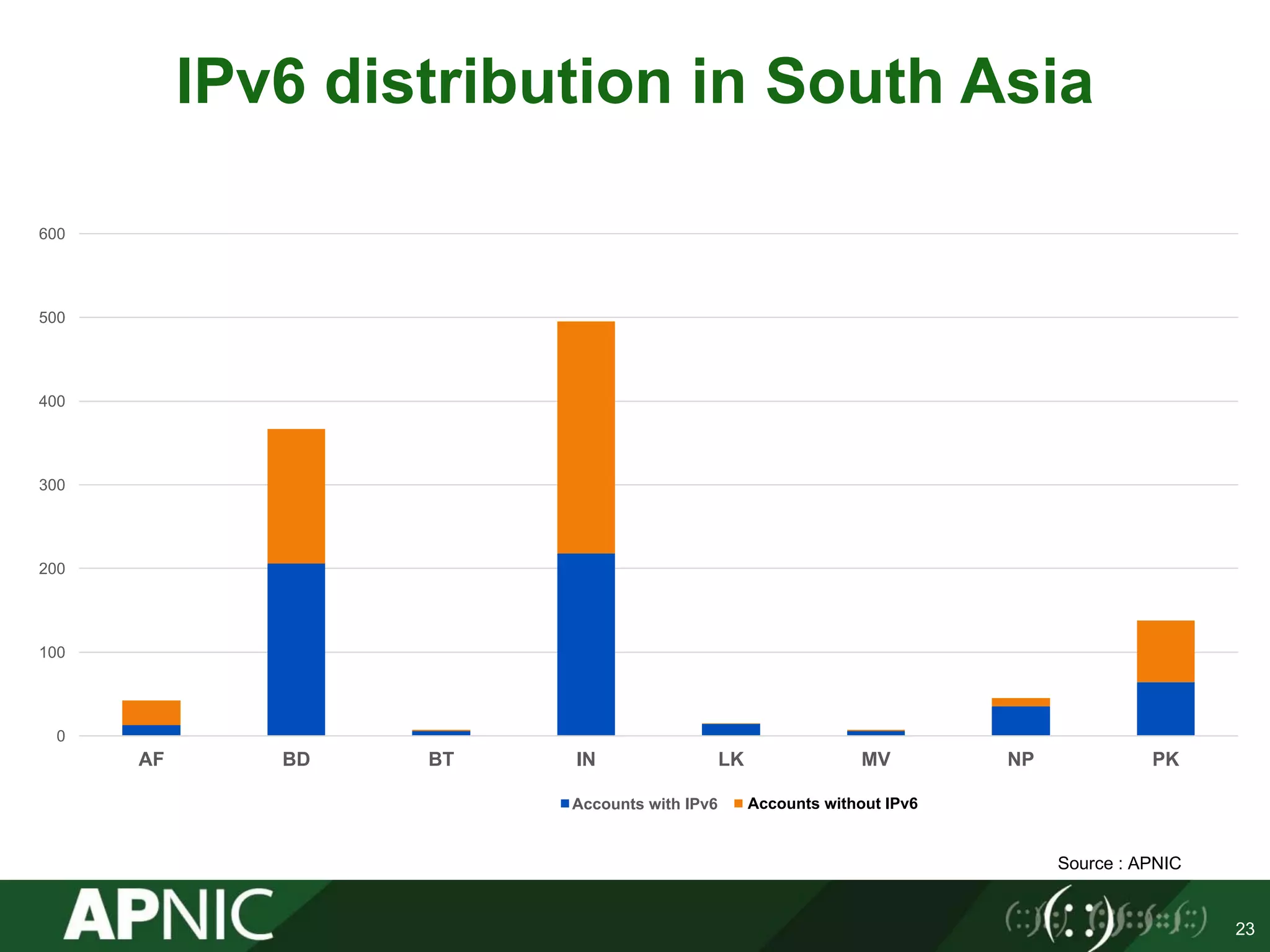
IPv6 distribution in South Asia
23
0
100
200
300
400
500
600
AF BD BT IN LK MV NP PK
Accounts with IPv6
Source : APNIC
Accounts without IPv6
0
5
10
15
20
25
2011-11
2012-01
2012-03
2012-05
2012-07
2012-09
2012-11
2013-01
2013-03
2013-05
2013-07
2013-09
2013-11
2014-01
2014-03
2014-05
2014-07
2014-09
2014-11
2015-01
2015-03
2015-05
2015-07
2015-09
2015-11
2016-01
2016-03
2016-05
2016-07
2016-09
2016-11
2017-01
%IPV6CAPABLE
IN PK BD LK NP BT MV AF
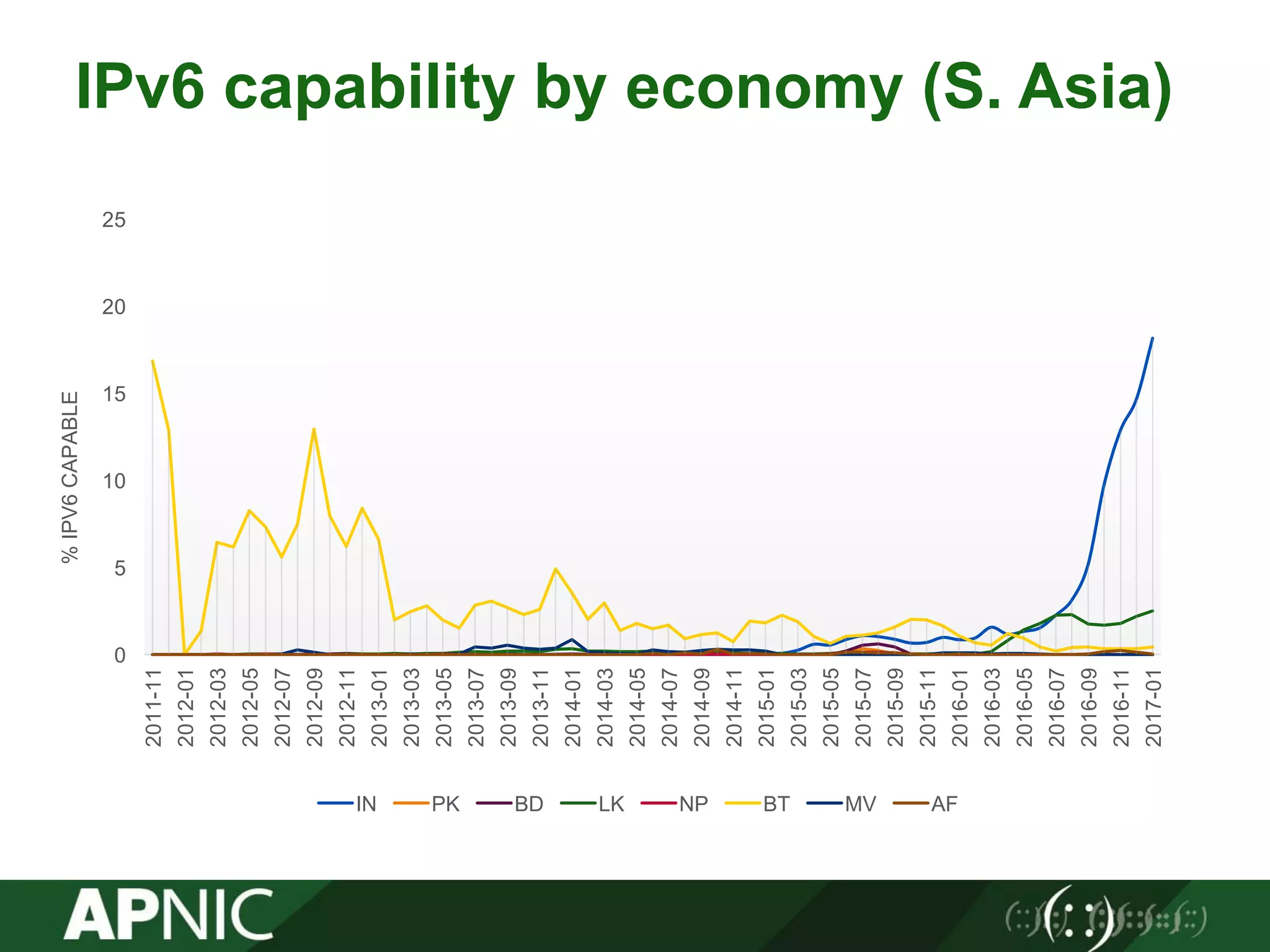
IPv6 capability by economy (S. Asia)
25
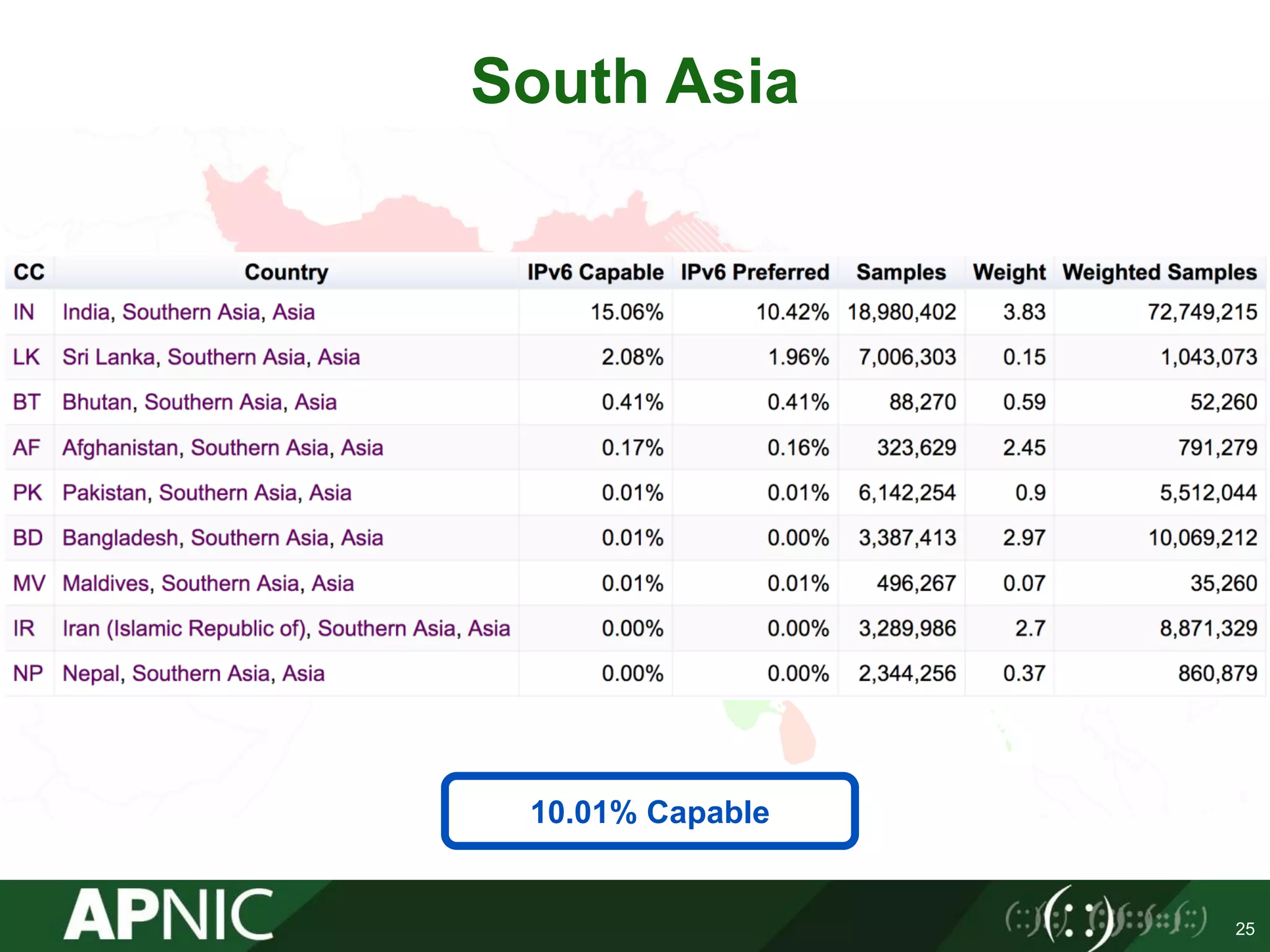
South Asia
10.01% Capable
26
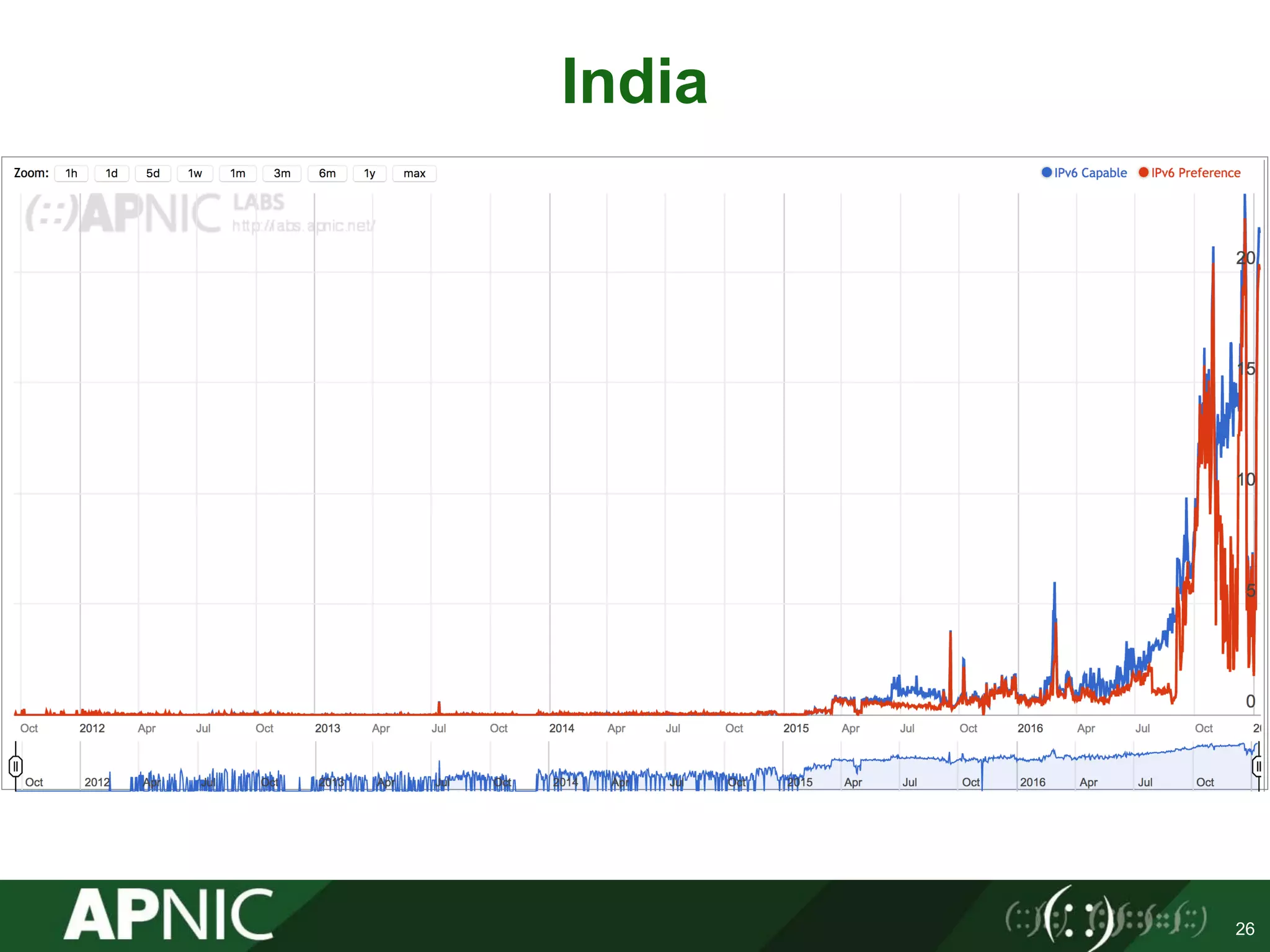
India
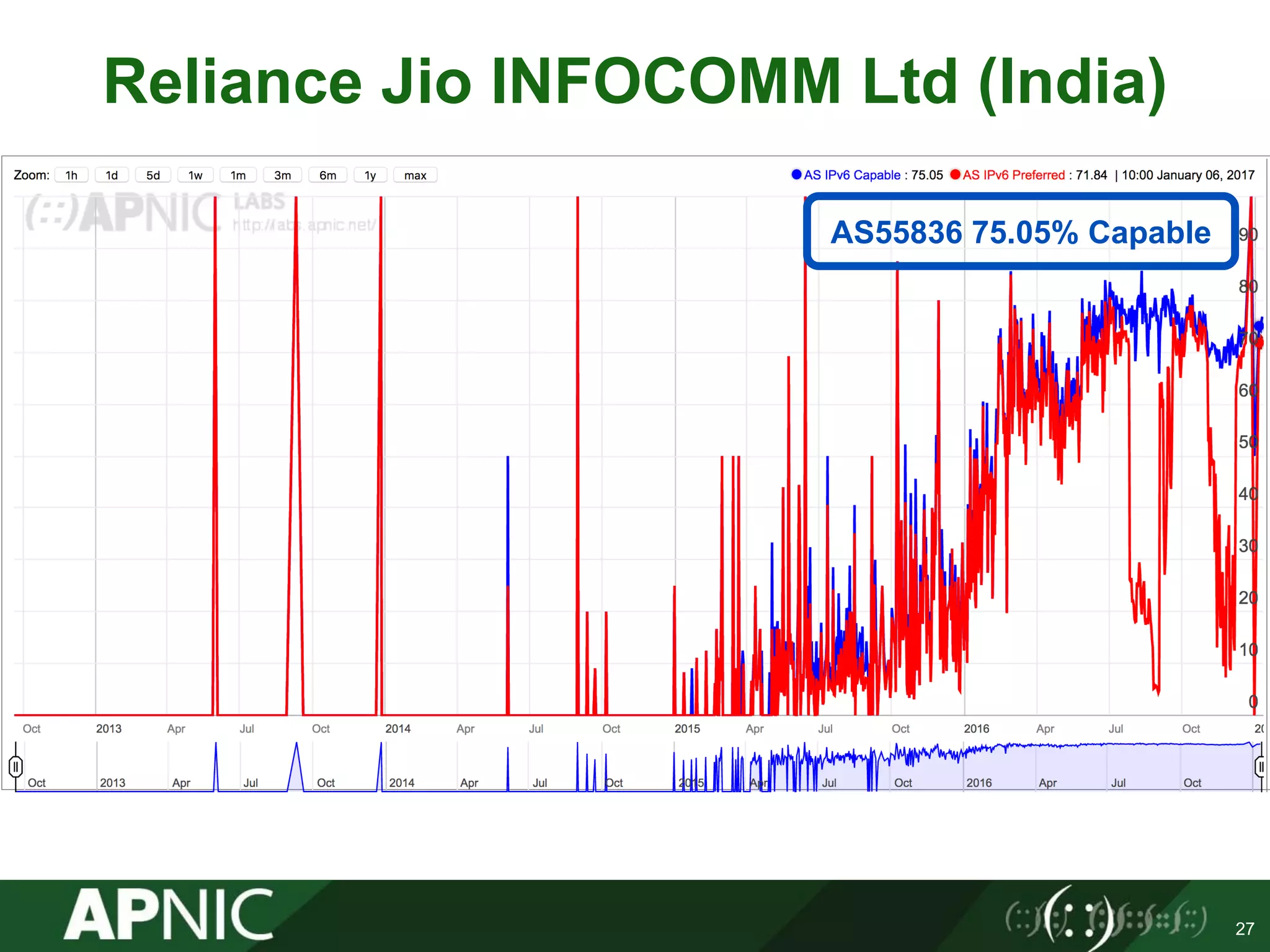
27
Reliance Jio INFOCOMM Ltd (India)
AS55836 75.05% Capable
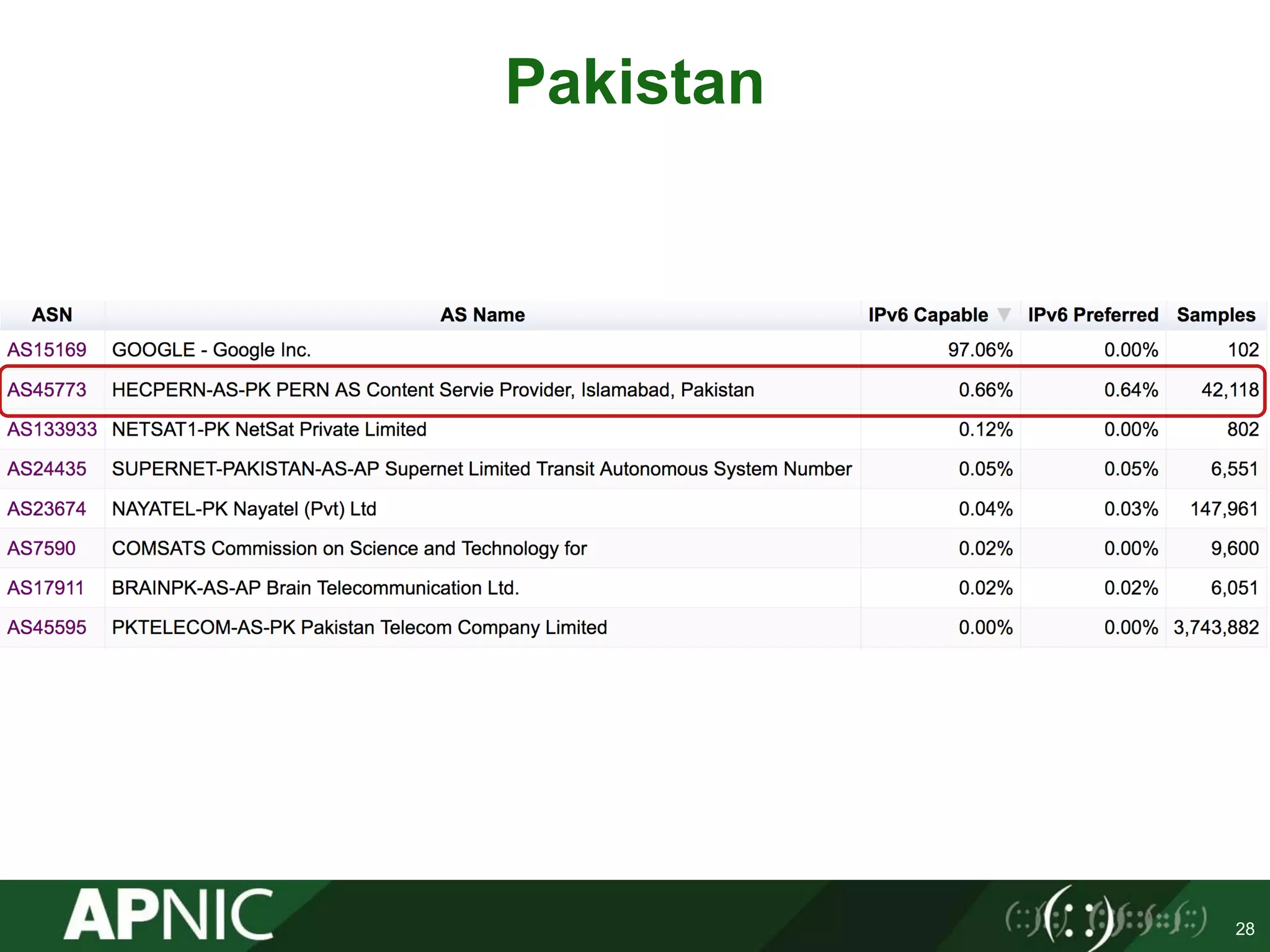
28
Pakistan
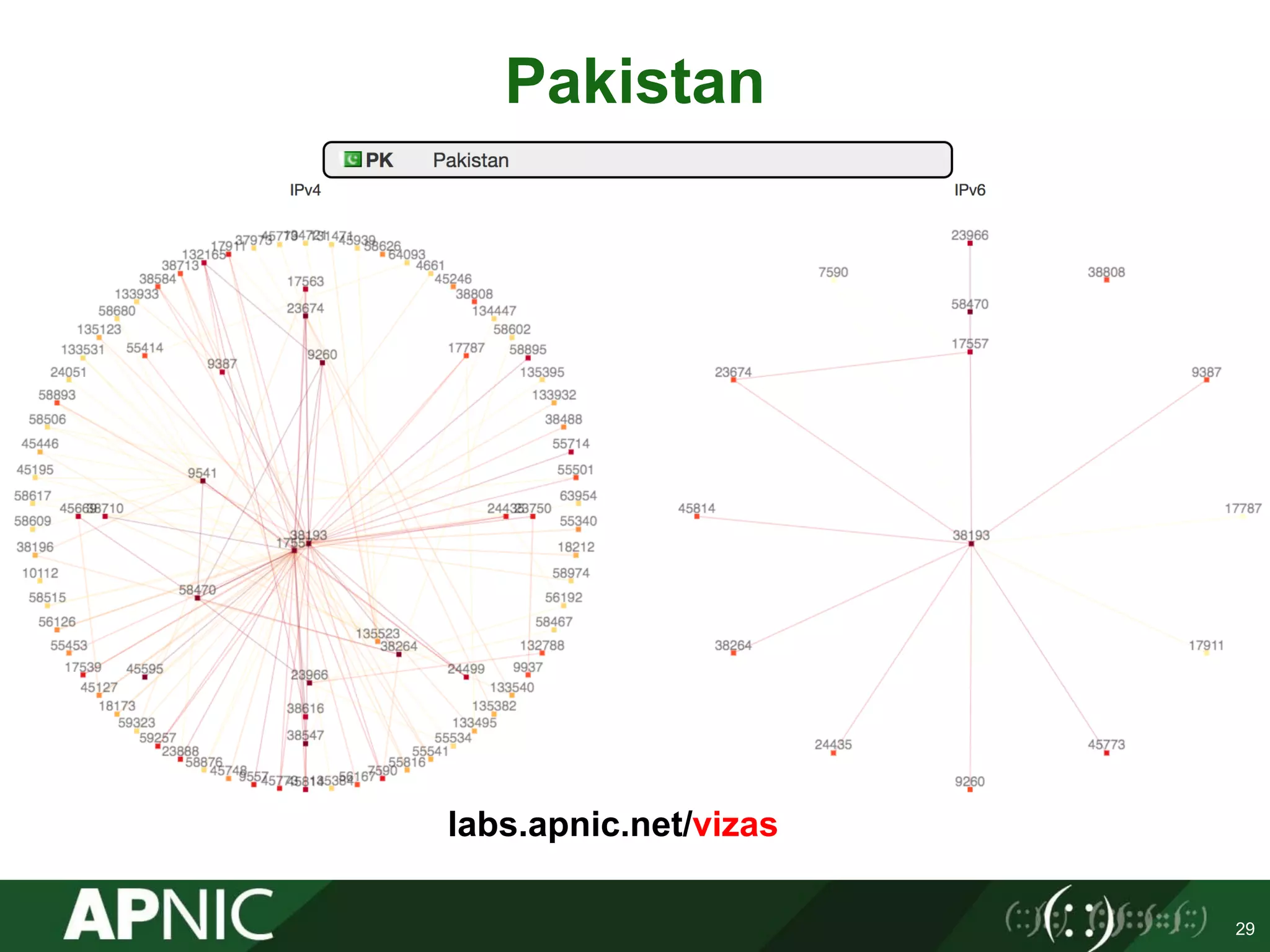
29
Pakistan
labs.apnic.net/vizas
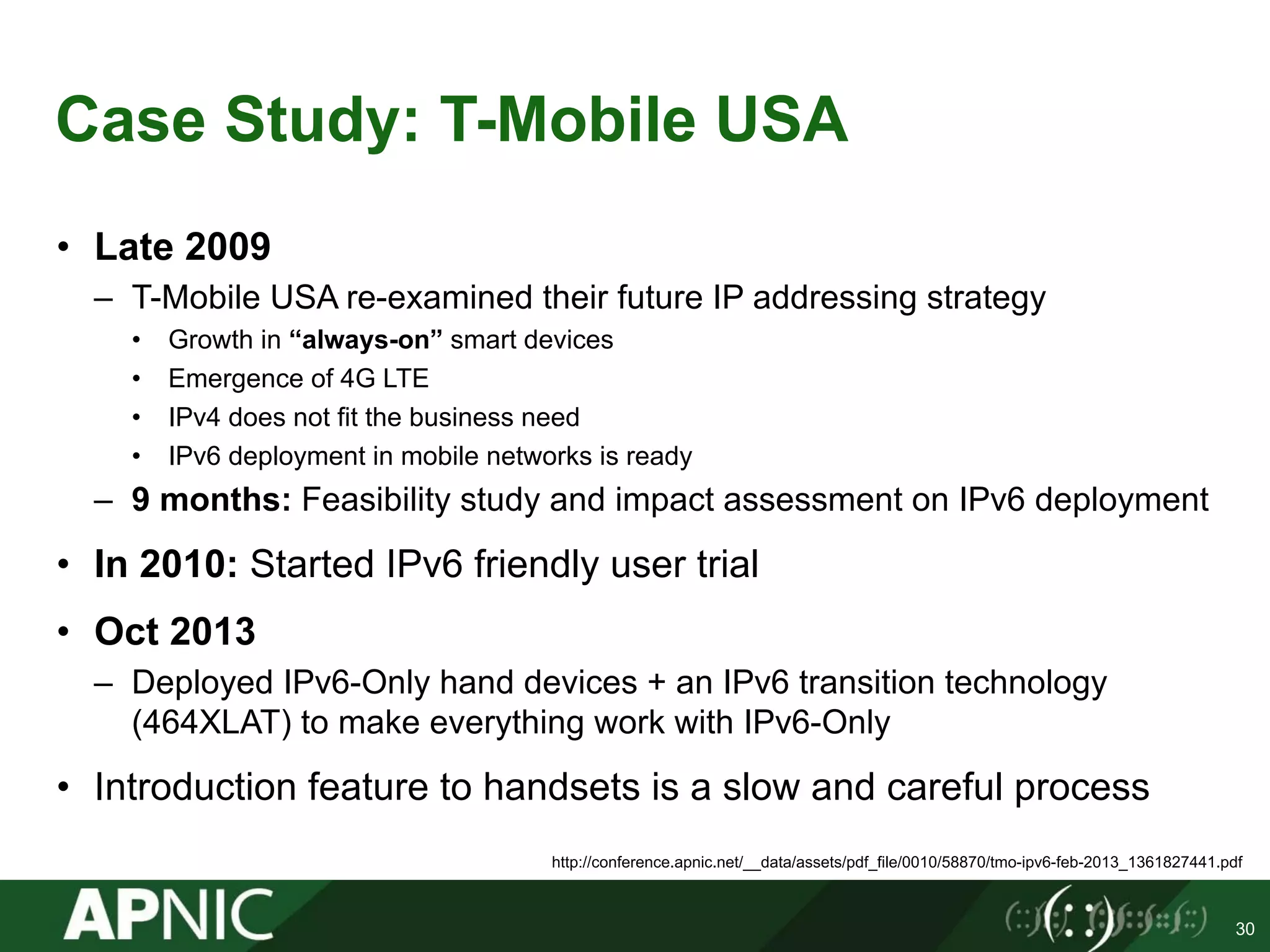
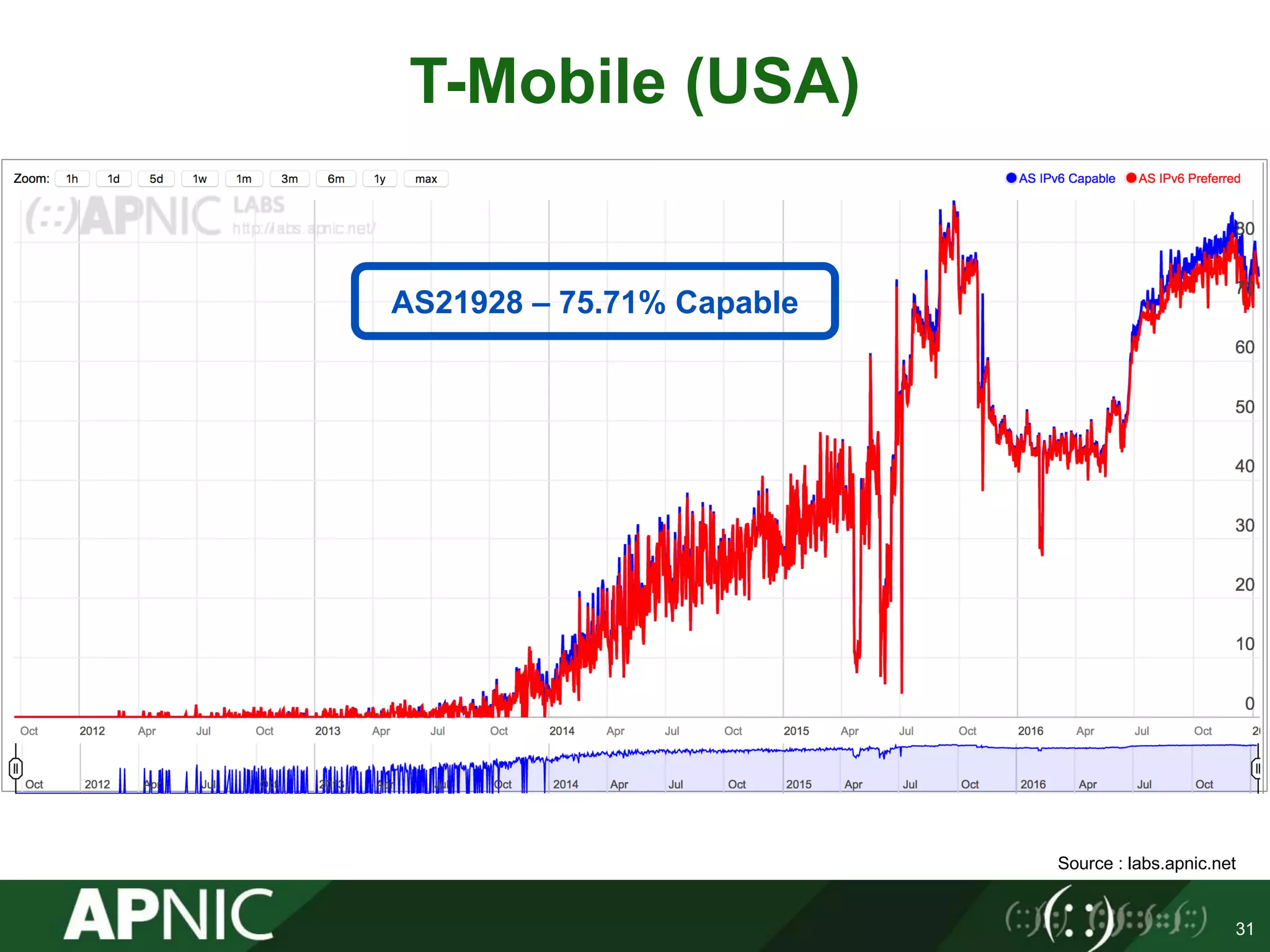
Case Study: T-Mobile USA
• Late 2009
– T-Mobile USA re-examined their future IP addressing strategy
• Growth in “always-on” smart devices
• Emergence of 4G LTE
• IPv4 does not fit the business need
• IPv6 deployment in mobile networks is ready
– 9 months: Feasibility study and impact assessment on IPv6 deployment
• In 2010: Started IPv6 friendly user trial
• Oct 2013
– Deployed IPv6-Only hand devices + an IPv6 transition technology
(464XLAT) to make everything work with IPv6-Only
• Introduction feature to handsets is a slow and careful process
30
http://conference.apnic.net/__data/assets/pdf_file/0010/58870/tmo-ipv6-feb-2013_1361827441.pdf
31
T-Mobile (USA)
AS21928 – 75.71% Capable
Source : labs.apnic.net
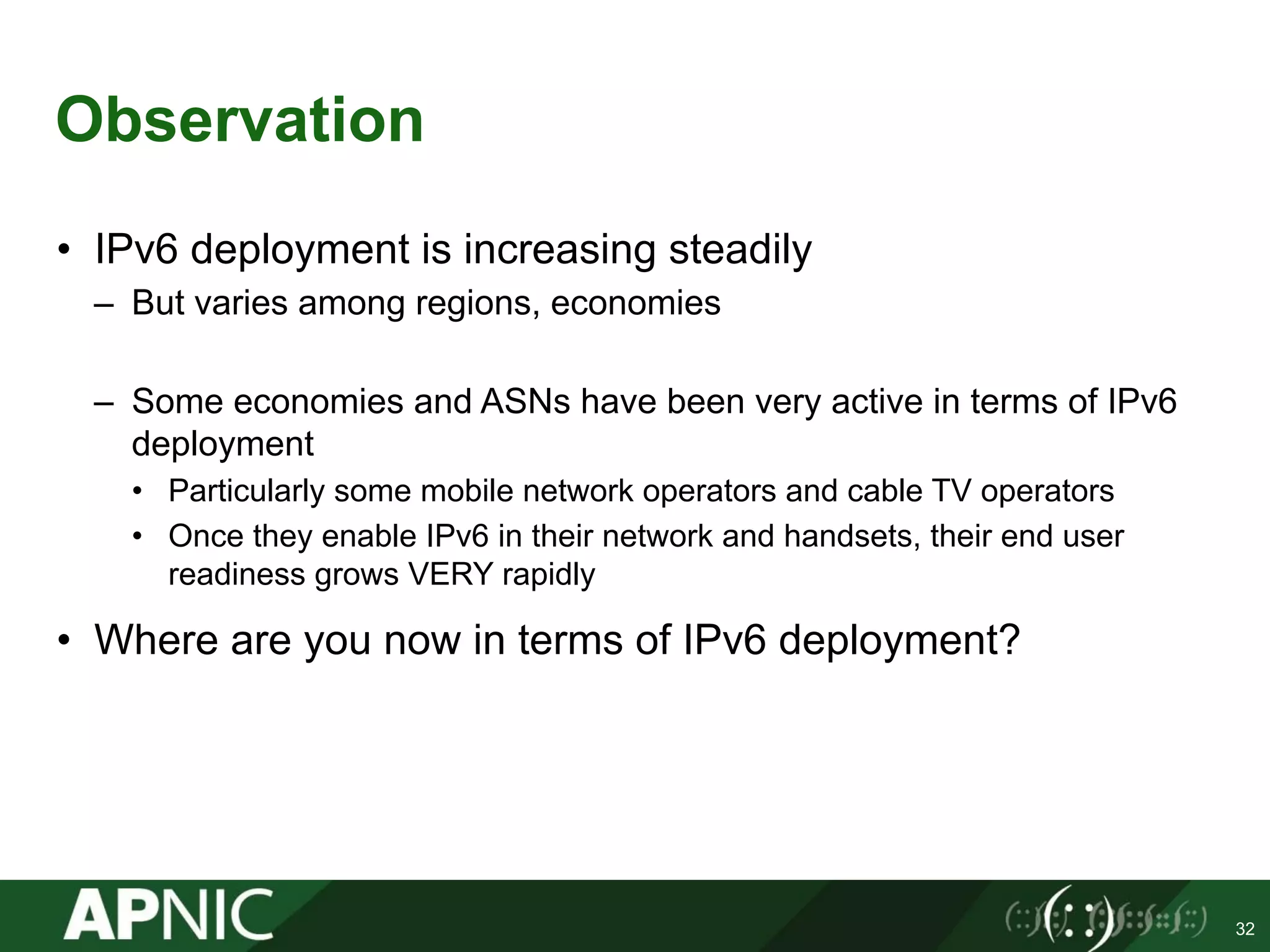
Observation
• IPv6 deployment is increasing steadily
– But varies among regions, economies
– Some economies and ASNs have been very active in terms of IPv6
deployment
• Particularly some mobile network operators and cable TV operators
• Once they enable IPv6 in their network and handsets, their end user
readiness grows VERY rapidly
• Where are you now in terms of IPv6 deployment?
32
IPv6 @ APNIC
34
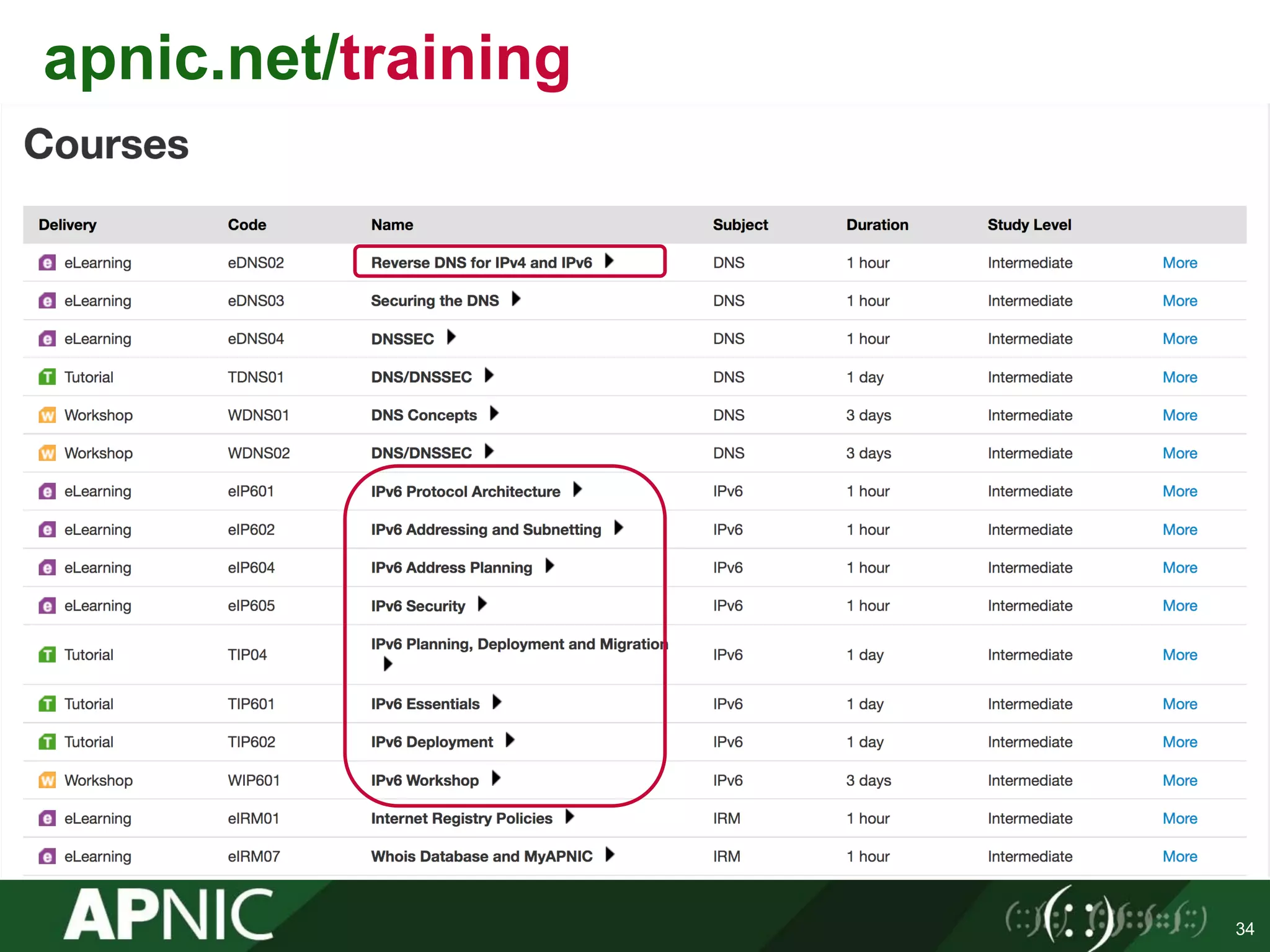
apnic.net/training
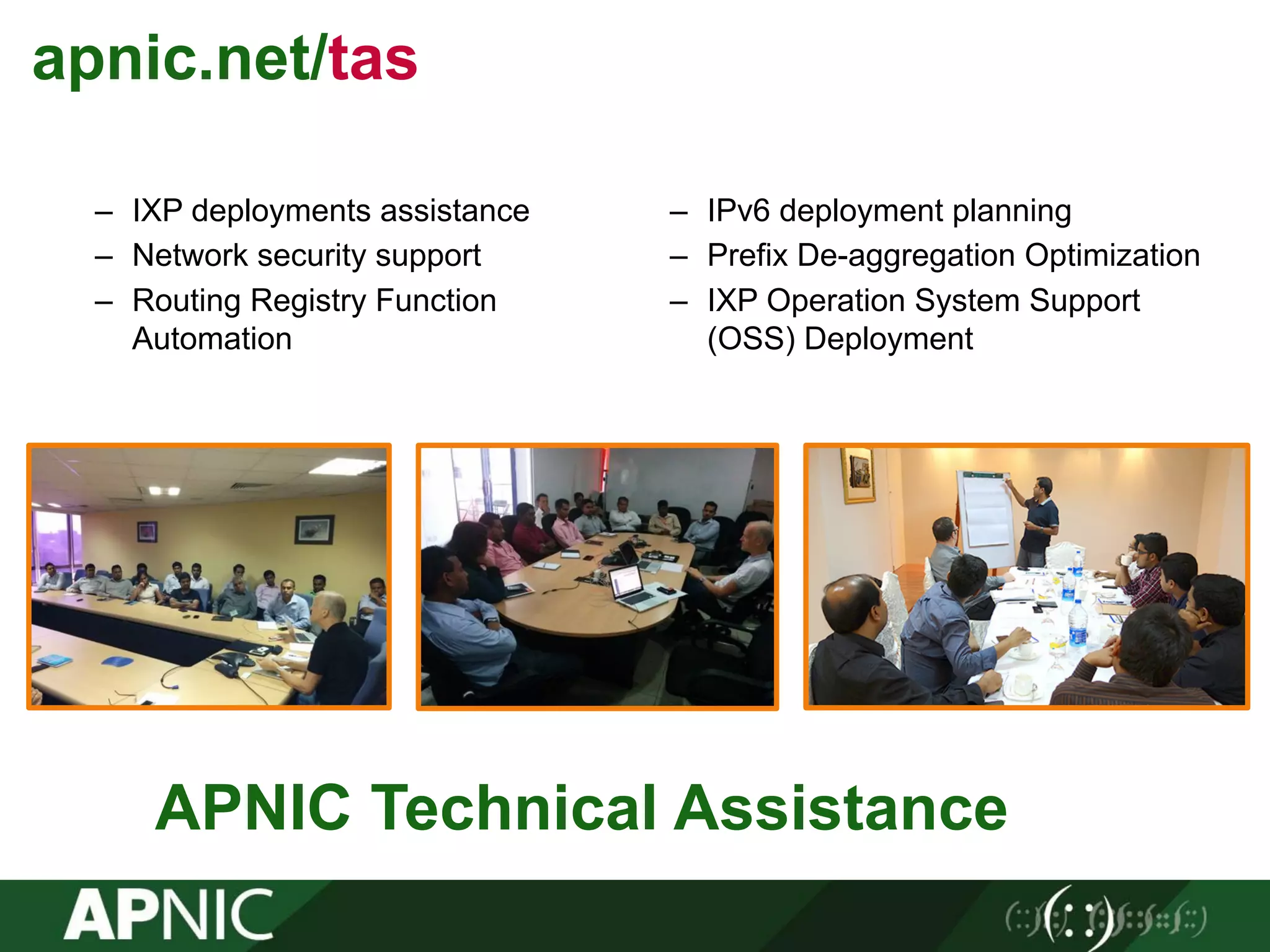
APNIC Technical Assistance 35
– IXP deployments assistance
– Network security support
– Routing Registry Function
Automation
– IPv6 deployment planning
– Prefix De-aggregation Optimization
– IXP Operation System Support
(OSS) Deployment
apnic.net/tas
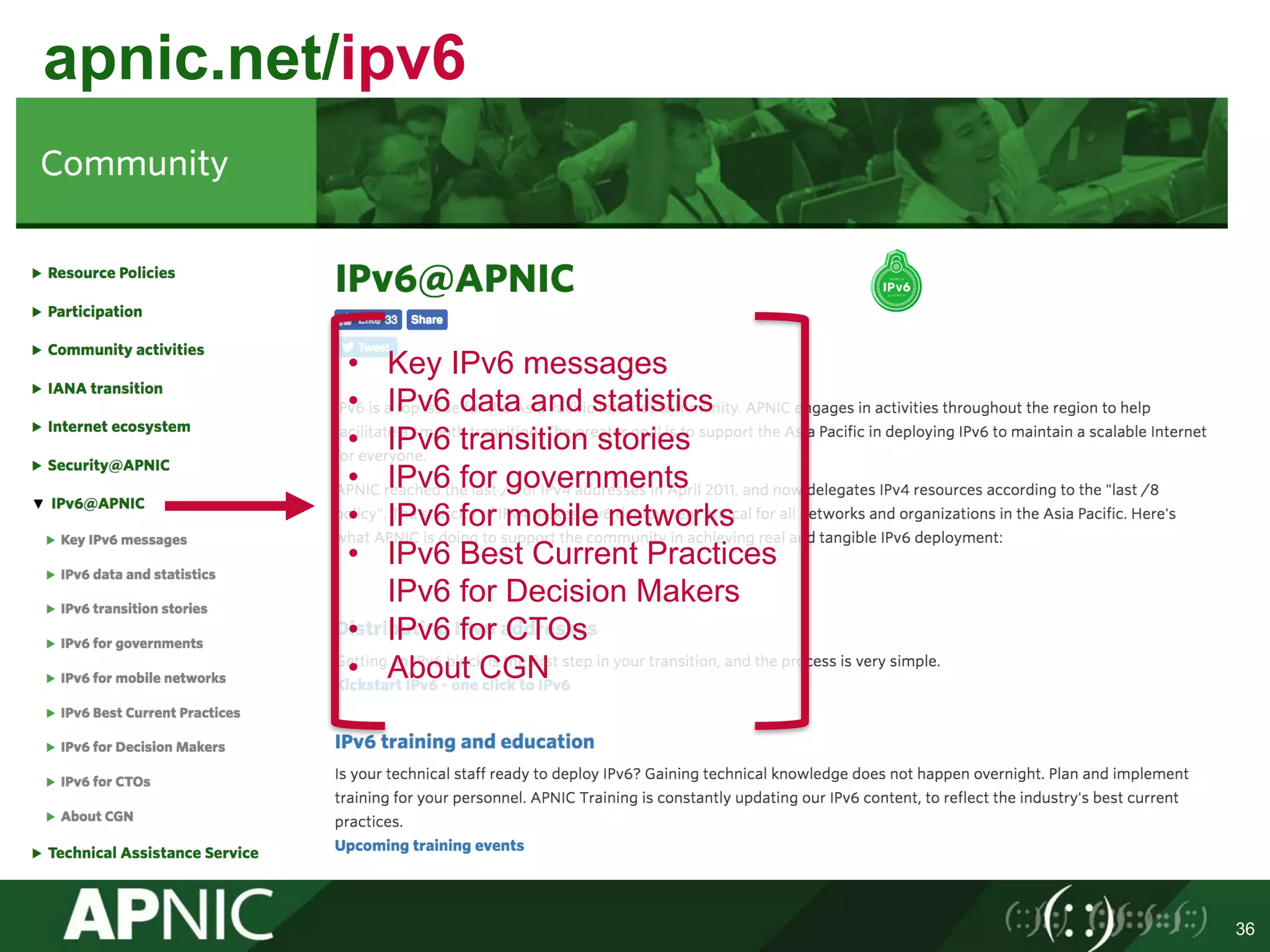
apnic.net/ipv6
36
• Key IPv6 messages
• IPv6 data and statistics
• IPv6 transition stories
• IPv6 for governments
• IPv6 for mobile networks
• IPv6 Best Current Practices
IPv6 for Decision Makers
• IPv6 for CTOs
• About CGN
37
2017.apricot.net
THANK YOU
Pubudu Jayasinghe
<pubudu@apnic.net>
http://www.apnic.net
38

IPv6 - delegations, deployment and trends, SANOG 29