ip crash course for
  mobile startups:
a practical approach
   ernest grumbles
  adams monahan llp
      3.21.2012
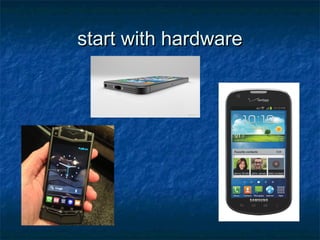
start with hardware
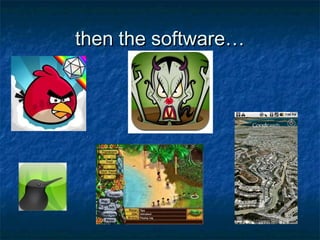
then the software…
how about interface design…
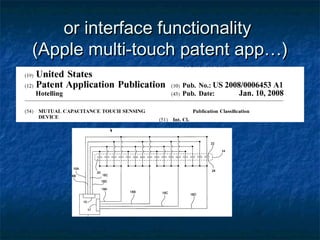
or interface functionality
(Apple multi-touch patent app…)
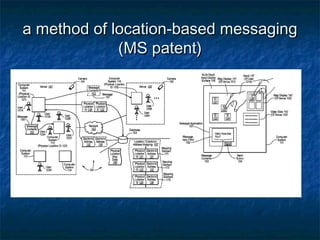
a method of location-based messaging
             (MS patent)
brands….
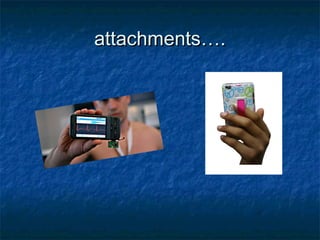
attachments….
what is ip?
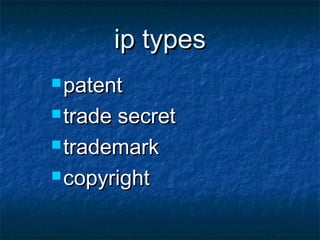
ip types
 patent

 tradesecret
 trademark

 copyright
9 things about patents
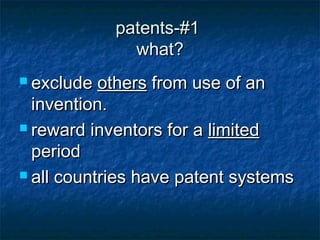
patents-#1
              what?
 exclude  others from use of an
  invention.
 reward inventors for a limited

  period
 all countries have patent systems
patents-#2
                   why?
   market exclusivity
   strategic tool against competitors
   Licensing
   value in business – “patent pending”
   investment, acquisition
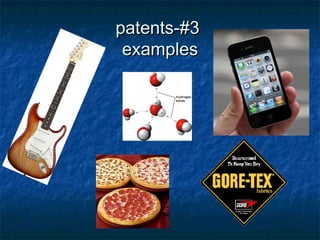
patents-#3
 examples
patents-#4
               process
   identify inventions
   maintain secrecy
   gather information and prepare an
    application
   file with the pto
   hang on the wall
patents-#5
                 time to get

    18 months to 5 years from filing of
     application.
    length varies by technology
     software patents – up to 5 years

    Claims may never issue.
patents-#6
                   cost

   $500 to $5000 for provisional application
   $4000-$18,000 for non-provisional
    application
   depends on technology, business goals
    and timing
patents-#7
                   duration

   20 years from filing
   once it dies, it’s dead
   but:
       continuation-in-part applications
patents-#8
         enforcement/defense

   search before new tech release
   patent litigation ain’t cheap
   $3 million in fees/costs would be a good
    deal for an active case
   cases can last 2-5 years
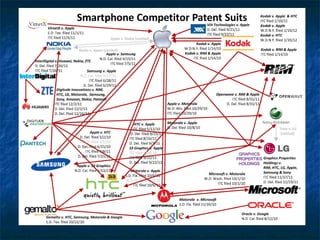
The
Moile
Patent
Wars
 2011
patents-#9
            best practices

   do you know your IP?
   does the company own the ip??
   what tech drives revenue?
patents-#9….
             best practices

   confidentiality
   provisional = quick “patent pending”
   periodically review R&D
philosophical interlude:

      choose one -
    * patents rock!
    * patents s-ck!
9 things about trade secrets
trade secrets-#1
                  what?

   confidential information that has value
    from not being generally known
   protection only as long as secret kept –
    like the Coke formula
   statute (like Uniform Trade Secrets Act)
    and contract
trade secrets-#2
                     why?

   value in business – proprietary
    formulas/processes
   preserve market advantage
       keep secret forever – can’t with patents
   preserve patentability of inventions
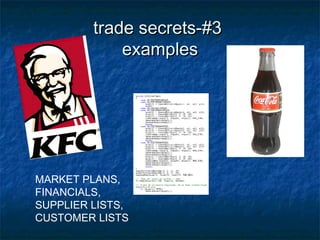
trade secrets-#3
             examples


MARKET PLANS,
FINANCIALS,
SUPPLIER LISTS,
CUSTOMER LISTS
trade secrets-#4
                process

   maintain secrecy of data
   identify inventions
   control access
   consider a log
trade secrets-#5
             time to get


   you own as soon as you create
   no formal filing process
trade secrets-#6
                 cost

   cost of development
   cost of maintaining secrecy
trade secrets-#7
                 duration

   perpetual – if it can be maintained
    as such
       coke formula
   the rabbit has to stay in the hat
trade secrets-#8
         enforcement/defense

   when to sue?
   complex litigation
   often bundled with employee-related
    disputes (coke-pepsi)
   injunctions…!
   costs - $400k-$3 million
trade secrets-#9
             best practices

   confidentiality policies (“CP’s”)
   use NDA’s when possible
   mark “confidential” materials as
    such
   protect sensitive materials (or
    facilities)
9 things about trademarks
trademarks-#1
                  what

   exclusive use of brand for specified
    goods or services
   rights based on use in the marketplace
   U.S. federal and state level (statutes and
    common law)
   all countries have trademark systems
trademarks-#2
                  why
   market exclusivity for brands – unique
    association
   promote customer loyalty (TONY THE
    TIGER)
   prevent customer confusion
   strategic tool against competitors
   build value in business – ®
trademarks-#3
                examples

   word mark: EXXON
   stylized word mark:
   design mark: TONY THE TIGER
   color: yellow for sticky note pads (“Post-
    Its”)
   product shape: the Coke bottle
trademarks-#4
                 process
   identify brands (incl. future brands)
   evaluate market significance/strength of
    mark
   search!
   federal v. state
   file application
   prosecute to registration
trademarks-#5
               time to get

   common law – rights upon use
   federal registration process - can
    take 18 months
   state registrations – much quicker
trademarks-#6
                  cost

   trademark search - ~$700
   U.S. tm app. - ~$1000 (single class).
   up to $2K in additional prosecution costs
   state tm’s – much cheaper
   foreign applications - generally more
trademarks-#7
                duration

   perpetual???
   registrations indefinitely renewable
   STELLA ARTOIS – claims rights back to
    1366
   when marks die – ASPIRIN, ZIPPER,
    DRY ICE, ESCALATOR (generic terms)
trademarks-#8
        enforcement/defense

   sue for likelihood of confusion
    (similar mark on similar goods)
   trademark litigation ~$400K-$2M.
   most disputes settled
   cases can last 1-3 years.
trademarks-#9
            best practices

   communicate with
    marketing/product teams on brands
   search before you sell!
   prioritize revenue-driver brands
trademarks-#9
              best practices

   file Intent to Use (ITU) applications
    for quick protection
   maintain uniformity of use
   enforce rights
copyrights

 protects writings/images/sounds
 inexpensive to register

 protection lasts over 100 years
copyrights, cont….

 register  soon after public release
 protected by U.S. statutes

 good for company code, manuals,

  images
 litigation – not cheap
copyrights: best practices
 use stuff you own or have licensed
  (incl. creative commons)
 make sure you own stuff you’re
  paying for – images, code, narrative
  (agreements!)
 use Copyright Office process for
  source code registration
the end

egrumbles@adamsmonahan.com
   www.ernestgrumbles.com
       651.491.3643

IP for Mobile Startups -Ernest Grumbles

  • 1.
    ip crash coursefor mobile startups: a practical approach ernest grumbles adams monahan llp 3.21.2012
  • 3.
  • 4.
  • 5.
  • 6.
    or interface functionality (Applemulti-touch patent app…)
  • 7.
    a method oflocation-based messaging (MS patent)
  • 8.
  • 9.
  • 10.
  • 11.
    ip types  patent tradesecret  trademark  copyright
  • 12.
  • 13.
    patents-#1 what?  exclude others from use of an invention.  reward inventors for a limited period  all countries have patent systems
  • 14.
    patents-#2 why?  market exclusivity  strategic tool against competitors  Licensing  value in business – “patent pending”  investment, acquisition
  • 15.
  • 16.
    patents-#4 process  identify inventions  maintain secrecy  gather information and prepare an application  file with the pto  hang on the wall
  • 17.
    patents-#5 time to get  18 months to 5 years from filing of application.  length varies by technology  software patents – up to 5 years  Claims may never issue.
  • 18.
    patents-#6 cost  $500 to $5000 for provisional application  $4000-$18,000 for non-provisional application  depends on technology, business goals and timing
  • 19.
    patents-#7 duration  20 years from filing  once it dies, it’s dead  but:  continuation-in-part applications
  • 20.
    patents-#8 enforcement/defense  search before new tech release  patent litigation ain’t cheap  $3 million in fees/costs would be a good deal for an active case  cases can last 2-5 years
  • 21.
  • 22.
    patents-#9 best practices  do you know your IP?  does the company own the ip??  what tech drives revenue?
  • 23.
    patents-#9…. best practices  confidentiality  provisional = quick “patent pending”  periodically review R&D
  • 24.
    philosophical interlude: choose one - * patents rock! * patents s-ck!
  • 25.
    9 things abouttrade secrets
  • 26.
    trade secrets-#1 what?  confidential information that has value from not being generally known  protection only as long as secret kept – like the Coke formula  statute (like Uniform Trade Secrets Act) and contract
  • 27.
    trade secrets-#2 why?  value in business – proprietary formulas/processes  preserve market advantage  keep secret forever – can’t with patents  preserve patentability of inventions
  • 28.
    trade secrets-#3 examples MARKET PLANS, FINANCIALS, SUPPLIER LISTS, CUSTOMER LISTS
  • 29.
    trade secrets-#4 process  maintain secrecy of data  identify inventions  control access  consider a log
  • 30.
    trade secrets-#5 time to get  you own as soon as you create  no formal filing process
  • 31.
    trade secrets-#6 cost  cost of development  cost of maintaining secrecy
  • 32.
    trade secrets-#7 duration  perpetual – if it can be maintained as such  coke formula  the rabbit has to stay in the hat
  • 33.
    trade secrets-#8 enforcement/defense  when to sue?  complex litigation  often bundled with employee-related disputes (coke-pepsi)  injunctions…!  costs - $400k-$3 million
  • 34.
    trade secrets-#9 best practices  confidentiality policies (“CP’s”)  use NDA’s when possible  mark “confidential” materials as such  protect sensitive materials (or facilities)
  • 35.
    9 things abouttrademarks
  • 36.
    trademarks-#1 what  exclusive use of brand for specified goods or services  rights based on use in the marketplace  U.S. federal and state level (statutes and common law)  all countries have trademark systems
  • 37.
    trademarks-#2 why  market exclusivity for brands – unique association  promote customer loyalty (TONY THE TIGER)  prevent customer confusion  strategic tool against competitors  build value in business – ®
  • 38.
    trademarks-#3 examples  word mark: EXXON  stylized word mark:  design mark: TONY THE TIGER  color: yellow for sticky note pads (“Post- Its”)  product shape: the Coke bottle
  • 39.
    trademarks-#4 process  identify brands (incl. future brands)  evaluate market significance/strength of mark  search!  federal v. state  file application  prosecute to registration
  • 40.
    trademarks-#5 time to get  common law – rights upon use  federal registration process - can take 18 months  state registrations – much quicker
  • 41.
    trademarks-#6 cost  trademark search - ~$700  U.S. tm app. - ~$1000 (single class).  up to $2K in additional prosecution costs  state tm’s – much cheaper  foreign applications - generally more
  • 42.
    trademarks-#7 duration  perpetual???  registrations indefinitely renewable  STELLA ARTOIS – claims rights back to 1366  when marks die – ASPIRIN, ZIPPER, DRY ICE, ESCALATOR (generic terms)
  • 43.
    trademarks-#8 enforcement/defense  sue for likelihood of confusion (similar mark on similar goods)  trademark litigation ~$400K-$2M.  most disputes settled  cases can last 1-3 years.
  • 44.
    trademarks-#9 best practices  communicate with marketing/product teams on brands  search before you sell!  prioritize revenue-driver brands
  • 45.
    trademarks-#9 best practices  file Intent to Use (ITU) applications for quick protection  maintain uniformity of use  enforce rights
  • 46.
    copyrights  protects writings/images/sounds inexpensive to register  protection lasts over 100 years
  • 47.
    copyrights, cont….  register soon after public release  protected by U.S. statutes  good for company code, manuals, images  litigation – not cheap
  • 48.
    copyrights: best practices use stuff you own or have licensed (incl. creative commons)  make sure you own stuff you’re paying for – images, code, narrative (agreements!)  use Copyright Office process for source code registration
  • 49.
    the end egrumbles@adamsmonahan.com www.ernestgrumbles.com 651.491.3643