
INTERNET PROTOCOL TELEPHONY PRESENTED BY:- GAURAV DASHARIA BHAGAT SINGH  ATUL KUMAR SENGAR
Introduction Voice-over-Internet-Protocol Transmission of  Voice Using IP Market Prospects Session Initiation Protocol H.323 Protocol Advantages of IP for Voice Disadvantages Applications
Introduction Technologies that use Internet protocol have the potential to reduce costs. Internet protocol technology pose  challenges for regulators. Internet protocol technology for voice can advance the goal of affordable  service.
VoIP is a term that refers to all types of voice communication using Internet protocol technology. Voice-over-the-internet is a service in  which a regular voice telephone call is transmitted.
The caller’s voice is digitized. The digital voice is compressed and then separated into packets. Packets may be lost or delayed during transmission on the Internet. The transmission is assembled to  restore the data.
A VoIP system consists of a number  of different components. The digital signal processor segments the voice signal into frames. Coders are used for efficient bandwidth utilization.
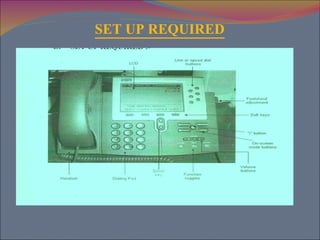
SET UP REQUIRED
Phones are connected directly to  telephone company phone lines. Household VoIP hardware uses  broadband modems.  Early adopters of VoIP may also be  users of other phone equipment.
Takes up a dedicated communication  path. The source and destination are  connected temporarily. Destination node status is necessary.
Messages are received at intermediate routing points.  Also known as store and forward  switching. Normally accepts all traffic.
Session   Initiation   Protocol Designed by Henning Schulzrinne and  Mark Handley in 1996. Used for creating, modifying and terminating sessions. Features of SIP are:  Light weight Transport-independent
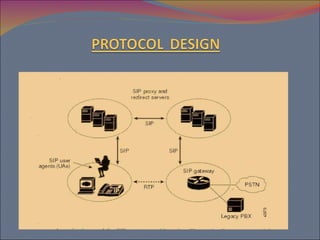
SIP clients use TCP to connect to SIP servers and other SIP endpoints. SIP can be used where session  initiation is a requirement. SIP was used to provide a signalling and call set up protocol.
 
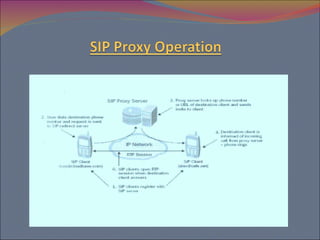
Makes use of elements called proxy servers. Provides a registration function. A user agent server is given the special name called Registrar.
Allow callers and callees to be  identified. Invitation is the most common  operation of SIP.
Relies on following recommendations: Call signaling Bearer signaling Transport of audio,video Security defined
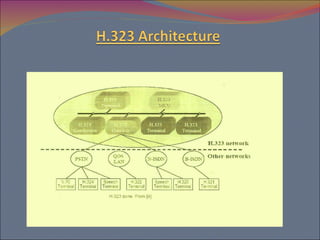
Defines several types of equipment. Consists of following devices: Terminal Gateway  Gatekeeper MCU
 
Greater Efficiency Lower Cost Higher Reliability Supporting Innovation
SIP is transported over Transmission  Control Protocol. Supports user mobility with two  operating modes:  Proxy Redirect
 
H.323 is a packet-based multimedia communication system. Classify and solve multimedia delivery issues. Contains three components: Call processing servers Media gateways Gatekeepers
The business benefits: Reduced long distance costs More enhanced services The technical benefits: Less bandwidth More efficient use
VoIP is dependent on wall power. Systems may be integrated into the phone line. Emergency 911 calls. Normally associated with home broadband services.
Radio Over Internet Protocol  has  adapted VoIP. Radio operators using radios are  able to tune to repeaters.
Internet based telephony holds the  future of communication . Efforts are being made to make the  maximum possible utilization of the  bandwidth.
Any Questions…..????

Ip

  • 1.
    INTERNET PROTOCOL TELEPHONYPRESENTED BY:- GAURAV DASHARIA BHAGAT SINGH ATUL KUMAR SENGAR
  • 2.
    Introduction Voice-over-Internet-Protocol Transmissionof Voice Using IP Market Prospects Session Initiation Protocol H.323 Protocol Advantages of IP for Voice Disadvantages Applications
  • 3.
    Introduction Technologies thatuse Internet protocol have the potential to reduce costs. Internet protocol technology pose challenges for regulators. Internet protocol technology for voice can advance the goal of affordable service.
  • 4.
    VoIP is aterm that refers to all types of voice communication using Internet protocol technology. Voice-over-the-internet is a service in which a regular voice telephone call is transmitted.
  • 5.
    The caller’s voiceis digitized. The digital voice is compressed and then separated into packets. Packets may be lost or delayed during transmission on the Internet. The transmission is assembled to restore the data.
  • 6.
    A VoIP systemconsists of a number of different components. The digital signal processor segments the voice signal into frames. Coders are used for efficient bandwidth utilization.
  • 7.
  • 8.
    Phones are connecteddirectly to telephone company phone lines. Household VoIP hardware uses broadband modems. Early adopters of VoIP may also be users of other phone equipment.
  • 9.
    Takes up adedicated communication path. The source and destination are connected temporarily. Destination node status is necessary.
  • 10.
    Messages are receivedat intermediate routing points. Also known as store and forward switching. Normally accepts all traffic.
  • 11.
    Session Initiation Protocol Designed by Henning Schulzrinne and Mark Handley in 1996. Used for creating, modifying and terminating sessions. Features of SIP are: Light weight Transport-independent
  • 12.
    SIP clients useTCP to connect to SIP servers and other SIP endpoints. SIP can be used where session initiation is a requirement. SIP was used to provide a signalling and call set up protocol.
  • 13.
  • 14.
    Makes use ofelements called proxy servers. Provides a registration function. A user agent server is given the special name called Registrar.
  • 15.
    Allow callers andcallees to be identified. Invitation is the most common operation of SIP.
  • 16.
    Relies on followingrecommendations: Call signaling Bearer signaling Transport of audio,video Security defined
  • 17.
    Defines several typesof equipment. Consists of following devices: Terminal Gateway Gatekeeper MCU
  • 18.
  • 19.
    Greater Efficiency LowerCost Higher Reliability Supporting Innovation
  • 20.
    SIP is transportedover Transmission Control Protocol. Supports user mobility with two operating modes: Proxy Redirect
  • 21.
  • 22.
    H.323 is apacket-based multimedia communication system. Classify and solve multimedia delivery issues. Contains three components: Call processing servers Media gateways Gatekeepers
  • 23.
    The business benefits:Reduced long distance costs More enhanced services The technical benefits: Less bandwidth More efficient use
  • 24.
    VoIP is dependenton wall power. Systems may be integrated into the phone line. Emergency 911 calls. Normally associated with home broadband services.
  • 25.
    Radio Over InternetProtocol has adapted VoIP. Radio operators using radios are able to tune to repeaters.
  • 26.
    Internet based telephonyholds the future of communication . Efforts are being made to make the maximum possible utilization of the bandwidth.
  • 27.