Smart Cities and
The Internet of
Things
Rodger Lea, Mike Blackstock
University of British Columbia
Canada
•The IoT and Smart Cities
•Smart City Hubs
•System structure
•Deployments
•Issues – Interoperability & hybrid cloud
•Examples
Overview
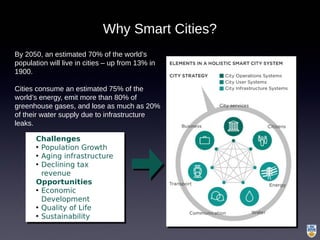
By 2050, an estimated 70% of the world’s
population will live in cities – up from 13% in
1900.
Cities consume an estimated 75% of the
world’s energy, emit more than 80% of
greenhouse gases, and lose as much as 20%
of their water supply due to infrastructure
leaks.
Challenges
• Population Growth
• Aging infrastructure
• Declining tax
revenue
Opportunities
• Economic
Development
• Quality of Life
• Sustainability
Why Smart Cities?
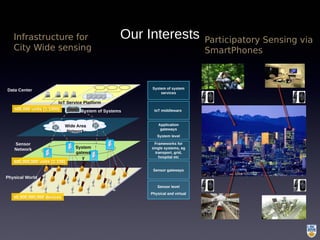
System of Systems
Physical World
Wide Area
Network
System
gatewa
y
Physical World
Sensor
Network
IoT Service Platform
Smart
supply chain
Smart
grid
Smart
healthcare
Smart
building
app1 app2 app3
Data Center
Application
gateways
System level
Frameworks for
single systems, eg
transport, grid,
hospital etc
Sensor gateways
IoT middleware
System of system
services
Sensor level
Physical and virtual
50,000,000,000 devices
500,000 units (1:1000)
500,000,000 units (1:100)
Infrastructure for
City Wide sensing
Participatory Sensing via
SmartPhones
Our Interests
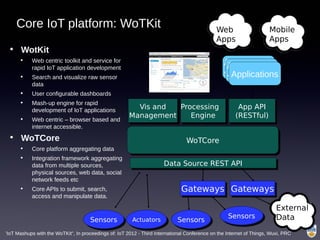
• WotKit
• Web centric toolkit and service for
rapid IoT application development
• Search and visualize raw sensor
data
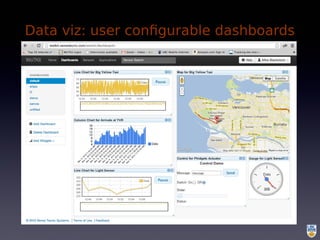
• User configurable dashboards
• Mash-up engine for rapid
development of IoT applications
• Web centric – browser based and
internet accessible.
• WoTCore
• Core platform aggregating data
• Integration framework aggregating
data from multiple sources,
physical sources, web data, social
network feeds etc
• Core APIs to submit, search,
access and manipulate data.
SensorsSensors ActuatorsActuators SensorsSensors
WoTCoreWoTCore
GatewaysGateways
External
Data
Vis and
Management
Vis and
Management
Processing
Engine
Processing
Engine
Data Source REST APIData Source REST API
App API
(RESTful)
App API
(RESTful)
GatewaysGateways
SensorsSensors
Application
s
Application
s
Application
s
Application
s ApplicationsApplications
Web
Apps
Mobile
Apps
Core IoT platform: WoTKit
'IoT Mashups with the WoTKit", In proceedings of: IoT 2012 - Third International Conference on the Internet of Things, Wuxi, PRC
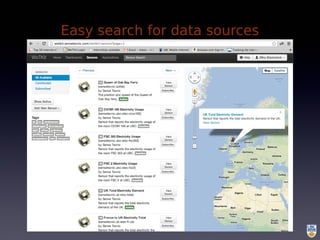
Easy search for data sources
Data viz: user configurable dashboards
Visual tool for application development
Dataset Portal
Storage & API
Hub Interop API Proxy Hub Landing Site
Billing System
API Usage
Logs
External Static
Data
Sensor Networks &
Real Time Updates
Uploaded Files
Sensor
Gateways
WoTKit Sensor Data
Portal and API
Application Container
API Usage Information
External Apps
Hub App Store
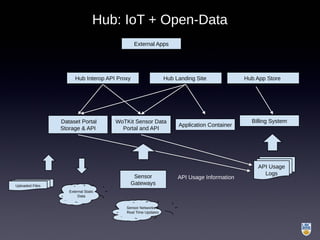
Hub: IoT + Open-Data
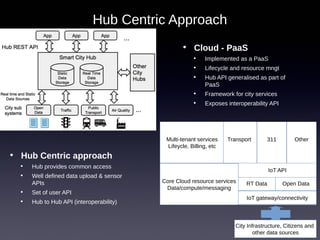
Hub Centric Approach
IoT gateway/connectivity
Open DataRT DataCore Cloud resource services
Data/compute/messaging
IoT API
Multi-tenant services
Lifeycle, Billing, etc
Transport
App
311
App
Other
Apps
City Infrastructure, Citizens and
other data sources
• Hub Centric approach
• Hub provides common access
• Well defined data upload & sensor
APIs
• Set of user API
• Hub to Hub API (interoperability)
• Cloud - PaaS
• Implemented as a PaaS
• Lifecycle and resource mngt
• Hub API generalised as part of
PaaS
• Framework for city services
• Exposes interoperability API
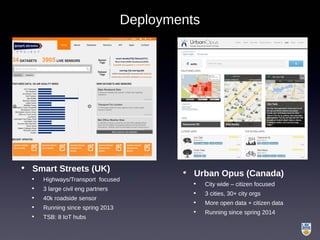
Deployments
• Smart Streets (UK)
• Highways/Transport focused
• 3 large civil eng partners
• 40k roadside sensor
• Running since spring 2013
• TSB: 8 IoT hubs
• Urban Opus (Canada)
• City wide – citizen focused
• 3 cities, 30+ city orgs
• More open data + citizen data
• Running since spring 2014
Interoperability
oHow do hubs interoperate
oWhat do they expose and how
o Regional groupings (metro), city to city,
system to system
oWork as part of 8 IoT Smart City projects (UK)
oHyperCat – basic city catalogue
o Query catalogue, search etc
o Basic access
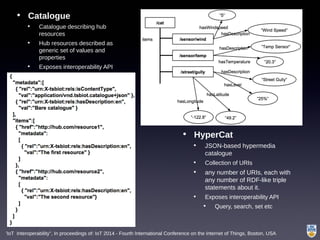
Fig. 3. Example HyperCat catalogue.
• HyperCat
• JSON-based hypermedia
catalogue
• Collection of URIs
• any number of URIs, each with
any number of RDF-like triple
statements about it.
• Exposes interoperability API
• Query, search, set etc
• Catalogue
• Catalogue describing hub
resources
• Hub resources described as
generic set of values and
properties
• Exposes interoperability API
'IoT Interoperability", In proceedings of: IoT 2014 - Fourth International Conference on the Internet of Things, Boston, USA
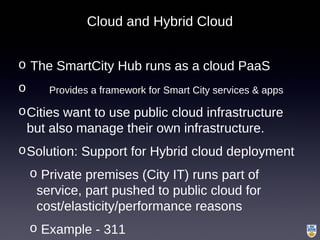
Cloud and Hybrid Cloud
o The SmartCity Hub runs as a cloud PaaS
o Provides a framework for Smart City services & apps
oCities want to use public cloud infrastructure
but also manage their own infrastructure.
oSolution: Support for Hybrid cloud deployment
o Private premises (City IT) runs part of
service, part pushed to public cloud for
cost/elasticity/performance reasons
o Example - 311
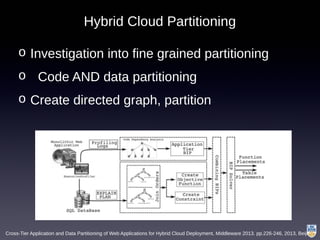
Hybrid Cloud Partitioning
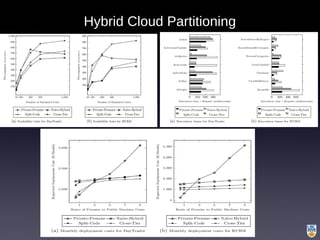
o Investigation into fine grained partitioning
o Code AND data partitioning
o Create directed graph, partition
Cross-Tier Application and Data Partitioning of Web Applications for Hybrid Cloud Deployment, Middleware 2013. pp.226-246, 2013, Beijing
Hybrid Cloud Partitioning
Examples
• SmartStreets - UK city data hub (UK)
• Focus on real-time data
• Urban Opus – Trusted Broker
• Participatory sensing
• Precision Agriculture
• Focus on WoTKit
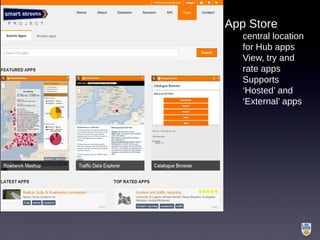
App Store
● central location
for Hub apps
● View, try and
rate apps
● Supports
‘Hosted’ and
‘External’ apps
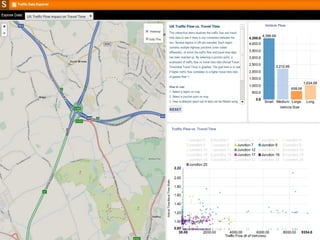
App examples
● junction analyser
● explore traffic
behaviour as
junction load
increases
● Visualize patterns
● Drill down on
specific data points
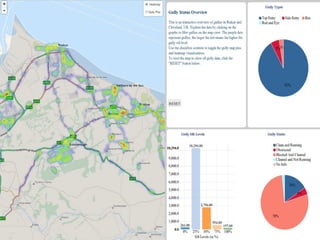
App examples
● Drain/Gully silt
level
● Snapshot of
region
● Heat map
highlights
‘problem areas’
● Explore by Gully
type, status etc
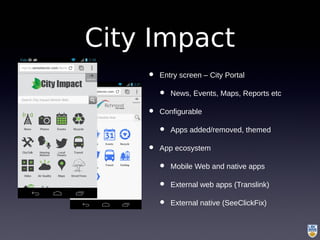
• Entry screen – City Portal
• News, Events, Maps, Reports etc
• Configurable
• Apps added/removed, themed
• App ecosystem
• Mobile Web and native apps
• External web apps (Translink)
• External native (SeeClickFix)
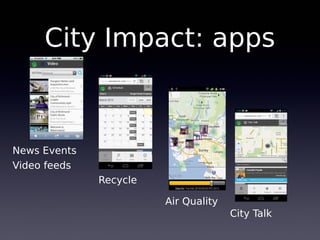
City Impact
News Events
Video feeds
Recycle
City Talk
City Impact: apps
Air Quality
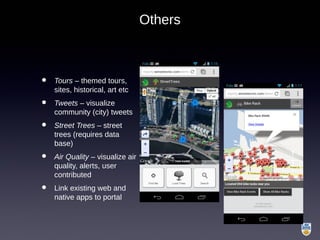
• Tours – themed tours,
sites, historical, art etc
• Tweets – visualize
community (city) tweets
• Street Trees – street
trees (requires data
base)
• Air Quality – visualize air
quality, alerts, user
contributed
• Link existing web and
native apps to portal
Others
Issues and questions
oIoT Hubs as common access points
o How to define a common API
oTrusted data brokers
o Trust through user ownership & control
o Data brokerage – business models
o Cloud PaaS – inter cloud or cloud-to-
cloud
Thanks
•Demonstrations and more information
•http://smartstreets.sensetecnic.com
•http://urbanopus.net
•WoTKit
•http://wotkit.sensetecnic.com

iot-and-smart-cities-lea-blackstock

  • 1.
    Smart Cities and TheInternet of Things Rodger Lea, Mike Blackstock University of British Columbia Canada
  • 2.
    •The IoT andSmart Cities •Smart City Hubs •System structure •Deployments •Issues – Interoperability & hybrid cloud •Examples Overview
  • 3.
    By 2050, anestimated 70% of the world’s population will live in cities – up from 13% in 1900. Cities consume an estimated 75% of the world’s energy, emit more than 80% of greenhouse gases, and lose as much as 20% of their water supply due to infrastructure leaks. Challenges • Population Growth • Aging infrastructure • Declining tax revenue Opportunities • Economic Development • Quality of Life • Sustainability Why Smart Cities?
  • 4.
    System of Systems PhysicalWorld Wide Area Network System gatewa y Physical World Sensor Network IoT Service Platform Smart supply chain Smart grid Smart healthcare Smart building app1 app2 app3 Data Center Application gateways System level Frameworks for single systems, eg transport, grid, hospital etc Sensor gateways IoT middleware System of system services Sensor level Physical and virtual 50,000,000,000 devices 500,000 units (1:1000) 500,000,000 units (1:100) Infrastructure for City Wide sensing Participatory Sensing via SmartPhones Our Interests
  • 5.
    • WotKit • Webcentric toolkit and service for rapid IoT application development • Search and visualize raw sensor data • User configurable dashboards • Mash-up engine for rapid development of IoT applications • Web centric – browser based and internet accessible. • WoTCore • Core platform aggregating data • Integration framework aggregating data from multiple sources, physical sources, web data, social network feeds etc • Core APIs to submit, search, access and manipulate data. SensorsSensors ActuatorsActuators SensorsSensors WoTCoreWoTCore GatewaysGateways External Data Vis and Management Vis and Management Processing Engine Processing Engine Data Source REST APIData Source REST API App API (RESTful) App API (RESTful) GatewaysGateways SensorsSensors Application s Application s Application s Application s ApplicationsApplications Web Apps Mobile Apps Core IoT platform: WoTKit 'IoT Mashups with the WoTKit", In proceedings of: IoT 2012 - Third International Conference on the Internet of Things, Wuxi, PRC
  • 6.
    Easy search fordata sources
  • 7.
    Data viz: userconfigurable dashboards
  • 8.
    Visual tool forapplication development
  • 9.
    Dataset Portal Storage &API Hub Interop API Proxy Hub Landing Site Billing System API Usage Logs External Static Data Sensor Networks & Real Time Updates Uploaded Files Sensor Gateways WoTKit Sensor Data Portal and API Application Container API Usage Information External Apps Hub App Store Hub: IoT + Open-Data
  • 10.
    Hub Centric Approach IoTgateway/connectivity Open DataRT DataCore Cloud resource services Data/compute/messaging IoT API Multi-tenant services Lifeycle, Billing, etc Transport App 311 App Other Apps City Infrastructure, Citizens and other data sources • Hub Centric approach • Hub provides common access • Well defined data upload & sensor APIs • Set of user API • Hub to Hub API (interoperability) • Cloud - PaaS • Implemented as a PaaS • Lifecycle and resource mngt • Hub API generalised as part of PaaS • Framework for city services • Exposes interoperability API
  • 11.
    Deployments • Smart Streets(UK) • Highways/Transport focused • 3 large civil eng partners • 40k roadside sensor • Running since spring 2013 • TSB: 8 IoT hubs • Urban Opus (Canada) • City wide – citizen focused • 3 cities, 30+ city orgs • More open data + citizen data • Running since spring 2014
  • 12.
    Interoperability oHow do hubsinteroperate oWhat do they expose and how o Regional groupings (metro), city to city, system to system oWork as part of 8 IoT Smart City projects (UK) oHyperCat – basic city catalogue o Query catalogue, search etc o Basic access
  • 13.
    Fig. 3. ExampleHyperCat catalogue. • HyperCat • JSON-based hypermedia catalogue • Collection of URIs • any number of URIs, each with any number of RDF-like triple statements about it. • Exposes interoperability API • Query, search, set etc • Catalogue • Catalogue describing hub resources • Hub resources described as generic set of values and properties • Exposes interoperability API 'IoT Interoperability", In proceedings of: IoT 2014 - Fourth International Conference on the Internet of Things, Boston, USA
  • 14.
    Cloud and HybridCloud o The SmartCity Hub runs as a cloud PaaS o Provides a framework for Smart City services & apps oCities want to use public cloud infrastructure but also manage their own infrastructure. oSolution: Support for Hybrid cloud deployment o Private premises (City IT) runs part of service, part pushed to public cloud for cost/elasticity/performance reasons o Example - 311
  • 15.
    Hybrid Cloud Partitioning oInvestigation into fine grained partitioning o Code AND data partitioning o Create directed graph, partition Cross-Tier Application and Data Partitioning of Web Applications for Hybrid Cloud Deployment, Middleware 2013. pp.226-246, 2013, Beijing
  • 16.
  • 17.
    Examples • SmartStreets -UK city data hub (UK) • Focus on real-time data • Urban Opus – Trusted Broker • Participatory sensing • Precision Agriculture • Focus on WoTKit
  • 18.
    App Store ● centrallocation for Hub apps ● View, try and rate apps ● Supports ‘Hosted’ and ‘External’ apps
  • 19.
    App examples ● junctionanalyser ● explore traffic behaviour as junction load increases ● Visualize patterns ● Drill down on specific data points
  • 20.
    App examples ● Drain/Gullysilt level ● Snapshot of region ● Heat map highlights ‘problem areas’ ● Explore by Gully type, status etc
  • 21.
    • Entry screen– City Portal • News, Events, Maps, Reports etc • Configurable • Apps added/removed, themed • App ecosystem • Mobile Web and native apps • External web apps (Translink) • External native (SeeClickFix) City Impact
  • 22.
    News Events Video feeds Recycle CityTalk City Impact: apps Air Quality
  • 23.
    • Tours –themed tours, sites, historical, art etc • Tweets – visualize community (city) tweets • Street Trees – street trees (requires data base) • Air Quality – visualize air quality, alerts, user contributed • Link existing web and native apps to portal Others
  • 24.
    Issues and questions oIoTHubs as common access points o How to define a common API oTrusted data brokers o Trust through user ownership & control o Data brokerage – business models o Cloud PaaS – inter cloud or cloud-to- cloud
  • 25.
    Thanks •Demonstrations and moreinformation •http://smartstreets.sensetecnic.com •http://urbanopus.net •WoTKit •http://wotkit.sensetecnic.com