VEERAPPA NISTY ENGINEERING
COLLEGE
Technical Seminar
on
The Effect of IoT New Features on Security
and Privacy
Presented by
V. Saigireesh
(EEE dept)
Under the guidance of
Pro f . Srinivas
CONTENTS
Introduction
Methodology
Research Analysis
Advantages and Disadvantages
Applications of IoT
Conclusion
References
Introduction
IoT is a network of physical objects that are embedded with
software, electronics, network and sensors that allows these
objects to collect and exchange data.
IoT is a unique features of IoT devices, network and applications,
which are quite different with smart phones and computers.
Hardware, software and connectivity will all need to be secure for
IoT objects to work effectively.
Without security for IoT, any connected object, from refrigerators
to manufacturing bots, can be hacked.
Once hackers gain control, they can usurp the object's
functionality and steal the user's digital data.
Methodology
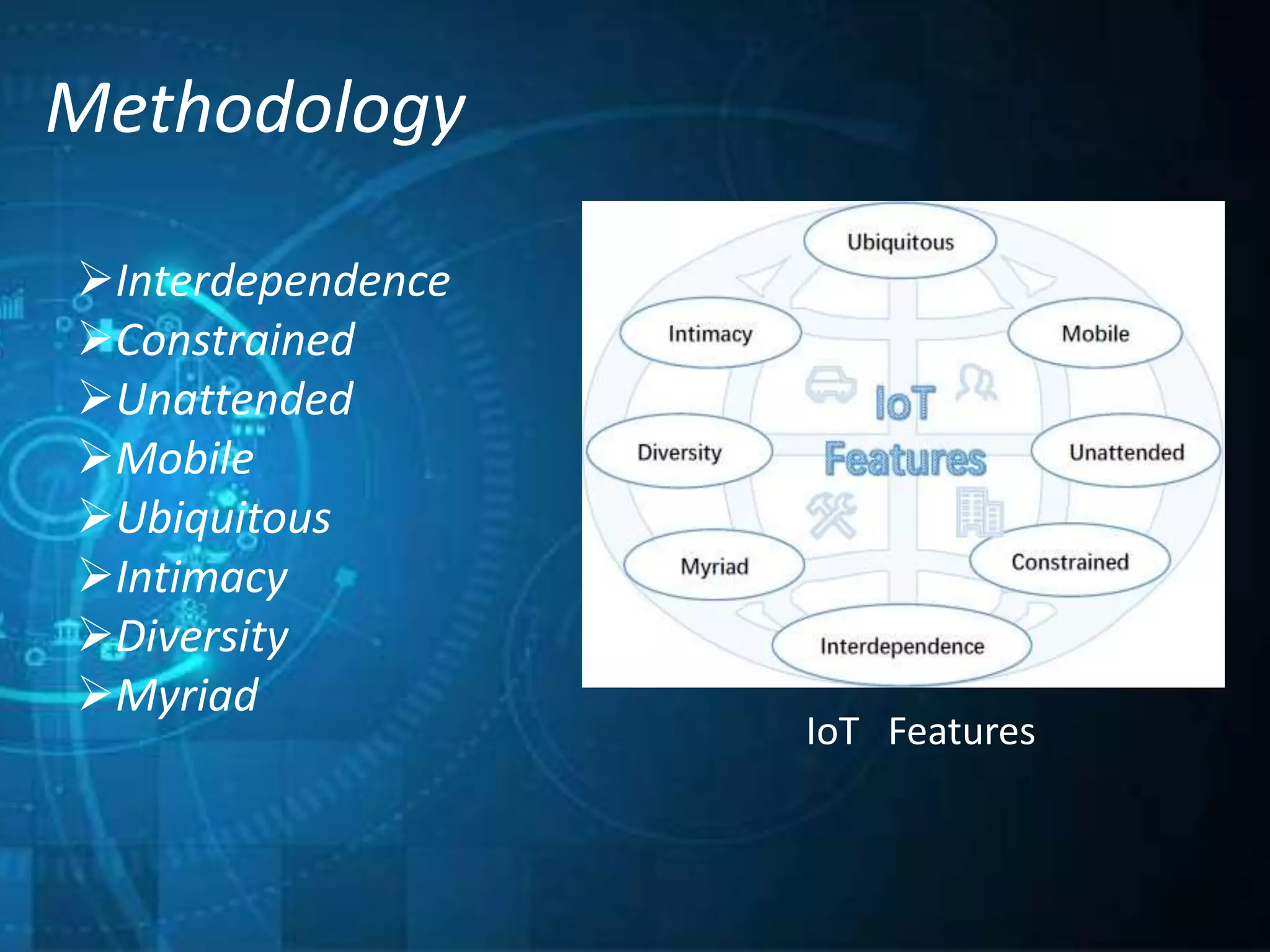
IoT Features
Interdependence
Constrained
Unattended
Mobile
Ubiquitous
Intimacy
Diversity
Myriad
Interdependence
As the evolution of IoT devices, the interactions between devices become
more complex and human involvement is needless.
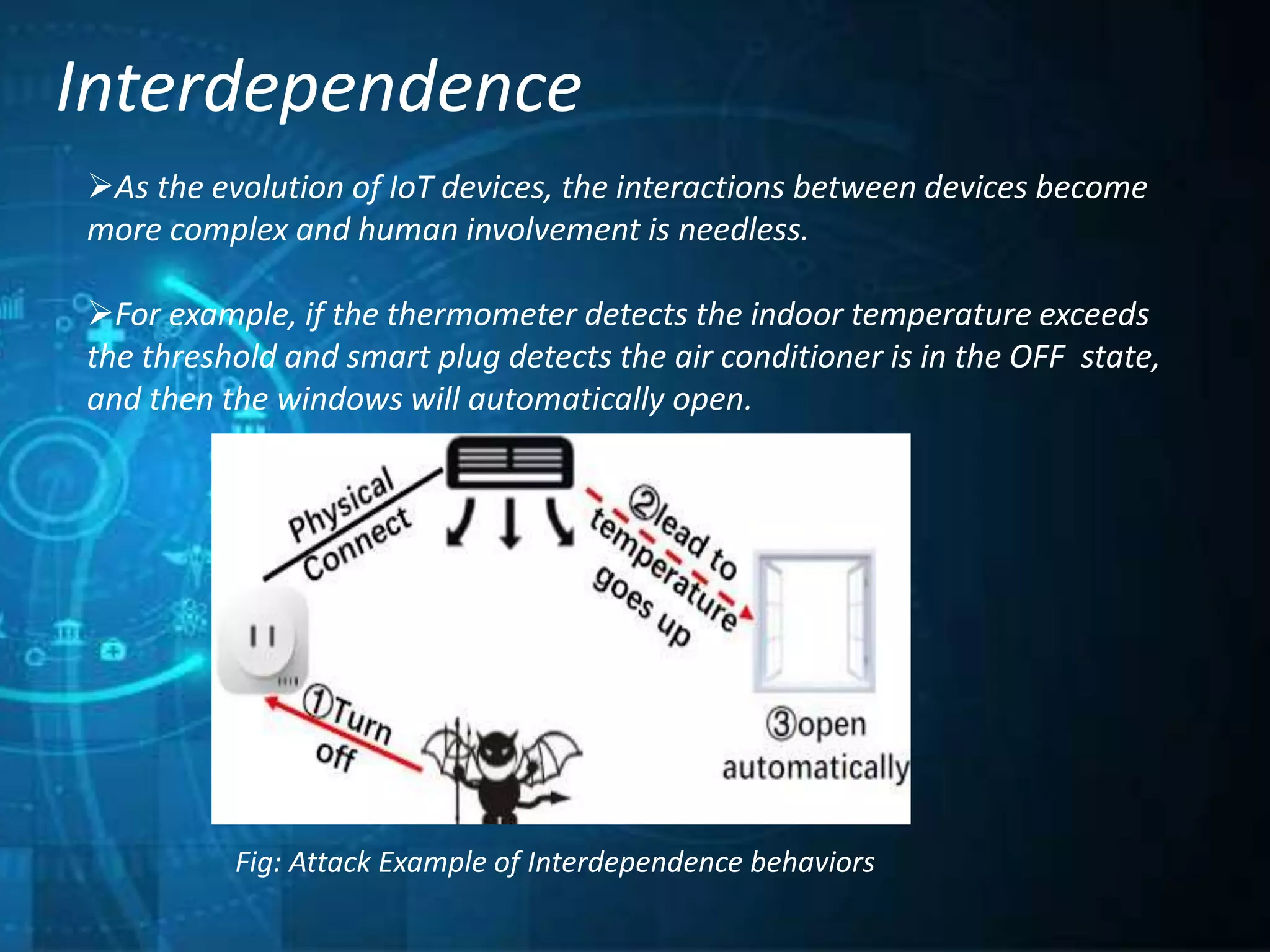
For example, if the thermometer detects the indoor temperature exceeds
the threshold and smart plug detects the air conditioner is in the OFF state,
and then the windows will automatically open.
Fig: Attack Example of Interdependence behaviors
Constrained
With the limitation of cost and physical conditions, many IoT devices,
especially industrial sensor and implantable medical devices, have been
designed to be light weight and small.
For example, lightweight IoT devices do not have the memory management
unit (MMU), so memory isolation, address space layout randomization (ASLR)
and other memory safety measures cannot be applied to these devices.

To enhance system security for constrained IoT devices, previous studies
focus on designing system security mechanisms for lightweight devices, but
most of them still cannot satisfy both the security and application
requirements.
Unattended
Unattended bots execute tasks and interact with applications
independent of human involvement.
As increasing adoption of wireless networking prompts, these
devices are evolving into IoT devices. We describe the long-time
unattended status of IoT devices as an IoT feature named
“unattended” here.
It is hard to physically connect an external interface to verify the
state of these devices. Thus, the remote attacks targeted them are
difficult to detect.
Mobile
Many IoT devices, such as wearable devices and
smart cars are used in the mobile environment.
For example, when user drives a smart car from one
district to another, the car can automatically collect
road information for highway foundational facilities in
the new district. It will become more common in the
future.
Because mobile IoT devices usually join more
networks, attackers tend to inject the malicious code
into mobile IoT devices to accelerate its spread.
Ubiquitous
Fig: Attack Example of Insecure Configuration
Manufacturers
Operators
Researches
Intimacy
We describe the intimate relationship between users and IoT devices as an
IoT feature named “Intimacy” here.
These devices not only collect our biology information including heart rate
and blood pressure but also monitor and record our surrounding information
and daily activities like the change of indoor temperature and the locations
you have been.
The intimate relationships between users and IoT devices will certainly raise
more serious and unnoticed privacy concerns.
Driven by profit, these providers usually keep this data forever and even
share these data with other advertising agency without the user’s consent,
which increases the risk of privacy leak.
Myriad
We describe the enormous number of IoT devices and
the huge amount of IoT data as an IoT feature named
“Myriad” here.
In 2016, the attack traffic of Mirai botnet which was
composed of more than 1 million IoT devices, exceeded
1Tbps, which previous cyber-attacks have never been
achieved.
Research Analysis
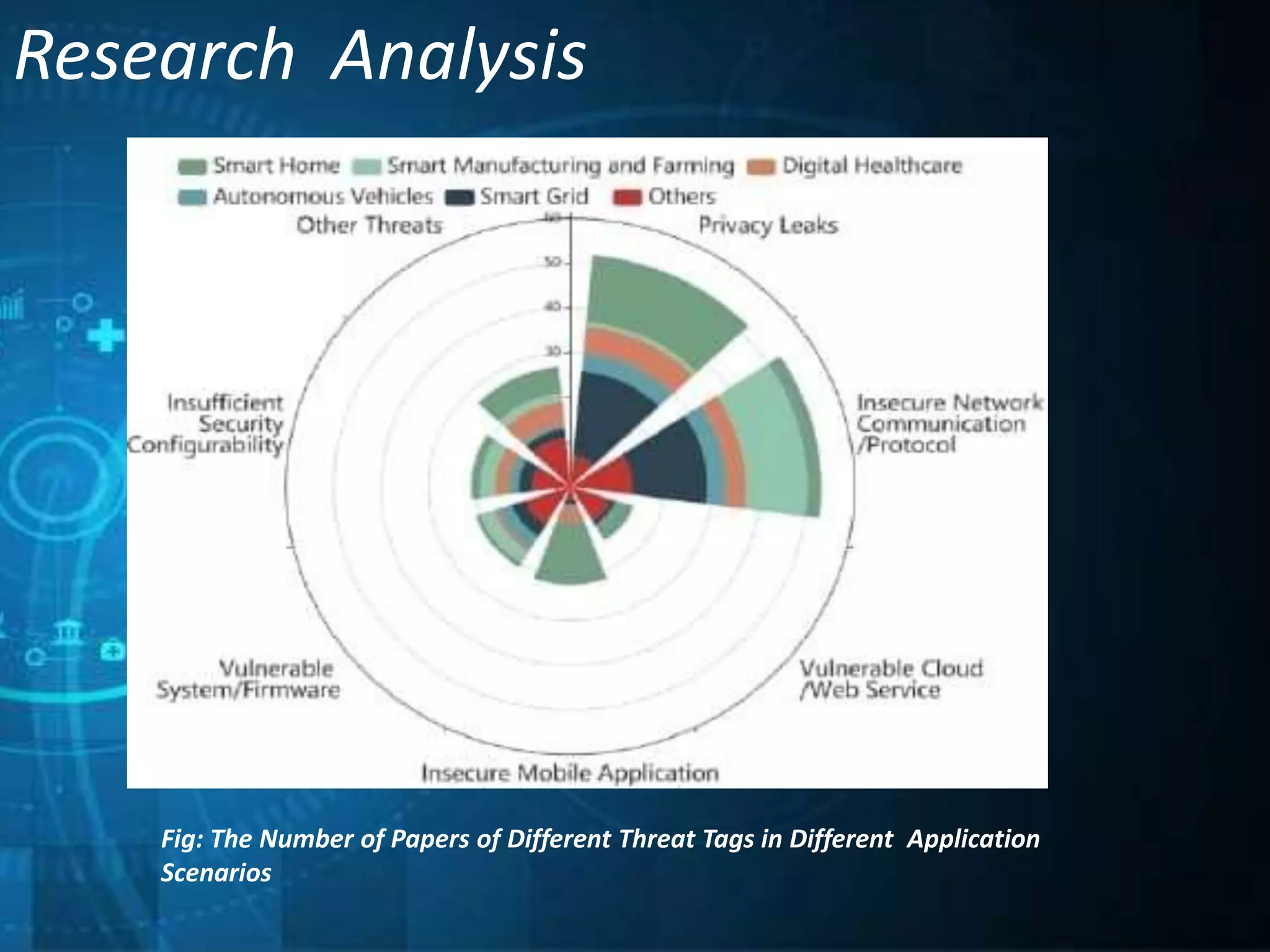
Fig: The Number of Papers of Different Threat Tags in Different Application
Scenarios
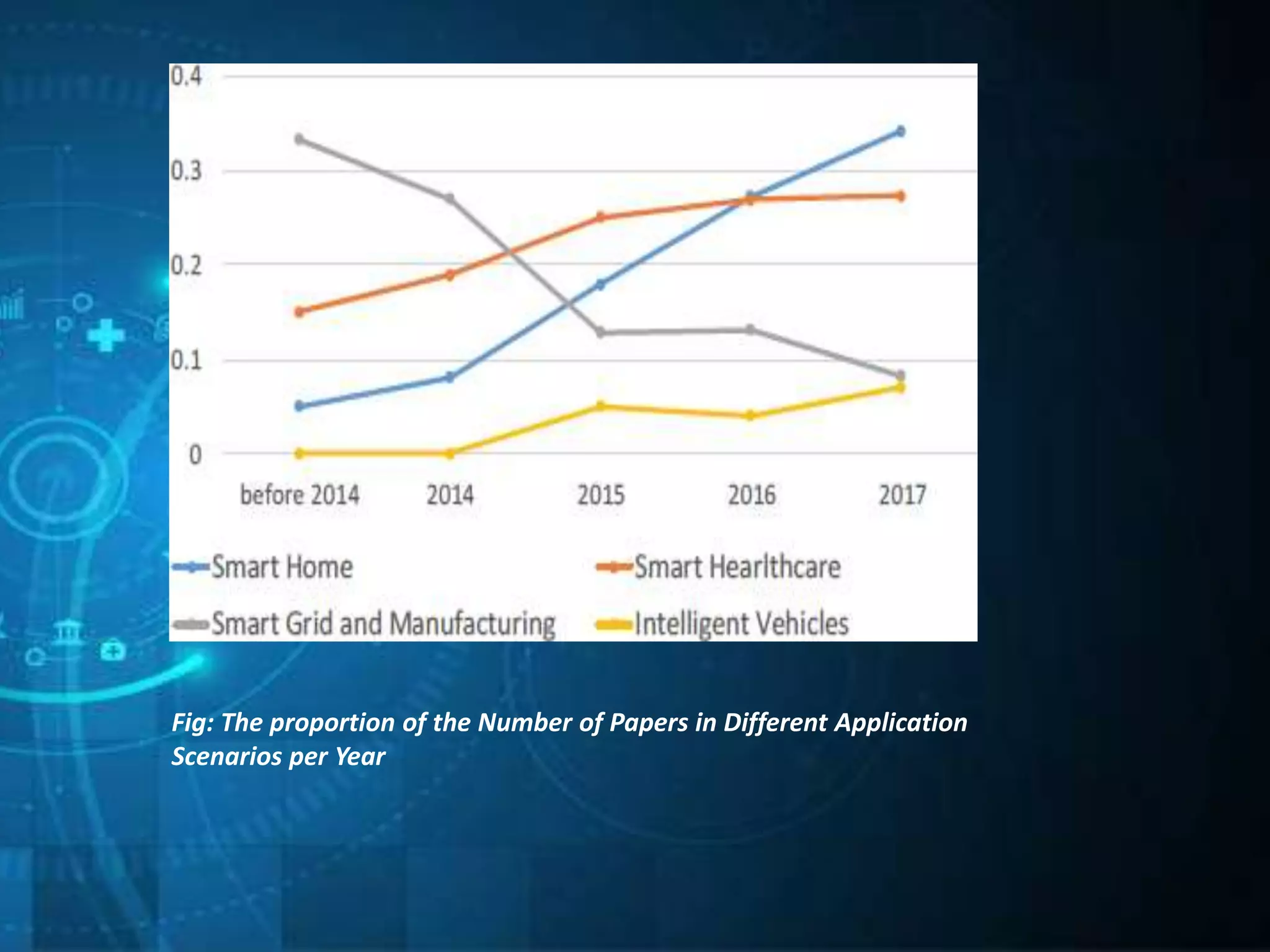
Fig: The proportion of the Number of Papers in Different Application
Scenarios per Year
Advantages
Minimize human effort
Save time
Enhanced data collection
Improved security
Efficient resource utilization
Reduced use of other electronic equipment
Disadvantages
Security issues
Privacy concern
Increased unemployment
High dependency on the internet
Reduced mental and physical activity
Applications of IoT
Smart Home Applications
Health Care
Smart Cities
Agriculture
Industrial Automation
Conclusion
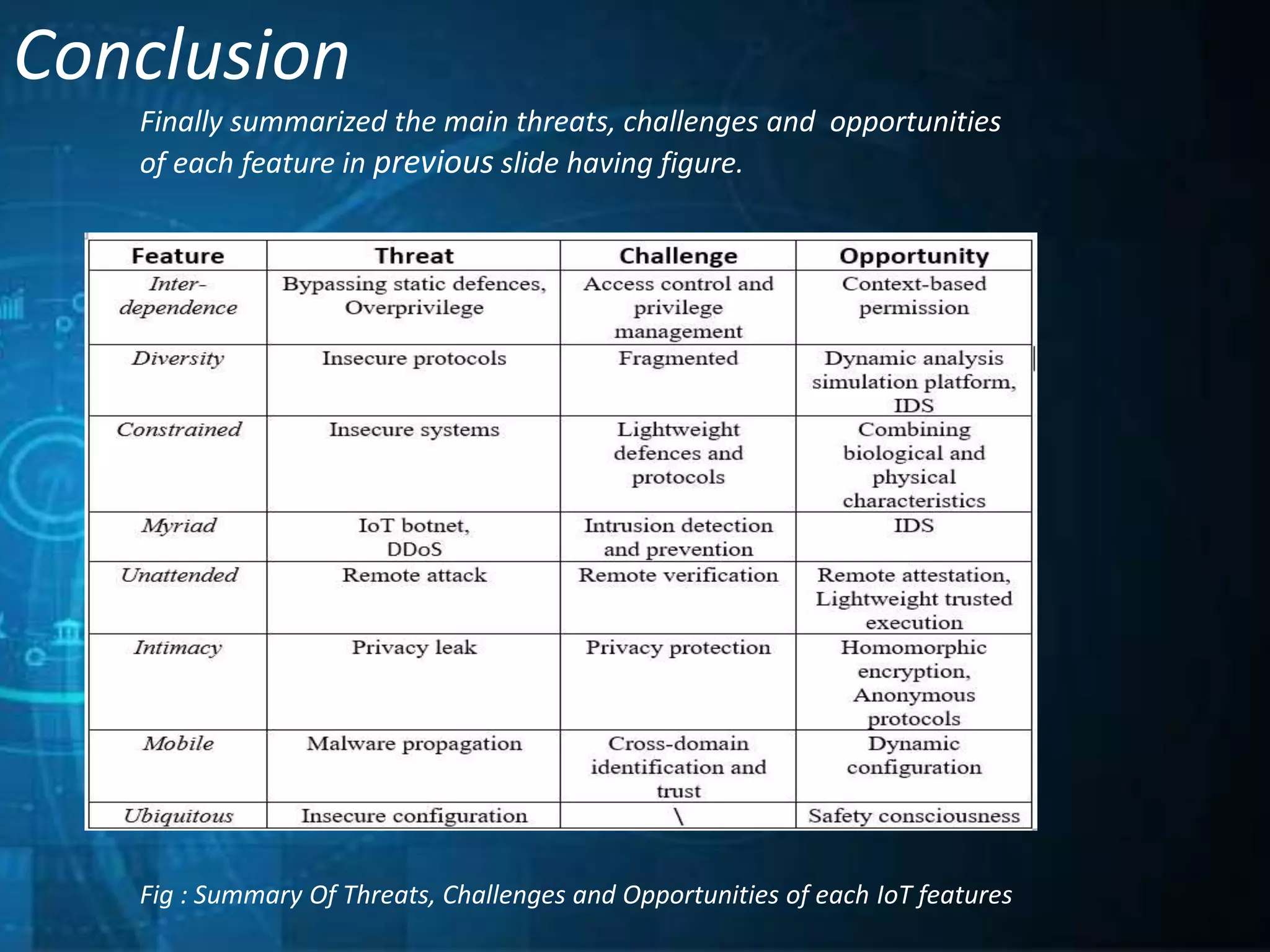
Finally summarized the main threats, challenges and opportunities
of each feature in previous slide having figure.
Fig : Summary Of Threats, Challenges and Opportunities of each IoT features
References
M. Hu, W. Liu, K. Peng, X. Ma, W. Cheng, J. Liu,
and B. Li, “Joint routing and scheduling for vehicle-assisted
multidrone surveillance,” IEEE Internet Things J., vol. 6, no. 2,
pp. 1781-1790, Apr. 2019.
AI-Inspired Non-Terrestrial Networks for IIoT: Review on
Enabling Technologies and Applications Emmanouel T.
Michailidis , Stelios
M. Potirakis and Athanasios G. Kanatas
Wenjing Xiao; Rui Wang; Jeungeun Song; Di Wu; Long Hu;
Min Chen,“AI-based Satellite Ground Communication System
with In- telligent Antenna Pointing”,7-11 Dec. 2020.

iot ppt.pptx

  • 2.
    VEERAPPA NISTY ENGINEERING COLLEGE TechnicalSeminar on The Effect of IoT New Features on Security and Privacy Presented by V. Saigireesh (EEE dept) Under the guidance of Pro f . Srinivas
  • 3.
    CONTENTS Introduction Methodology Research Analysis Advantages andDisadvantages Applications of IoT Conclusion References
  • 4.
    Introduction IoT is anetwork of physical objects that are embedded with software, electronics, network and sensors that allows these objects to collect and exchange data. IoT is a unique features of IoT devices, network and applications, which are quite different with smart phones and computers. Hardware, software and connectivity will all need to be secure for IoT objects to work effectively. Without security for IoT, any connected object, from refrigerators to manufacturing bots, can be hacked. Once hackers gain control, they can usurp the object's functionality and steal the user's digital data.
  • 5.
  • 6.
    Interdependence As the evolutionof IoT devices, the interactions between devices become more complex and human involvement is needless. For example, if the thermometer detects the indoor temperature exceeds the threshold and smart plug detects the air conditioner is in the OFF state, and then the windows will automatically open. Fig: Attack Example of Interdependence behaviors
  • 7.
    Constrained With the limitationof cost and physical conditions, many IoT devices, especially industrial sensor and implantable medical devices, have been designed to be light weight and small. For example, lightweight IoT devices do not have the memory management unit (MMU), so memory isolation, address space layout randomization (ASLR) and other memory safety measures cannot be applied to these devices.  To enhance system security for constrained IoT devices, previous studies focus on designing system security mechanisms for lightweight devices, but most of them still cannot satisfy both the security and application requirements.
  • 8.
    Unattended Unattended bots executetasks and interact with applications independent of human involvement. As increasing adoption of wireless networking prompts, these devices are evolving into IoT devices. We describe the long-time unattended status of IoT devices as an IoT feature named “unattended” here. It is hard to physically connect an external interface to verify the state of these devices. Thus, the remote attacks targeted them are difficult to detect.
  • 9.
    Mobile Many IoT devices,such as wearable devices and smart cars are used in the mobile environment. For example, when user drives a smart car from one district to another, the car can automatically collect road information for highway foundational facilities in the new district. It will become more common in the future. Because mobile IoT devices usually join more networks, attackers tend to inject the malicious code into mobile IoT devices to accelerate its spread.
  • 10.
    Ubiquitous Fig: Attack Exampleof Insecure Configuration Manufacturers Operators Researches
  • 11.
    Intimacy We describe theintimate relationship between users and IoT devices as an IoT feature named “Intimacy” here. These devices not only collect our biology information including heart rate and blood pressure but also monitor and record our surrounding information and daily activities like the change of indoor temperature and the locations you have been. The intimate relationships between users and IoT devices will certainly raise more serious and unnoticed privacy concerns. Driven by profit, these providers usually keep this data forever and even share these data with other advertising agency without the user’s consent, which increases the risk of privacy leak.
  • 12.
    Myriad We describe theenormous number of IoT devices and the huge amount of IoT data as an IoT feature named “Myriad” here. In 2016, the attack traffic of Mirai botnet which was composed of more than 1 million IoT devices, exceeded 1Tbps, which previous cyber-attacks have never been achieved.
  • 13.
    Research Analysis Fig: TheNumber of Papers of Different Threat Tags in Different Application Scenarios
  • 14.
    Fig: The proportionof the Number of Papers in Different Application Scenarios per Year
  • 15.
    Advantages Minimize human effort Savetime Enhanced data collection Improved security Efficient resource utilization Reduced use of other electronic equipment Disadvantages Security issues Privacy concern Increased unemployment High dependency on the internet Reduced mental and physical activity
  • 16.
    Applications of IoT SmartHome Applications Health Care Smart Cities Agriculture Industrial Automation
  • 17.
    Conclusion Finally summarized themain threats, challenges and opportunities of each feature in previous slide having figure. Fig : Summary Of Threats, Challenges and Opportunities of each IoT features
  • 18.
    References M. Hu, W.Liu, K. Peng, X. Ma, W. Cheng, J. Liu, and B. Li, “Joint routing and scheduling for vehicle-assisted multidrone surveillance,” IEEE Internet Things J., vol. 6, no. 2, pp. 1781-1790, Apr. 2019. AI-Inspired Non-Terrestrial Networks for IIoT: Review on Enabling Technologies and Applications Emmanouel T. Michailidis , Stelios M. Potirakis and Athanasios G. Kanatas Wenjing Xiao; Rui Wang; Jeungeun Song; Di Wu; Long Hu; Min Chen,“AI-based Satellite Ground Communication System with In- telligent Antenna Pointing”,7-11 Dec. 2020.