N AT U R A L S C I E N C E – U N I T 2 – PA R T 1
3 R D O F P R I M M A RY
INVERTEBRATE ANIMALS
1
INVERTEBRATES ANIMLAS
• The invertebrates animals has no skeleton.
• There are different types of invertebrate animals:
Arthopods
Echinoderms
Jellyfish
Sponges
Worms
Molluscs
2
ARTHOPODS
• There are the biggest group of invertebrates.
• Their body are divided in 3 parts: abdomen, head and
thorax.
• They have a hard skin and joints in their legs.
• INSECTS: bees, ants.
• ARACHNIDS: spiders, scorpions.
3
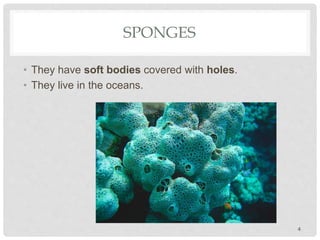
SPONGES
• They have soft bodies covered with holes.
• They live in the oceans.
4
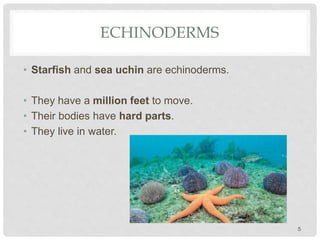
ECHINODERMS
• Starfish and sea uchin are echinoderms.
• They have a million feet to move.
• Their bodies have hard parts.
• They live in water.
5
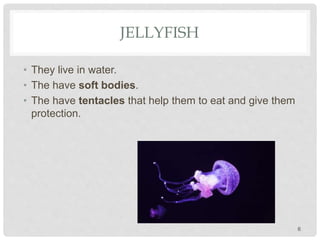
JELLYFISH
• They live in water.
• The have soft bodies.
• The have tentacles that help them to eat and give them
protection.
6
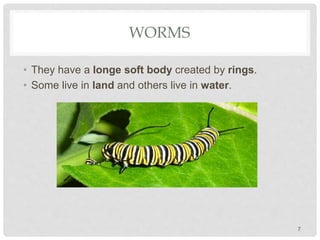
WORMS
• They have a longe soft body created by rings.
• Some live in land and others live in water.
7
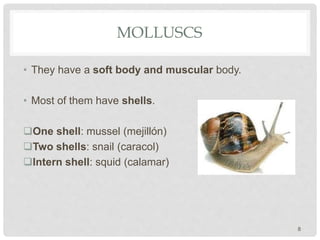
MOLLUSCS
• They have a soft body and muscular body.
• Most of them have shells.
One shell: mussel (mejillón)
Two shells: snail (caracol)
Intern shell: squid (calamar)
8
QUESTIONS
• What are the different groups of the arthopods?
• Which groups has holes in their bodies?
• Which starfish live in?
• Which group has shells in the body?
9
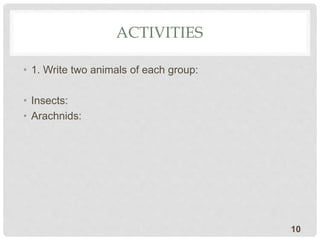
ACTIVITIES
• 1. Write two animals of each group:
• Insects:
• Arachnids:
10
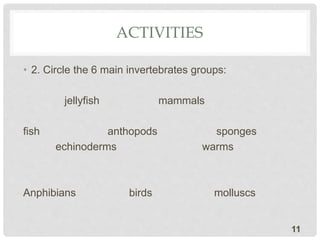
ACTIVITIES
• 2. Circle the 6 main invertebrates groups:
jellyfish mammals
fish anthopods sponges
echinoderms warms
Anphibians birds molluscs
11
JOURNAL
• What’s your favourite animal?
12

Invertebrate animals- Natural Science - 3rd primary

  • 1.
    N AT UR A L S C I E N C E – U N I T 2 – PA R T 1 3 R D O F P R I M M A RY INVERTEBRATE ANIMALS 1
  • 2.
    INVERTEBRATES ANIMLAS • Theinvertebrates animals has no skeleton. • There are different types of invertebrate animals: Arthopods Echinoderms Jellyfish Sponges Worms Molluscs 2
  • 3.
    ARTHOPODS • There arethe biggest group of invertebrates. • Their body are divided in 3 parts: abdomen, head and thorax. • They have a hard skin and joints in their legs. • INSECTS: bees, ants. • ARACHNIDS: spiders, scorpions. 3
  • 4.
    SPONGES • They havesoft bodies covered with holes. • They live in the oceans. 4
  • 5.
    ECHINODERMS • Starfish andsea uchin are echinoderms. • They have a million feet to move. • Their bodies have hard parts. • They live in water. 5
  • 6.
    JELLYFISH • They livein water. • The have soft bodies. • The have tentacles that help them to eat and give them protection. 6
  • 7.
    WORMS • They havea longe soft body created by rings. • Some live in land and others live in water. 7
  • 8.
    MOLLUSCS • They havea soft body and muscular body. • Most of them have shells. One shell: mussel (mejillón) Two shells: snail (caracol) Intern shell: squid (calamar) 8
  • 9.
    QUESTIONS • What arethe different groups of the arthopods? • Which groups has holes in their bodies? • Which starfish live in? • Which group has shells in the body? 9
  • 10.
    ACTIVITIES • 1. Writetwo animals of each group: • Insects: • Arachnids: 10
  • 11.
    ACTIVITIES • 2. Circlethe 6 main invertebrates groups: jellyfish mammals fish anthopods sponges echinoderms warms Anphibians birds molluscs 11
  • 12.
    JOURNAL • What’s yourfavourite animal? 12