• Danilo Fernando Sánchez Sánchez 
1520121089 
• Juan Sebastián Vaquiro Ospina 
1520121122 
International Business I 
Universidad de Ibagué
Definition 
 
 FDI "includes mergers and acquisitions, 
building new facilities, reinvesting the profits 
of the foreign operations and intercompany 
lending company." 
 The characteristics of foreign direct 
investment are: 
 Invest in countries where there is political 
and economic stability. 
 Searching for an extension of the industrial 
and commercial capital.
Types of FDI 
 
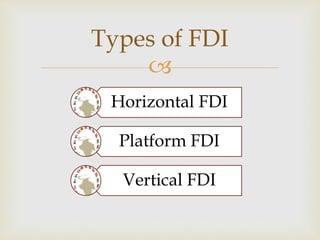
Horizontal FDI 
Platform FDI 
Vertical FDI
Horizontal FDI 
 
 Arises when a 
company doubles its 
activities in the 
country of origin at 
the same stage of the 
value chain in a host 
country through FDI.
Platform FDI 
 
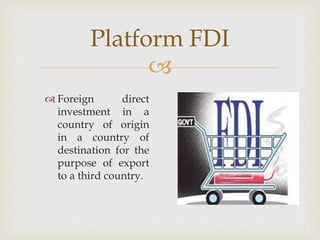
 Foreign direct 
investment in a 
country of origin 
in a country of 
destination for the 
purpose of export 
to a third country.
Vertical FDI 
 
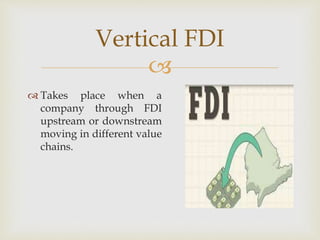
 Takes place when a 
company through FDI 
upstream or downstream 
moving in different value 
chains.
Attracting foreign 
investment 

 
 Many countries that have 
specialized agencies. 
 Most governments now offer 
incentives and benefits to 
companies that choose their 
country as a place to set up 
operations. 
 FDI involves a significant 
degree of influence by the 
investor on the management 
of the enterprise resident in 
the other country.
Determinants 

 
 There are several reasons why a company decides to 
invest in another country. 
 Almost all the arguments that have been offered for 
the existence of FDI can be grouped under two basic 
objectives: 
 The attempt to enter new markets 
 Increase efficiency.
Exploiting new markets 
 
 One of the main reasons 
that have been offered to 
explain the presence of 
FDI in an economy is the 
search for new markets.
Find productive efficiency 
 
 This type of FDI seeks 
greater productive 
efficiency by reducing 
production costs. 
 This may involve 
finding areas where 
certain costs are cheaper 
production inputs.
Classification of foreign 
investment 

 
Direct investment: 
That which comes from 
a natural or legal 
person from abroad, 
whose capital is 
invested in a country 
with the intention of 
having direct 
involvement in the 
long-term development 
of a firm. 
Indirect Investment: 
Are all acts or contracts 
by which the investor 
makes a contribution to 
a company without 
currently having 
ownership interest in 
all or part of it.
 
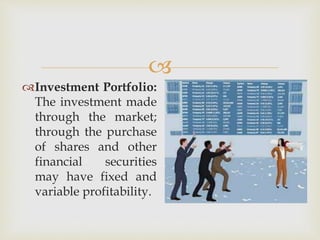
Investment Portfolio: 
The investment made 
through the market; 
through the purchase 
of shares and other 
financial securities 
may have fixed and 
variable profitability.
Advantages 

 
 Technological 
development 
 Developing 
countries create 
tax incentives to 
attract foreign 
direct investment 
are the facilities 
and practices of 
organization and 
management of 
capital. 
 Economic 
Development 
 Foreign direct 
investment 
helps in the 
economic 
development of 
the host 
country. 
 Tax incentives 
 Developing 
countries creates 
prosecutors to 
attract FDI capital 
facilities that bring 
incentives, 
organizational and 
management 
practices that 
provide 
developing 
countries greater 
access to 
international 
markets.
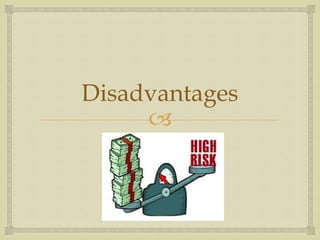
Disadvantages 

 
 Formation of a local 
monopoly 
 A foreign company may 
harm local industry 
because any particular 
advantage such as 
technology, and so thus 
make local businesses 
go bankrupt. In this 
case, the foreign firm is 
a monopoly and will 
bring negative effects 
that accompany 
monopolies. 
 Decrease of domestic 
savings 
 In a less developed 
country the entry of 
foreign capital can make 
the government of the 
recipient country does 
not work so energetically 
to promote domestic 
savings because a 
company in another 
country has invested the 
necessary capital.
 
 Lack of attention to the development of education 
and training in the host country 
 It is said that the multinational set aside jobs 
requiring knowledge and business skills for the 
base country. As a result the company works 
assigned in the host country will require a lower 
level in this regard. Therefore the work force and 
managers of the receiving country gain no training 
or knowledge.
Example 
 
 For example apple is 
located in United States 
and has agreements with 
subcontractors in Asia 
where they make and sell 
their products worldwide.
REFERENCES 
 
 
Foreign Direct Investment - FDI. (n.d.). Retrieved 
from http://www.investopedia.com/terms/f/fdi.asp 
 What is Foreign Direct Investment? (n.d.). Retrieved 
fromhttp://usforeignpolicy.about.com/od/introtoforeignpolicy/a/what-is-FDI.htm 
 Foreign direct investment. (n.d.). Retrieved 
from http://en.wikipedia.org/wiki/Foreign_direct_investment 
 Definition of FDI / Foreign Direct Investment. (n.d.). Retrieved 
fromhttp://economics.about.com/cs/economicsglossary/g/fdi.htm 
 Heinemann, Butterworth. "Foreign Direct Investment." Entering the International 
Market. N.p., n.d. Web. 23 Feb. 
2007. http://plataforma.unibague.edu.co/pluginfile.php/16196/mod_scorm/content/2/docu 
ments/Chapter%208%20Entering%20the%20international%20marketing.pdf
THE END

invercion extranjera directa

  • 1.
    • Danilo FernandoSánchez Sánchez 1520121089 • Juan Sebastián Vaquiro Ospina 1520121122 International Business I Universidad de Ibagué
  • 2.
    Definition  FDI "includes mergers and acquisitions, building new facilities, reinvesting the profits of the foreign operations and intercompany lending company."  The characteristics of foreign direct investment are:  Invest in countries where there is political and economic stability.  Searching for an extension of the industrial and commercial capital.
  • 3.
    Types of FDI  Horizontal FDI Platform FDI Vertical FDI
  • 4.
    Horizontal FDI   Arises when a company doubles its activities in the country of origin at the same stage of the value chain in a host country through FDI.
  • 5.
    Platform FDI   Foreign direct investment in a country of origin in a country of destination for the purpose of export to a third country.
  • 6.
    Vertical FDI   Takes place when a company through FDI upstream or downstream moving in different value chains.
  • 7.
  • 8.
      Manycountries that have specialized agencies.  Most governments now offer incentives and benefits to companies that choose their country as a place to set up operations.  FDI involves a significant degree of influence by the investor on the management of the enterprise resident in the other country.
  • 9.
  • 10.
      Thereare several reasons why a company decides to invest in another country.  Almost all the arguments that have been offered for the existence of FDI can be grouped under two basic objectives:  The attempt to enter new markets  Increase efficiency.
  • 11.
    Exploiting new markets   One of the main reasons that have been offered to explain the presence of FDI in an economy is the search for new markets.
  • 12.
    Find productive efficiency   This type of FDI seeks greater productive efficiency by reducing production costs.  This may involve finding areas where certain costs are cheaper production inputs.
  • 13.
  • 14.
     Direct investment: That which comes from a natural or legal person from abroad, whose capital is invested in a country with the intention of having direct involvement in the long-term development of a firm. Indirect Investment: Are all acts or contracts by which the investor makes a contribution to a company without currently having ownership interest in all or part of it.
  • 15.
     Investment Portfolio: The investment made through the market; through the purchase of shares and other financial securities may have fixed and variable profitability.
  • 16.
  • 17.
      Technological development  Developing countries create tax incentives to attract foreign direct investment are the facilities and practices of organization and management of capital.  Economic Development  Foreign direct investment helps in the economic development of the host country.  Tax incentives  Developing countries creates prosecutors to attract FDI capital facilities that bring incentives, organizational and management practices that provide developing countries greater access to international markets.
  • 18.
  • 19.
      Formationof a local monopoly  A foreign company may harm local industry because any particular advantage such as technology, and so thus make local businesses go bankrupt. In this case, the foreign firm is a monopoly and will bring negative effects that accompany monopolies.  Decrease of domestic savings  In a less developed country the entry of foreign capital can make the government of the recipient country does not work so energetically to promote domestic savings because a company in another country has invested the necessary capital.
  • 20.
      Lackof attention to the development of education and training in the host country  It is said that the multinational set aside jobs requiring knowledge and business skills for the base country. As a result the company works assigned in the host country will require a lower level in this regard. Therefore the work force and managers of the receiving country gain no training or knowledge.
  • 21.
    Example  For example apple is located in United States and has agreements with subcontractors in Asia where they make and sell their products worldwide.
  • 22.
    REFERENCES   Foreign Direct Investment - FDI. (n.d.). Retrieved from http://www.investopedia.com/terms/f/fdi.asp  What is Foreign Direct Investment? (n.d.). Retrieved fromhttp://usforeignpolicy.about.com/od/introtoforeignpolicy/a/what-is-FDI.htm  Foreign direct investment. (n.d.). Retrieved from http://en.wikipedia.org/wiki/Foreign_direct_investment  Definition of FDI / Foreign Direct Investment. (n.d.). Retrieved fromhttp://economics.about.com/cs/economicsglossary/g/fdi.htm  Heinemann, Butterworth. "Foreign Direct Investment." Entering the International Market. N.p., n.d. Web. 23 Feb. 2007. http://plataforma.unibague.edu.co/pluginfile.php/16196/mod_scorm/content/2/docu ments/Chapter%208%20Entering%20the%20international%20marketing.pdf
  • 23.

Editor's Notes