
Invent Options for Mutual Gain
Problem 
• Negotiate along a single 
dimension 
• Either/or choices 
• Zero sum 
• What you gain, I lose 
• Choice only between 
winning and losing 
• There seems to be no way 
to split the pie so both 
parties are satisfied
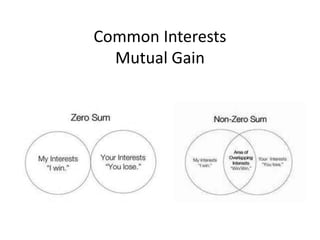
Common Interests 
Mutual Gain
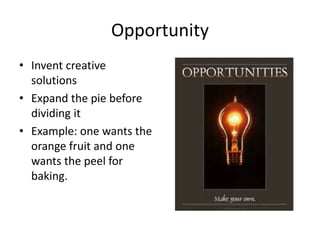
Opportunity 
• Invent creative 
solutions 
• Expand the pie before 
dividing it 
• Example: one wants the 
orange fruit and one 
wants the peel for 
baking.
Diagnosis 
• All available answers 
appear to lie along a 
straight line. 
• End up with only 
solution: split the 
difference. 
• Mental obstacles inhibit 
inventing options
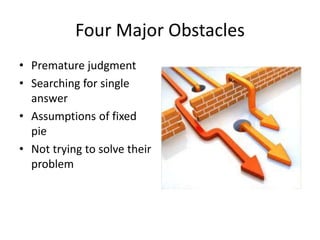
Four Major Obstacles 
• Premature judgment 
• Searching for single 
answer 
• Assumptions of fixed 
pie 
• Not trying to solve their 
problem
Judgment hinders Imagination 
• Stifle Creativity 
• Critical Sense 
• Premature criticism
Start Inventing Imaginative Solutions
Searching for the Single Answer 
• Broaden the options 
available instead of 
trying to narrow the gap 
between positions 
• Premature closure 
• A wiser decision-making 
process: select from a 
large number of 
possible answers
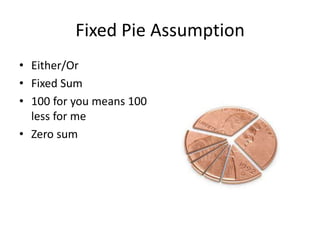
Fixed Pie Assumption 
• Either/Or 
• Fixed Sum 
• 100 for you means 100 
less for me 
• Zero sum
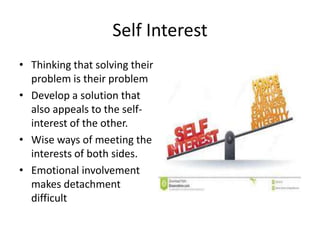
Self Interest 
• Thinking that solving their 
problem is their problem 
• Develop a solution that 
also appeals to the self-interest 
of the other. 
• Wise ways of meeting the 
interests of both sides. 
• Emotional involvement 
makes detachment 
difficult
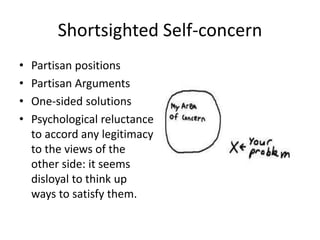
Shortsighted Self-concern 
• Partisan positions 
• Partisan Arguments 
• One-sided solutions 
• Psychological reluctance 
to accord any legitimacy 
to the views of the 
other side: it seems 
disloyal to think up 
ways to satisfy them.
Prescription 
• Separate the act of 
inventing options from 
the act of judging them 
• Broaden options on the 
table rather than look 
for a single answer 
• Search for mutual gains 
• Invent ways of making 
their decisions easy
Separate Inventing from Deciding 
• Invent first, decide later 
• Brainstorming 
• Key ground rule: 
postpone all criticism 
and evaluation of ideas 
• Inhibitions removed
Before Brainstorming 
• Define your purpose 
• Choose a few 
participants 
• Change the 
environment 
• Informal atmosphere 
• Choose a facilitator
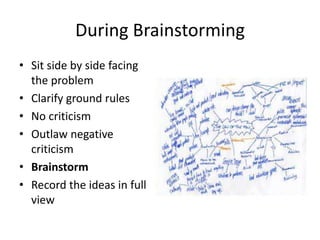
During Brainstorming 
• Sit side by side facing 
the problem 
• Clarify ground rules 
• No criticism 
• Outlaw negative 
criticism 
• Brainstorm 
• Record the ideas in full 
view
After Brainstorming 
• Star the most promising 
ideas 
• Invent improvements 
for promising idea 
• Set up a time to 
evaluate ideas and 
decide
Broaden Your Options 
• Developing room within 
which to negotiate 
• Crafting a solution 
• A vintner making a fine 
wine chooses grapes from 
a number of varieties 
• The same principle 
applies to negotiation 
• Wise decision making: 
select from a great 
number and variety of 
options.
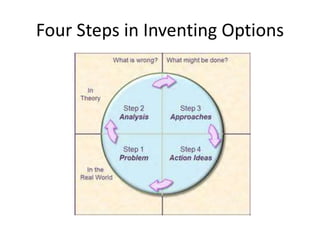
Multiply Options 
Shuttle between the 
specific and the general: 
1. Particular problem 
2. Descriptive analysis 
3. What ought to be 
done 
4. Specific, feasible, 
practical suggestions 
for action
Four Steps in Inventing Options
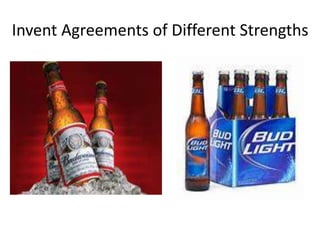
Invent Agreements of Different Strengths
Agreements of Different Strengths 
Agreement 
• Substantive 
• Permanent 
• Comprehensive 
• Final 
• Unconditional 
• Binding 
• First-order 
Agreement light 
• Procedural 
• Provisional 
• Partial 
• In principle 
• Contingent 
• Nonbinding 
• Second-order
Change the Scope 
• Fractionate 
• Manageable Units 
• Selected subjects 
• Partial 
• Fewer Parties 
• Certain geographical 
area 
• Limited period of time
Sweeten the Pot 
• Make the agreement 
• More attractive 
• More palatable 
• More amenable 
• Benefits
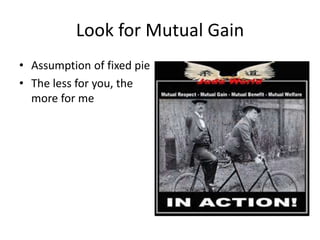
Look for Mutual Gain 
• Assumption of fixed pie 
• The less for you, the 
more for me
Mutual Gain 
1. Shared interest in 
averting joint loss 
2. Developing a mutually 
advantageous 
relationship 
3. Satisfying the interests 
of each side with a 
creative solution
Fostering the Relationship 
• Relationship building 
frequently outweighs in 
importance the outcome 
of any particular issue 
• Leave the other side 
satisfied 
• Your satisfaction depends 
to a degree on making 
the other side sufficiently 
content with an 
agreement to want to live 
up to it.
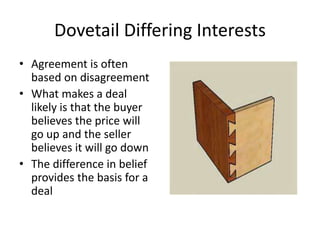
Dovetail Differing Interests 
• Agreement is often 
based on disagreement 
• What makes a deal 
likely is that the buyer 
believes the price will 
go up and the seller 
believes it will go down 
• The difference in belief 
provides the basis for a 
deal
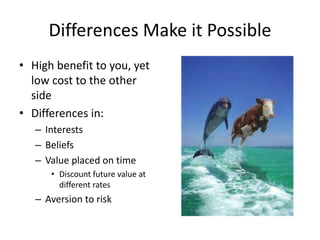
Differences Make it Possible 
• High benefit to you, yet 
low cost to the other 
side 
• Differences in: 
– Interests 
– Beliefs 
– Value placed on time 
• Discount future value at 
different rates 
– Aversion to risk
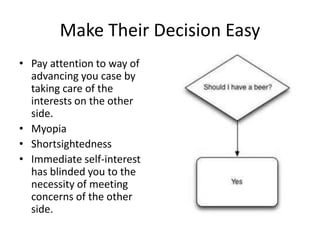
Make Their Decision Easy 
• Pay attention to way of 
advancing you case by 
taking care of the 
interests on the other 
side. 
• Myopia 
• Shortsightedness 
• Immediate self-interest 
has blinded you to the 
necessity of meeting 
concerns of the other 
side.
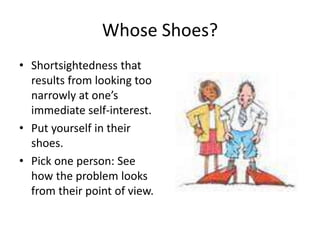
Whose Shoes? 
• Shortsightedness that 
results from looking too 
narrowly at one’s 
immediate self-interest. 
• Put yourself in their 
shoes. 
• Pick one person: See 
how the problem looks 
from their point of view.
Handle Complexity 
• However complex the 
other side’s decisional 
process may seem, you 
will understand it better if 
you pick one person and 
see how the problem 
looks from their vantage 
point. 
• By focusing on one 
person you are not 
ignoring complexities 
rather you are handling 
them.
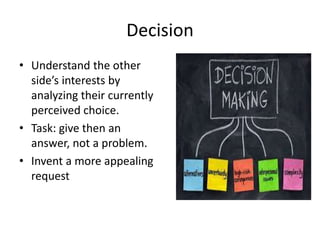
Decision 
• Understand the other 
side’s interests by 
analyzing their currently 
perceived choice. 
• Task: give then an 
answer, not a problem. 
• Invent a more appealing 
request
Performance 
• If it is performance you 
want, do not add 
something for 
“negotiating room” 
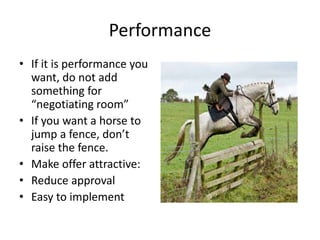
• If you want a horse to 
jump a fence, don’t 
raise the fence. 
• Make offer attractive: 
• Reduce approval 
• Easy to implement
Easy does it 
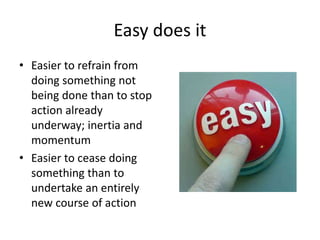
• Easier to refrain from 
doing something not 
being done than to stop 
action already 
underway; inertia and 
momentum 
• Easier to cease doing 
something than to 
undertake an entirely 
new course of action
Making threats is not enough 
• Offers are usually more 
effective than threats 
and warnings of 
consequences 
• Manage carrot and stick 
• Write out options in a 
“yesable proposition”
Summary 
• In a complex situation, 
creative inventing is an 
absolute necessity 
• Produce a range of potential 
agreements satisfactory to 
both sides 
• Generate many option 
before selecting 
• Invent first; decide later 
• Look for shared interests 
and differing interests to 
dovetail 
• Seek to make their decision 
easy.

Invent Options for Mutual Gain

  • 1.
    Invent Options forMutual Gain
  • 2.
    Problem • Negotiatealong a single dimension • Either/or choices • Zero sum • What you gain, I lose • Choice only between winning and losing • There seems to be no way to split the pie so both parties are satisfied
  • 3.
  • 4.
    Opportunity • Inventcreative solutions • Expand the pie before dividing it • Example: one wants the orange fruit and one wants the peel for baking.
  • 5.
    Diagnosis • Allavailable answers appear to lie along a straight line. • End up with only solution: split the difference. • Mental obstacles inhibit inventing options
  • 6.
    Four Major Obstacles • Premature judgment • Searching for single answer • Assumptions of fixed pie • Not trying to solve their problem
  • 7.
    Judgment hinders Imagination • Stifle Creativity • Critical Sense • Premature criticism
  • 8.
  • 9.
    Searching for theSingle Answer • Broaden the options available instead of trying to narrow the gap between positions • Premature closure • A wiser decision-making process: select from a large number of possible answers
  • 10.
    Fixed Pie Assumption • Either/Or • Fixed Sum • 100 for you means 100 less for me • Zero sum
  • 11.
    Self Interest •Thinking that solving their problem is their problem • Develop a solution that also appeals to the self-interest of the other. • Wise ways of meeting the interests of both sides. • Emotional involvement makes detachment difficult
  • 12.
    Shortsighted Self-concern •Partisan positions • Partisan Arguments • One-sided solutions • Psychological reluctance to accord any legitimacy to the views of the other side: it seems disloyal to think up ways to satisfy them.
  • 13.
    Prescription • Separatethe act of inventing options from the act of judging them • Broaden options on the table rather than look for a single answer • Search for mutual gains • Invent ways of making their decisions easy
  • 14.
    Separate Inventing fromDeciding • Invent first, decide later • Brainstorming • Key ground rule: postpone all criticism and evaluation of ideas • Inhibitions removed
  • 15.
    Before Brainstorming •Define your purpose • Choose a few participants • Change the environment • Informal atmosphere • Choose a facilitator
  • 16.
    During Brainstorming •Sit side by side facing the problem • Clarify ground rules • No criticism • Outlaw negative criticism • Brainstorm • Record the ideas in full view
  • 17.
    After Brainstorming •Star the most promising ideas • Invent improvements for promising idea • Set up a time to evaluate ideas and decide
  • 18.
    Broaden Your Options • Developing room within which to negotiate • Crafting a solution • A vintner making a fine wine chooses grapes from a number of varieties • The same principle applies to negotiation • Wise decision making: select from a great number and variety of options.
  • 19.
    Multiply Options Shuttlebetween the specific and the general: 1. Particular problem 2. Descriptive analysis 3. What ought to be done 4. Specific, feasible, practical suggestions for action
  • 20.
    Four Steps inInventing Options
  • 21.
    Invent Agreements ofDifferent Strengths
  • 22.
    Agreements of DifferentStrengths Agreement • Substantive • Permanent • Comprehensive • Final • Unconditional • Binding • First-order Agreement light • Procedural • Provisional • Partial • In principle • Contingent • Nonbinding • Second-order
  • 23.
    Change the Scope • Fractionate • Manageable Units • Selected subjects • Partial • Fewer Parties • Certain geographical area • Limited period of time
  • 24.
    Sweeten the Pot • Make the agreement • More attractive • More palatable • More amenable • Benefits
  • 25.
    Look for MutualGain • Assumption of fixed pie • The less for you, the more for me
  • 26.
    Mutual Gain 1.Shared interest in averting joint loss 2. Developing a mutually advantageous relationship 3. Satisfying the interests of each side with a creative solution
  • 27.
    Fostering the Relationship • Relationship building frequently outweighs in importance the outcome of any particular issue • Leave the other side satisfied • Your satisfaction depends to a degree on making the other side sufficiently content with an agreement to want to live up to it.
  • 28.
    Dovetail Differing Interests • Agreement is often based on disagreement • What makes a deal likely is that the buyer believes the price will go up and the seller believes it will go down • The difference in belief provides the basis for a deal
  • 29.
    Differences Make itPossible • High benefit to you, yet low cost to the other side • Differences in: – Interests – Beliefs – Value placed on time • Discount future value at different rates – Aversion to risk
  • 30.
    Make Their DecisionEasy • Pay attention to way of advancing you case by taking care of the interests on the other side. • Myopia • Shortsightedness • Immediate self-interest has blinded you to the necessity of meeting concerns of the other side.
  • 31.
    Whose Shoes? •Shortsightedness that results from looking too narrowly at one’s immediate self-interest. • Put yourself in their shoes. • Pick one person: See how the problem looks from their point of view.
  • 32.
    Handle Complexity •However complex the other side’s decisional process may seem, you will understand it better if you pick one person and see how the problem looks from their vantage point. • By focusing on one person you are not ignoring complexities rather you are handling them.
  • 33.
    Decision • Understandthe other side’s interests by analyzing their currently perceived choice. • Task: give then an answer, not a problem. • Invent a more appealing request
  • 34.
    Performance • Ifit is performance you want, do not add something for “negotiating room” • If you want a horse to jump a fence, don’t raise the fence. • Make offer attractive: • Reduce approval • Easy to implement
  • 35.
    Easy does it • Easier to refrain from doing something not being done than to stop action already underway; inertia and momentum • Easier to cease doing something than to undertake an entirely new course of action
  • 36.
    Making threats isnot enough • Offers are usually more effective than threats and warnings of consequences • Manage carrot and stick • Write out options in a “yesable proposition”
  • 37.
    Summary • Ina complex situation, creative inventing is an absolute necessity • Produce a range of potential agreements satisfactory to both sides • Generate many option before selecting • Invent first; decide later • Look for shared interests and differing interests to dovetail • Seek to make their decision easy.