INTRODUCTION TO
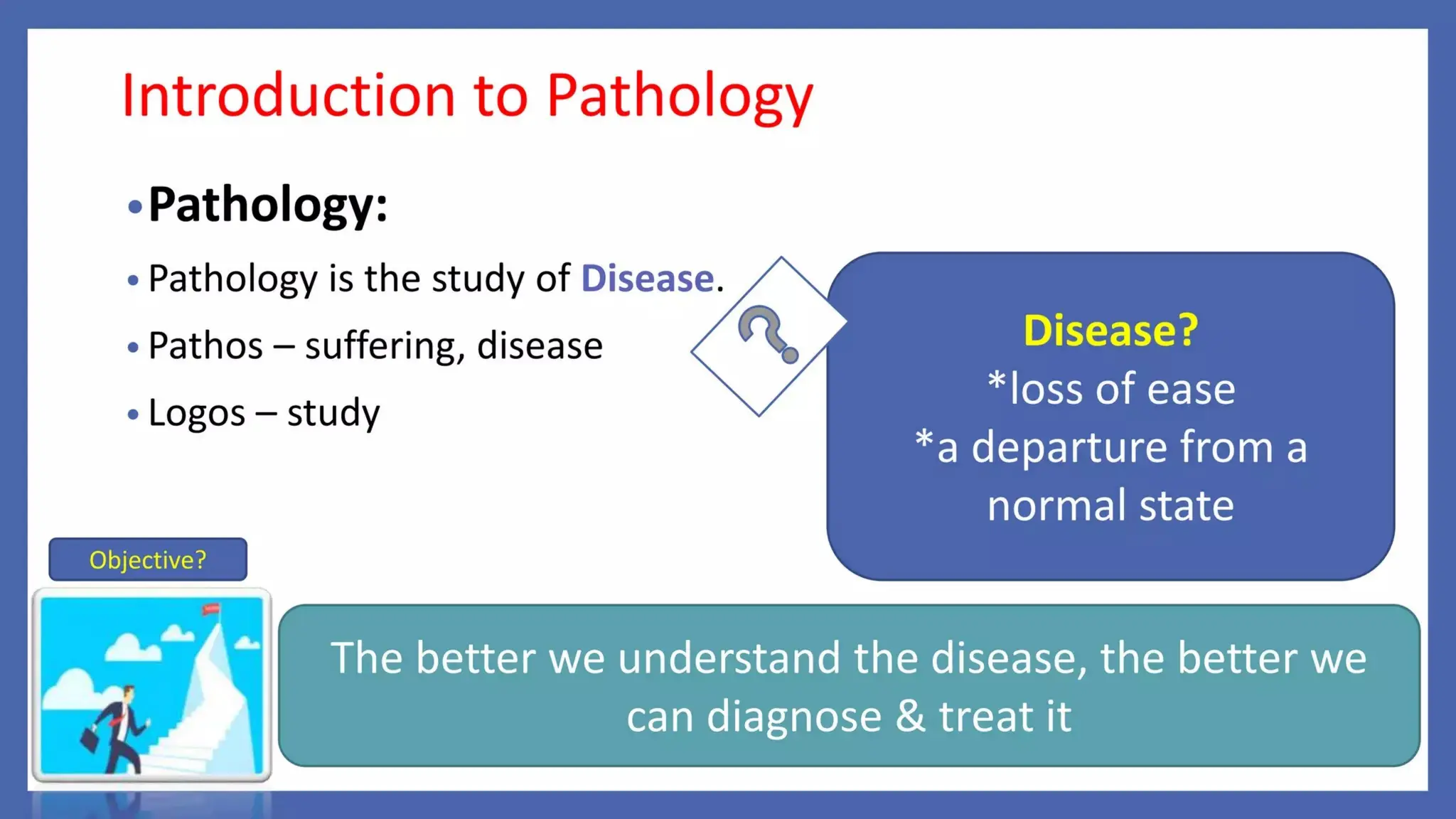
PATHOLOGY
DR ARIAGA NAOMI
Definition
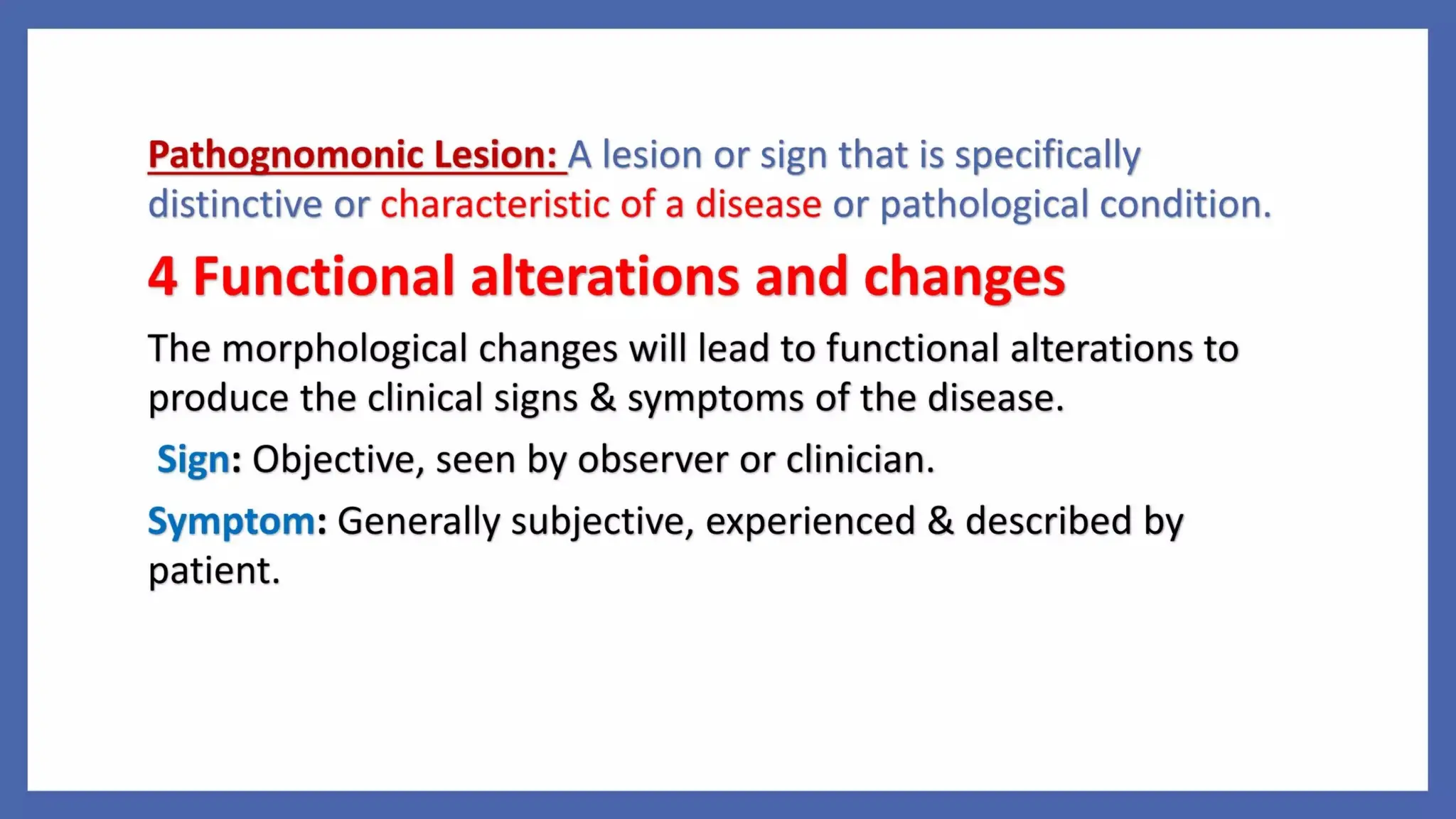
• Pathology is the branch of medical science that investigates the
causes, nature, and effects of diseases.
• Pathology is the study of morphological, functional, molecular and
biochemical changes in cells tissues or organs in response to an injury
Key components of pathology include:
Anatomic Pathology:
• Histopathology: Involves the microscopic examination of tissue
samples to identify structural changes at the cellular level.
• Cytopathology: Focuses on the study of individual cells obtained from
various body fluids or tissues, often using techniques like Pap smears.
• Autopsy Pathology: Investigates the cause of death through post-
mortem examination to understand disease processes.
Key components of pathology include
Clinical Pathology:
• Hematology: Studies blood and blood-forming tissues, including the diagnosis
and treatment of blood disorders.
• Microbiology: Identifies and studies microorganisms, including bacteria, viruses,
fungi, and parasites, to diagnose infectious diseases.
• Clinical Biochemistry: Analyzes chemical components in body fluids to assess
organ function and detect abnormalities.
• Immunology: Examines the body's immune system and its responses to
infections, autoimmune disorders, and other conditions.
• Molecular Pathology: Focuses on the study of molecular and genetic changes
associated with diseases, aiding in personalized medicine approaches.
Key components of pathology include
Forensic Pathology:
• Applies pathology principles to legal and criminal investigations,
determining the cause of death and providing evidence in legal
proceedings.
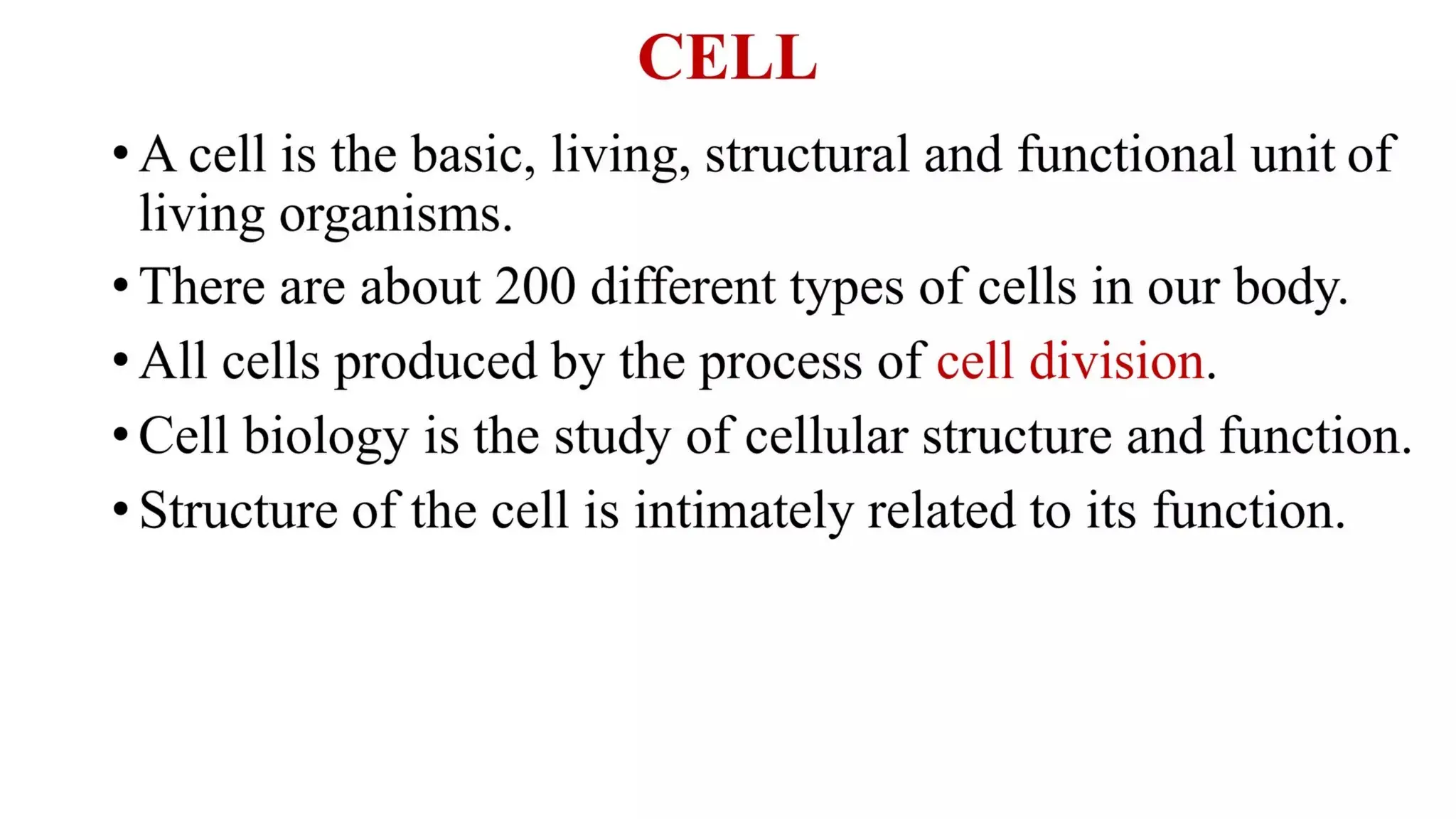
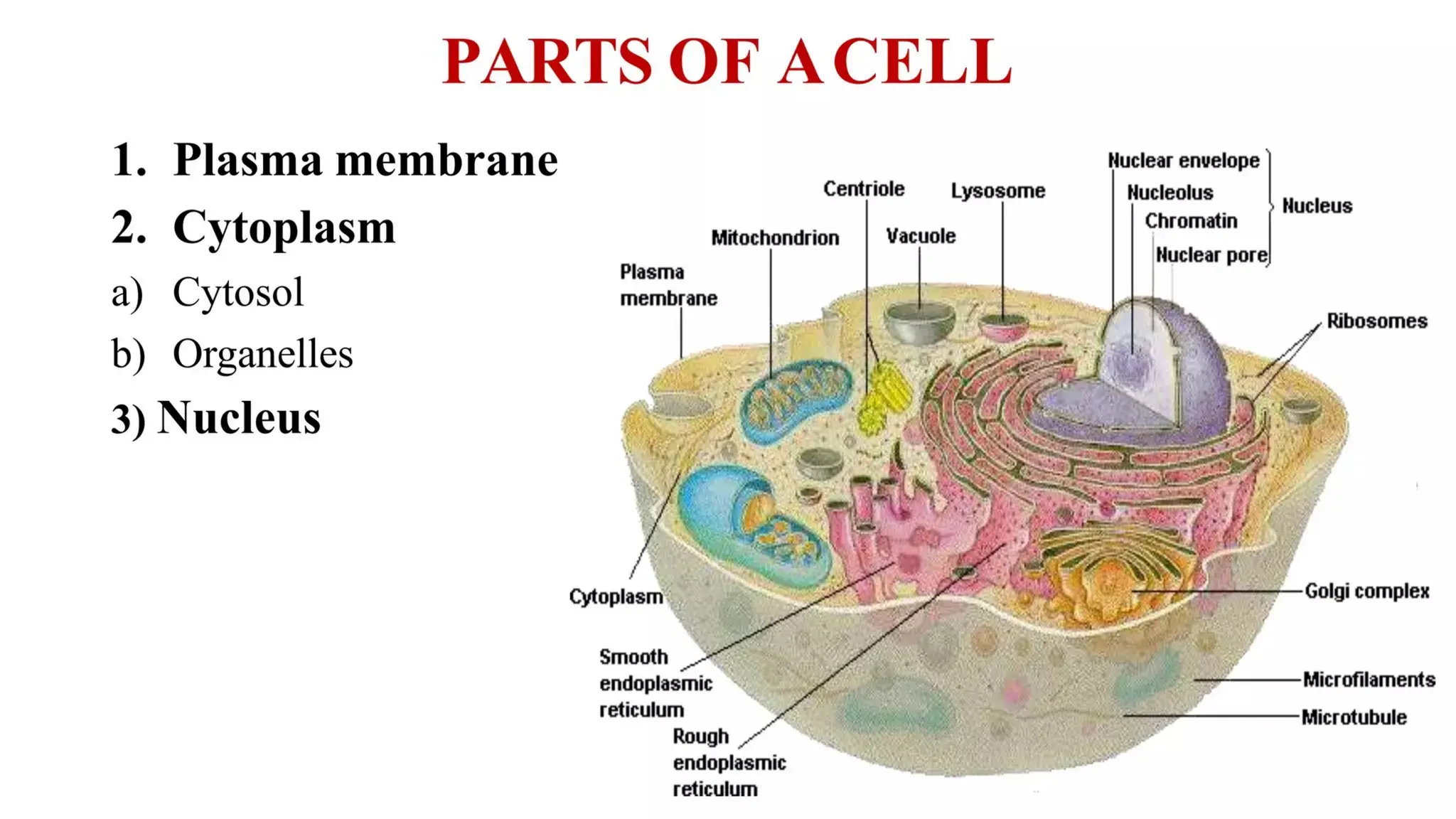
THE CELL
introductioon to pathology and the cell.

introductioon to pathology and the cell.

  • 1.
  • 3.
    Definition • Pathology isthe branch of medical science that investigates the causes, nature, and effects of diseases. • Pathology is the study of morphological, functional, molecular and biochemical changes in cells tissues or organs in response to an injury
  • 4.
    Key components ofpathology include: Anatomic Pathology: • Histopathology: Involves the microscopic examination of tissue samples to identify structural changes at the cellular level. • Cytopathology: Focuses on the study of individual cells obtained from various body fluids or tissues, often using techniques like Pap smears. • Autopsy Pathology: Investigates the cause of death through post- mortem examination to understand disease processes.
  • 5.
    Key components ofpathology include Clinical Pathology: • Hematology: Studies blood and blood-forming tissues, including the diagnosis and treatment of blood disorders. • Microbiology: Identifies and studies microorganisms, including bacteria, viruses, fungi, and parasites, to diagnose infectious diseases. • Clinical Biochemistry: Analyzes chemical components in body fluids to assess organ function and detect abnormalities. • Immunology: Examines the body's immune system and its responses to infections, autoimmune disorders, and other conditions. • Molecular Pathology: Focuses on the study of molecular and genetic changes associated with diseases, aiding in personalized medicine approaches.
  • 6.
    Key components ofpathology include Forensic Pathology: • Applies pathology principles to legal and criminal investigations, determining the cause of death and providing evidence in legal proceedings.
  • 16.