Download as PDF, PPTX





The document provides an overview of the Resource Public Key Infrastructure (RPKI), which is aimed at securing internet routing from incidents such as BGP hijacking and mis-origination. It outlines how RPKI verifies the association between resource holders and internet resources through a system of certificates and validation processes. Additionally, it describes efforts to promote RPKI adoption among network operators to enhance routing security.
Introduction to RPKI infrastructure presented at VNIX-NOG conference in Hanoi, Vietnam.
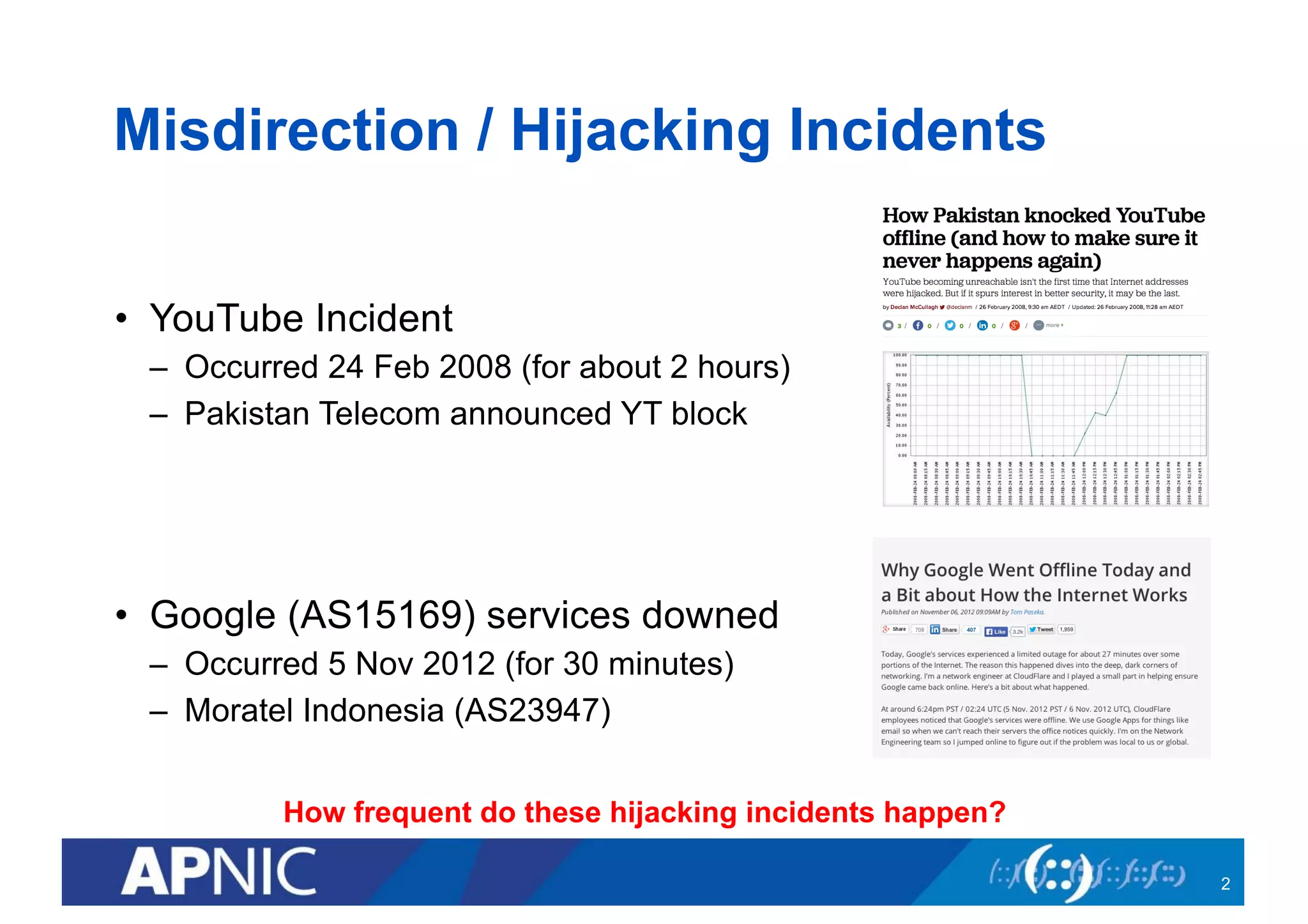
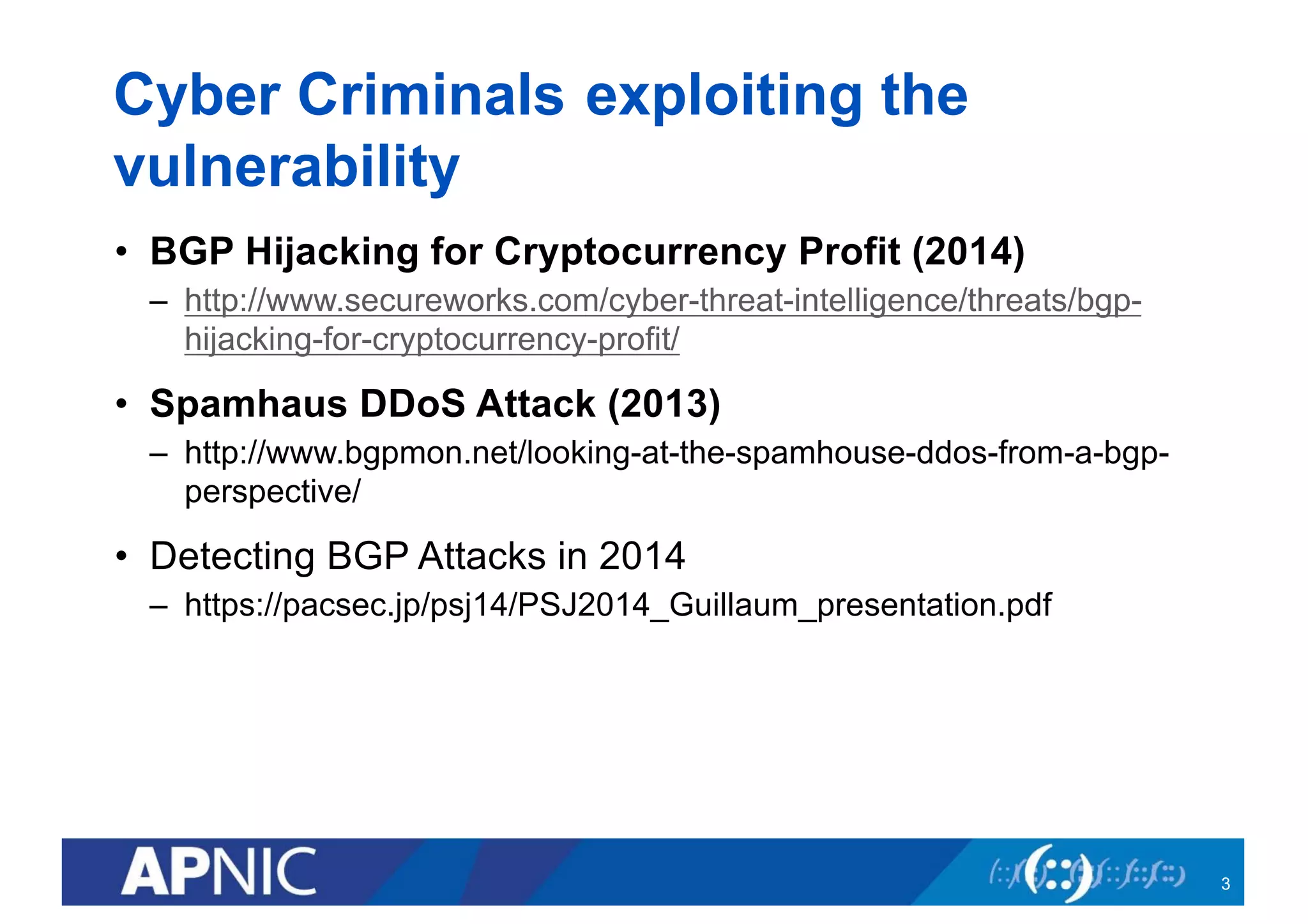
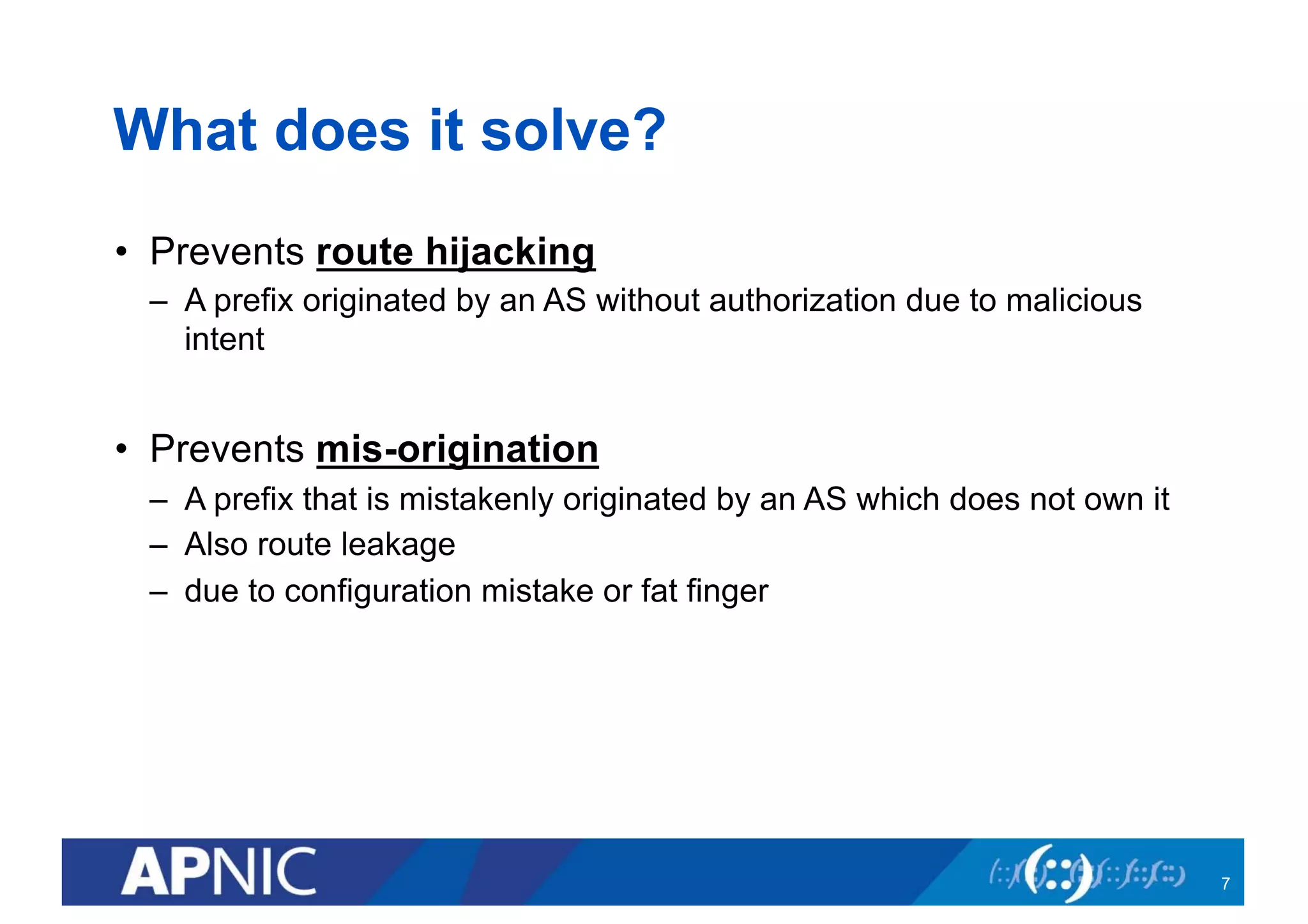
Explores incidents of BGP misdirection, with highlights on YouTube & Google hijacking events.
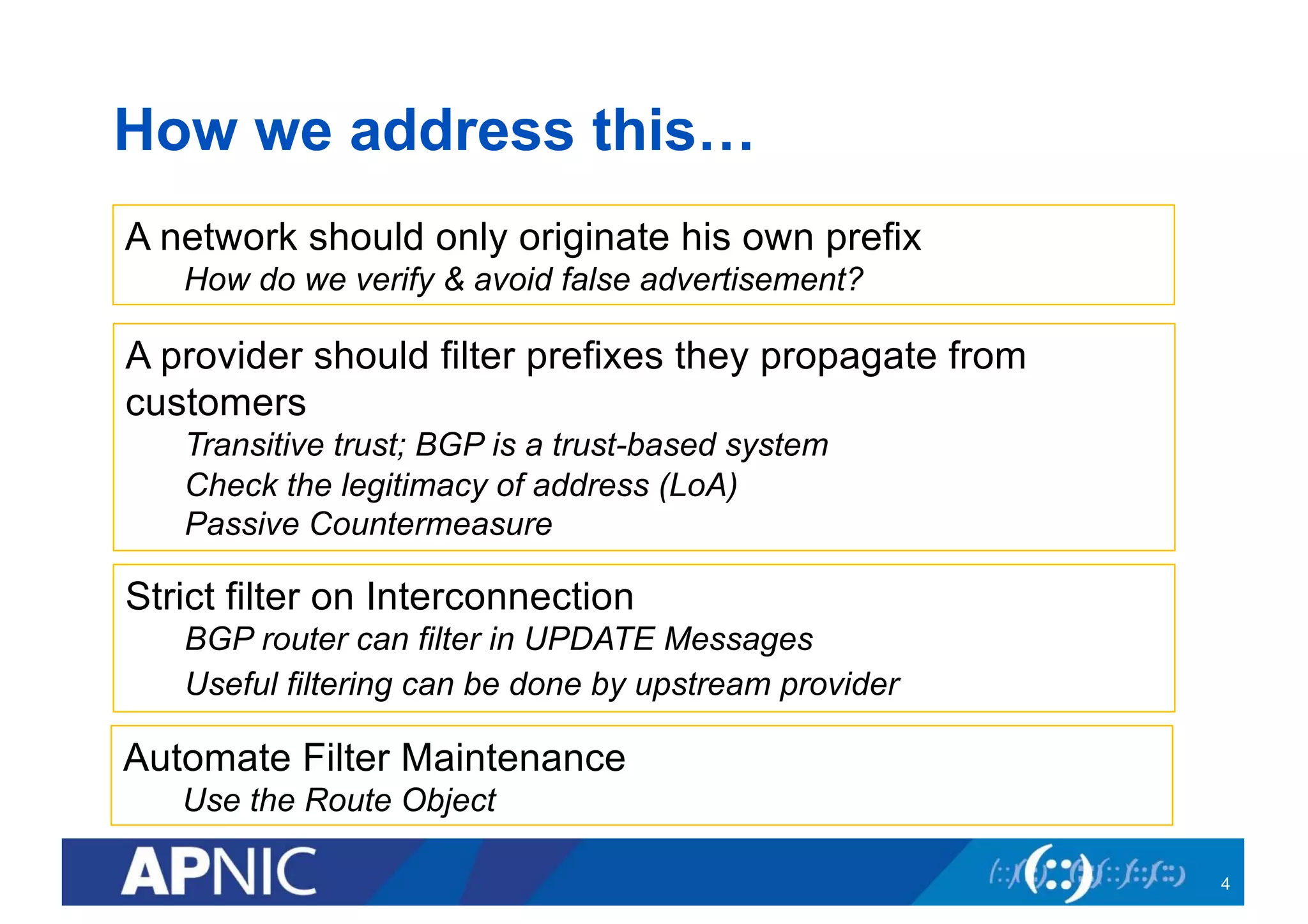
Outlines methods to address BGP security including prefix checks and filtering strategies.
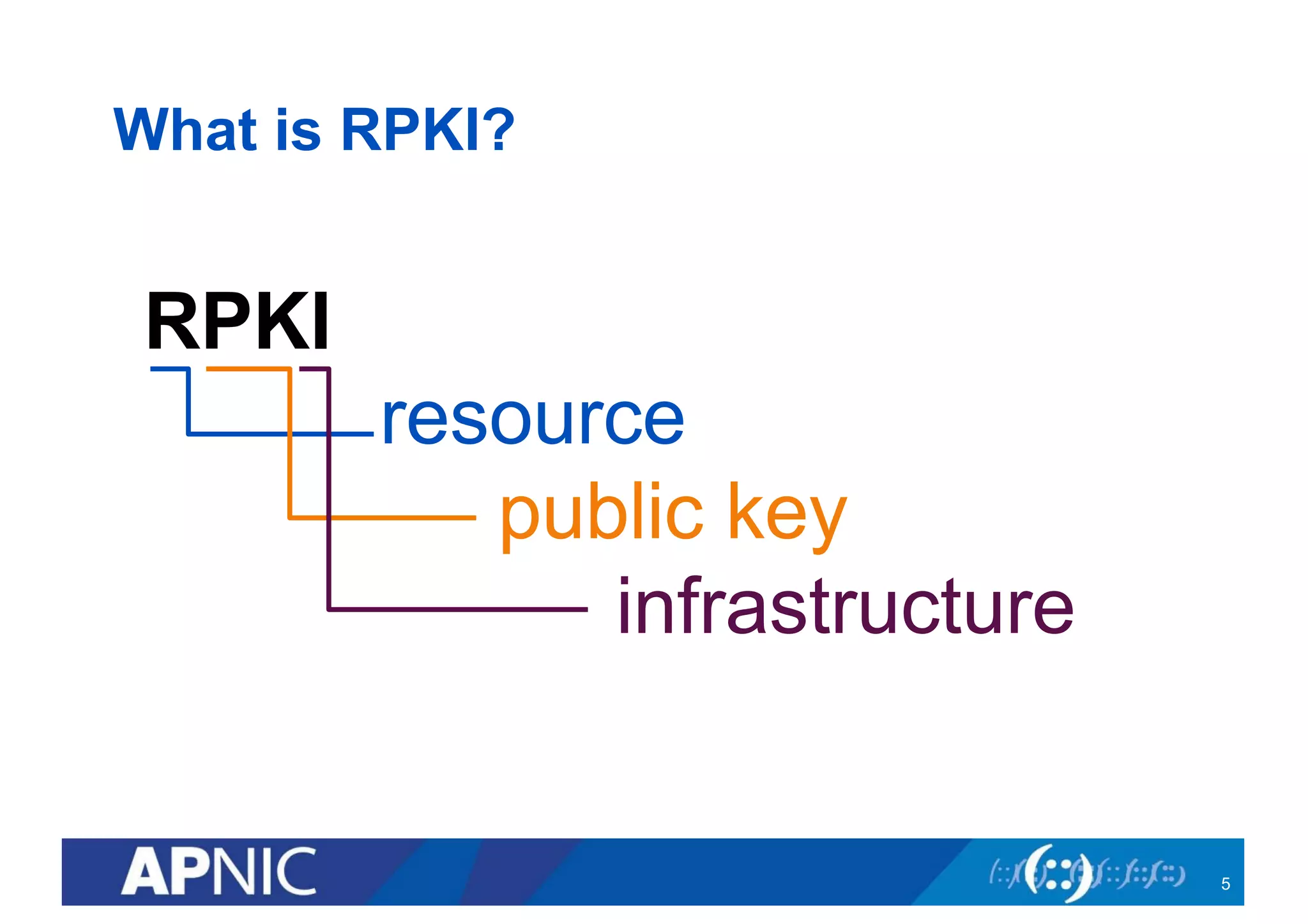
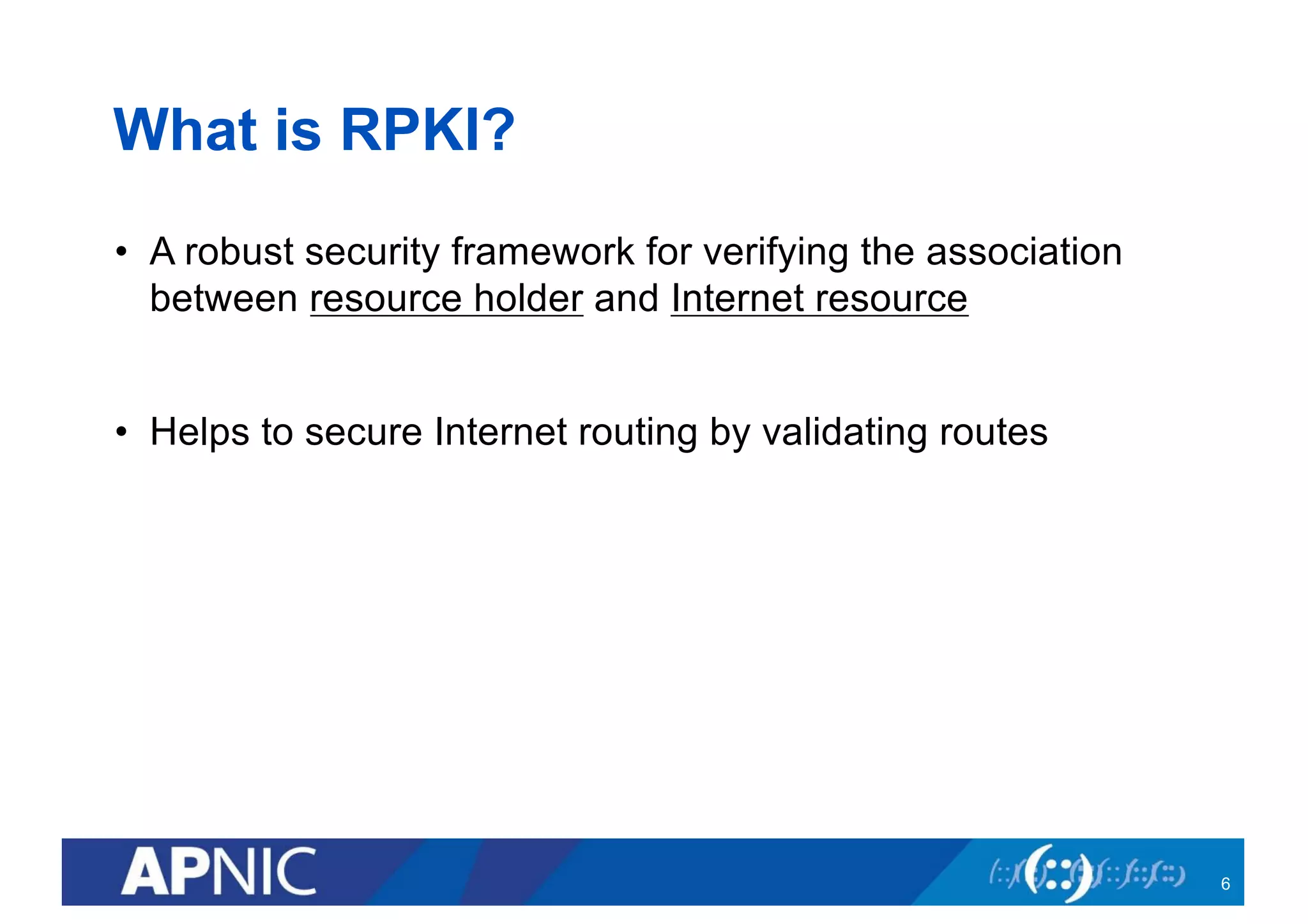
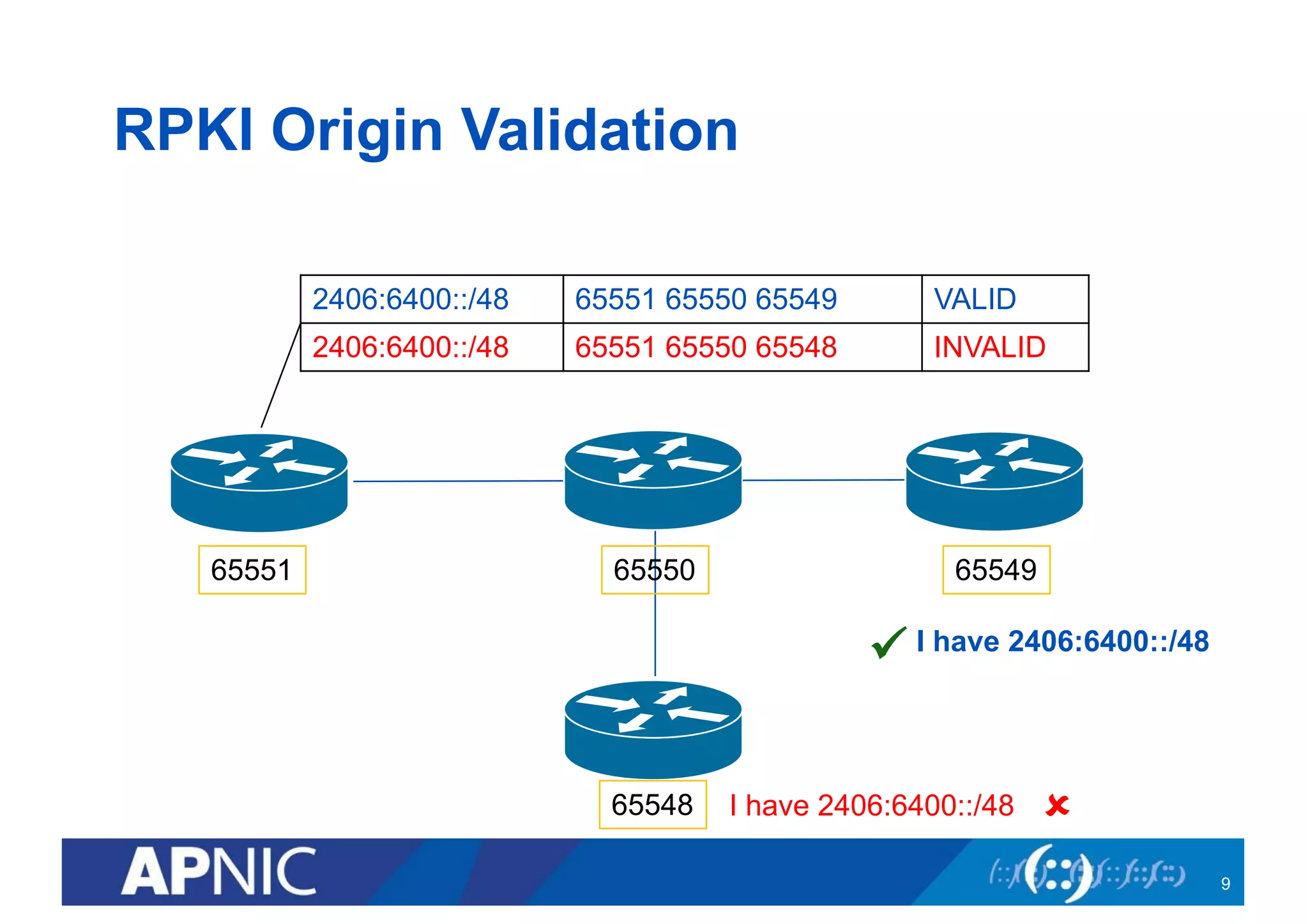
Defines RPKI as a security framework preventing route mis-origination and hijacking.
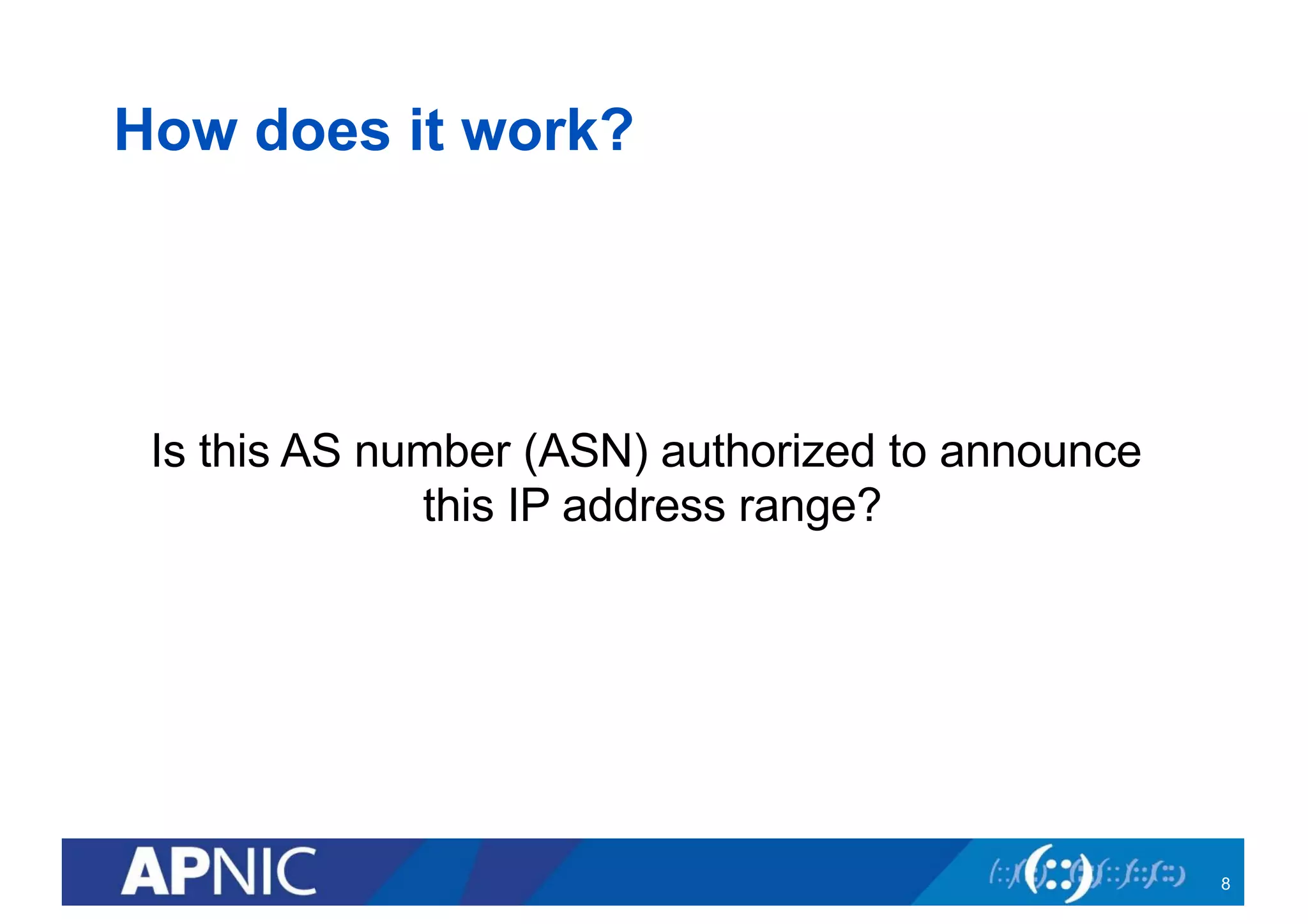
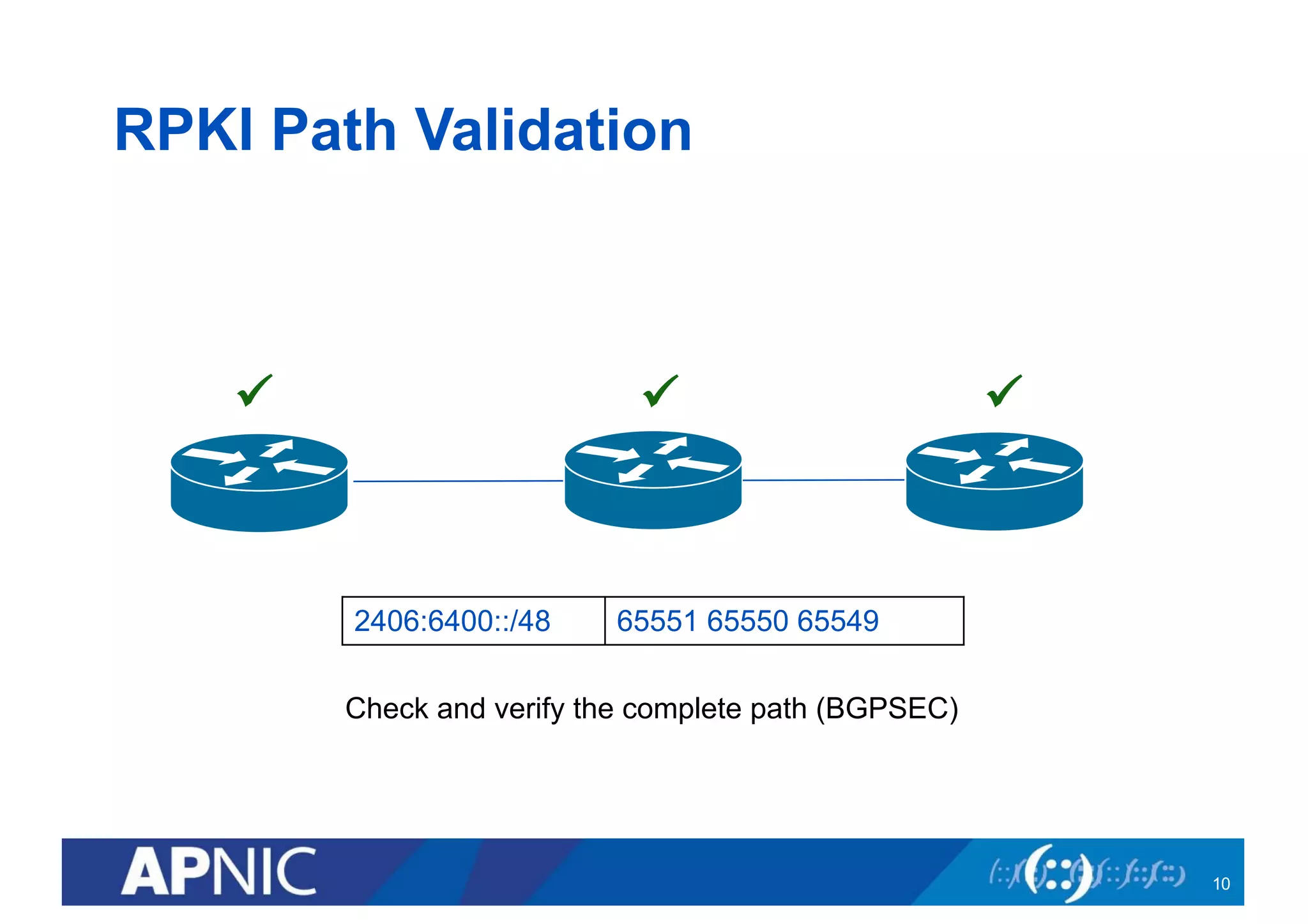
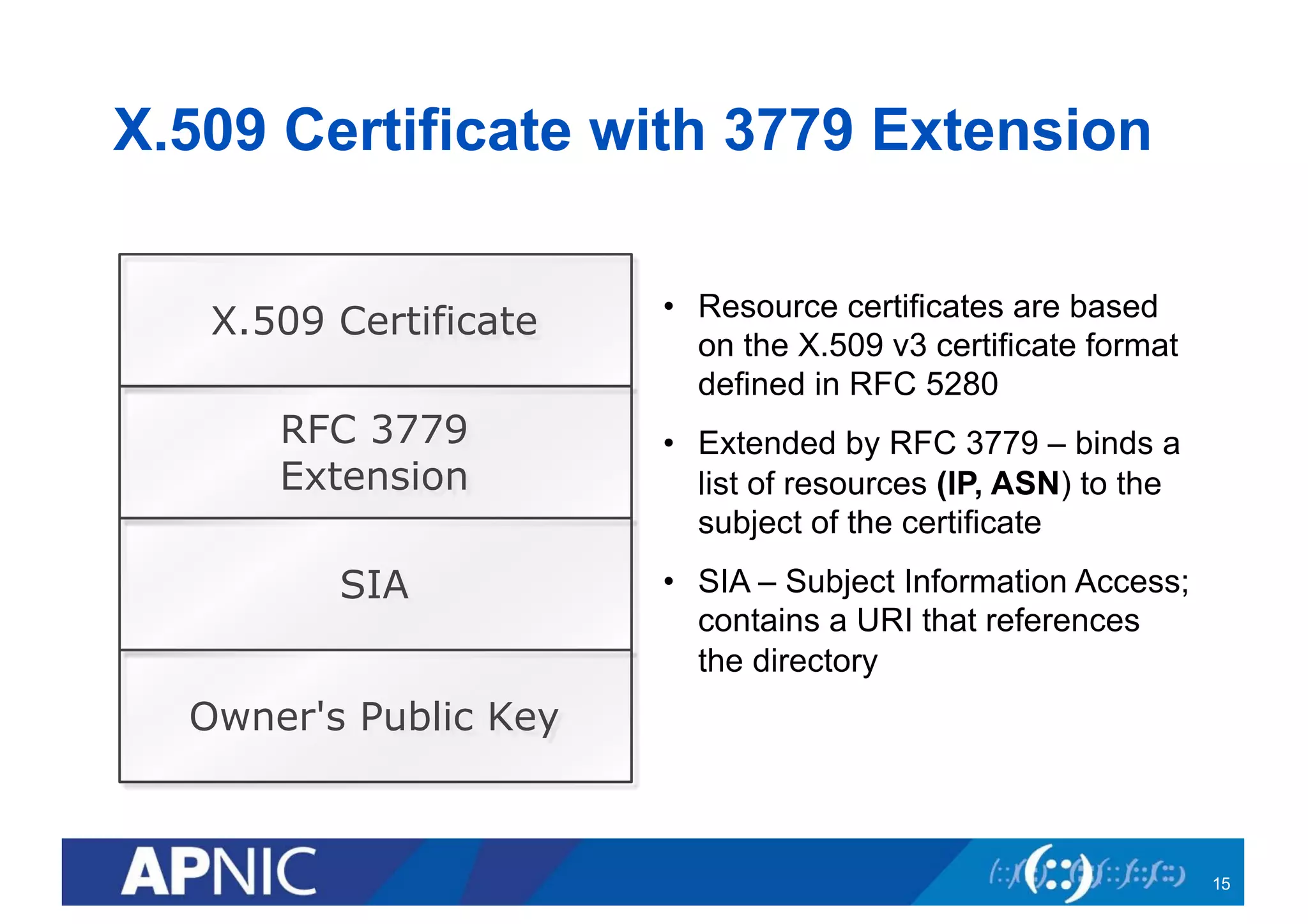
Describes how RPKI validates ASN and IP address range for routing security.
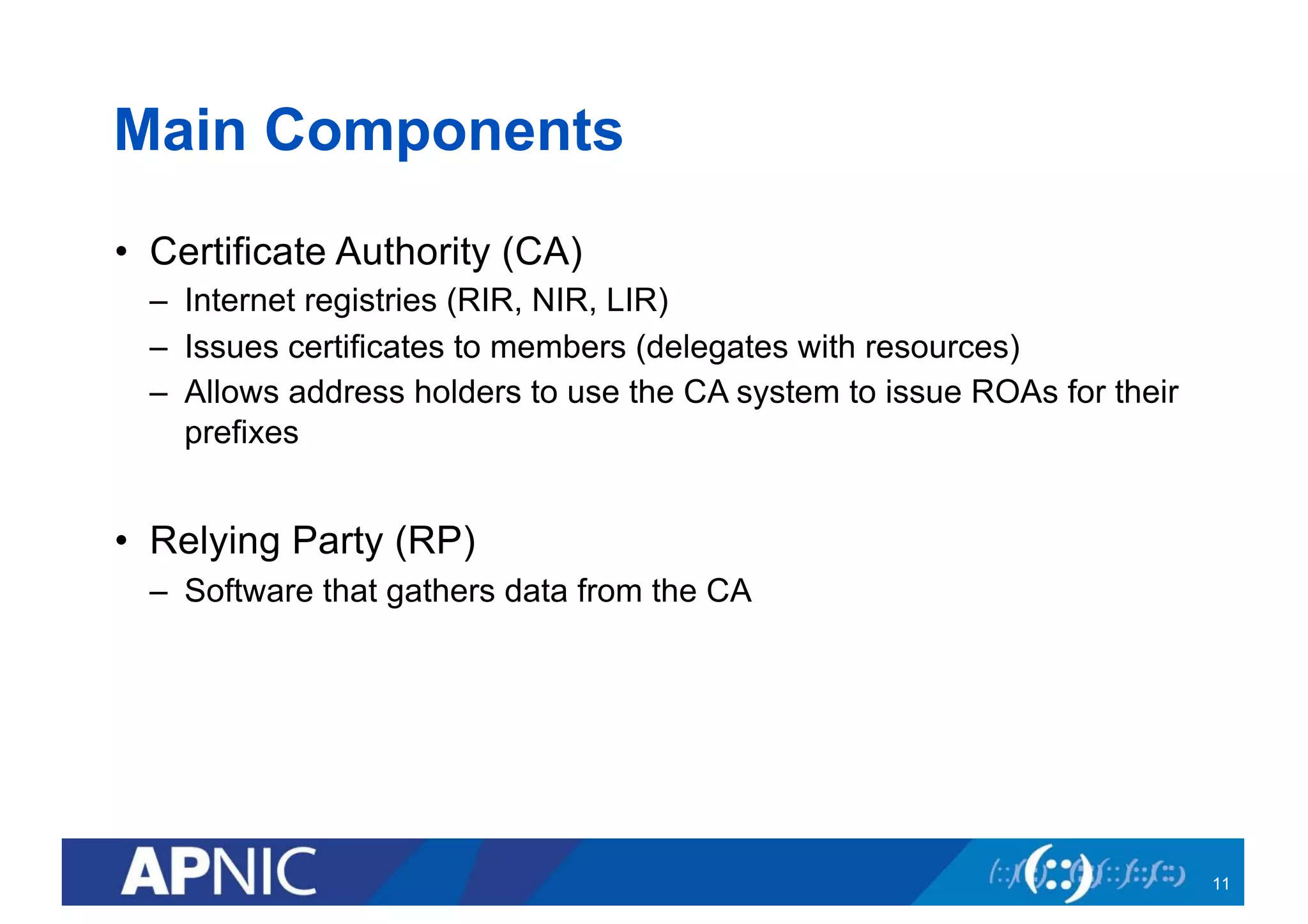
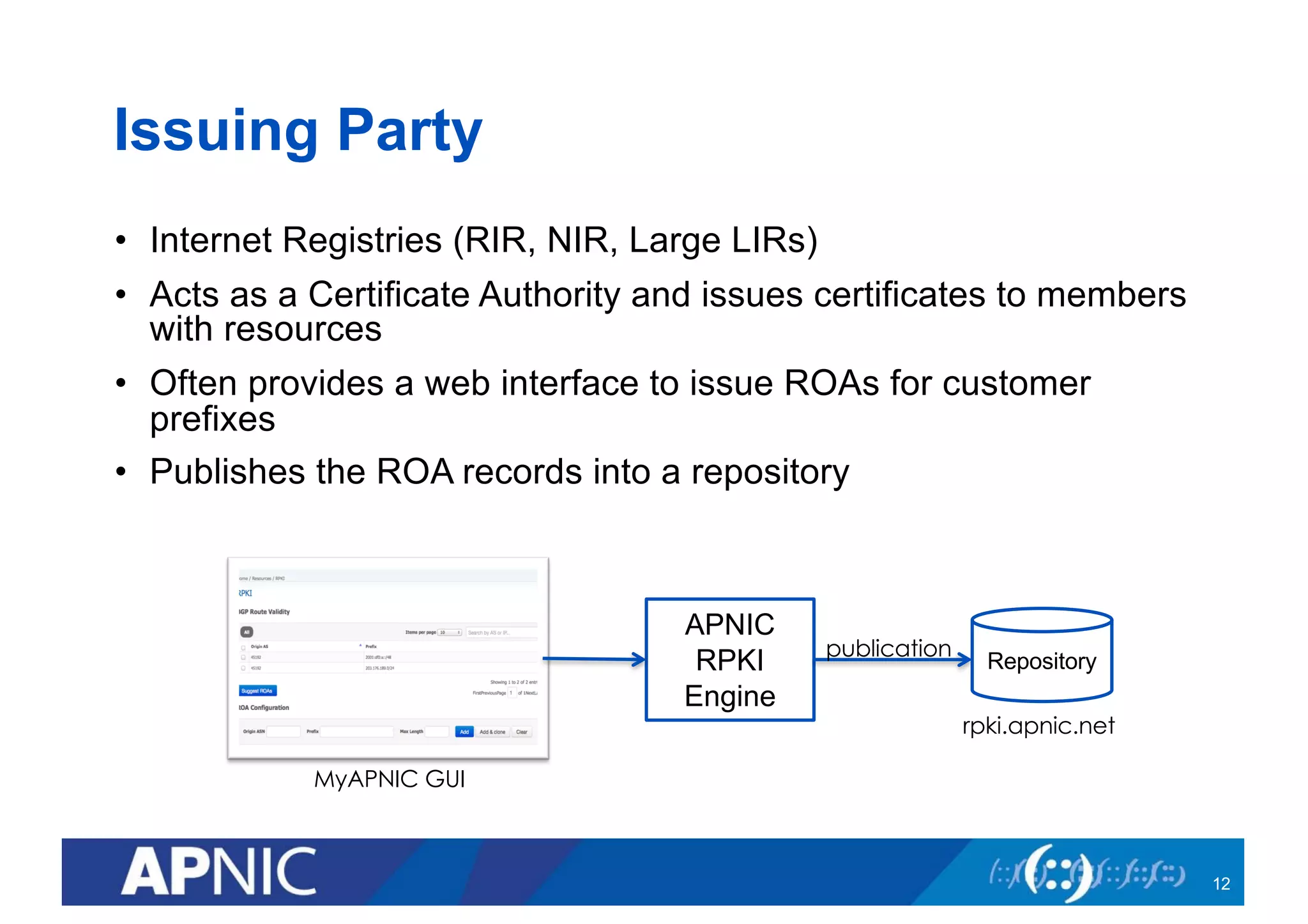
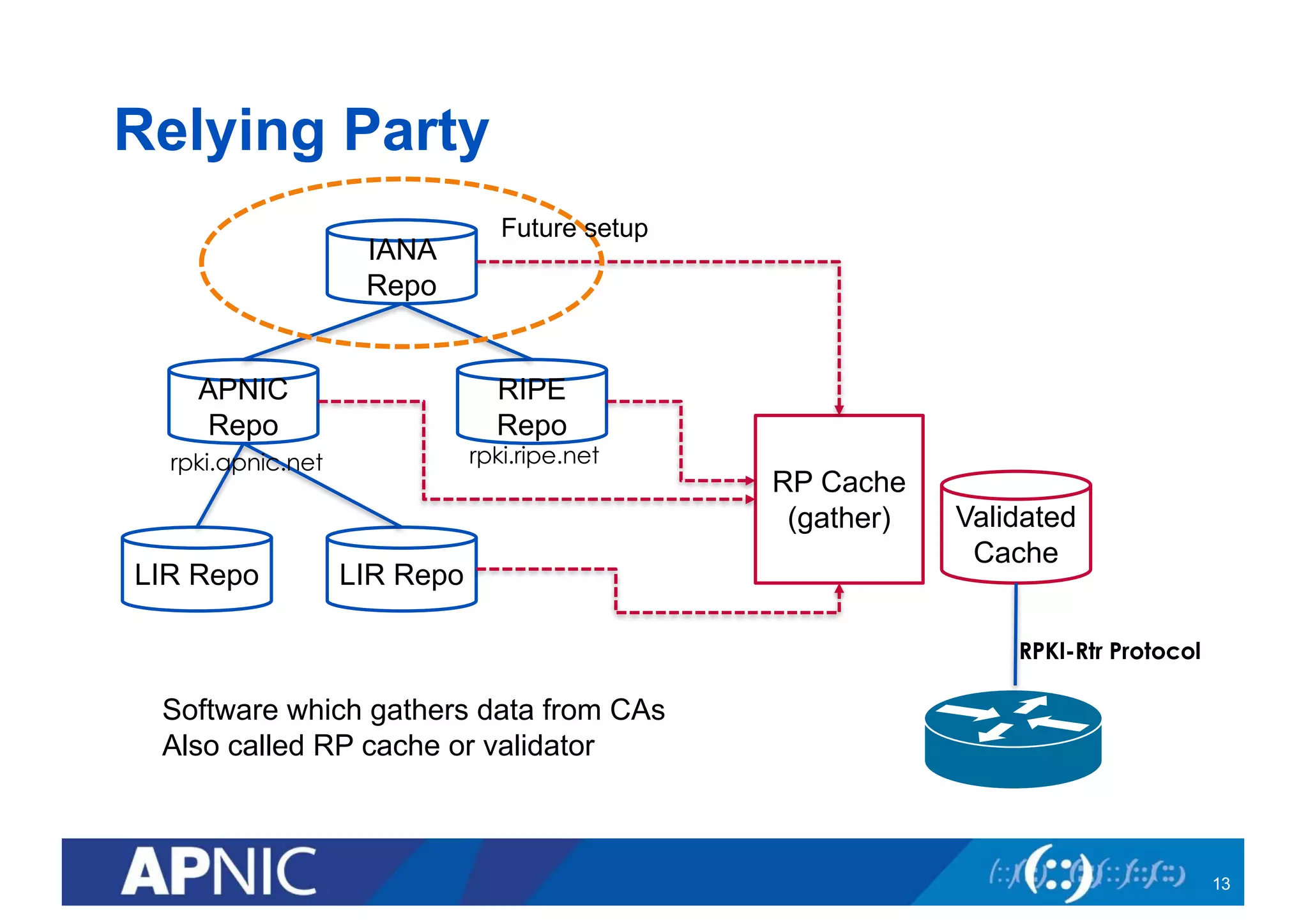
Details on RPKI components such as Certificate Authority and Relying Party functionalities.
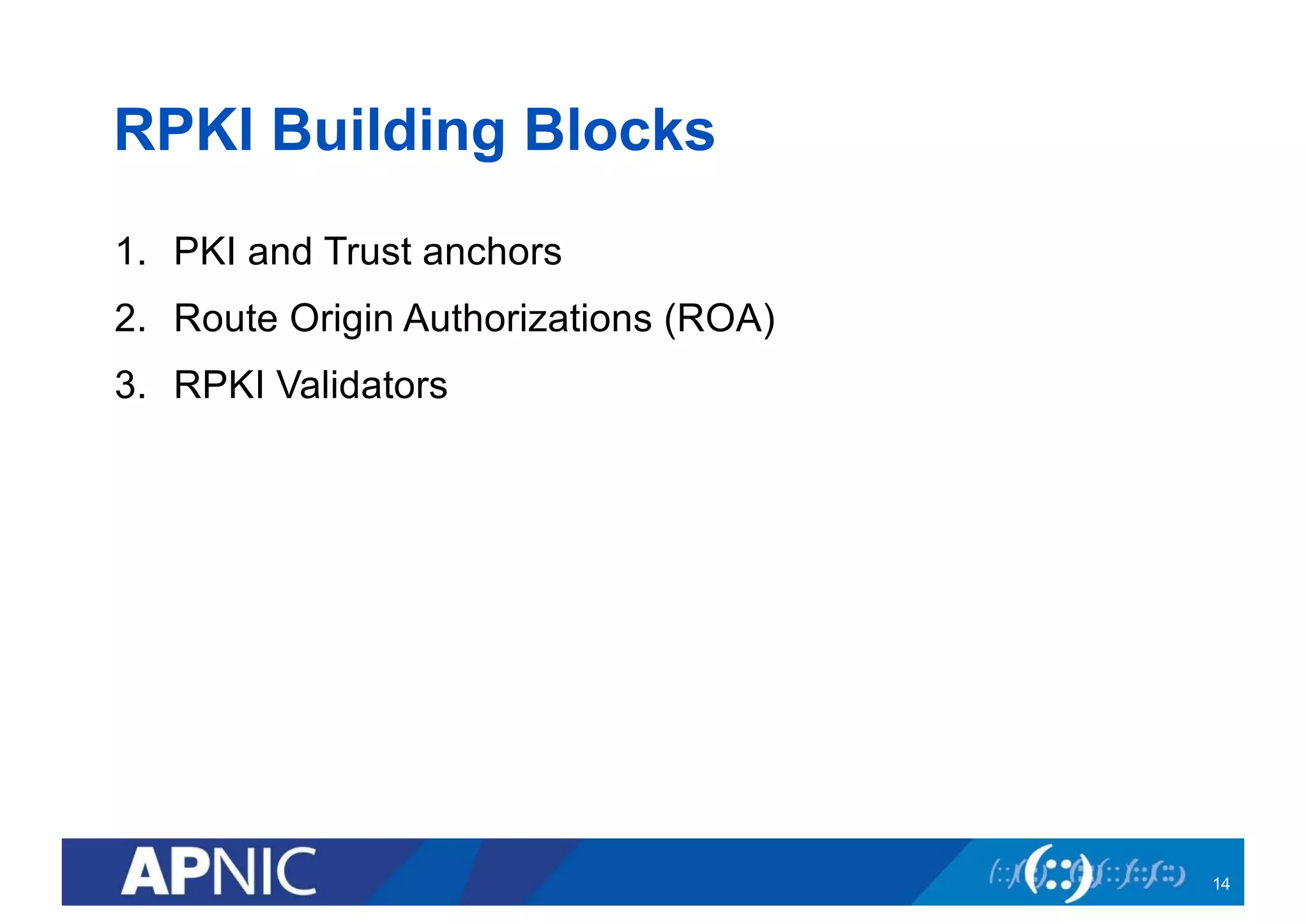
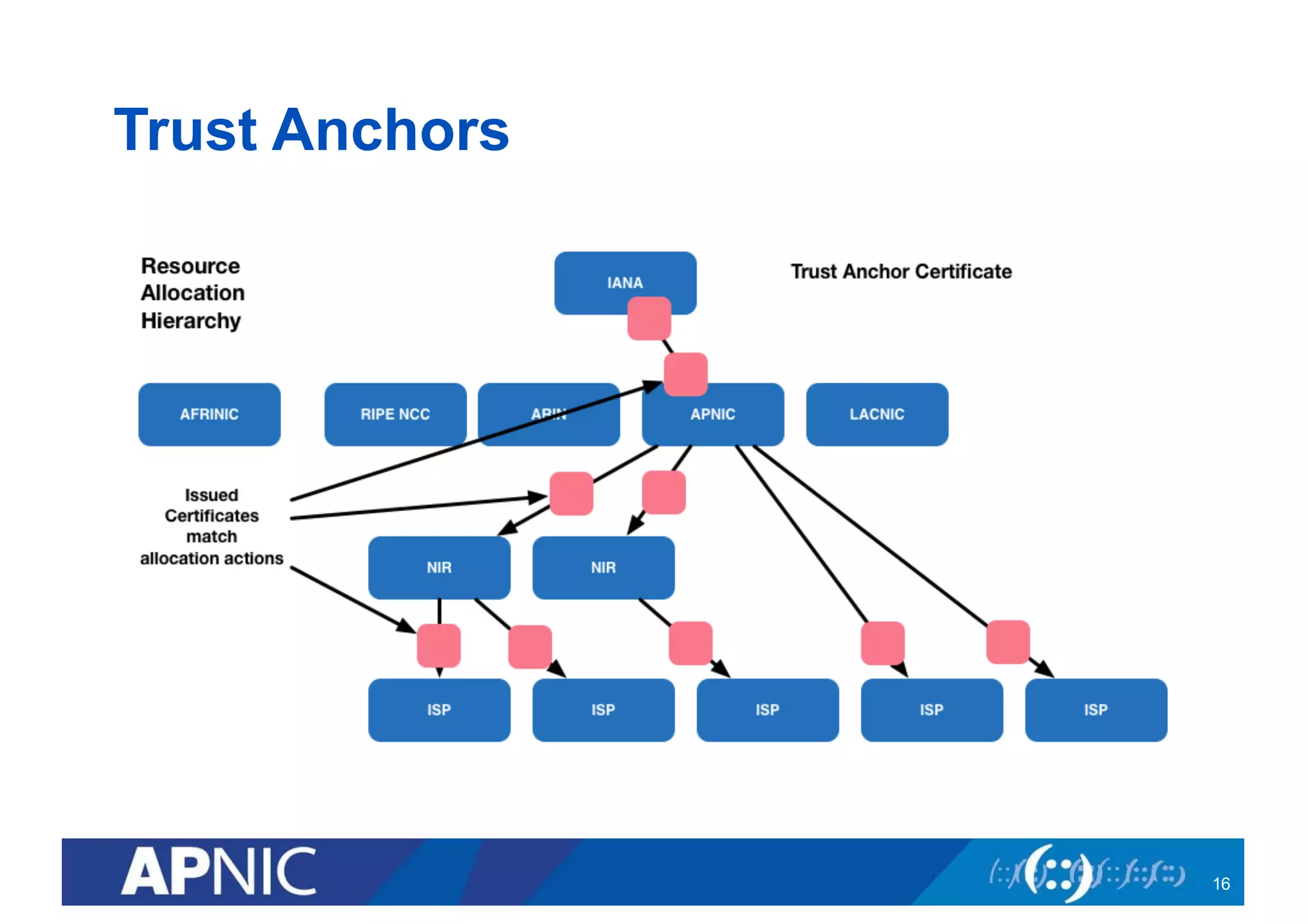
Explains the essential components of RPKI, including trust anchors and route authorizations.
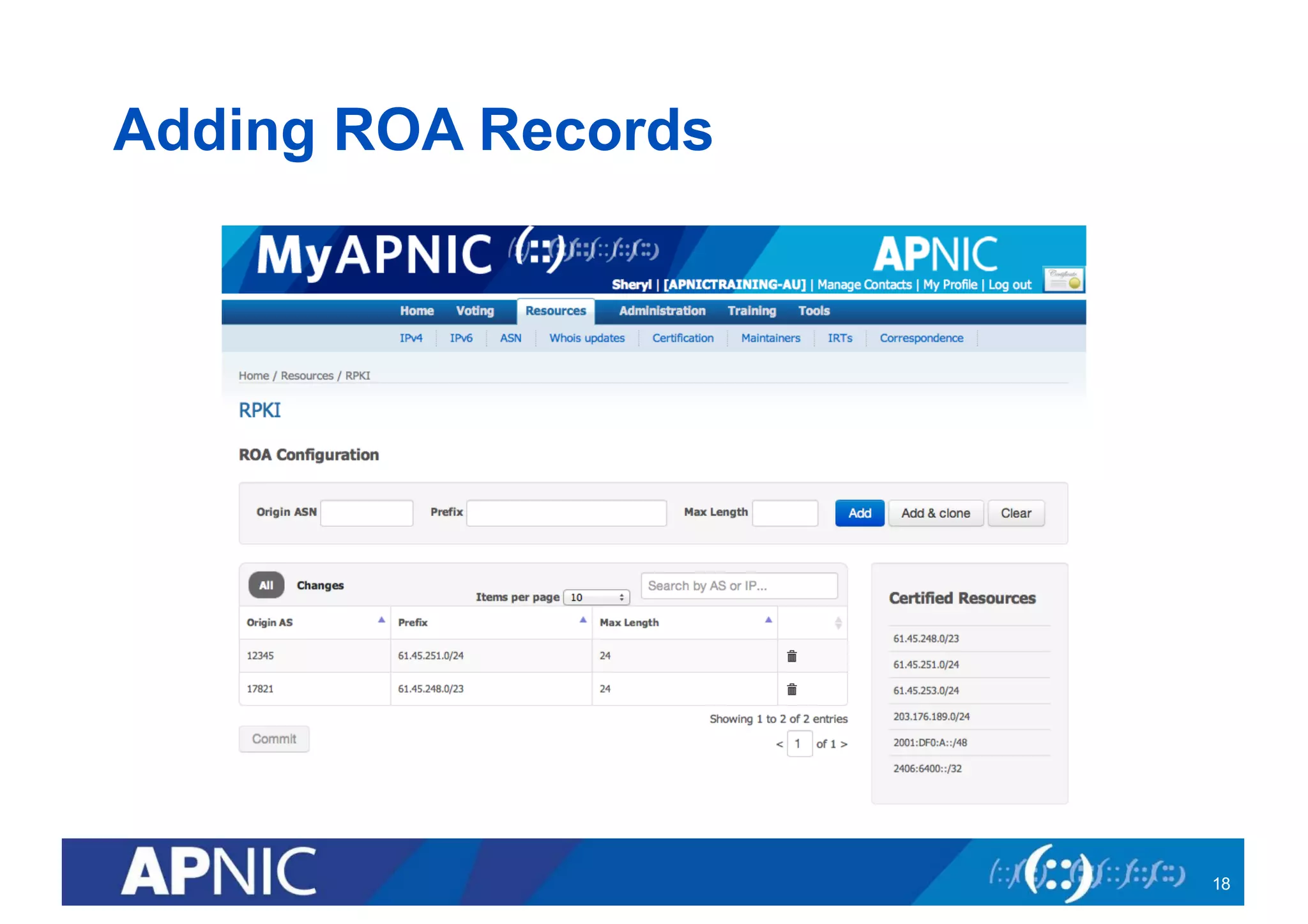
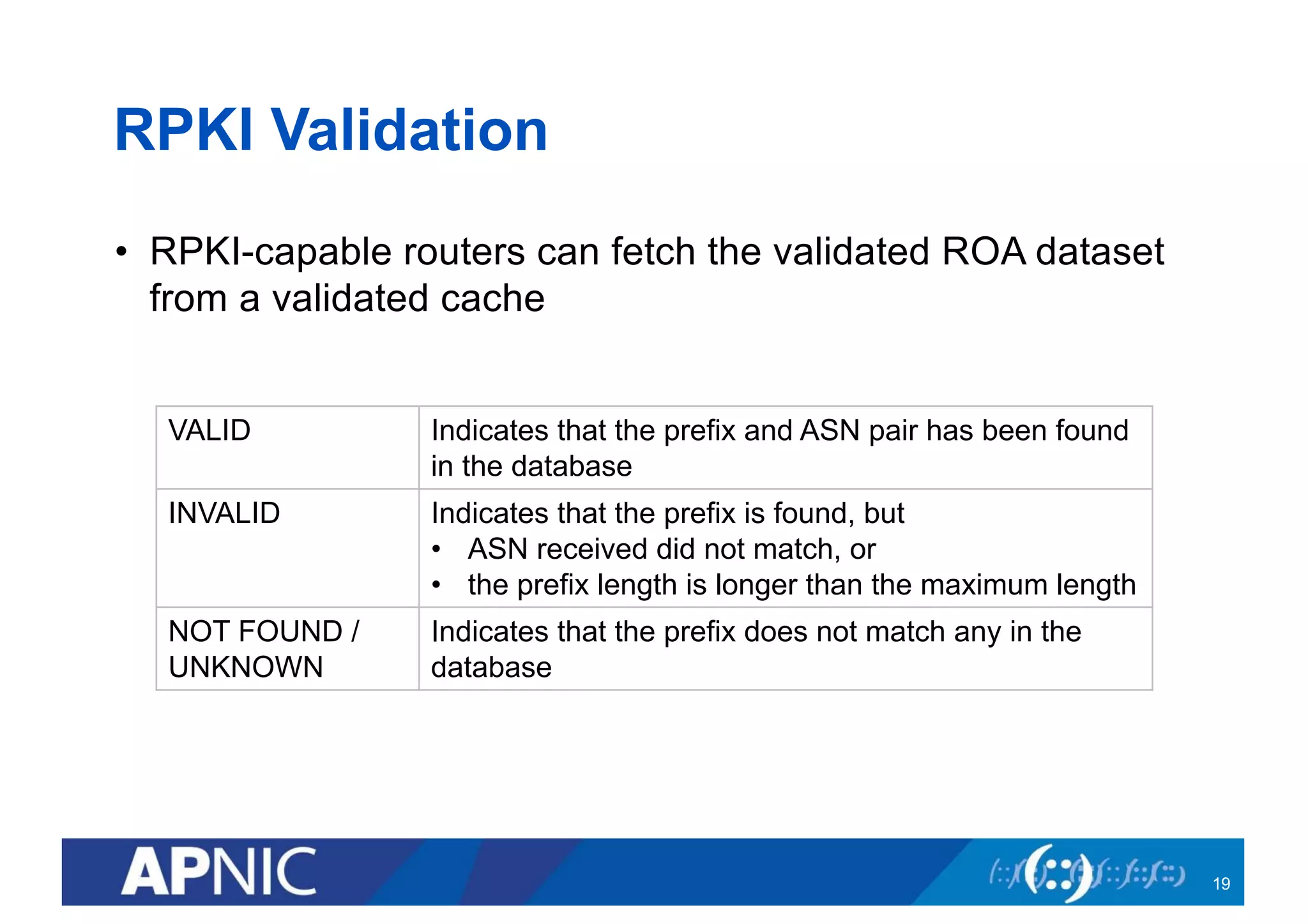
Describes Route Origin Authorizations (ROAs) and their validation in RPKI.
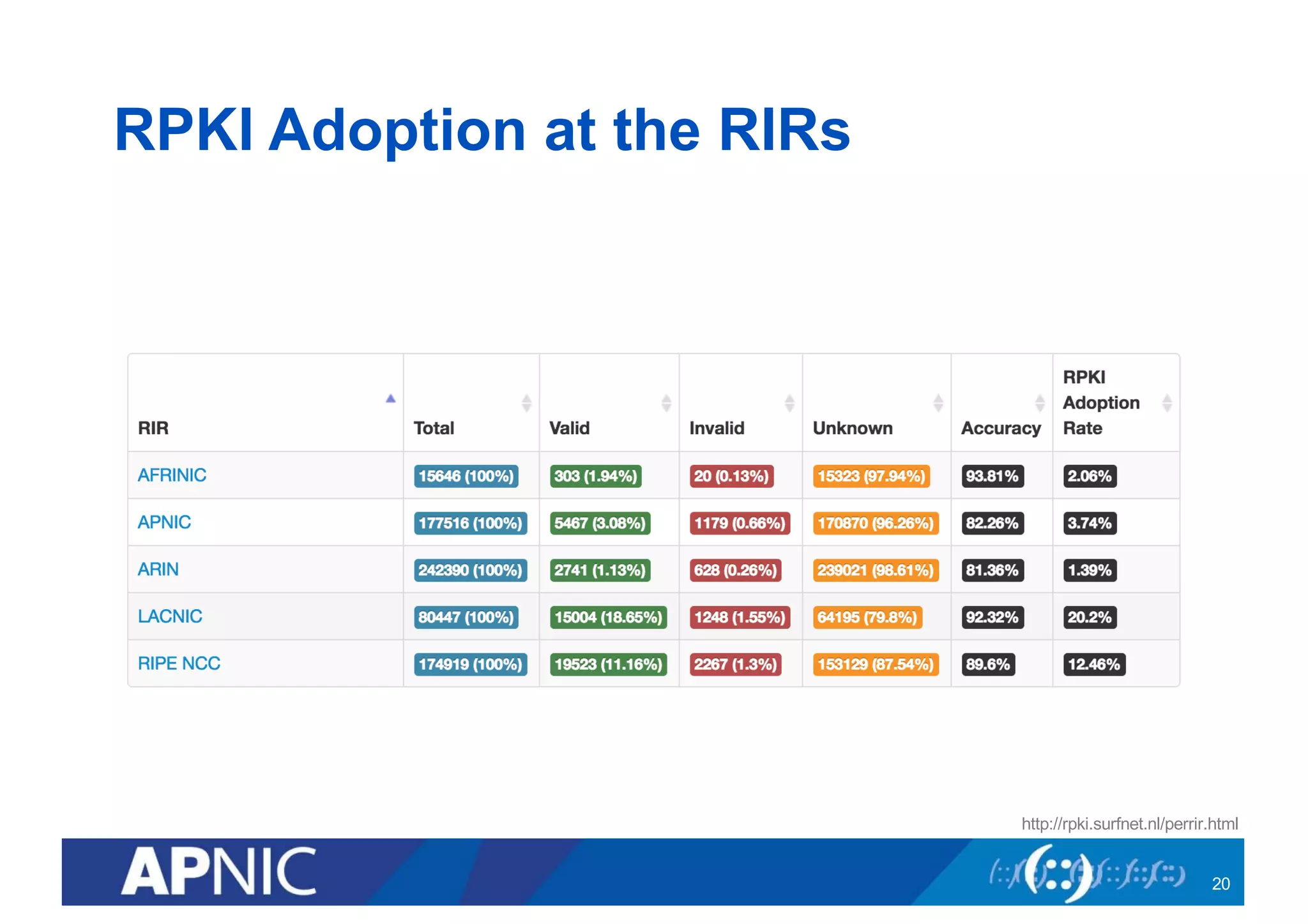
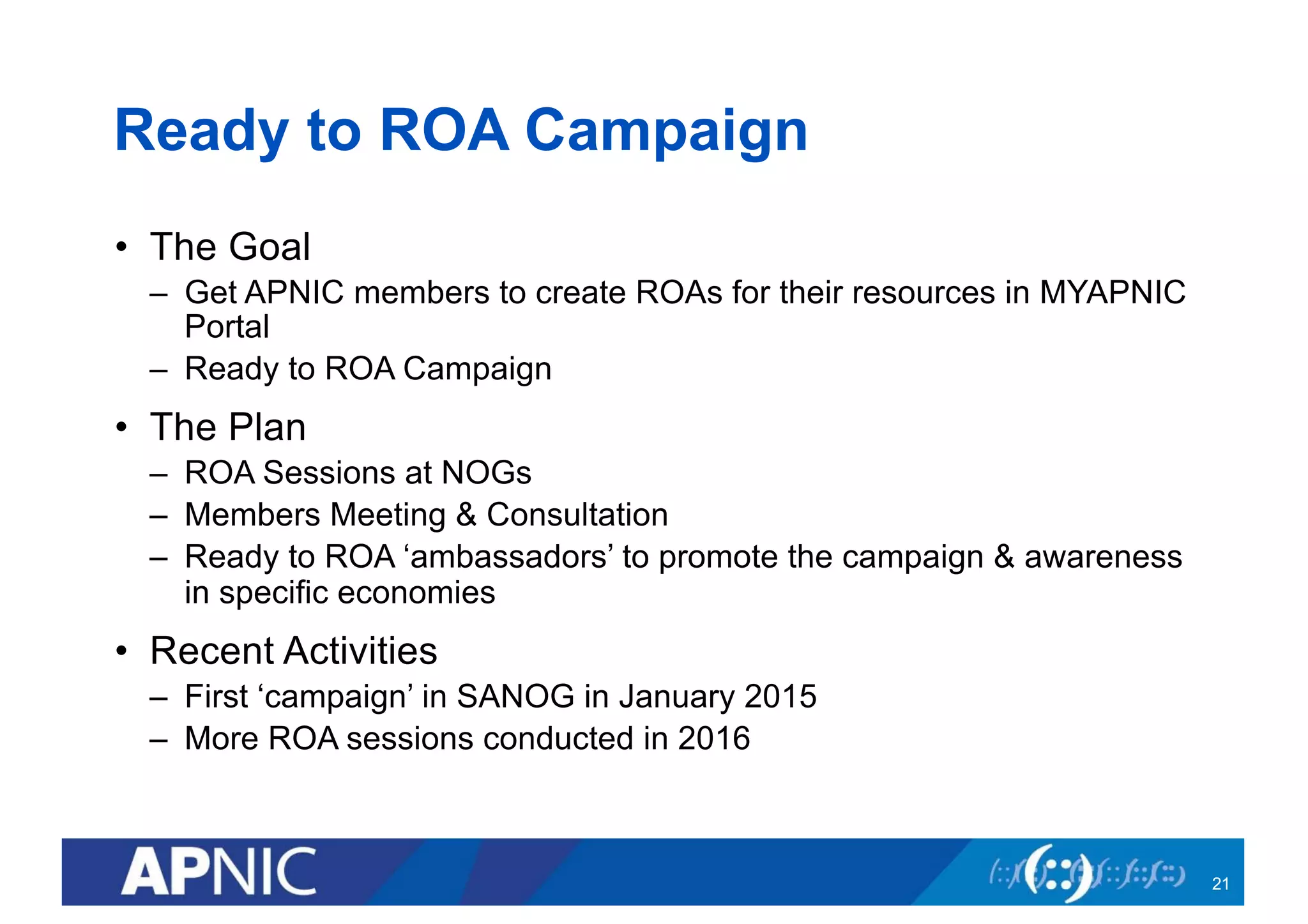
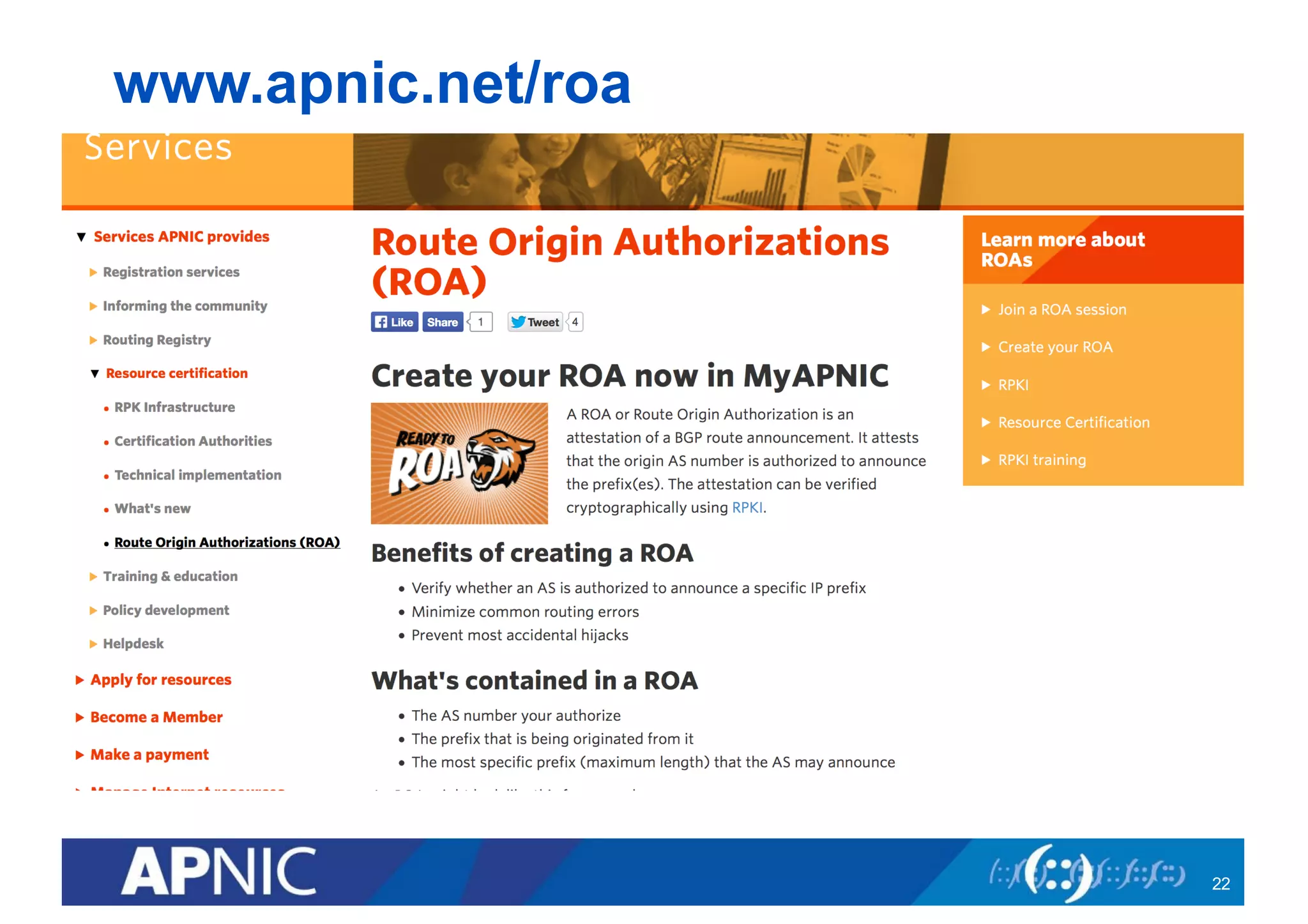
Information about RPKI adoption at RIRs and the 'Ready to ROA' campaign.
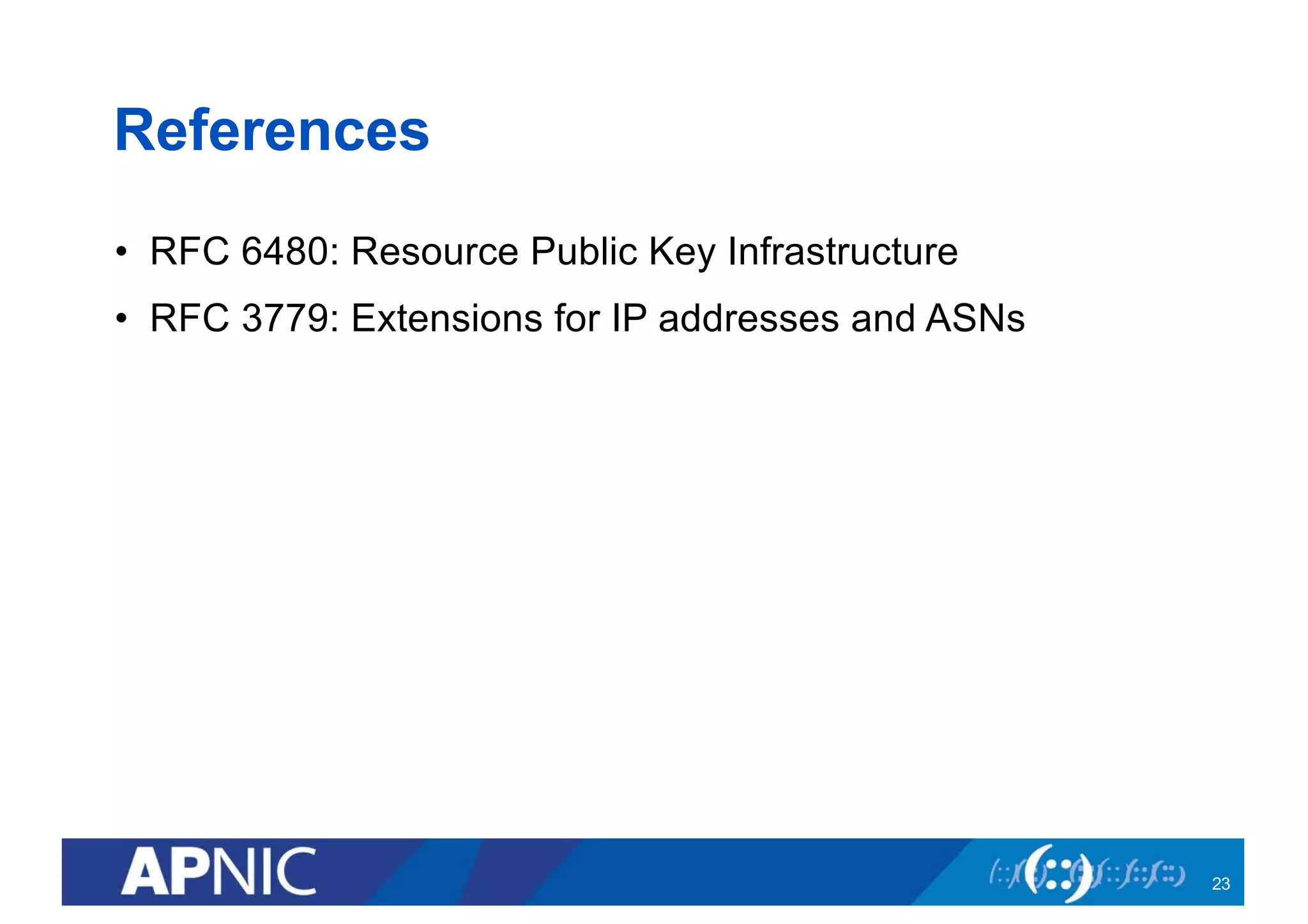
Provides references, campaign links and social media for further engagement with APNIC.


![[2018] 오픈스택 5년 운영의 경험](https://cdn.slidesharecdn.com/ss_thumbnails/cloudinfra05-190131073350-thumbnail.jpg?width=640&height=640&fit=bounds)


![[cb22] Fight Against Malware Development Life Cycle by Shusei Tomonaga and Yu...](https://cdn.slidesharecdn.com/ss_thumbnails/d1t1s07tomonagamasubuchifightagainstmalwaredevelopmentlifecycle2022-10-1806-230101090047-9ab922cd-thumbnail.jpg?width=640&height=640&fit=bounds)


![[네트워크] TCP, 믿을 수 있나요!?](https://cdn.slidesharecdn.com/ss_thumbnails/tcp-150426214109-conversion-gate01-thumbnail.jpg?width=640&height=640&fit=bounds)


![Number_Guessing_Game_Dsbsbssbzboc[1].pptx](https://cdn.slidesharecdn.com/ss_thumbnails/numberguessinggamedoc1-251206215042-a076fc05-thumbnail.jpg?width=640&height=640&fit=bounds)


