Introduction to Removable Prosthodontics Dr. Feras Aalam
Prosthodontics: Removable Prosthodontics Part A: Removable Partial Denture Part B: Removable Complete Denture
Key Terms Abutment Anatomical Baseplate Bite rim Border molding Centric occlusion Connectors Denture base Framework  Muscle trimming Non-anatomical Overdenture Partial dentures Prostheses Relined Rests Retainer Vertical dimension
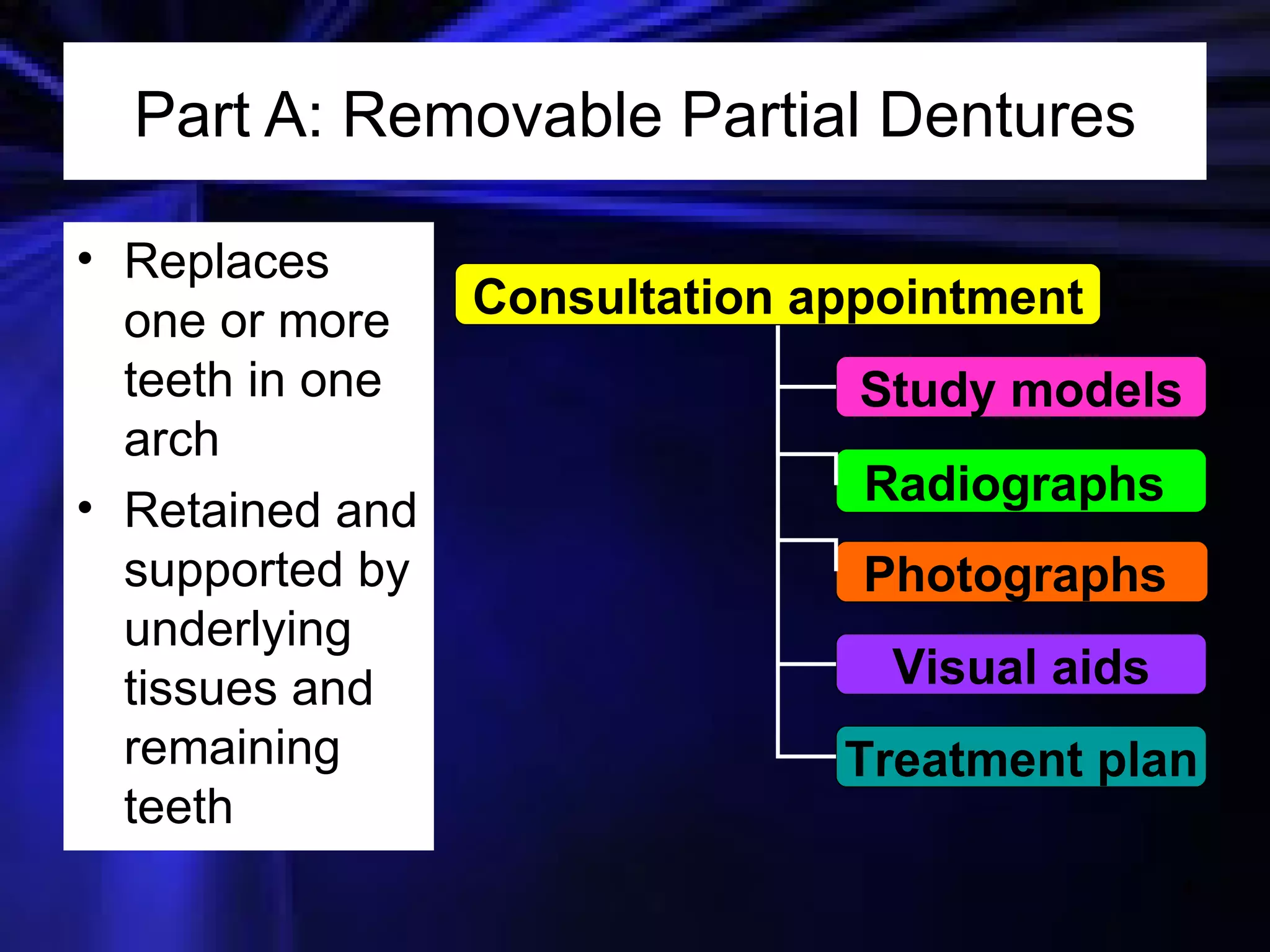
Part A: Removable Partial Dentures Replaces one or more teeth in one arch Retained and supported by underlying tissues and remaining teeth Study models Photographs  Visual aids Radiographs  Treatment plan Consultation appointment
Advantages of a Removable Partial Less expensive than fixed prostheses Proper occlusal plane is maintained Fewer intraoral procedures than fixed pros. May support periodontally involved teeth  Stabilizes the arches Restores function when no distal teeth present Restores long span of lost dentition Easier for good oral hygiene of abutments Easily repaired and adjusted
Contraindications for a Partial Lack of sufficient number of natural teeth properly located in the arch Lack of teeth with adequate root support to retain the appliance Rampant caries or gross periodontal conditions of remaining teeth Poor oral hygiene with no motivation to improve oral conditions
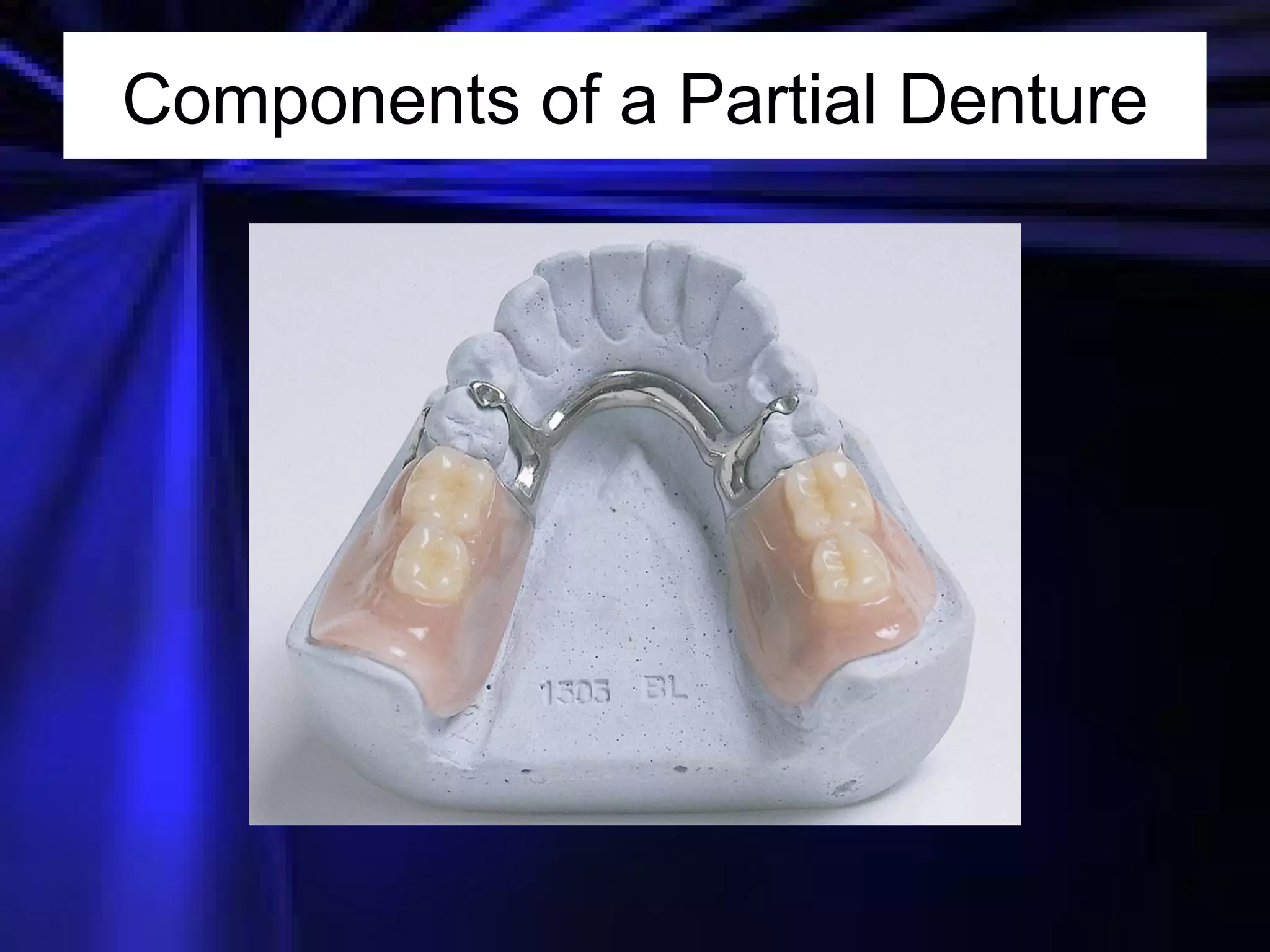
Components of a Partial Denture
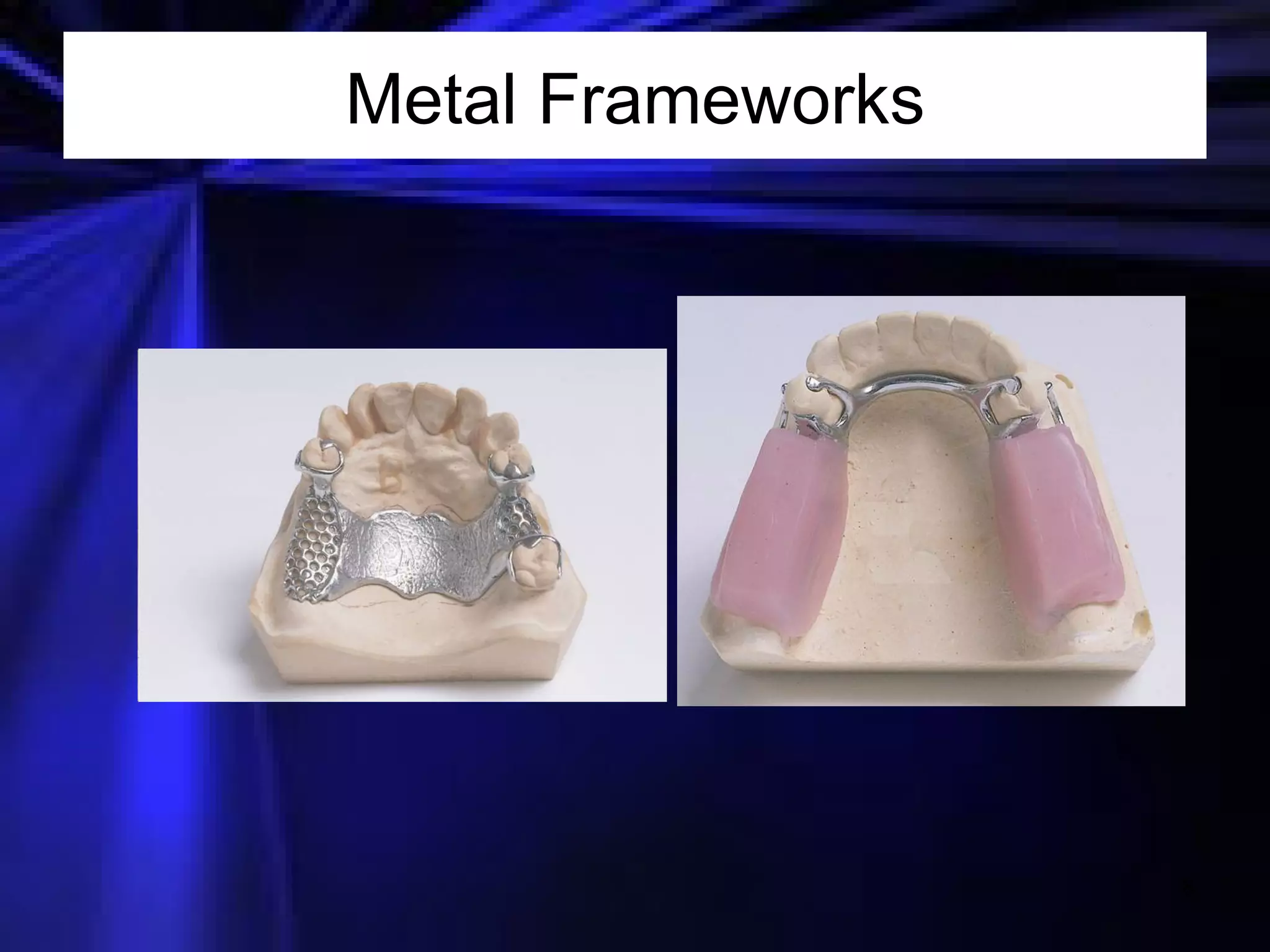
Metal Frameworks
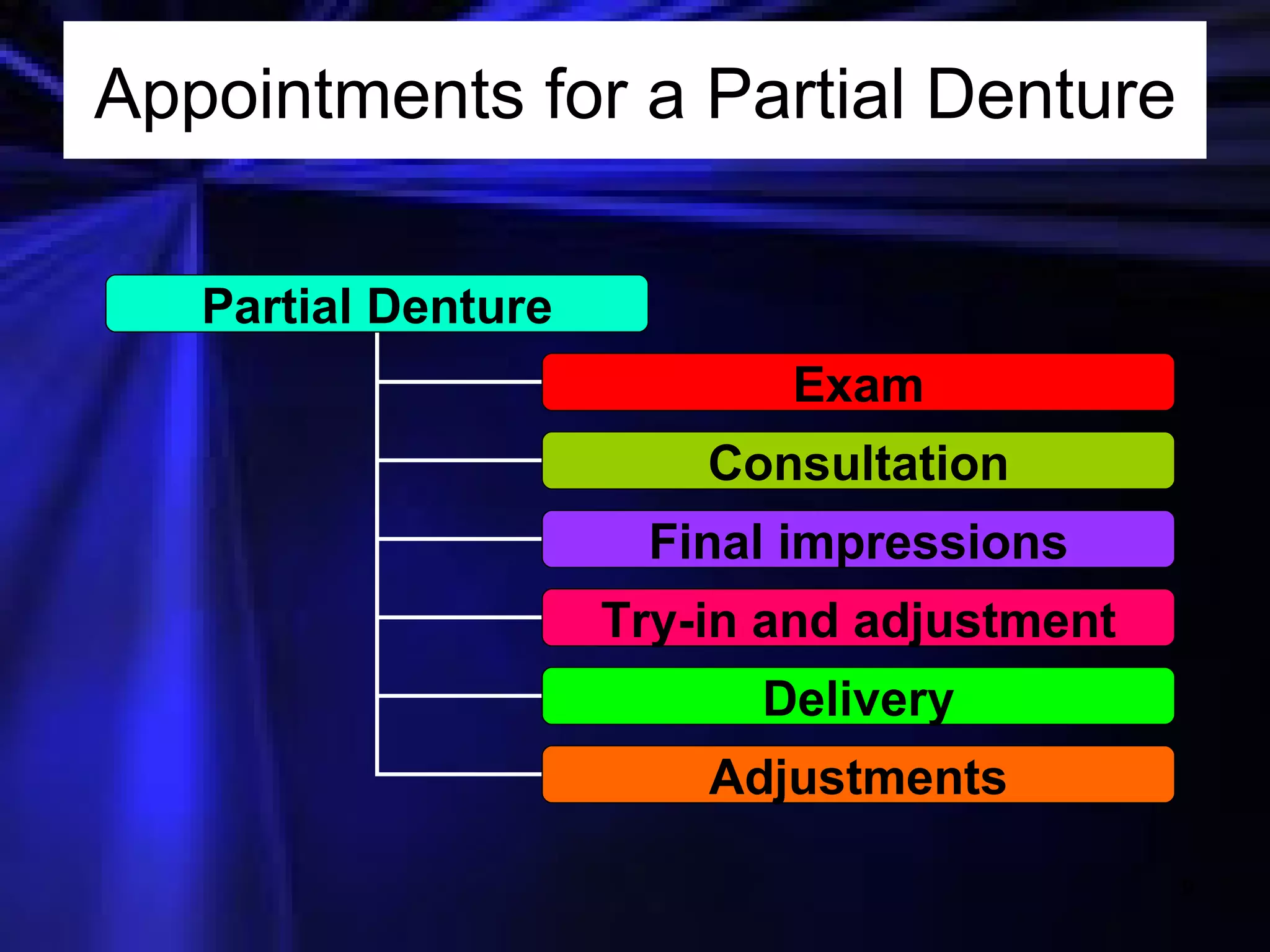
Appointments for a Partial Denture Exam Consultation Final impressions Try-in and adjustment Delivery Adjustments Partial Denture
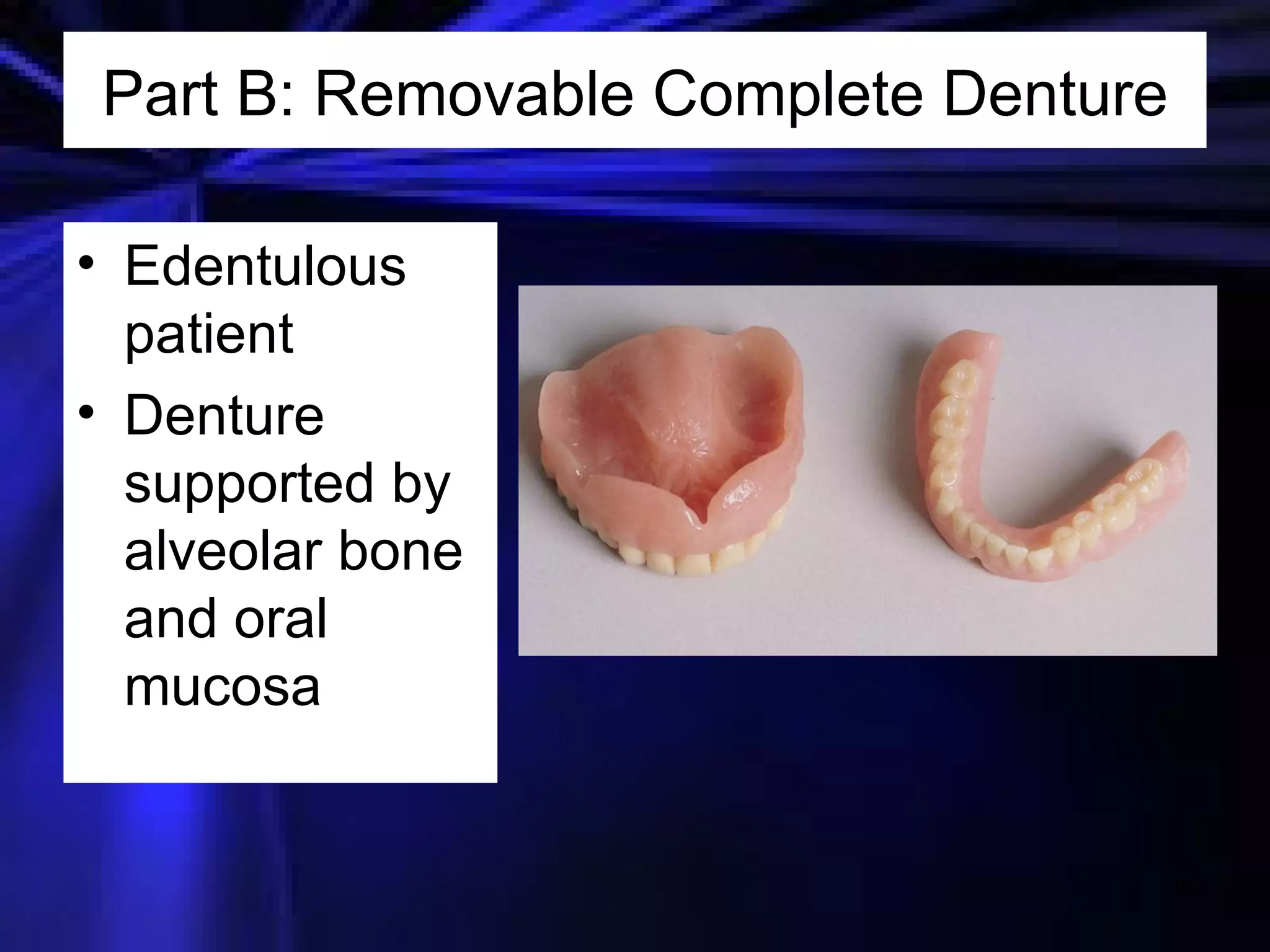
Part B: Removable Complete Denture Edentulous patient Denture supported by alveolar bone and oral mucosa
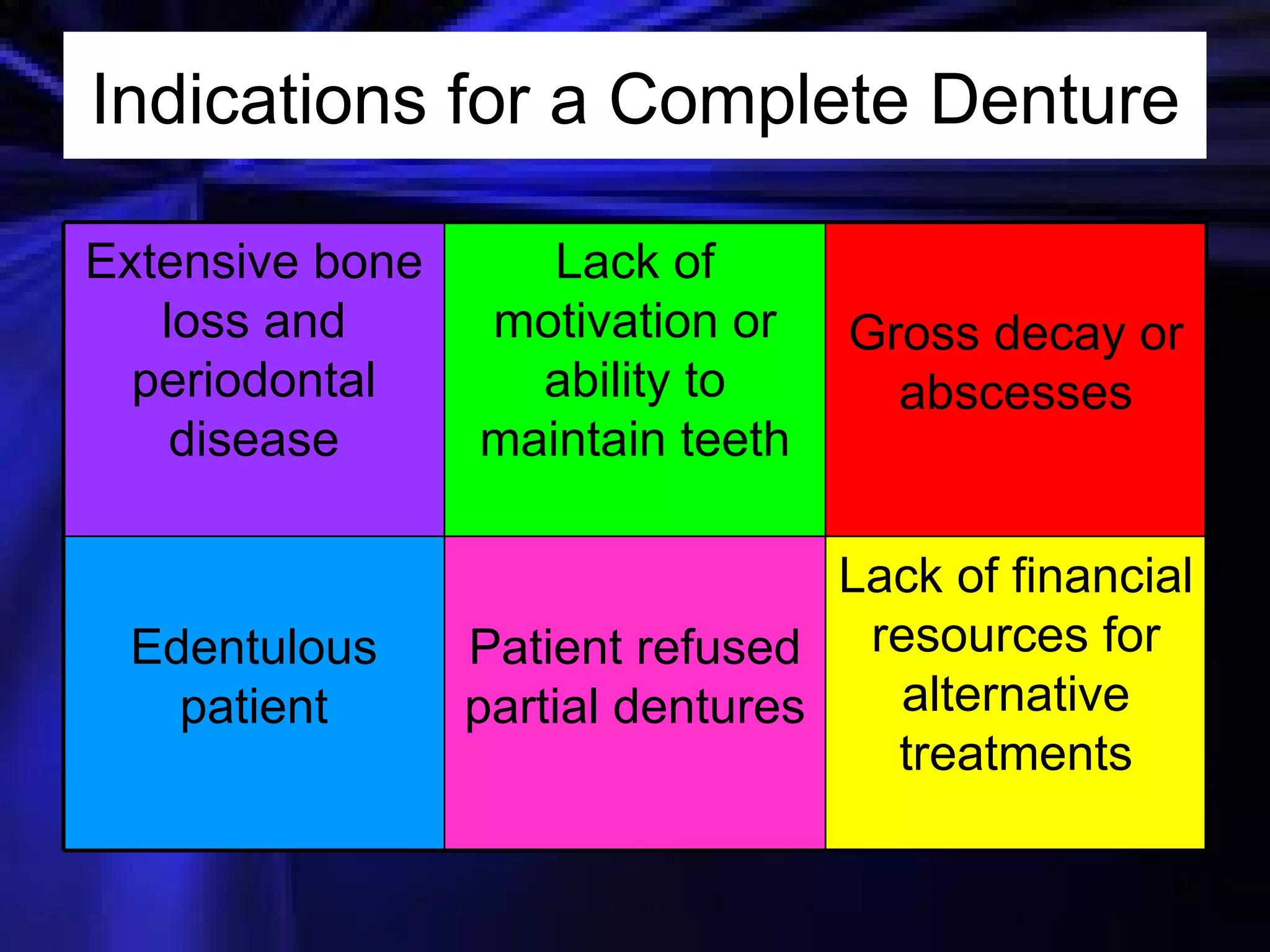
Indications for a Complete Denture Lack of financial resources for alternative treatments Patient refused partial dentures Edentulous patient Gross decay or abscesses Lack of motivation or ability to maintain teeth Extensive bone loss and periodontal disease
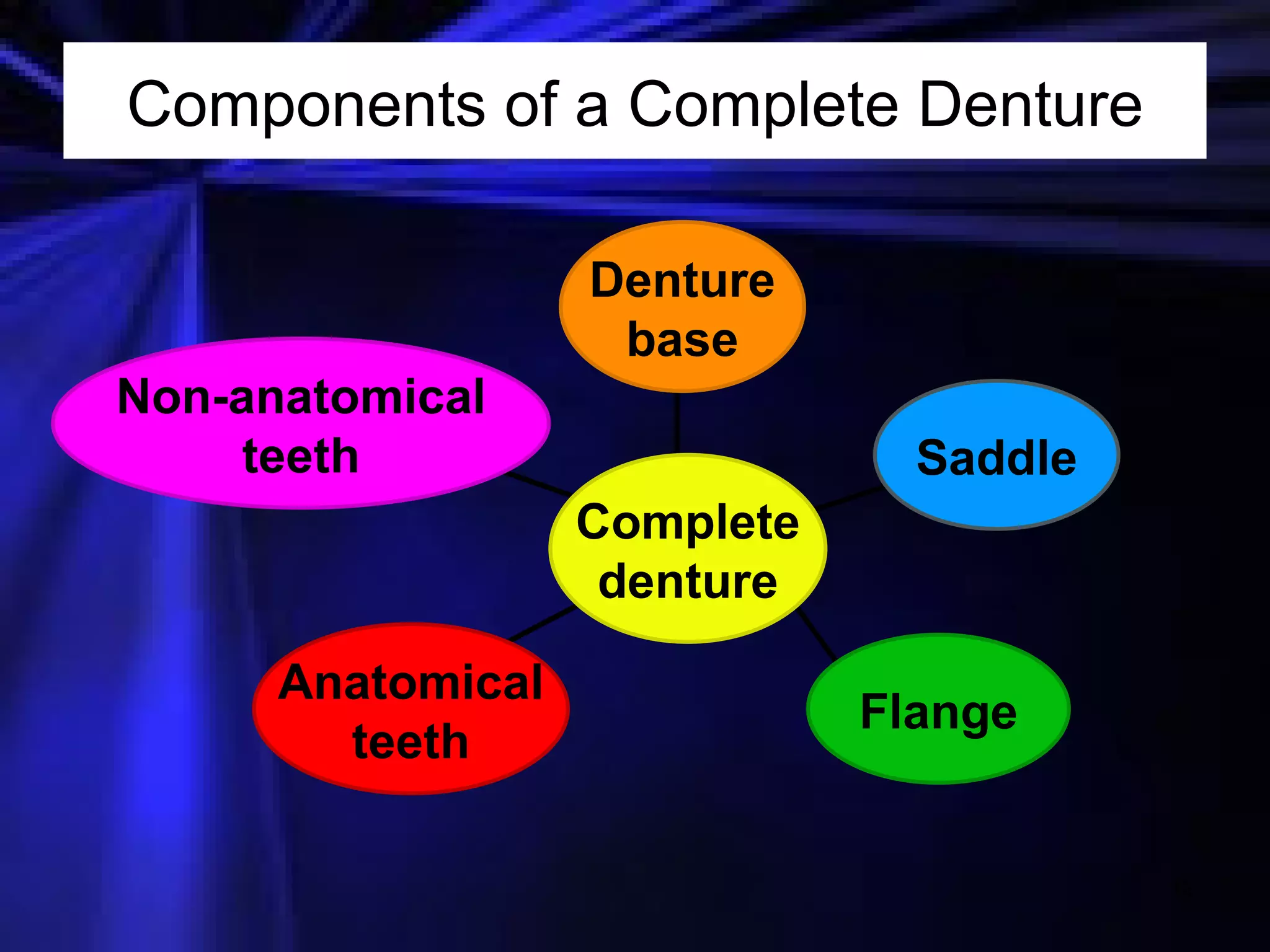
Components of a Complete Denture Complete denture Non-anatomical teeth Anatomical teeth Flange Saddle Denture base
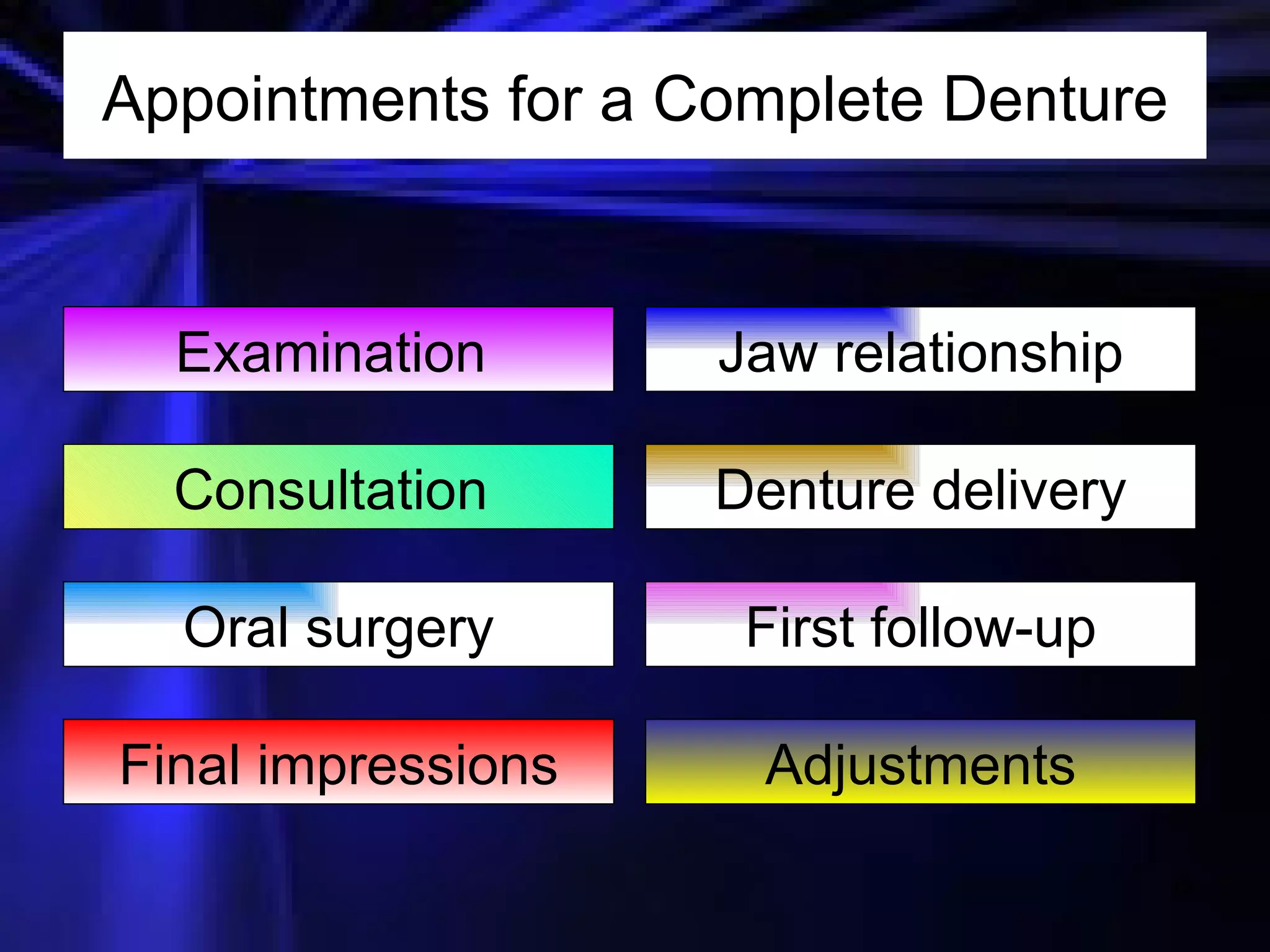
Appointments for a Complete Denture Examination  Consultation  Oral surgery Final impressions Jaw relationship Denture delivery First follow-up Adjustments
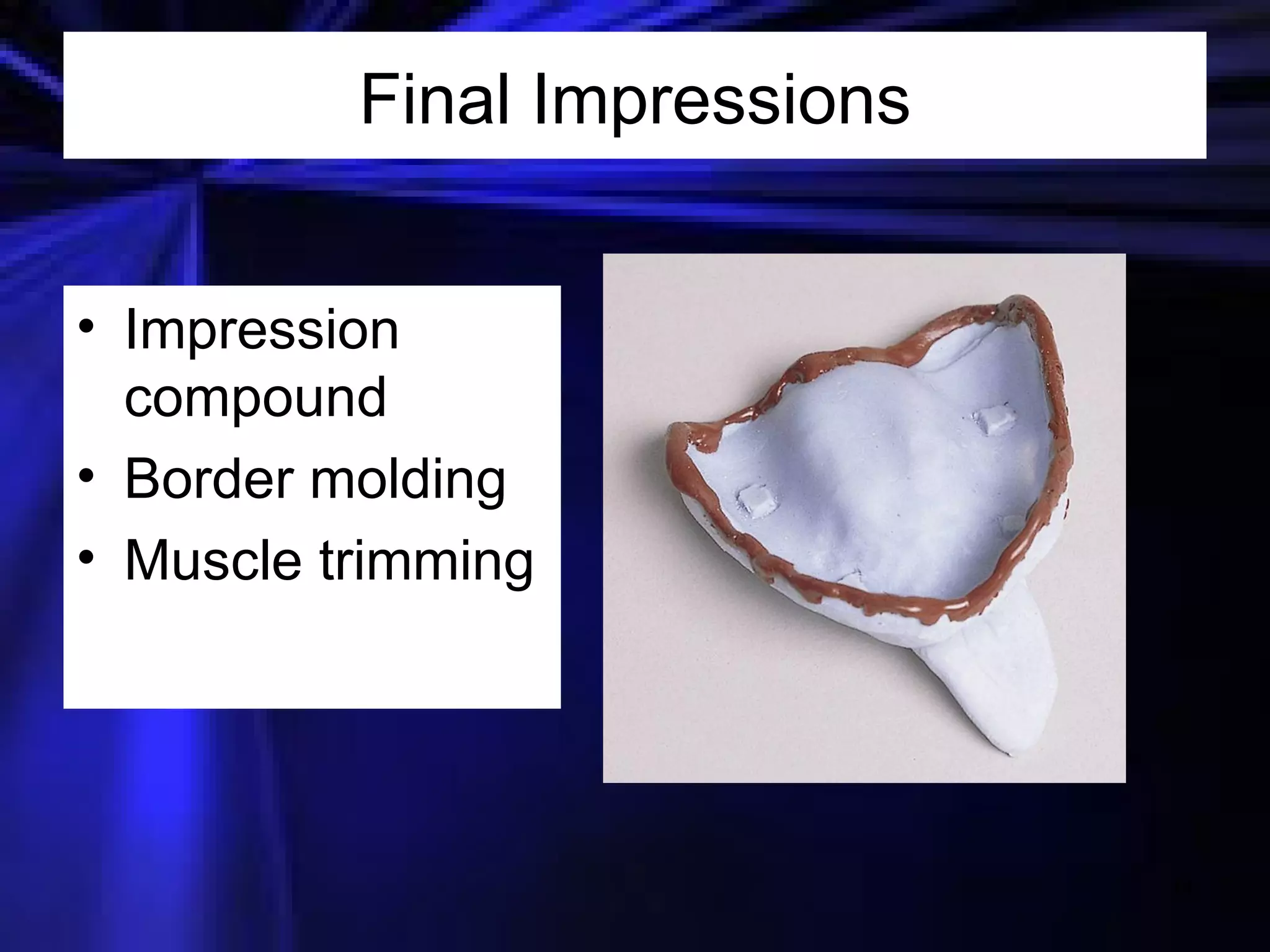
Final Impressions Impression compound Border molding Muscle trimming
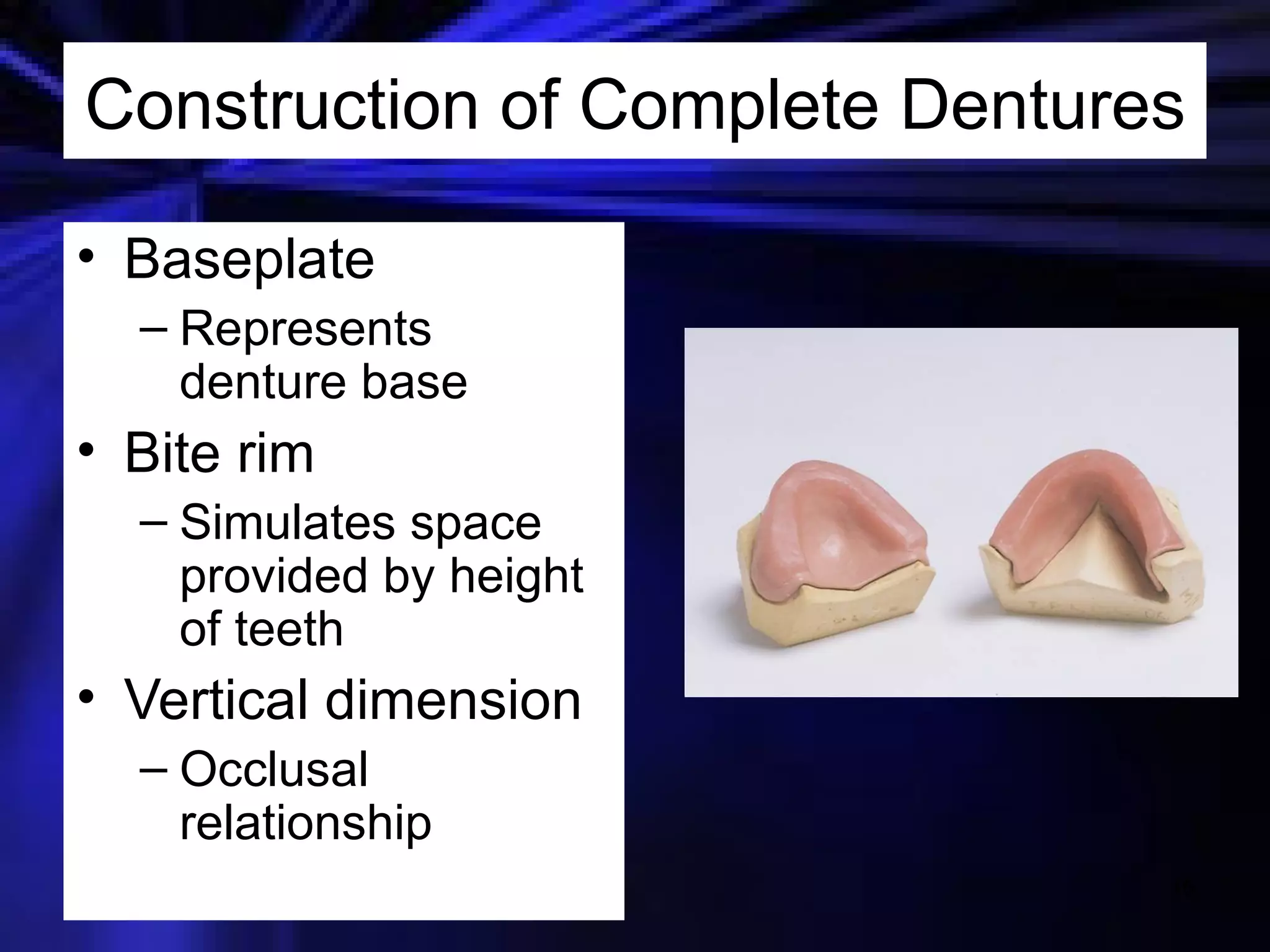
Construction of Complete Dentures Baseplate Represents denture base Bite rim Simulates space provided by height of teeth Vertical dimension Occlusal relationship
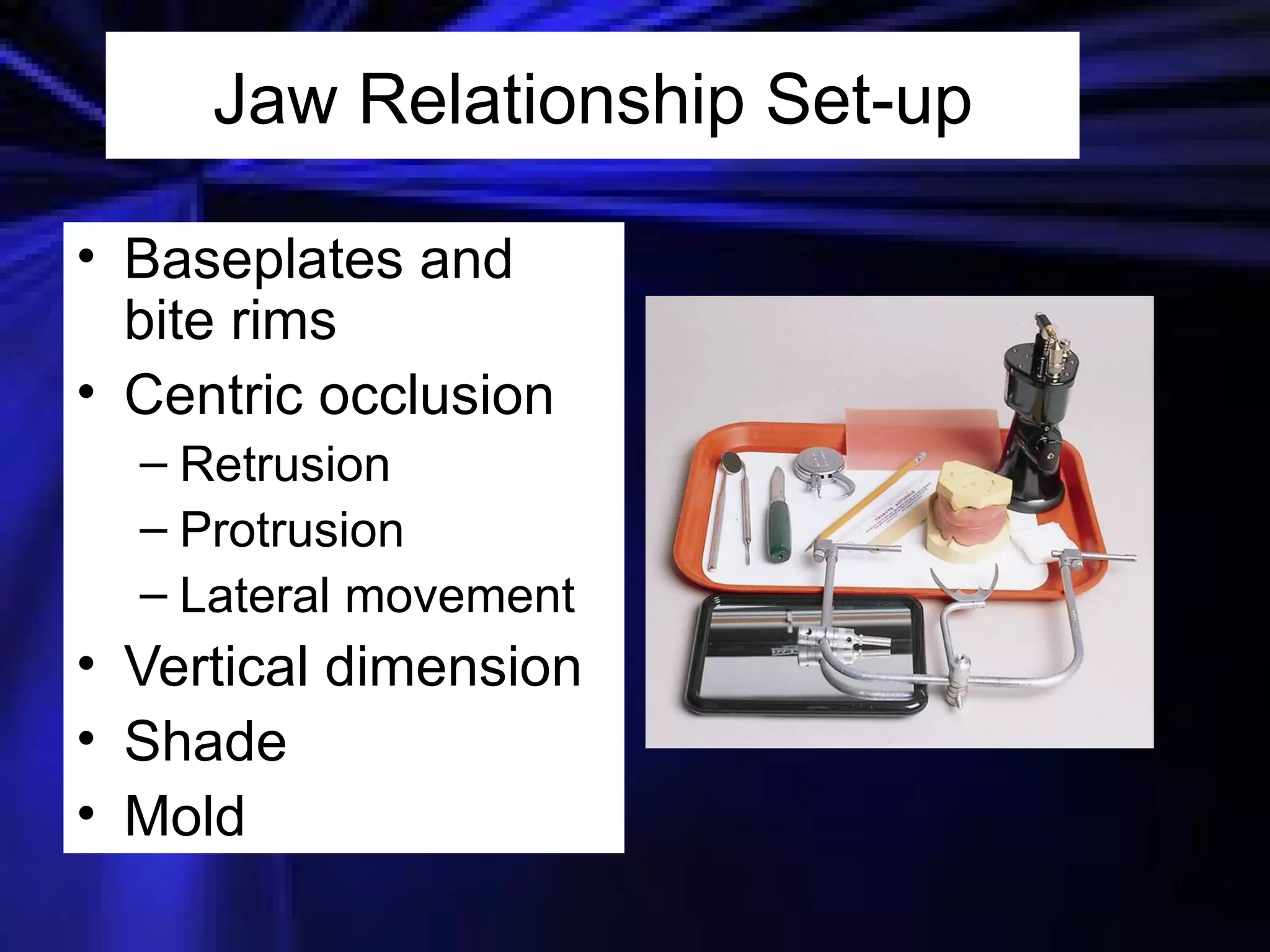
Jaw Relationship Set-up Baseplates and bite rims   Centric occlusion Retrusion Protrusion Lateral movement Vertical dimension Shade Mold
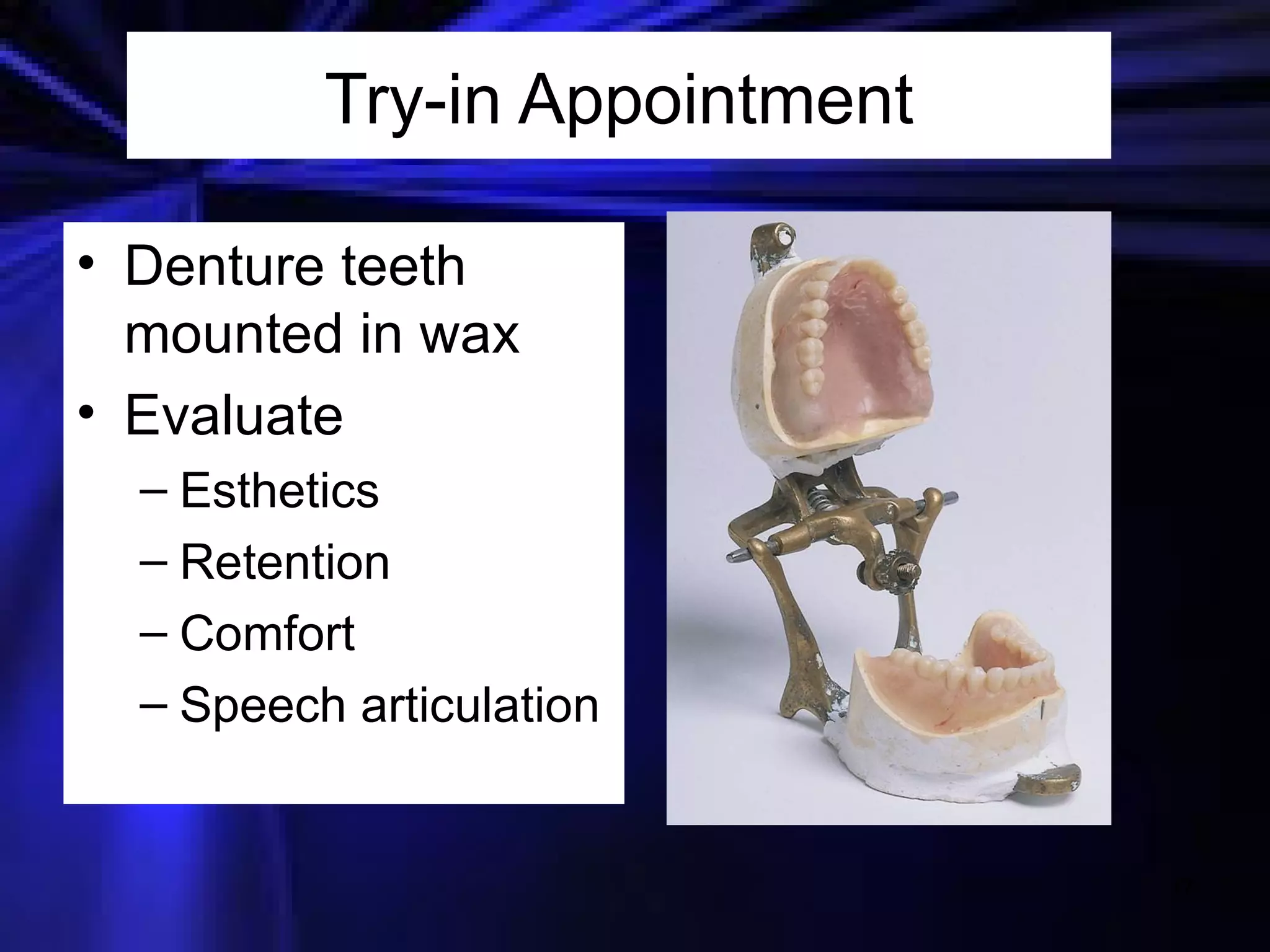
Try-in Appointment Denture teeth mounted in wax Evaluate Esthetics Retention Comfort Speech articulation
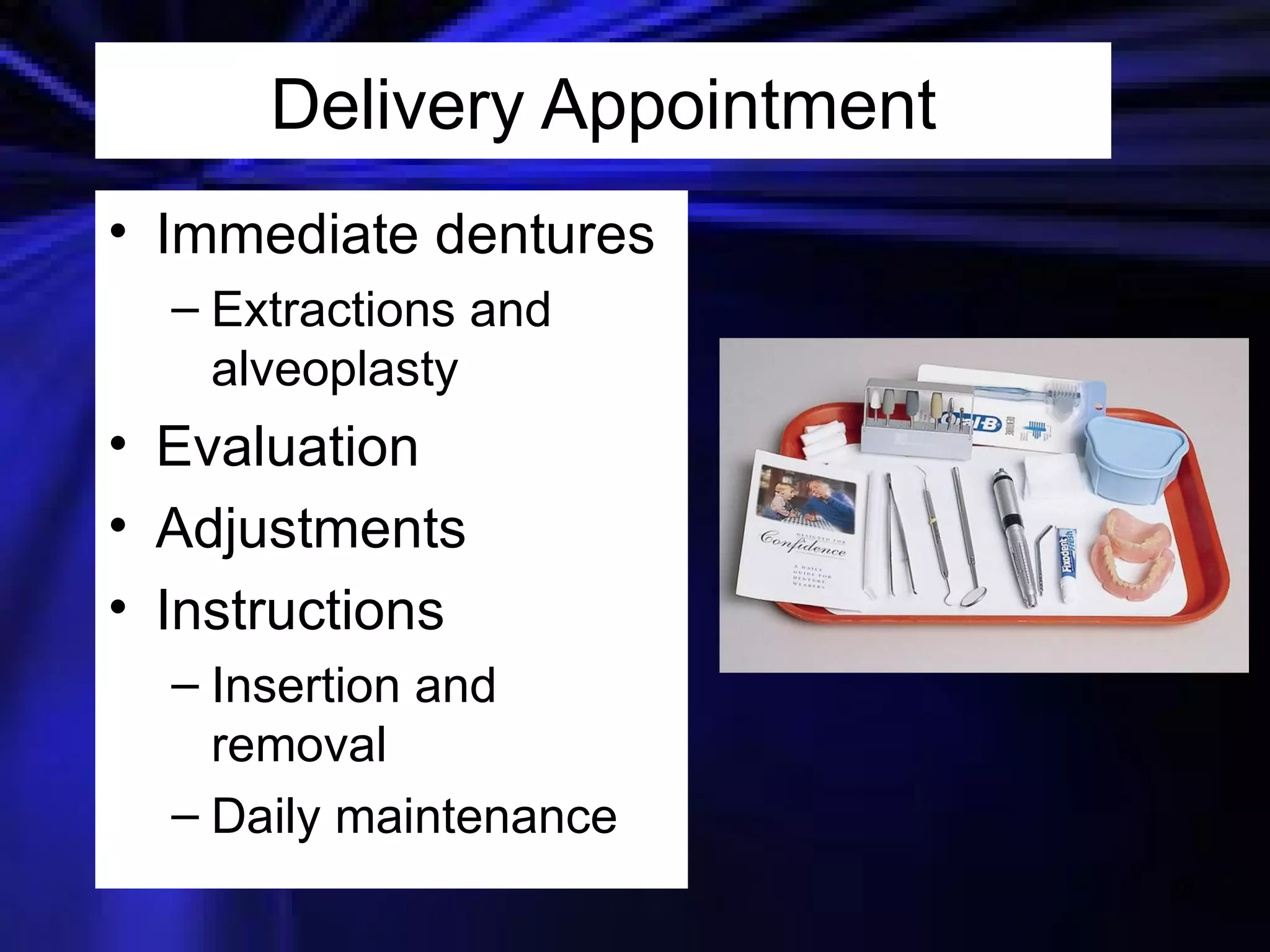
Delivery Appointment Immediate dentures Extractions and alveoplasty Evaluation Adjustments Instructions Insertion and removal Daily maintenance
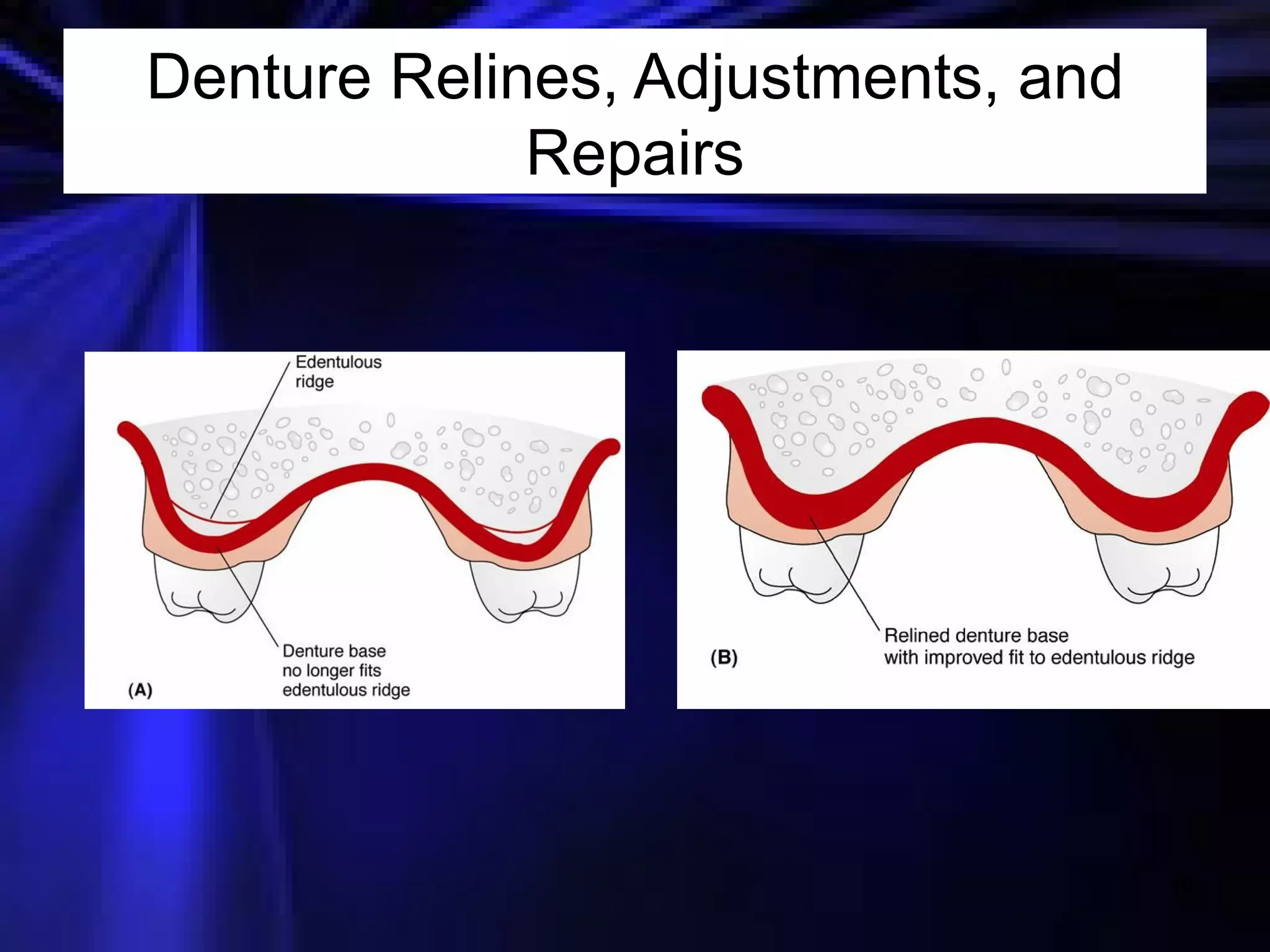
Denture Relines, Adjustments, and Repairs
Assessment Questions What does the bite rim simulate? Vertical dimension, or the height of the teeth. What is the term for not having any teeth? Edentulous. What happens to the bone following tooth extractions? The bone will shrink and resorb.
Thank you
Summary of the lecture  Key Terms Types of fixed prosthetics and materials Procedures performed during fixed and removable prosthodontics Considerations for fixed crowns and bridges, partial dentures, and complete dentures Construction of prostheses Partial and complete denture components relines, and adjustments
Removable Prosthodontics Learning Objectives 1. Define the Key Terms. 2. Explain the reasons for removable prostheses. 3. List the components of a partial denture. 4. Describe the consultation appointment for a removable prosthesis. 5. Explain the difference between a removable partial and a complete denture.
Learning Objectives 6. Describe the appointment steps for a partial denture and a complete denture. 7. Explain denture reline, repair, and adjustment procedures. 8. Demonstrate partial denture final impressions and delivery. 9. Demonstrate a jaw relationship and a denture relining procedure. Removable Prosthodontics
Implants and Overdentures Advantages Disadvantages

Introduction to removable prosthodontics(new)

  • 1.
    Introduction to RemovableProsthodontics Dr. Feras Aalam
  • 2.
    Prosthodontics: Removable ProsthodonticsPart A: Removable Partial Denture Part B: Removable Complete Denture
  • 3.
    Key Terms AbutmentAnatomical Baseplate Bite rim Border molding Centric occlusion Connectors Denture base Framework Muscle trimming Non-anatomical Overdenture Partial dentures Prostheses Relined Rests Retainer Vertical dimension
  • 4.
    Part A: RemovablePartial Dentures Replaces one or more teeth in one arch Retained and supported by underlying tissues and remaining teeth Study models Photographs Visual aids Radiographs Treatment plan Consultation appointment
  • 5.
    Advantages of aRemovable Partial Less expensive than fixed prostheses Proper occlusal plane is maintained Fewer intraoral procedures than fixed pros. May support periodontally involved teeth Stabilizes the arches Restores function when no distal teeth present Restores long span of lost dentition Easier for good oral hygiene of abutments Easily repaired and adjusted
  • 6.
    Contraindications for aPartial Lack of sufficient number of natural teeth properly located in the arch Lack of teeth with adequate root support to retain the appliance Rampant caries or gross periodontal conditions of remaining teeth Poor oral hygiene with no motivation to improve oral conditions
  • 7.
    Components of aPartial Denture
  • 8.
  • 9.
    Appointments for aPartial Denture Exam Consultation Final impressions Try-in and adjustment Delivery Adjustments Partial Denture
  • 10.
    Part B: RemovableComplete Denture Edentulous patient Denture supported by alveolar bone and oral mucosa
  • 11.
    Indications for aComplete Denture Lack of financial resources for alternative treatments Patient refused partial dentures Edentulous patient Gross decay or abscesses Lack of motivation or ability to maintain teeth Extensive bone loss and periodontal disease
  • 12.
    Components of aComplete Denture Complete denture Non-anatomical teeth Anatomical teeth Flange Saddle Denture base
  • 13.
    Appointments for aComplete Denture Examination Consultation Oral surgery Final impressions Jaw relationship Denture delivery First follow-up Adjustments
  • 14.
    Final Impressions Impressioncompound Border molding Muscle trimming
  • 15.
    Construction of CompleteDentures Baseplate Represents denture base Bite rim Simulates space provided by height of teeth Vertical dimension Occlusal relationship
  • 16.
    Jaw Relationship Set-upBaseplates and bite rims Centric occlusion Retrusion Protrusion Lateral movement Vertical dimension Shade Mold
  • 17.
    Try-in Appointment Dentureteeth mounted in wax Evaluate Esthetics Retention Comfort Speech articulation
  • 18.
    Delivery Appointment Immediatedentures Extractions and alveoplasty Evaluation Adjustments Instructions Insertion and removal Daily maintenance
  • 19.
  • 20.
    Assessment Questions Whatdoes the bite rim simulate? Vertical dimension, or the height of the teeth. What is the term for not having any teeth? Edentulous. What happens to the bone following tooth extractions? The bone will shrink and resorb.
  • 21.
  • 22.
    Summary of thelecture Key Terms Types of fixed prosthetics and materials Procedures performed during fixed and removable prosthodontics Considerations for fixed crowns and bridges, partial dentures, and complete dentures Construction of prostheses Partial and complete denture components relines, and adjustments
  • 23.
    Removable Prosthodontics LearningObjectives 1. Define the Key Terms. 2. Explain the reasons for removable prostheses. 3. List the components of a partial denture. 4. Describe the consultation appointment for a removable prosthesis. 5. Explain the difference between a removable partial and a complete denture.
  • 24.
    Learning Objectives 6.Describe the appointment steps for a partial denture and a complete denture. 7. Explain denture reline, repair, and adjustment procedures. 8. Demonstrate partial denture final impressions and delivery. 9. Demonstrate a jaw relationship and a denture relining procedure. Removable Prosthodontics
  • 25.
    Implants and OverdenturesAdvantages Disadvantages