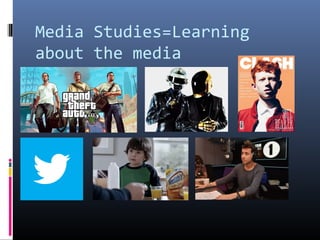
Media Studies=Learning
about the media
Media Studies
Media Studies students can:
 Research
 Deconstruct
 Analyse
 Discuss
 Plan
 Create and Produce
 Evaluate
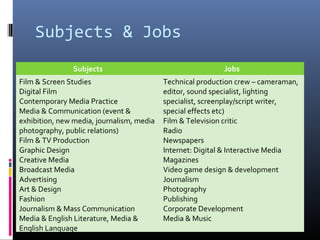
Subjects & Jobs
Subjects Jobs
Film & Screen Studies
Digital Film
Contemporary Media Practice
Media & Communication (event &
exhibition, new media, journalism, media
photography, public relations)
Film & TV Production
Graphic Design
Creative Media
Broadcast Media
Advertising
Art & Design
Fashion
Journalism & Mass Communication
Media & English Literature, Media &
English Language
Technical production crew – cameraman,
editor, sound specialist, lighting
specialist, screenplay/script writer,
special effects etc)
Film & Television critic
Radio
Newspapers
Internet: Digital & Interactive Media
Magazines
Video game design & development
Journalism
Photography
Publishing
Corporate Development
Media & Music
Important considerations
 Time consuming subject: Filming/ using photo-editing
software lunchtimes/after-school or evenings/weekends
 Needs to fit in with other GCSE choices
 Must be a team player: a lot of group work
 Useful ( but not essential) to have access to a computer,
editing software (GIMP is a free Photoshop style program),
a USB stick/hard drive to store your work safely
 Some people say it’s easy, others wouldn’t – 40% of your
mark is a challenging written exam
Unit B321: The Individual
Media Studies Portfolio
 This is a controlled assessment unit, 25–30
hours, internally assessed and externally
moderated. 120 marks, 30% of the total GCSE
marks
 Candidates produce an individual portfolio
containing a comparative analytical
assignment, a production exercise and a
planning and evaluative commentary. The
comparative analytical assignment is based
on at least two media texts from a selection
Unit B323: Textual Analysis
and Media Studies Topic
(Moving Image)
 40% of the total GCSE
1hour 45 minutes written paper 80 marks
 This is an examined unit where candidates in
Section A analyse and respond to an unseen
moving image extract.
 In Section B, candidates answer questions
based on Institution and Audience through the
study of Television Comedy.
Unit B324: Production
Portfolio in Media Studies
 This is a controlled assessment unit, 25-30 hours,
internally assessed and externally moderated.
120 marks, 30% of the total GCSE marks
 Candidates can either work individually or in
groups to produce a major practical production
from a selection of set briefs. Within this, each
individual produces their own evidence of
research and planning alongside an individual
evaluation of their finished product
Class Blog
 Using Blogger to create a coursework blog of
your own and to access homework and lesson
notes from your teacher’s blog
 Example of how a blog looks:
 http://lcmedia2.blogspot.co.uk
Institution
 This is who makes the Media texts. The
institution can be a large company like Warner
Bros. Pictures or a small company like Working
Title.
Representation
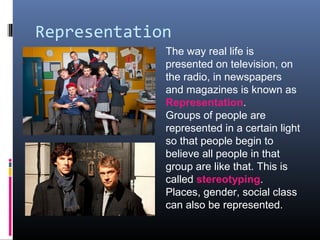
The way real life is
presented on television, on
the radio, in newspapers
and magazines is known as
Representation.
Groups of people are
represented in a certain light
so that people begin to
believe all people in that
group are like that. This is
called stereotyping.
Places, gender, social class
can also be represented.
Audience
 People who listen, watch, read or use media
texts are called the audience.
 Audiences are grouped together by gender,
age, how much money they earn and what
they like.
 Institutions work hard to make their media
texts appeal to the right audience.
TV Codes and Conventions
Television uses these codes and conventions.
 Moving Image – camera shots, camera
movements
 Sound – music and dialogue
 Graphics – station logo, title graphics, credits
 Genre – what type of TV programme is it
(film, drama, news programme)
 Narrative – what happens in the programme
Code and Conventions
 Each media text uses different codes and
conventions which the audience learn to
recognise and understand.
 Media students know what those codes and
conventions are.
 Media students are able to talk about
Language (codes and conventions) to help
them analyse any media text.
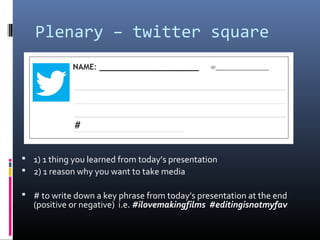
Plenary – twitter square
 1) 1 thing you learned from today’s presentation
 2) 1 reason why you want to take media
 # to write down a key phrase from today’s presentation at the end
(positive or negative) i.e. #ilovemakingfilms #editingisnotmyfav
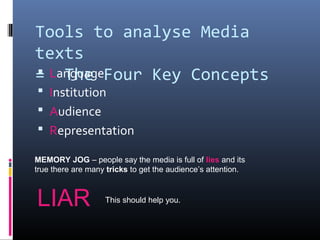
Tools to analyse Media
texts
= The Four Key Concepts Language
 Institution
 Audience
 Representation
MEMORY JOG – people say the media is full of lies and its
true there are many tricks to get the audience’s attention.
LIAR This should help you.
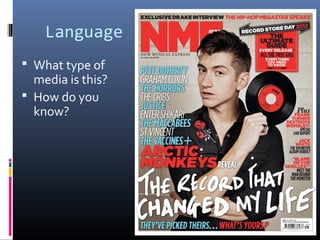
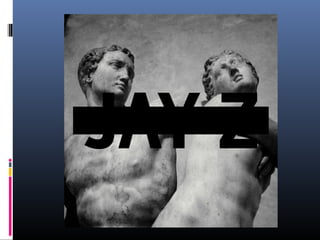
Language
 What type of
media is this?
 How do you
know?
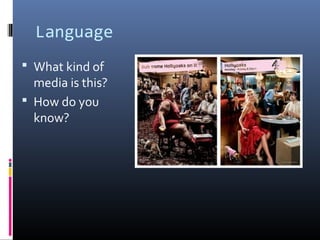
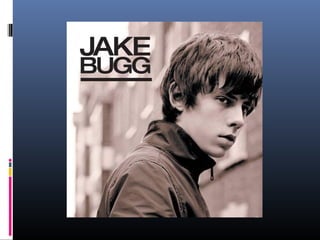
Language
 What kind of
media is this?
 How do you
know?
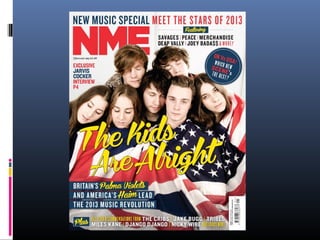
Language = Codes and
Conventions
 Media texts follow the same rules depending
on what kind of media platform they use.
Magazines follow the rules of Print.
 Layout
 Colour
 Image
 Text
These rules are called the codes
and conventions. They make it
easy to understand what kind of
media text you are looking at.
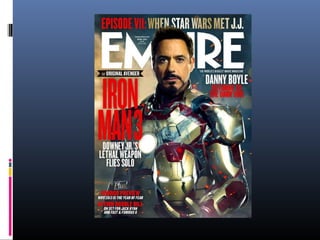
Task
In pairs, look at the media text and talk about
Language and Audience.
1. What type of media is it?
2. What kind of media language does it use?
3. Who is the audience and how do you know it
would appeal to that group of people?
Introduction to media gcse

Introduction to media gcse

  • 2.
  • 3.
    Media Studies Media Studiesstudents can:  Research  Deconstruct  Analyse  Discuss  Plan  Create and Produce  Evaluate
  • 4.
    Subjects & Jobs SubjectsJobs Film & Screen Studies Digital Film Contemporary Media Practice Media & Communication (event & exhibition, new media, journalism, media photography, public relations) Film & TV Production Graphic Design Creative Media Broadcast Media Advertising Art & Design Fashion Journalism & Mass Communication Media & English Literature, Media & English Language Technical production crew – cameraman, editor, sound specialist, lighting specialist, screenplay/script writer, special effects etc) Film & Television critic Radio Newspapers Internet: Digital & Interactive Media Magazines Video game design & development Journalism Photography Publishing Corporate Development Media & Music
  • 5.
    Important considerations  Timeconsuming subject: Filming/ using photo-editing software lunchtimes/after-school or evenings/weekends  Needs to fit in with other GCSE choices  Must be a team player: a lot of group work  Useful ( but not essential) to have access to a computer, editing software (GIMP is a free Photoshop style program), a USB stick/hard drive to store your work safely  Some people say it’s easy, others wouldn’t – 40% of your mark is a challenging written exam
  • 6.
    Unit B321: TheIndividual Media Studies Portfolio  This is a controlled assessment unit, 25–30 hours, internally assessed and externally moderated. 120 marks, 30% of the total GCSE marks  Candidates produce an individual portfolio containing a comparative analytical assignment, a production exercise and a planning and evaluative commentary. The comparative analytical assignment is based on at least two media texts from a selection
  • 7.
    Unit B323: TextualAnalysis and Media Studies Topic (Moving Image)  40% of the total GCSE 1hour 45 minutes written paper 80 marks  This is an examined unit where candidates in Section A analyse and respond to an unseen moving image extract.  In Section B, candidates answer questions based on Institution and Audience through the study of Television Comedy.
  • 8.
    Unit B324: Production Portfolioin Media Studies  This is a controlled assessment unit, 25-30 hours, internally assessed and externally moderated. 120 marks, 30% of the total GCSE marks  Candidates can either work individually or in groups to produce a major practical production from a selection of set briefs. Within this, each individual produces their own evidence of research and planning alongside an individual evaluation of their finished product
  • 9.
    Class Blog  UsingBlogger to create a coursework blog of your own and to access homework and lesson notes from your teacher’s blog  Example of how a blog looks:  http://lcmedia2.blogspot.co.uk
  • 10.
    Institution  This iswho makes the Media texts. The institution can be a large company like Warner Bros. Pictures or a small company like Working Title.
  • 11.
    Representation The way reallife is presented on television, on the radio, in newspapers and magazines is known as Representation. Groups of people are represented in a certain light so that people begin to believe all people in that group are like that. This is called stereotyping. Places, gender, social class can also be represented.
  • 12.
    Audience  People wholisten, watch, read or use media texts are called the audience.  Audiences are grouped together by gender, age, how much money they earn and what they like.  Institutions work hard to make their media texts appeal to the right audience.
  • 13.
    TV Codes andConventions Television uses these codes and conventions.  Moving Image – camera shots, camera movements  Sound – music and dialogue  Graphics – station logo, title graphics, credits  Genre – what type of TV programme is it (film, drama, news programme)  Narrative – what happens in the programme
  • 14.
    Code and Conventions Each media text uses different codes and conventions which the audience learn to recognise and understand.  Media students know what those codes and conventions are.  Media students are able to talk about Language (codes and conventions) to help them analyse any media text.
  • 15.
    Plenary – twittersquare  1) 1 thing you learned from today’s presentation  2) 1 reason why you want to take media  # to write down a key phrase from today’s presentation at the end (positive or negative) i.e. #ilovemakingfilms #editingisnotmyfav
  • 16.
    Tools to analyseMedia texts = The Four Key Concepts Language  Institution  Audience  Representation MEMORY JOG – people say the media is full of lies and its true there are many tricks to get the audience’s attention. LIAR This should help you.
  • 17.
    Language  What typeof media is this?  How do you know?
  • 18.
    Language  What kindof media is this?  How do you know?
  • 19.
    Language = Codesand Conventions  Media texts follow the same rules depending on what kind of media platform they use. Magazines follow the rules of Print.  Layout  Colour  Image  Text These rules are called the codes and conventions. They make it easy to understand what kind of media text you are looking at.
  • 20.
    Task In pairs, lookat the media text and talk about Language and Audience. 1. What type of media is it? 2. What kind of media language does it use? 3. Who is the audience and how do you know it would appeal to that group of people?