Magazine Front Covers
Conventions
LOs: To apply golden spiral and other conventions to
covers
To use survey results to inform flat plan of magazine
Purpose of a Front Cover
• Essentially, the front cover functions to
entice readers to buy a magazine.
Although the reader will spend a fraction
of the time they read the magazine
focusing on the front, they may not pick it
up in the first place unless the front cover
is well designed.
• The front cover is made up of a number of
important features. These are common
conventions of magazines. For you to
create your own magazine, you must
understand how these conventions
function and what their purpose is.
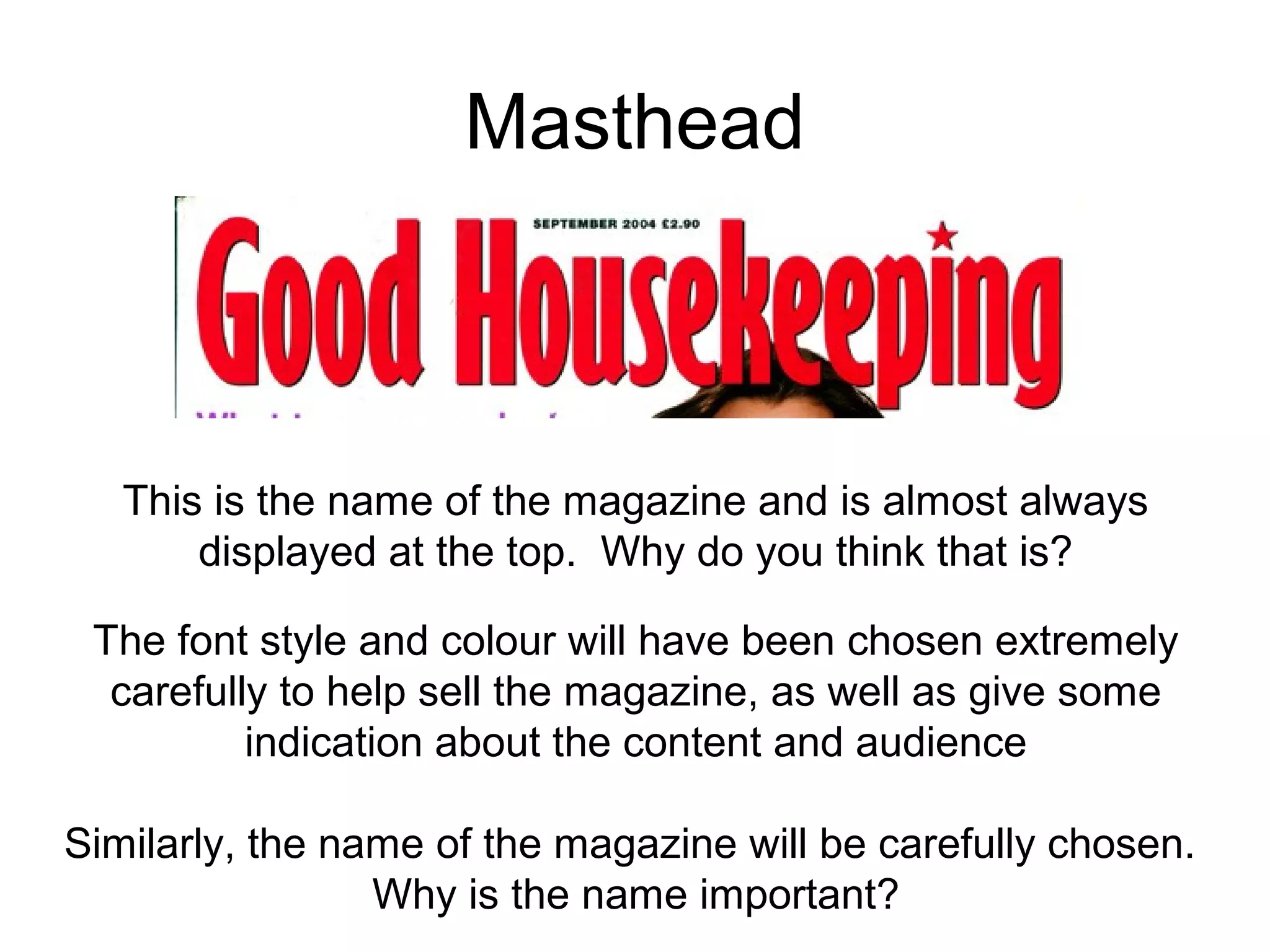
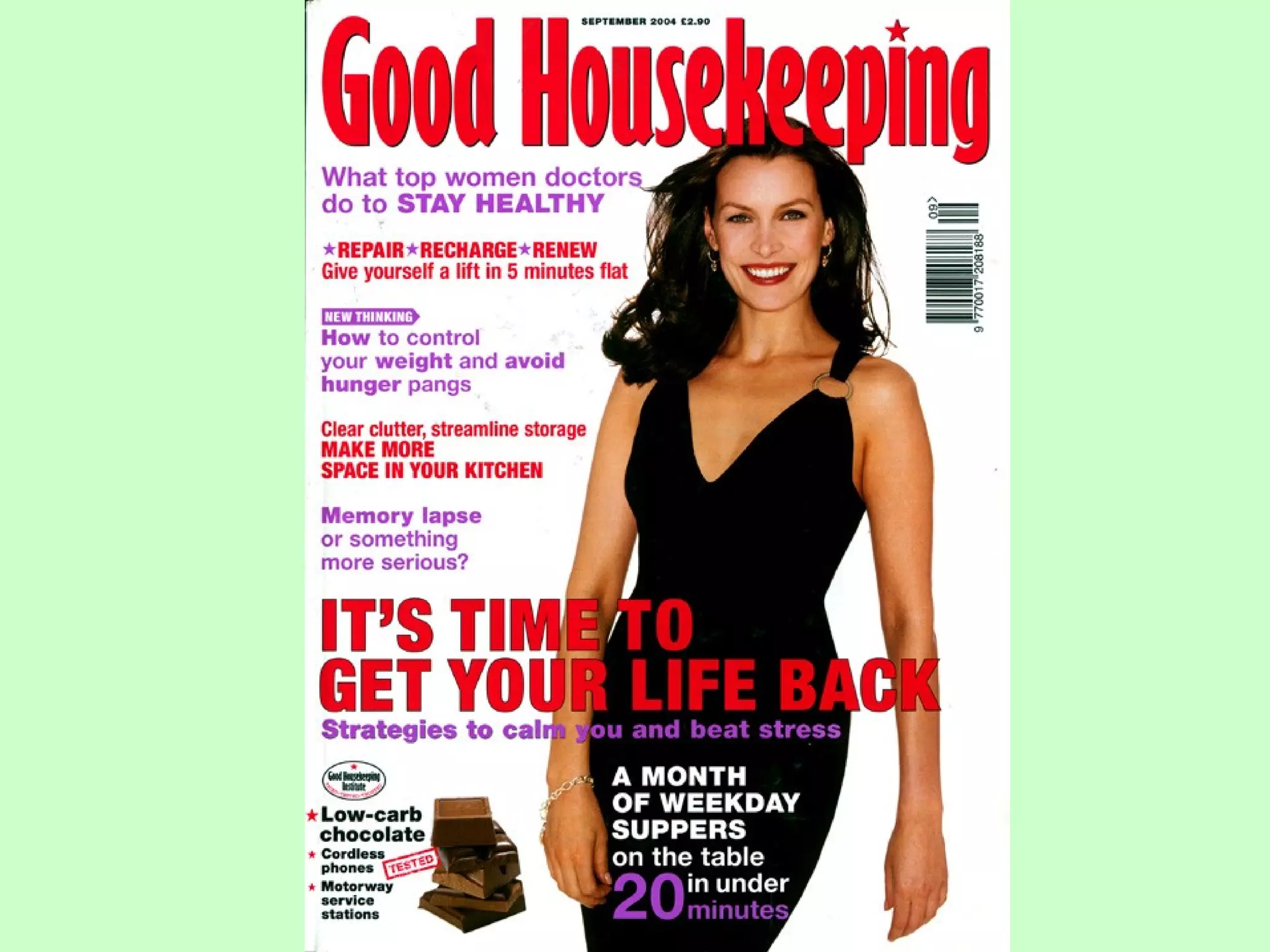
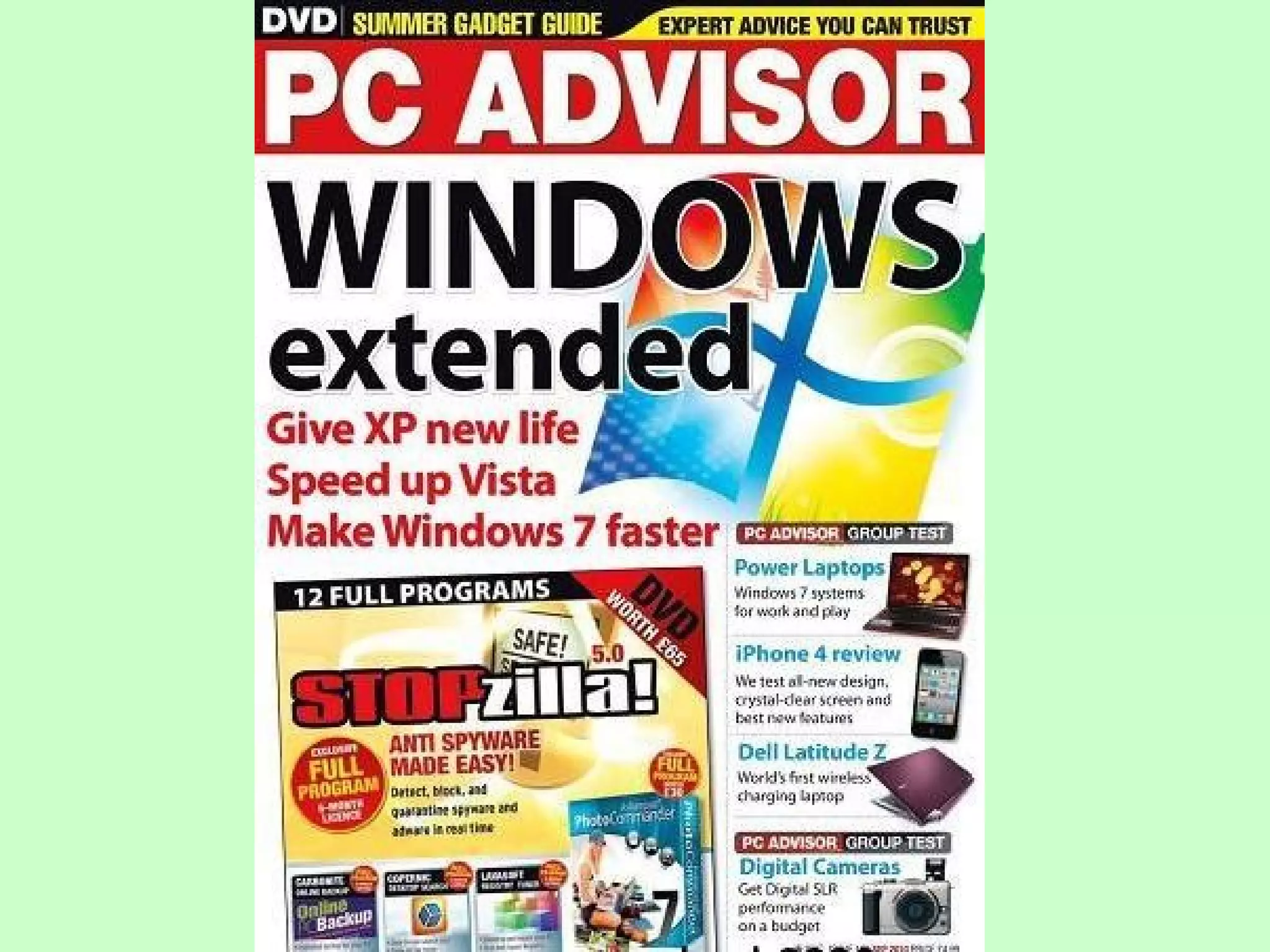
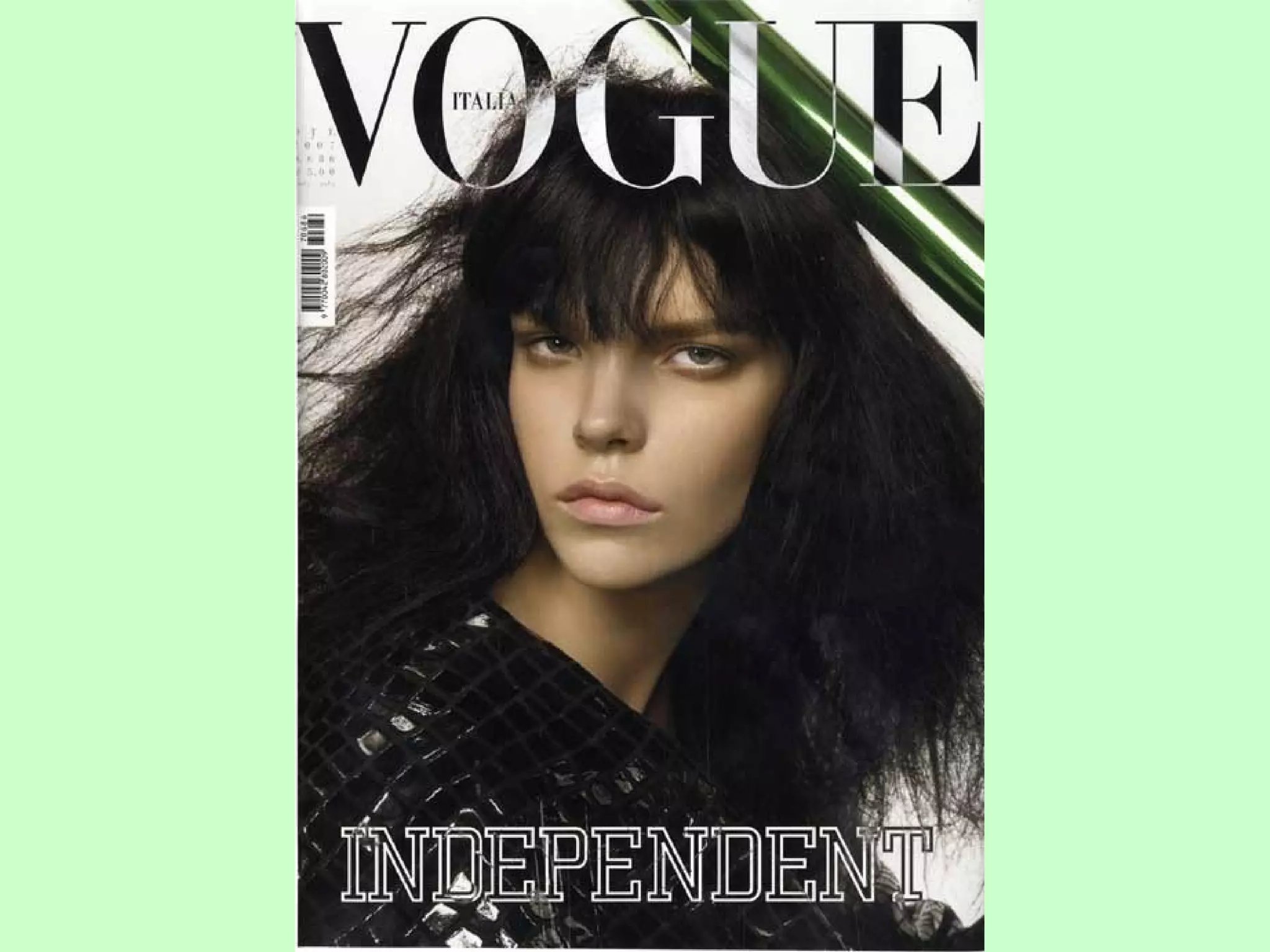
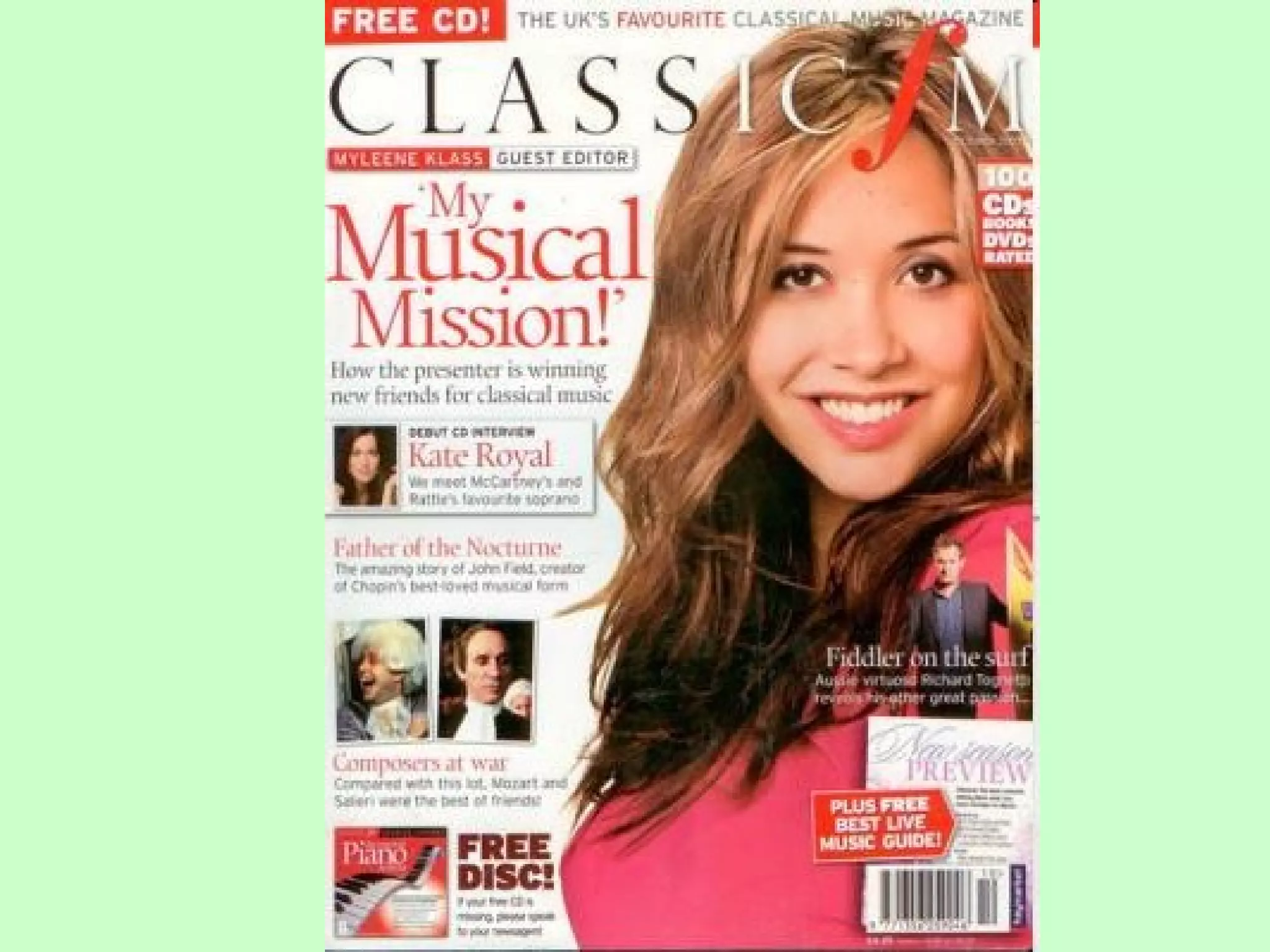
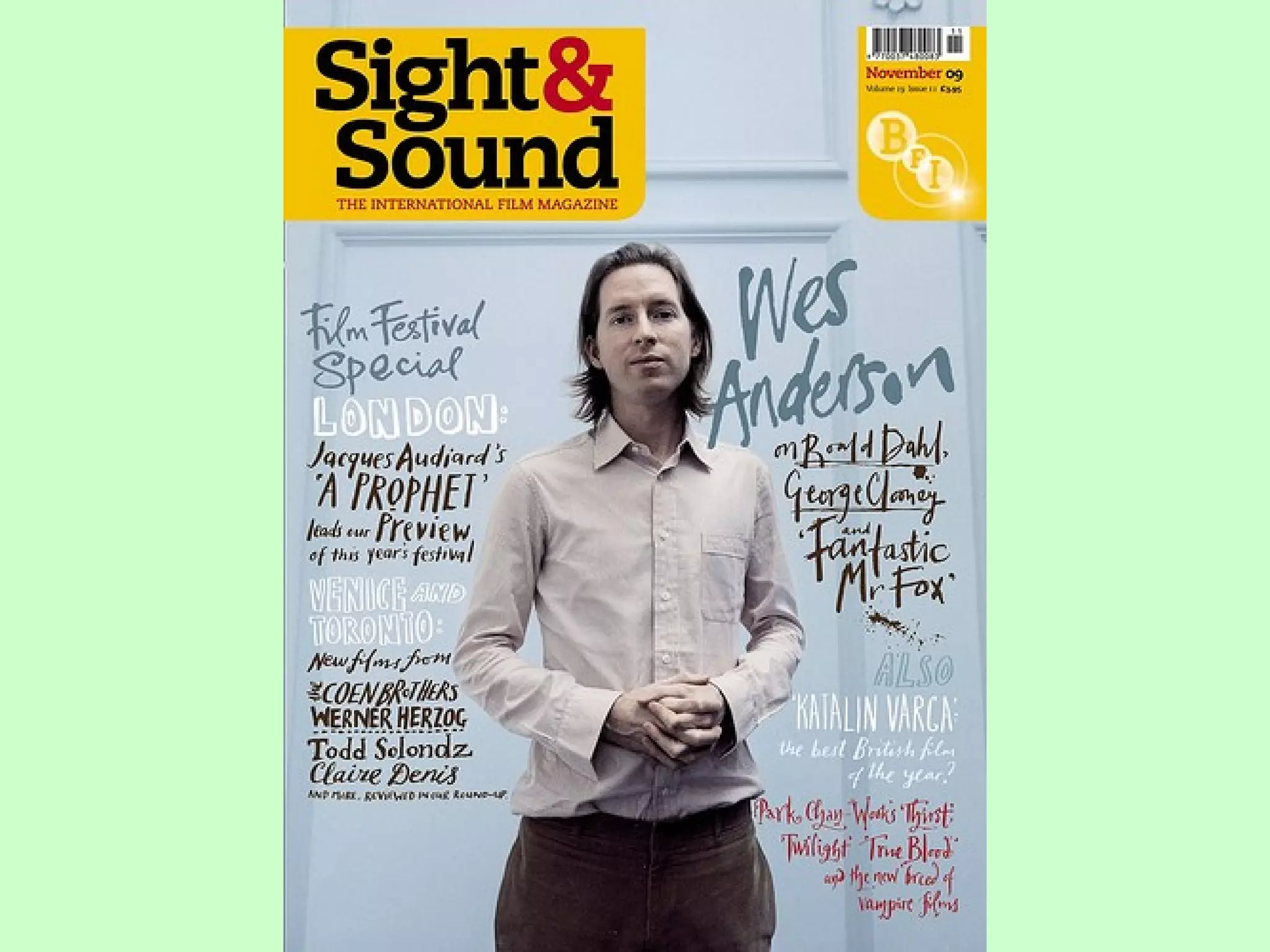
Masthead
This is the name of the magazine and is almost always
displayed at the top. Why do you think that is?
The font style and colour will have been chosen extremely
carefully to help sell the magazine, as well as give some
indication about the content and audience
Similarly, the name of the magazine will be carefully chosen.
Why is the name important?
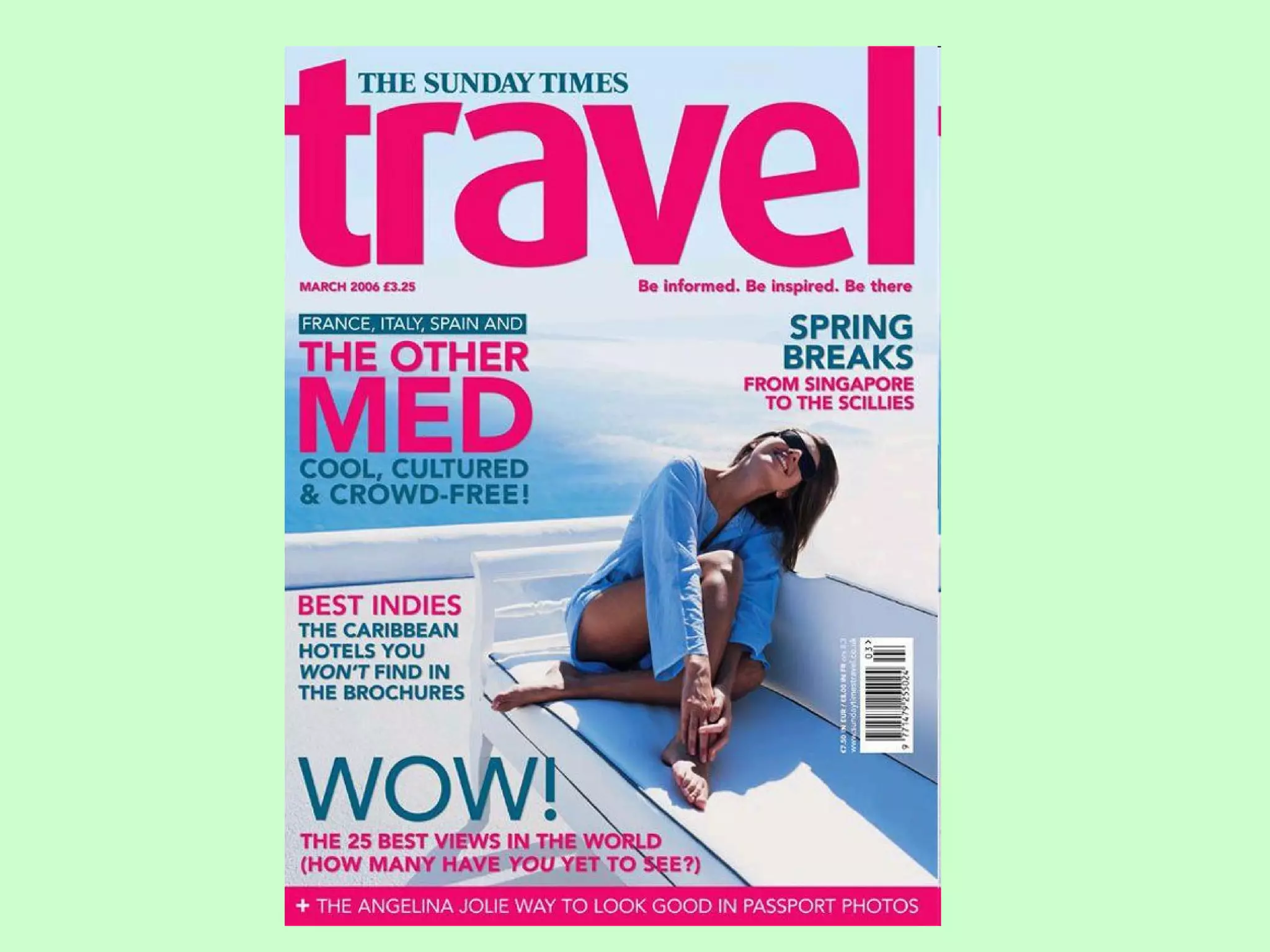
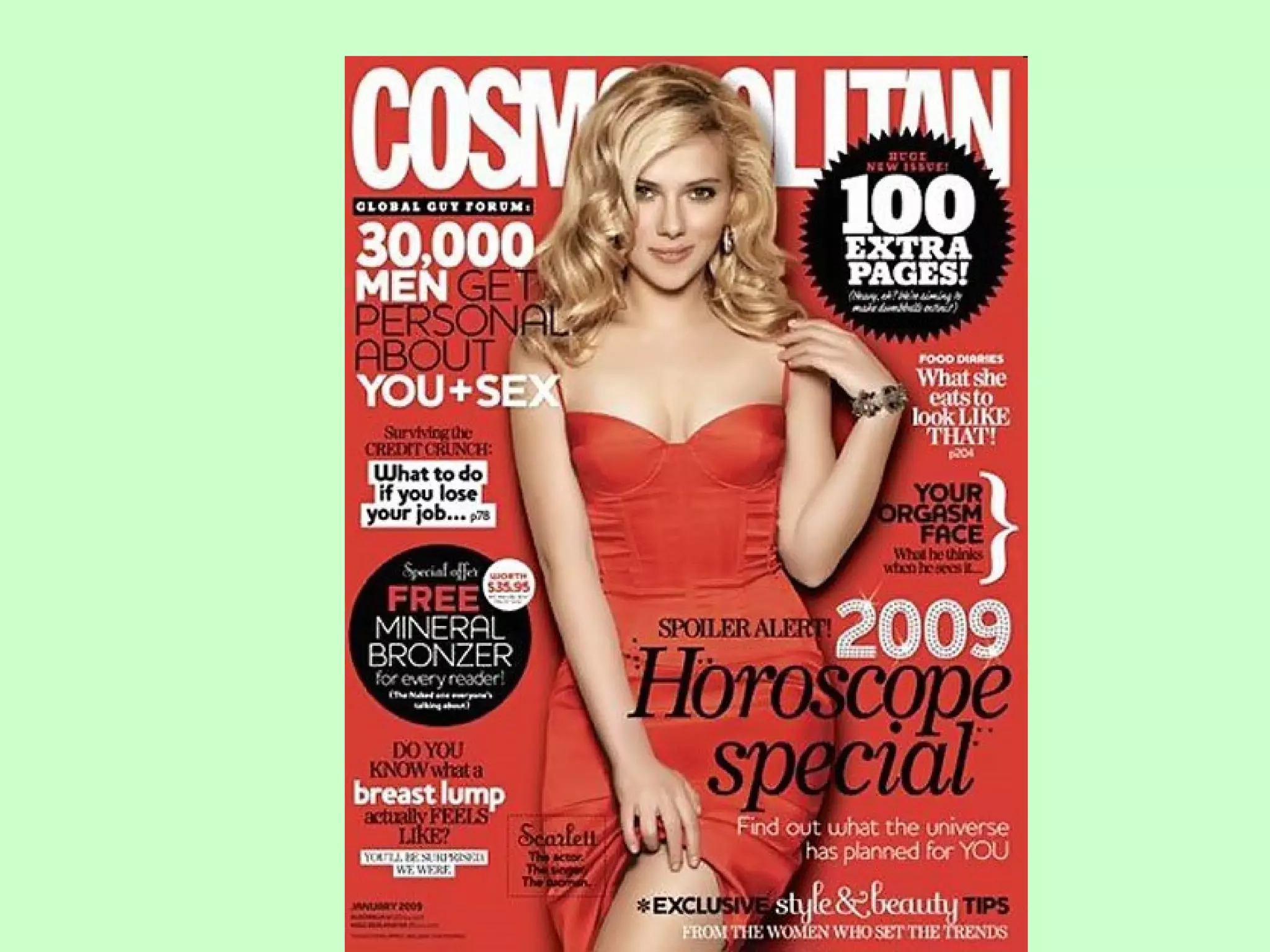
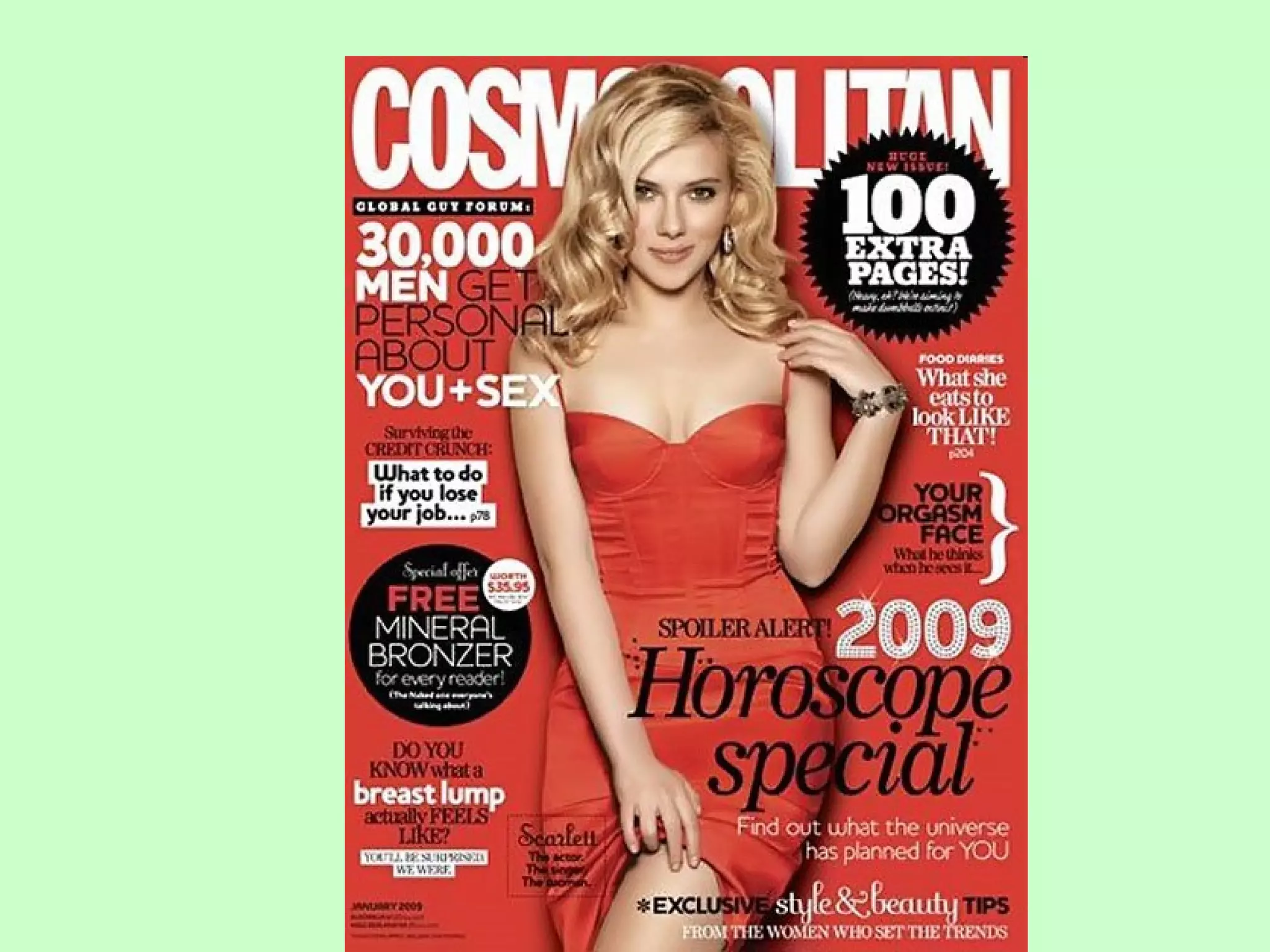
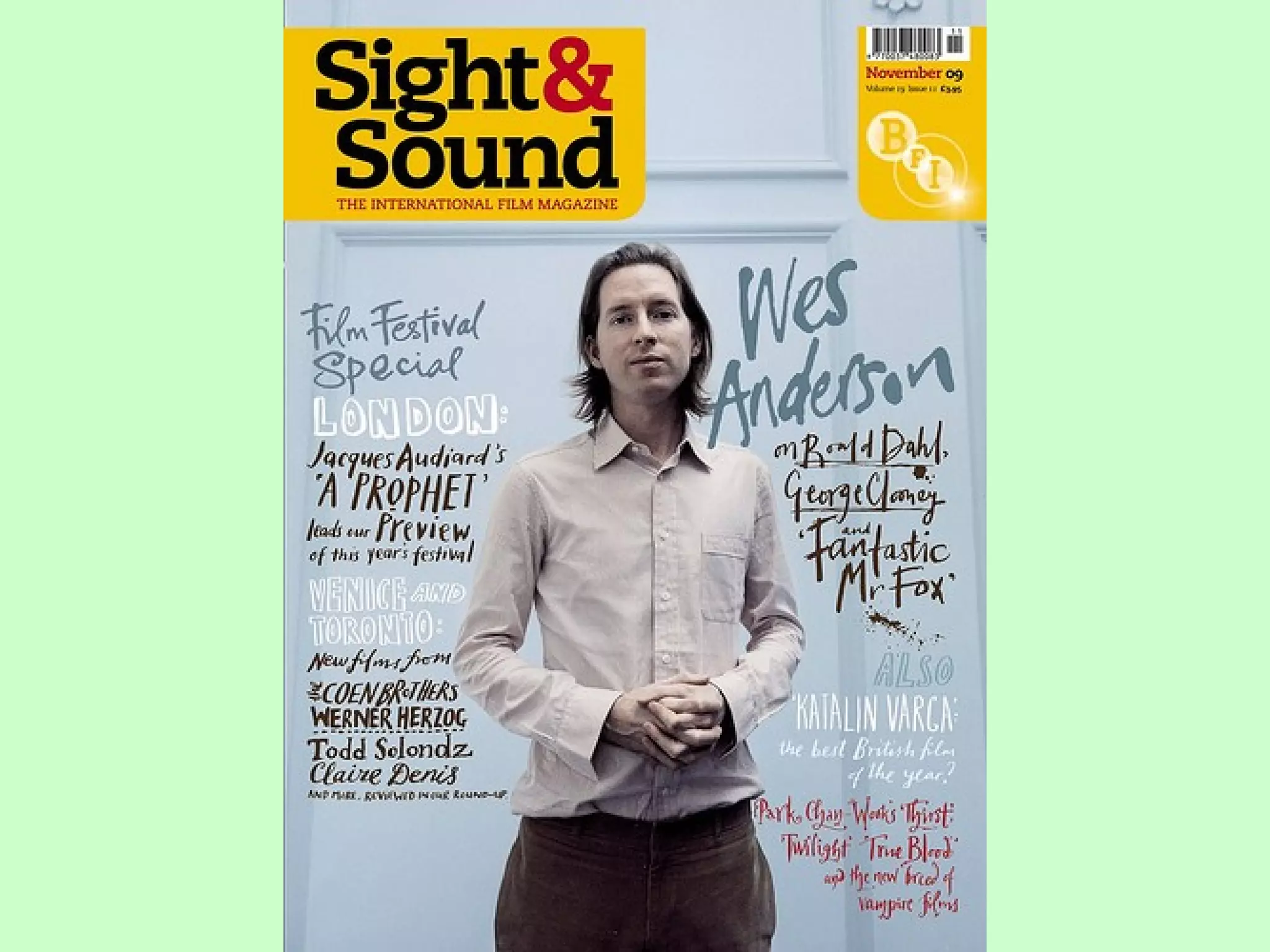
What can you say about the mastheads
on these magazines?
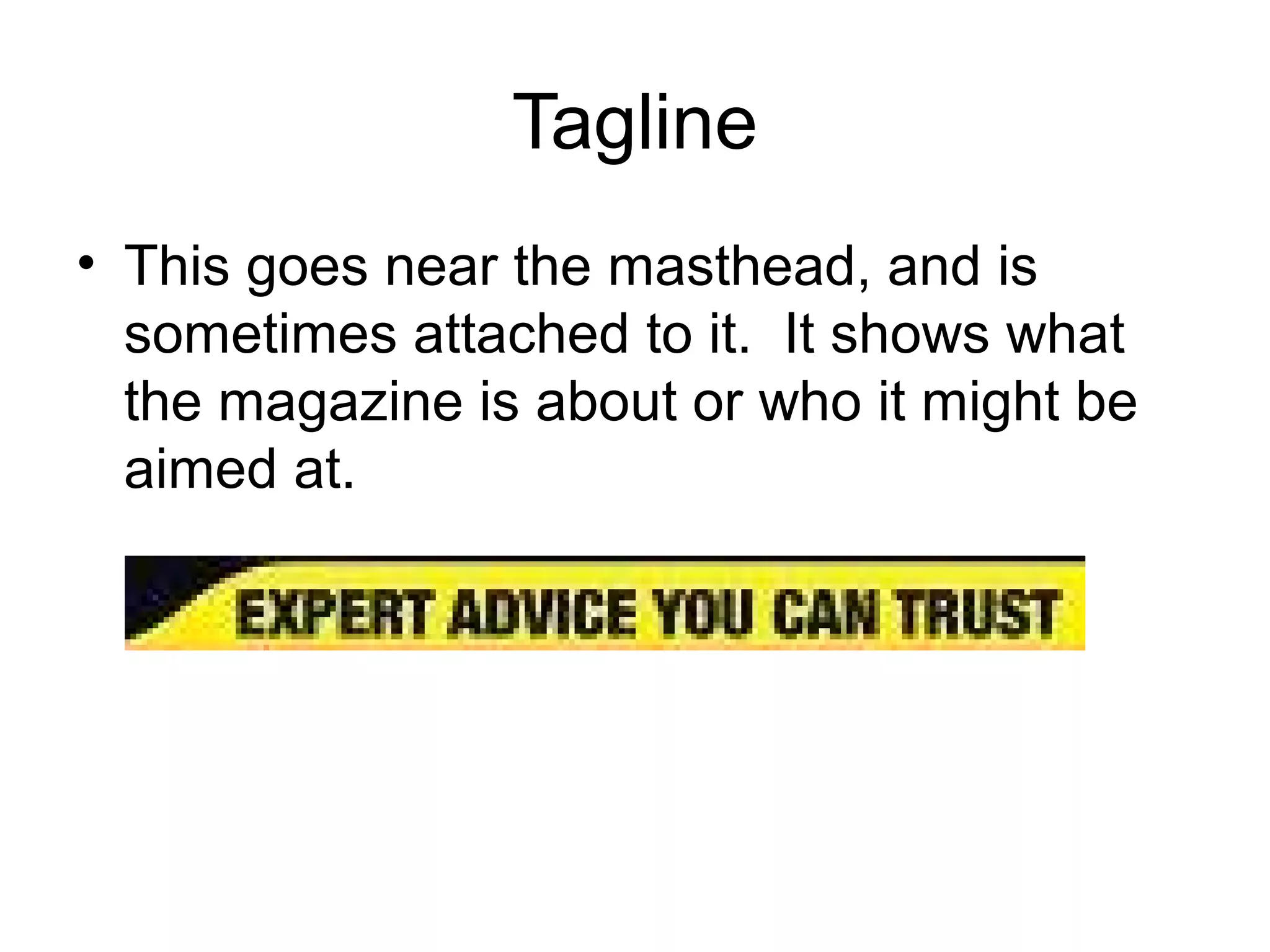
Tagline
• This goes near the masthead, and is
sometimes attached to it. It shows what
the magazine is about or who it might be
aimed at.
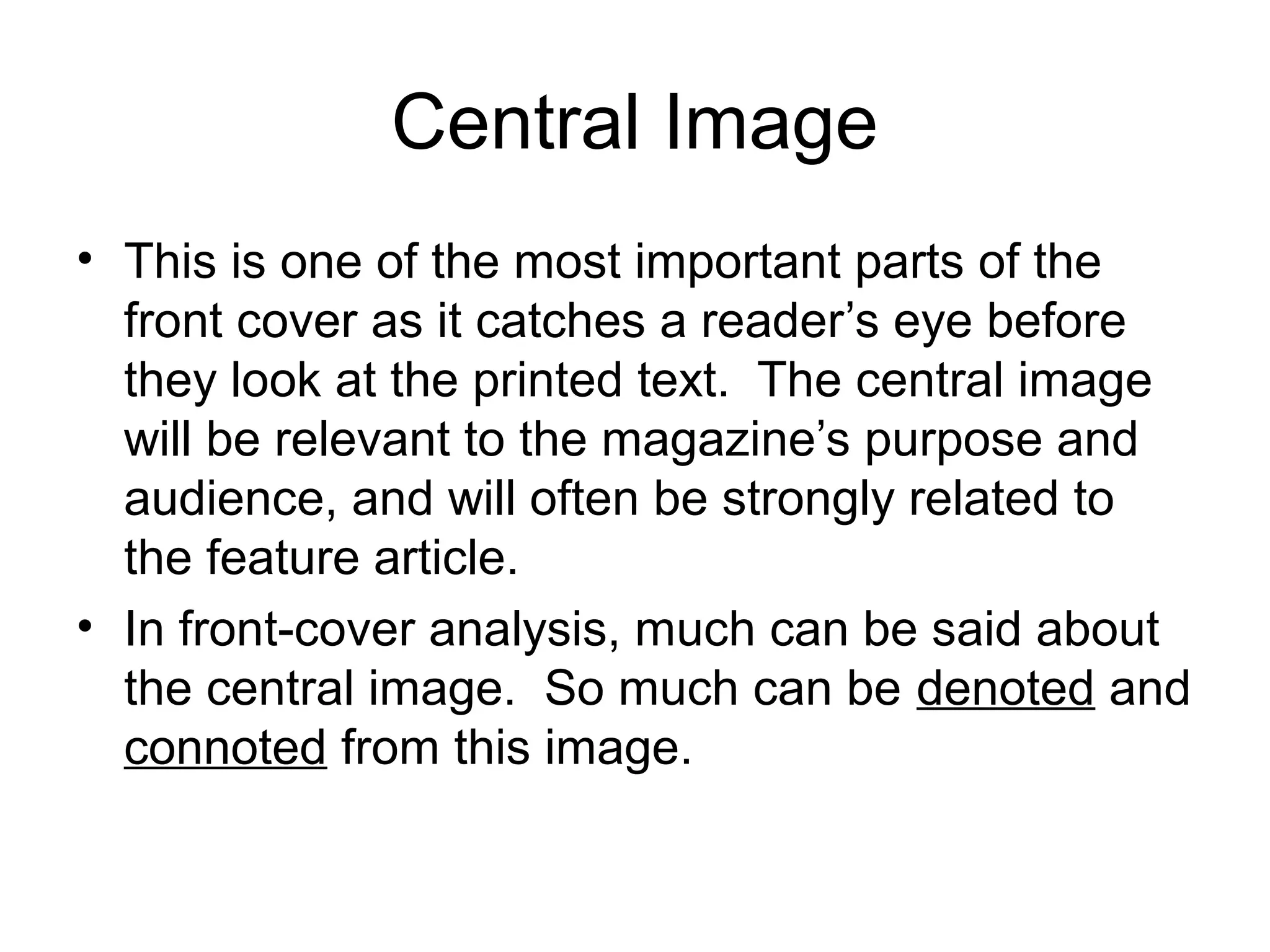
Central Image
• This is one of the most important parts of the
front cover as it catches a reader’s eye before
they look at the printed text. The central image
will be relevant to the magazine’s purpose and
audience, and will often be strongly related to
the feature article.
• In front-cover analysis, much can be said about
the central image. So much can be denoted and
connoted from this image.
The Cover Model
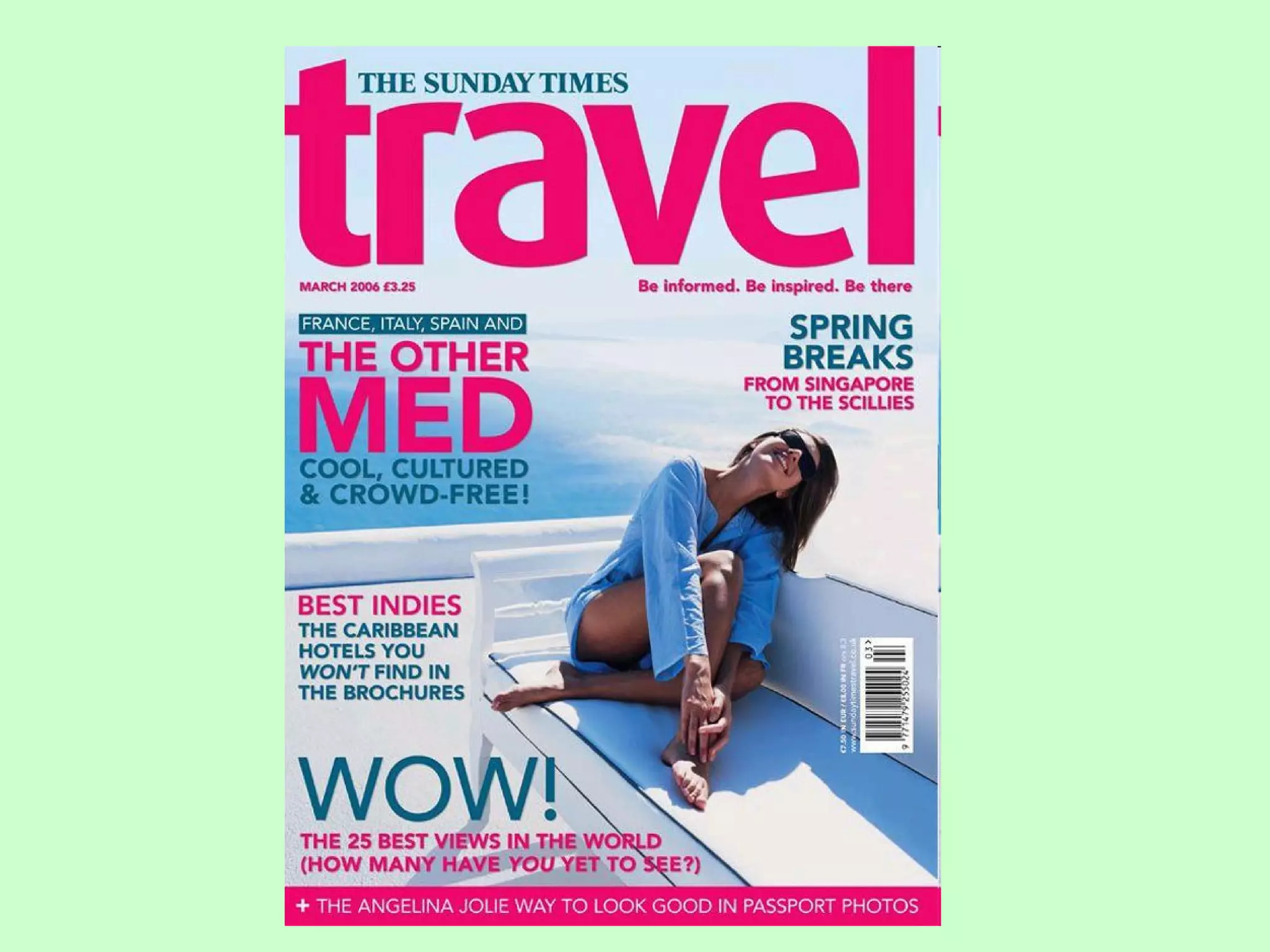
• For many magazines, a cover model will be used. This
may be a celebrity, or well-known individual connected
with the magazine’s genre (e.g. a rock star posing for a
music magazine); or it may be a photographic model.
• Consider the implications of this. What difference might
it make to the magazine’s selling power?
• Think about the mise-en-scene. Why is the model
dressed in a certain way, or lit in a certain way? How are
they posed? What is the connotation of this? Is the
model’s pose seductive? Intimidating? Why are they
wearing those specific clothes?
Anchorage
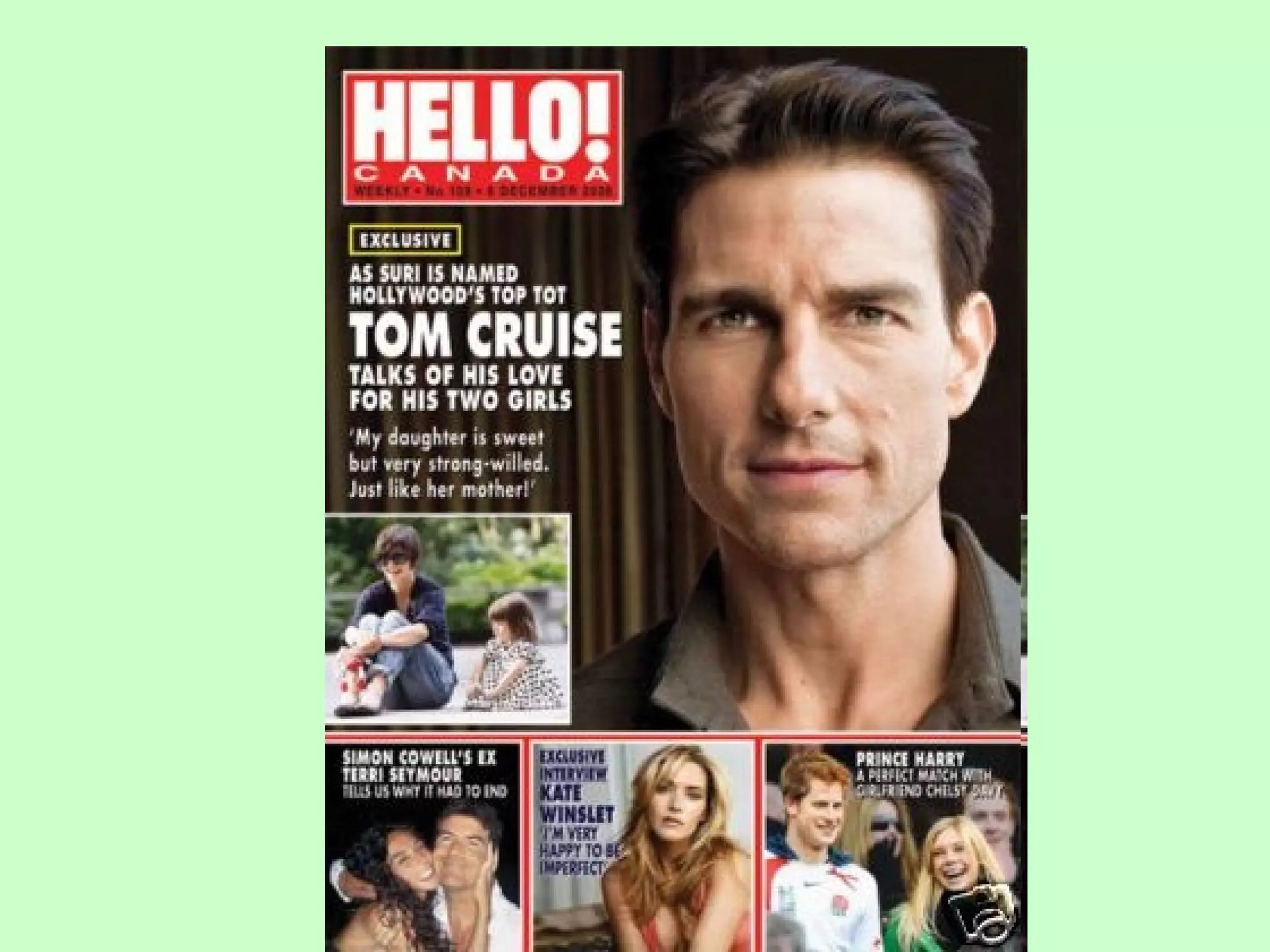
This is a term that refers to how images are
referred to. In magazines, images will be
anchored by captions (directly explaining what
the pictures depict), by coverlines, or by
articles and headlines. Anchoring an image
helps give it meaning, as it helps the reader
understand the significance.
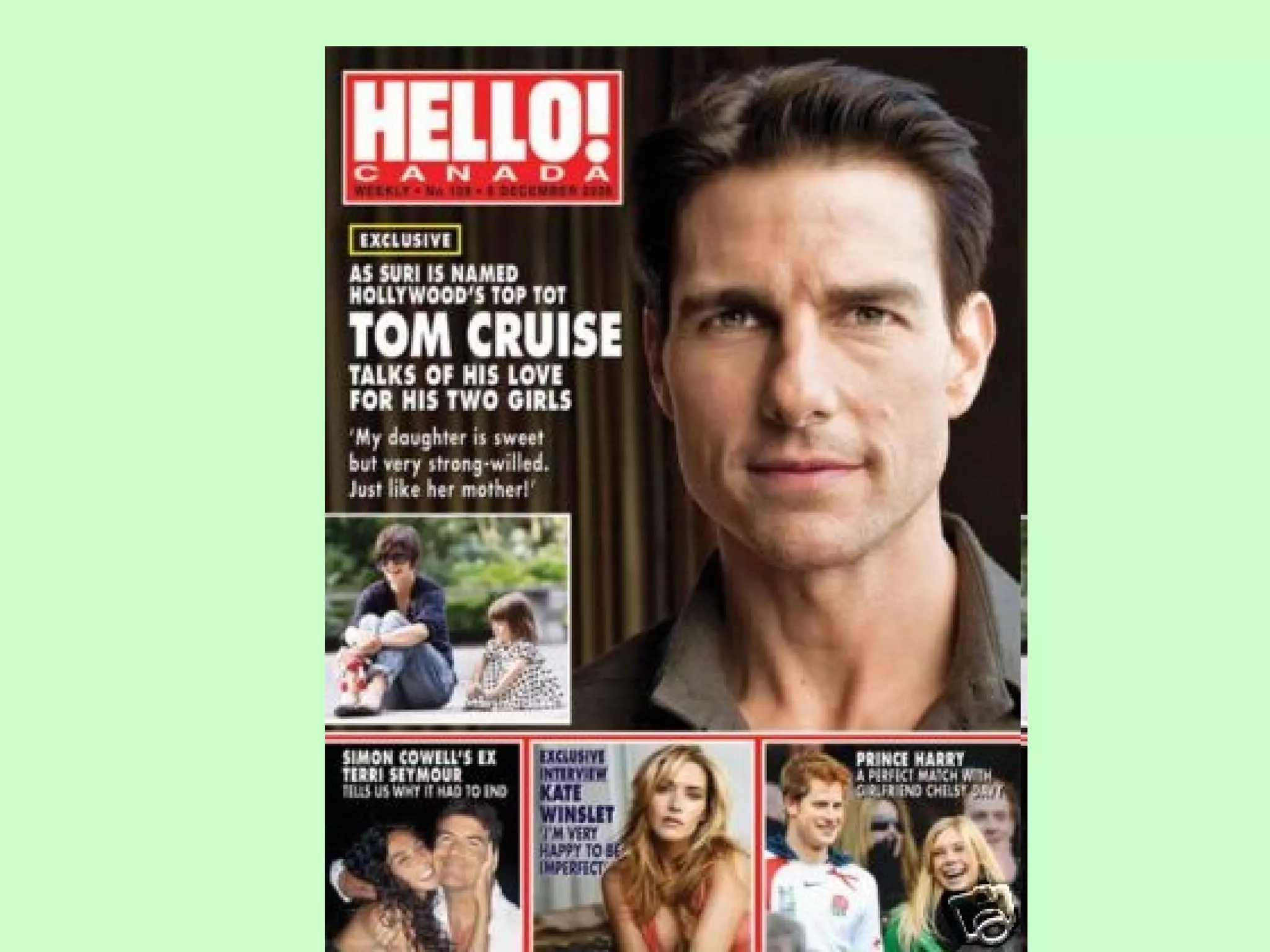
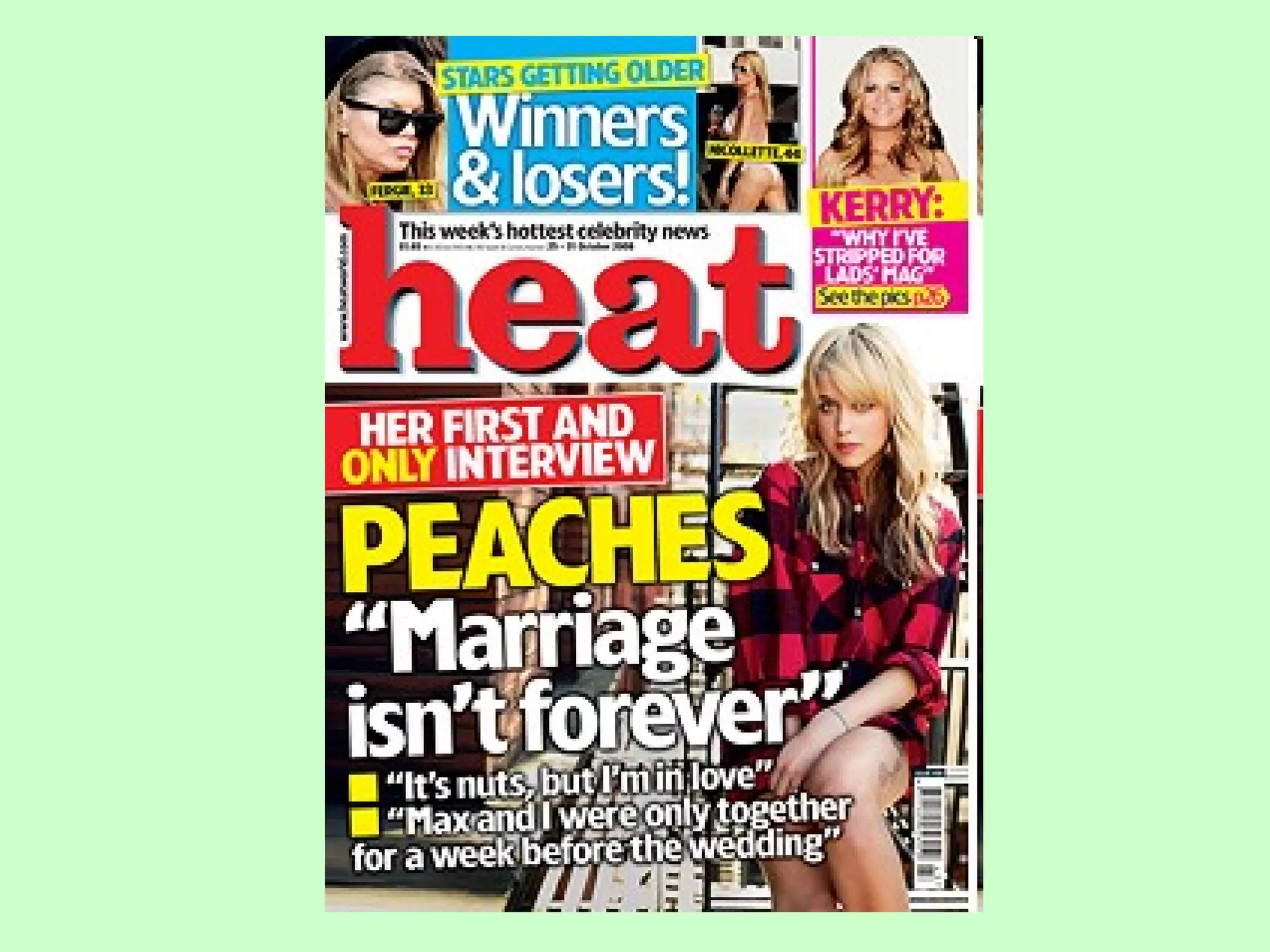
Secondary Images
• They may be used on the front cover to
help promote other features in the
magazine, usually anchored by a
coverline.
• They are often used in magazines where
reader’s need to be enticed by the picture
rather than the coverline text (e.g.
celebrity magazines).
Coverlines
• These are located at various points on the
front cover, telling readers about the
magazine’s contents – and specifically, the
articles they’ll find.
• The front cover often features 6-12
coverlines in an attempt to lure different
readers to different things.
• Coverlines will often use language and
presentational devices to be most effective
Mode of Address
• Mode of Address refers to the way that
magazines communicate with their readers.
Some magazines will use a direct mode of
address, communicating with individual readers.
This might be through use of the cover model
(e.g. pointing directly at the camera), or through
the use of 2nd
person pronouns (“you”).
• What kinds of magazines do you think would
favour a direct mode, and which would favour an
indirect mode?
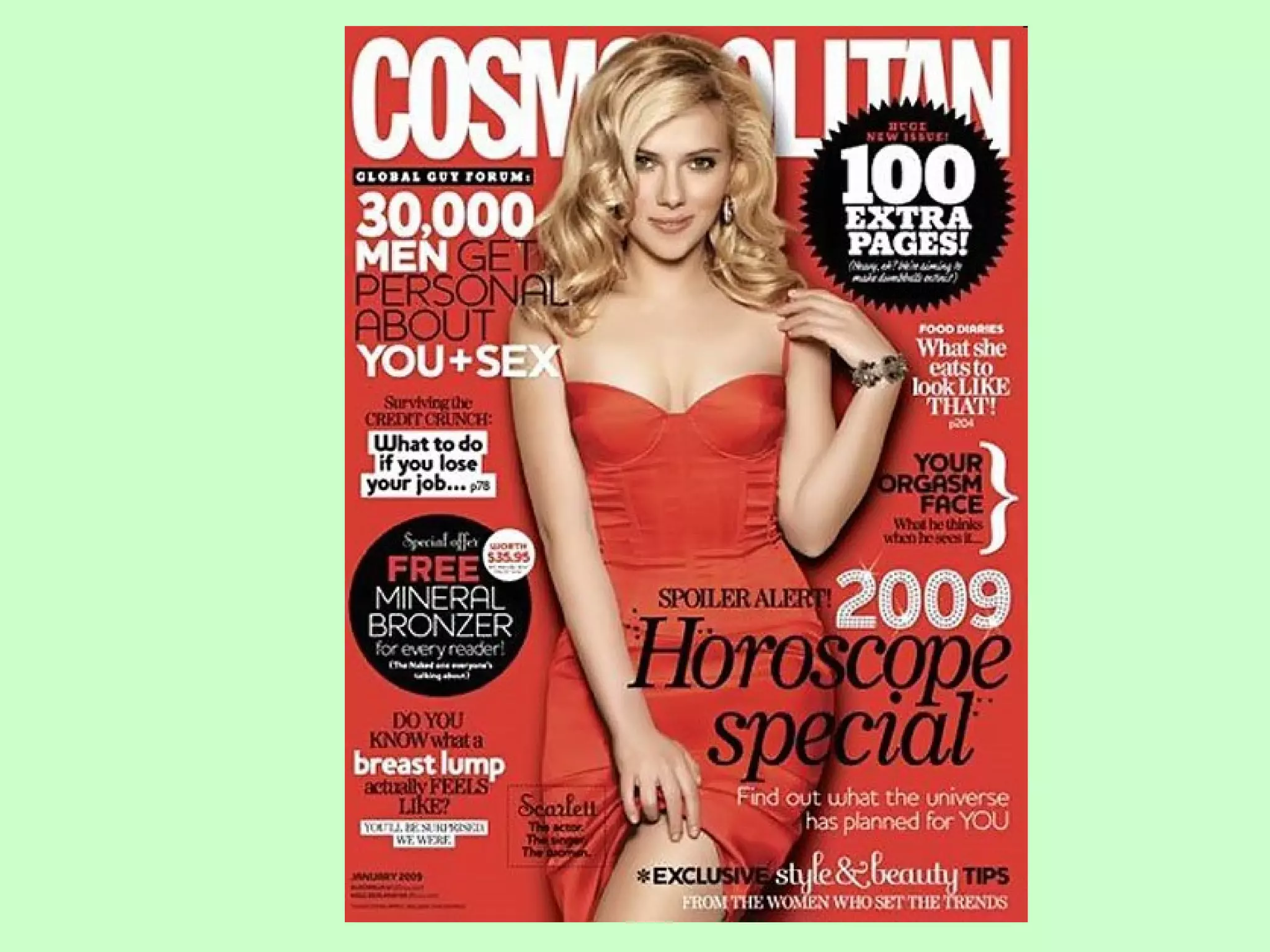
Puff
• As in “puff of air”, this is a device which
helps to draw attention to and promote
certain elements in the magazine. They
are often set against colourful
backgrounds and are shaped – e.g.
rounded. Quite often they advertise a
“freebie” or a special feature in the
magazine
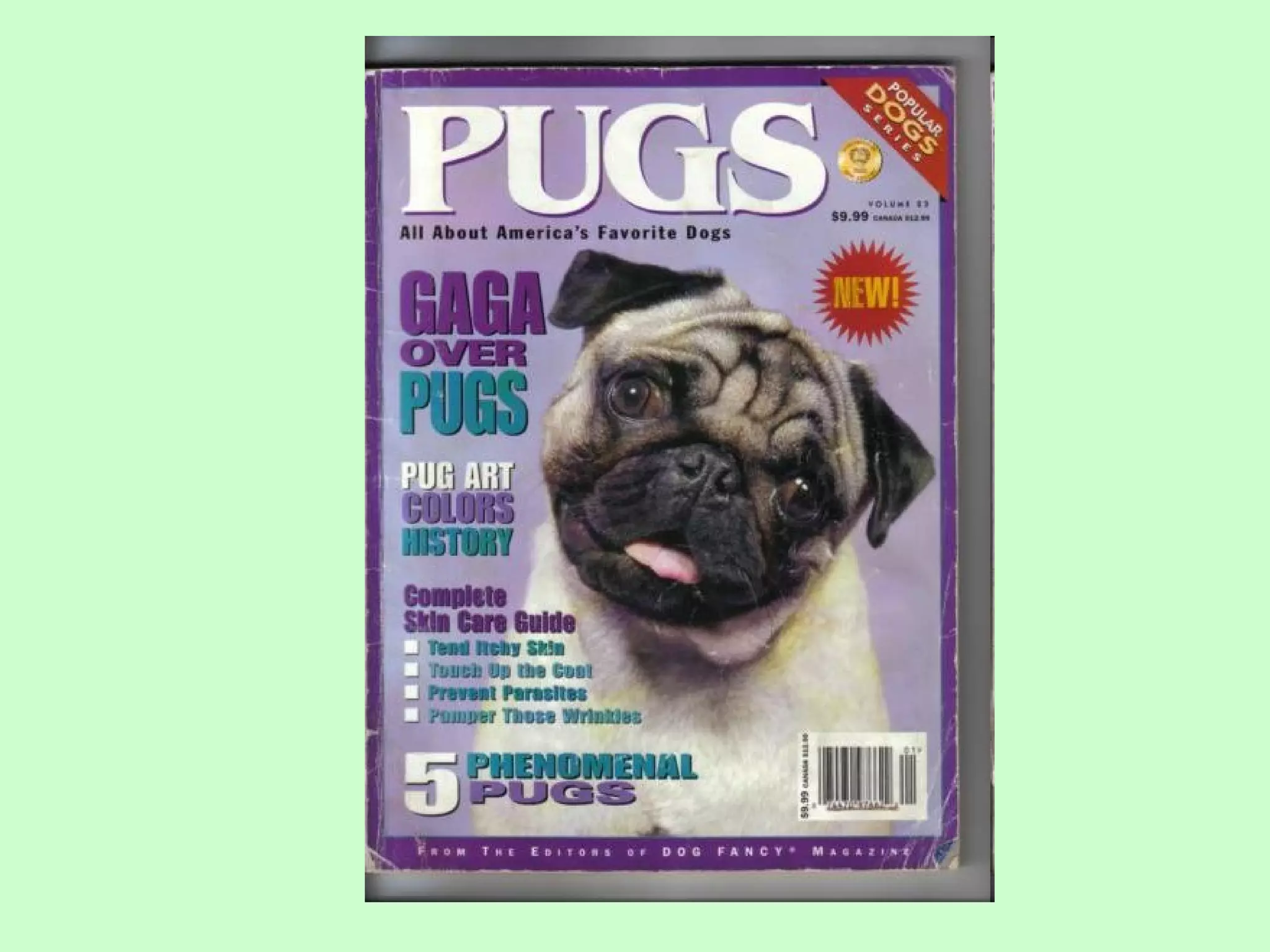
Pug
• Pugs are the “ears” of a magazine and are
placed at the top left or right-hand corners
of a front cover. They usually display a
promotion from that magazine’s edition, or
possibly the price.
Barcode, Price, Edition
• Straightforward features, but they need to
be strategically placed. The barcode
shouldn’t distort any of the cover’s
principal features, and the price will
usually be displayed nearby.
• How the edition is phrased will depend on
the frequency of publication. Most
magazines are monthly editions, and so
the month and year will be displayed.
Use of Colour
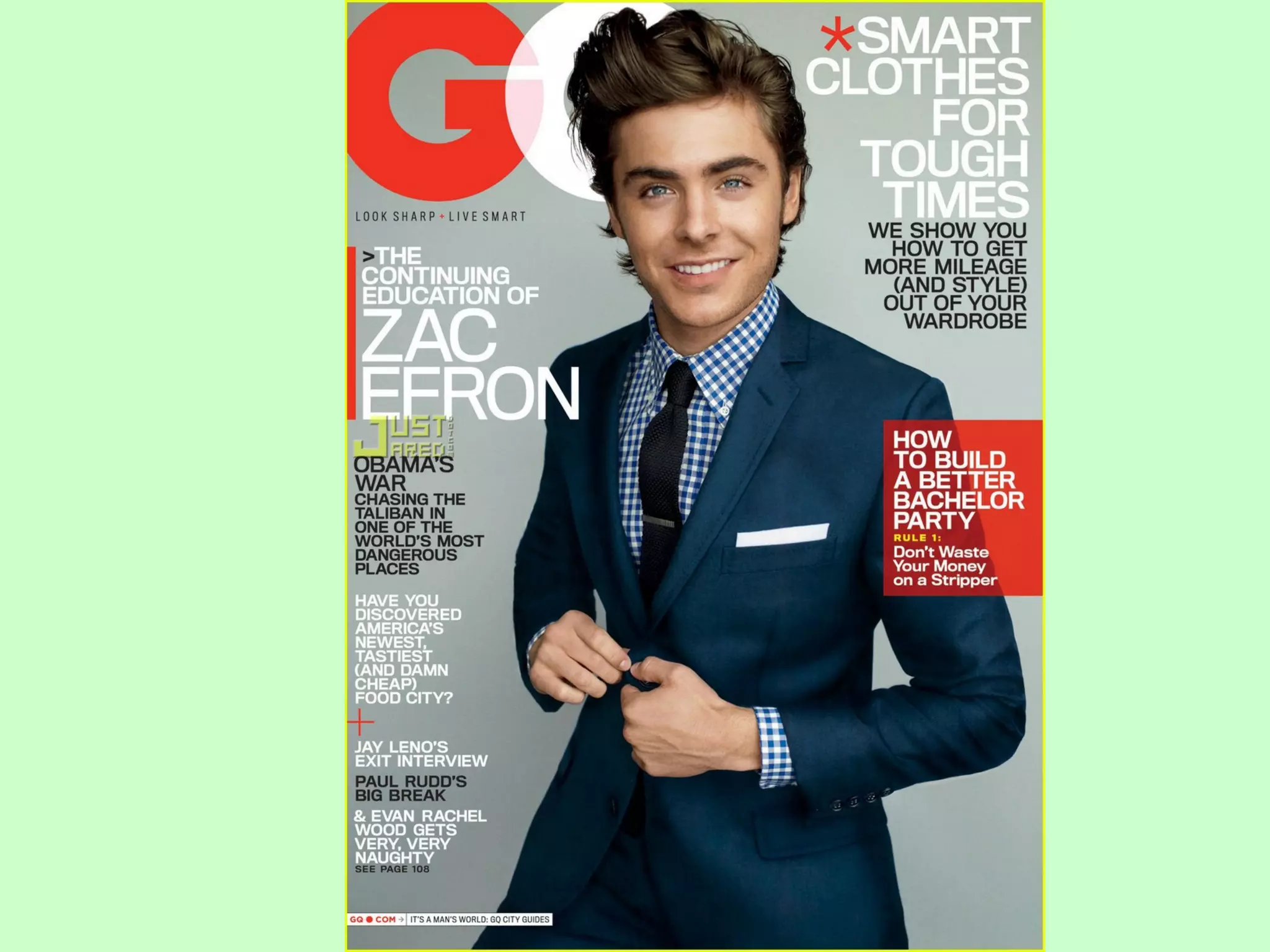
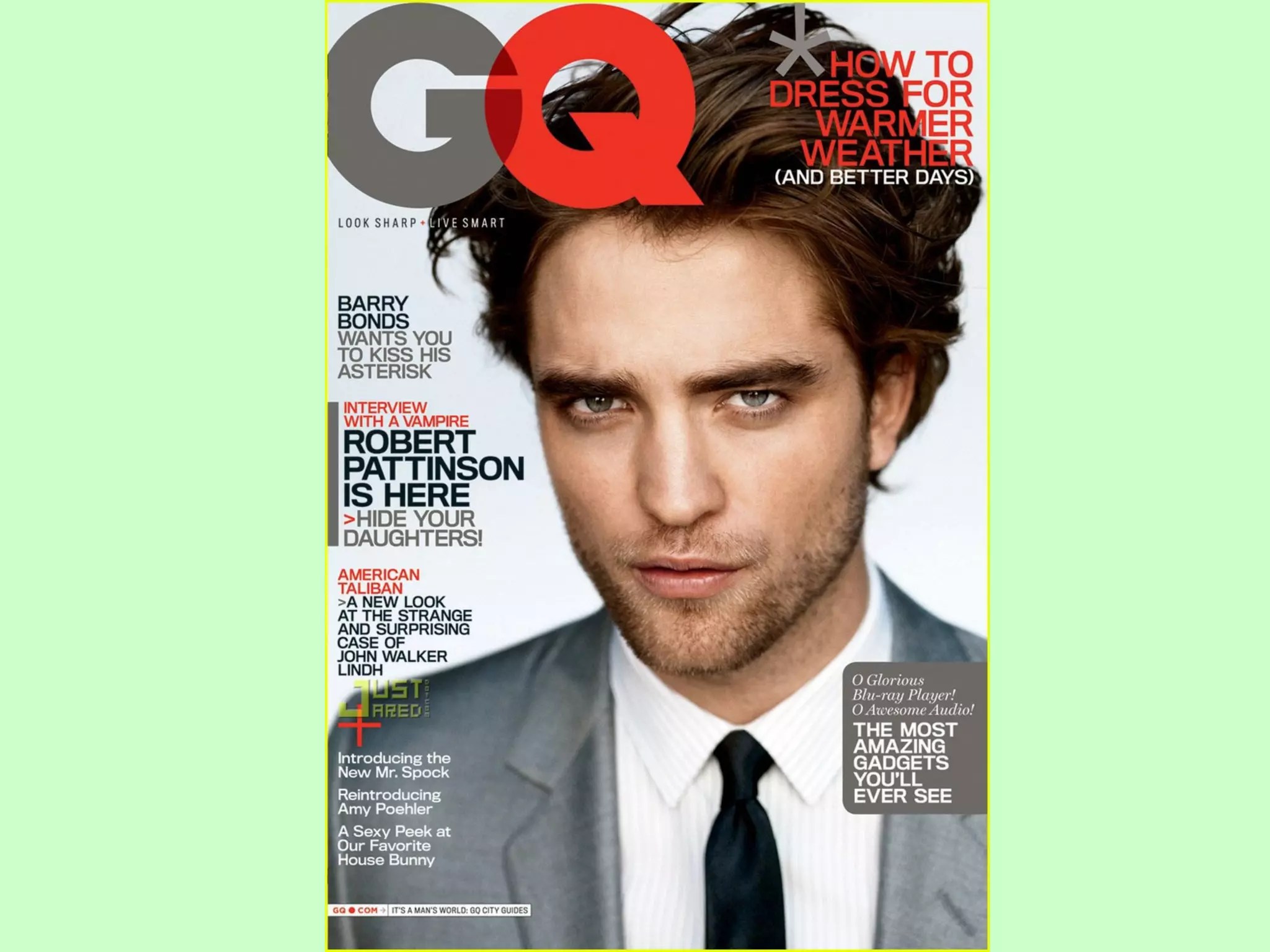
• Colour: this is used to great effect. Some
magazines will alter all the colour schemes from
edition to edition (masthead, coverline fonts,
etc), while others will alter some colours to
coordinate with the central image.
• Think about signifier/signified where colour is in
question. Ask yourselves whether the magazine
is using colour to send a message, or whether
colour has been manipulated to help accentuate
a certain feature of the cover image.
Font
• Front covers will display a variety of font
choices, usually adapted to infer meaning
to the text they’re displaying.
• Think about how font choices are
manipulated for both mastheads and
coverlines.
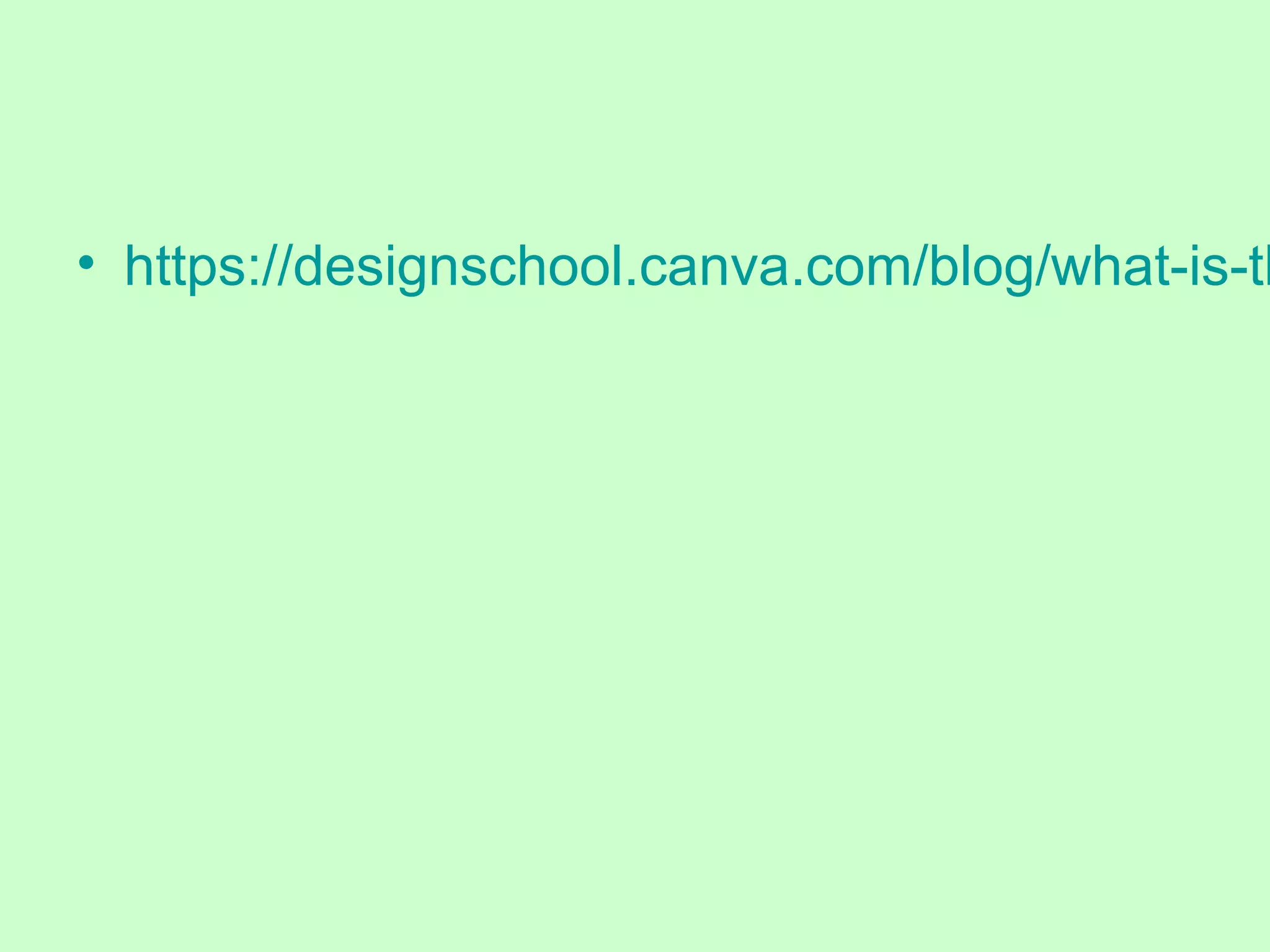
Golden SpiralGolden Spiral
Font
• Front covers will display a variety of font
choices, usually adapted to infer meaning
to the text they’re displaying.
• Think about how font choices are
manipulated for both mastheads and
coverlines.
• https://designschool.canva.com/blog/what-is-th
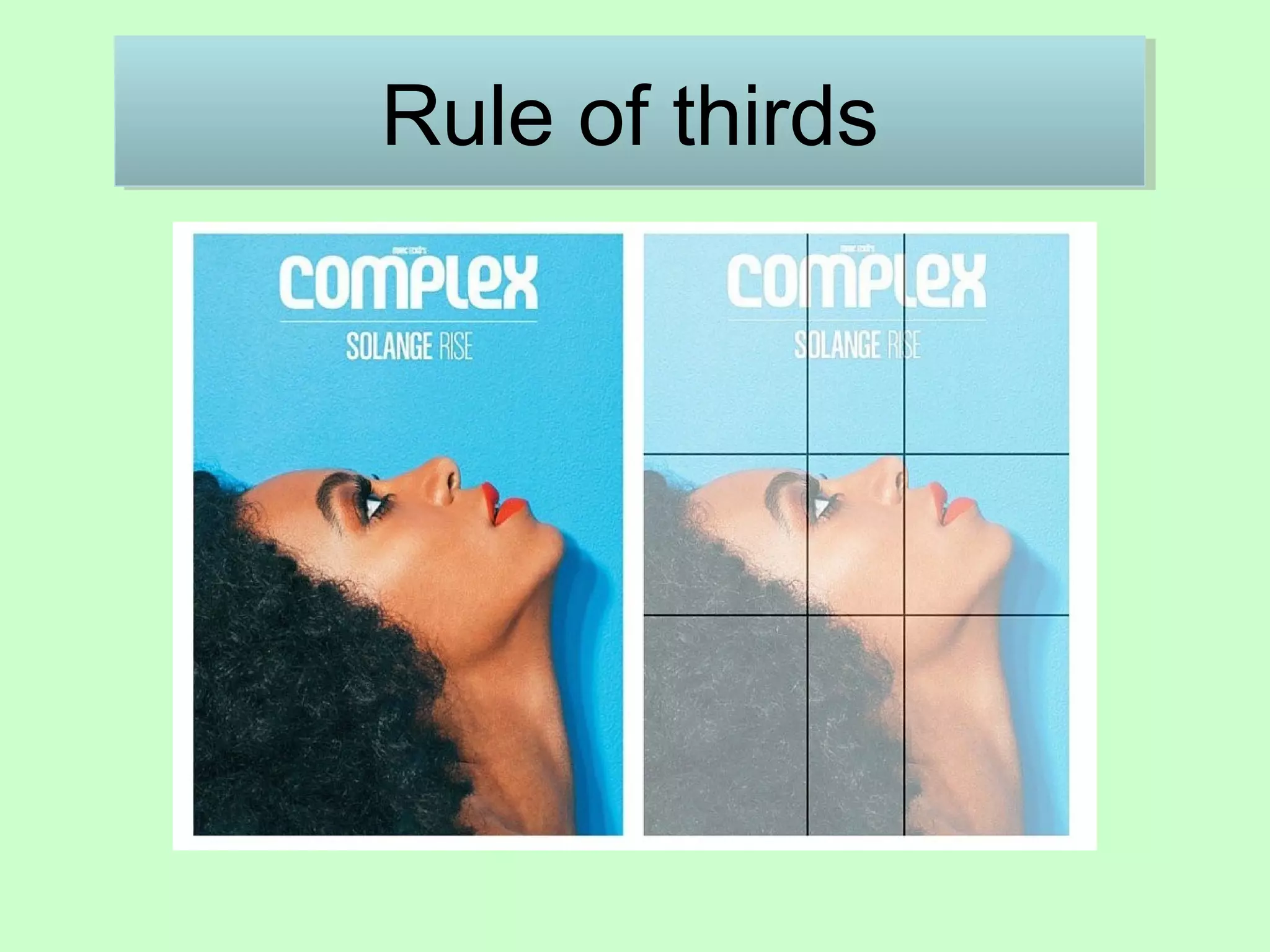
Rule of thirdsRule of thirds
Homework: due in Monday 4th
July
• Take at least 20 original photos for your front
cover/contents and double page article.
• You can use your phone or a digital camera if you have
one.
• If you don’t have access to either, then arrange a
lunchtime ( Monday Wednesday or Friday) or after
school ( Wednesday or Thursday) to use Media Studies
cameras.
• You need to style your model; hair, clothes, make up and
the background. Frame your shots carefully. Look at
what is in the background – move it if you need to1
• Try a variety of poses and expressions – experiment and
don’t be afraid to try different things
Questionnaire Results
• Write up your results from your magazine
survey
• What did your survey reveal?
• How will you implement this in your own
magazine
- cover
- contents
- what your article will be about
Flat plan
• Sketch out your plan for your front cover
• Do this in pencil
• Use a whole A4 page
• Don’t be afraid to do a few copies before
you get it right

Lesson 5magazinefrontcoveranalysis

  • 1.
    Magazine Front Covers Conventions LOs:To apply golden spiral and other conventions to covers To use survey results to inform flat plan of magazine
  • 2.
    Purpose of aFront Cover • Essentially, the front cover functions to entice readers to buy a magazine. Although the reader will spend a fraction of the time they read the magazine focusing on the front, they may not pick it up in the first place unless the front cover is well designed.
  • 3.
    • The frontcover is made up of a number of important features. These are common conventions of magazines. For you to create your own magazine, you must understand how these conventions function and what their purpose is.
  • 4.
    Masthead This is thename of the magazine and is almost always displayed at the top. Why do you think that is? The font style and colour will have been chosen extremely carefully to help sell the magazine, as well as give some indication about the content and audience Similarly, the name of the magazine will be carefully chosen. Why is the name important?
  • 5.
    What can yousay about the mastheads on these magazines?
  • 9.
    Tagline • This goesnear the masthead, and is sometimes attached to it. It shows what the magazine is about or who it might be aimed at.
  • 12.
    Central Image • Thisis one of the most important parts of the front cover as it catches a reader’s eye before they look at the printed text. The central image will be relevant to the magazine’s purpose and audience, and will often be strongly related to the feature article. • In front-cover analysis, much can be said about the central image. So much can be denoted and connoted from this image.
  • 14.
    The Cover Model •For many magazines, a cover model will be used. This may be a celebrity, or well-known individual connected with the magazine’s genre (e.g. a rock star posing for a music magazine); or it may be a photographic model. • Consider the implications of this. What difference might it make to the magazine’s selling power? • Think about the mise-en-scene. Why is the model dressed in a certain way, or lit in a certain way? How are they posed? What is the connotation of this? Is the model’s pose seductive? Intimidating? Why are they wearing those specific clothes?
  • 16.
    Anchorage This is aterm that refers to how images are referred to. In magazines, images will be anchored by captions (directly explaining what the pictures depict), by coverlines, or by articles and headlines. Anchoring an image helps give it meaning, as it helps the reader understand the significance.
  • 18.
    Secondary Images • Theymay be used on the front cover to help promote other features in the magazine, usually anchored by a coverline. • They are often used in magazines where reader’s need to be enticed by the picture rather than the coverline text (e.g. celebrity magazines).
  • 21.
    Coverlines • These arelocated at various points on the front cover, telling readers about the magazine’s contents – and specifically, the articles they’ll find. • The front cover often features 6-12 coverlines in an attempt to lure different readers to different things. • Coverlines will often use language and presentational devices to be most effective
  • 23.
    Mode of Address •Mode of Address refers to the way that magazines communicate with their readers. Some magazines will use a direct mode of address, communicating with individual readers. This might be through use of the cover model (e.g. pointing directly at the camera), or through the use of 2nd person pronouns (“you”). • What kinds of magazines do you think would favour a direct mode, and which would favour an indirect mode?
  • 25.
    Puff • As in“puff of air”, this is a device which helps to draw attention to and promote certain elements in the magazine. They are often set against colourful backgrounds and are shaped – e.g. rounded. Quite often they advertise a “freebie” or a special feature in the magazine
  • 27.
    Pug • Pugs arethe “ears” of a magazine and are placed at the top left or right-hand corners of a front cover. They usually display a promotion from that magazine’s edition, or possibly the price.
  • 29.
    Barcode, Price, Edition •Straightforward features, but they need to be strategically placed. The barcode shouldn’t distort any of the cover’s principal features, and the price will usually be displayed nearby. • How the edition is phrased will depend on the frequency of publication. Most magazines are monthly editions, and so the month and year will be displayed.
  • 30.
    Use of Colour •Colour: this is used to great effect. Some magazines will alter all the colour schemes from edition to edition (masthead, coverline fonts, etc), while others will alter some colours to coordinate with the central image. • Think about signifier/signified where colour is in question. Ask yourselves whether the magazine is using colour to send a message, or whether colour has been manipulated to help accentuate a certain feature of the cover image.
  • 33.
    Font • Front coverswill display a variety of font choices, usually adapted to infer meaning to the text they’re displaying. • Think about how font choices are manipulated for both mastheads and coverlines.
  • 36.
  • 37.
    Font • Front coverswill display a variety of font choices, usually adapted to infer meaning to the text they’re displaying. • Think about how font choices are manipulated for both mastheads and coverlines.
  • 38.
  • 39.
  • 40.
    Homework: due inMonday 4th July • Take at least 20 original photos for your front cover/contents and double page article. • You can use your phone or a digital camera if you have one. • If you don’t have access to either, then arrange a lunchtime ( Monday Wednesday or Friday) or after school ( Wednesday or Thursday) to use Media Studies cameras. • You need to style your model; hair, clothes, make up and the background. Frame your shots carefully. Look at what is in the background – move it if you need to1 • Try a variety of poses and expressions – experiment and don’t be afraid to try different things
  • 41.
    Questionnaire Results • Writeup your results from your magazine survey • What did your survey reveal? • How will you implement this in your own magazine - cover - contents - what your article will be about
  • 42.
    Flat plan • Sketchout your plan for your front cover • Do this in pencil • Use a whole A4 page • Don’t be afraid to do a few copies before you get it right