Follow or Tweet: #ent101
Contents
•  Goal: To Define Key Marketing Concepts
•  Introduction
  –  Defining the field and scope
•  Part I: Analytical Foundation
•  Part II: Critical Value Factors
•  Part III: Strategic Approach
Introduction

DEFINING THE FIELD
Marketing - the definition

•  Marketing is an organizational function
   and a set of processes for creating,
   communicating, and delivering value to
   customers and for managing customer
   relationships in ways that benefit the
   organization and its stakeholders.

Source: AMA
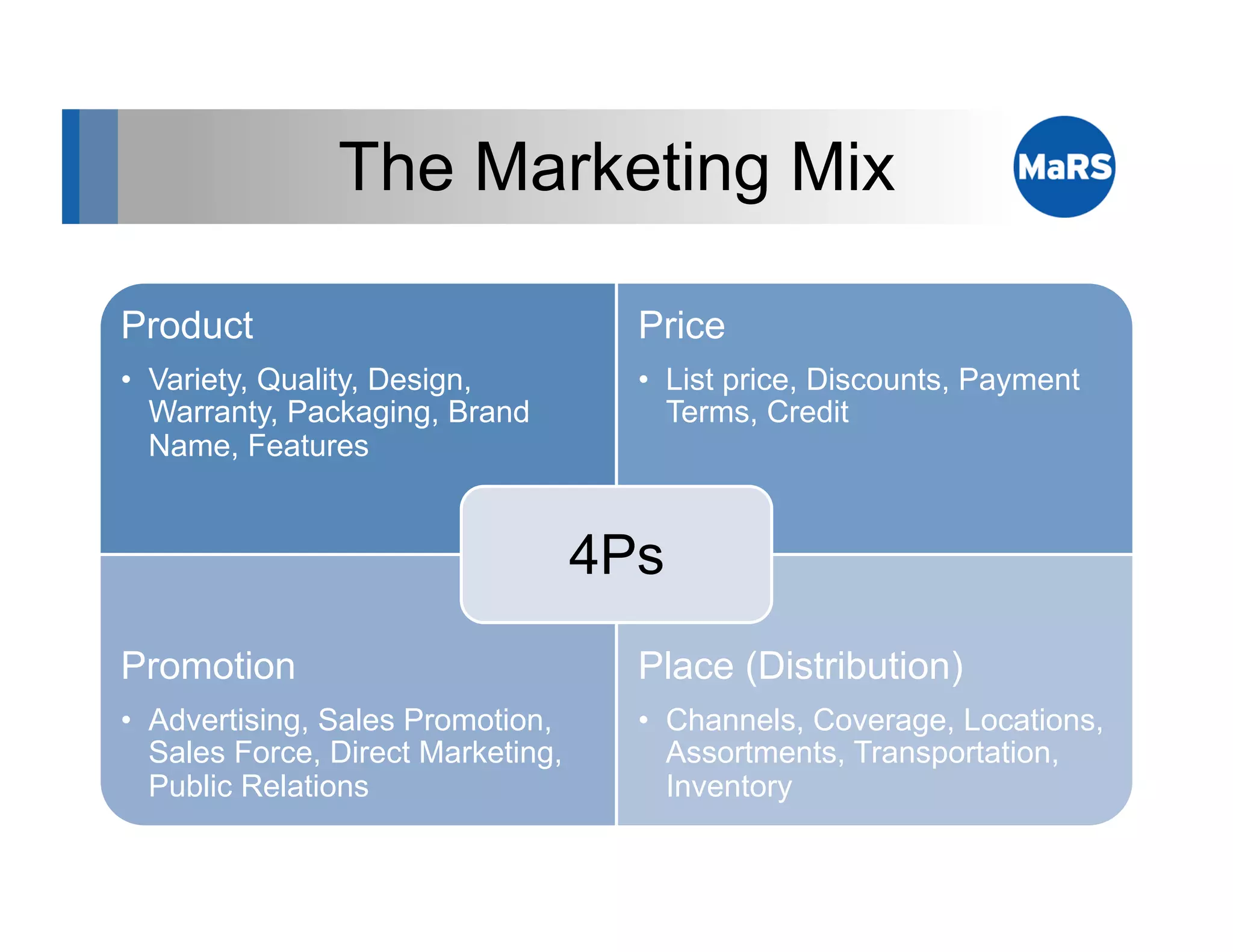
The Marketing Mix

Product                               Price
•  Variety, Quality, Design,          •  List price, Discounts, Payment
   Warranty, Packaging, Brand            Terms, Credit
   Name, Features


                                    4Ps
Promotion                             Place (Distribution)
•  Advertising, Sales Promotion,      •  Channels, Coverage, Locations,
   Sales Force, Direct Marketing,        Assortments, Transportation,
   Public Relations                      Inventory
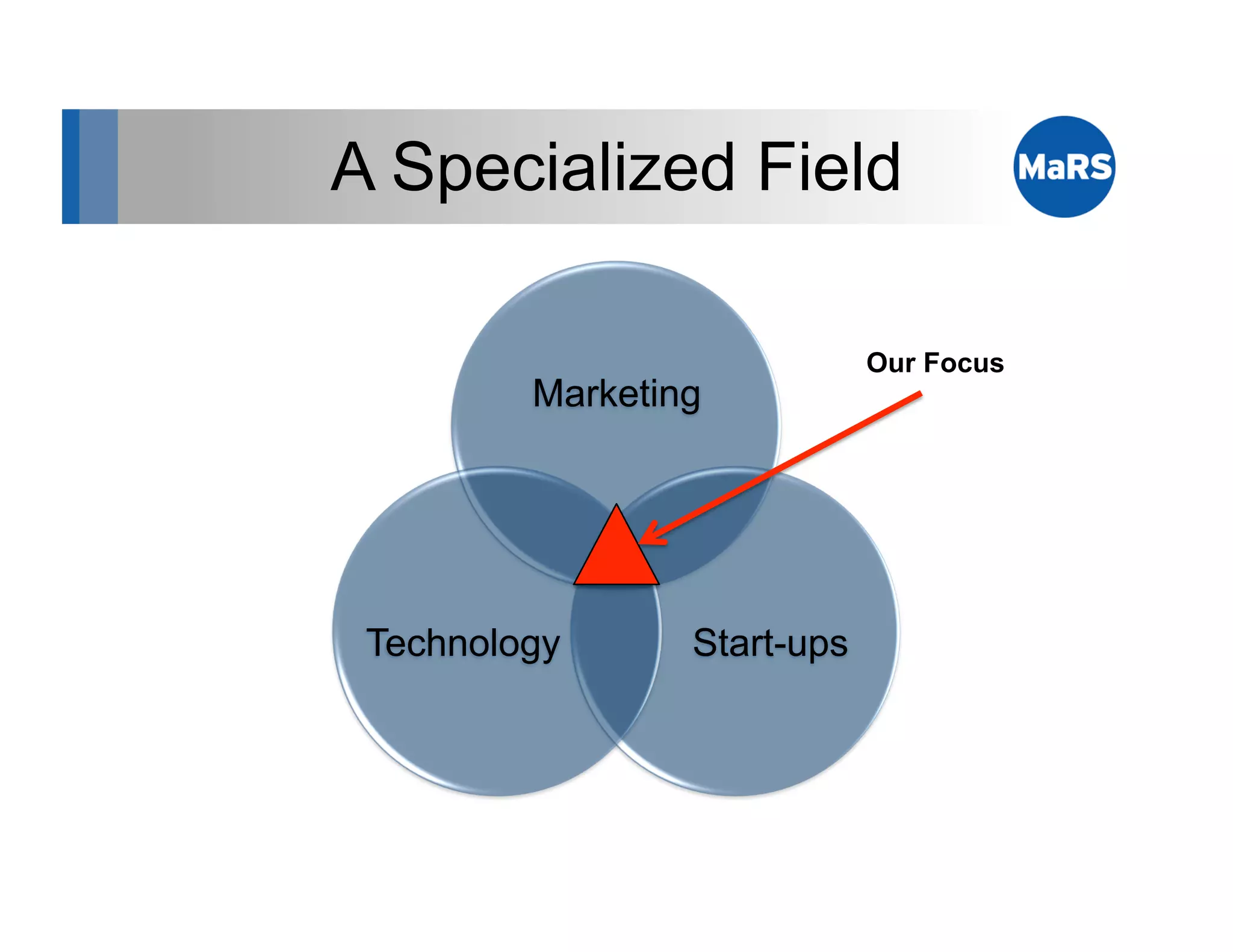
A Specialized Field

                             Our Focus
         Marketing


 Technology      Start-ups
Part I

ANALYTICAL FOUNDATION
H1: Your Business Idea
•  The name of your business/product idea?
•  What kind of problem do you solve? Is
   this an important problem? Is there a big
   potential market?
•  How is your competition solving this
   problem for their customers today?
•  Why are you qualified to solve this
   problem better than your competitors? Is
   your uniqueness sustainable over time?
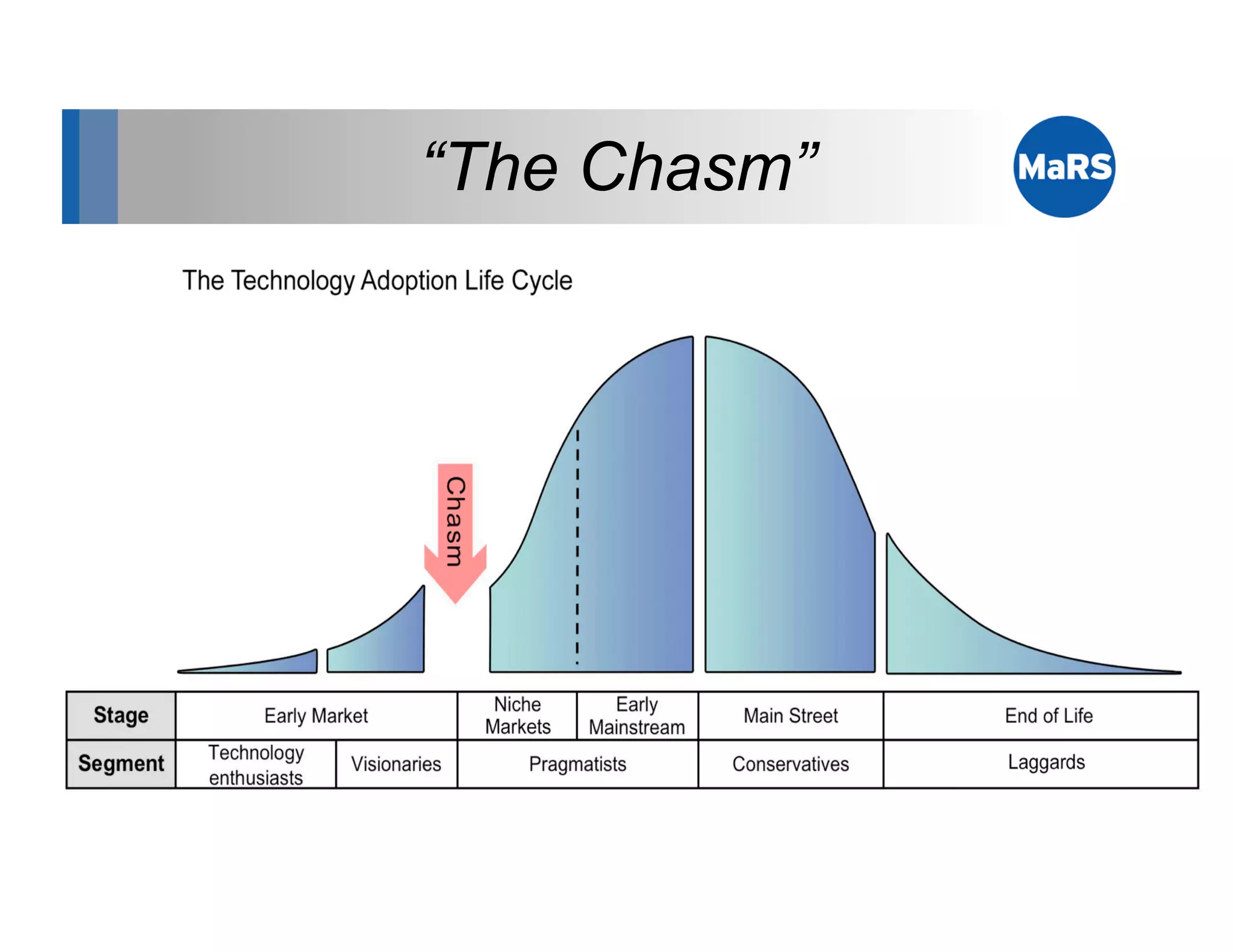
“The Chasm”
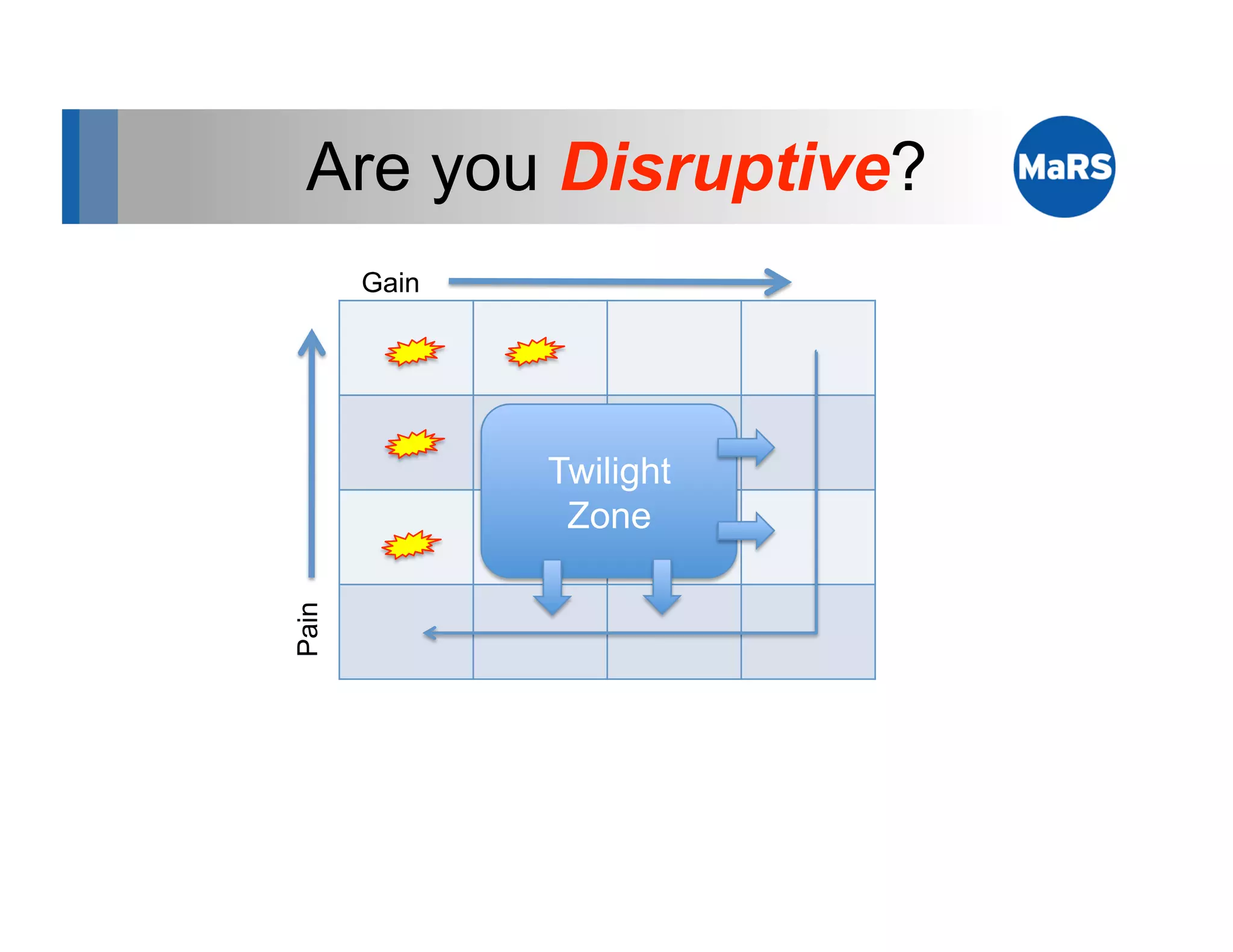
Are you Disruptive?
       Gain


              Twilight
               Zone
Pain
The Analytical Foundation
•  SWOT Analysis
  –  Internal: Strength, Weakness
     •  Attributes
     •  Capabilities
     •  Assets
  –  External: Opportunity, Threat
     •  PEST Analysis (Macro)
     •  Industry Analysis (Intermediate)
     •  Market Analysis (Micro)
Part II

CRITICAL VALUE FACTORS
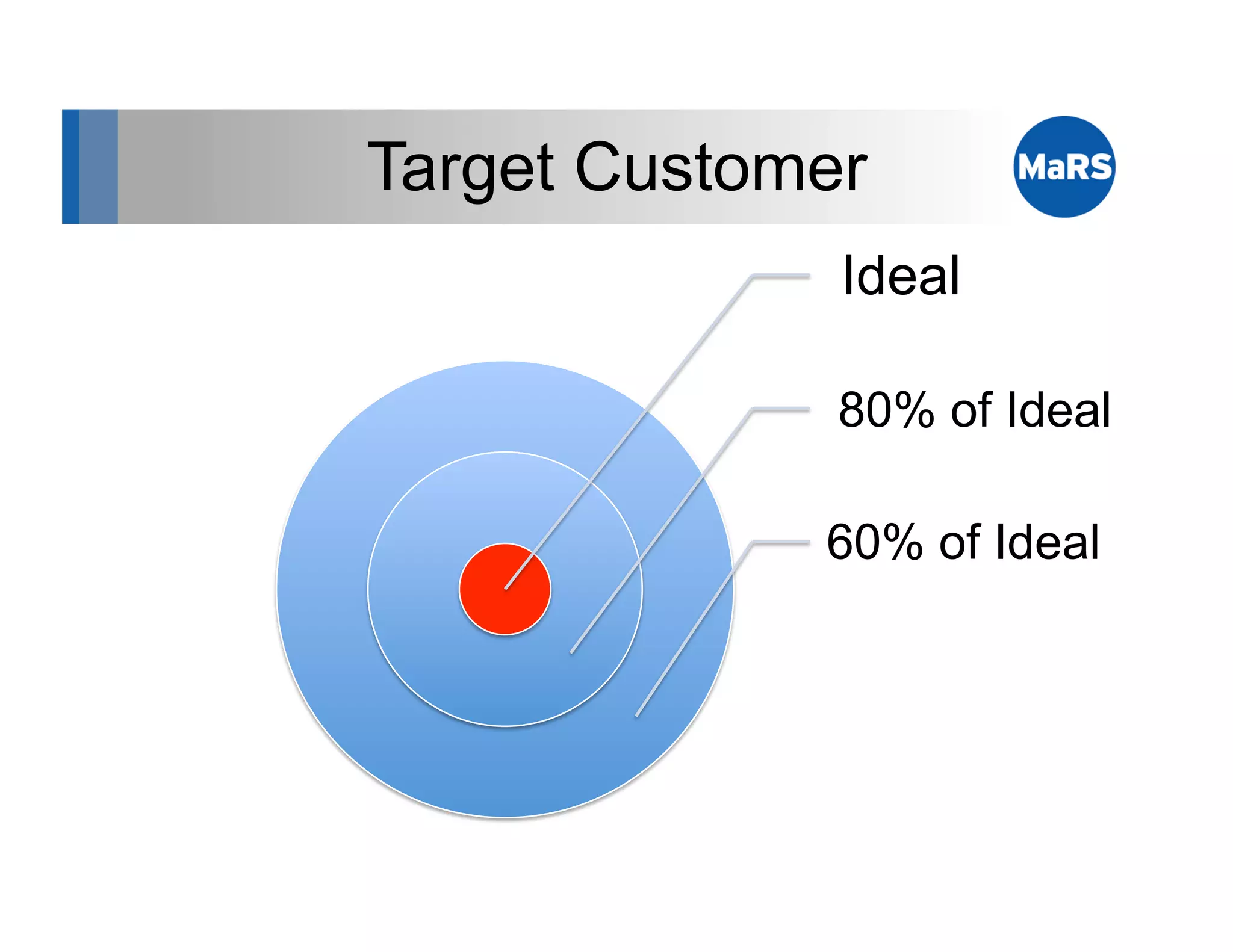
Target Customer
              Ideal

              80% of Ideal

             60% of Ideal
Customer Pain
•  What problem are you solving for your
   customer?
•  Is the customer aware of the problem or is
   it a latent problem?
•  Market Analysis: Customer Needs
•  C.Christensen: Job-to-be-done
•  Avoid: Your reason to sell…..
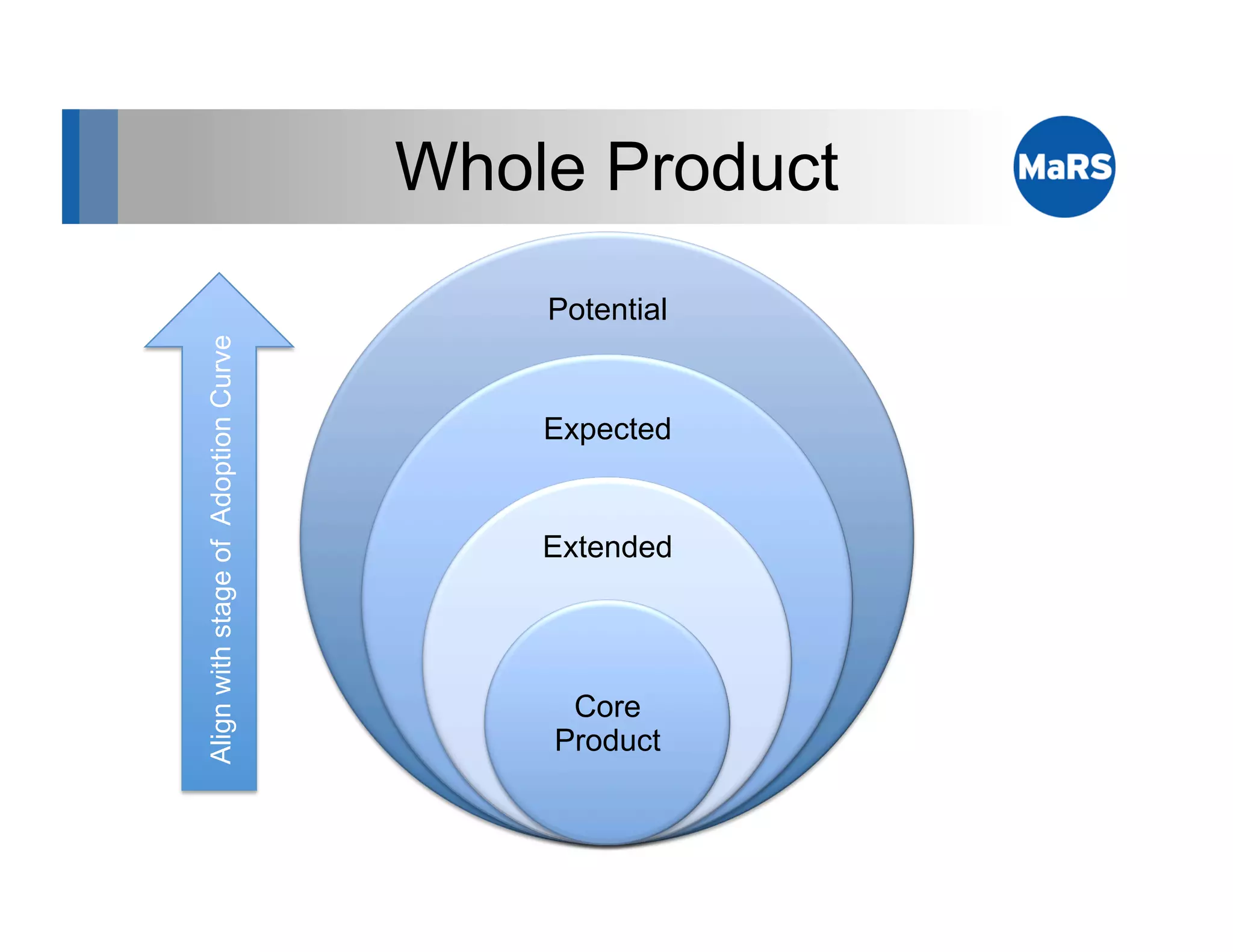
Whole Product
                                         Potential
Align with stage of Adoption Curve


                                         Expected


                                         Extended


                                          Core
                                         Product
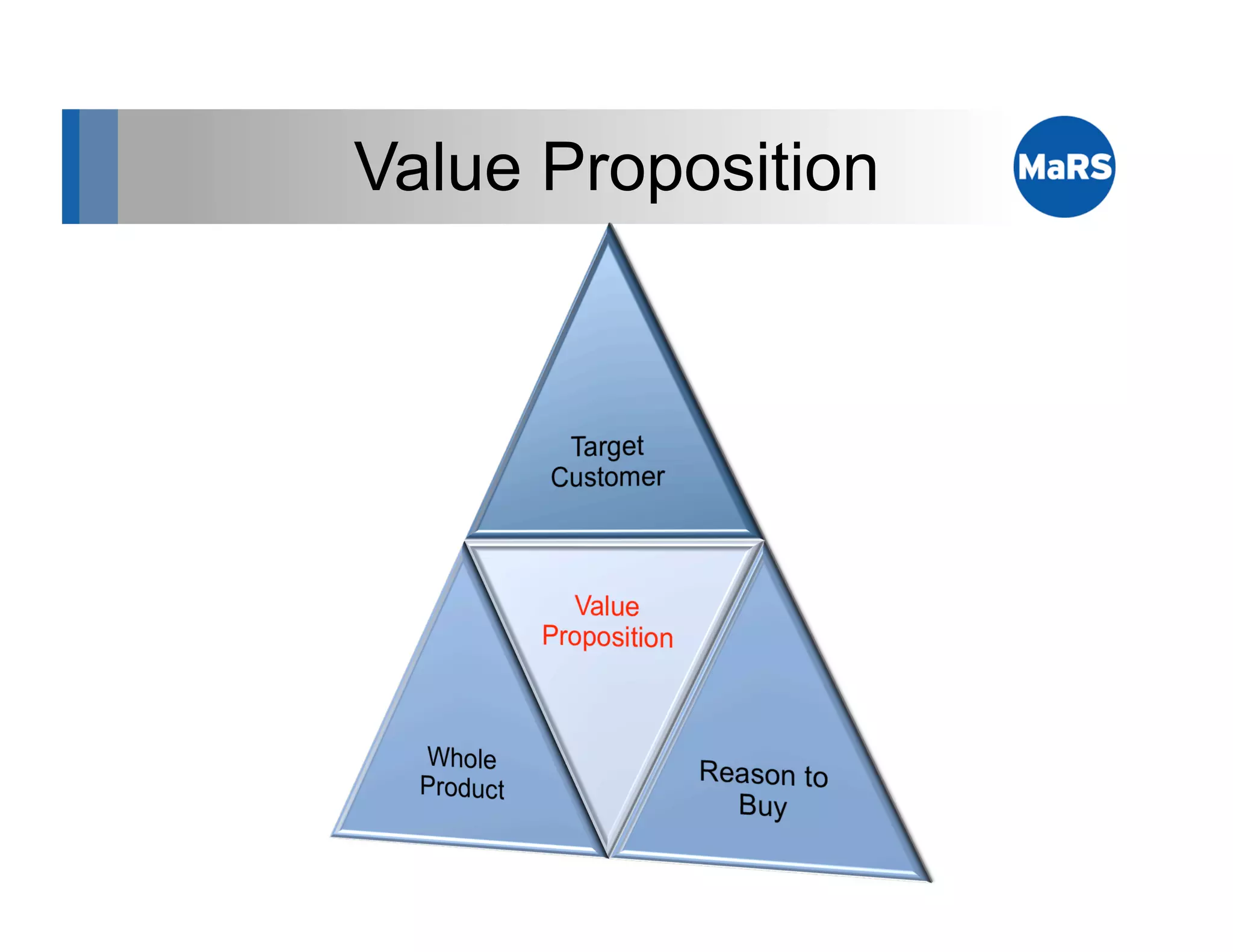
Value Proposition
Part III

STRATEGIC MARKET APPROACH
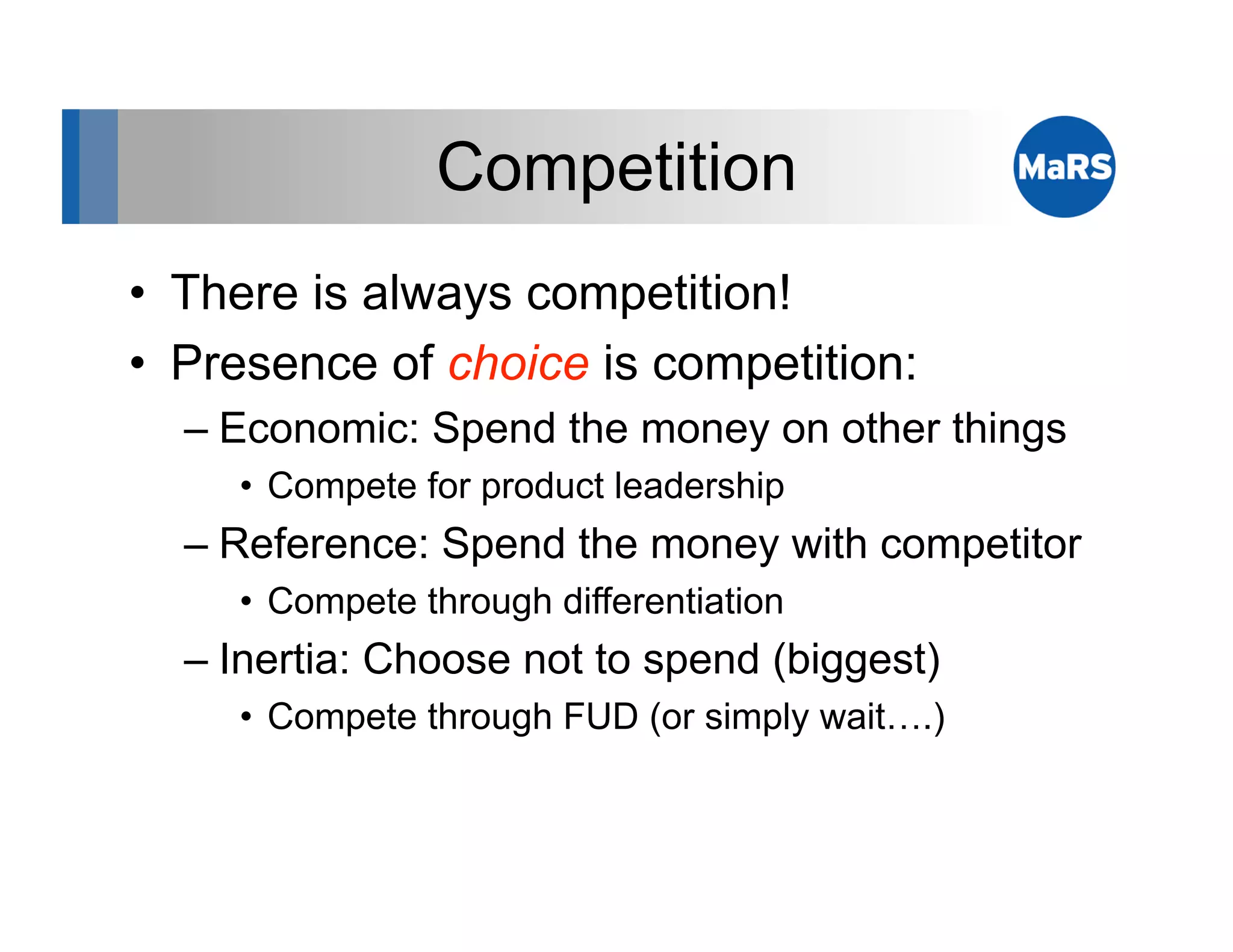
Competition
•  There is always competition!
•  Presence of choice is competition:
  –  Economic: Spend the money on other things
     •  Compete for product leadership
  –  Reference: Spend the money with competitor
     •  Compete through differentiation
  –  Inertia: Choose not to spend (biggest)
     •  Compete through FUD (or simply wait….)
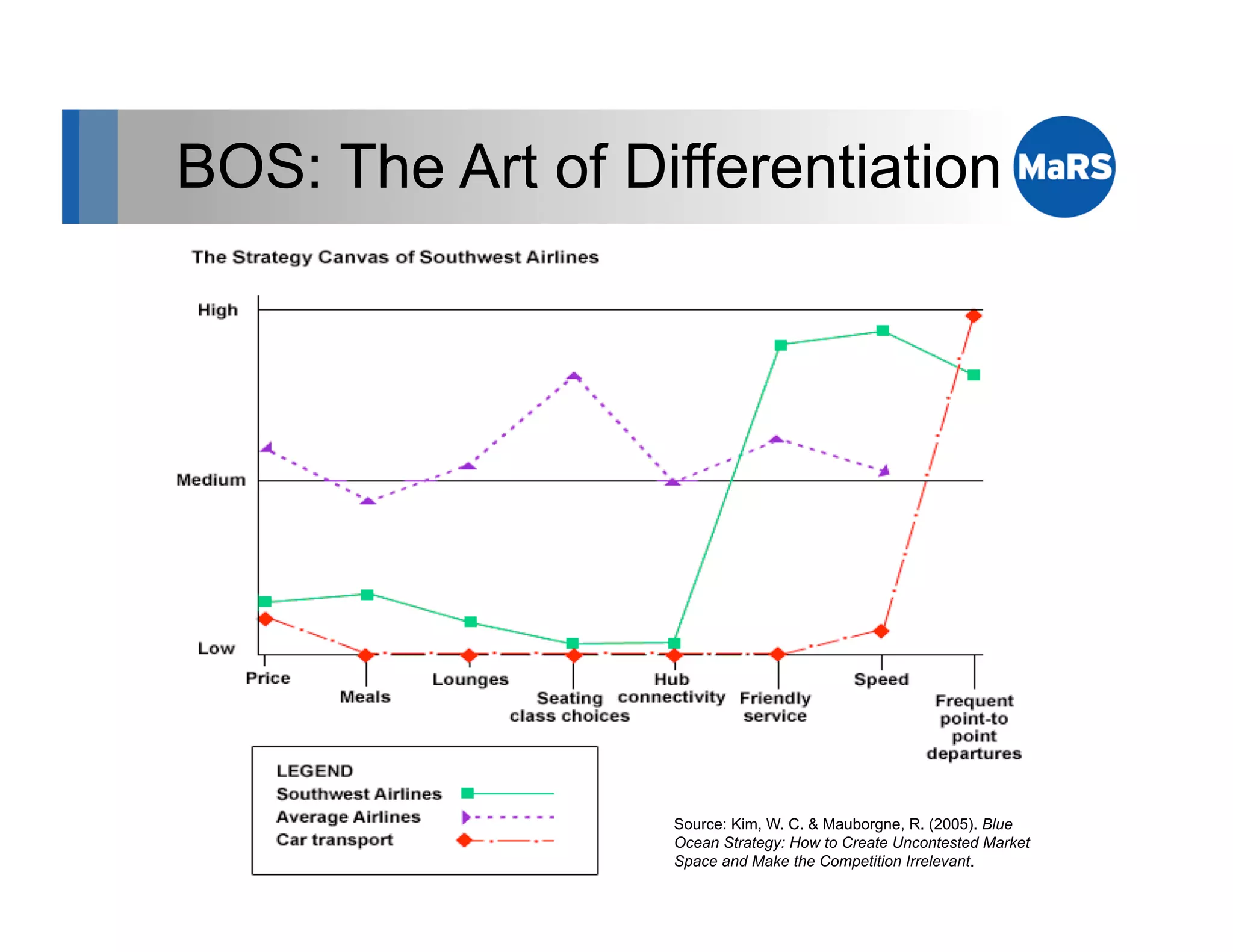
BOS: The Art of Differentiation


                  Source: Kim, W. C. & Mauborgne, R. (2005). Blue
                  Ocean Strategy: How to Create Uncontested Market
                  Space and Make the Competition Irrelevant.
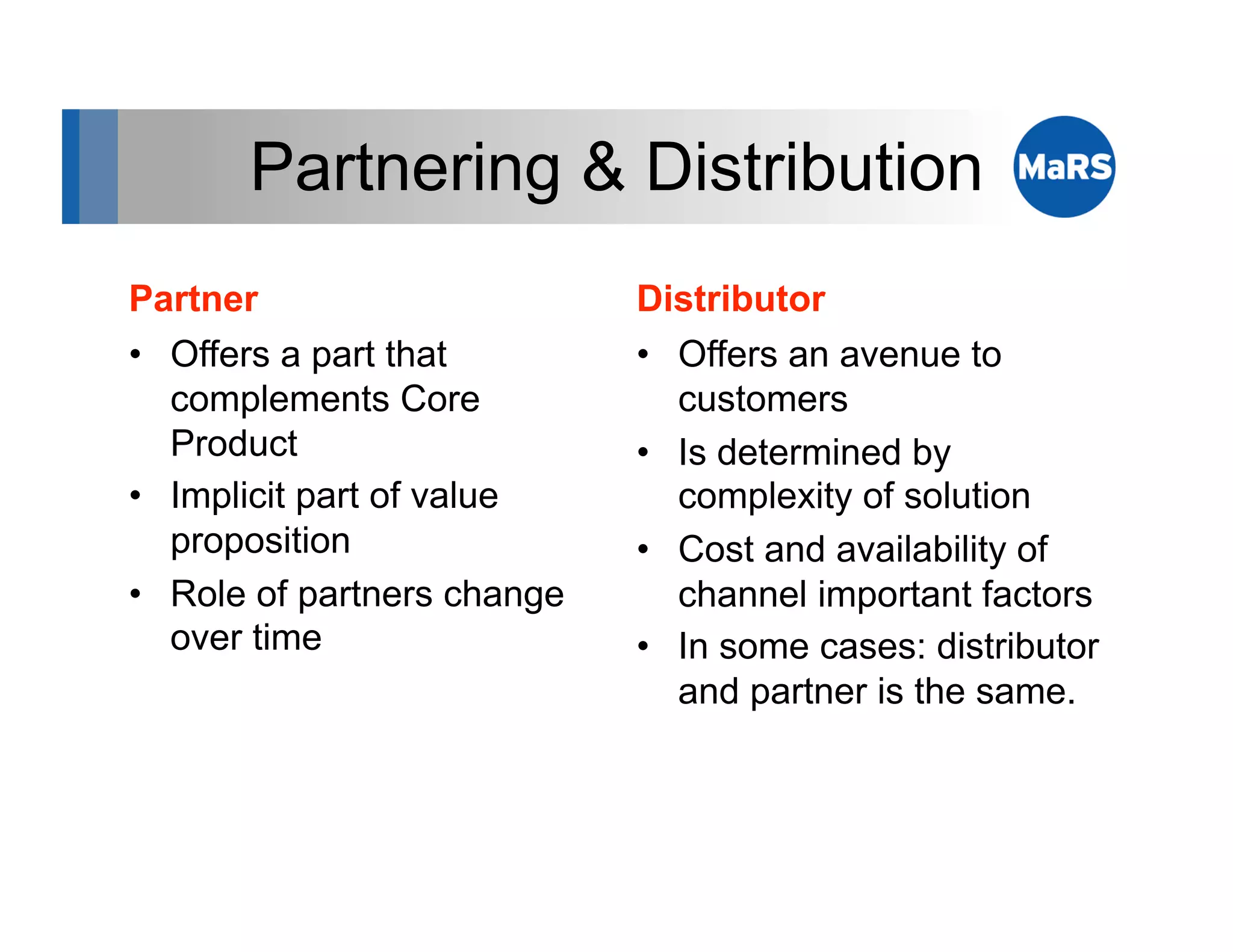
Partnering & Distribution
Partner                      Distributor
•  Offers a part that        •  Offers an avenue to
   complements Core             customers
   Product                   •  Is determined by
•  Implicit part of value       complexity of solution
   proposition               •  Cost and availability of
•  Role of partners change      channel important factors
   over time                 •  In some cases: distributor
                                and partner is the same.
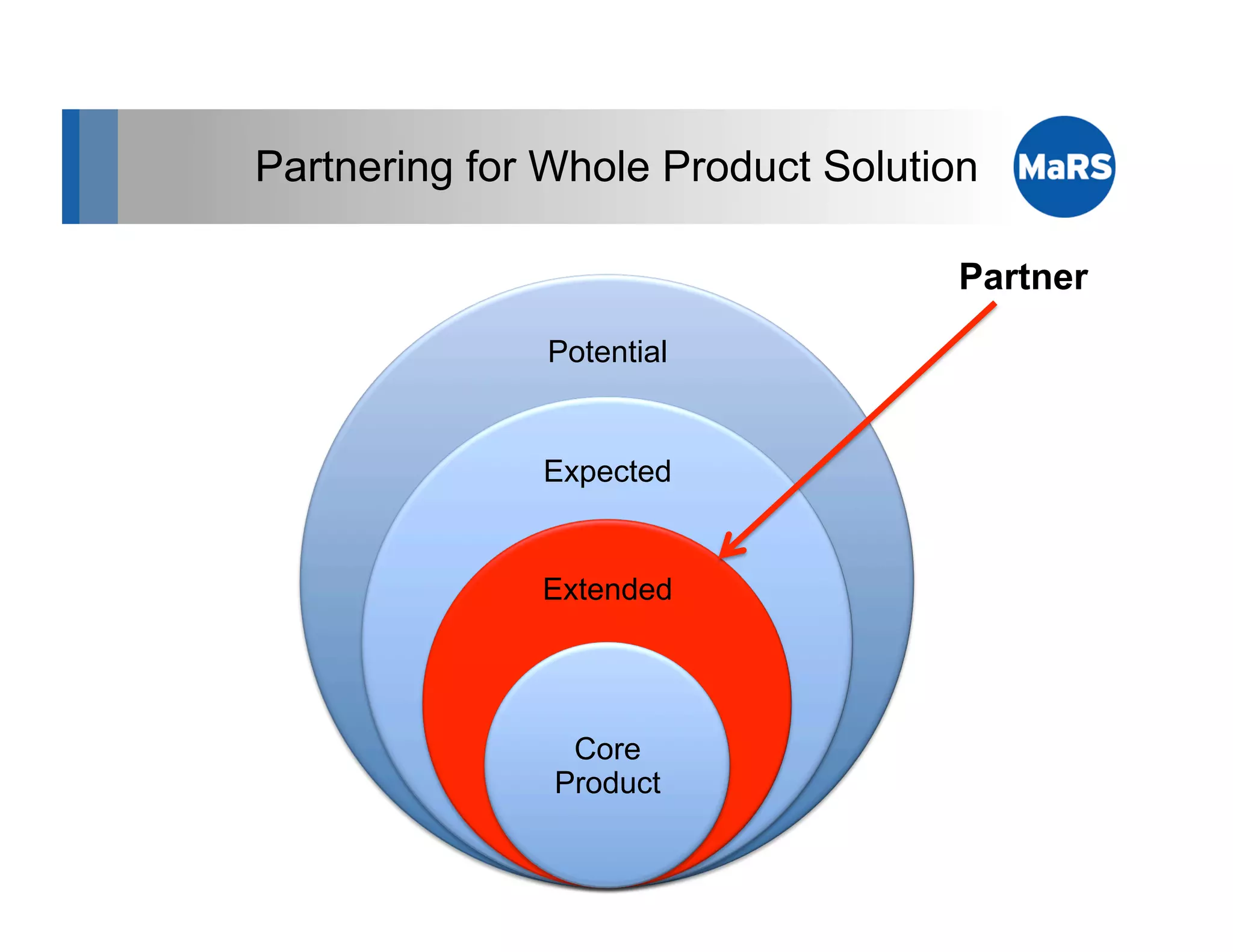
Partnering for Whole Product Solution

                                   Partner
              Potential


              Expected


              Extended


                Core
               Product
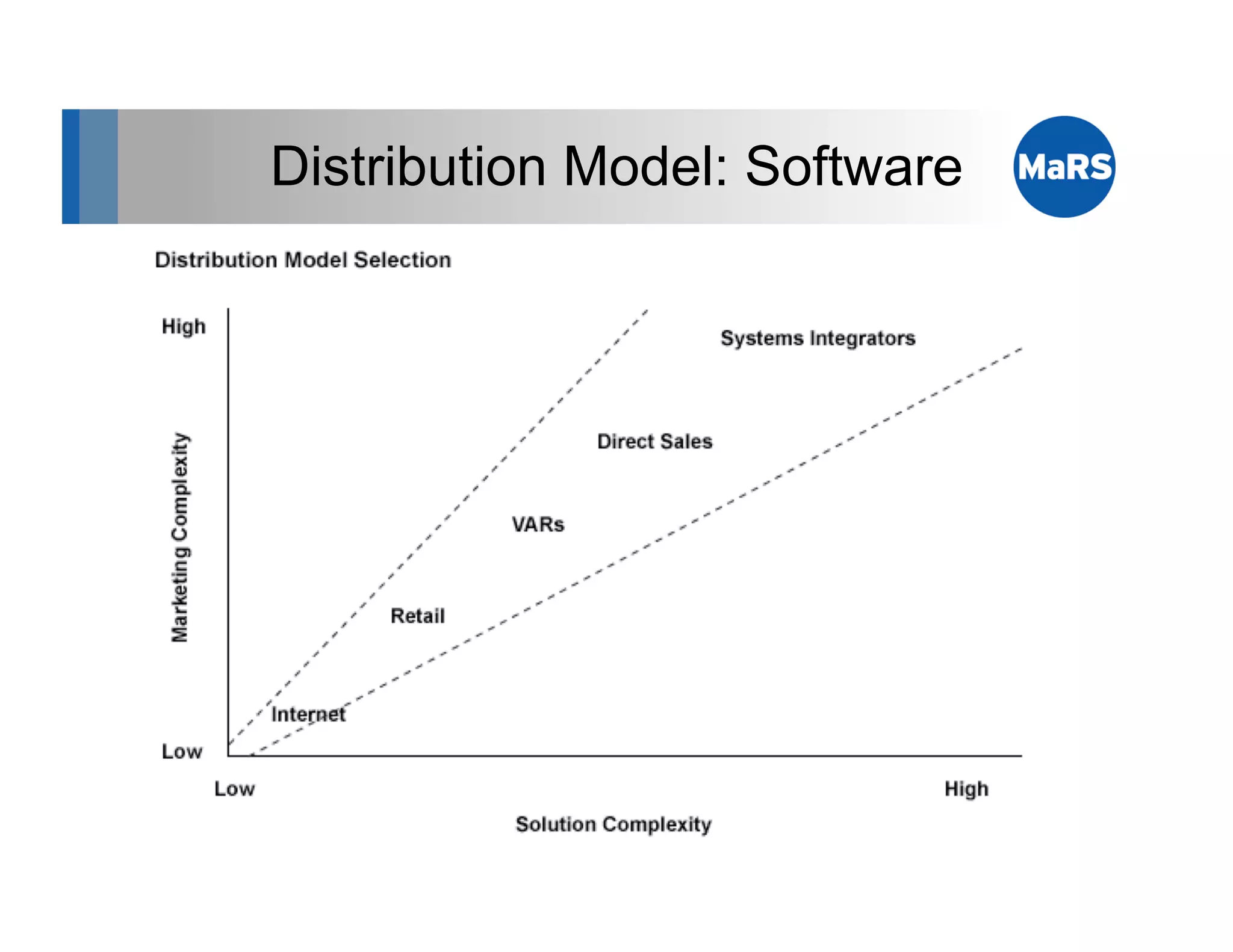
Distribution Model: Software
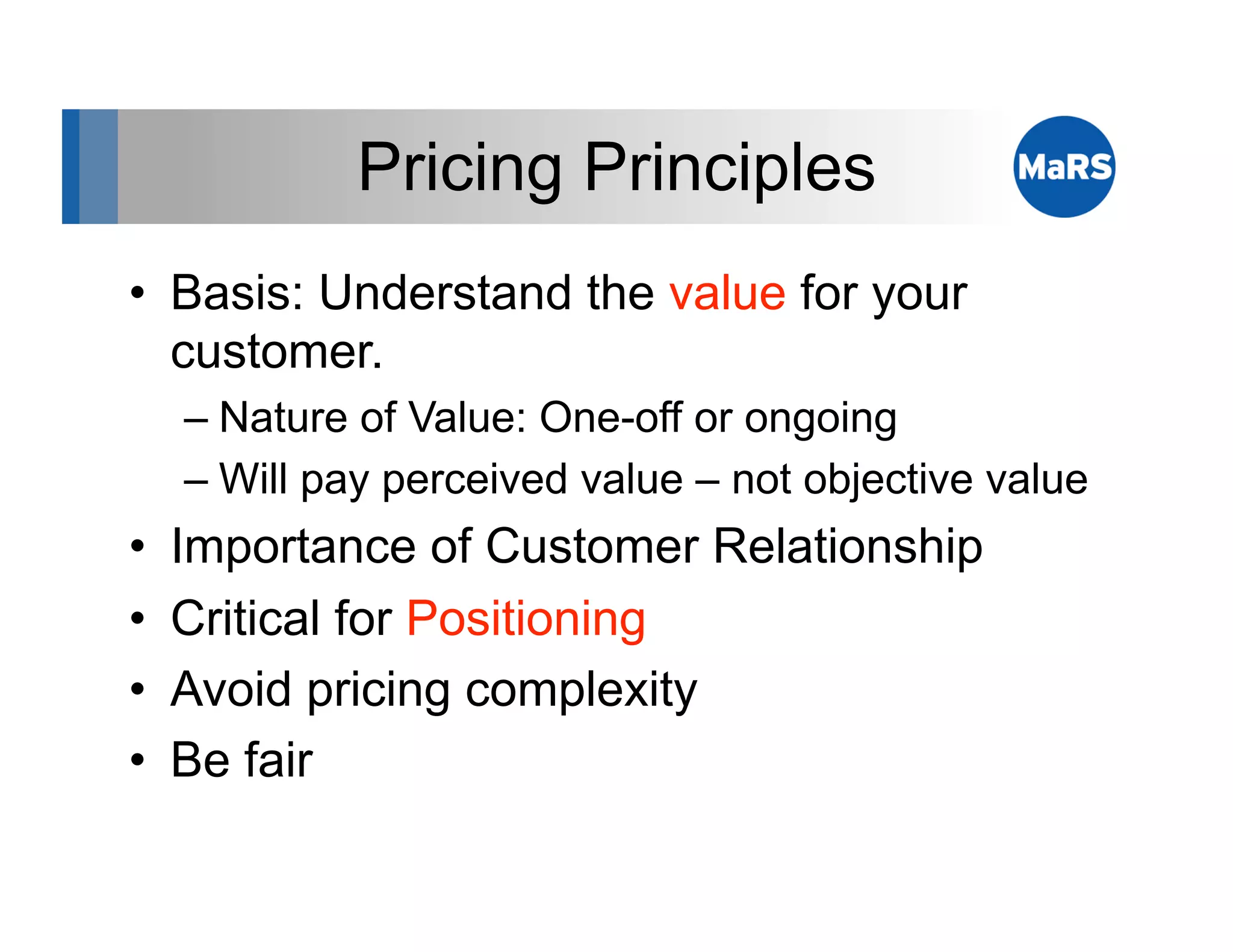
Pricing Principles
•  Basis: Understand the value for your
   customer.
     –  Nature of Value: One-off or ongoing
     –  Will pay perceived value – not objective value
•    Importance of Customer Relationship
•    Critical for Positioning
•    Avoid pricing complexity
•    Be fair
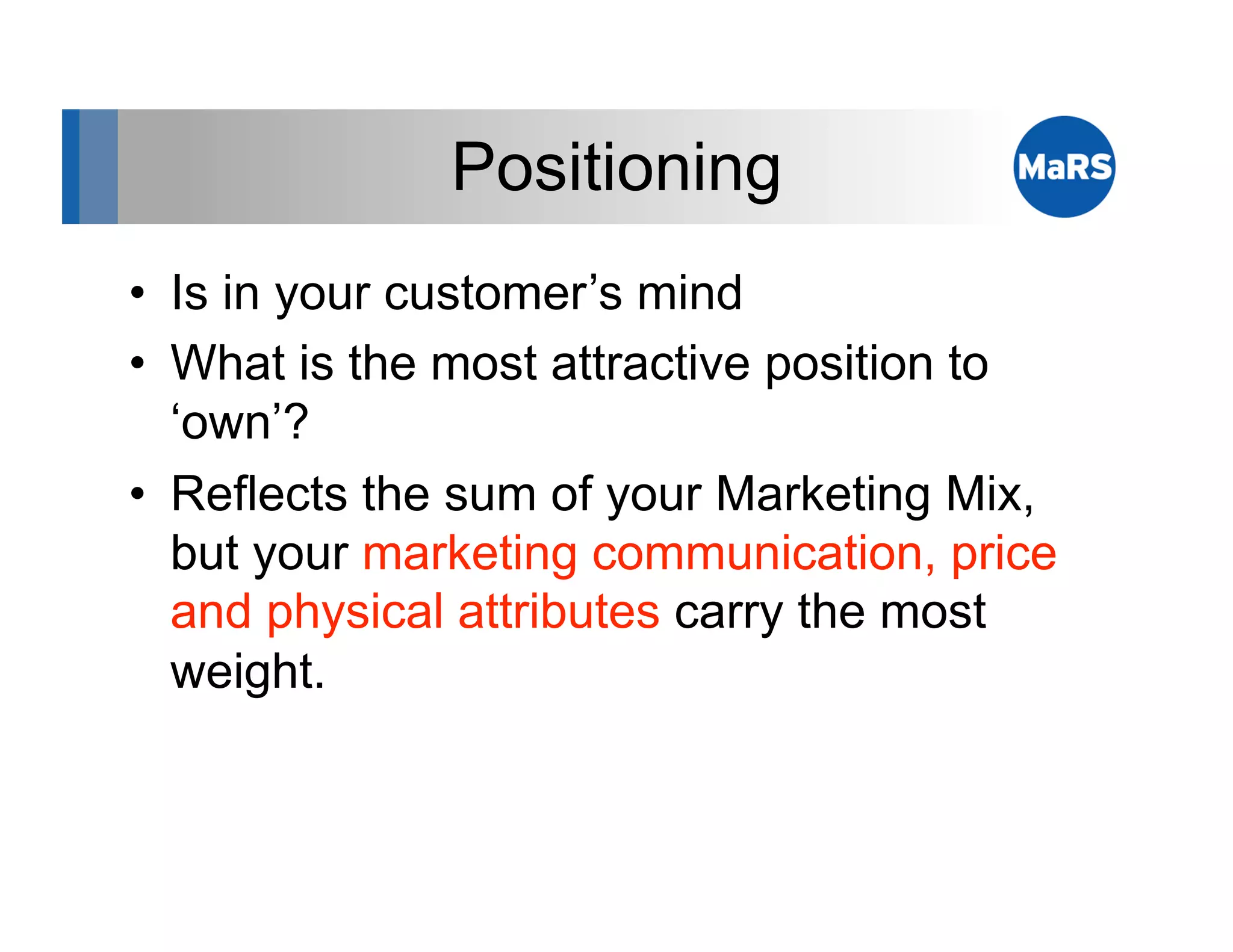
Positioning
•  Is in your customer’s mind
•  What is the most attractive position to
   ‘own’?
•  Reflects the sum of your Marketing Mix,
   but your marketing communication, price
   and physical attributes carry the most
   weight.
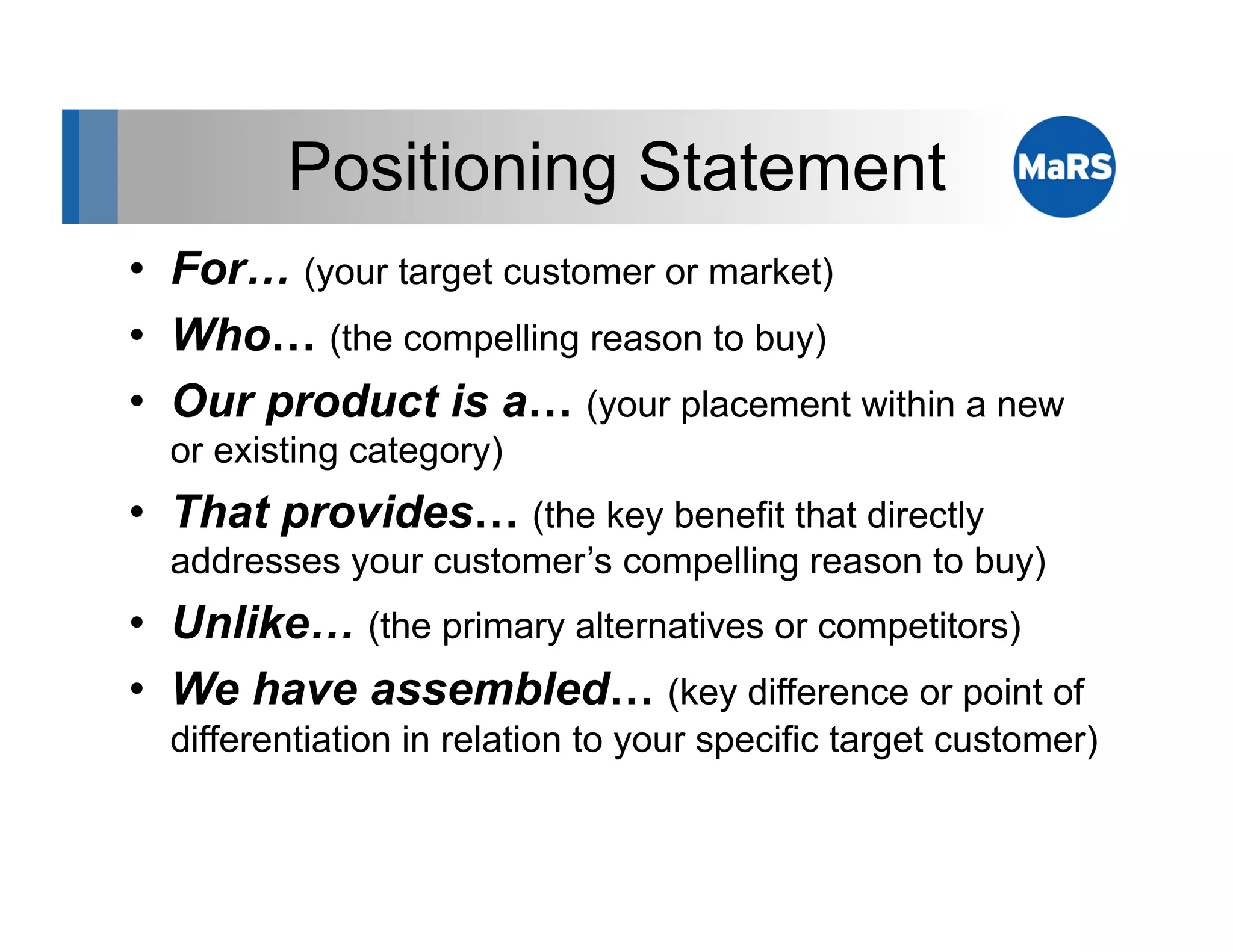
Positioning Statement
•  For… (your target customer or market)
•  Who… (the compelling reason to buy)
•  Our product is a… (your placement within a new
  or existing category)
•  That provides… (the key benefit that directly
  addresses your customer’s compelling reason to buy)
•  Unlike… (the primary alternatives or competitors)
•  We have assembled… (key difference or point of
  differentiation in relation to your specific target customer)
Example: TiVo
The TiVo Story
•  Established 1997
•  Created the world's first digital video
   recorder (DVR)
•  Potential to “kill” commercial TV
•  Launch strategy: “Celebrity Evangelists”
•  Revenue in Q3-07: $ 133M (peak)
•  Revenue in Q2-09: $ 106M (down 20%)
•  Stock price: $ 10.66 (All time high: $ 70)
TiVo: Customer Pain
•  Time-shifting (need currently filled by
   VCR)
•  Challenge: People don’t like VCRs
   because they don’t understand how to use
   them.
•  Solution: Avoid positioning TiVo as
   alternative to VCR.
TiVo Positioning
•  Original position:
   –  “TiVo is like having your own TV network where
      you get to decide what's on and when"

•  Problem 1: “Personal TV Network” –
   customers have no familiarity with term
•  Problem 2: Didn’t solve the customer pain
•  Problem 3: Wrong type of evangelists
•  Problem 4: The life cycle too short
Questions?

Introduction to technology marketing

  • 1.
  • 3.
    Contents •  Goal: ToDefine Key Marketing Concepts •  Introduction –  Defining the field and scope •  Part I: Analytical Foundation •  Part II: Critical Value Factors •  Part III: Strategic Approach
  • 4.
  • 5.
    Marketing - thedefinition •  Marketing is an organizational function and a set of processes for creating, communicating, and delivering value to customers and for managing customer relationships in ways that benefit the organization and its stakeholders. Source: AMA
  • 6.
    The Marketing Mix Product Price •  Variety, Quality, Design, •  List price, Discounts, Payment Warranty, Packaging, Brand Terms, Credit Name, Features 4Ps Promotion Place (Distribution) •  Advertising, Sales Promotion, •  Channels, Coverage, Locations, Sales Force, Direct Marketing, Assortments, Transportation, Public Relations Inventory
  • 7.
    A Specialized Field Our Focus Marketing Technology Start-ups
  • 8.
  • 9.
    H1: Your BusinessIdea •  The name of your business/product idea? •  What kind of problem do you solve? Is this an important problem? Is there a big potential market? •  How is your competition solving this problem for their customers today? •  Why are you qualified to solve this problem better than your competitors? Is your uniqueness sustainable over time?
  • 10.
  • 11.
    Are you Disruptive? Gain Twilight Zone Pain
  • 12.
    The Analytical Foundation • SWOT Analysis –  Internal: Strength, Weakness •  Attributes •  Capabilities •  Assets –  External: Opportunity, Threat •  PEST Analysis (Macro) •  Industry Analysis (Intermediate) •  Market Analysis (Micro)
  • 13.
  • 14.
    Target Customer Ideal 80% of Ideal 60% of Ideal
  • 15.
    Customer Pain •  Whatproblem are you solving for your customer? •  Is the customer aware of the problem or is it a latent problem? •  Market Analysis: Customer Needs •  C.Christensen: Job-to-be-done •  Avoid: Your reason to sell…..
  • 16.
    Whole Product Potential Align with stage of Adoption Curve Expected Extended Core Product
  • 17.
  • 18.
  • 19.
    Competition •  There isalways competition! •  Presence of choice is competition: –  Economic: Spend the money on other things •  Compete for product leadership –  Reference: Spend the money with competitor •  Compete through differentiation –  Inertia: Choose not to spend (biggest) •  Compete through FUD (or simply wait….)
  • 20.
    BOS: The Artof Differentiation Source: Kim, W. C. & Mauborgne, R. (2005). Blue Ocean Strategy: How to Create Uncontested Market Space and Make the Competition Irrelevant.
  • 21.
    Partnering & Distribution Partner Distributor •  Offers a part that •  Offers an avenue to complements Core customers Product •  Is determined by •  Implicit part of value complexity of solution proposition •  Cost and availability of •  Role of partners change channel important factors over time •  In some cases: distributor and partner is the same.
  • 22.
    Partnering for WholeProduct Solution Partner Potential Expected Extended Core Product
  • 23.
  • 24.
    Pricing Principles •  Basis:Understand the value for your customer. –  Nature of Value: One-off or ongoing –  Will pay perceived value – not objective value •  Importance of Customer Relationship •  Critical for Positioning •  Avoid pricing complexity •  Be fair
  • 25.
    Positioning •  Is inyour customer’s mind •  What is the most attractive position to ‘own’? •  Reflects the sum of your Marketing Mix, but your marketing communication, price and physical attributes carry the most weight.
  • 26.
    Positioning Statement •  For…(your target customer or market) •  Who… (the compelling reason to buy) •  Our product is a… (your placement within a new or existing category) •  That provides… (the key benefit that directly addresses your customer’s compelling reason to buy) •  Unlike… (the primary alternatives or competitors) •  We have assembled… (key difference or point of differentiation in relation to your specific target customer)
  • 27.
  • 28.
    The TiVo Story • Established 1997 •  Created the world's first digital video recorder (DVR) •  Potential to “kill” commercial TV •  Launch strategy: “Celebrity Evangelists” •  Revenue in Q3-07: $ 133M (peak) •  Revenue in Q2-09: $ 106M (down 20%) •  Stock price: $ 10.66 (All time high: $ 70)
  • 29.
    TiVo: Customer Pain • Time-shifting (need currently filled by VCR) •  Challenge: People don’t like VCRs because they don’t understand how to use them. •  Solution: Avoid positioning TiVo as alternative to VCR.
  • 30.
    TiVo Positioning •  Originalposition: –  “TiVo is like having your own TV network where you get to decide what's on and when" •  Problem 1: “Personal TV Network” – customers have no familiarity with term •  Problem 2: Didn’t solve the customer pain •  Problem 3: Wrong type of evangelists •  Problem 4: The life cycle too short
  • 31.