Introduction to
Linguistics
Key Points
Definition of Linguistics
Linguistics vs. Traditional Grammar
Use of Studying Linguistics
Scope of Linguistics
Definition of Linguistics
The scientific study of language
Analyzes human language as a system for
relating sounds and meanings
Two Main Purpose of Linguistics
It studies the nature of language and tries to
establish a theory of language and describes
languages in the light of the theory
established
It examines all the forms of language in
general and seeks a scientific understanding
of the ways in which it is organized to
fulfill the needs it serves and the functions it
performs in human life
Goals of Linguistics
To describe language
To explain the unaware knowledge all
speakers have about their language
Linguistics vs. Traditional
Grammar
To uncover general principles underlying
human language
To provide reliable descriptions of
individual language
Linguistics vs. Traditional
Grammar
Linguistics describes languages and does
not lay rules of correctness.
Linguists regard the spoken language as
prima
Traditional grammar is based on Latin and
it tries to impose the Latin categories and
structures on other languages
Linguistics describes each language on its
own merits
Use of Studying Linguistics
FOR A STUDENT OF LANGUAGE
To know the general properties of language
can help the students to have an overview
of the human language which in turn will
stop him asking unnecessary questions.
Use of Studying Linguistics
FOR A TEACHER
He will learn about not only how language
is pronounced or structured, but also how it
should be presented to learners.
He will know not only how each level of
the language system is related to other
levels, but also how language is closely
related to many things outside itself. (mind,
brain, society, etc.)
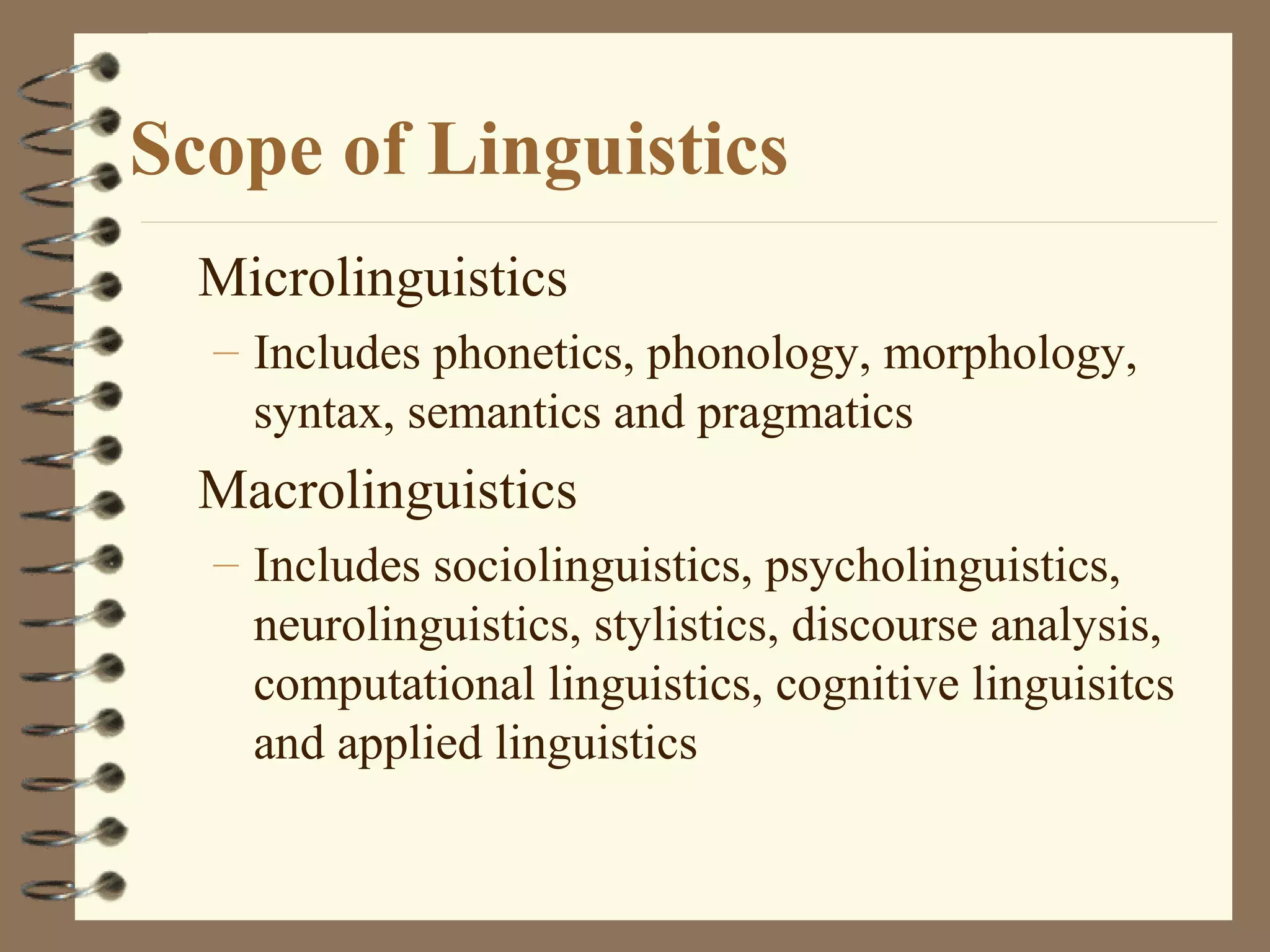
Scope of Linguistics
Microlinguistics
– Includes phonetics, phonology, morphology,
syntax, semantics and pragmatics
Macrolinguistics
– Includes sociolinguistics, psycholinguistics,
neurolinguistics, stylistics, discourse analysis,
computational linguistics, cognitive linguisitcs
and applied linguistics
Thank You!

Introduction to Linguistics

  • 1.
  • 2.
    Key Points Definition ofLinguistics Linguistics vs. Traditional Grammar Use of Studying Linguistics Scope of Linguistics
  • 3.
    Definition of Linguistics Thescientific study of language Analyzes human language as a system for relating sounds and meanings
  • 4.
    Two Main Purposeof Linguistics It studies the nature of language and tries to establish a theory of language and describes languages in the light of the theory established It examines all the forms of language in general and seeks a scientific understanding of the ways in which it is organized to fulfill the needs it serves and the functions it performs in human life
  • 5.
    Goals of Linguistics Todescribe language To explain the unaware knowledge all speakers have about their language
  • 6.
    Linguistics vs. Traditional Grammar Touncover general principles underlying human language To provide reliable descriptions of individual language
  • 7.
    Linguistics vs. Traditional Grammar Linguisticsdescribes languages and does not lay rules of correctness. Linguists regard the spoken language as prima Traditional grammar is based on Latin and it tries to impose the Latin categories and structures on other languages Linguistics describes each language on its own merits
  • 8.
    Use of StudyingLinguistics FOR A STUDENT OF LANGUAGE To know the general properties of language can help the students to have an overview of the human language which in turn will stop him asking unnecessary questions.
  • 9.
    Use of StudyingLinguistics FOR A TEACHER He will learn about not only how language is pronounced or structured, but also how it should be presented to learners. He will know not only how each level of the language system is related to other levels, but also how language is closely related to many things outside itself. (mind, brain, society, etc.)
  • 10.
    Scope of Linguistics Microlinguistics –Includes phonetics, phonology, morphology, syntax, semantics and pragmatics Macrolinguistics – Includes sociolinguistics, psycholinguistics, neurolinguistics, stylistics, discourse analysis, computational linguistics, cognitive linguisitcs and applied linguistics
  • 11.