Introduction to Interview
as a Teaching Method
Interviews are a powerful educational tool that
engage students in active learning.
Benefits of Using Interviews in Teaching
1 Enhanced
Engagement
Interviews capture
students' interest and
provide a platform for
active participation.
2 Real-World
Relevance
Interviews connect
classroom learning to
practical, applicable
skills.
3 Personal
Development
Students develop
communication,
research, and
interpersonal skills
through interviewing.
Preparing for an Interview-Based Lesson
Determine Objectives
Clarify the purpose of
the interviews and the
desired learning
outcomes.
Curate Resources
Prepare relevant
materials, such as
interview questions and
supplementary content.
Set Clear Guidelines
Establish expectations for
both interviewers and
interviewees and create a
supportive environment.
Conducting an Interview-Based
Lesson
Engage Students
Encourage students to actively participate in the interview process,
fostering communication skills.
Facilitate Discussions
Guide meaningful conversations and ensure all students have an
opportunity to participate.
Evaluate Understanding
Assess students' comprehension and critical thinking through their
interview responses.
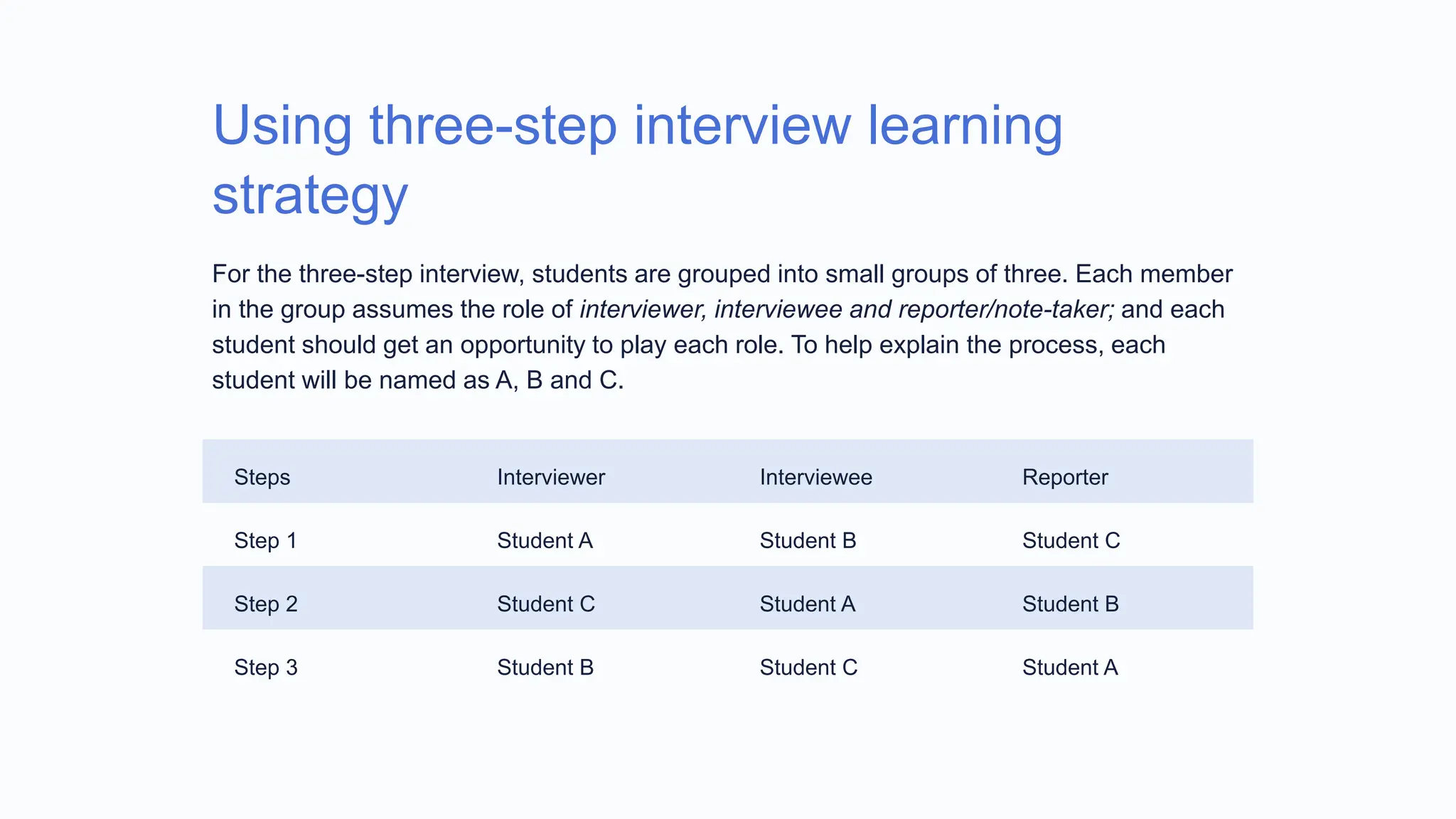
Using three-step interview learning
strategy
For the three-step interview, students are grouped into small groups of three. Each member
in the group assumes the role of interviewer, interviewee and reporter/note-taker; and each
student should get an opportunity to play each role. To help explain the process, each
student will be named as A, B and C.
Steps Interviewer Interviewee Reporter
Step 1 Student A Student B Student C
Step 2 Student C Student A Student B
Step 3 Student B Student C Student A
Thank you

Introduction-to-Interview-as-a-Teaching-Method.pptx

  • 1.
    Introduction to Interview asa Teaching Method Interviews are a powerful educational tool that engage students in active learning.
  • 2.
    Benefits of UsingInterviews in Teaching 1 Enhanced Engagement Interviews capture students' interest and provide a platform for active participation. 2 Real-World Relevance Interviews connect classroom learning to practical, applicable skills. 3 Personal Development Students develop communication, research, and interpersonal skills through interviewing.
  • 3.
    Preparing for anInterview-Based Lesson Determine Objectives Clarify the purpose of the interviews and the desired learning outcomes. Curate Resources Prepare relevant materials, such as interview questions and supplementary content. Set Clear Guidelines Establish expectations for both interviewers and interviewees and create a supportive environment.
  • 4.
    Conducting an Interview-Based Lesson EngageStudents Encourage students to actively participate in the interview process, fostering communication skills. Facilitate Discussions Guide meaningful conversations and ensure all students have an opportunity to participate. Evaluate Understanding Assess students' comprehension and critical thinking through their interview responses.
  • 5.
    Using three-step interviewlearning strategy For the three-step interview, students are grouped into small groups of three. Each member in the group assumes the role of interviewer, interviewee and reporter/note-taker; and each student should get an opportunity to play each role. To help explain the process, each student will be named as A, B and C. Steps Interviewer Interviewee Reporter Step 1 Student A Student B Student C Step 2 Student C Student A Student B Step 3 Student B Student C Student A
  • 6.

Editor's Notes

  • #6 Purpose of the activity: The three-step interview can be used as an entrance activity to introduce the topic and to activate past knowledge; an in-between activity to encourage students to analyze and understand the topic in depth; and an exit task to review the information taught in the class. Benefits The three-step interview learning strategy is beneficial to student learning in the following ways: It encourages students to think about the information they have been taught It expands their ability to question, think and generate answers It provides each student with the opportunity to voice their opinions, and promotes equal participation It promotes student accountability The three-step interview learning strategy helps students to enhance their learning by using their inquisitive nature and enables them to develop their skills such as active listening, questioning and generating answers.