I will provide a comprehensive guide on how to conduct research, covering essential steps and considerations.
Defining Research
Research is a systematic investigation into a topic to discover new facts, test theories, or revise existing knowledge. It involves asking a question, collecting and analyzing data, and interpreting the results.
Step 1: Choosing a Research Topic
Selecting a research topic is the first and most critical step in the research process. Choose a topic that genuinely interests you, but also one that is manageable and has available resources.
- Identify your interests: Begin by listing subjects you find interesting or are curious about.
- Consider feasibility: Ensure the topic is neither too broad nor too narrow. It should be researchable within your resources and time frame.
- Preliminary research: Do some initial reading to check if there is enough existing literature and data available on your chosen topic.
Step 2: Conducting a Literature Review
A literature review provides background information, identifies gaps in existing research, and helps refine your research question. It involves systematically searching, evaluating, and synthesizing existing studies and articles related to your topic.
- Search for relevant sources: Use academic databases, journals, books, and reputable websites to find relevant studies.
- Evaluate sources: Assess the credibility and relevance of each source. Look for peer-reviewed articles and well-regarded authors.
- Synthesize information: Summarize and analyze the key findings from your sources, noting any gaps or inconsistencies in the literature.
Step 3: Formulating a Research Question and Hypothesis
The research question defines what you want to find out, while the hypothesis is an educated guess or prediction about the relationship between variables. A well-defined research question guides your study and makes it focused.
- Develop a clear question: Your research question should be clear, specific, and focused. It should address a gap or problem identified in your literature review.
- Formulate a hypothesis: Based on your research question, develop a testable hypothesis. This is a statement that you can test through your research.
Step 4: Selecting a Research Design
The research design is the overall strategy you choose to integrate the different components of the study in a coherent and logical way, thereby, ensuring you will effectively address the research problem.
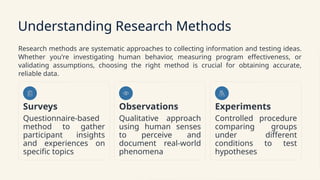
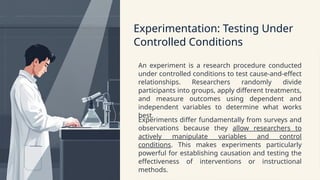
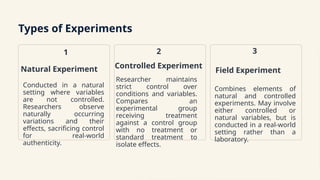
- Quantitative Research: This involves collecting and analyzing numerical data. Common methods include surveys, experiments, and statistical analysis.
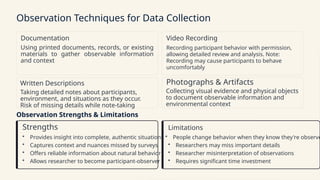
- Qualitative Research: This involves collecting and analyzing non-numerical data, such as interviews, observations, and textual analysis.
- Mixed Methods Research: Combines both quantitative and qualitative approaches to provide a more comprehensive understanding of the research problem.
Step 5: Data Collection
Data collection is the process of gath