Dr. C.V. Suresh Babu
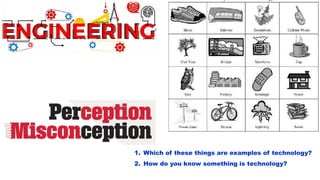
1. Which of these things are examples of technology?
2. How do you know something is technology?
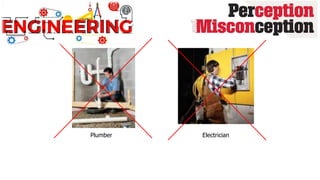
Plumber Electrician
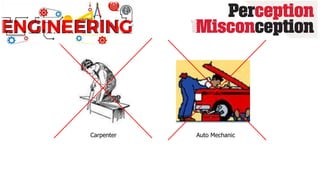
Carpenter Auto Mechanic
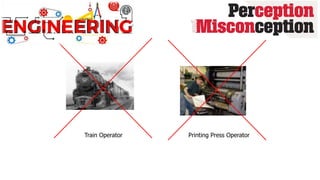
Train Operator Printing Press Operator
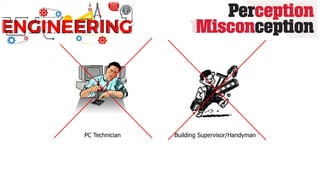
PC Technician Building Supervisor/Handyman
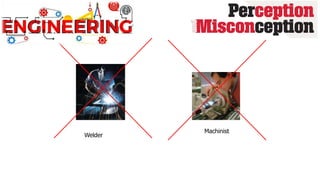
Welder
Machinist
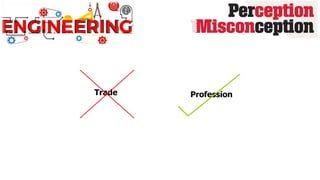
Trade Profession
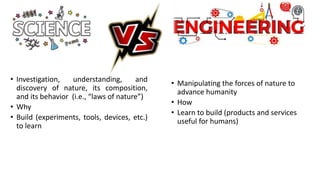
• Investigation, understanding, and
discovery of nature, its composition,
and its behavior (i.e., “laws of nature”)
• Why
• Build (experiments, tools, devices, etc.)
to learn
• Manipulating the forces of nature to
advance humanity
• How
• Learn to build (products and services
useful for humans)
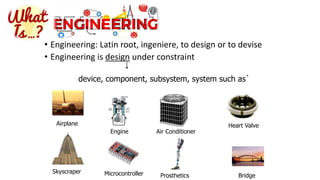
• Engineering: Latin root, ingeniere, to design or to devise
• Engineering is design under constraint
↓
device, component, subsystem, system such as`
Airplane
Engine Air Conditioner
Heart Valve
Skyscraper Microcontroller Prosthetics Bridge
• Successful engineering design improves quality of life while working
within technical, economic, business, societal, and ethical constraints.
• Technology: Outcome of engineering
• Profession in which knowledge of math and natural sciences, gained
by study, experience, and practice, is applied with judgment to
develop ways to use, economically, the materials and forces of nature
for the benefit of mankind.
• Accreditation Board for Engineering and Technology (ABET)
• Profession
• Math and natural sciences
• Knowledge acquired by study, experience, and professional practice
• Knowledge applied with judgment
• Attention must be paid to constraints (economic, materials, forces of
nature)
• Benefit of mankind
• Not based solely on trial, error, intuition
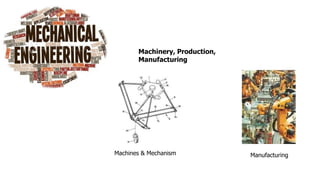
Machines & Mechanism Manufacturing
Machinery, Production,
Manufacturing
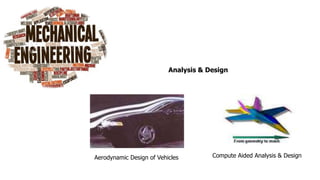
Compute Aided Analysis & DesignAerodynamic Design of Vehicles
Analysis & Design
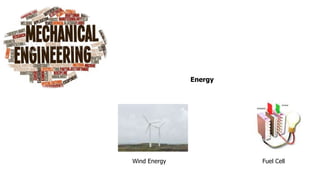
Wind Energy Fuel Cell
Energy
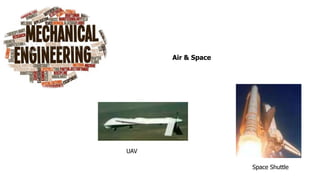
UAV
Space Shuttle
Air & Space
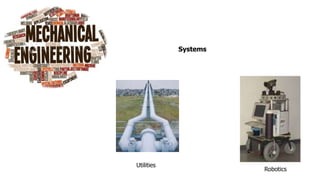
Robotics
Utilities
Systems
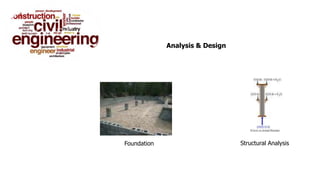
Foundation Structural Analysis
Analysis & Design
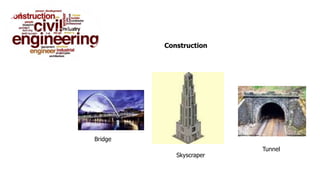
Bridge
Skyscraper
Tunnel
Construction
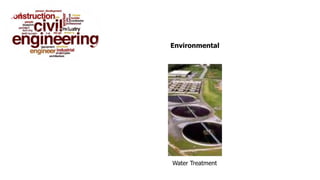
Water Treatment
Environmental
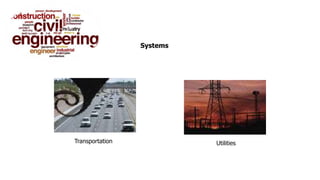
Transportation Utilities
Systems
Electricity
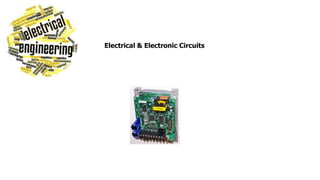
Electrical & Electronic Circuits
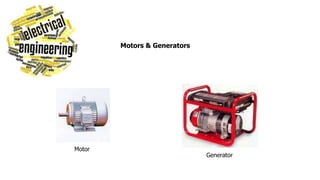
Motor
Generator
Motors & Generators
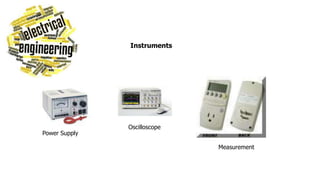
Power Supply
Measurement
Instruments
Oscilloscope
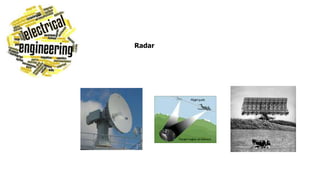
Radar
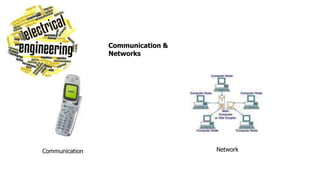
NetworkCommunication
Communication &
Networks
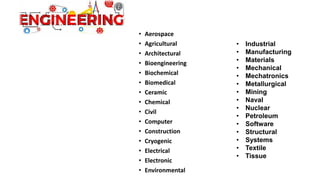
• Aerospace
• Agricultural
• Architectural
• Bioengineering
• Biochemical
• Biomedical
• Ceramic
• Chemical
• Civil
• Computer
• Construction
• Cryogenic
• Electrical
• Electronic
• Environmental
• Industrial
• Manufacturing
• Materials
• Mechanical
• Mechatronics
• Metallurgical
• Mining
• Naval
• Nuclear
• Petroleum
• Software
• Structural
• Systems
• Textile
• Tissue
• Research: Advance field
• Development: Lab to market
• Testing: Verify integrity, reliability, quality
• Design: Develop specs for manufacturing,
construction, etc.
• Analysis: Use math models to aid in R&D
• Systems: Integrate components to produce functioning
product Manufacturing: Develop plants and process to
make products
• Construction: Build
• Facility/Plant Operation
• Maintenance
• Technical Support
• Customer Support
• Sales
• Consulting
• Management
• Others
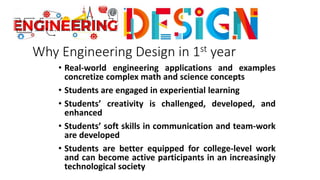
Why Engineering Design in 1st year
• Real-world engineering applications and examples
concretize complex math and science concepts
• Students are engaged in experiential learning
• Students’ creativity is challenged, developed, and
enhanced
• Students’ soft skills in communication and team-work
are developed
• Students are better equipped for college-level work
and can become active participants in an increasingly
technological society

Introduction to Enginnering