Wednesday 24 June 2015, Centurion House, Manchester
James Milligan, Solicitor, DMA
@DMA_UK #dmadata
An introduction to data protection
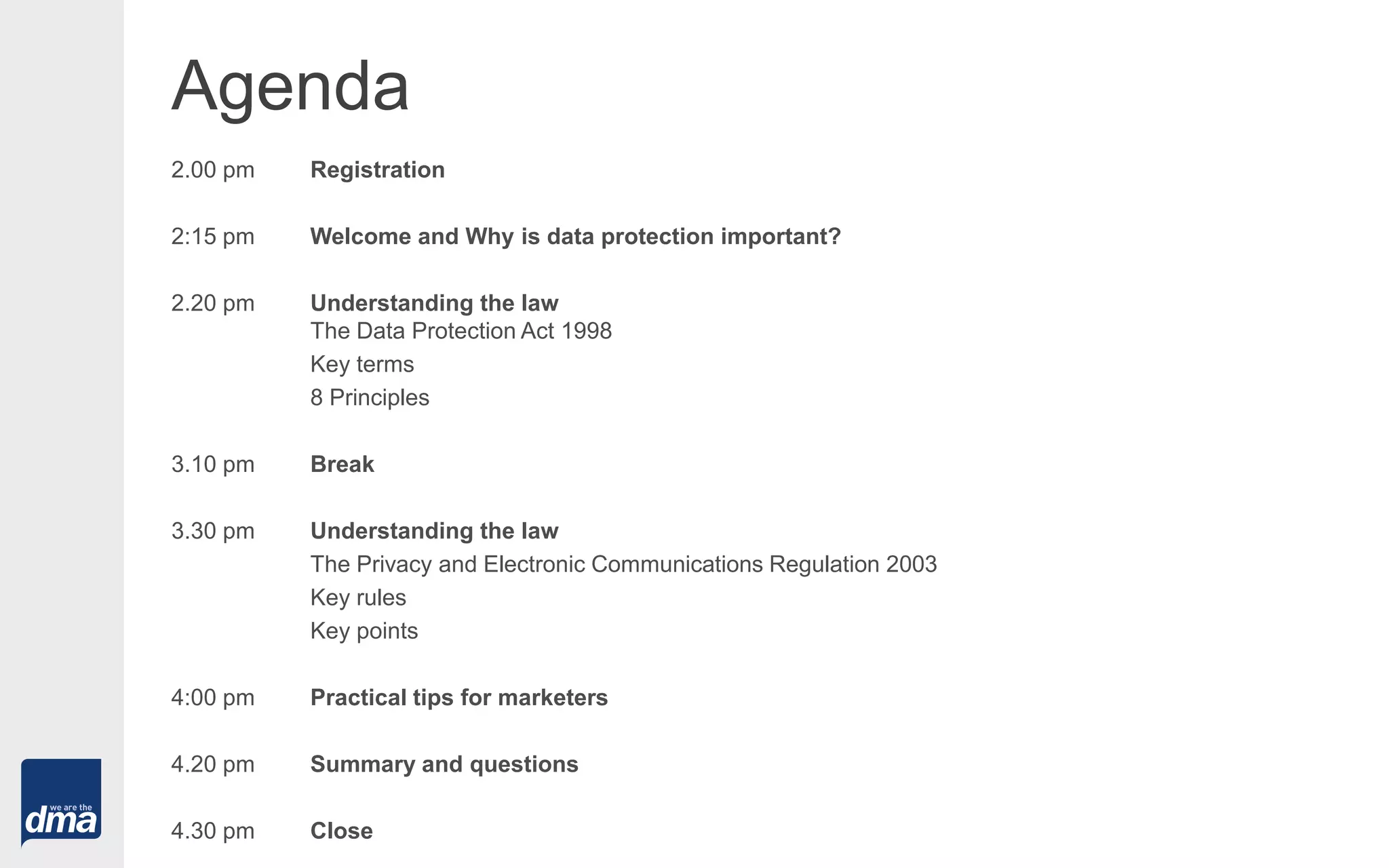
Agenda
2.00 pm Registration
2:15 pm Welcome and Why is data protection important?
2.20 pm Understanding the law
The Data Protection Act 1998
Key terms
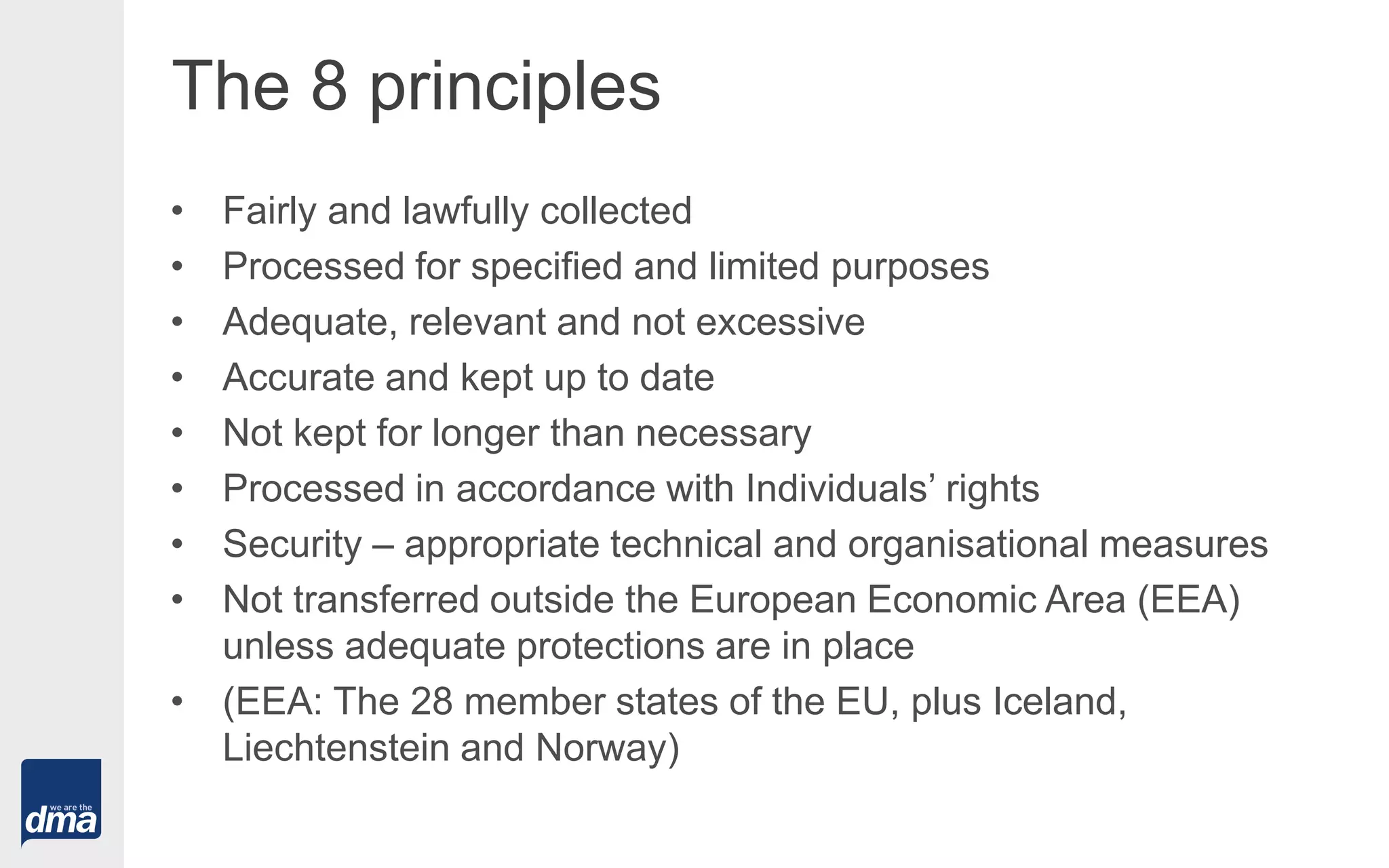
8 Principles
3.10 pm Break
3.30 pm Understanding the law
The Privacy and Electronic Communications Regulation 2003
Key rules
Key points
4:00 pm Practical tips for marketers
4.20 pm Summary and questions
4.30 pm Close
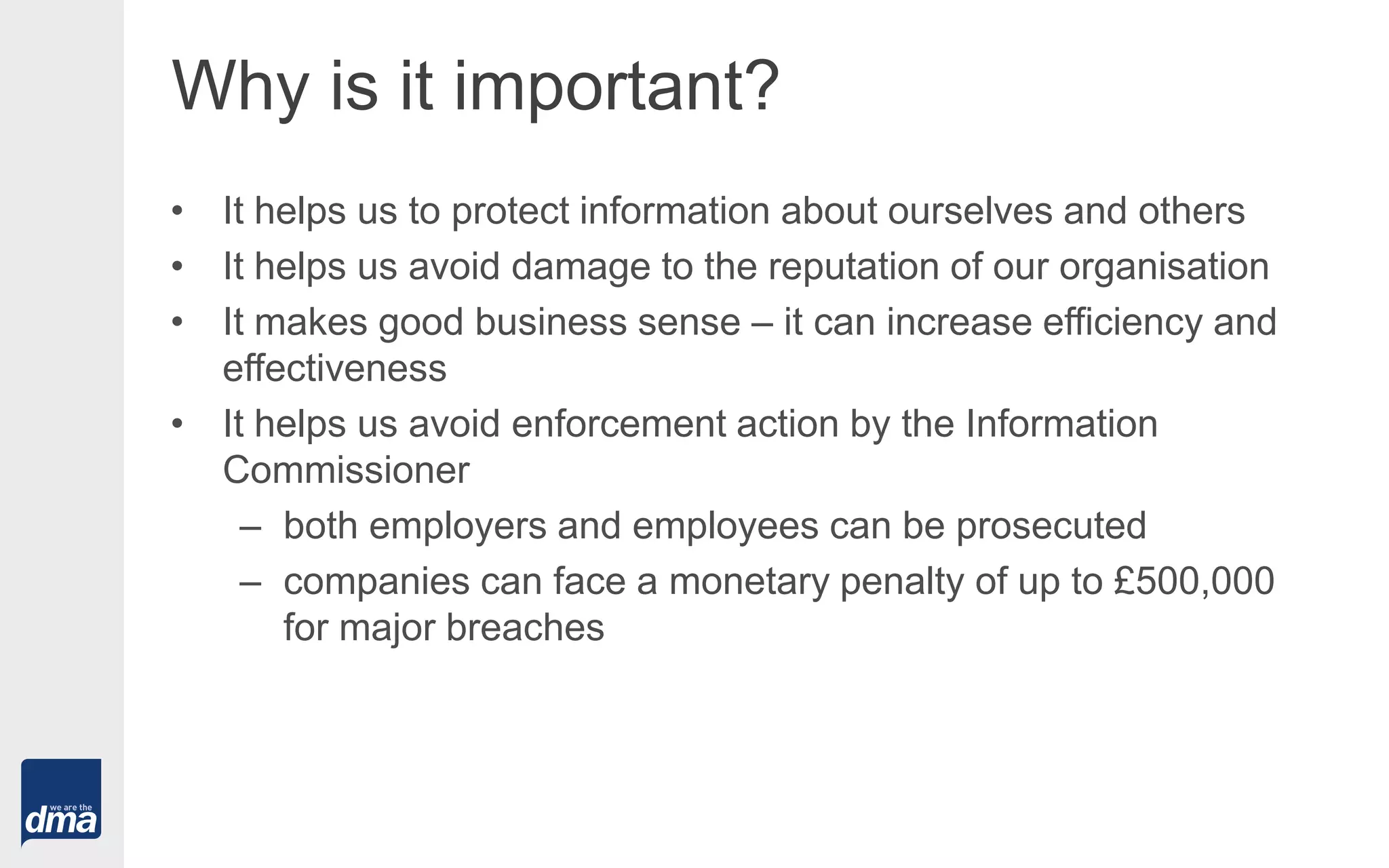
Why is it important?
• It helps us to protect information about ourselves and others
• It helps us avoid damage to the reputation of our organisation
• It makes good business sense – it can increase efficiency and
effectiveness
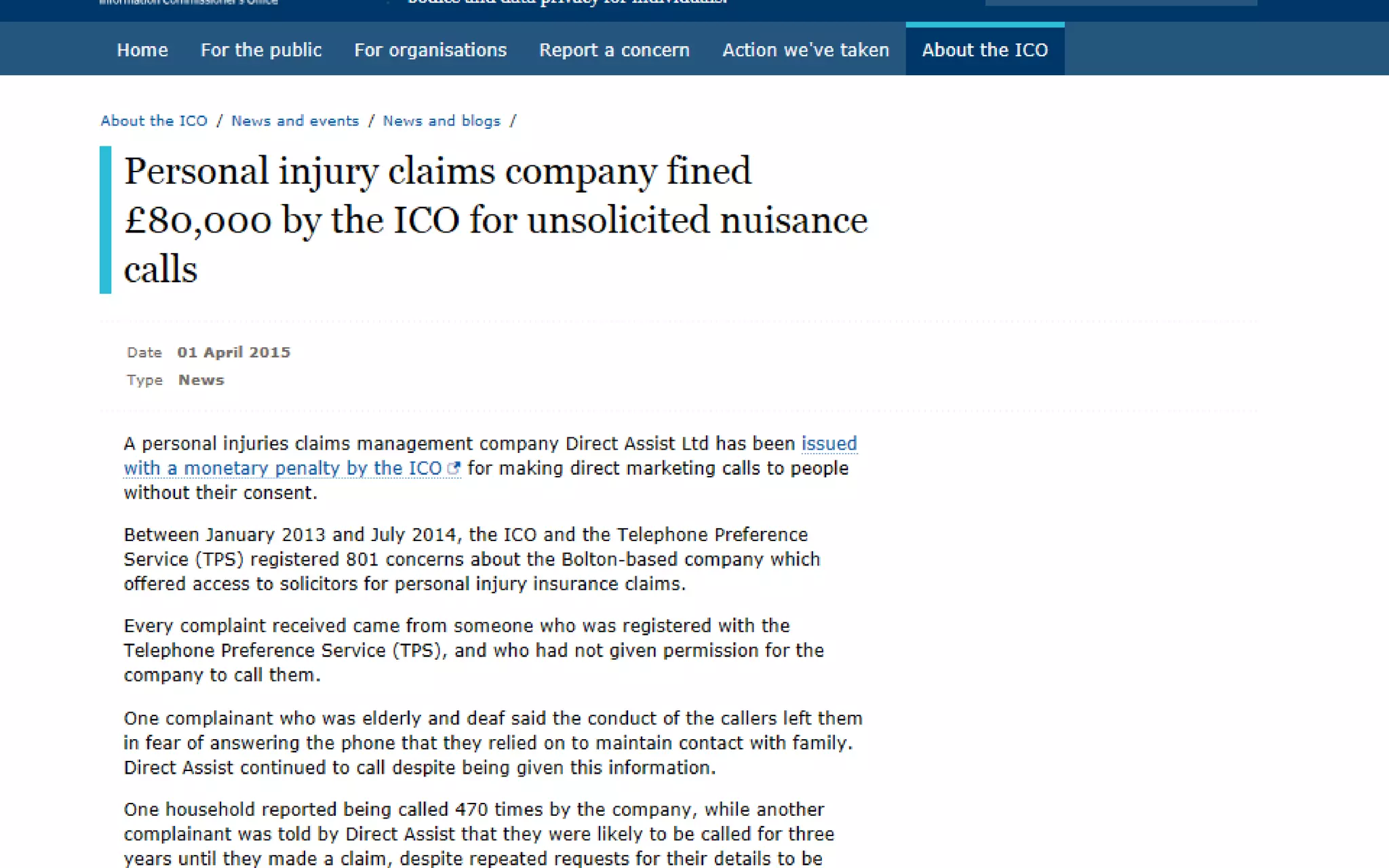
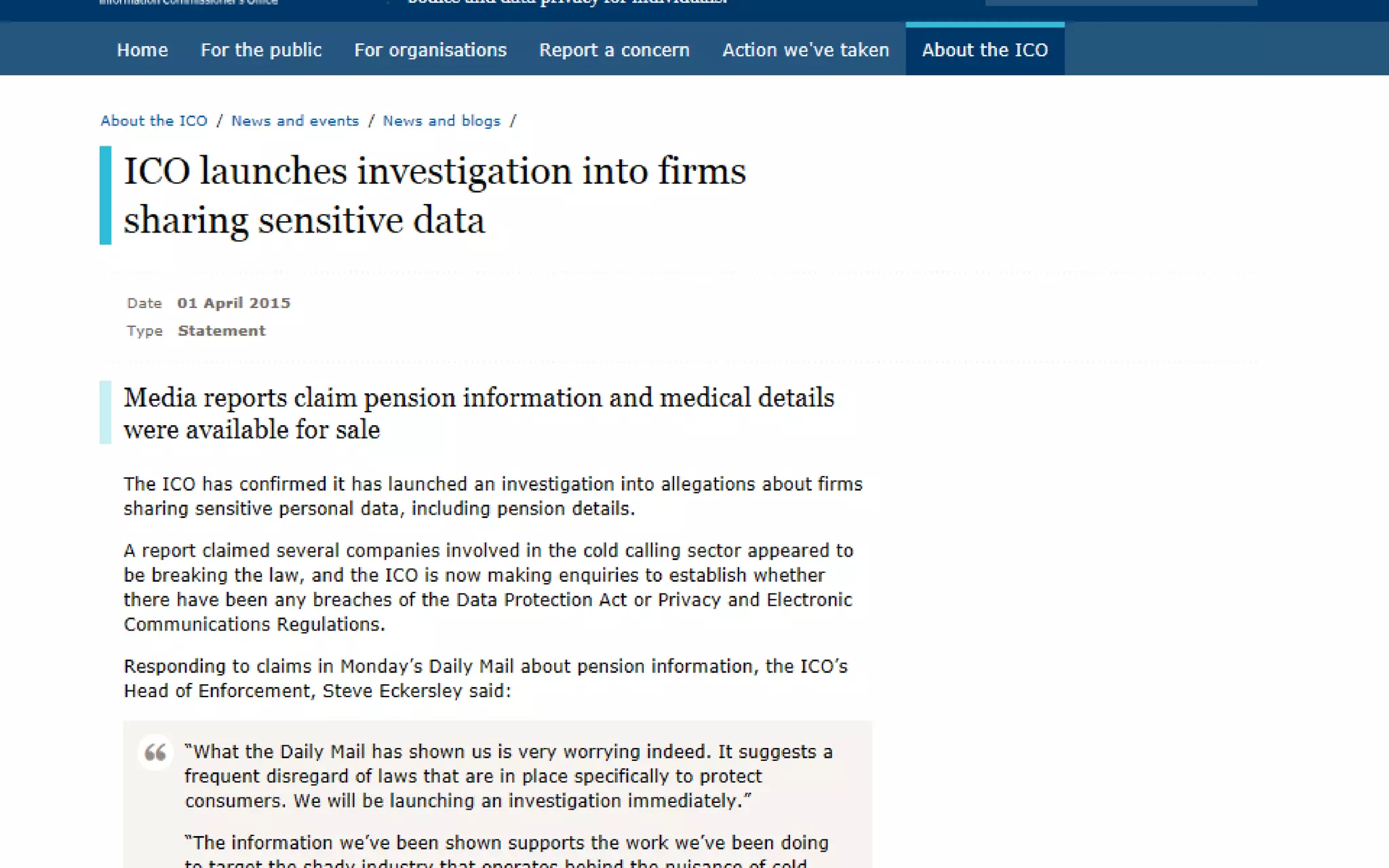
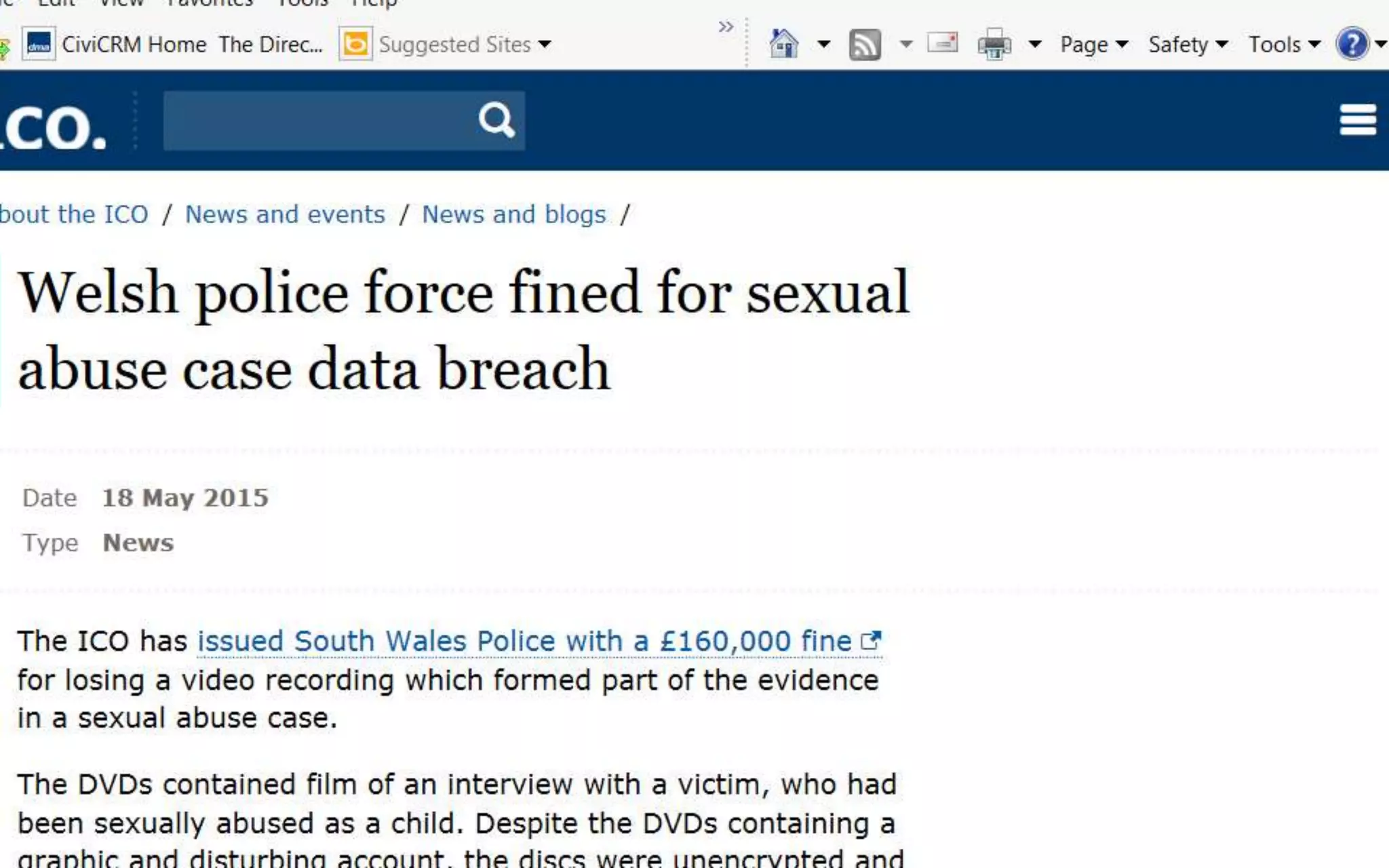
• It helps us avoid enforcement action by the Information
Commissioner
– both employers and employees can be prosecuted
– companies can face a monetary penalty of up to £500,000
for major breaches
Understanding the law - DPA
• Data Protection Act 1998 (DPA)
– Came into force 1 March 2000
– Replaced 1984 Act
– Covers doing anything with data
– Applies electronic records and some manual records
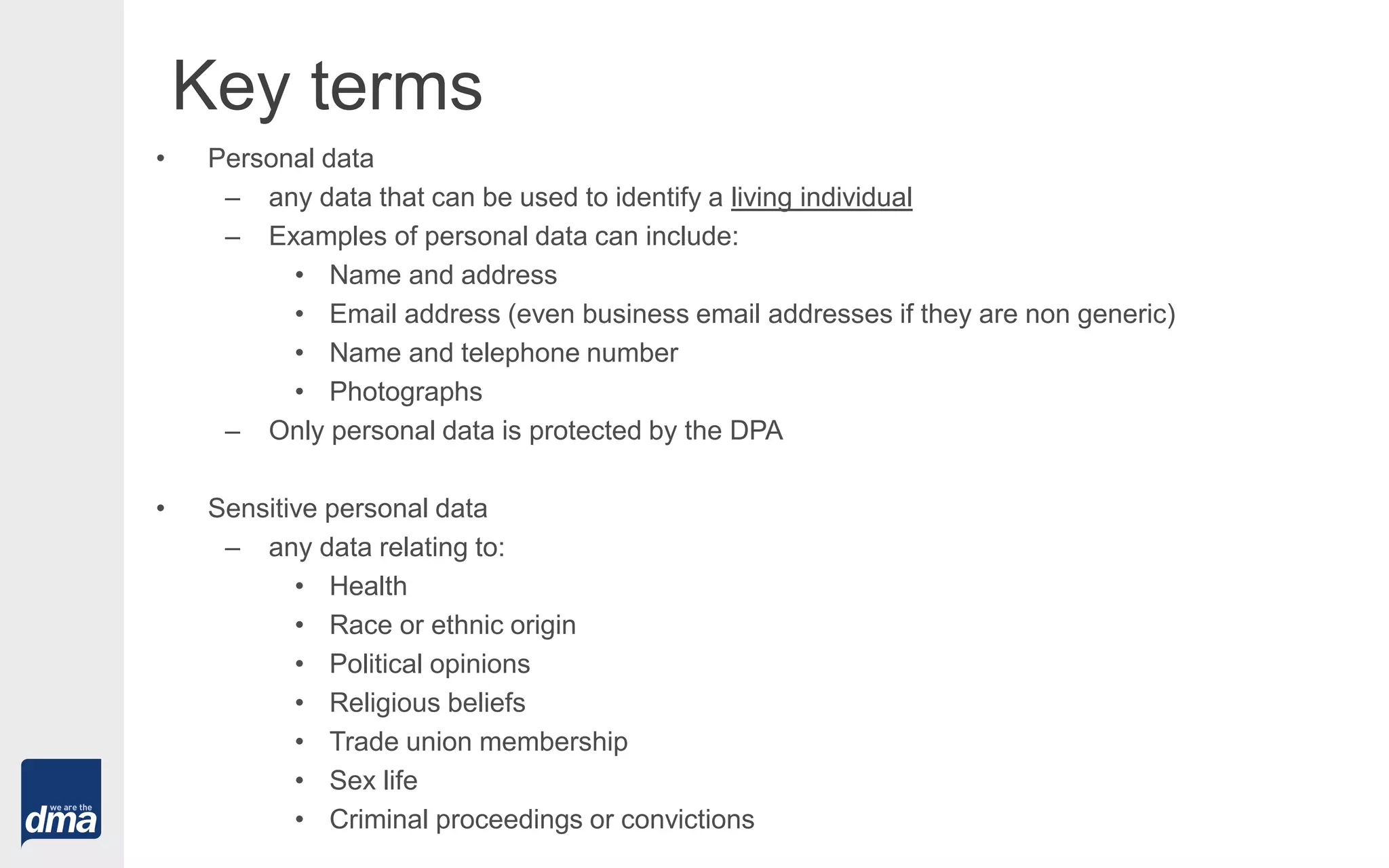
Key terms
• Personal data
– any data that can be used to identify a living individual
– Examples of personal data can include:
• Name and address
• Email address (even business email addresses if they are non generic)
• Name and telephone number
• Photographs
– Only personal data is protected by the DPA
• Sensitive personal data
– any data relating to:
• Health
• Race or ethnic origin
• Political opinions
• Religious beliefs
• Trade union membership
• Sex life
• Criminal proceedings or convictions
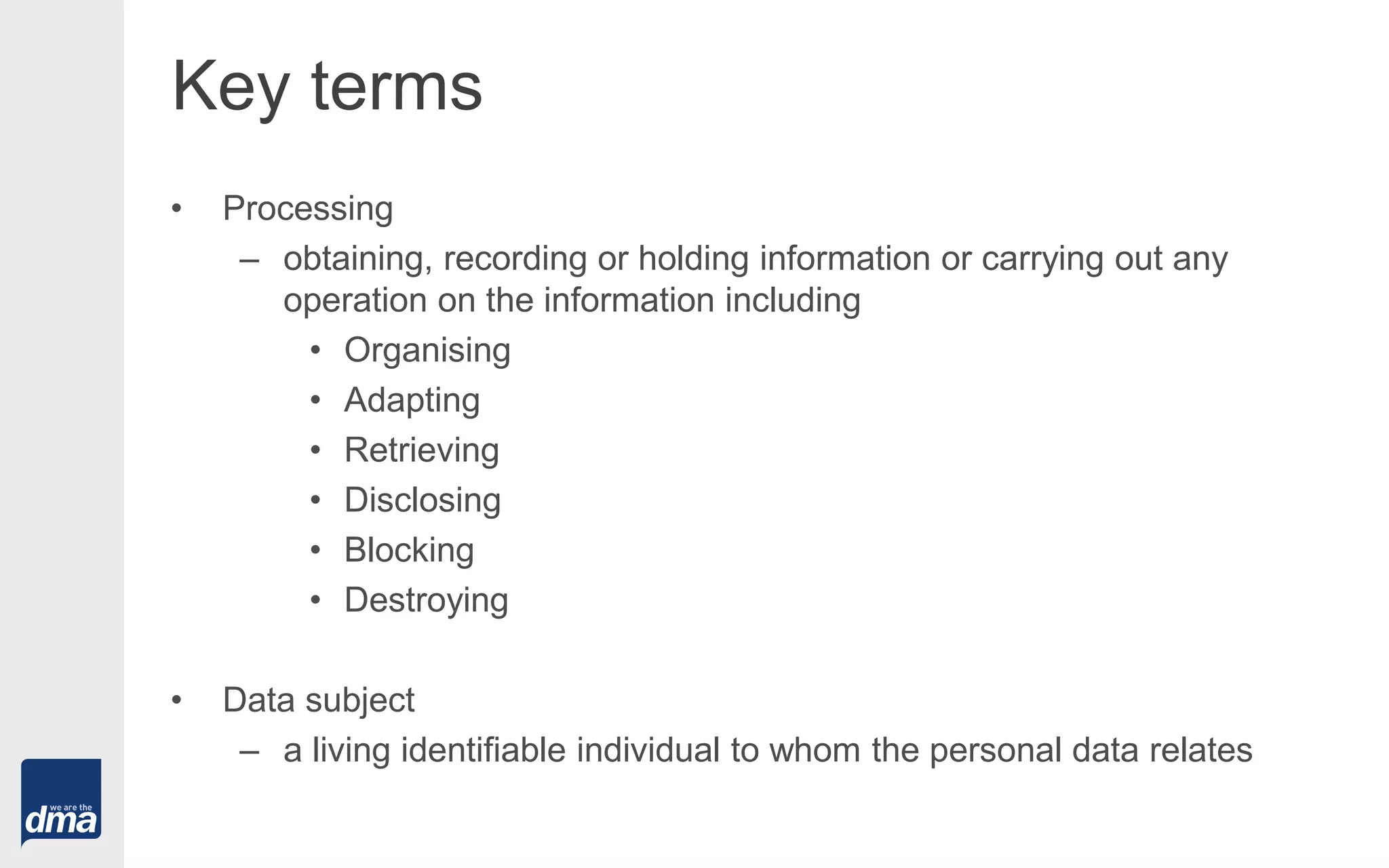
Key terms
• Processing
– obtaining, recording or holding information or carrying out any
operation on the information including
• Organising
• Adapting
• Retrieving
• Disclosing
• Blocking
• Destroying
• Data subject
– a living identifiable individual to whom the personal data relates
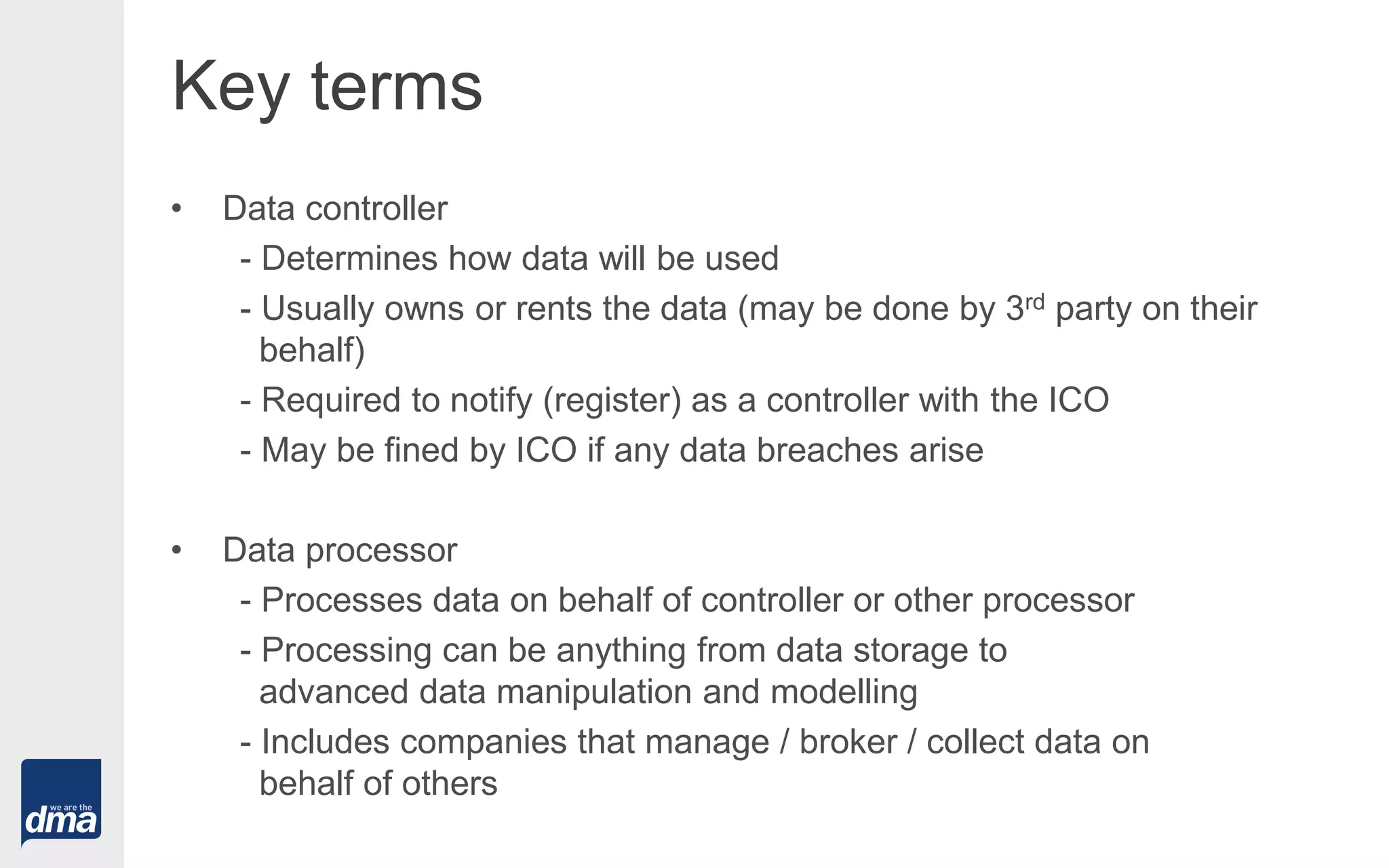
Key terms
• Data controller
- Determines how data will be used
- Usually owns or rents the data (may be done by 3rd party on their
behalf)
- Required to notify (register) as a controller with the ICO
- May be fined by ICO if any data breaches arise
• Data processor
- Processes data on behalf of controller or other processor
- Processing can be anything from data storage to
advanced data manipulation and modelling
- Includes companies that manage / broker / collect data on
behalf of others
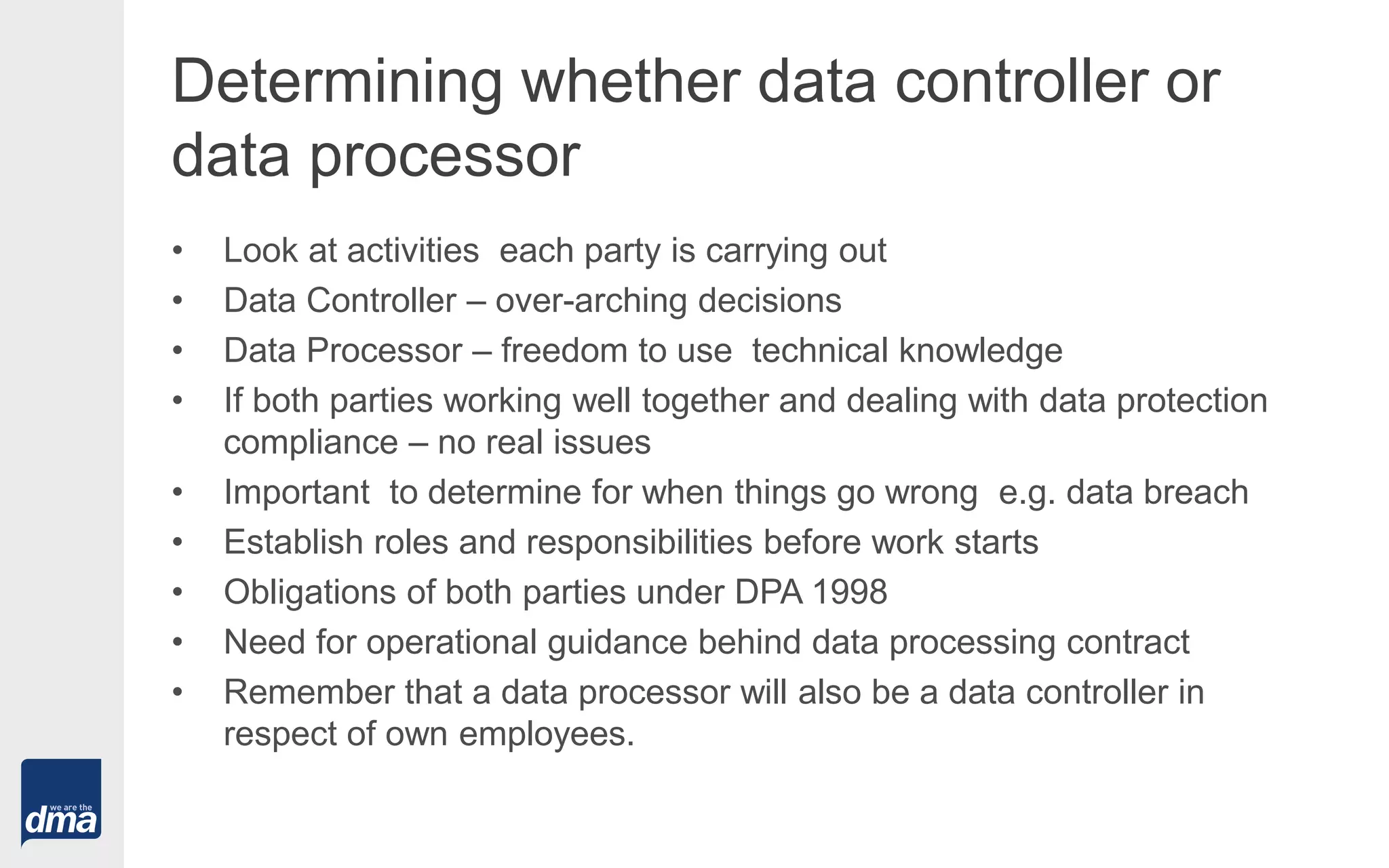
Determining whether data controller or
data processor
• Look at activities each party is carrying out
• Data Controller – over-arching decisions
• Data Processor – freedom to use technical knowledge
• If both parties working well together and dealing with data protection
compliance – no real issues
• Important to determine for when things go wrong e.g. data breach
• Establish roles and responsibilities before work starts
• Obligations of both parties under DPA 1998
• Need for operational guidance behind data processing contract
• Remember that a data processor will also be a data controller in
respect of own employees.
The 8 principles
• Fairly and lawfully collected
• Processed for specified and limited purposes
• Adequate, relevant and not excessive
• Accurate and kept up to date
• Not kept for longer than necessary
• Processed in accordance with Individuals’ rights
• Security – appropriate technical and organisational measures
• Not transferred outside the European Economic Area (EEA)
unless adequate protections are in place
• (EEA: The 28 member states of the EU, plus Iceland,
Liechtenstein and Norway)
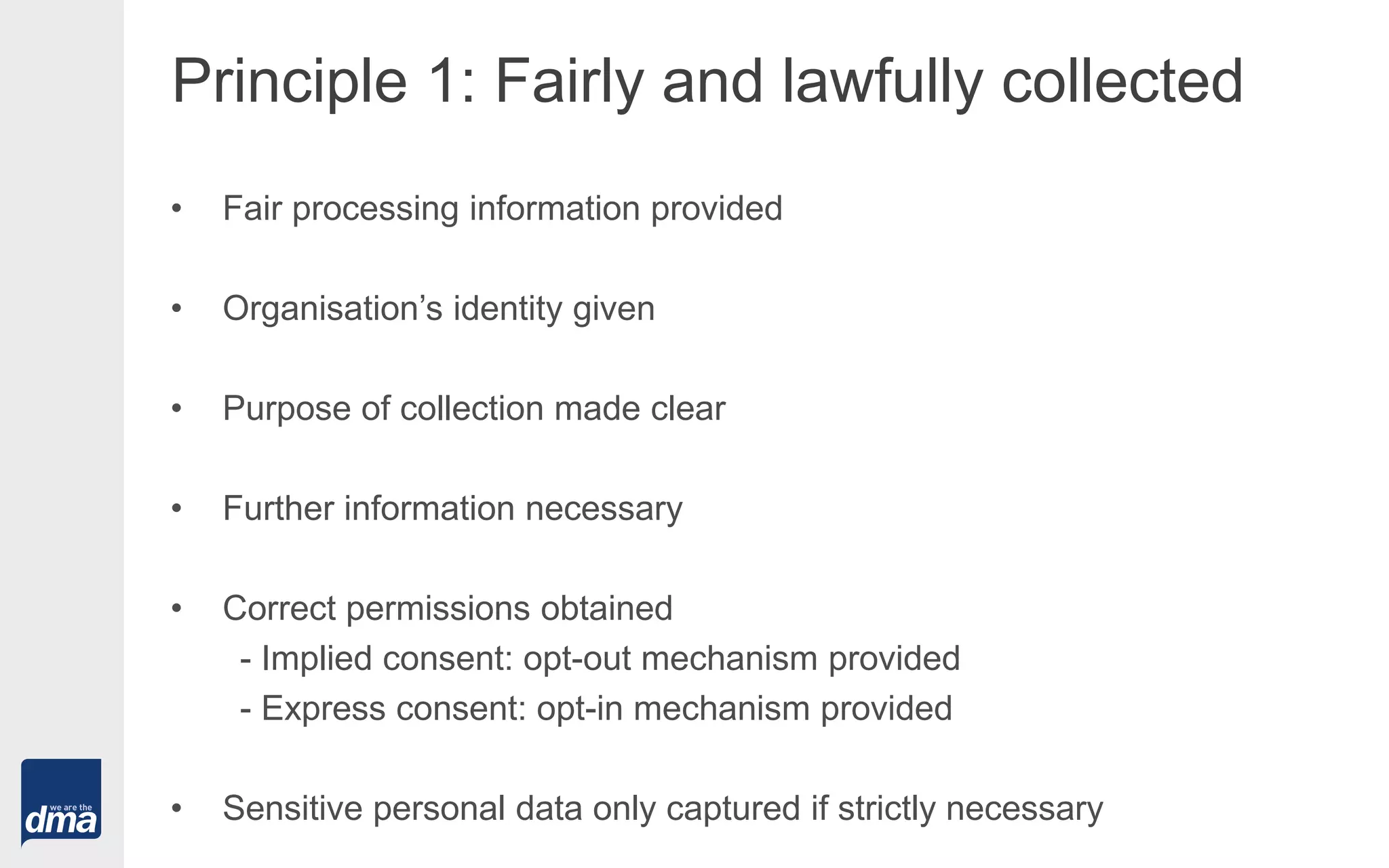
Principle 1: Fairly and lawfully collected
• Fair processing information provided
• Organisation’s identity given
• Purpose of collection made clear
• Further information necessary
• Correct permissions obtained
- Implied consent: opt-out mechanism provided
- Express consent: opt-in mechanism provided
• Sensitive personal data only captured if strictly necessary
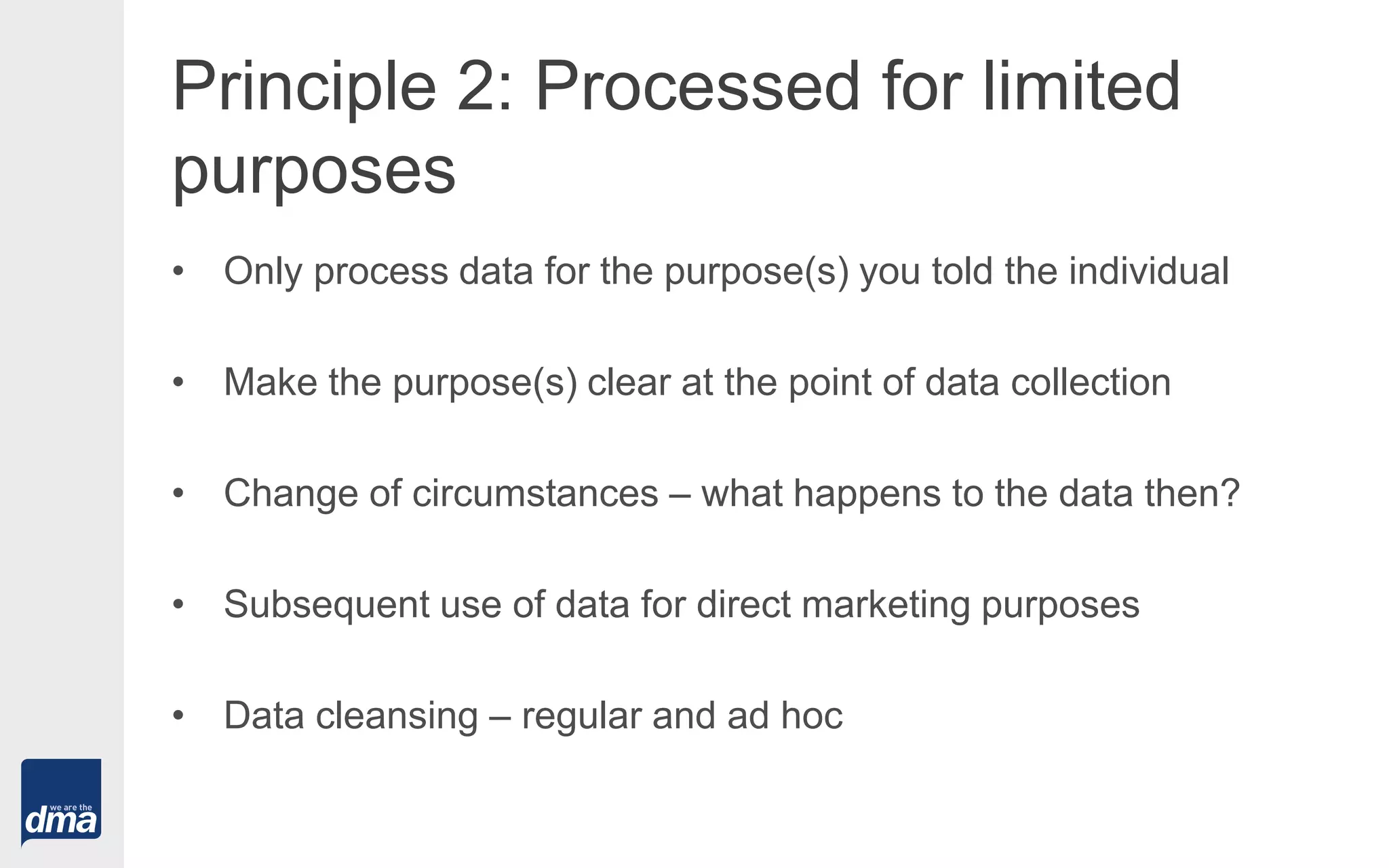
Principle 2: Processed for limited
purposes
• Only process data for the purpose(s) you told the individual
• Make the purpose(s) clear at the point of data collection
• Change of circumstances – what happens to the data then?
• Subsequent use of data for direct marketing purposes
• Data cleansing – regular and ad hoc
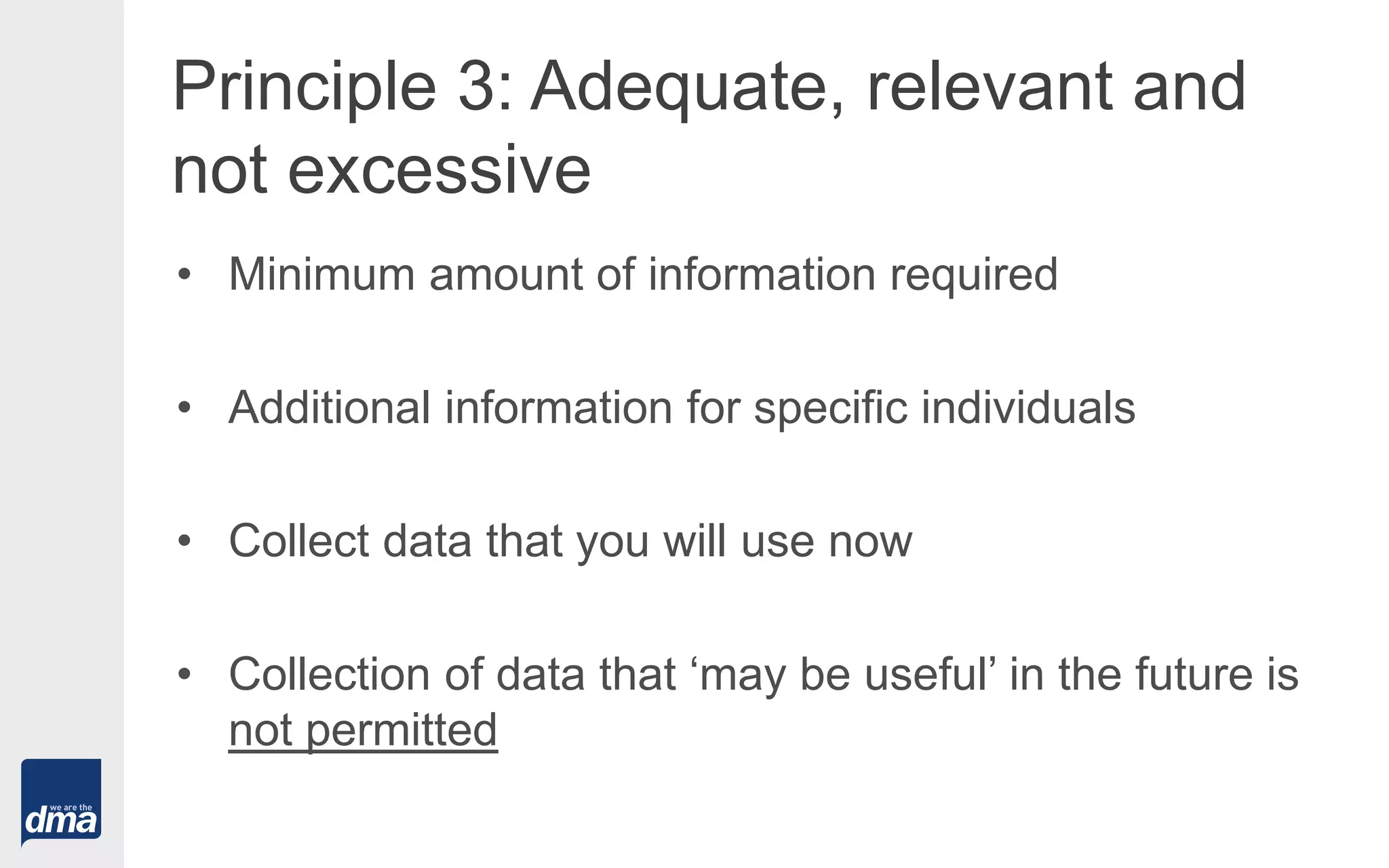
Principle 3: Adequate, relevant and
not excessive
• Minimum amount of information required
• Additional information for specific individuals
• Collect data that you will use now
• Collection of data that ‘may be useful’ in the future is
not permitted
Principle 4: Accurate and kept up to
date
• Take reasonable steps to ensure accuracy (but what
is ‘reasonable’?)
• Ensure data is not incorrect or misleading
• Undertake regular data cleansing
• Clean data against the relevant preference service
files and other appropriate cleansing files
Principle 5: Not kept for longer than
necessary
• Keep for as long as purpose collected for
• Suppression lists
Principle 6: Processed in accordance
with the right of data subjects
• Subject access requests
• ‘Where did you get my data from?’
• Right to prevent direct marketing
• Customer service / legally required communications –
no opt-out provision required
• Right to have inaccurate data corrected
Principle 7: Technological and
organisational security
• Data security must be appropriate – take account of:
– Current state of technological development
– Cost of implementing security measures
– Potential harm that could result from a data breach
– Nature of data to be protected – non/sensitive?
• Need for risk assessment and risk management techniques
• Record your findings and assessments
Principle 7: Technological and
organisational security
• Ensure adequate organisational data security measures
• Prevent unauthorised as well as unlawful processing or disclosure of data
• Security measures by data controller and data processor
• Data processing and transfer agreements in place
• Staff training
• Data access on a ‘need to know’ basis – individual log-ins only
• Secure disposal of data – internally/externally - keep records
Principle 8: Processed within the EEA
unless adequate protection in place
• Data can be freely transferred within the EEA (providing
data transfer agreements are in place)
• Do not transfer data unless the country (destination and
countries data is routed via) have an adequate level of
data protection
• Need to inform individuals before transferring their data
outside the EEA but do not need their consent
Understanding the law - PECR
• Privacy and Electronic Communications Regulations 2003
(PECR)
– Came into force 11 December 2003
– Covers electronic communications – email, telephone,
SMS
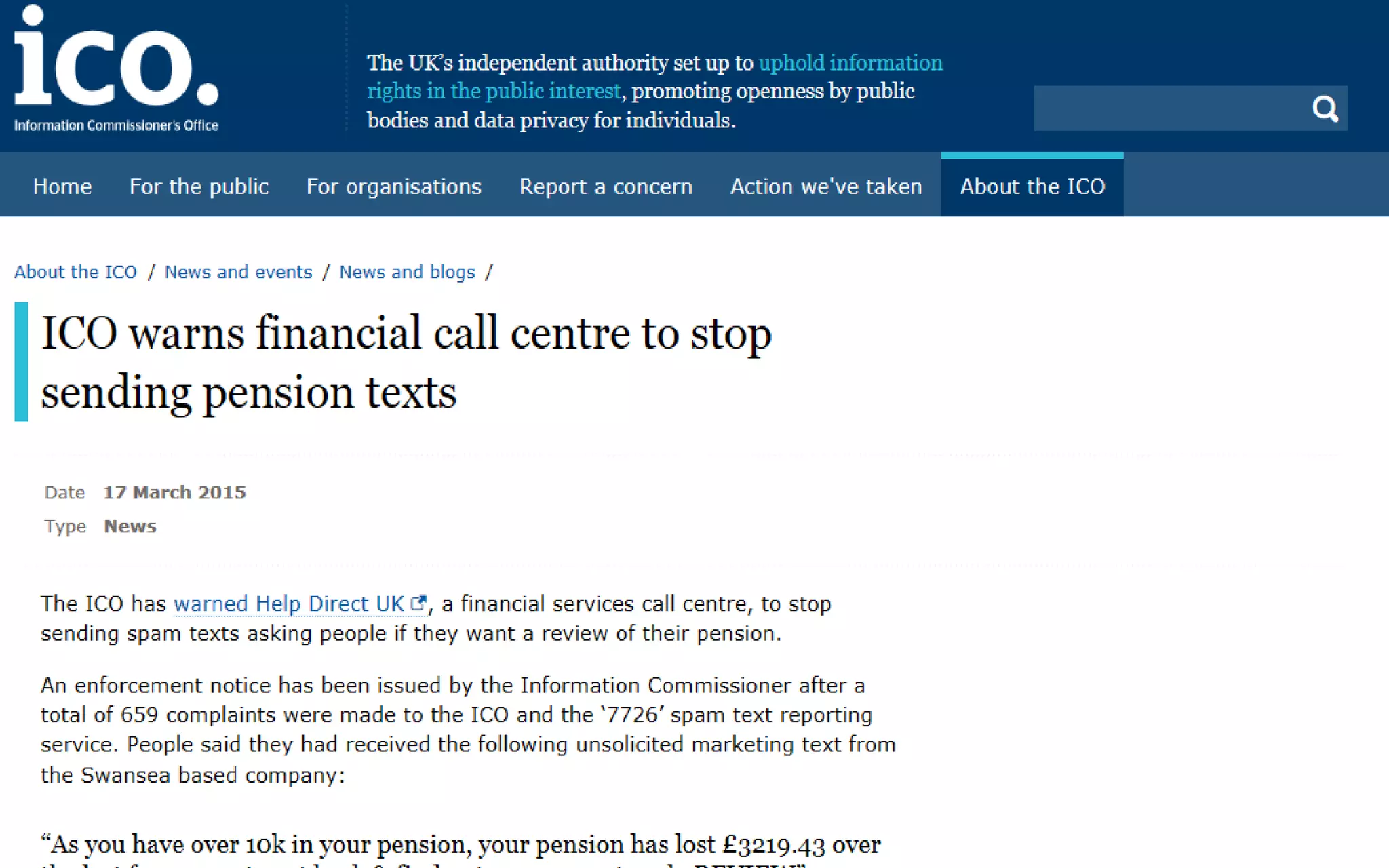
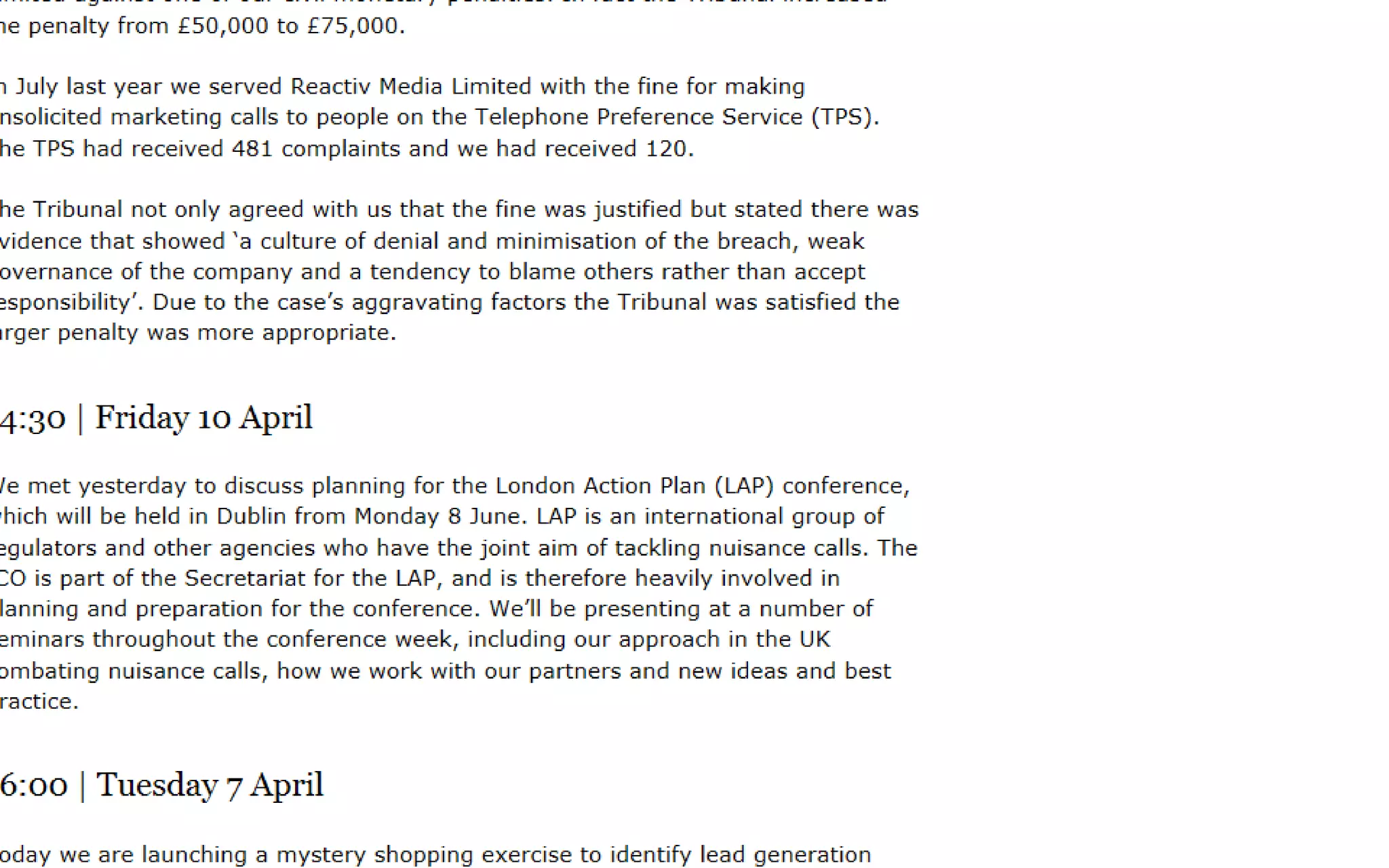
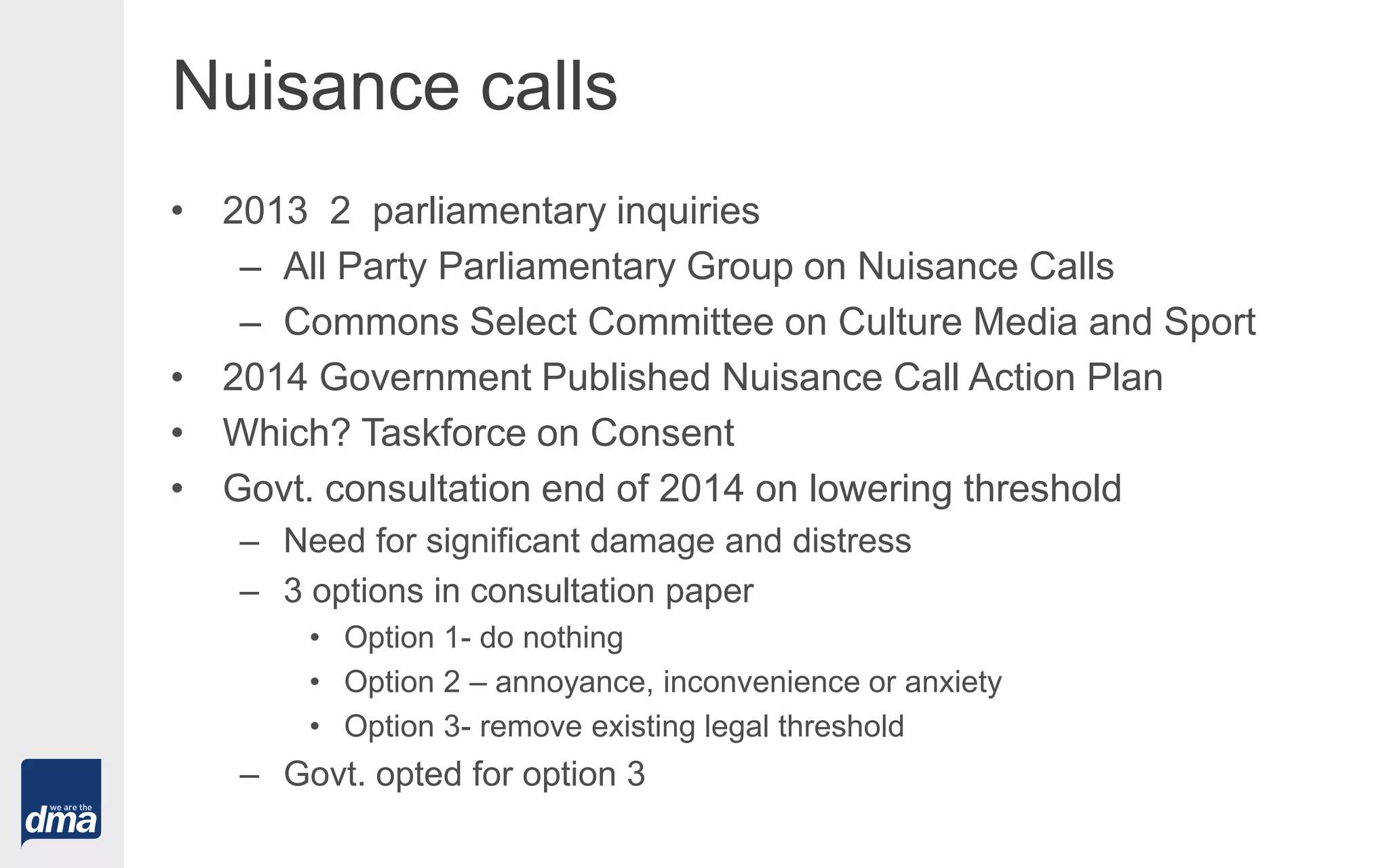
Nuisance calls
• 2013 2 parliamentary inquiries
– All Party Parliamentary Group on Nuisance Calls
– Commons Select Committee on Culture Media and Sport
• 2014 Government Published Nuisance Call Action Plan
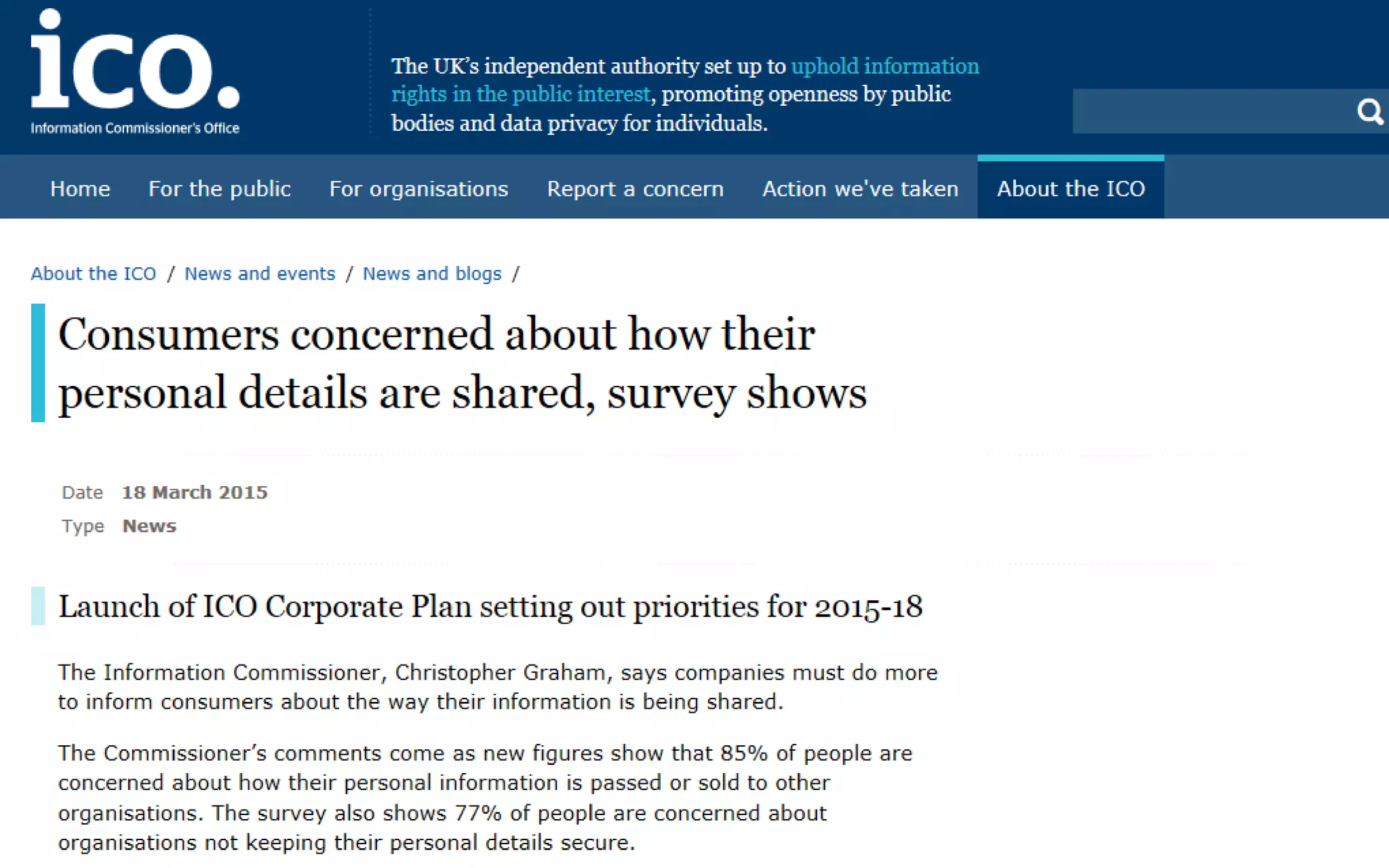
• Which? Taskforce on Consent
• Govt. consultation end of 2014 on lowering threshold
– Need for significant damage and distress
– 3 options in consultation paper
• Option 1- do nothing
• Option 2 – annoyance, inconvenience or anxiety
• Option 3- remove existing legal threshold
– Govt. opted for option 3
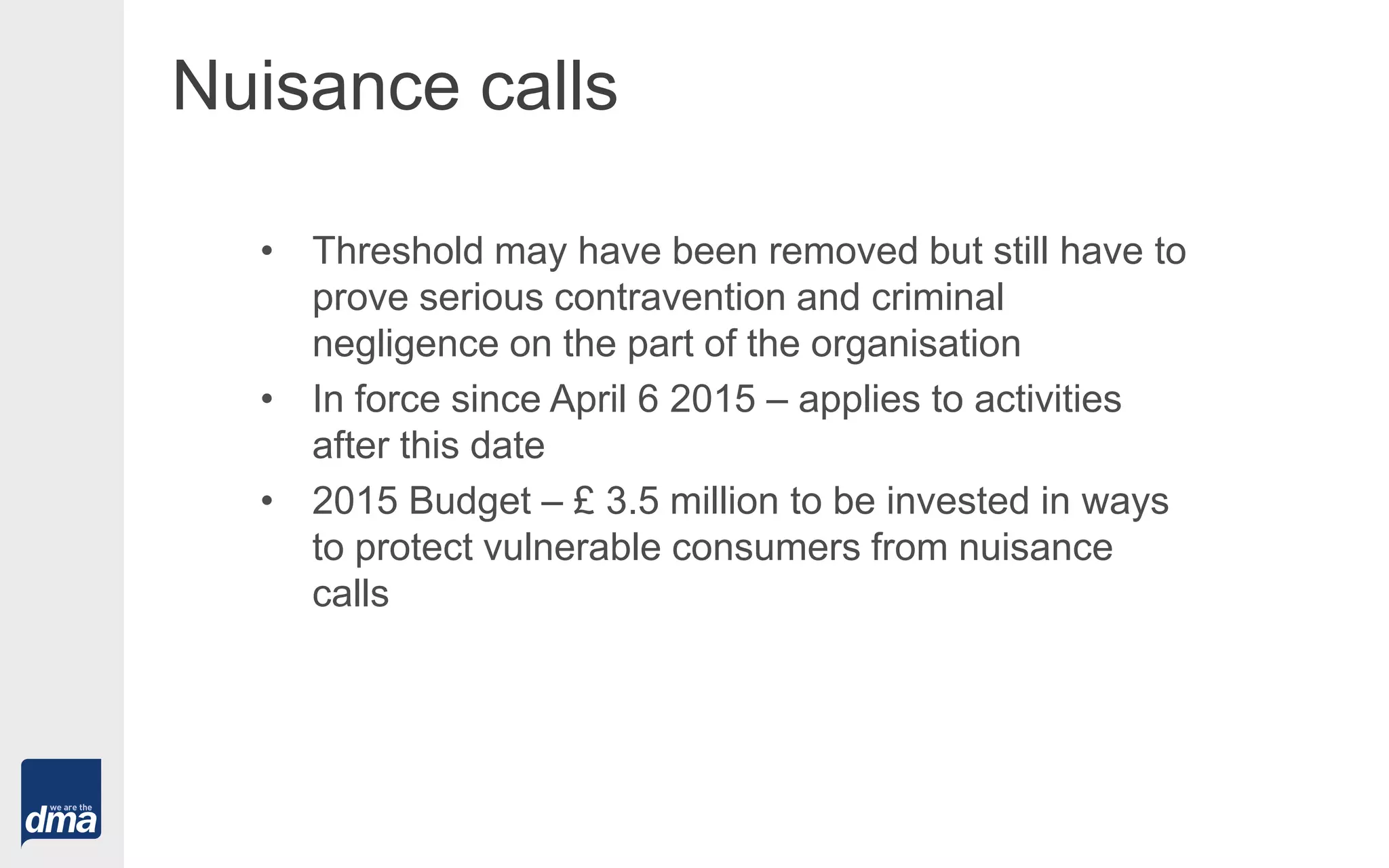
Nuisance calls
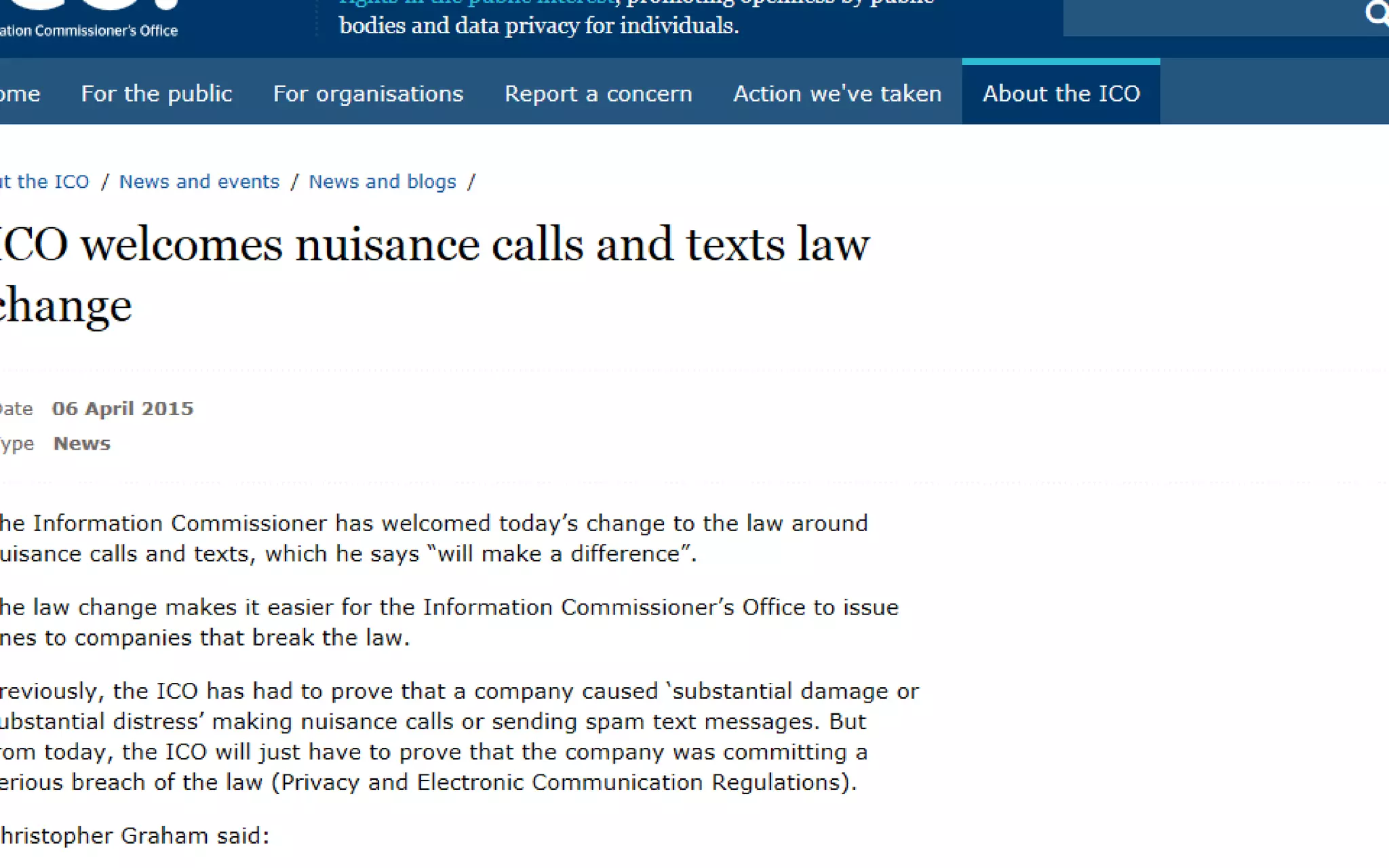
• Threshold may have been removed but still have to
prove serious contravention and criminal
negligence on the part of the organisation
• In force since April 6 2015 – applies to activities
after this date
• 2015 Budget – £ 3.5 million to be invested in ways
to protect vulnerable consumers from nuisance
calls
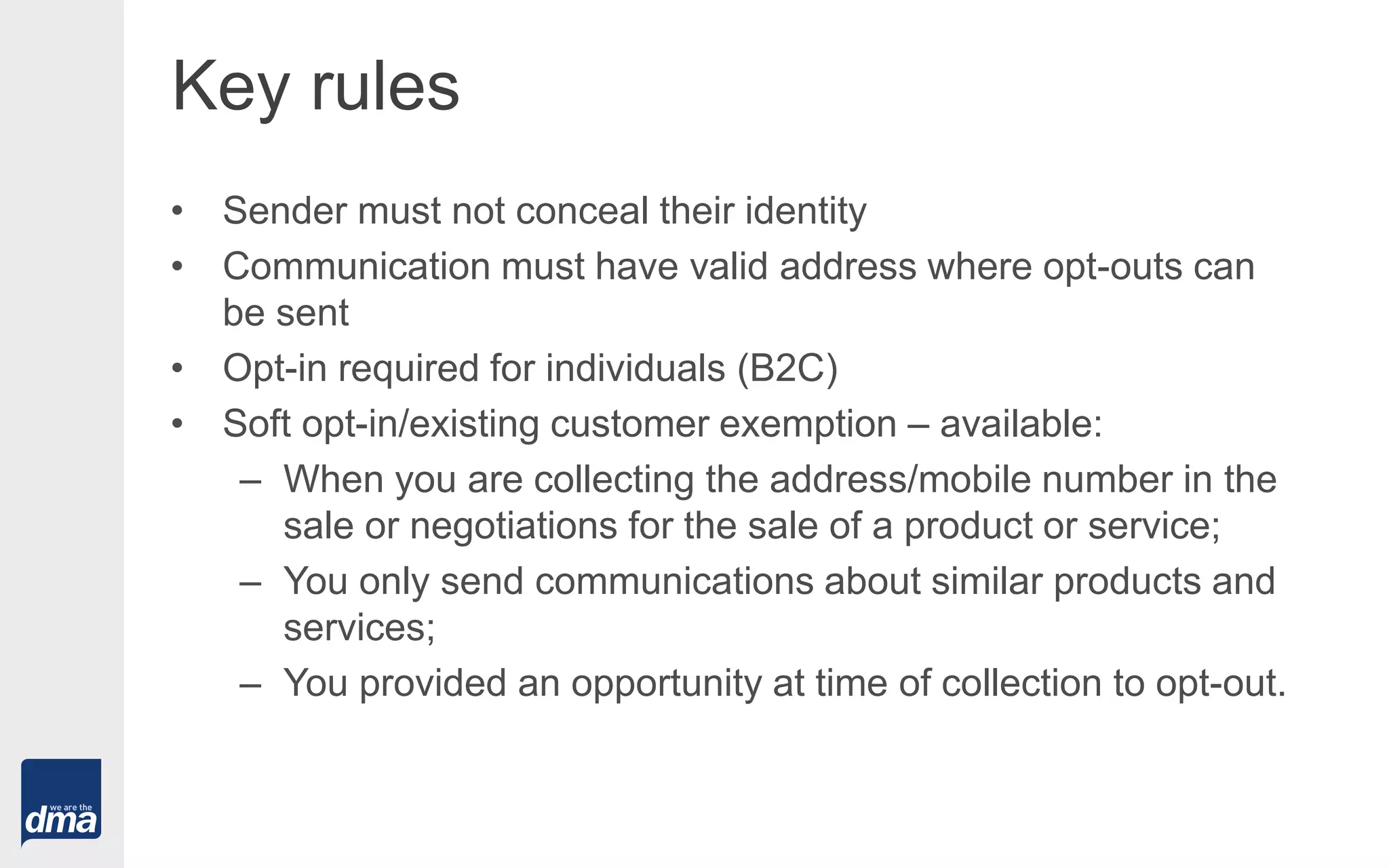
Key rules
• Sender must not conceal their identity
• Communication must have valid address where opt-outs can
be sent
• Opt-in required for individuals (B2C)
• Soft opt-in/existing customer exemption – available:
– When you are collecting the address/mobile number in the
sale or negotiations for the sale of a product or service;
– You only send communications about similar products and
services;
– You provided an opportunity at time of collection to opt-out.
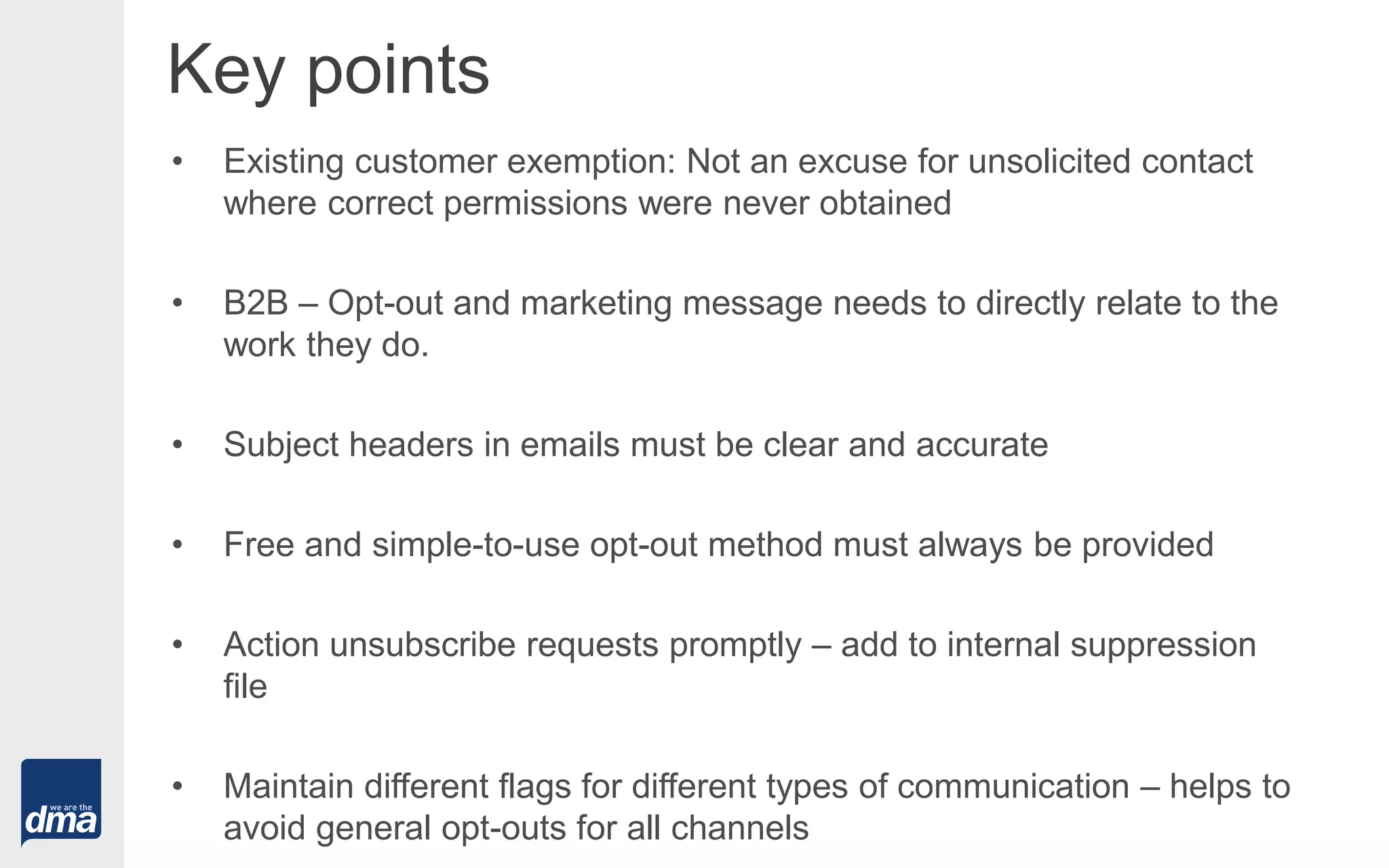
Key points
• Existing customer exemption: Not an excuse for unsolicited contact
where correct permissions were never obtained
• B2B – Opt-out and marketing message needs to directly relate to the
work they do.
• Subject headers in emails must be clear and accurate
• Free and simple-to-use opt-out method must always be provided
• Action unsubscribe requests promptly – add to internal suppression
file
• Maintain different flags for different types of communication – helps to
avoid general opt-outs for all channels
Practical tips for marketers
• Data capture forms
• Marketing permissions
• Sourcing data
• Regaining lost permission
Data capture forms
• Key information to include;
– Why the data is being requested
– What the data will be used for
– Provision of an opt-in/out for marketing
– Marketing channels to be used
– Link to privacy policy
• Key information to include in privacy policy
– How the data subject can opt-out of marketing
– If the data will be processed outside the EEA
– How long the data will be kept for
– How to make a subject access request
– How to make a complaint regarding use of data
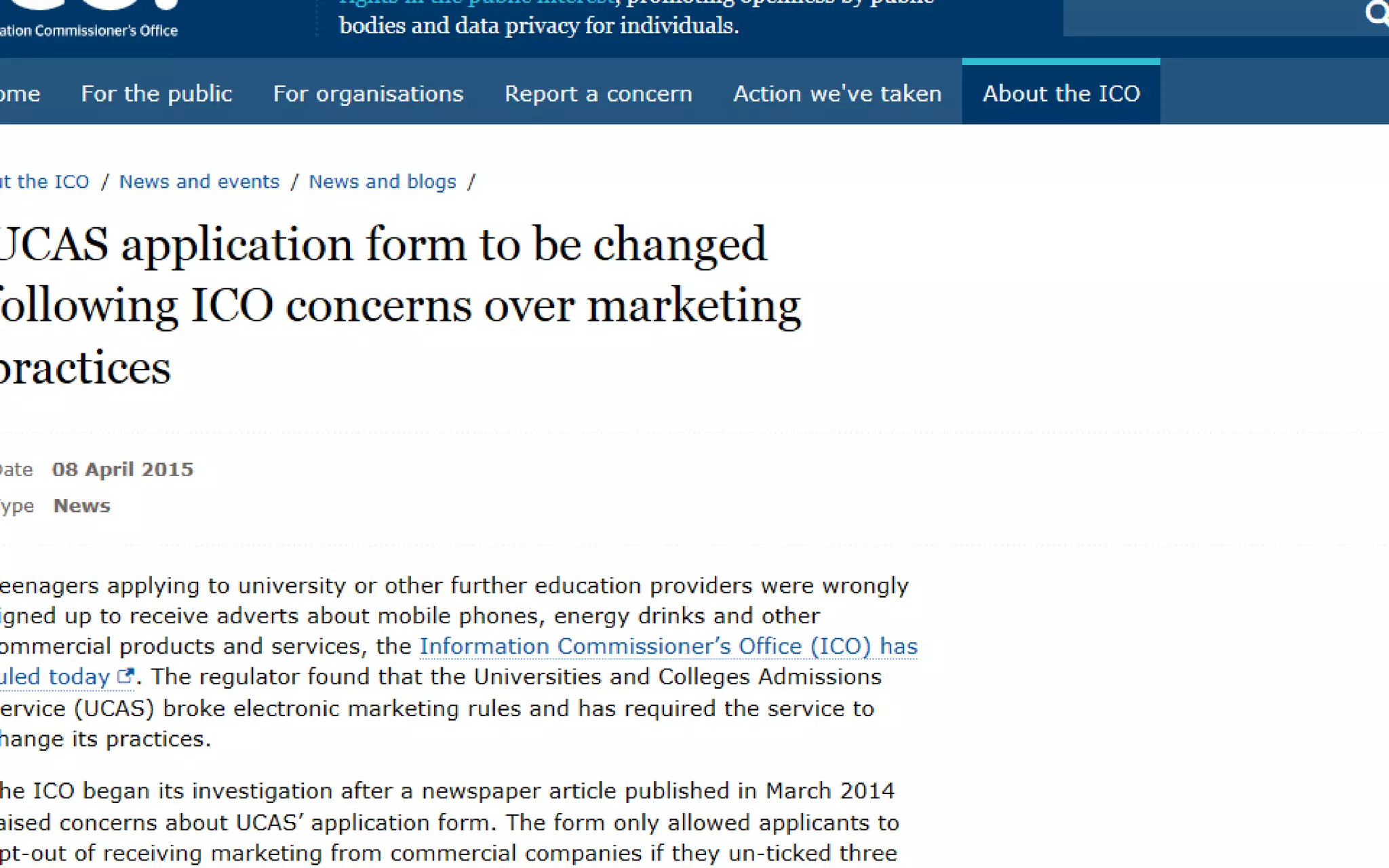
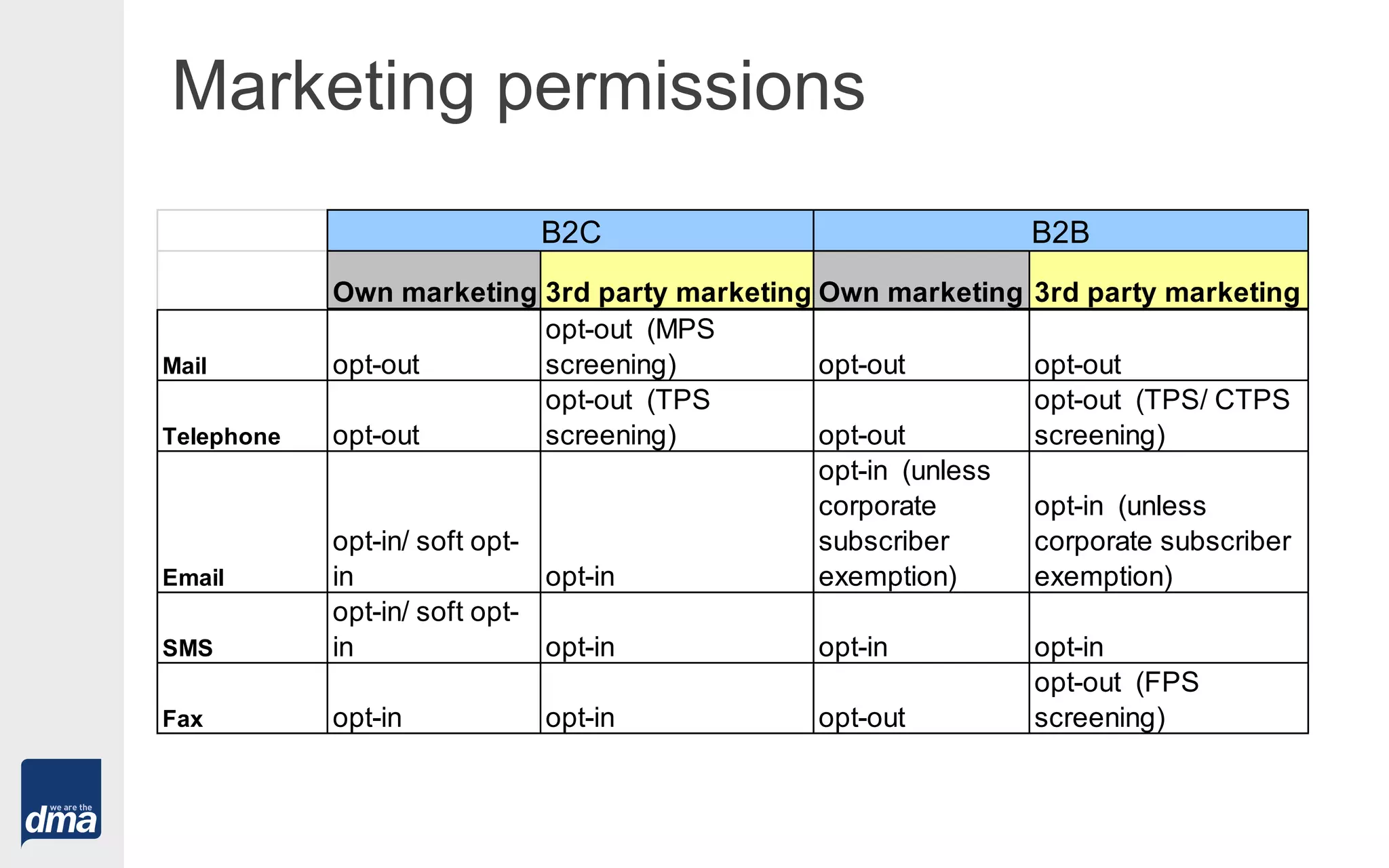
Marketing permissions
Own marketing 3rd party marketing Own marketing 3rd party marketing
Mail opt-out
opt-out (MPS
screening) opt-out opt-out
Telephone opt-out
opt-out (TPS
screening) opt-out
opt-out (TPS/ CTPS
screening)
Email
opt-in/ soft opt-
in opt-in
opt-in (unless
corporate
subscriber
exemption)
opt-in (unless
corporate subscriber
exemption)
SMS
opt-in/ soft opt-
in opt-in opt-in opt-in
Fax opt-in opt-in opt-out
opt-out (FPS
screening)
B2C B2B
Sourcing data/due diligence
• Who compiled the list? When? Has it been
amended or updated since?
• When was consent obtained?
• Who obtained consent and what was the context?
• Was it opt-in or opt-out?
• Was information provided clearly and intelligibly?
How was it provided?
• Did it list organisations by name, by description, or
any third party?
Regaining lost permissions
• Why was permission lost:
– Poor customer service?
– Poor communications timing?
– Inappropriate offers?
– In-house technical issues – permissions not recorded on
CRM system
• Revalidation exercise – obtaining up-to-date data
• Can very occasionally include request regarding marketing
update in a service message providing it is a minor part of the
message
• If you have only lost permission for certain channels, contact
via another channel to update permissions
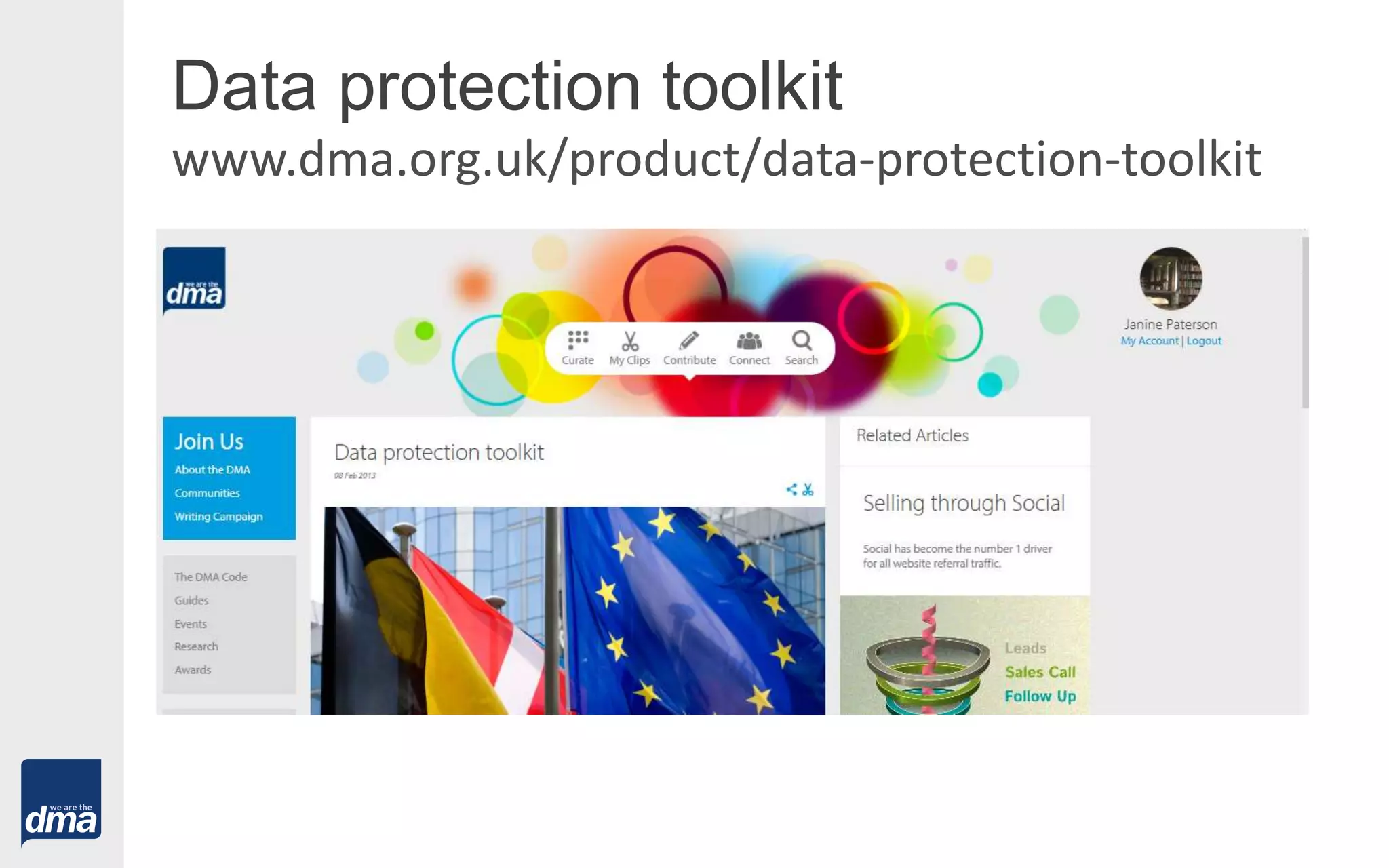
Data protection toolkit
www.dma.org.uk/product/data-protection-toolkit
Summary and questions
Contacts
James Milligan
DMA Solicitor
T - 020 7291 3347
james.milligan@dma.org.uk
Legal Advice Email Box
legaladvice@dma.org.uk

An introduction to data protection - Manchester - 24/06/15

  • 1.
    Wednesday 24 June2015, Centurion House, Manchester James Milligan, Solicitor, DMA @DMA_UK #dmadata An introduction to data protection
  • 2.
    Agenda 2.00 pm Registration 2:15pm Welcome and Why is data protection important? 2.20 pm Understanding the law The Data Protection Act 1998 Key terms 8 Principles 3.10 pm Break 3.30 pm Understanding the law The Privacy and Electronic Communications Regulation 2003 Key rules Key points 4:00 pm Practical tips for marketers 4.20 pm Summary and questions 4.30 pm Close
  • 3.
    Why is itimportant? • It helps us to protect information about ourselves and others • It helps us avoid damage to the reputation of our organisation • It makes good business sense – it can increase efficiency and effectiveness • It helps us avoid enforcement action by the Information Commissioner – both employers and employees can be prosecuted – companies can face a monetary penalty of up to £500,000 for major breaches
  • 12.
    Understanding the law- DPA • Data Protection Act 1998 (DPA) – Came into force 1 March 2000 – Replaced 1984 Act – Covers doing anything with data – Applies electronic records and some manual records
  • 13.
    Key terms • Personaldata – any data that can be used to identify a living individual – Examples of personal data can include: • Name and address • Email address (even business email addresses if they are non generic) • Name and telephone number • Photographs – Only personal data is protected by the DPA • Sensitive personal data – any data relating to: • Health • Race or ethnic origin • Political opinions • Religious beliefs • Trade union membership • Sex life • Criminal proceedings or convictions
  • 14.
    Key terms • Processing –obtaining, recording or holding information or carrying out any operation on the information including • Organising • Adapting • Retrieving • Disclosing • Blocking • Destroying • Data subject – a living identifiable individual to whom the personal data relates
  • 15.
    Key terms • Datacontroller - Determines how data will be used - Usually owns or rents the data (may be done by 3rd party on their behalf) - Required to notify (register) as a controller with the ICO - May be fined by ICO if any data breaches arise • Data processor - Processes data on behalf of controller or other processor - Processing can be anything from data storage to advanced data manipulation and modelling - Includes companies that manage / broker / collect data on behalf of others
  • 16.
    Determining whether datacontroller or data processor • Look at activities each party is carrying out • Data Controller – over-arching decisions • Data Processor – freedom to use technical knowledge • If both parties working well together and dealing with data protection compliance – no real issues • Important to determine for when things go wrong e.g. data breach • Establish roles and responsibilities before work starts • Obligations of both parties under DPA 1998 • Need for operational guidance behind data processing contract • Remember that a data processor will also be a data controller in respect of own employees.
  • 17.
    The 8 principles •Fairly and lawfully collected • Processed for specified and limited purposes • Adequate, relevant and not excessive • Accurate and kept up to date • Not kept for longer than necessary • Processed in accordance with Individuals’ rights • Security – appropriate technical and organisational measures • Not transferred outside the European Economic Area (EEA) unless adequate protections are in place • (EEA: The 28 member states of the EU, plus Iceland, Liechtenstein and Norway)
  • 18.
    Principle 1: Fairlyand lawfully collected • Fair processing information provided • Organisation’s identity given • Purpose of collection made clear • Further information necessary • Correct permissions obtained - Implied consent: opt-out mechanism provided - Express consent: opt-in mechanism provided • Sensitive personal data only captured if strictly necessary
  • 19.
    Principle 2: Processedfor limited purposes • Only process data for the purpose(s) you told the individual • Make the purpose(s) clear at the point of data collection • Change of circumstances – what happens to the data then? • Subsequent use of data for direct marketing purposes • Data cleansing – regular and ad hoc
  • 20.
    Principle 3: Adequate,relevant and not excessive • Minimum amount of information required • Additional information for specific individuals • Collect data that you will use now • Collection of data that ‘may be useful’ in the future is not permitted
  • 21.
    Principle 4: Accurateand kept up to date • Take reasonable steps to ensure accuracy (but what is ‘reasonable’?) • Ensure data is not incorrect or misleading • Undertake regular data cleansing • Clean data against the relevant preference service files and other appropriate cleansing files
  • 22.
    Principle 5: Notkept for longer than necessary • Keep for as long as purpose collected for • Suppression lists
  • 23.
    Principle 6: Processedin accordance with the right of data subjects • Subject access requests • ‘Where did you get my data from?’ • Right to prevent direct marketing • Customer service / legally required communications – no opt-out provision required • Right to have inaccurate data corrected
  • 24.
    Principle 7: Technologicaland organisational security • Data security must be appropriate – take account of: – Current state of technological development – Cost of implementing security measures – Potential harm that could result from a data breach – Nature of data to be protected – non/sensitive? • Need for risk assessment and risk management techniques • Record your findings and assessments
  • 25.
    Principle 7: Technologicaland organisational security • Ensure adequate organisational data security measures • Prevent unauthorised as well as unlawful processing or disclosure of data • Security measures by data controller and data processor • Data processing and transfer agreements in place • Staff training • Data access on a ‘need to know’ basis – individual log-ins only • Secure disposal of data – internally/externally - keep records
  • 26.
    Principle 8: Processedwithin the EEA unless adequate protection in place • Data can be freely transferred within the EEA (providing data transfer agreements are in place) • Do not transfer data unless the country (destination and countries data is routed via) have an adequate level of data protection • Need to inform individuals before transferring their data outside the EEA but do not need their consent
  • 27.
    Understanding the law- PECR • Privacy and Electronic Communications Regulations 2003 (PECR) – Came into force 11 December 2003 – Covers electronic communications – email, telephone, SMS
  • 29.
    Nuisance calls • 20132 parliamentary inquiries – All Party Parliamentary Group on Nuisance Calls – Commons Select Committee on Culture Media and Sport • 2014 Government Published Nuisance Call Action Plan • Which? Taskforce on Consent • Govt. consultation end of 2014 on lowering threshold – Need for significant damage and distress – 3 options in consultation paper • Option 1- do nothing • Option 2 – annoyance, inconvenience or anxiety • Option 3- remove existing legal threshold – Govt. opted for option 3
  • 30.
    Nuisance calls • Thresholdmay have been removed but still have to prove serious contravention and criminal negligence on the part of the organisation • In force since April 6 2015 – applies to activities after this date • 2015 Budget – £ 3.5 million to be invested in ways to protect vulnerable consumers from nuisance calls
  • 31.
    Key rules • Sendermust not conceal their identity • Communication must have valid address where opt-outs can be sent • Opt-in required for individuals (B2C) • Soft opt-in/existing customer exemption – available: – When you are collecting the address/mobile number in the sale or negotiations for the sale of a product or service; – You only send communications about similar products and services; – You provided an opportunity at time of collection to opt-out.
  • 32.
    Key points • Existingcustomer exemption: Not an excuse for unsolicited contact where correct permissions were never obtained • B2B – Opt-out and marketing message needs to directly relate to the work they do. • Subject headers in emails must be clear and accurate • Free and simple-to-use opt-out method must always be provided • Action unsubscribe requests promptly – add to internal suppression file • Maintain different flags for different types of communication – helps to avoid general opt-outs for all channels
  • 33.
    Practical tips formarketers • Data capture forms • Marketing permissions • Sourcing data • Regaining lost permission
  • 34.
    Data capture forms •Key information to include; – Why the data is being requested – What the data will be used for – Provision of an opt-in/out for marketing – Marketing channels to be used – Link to privacy policy • Key information to include in privacy policy – How the data subject can opt-out of marketing – If the data will be processed outside the EEA – How long the data will be kept for – How to make a subject access request – How to make a complaint regarding use of data
  • 35.
    Marketing permissions Own marketing3rd party marketing Own marketing 3rd party marketing Mail opt-out opt-out (MPS screening) opt-out opt-out Telephone opt-out opt-out (TPS screening) opt-out opt-out (TPS/ CTPS screening) Email opt-in/ soft opt- in opt-in opt-in (unless corporate subscriber exemption) opt-in (unless corporate subscriber exemption) SMS opt-in/ soft opt- in opt-in opt-in opt-in Fax opt-in opt-in opt-out opt-out (FPS screening) B2C B2B
  • 36.
    Sourcing data/due diligence •Who compiled the list? When? Has it been amended or updated since? • When was consent obtained? • Who obtained consent and what was the context? • Was it opt-in or opt-out? • Was information provided clearly and intelligibly? How was it provided? • Did it list organisations by name, by description, or any third party?
  • 37.
    Regaining lost permissions •Why was permission lost: – Poor customer service? – Poor communications timing? – Inappropriate offers? – In-house technical issues – permissions not recorded on CRM system • Revalidation exercise – obtaining up-to-date data • Can very occasionally include request regarding marketing update in a service message providing it is a minor part of the message • If you have only lost permission for certain channels, contact via another channel to update permissions
  • 38.
  • 39.
  • 40.
    Contacts James Milligan DMA Solicitor T- 020 7291 3347 james.milligan@dma.org.uk Legal Advice Email Box legaladvice@dma.org.uk