Data Protection โ€“ an overview


             By Ian C. Oultram
               Compliance Officer

             Business Link Northwest

            Presented 16th March 2009
What is the Act for?
โ€ข Maintains balance between the individual
  and government/industry

โ€ข Regulates demands for data by government
  and industry

โ€ข Protects privacy of individual

โ€ข Privacy is a basic human right
Data Protection history
โ€ข Original Act passed in 1984

โ€ข Replaced by 1998 Act

โ€ข Brought UK into line with European Data
  Protection Directive

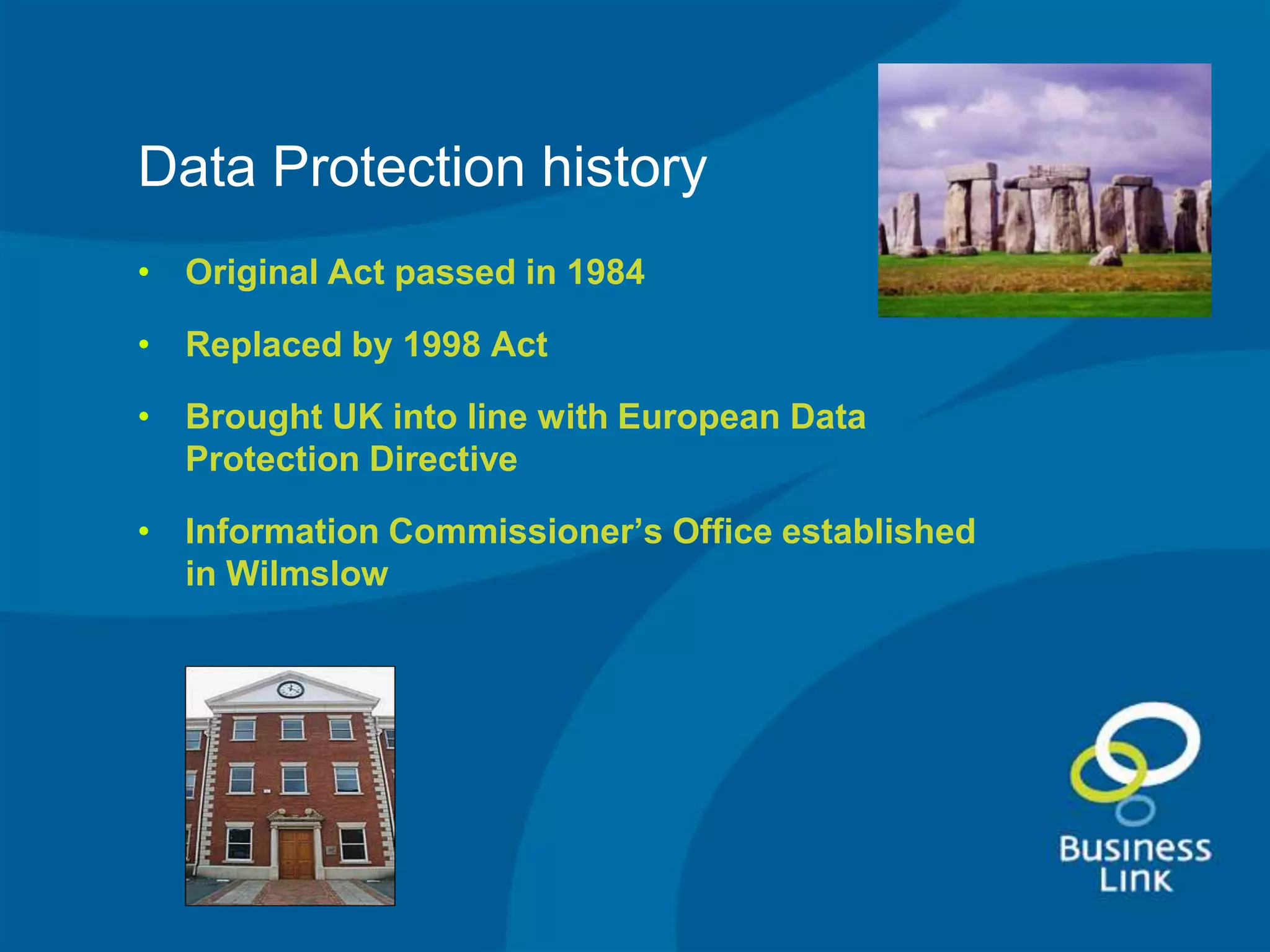
โ€ข Information Commissionerโ€™s Office established
  in Wilmslow
Key Definitions
โ€ข Personal data โ€“ uniquely identifies individual
โ€ข Sensitive data โ€“ ethnic, health or criminal
โ€ข Processing โ€“ obtaining, storing, sharing, using
โ€ข Data subject โ€“ the individual concerned
โ€ข Data controller โ€“ organisation using and owning
  data
โ€ข Data processor โ€“ organisation sub-contracted to
  use data by the controller
โ€ข Notification โ€“ informing Commissioner of
  processing purposes or a breach
โ€ข Purpose โ€“ broad area of use
The 8 Principles
โ€ข Fair and lawfully processed

โ€ข Processed for limited purposes

โ€ข Adequate, relevant and not excessive

โ€ข Accurate and up to date

โ€ข Not kept longer than necessary

โ€ข Processed in accordance with subject rights

โ€ข Kept secure

โ€ข Not transferred to other countries without
  protection
Fair and lawfully processed
โ€ข Need consent OR contract OR legal obligation
  OR statutory power OR public interest

โ€ข Fair processing statement (privacy policy)
  made available at time data is obtained

โ€ข Statement should include details of purposes
  and data sharing

โ€ข Comply with all relevant laws including
  confidentiality and Human Rights Convention

โ€ข Act within limits of any statutory powers
โ€ข Process within specific but broad purpose
โ€ข Cannot obtain data and do nothing with it
1st Principle
Sensitive personal data
โ€ข At least one schedule 2 condition plus explicit
  consent OR
โ€ข Necessary for statutory obligation regarding
  employment OR
โ€ข Necessary to monitor equal opportunities
โ€ข Does not involve sharing or a new purpose
  without consent
โ€ข Sickness and injury records should be kept
  separate from other employment records
โ€ข Medical reports should concentrate on fitness
โ€ข Staff should know what BUPA data is shared
  Business Link

1st Principle
Consent
โ€ข Individual must be aware of ways data will be
  processed
โ€ข Cannot be inferred from non-response to opt-
  out
โ€ข โ€˜Opportunity to objectโ€™ with another condition
  such as public interest may provide basis
โ€ข Consent does not last forever
โ€ข Can be transferred from/to third party where
  there is clear prior opt-in for sharing
โ€ข Explicit consent to processing of sensitive data


1st Principle
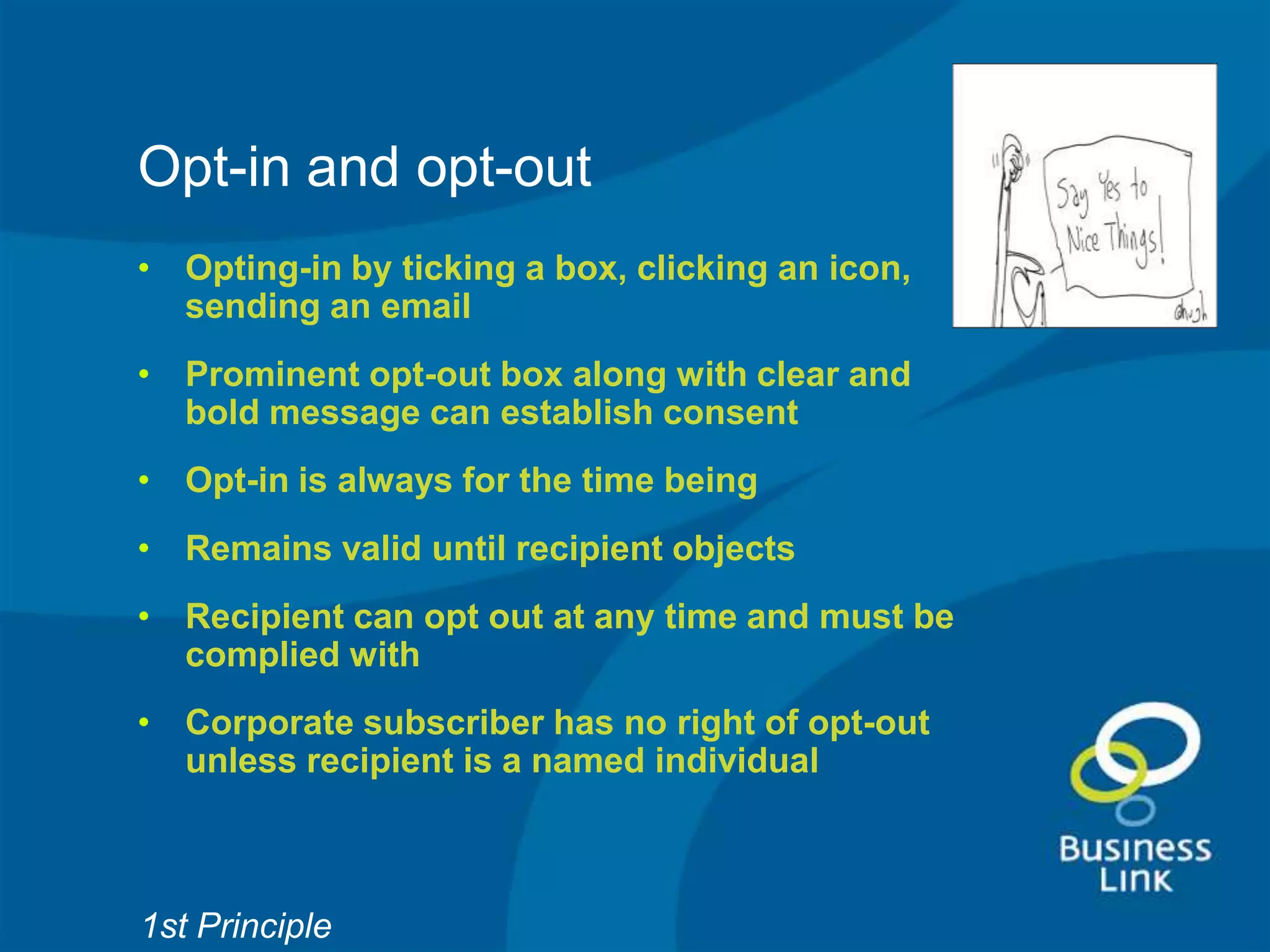
Opt-in and opt-out
โ€ข Opting-in by ticking a box, clicking an icon,
  sending an email
โ€ข Prominent opt-out box along with clear and
  bold message can establish consent
โ€ข Opt-in is always for the time being
โ€ข Remains valid until recipient objects
โ€ข Recipient can opt out at any time and must be
  complied with
โ€ข Corporate subscriber has no right of opt-out
  unless recipient is a named individual


1st Principle
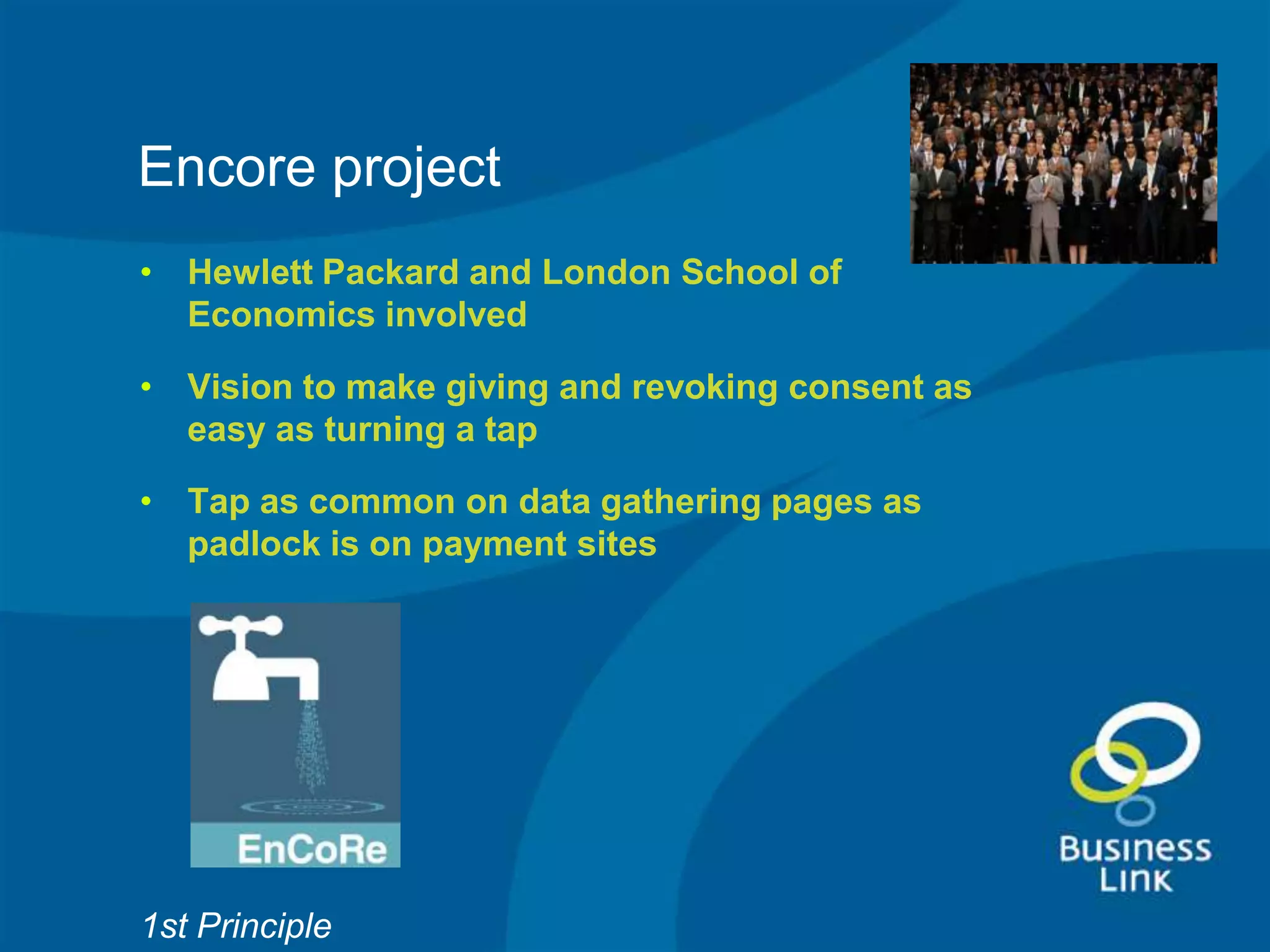
Encore project
โ€ข Hewlett Packard and London School of
  Economics involved

โ€ข Vision to make giving and revoking consent as
  easy as turning a tap

โ€ข Tap as common on data gathering pages as
  padlock is on payment sites


1st Principle
Telephone marketing
โ€ข Must identify ourselves and provide address or
  Freephone number if asked
โ€ข Must regularly screen CRM against TPS and
  CTPS registers
โ€ข Must not call numbers on TPS or CTPS registers
  unless subscriber gives specific opt-in consent
โ€ข Provide opportunity to opt out and terminate call
โ€ข Must comply with request to opt out by ticking
  CRM do not call
โ€ข Responsible even if agency calls on our behalf


1st Principle
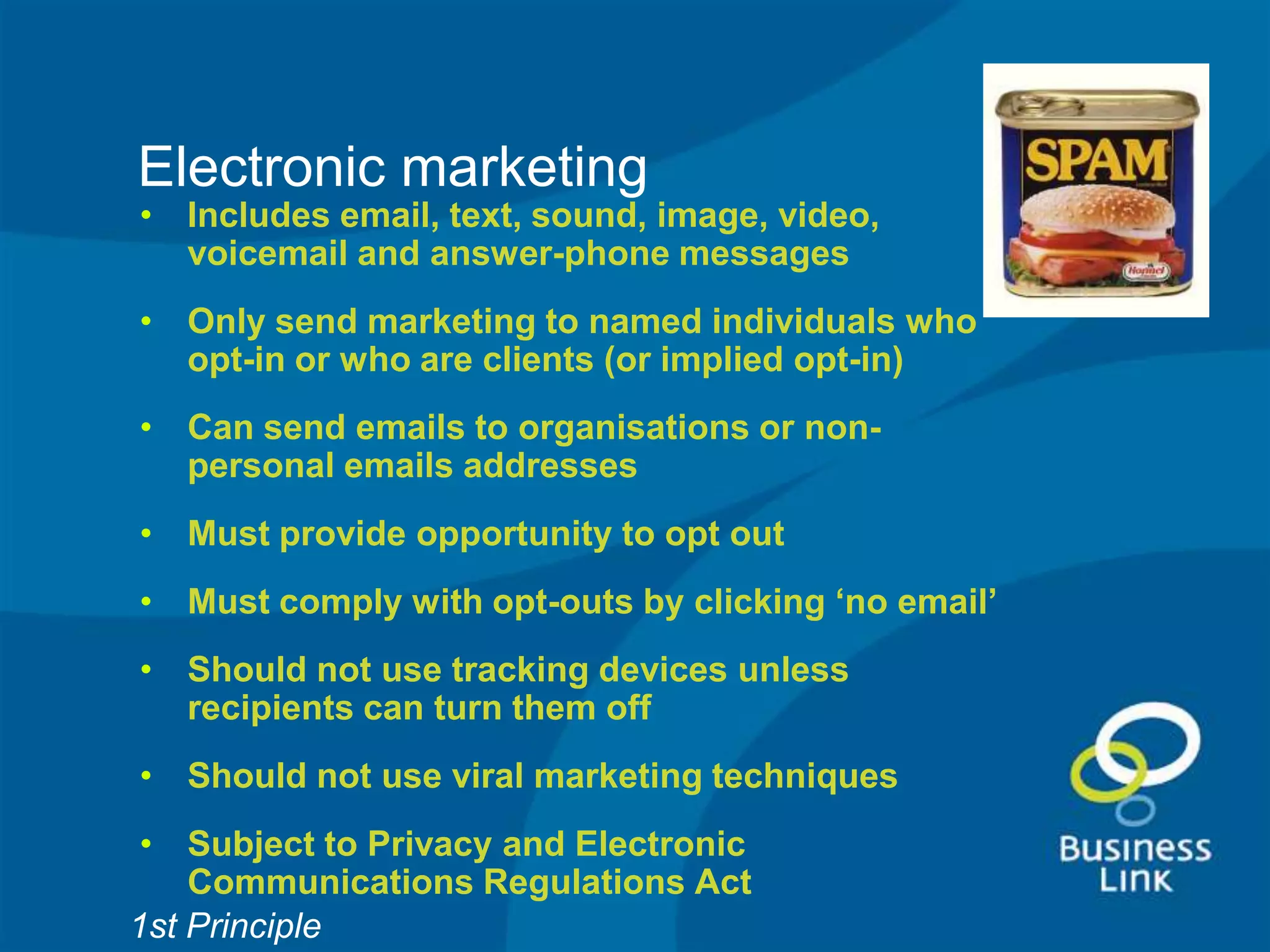
Electronic marketing
โ€ข Includes email, text, sound, image, video,
  voicemail and answer-phone messages
โ€ข Only send marketing to named individuals who
  opt-in or who are clients (or implied opt-in)
โ€ข Can send emails to organisations or non-
  personal emails addresses
โ€ข Must provide opportunity to opt out
โ€ข Must comply with opt-outs by clicking โ€˜no emailโ€™
โ€ข Should not use tracking devices unless
  recipients can turn them off
โ€ข Should not use viral marketing techniques
 โ€ข Subject to Privacy and Electronic
    Communications Regulations Act
1st Principle
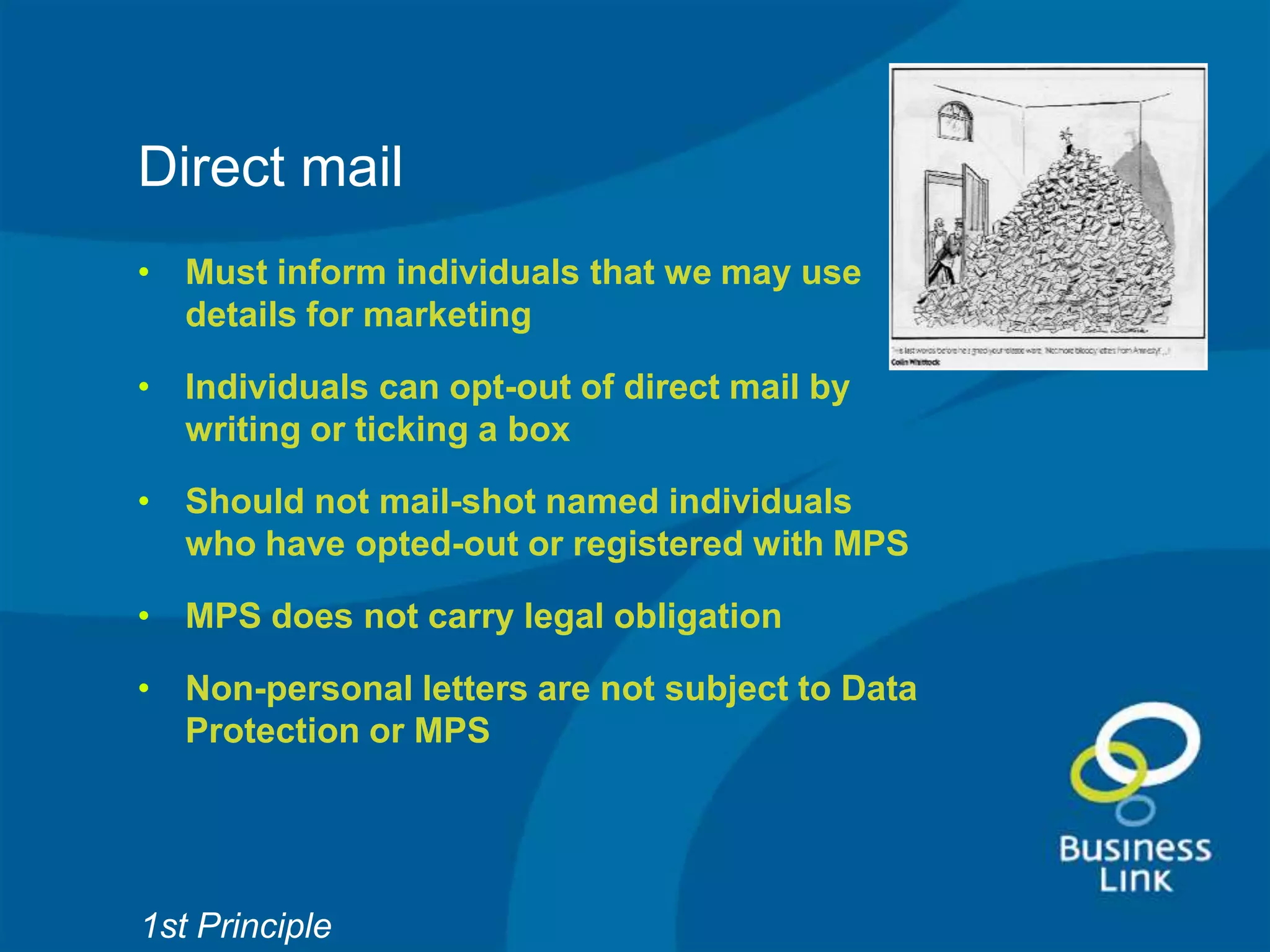
Direct mail
โ€ข Must inform individuals that we may use
  details for marketing

โ€ข Individuals can opt-out of direct mail by
  writing or ticking a box

โ€ข Should not mail-shot named individuals
  who have opted-out or registered with MPS

โ€ข MPS does not carry legal obligation

โ€ข Non-personal letters are not subject to Data
  Protection or MPS


1st Principle
Processed for limited purposes
โ€ข Data obtained for one purpose cannot be used
  for another without consent
โ€ข Data cannot be obtained without purposes
  being aligned
โ€ข Change in purpose needs consent which
  cannot be obtained retrospectively
โ€ข Purpose should be stated in fair processing
  statement
โ€ข Subjects must not be deceived or misled
  regarding purpose
โ€ข Commissioner must be notified of new
  purposes within 28 days

2nd Principle
Adequate, relevant, not excessive
โ€ข All processing must be necessary and
  proportionate
โ€ข Data needs at least one valid purpose
โ€ข Minimum amount of data necessary to fulfil
  purpose
โ€ข Information necessary for one individual
  should not be kept for all subjects
โ€ข Data cannot be kept on basis that it might be
  useful in the future
โ€ข Data should be kept up to date and relevance
  reviewed


3rd Principle
Accurate and up-to-date
โ€ข Take reasonable steps to ensure accuracy
โ€ข Update individual or third party data regularly
โ€ข Individuals can request their data is updated or
  deleted
โ€ข Record when information was recorded or
  updated
โ€ข Aware that data may not reflect current situation
โ€ข Objections should be noted
โ€ข Avoid false matches and unfounded inferences
โ€ข Exceptions are historical records of
  โ€˜transactionsโ€™

4th Principle
Not kept longer than necessary
โ€ข Data not kept for longer than purpose it was
  originally obtained

โ€ข Not gathered or held indefinitely without a
  purpose

โ€ข Reviewed regularly and deleted when no
  longer required

โ€ข Deleted when relationship ceases

โ€ข Historical or statistical data can be kept
  indefinitely


5th Principle
Processed in accordance with
subject rights
โ€ข Must supply information relating to a subject
  access right
โ€ข Must rectify or delete inaccurate or illegitimate
  data
โ€ข Must stop processing if causes damage or
  distress when requested
โ€ข Must cease direct marketing when consent
  withdrawn or not given
โ€ข Subject has right to seek compensation for
  damage or distress
โ€ข Must know purpose

6th Principle
Subject access rights
โ€ข Entitled to copy of data unless cost, time and effort
  is disproportionate

โ€ข Respond to written request within 40 calendar days
  after identity of requester is established

โ€ข Data supplied should include archived data but not
  management forecasts nor employment references

โ€ข Not obliged to comply where similar request has
  been met

โ€ข Routine amendments are allowed but must not
  cover-up or tamper with data

โ€ข Must not disclose to anyone else unless required
  by law, warrant, for legal advice or proceedings
6th Principle
Employeesโ€™ subject access rights
โ€ข Emails and word documents should be
  disclosed where individual is the subject

โ€ข References received by us should be disclosed
  unless subject to strict confidentiality

โ€ข References given by us are exempt from
  access

โ€ข Personal references are not covered

โ€ข Do not disclose when investigating criminal or
  harassment allegations

โ€ข Taxation or management information need not
  be disclosed


6th Principle
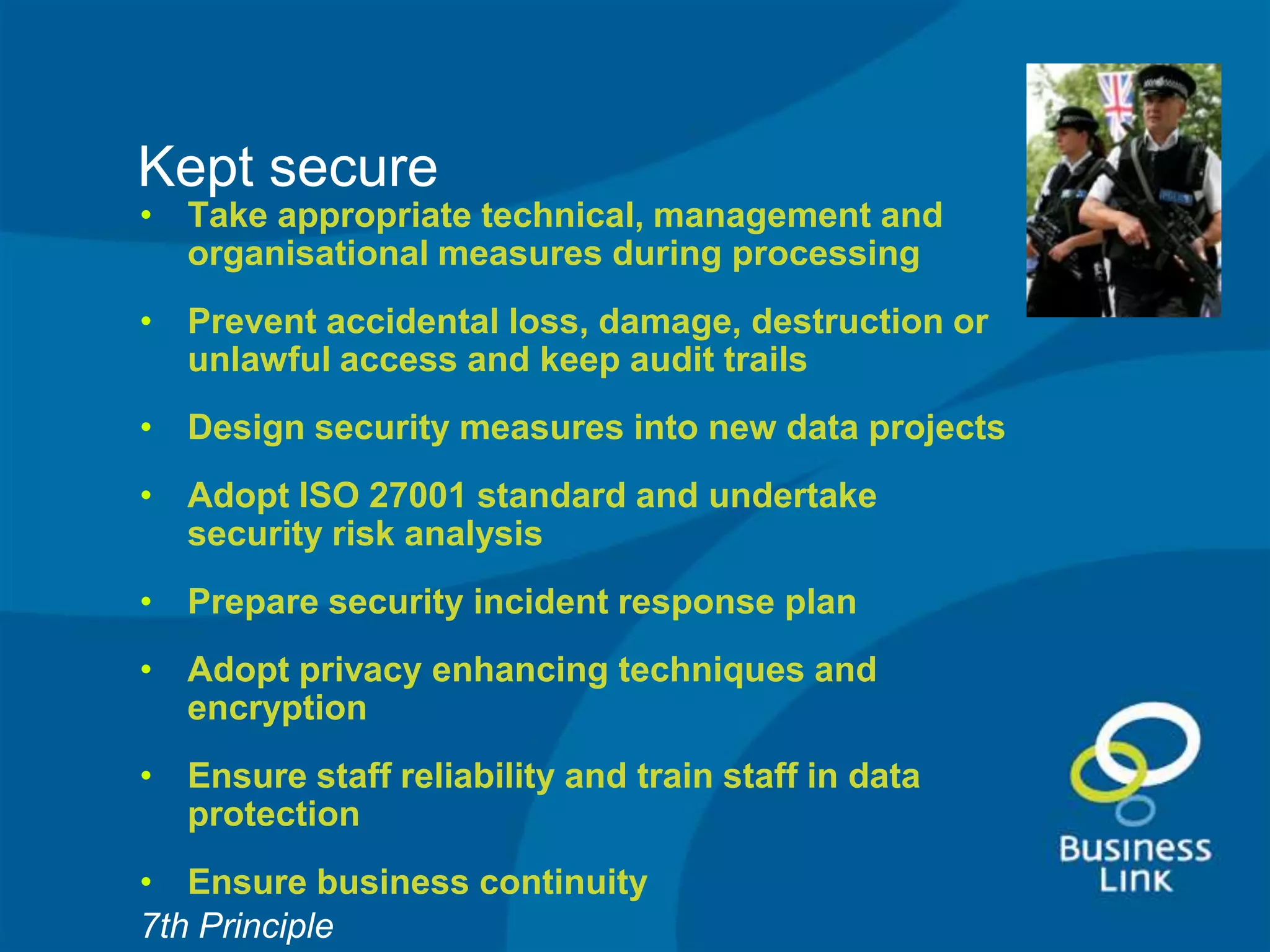
Kept secure
โ€ข Take appropriate technical, management and
  organisational measures during processing
โ€ข Prevent accidental loss, damage, destruction or
  unlawful access and keep audit trails
โ€ข Design security measures into new data projects
โ€ข Adopt ISO 27001 standard and undertake
  security risk analysis
โ€ข Prepare security incident response plan
โ€ข Adopt privacy enhancing techniques and
  encryption
โ€ข Ensure staff reliability and train staff in data
  protection
โ€ข Ensure business continuity
7th Principle
Not transferred to other countries
without protection
โ€ข Not transferred outside European Economic
  Area without adequate level of data protection

โ€ข Safe countries and โ€˜safe harboursโ€™ allowed

โ€ข Model contracts available


8th Principle
Information Commissionerโ€™s role
โ€ข Registers data controller notifications
โ€ข Makes register available for public inspection
โ€ข Investigates requests for assessments
โ€ข Issues information notices
โ€ข Issues data subject notices
โ€ข Issues enforcement notices
โ€ข Has powers of entry and inspection under
  warrant
โ€ข Can endorse a code of practice
Offences
โ€ข Processing without notification
โ€ข Failure to notify changes in purpose within 28
  days
โ€ข Failure to comply with Commissionerโ€™s
  โ€˜information noticeโ€™ request
โ€ข Failure to comply with enforcement notice
โ€ข Obstructing warrant
โ€ข Obtaining or disclosing data without
  permission of data controller
โ€ข Selling or offering to sell data without
  permission of data controller
Data sharing
โ€ข Check notification includes all classes of
  organisation we wish to share with
โ€ข Obtain consent unless processing and
  disclosure is in public interest
โ€ข Explicit consent before sensitive data can be
  shared
โ€ข Should not share personal data where
  anonymised data will do
โ€ข Conduct privacy impact assessment and
  prepare code of practice
โ€ข Commissioner recommends creating fast-track
  to dispense with existing barriers to sharing
โ€ข Data sharing review encourages research and
  statistical analysis and change in culture
Code of practice
โ€ข Define data sharing and business case
โ€ข Describe negative effect on individuals
โ€ข State whether consent is needed
โ€ข Outline legal provisions which allow data
  sharing
โ€ข Include less invasive alternatives such as
  anonymous data
โ€ข Describe data to be shared and list
  organisations to share with
โ€ข Evaluate security standards and training which
  need to be adopted
โ€ข Can take form of privacy impact assessment
โ€ข Review regularly and develop privacy strategy
Paper-based files
โ€ข Act covers computer input and output
  documents
โ€ข Includes organised and structured document
  files (relevant filing systems)
โ€ข Review paper-based filing systems to check
  whether they become โ€˜organisedโ€™
โ€ข Documents should be securely disposed
โ€ข Commissioner recommends shredders for
  home-workers
โ€ข No requirement to notify Commissioner of
  paper-based files
Monitoring at work
โ€ข Should be open and not covert unless part of
  criminal or malpractice investigation
โ€ข Subject to Regulation of Investigatory Powers
  Act and European Convention on Human Rights
โ€ข Right for privacy even in workplace
โ€ข Personal emails should not be opened
โ€ข Staff should be aware that business emails or
  voicemails may be checked while away
โ€ข Manager can listen/record calls for staff training
  and quality when caller receives message
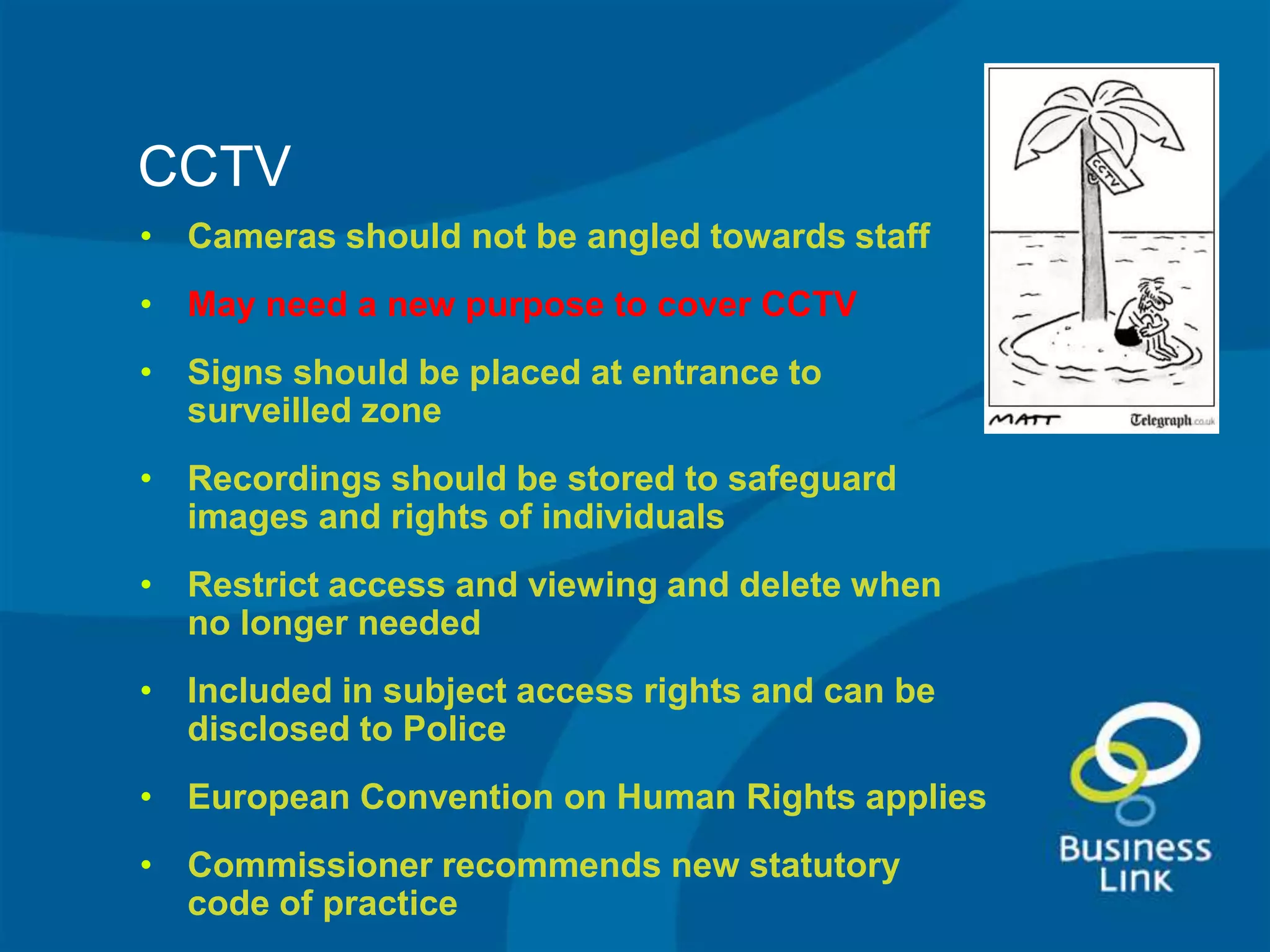
CCTV
โ€ข Cameras should not be angled towards staff
โ€ข May need a new purpose to cover CCTV
โ€ข Signs should be placed at entrance to
  surveilled zone
โ€ข Recordings should be stored to safeguard
  images and rights of individuals
โ€ข Restrict access and viewing and delete when
  no longer needed
โ€ข Included in subject access rights and can be
  disclosed to Police
โ€ข European Convention on Human Rights applies
โ€ข Commissioner recommends new statutory
  code of practice
The end
โ€ข Any final questions?

โ€ข Thank you for your kind attention

Data Protection Act presentation

  • 1.
    Data Protection โ€“an overview By Ian C. Oultram Compliance Officer Business Link Northwest Presented 16th March 2009
  • 2.
    What is theAct for? โ€ข Maintains balance between the individual and government/industry โ€ข Regulates demands for data by government and industry โ€ข Protects privacy of individual โ€ข Privacy is a basic human right
  • 3.
    Data Protection history โ€ขOriginal Act passed in 1984 โ€ข Replaced by 1998 Act โ€ข Brought UK into line with European Data Protection Directive โ€ข Information Commissionerโ€™s Office established in Wilmslow
  • 4.
    Key Definitions โ€ข Personaldata โ€“ uniquely identifies individual โ€ข Sensitive data โ€“ ethnic, health or criminal โ€ข Processing โ€“ obtaining, storing, sharing, using โ€ข Data subject โ€“ the individual concerned โ€ข Data controller โ€“ organisation using and owning data โ€ข Data processor โ€“ organisation sub-contracted to use data by the controller โ€ข Notification โ€“ informing Commissioner of processing purposes or a breach โ€ข Purpose โ€“ broad area of use
  • 5.
    The 8 Principles โ€ขFair and lawfully processed โ€ข Processed for limited purposes โ€ข Adequate, relevant and not excessive โ€ข Accurate and up to date โ€ข Not kept longer than necessary โ€ข Processed in accordance with subject rights โ€ข Kept secure โ€ข Not transferred to other countries without protection
  • 6.
    Fair and lawfullyprocessed โ€ข Need consent OR contract OR legal obligation OR statutory power OR public interest โ€ข Fair processing statement (privacy policy) made available at time data is obtained โ€ข Statement should include details of purposes and data sharing โ€ข Comply with all relevant laws including confidentiality and Human Rights Convention โ€ข Act within limits of any statutory powers โ€ข Process within specific but broad purpose โ€ข Cannot obtain data and do nothing with it 1st Principle
  • 7.
    Sensitive personal data โ€ขAt least one schedule 2 condition plus explicit consent OR โ€ข Necessary for statutory obligation regarding employment OR โ€ข Necessary to monitor equal opportunities โ€ข Does not involve sharing or a new purpose without consent โ€ข Sickness and injury records should be kept separate from other employment records โ€ข Medical reports should concentrate on fitness โ€ข Staff should know what BUPA data is shared Business Link 1st Principle
  • 8.
    Consent โ€ข Individual mustbe aware of ways data will be processed โ€ข Cannot be inferred from non-response to opt- out โ€ข โ€˜Opportunity to objectโ€™ with another condition such as public interest may provide basis โ€ข Consent does not last forever โ€ข Can be transferred from/to third party where there is clear prior opt-in for sharing โ€ข Explicit consent to processing of sensitive data 1st Principle
  • 9.
    Opt-in and opt-out โ€ขOpting-in by ticking a box, clicking an icon, sending an email โ€ข Prominent opt-out box along with clear and bold message can establish consent โ€ข Opt-in is always for the time being โ€ข Remains valid until recipient objects โ€ข Recipient can opt out at any time and must be complied with โ€ข Corporate subscriber has no right of opt-out unless recipient is a named individual 1st Principle
  • 10.
    Encore project โ€ข HewlettPackard and London School of Economics involved โ€ข Vision to make giving and revoking consent as easy as turning a tap โ€ข Tap as common on data gathering pages as padlock is on payment sites 1st Principle
  • 11.
    Telephone marketing โ€ข Mustidentify ourselves and provide address or Freephone number if asked โ€ข Must regularly screen CRM against TPS and CTPS registers โ€ข Must not call numbers on TPS or CTPS registers unless subscriber gives specific opt-in consent โ€ข Provide opportunity to opt out and terminate call โ€ข Must comply with request to opt out by ticking CRM do not call โ€ข Responsible even if agency calls on our behalf 1st Principle
  • 12.
    Electronic marketing โ€ข Includesemail, text, sound, image, video, voicemail and answer-phone messages โ€ข Only send marketing to named individuals who opt-in or who are clients (or implied opt-in) โ€ข Can send emails to organisations or non- personal emails addresses โ€ข Must provide opportunity to opt out โ€ข Must comply with opt-outs by clicking โ€˜no emailโ€™ โ€ข Should not use tracking devices unless recipients can turn them off โ€ข Should not use viral marketing techniques โ€ข Subject to Privacy and Electronic Communications Regulations Act 1st Principle
  • 13.
    Direct mail โ€ข Mustinform individuals that we may use details for marketing โ€ข Individuals can opt-out of direct mail by writing or ticking a box โ€ข Should not mail-shot named individuals who have opted-out or registered with MPS โ€ข MPS does not carry legal obligation โ€ข Non-personal letters are not subject to Data Protection or MPS 1st Principle
  • 14.
    Processed for limitedpurposes โ€ข Data obtained for one purpose cannot be used for another without consent โ€ข Data cannot be obtained without purposes being aligned โ€ข Change in purpose needs consent which cannot be obtained retrospectively โ€ข Purpose should be stated in fair processing statement โ€ข Subjects must not be deceived or misled regarding purpose โ€ข Commissioner must be notified of new purposes within 28 days 2nd Principle
  • 15.
    Adequate, relevant, notexcessive โ€ข All processing must be necessary and proportionate โ€ข Data needs at least one valid purpose โ€ข Minimum amount of data necessary to fulfil purpose โ€ข Information necessary for one individual should not be kept for all subjects โ€ข Data cannot be kept on basis that it might be useful in the future โ€ข Data should be kept up to date and relevance reviewed 3rd Principle
  • 16.
    Accurate and up-to-date โ€ขTake reasonable steps to ensure accuracy โ€ข Update individual or third party data regularly โ€ข Individuals can request their data is updated or deleted โ€ข Record when information was recorded or updated โ€ข Aware that data may not reflect current situation โ€ข Objections should be noted โ€ข Avoid false matches and unfounded inferences โ€ข Exceptions are historical records of โ€˜transactionsโ€™ 4th Principle
  • 17.
    Not kept longerthan necessary โ€ข Data not kept for longer than purpose it was originally obtained โ€ข Not gathered or held indefinitely without a purpose โ€ข Reviewed regularly and deleted when no longer required โ€ข Deleted when relationship ceases โ€ข Historical or statistical data can be kept indefinitely 5th Principle
  • 18.
    Processed in accordancewith subject rights โ€ข Must supply information relating to a subject access right โ€ข Must rectify or delete inaccurate or illegitimate data โ€ข Must stop processing if causes damage or distress when requested โ€ข Must cease direct marketing when consent withdrawn or not given โ€ข Subject has right to seek compensation for damage or distress โ€ข Must know purpose 6th Principle
  • 19.
    Subject access rights โ€ขEntitled to copy of data unless cost, time and effort is disproportionate โ€ข Respond to written request within 40 calendar days after identity of requester is established โ€ข Data supplied should include archived data but not management forecasts nor employment references โ€ข Not obliged to comply where similar request has been met โ€ข Routine amendments are allowed but must not cover-up or tamper with data โ€ข Must not disclose to anyone else unless required by law, warrant, for legal advice or proceedings 6th Principle
  • 20.
    Employeesโ€™ subject accessrights โ€ข Emails and word documents should be disclosed where individual is the subject โ€ข References received by us should be disclosed unless subject to strict confidentiality โ€ข References given by us are exempt from access โ€ข Personal references are not covered โ€ข Do not disclose when investigating criminal or harassment allegations โ€ข Taxation or management information need not be disclosed 6th Principle
  • 21.
    Kept secure โ€ข Takeappropriate technical, management and organisational measures during processing โ€ข Prevent accidental loss, damage, destruction or unlawful access and keep audit trails โ€ข Design security measures into new data projects โ€ข Adopt ISO 27001 standard and undertake security risk analysis โ€ข Prepare security incident response plan โ€ข Adopt privacy enhancing techniques and encryption โ€ข Ensure staff reliability and train staff in data protection โ€ข Ensure business continuity 7th Principle
  • 22.
    Not transferred toother countries without protection โ€ข Not transferred outside European Economic Area without adequate level of data protection โ€ข Safe countries and โ€˜safe harboursโ€™ allowed โ€ข Model contracts available 8th Principle
  • 23.
    Information Commissionerโ€™s role โ€ขRegisters data controller notifications โ€ข Makes register available for public inspection โ€ข Investigates requests for assessments โ€ข Issues information notices โ€ข Issues data subject notices โ€ข Issues enforcement notices โ€ข Has powers of entry and inspection under warrant โ€ข Can endorse a code of practice
  • 24.
    Offences โ€ข Processing withoutnotification โ€ข Failure to notify changes in purpose within 28 days โ€ข Failure to comply with Commissionerโ€™s โ€˜information noticeโ€™ request โ€ข Failure to comply with enforcement notice โ€ข Obstructing warrant โ€ข Obtaining or disclosing data without permission of data controller โ€ข Selling or offering to sell data without permission of data controller
  • 25.
    Data sharing โ€ข Checknotification includes all classes of organisation we wish to share with โ€ข Obtain consent unless processing and disclosure is in public interest โ€ข Explicit consent before sensitive data can be shared โ€ข Should not share personal data where anonymised data will do โ€ข Conduct privacy impact assessment and prepare code of practice โ€ข Commissioner recommends creating fast-track to dispense with existing barriers to sharing โ€ข Data sharing review encourages research and statistical analysis and change in culture
  • 26.
    Code of practice โ€ขDefine data sharing and business case โ€ข Describe negative effect on individuals โ€ข State whether consent is needed โ€ข Outline legal provisions which allow data sharing โ€ข Include less invasive alternatives such as anonymous data โ€ข Describe data to be shared and list organisations to share with โ€ข Evaluate security standards and training which need to be adopted โ€ข Can take form of privacy impact assessment โ€ข Review regularly and develop privacy strategy
  • 27.
    Paper-based files โ€ข Actcovers computer input and output documents โ€ข Includes organised and structured document files (relevant filing systems) โ€ข Review paper-based filing systems to check whether they become โ€˜organisedโ€™ โ€ข Documents should be securely disposed โ€ข Commissioner recommends shredders for home-workers โ€ข No requirement to notify Commissioner of paper-based files
  • 28.
    Monitoring at work โ€ขShould be open and not covert unless part of criminal or malpractice investigation โ€ข Subject to Regulation of Investigatory Powers Act and European Convention on Human Rights โ€ข Right for privacy even in workplace โ€ข Personal emails should not be opened โ€ข Staff should be aware that business emails or voicemails may be checked while away โ€ข Manager can listen/record calls for staff training and quality when caller receives message
  • 29.
    CCTV โ€ข Cameras shouldnot be angled towards staff โ€ข May need a new purpose to cover CCTV โ€ข Signs should be placed at entrance to surveilled zone โ€ข Recordings should be stored to safeguard images and rights of individuals โ€ข Restrict access and viewing and delete when no longer needed โ€ข Included in subject access rights and can be disclosed to Police โ€ข European Convention on Human Rights applies โ€ข Commissioner recommends new statutory code of practice
  • 30.
    The end โ€ข Anyfinal questions? โ€ข Thank you for your kind attention

Editor's Notes

  • #2ย Good morningFollowing my 27 page report on data protection issues which I gave to Mike and Beryl Iโ€™ve pulled together an boiled down overview of data protection in 28 sidesThereโ€™s a natural break after 23 if we run out of time or youโ€™ve had enoughBut I hope the subject will be interesting,Indeed Iโ€™ve included a highlight picture or cartoon on every slide to lighten the mood so I hope you will enjoy this presentation