Data Communication
Introduction
CSE 320
Data Communication
2
Data Communication is the
exchange of information from one
entity to the other using a
Transmission Medium.
CSE 320
Data Communication
3
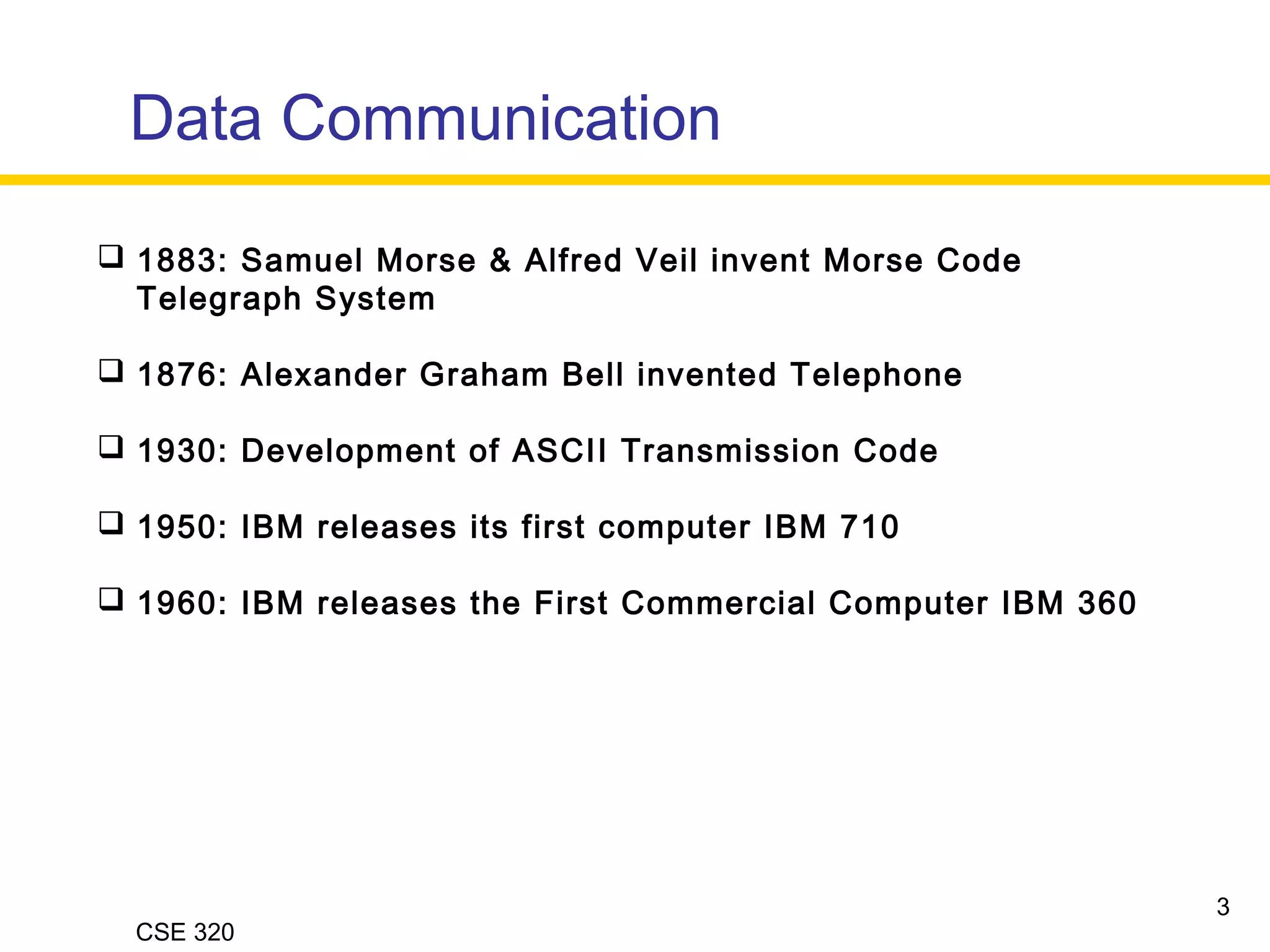
 1883: Samuel Morse & Alfred Veil invent Morse Code
Telegraph System
 1876: Alexander Graham Bell invented Telephone
 1930: Development of ASCII Transmission Code
 1950: IBM releases its first computer IBM 710
 1960: IBM releases the First Commercial Computer IBM 360
CSE 320
Data Communication Definition
(Modified)
4
Data Communication is the
exchange of data (in the form of 0’s
and 1’s) between two devices
(computers) via some form of the
transmission medium.
CSE 320
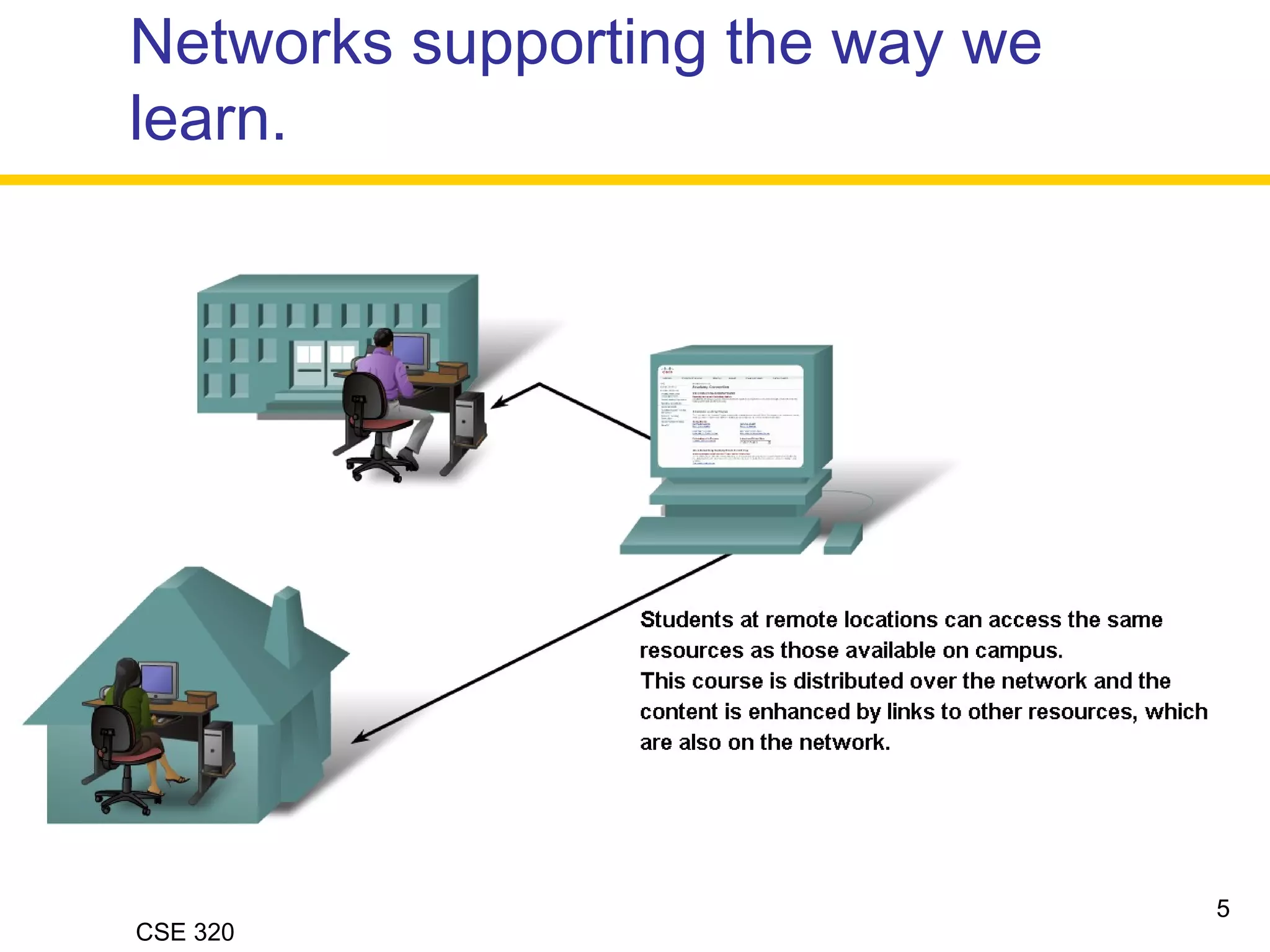
Networks supporting the way we
learn.
5
CSE 320
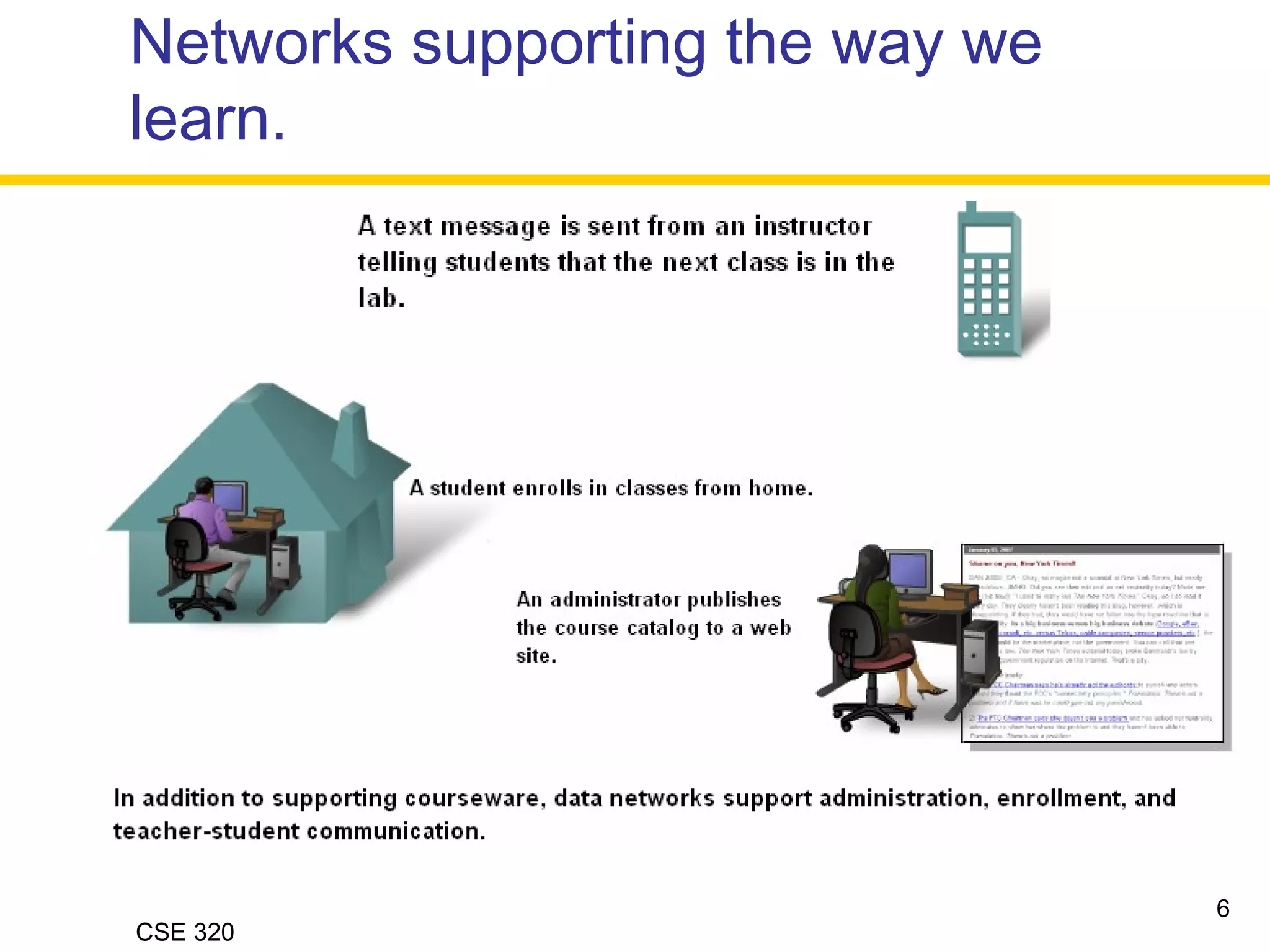
Networks supporting the way we
learn.
6
CSE 320
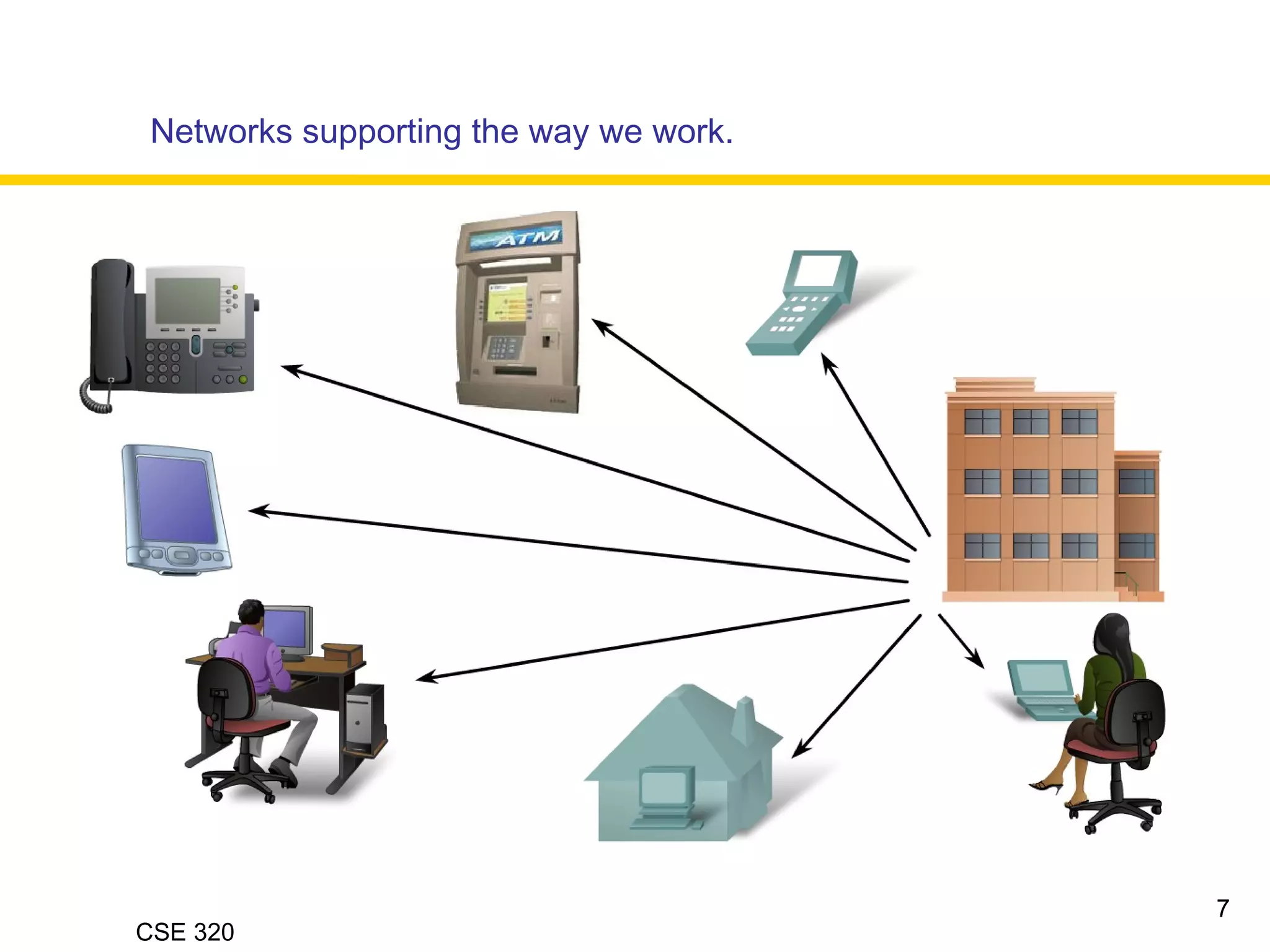
Networks supporting the way we work.
7
CSE 320
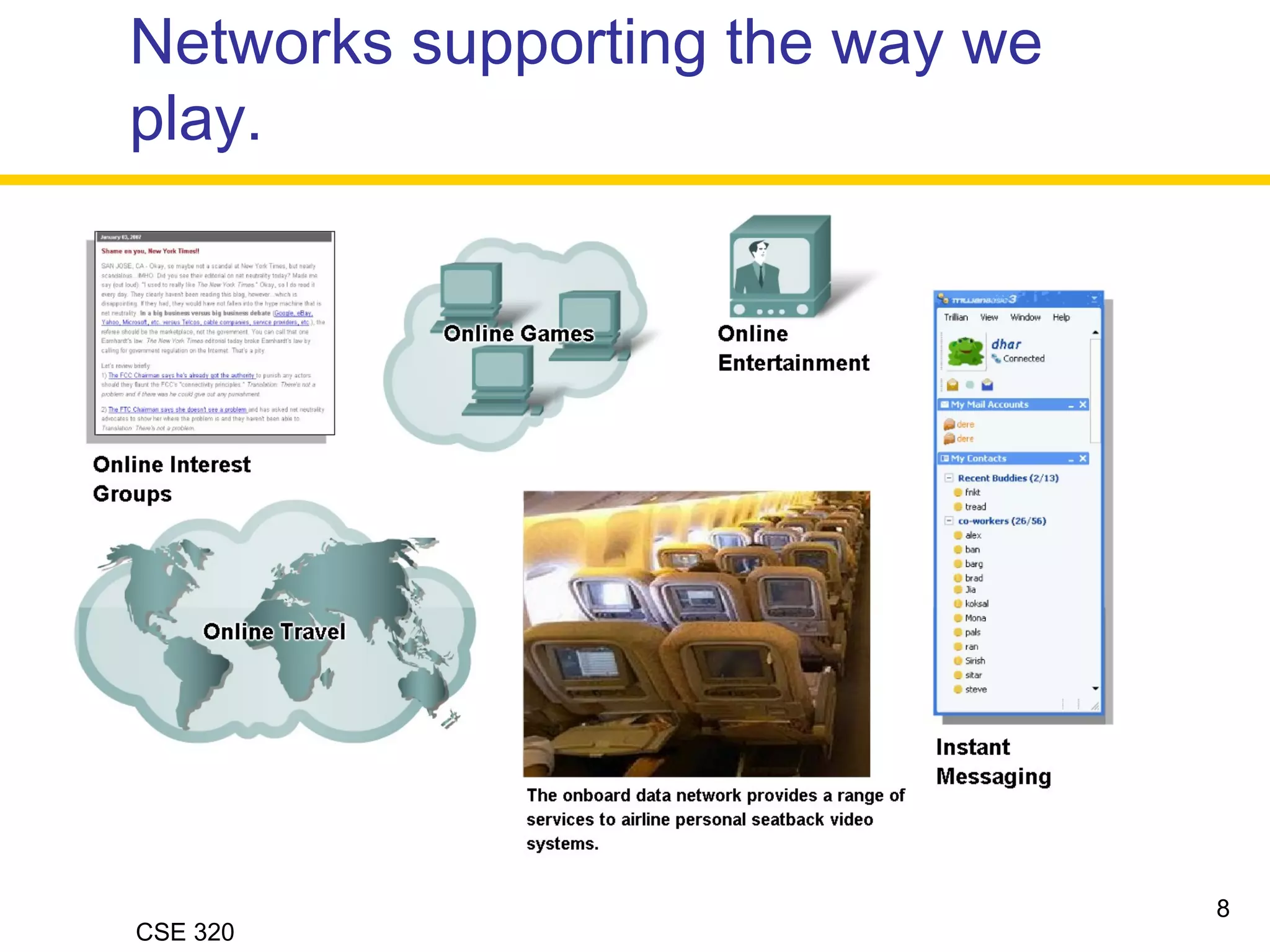
Networks supporting the way we
play.
8
CSE 320
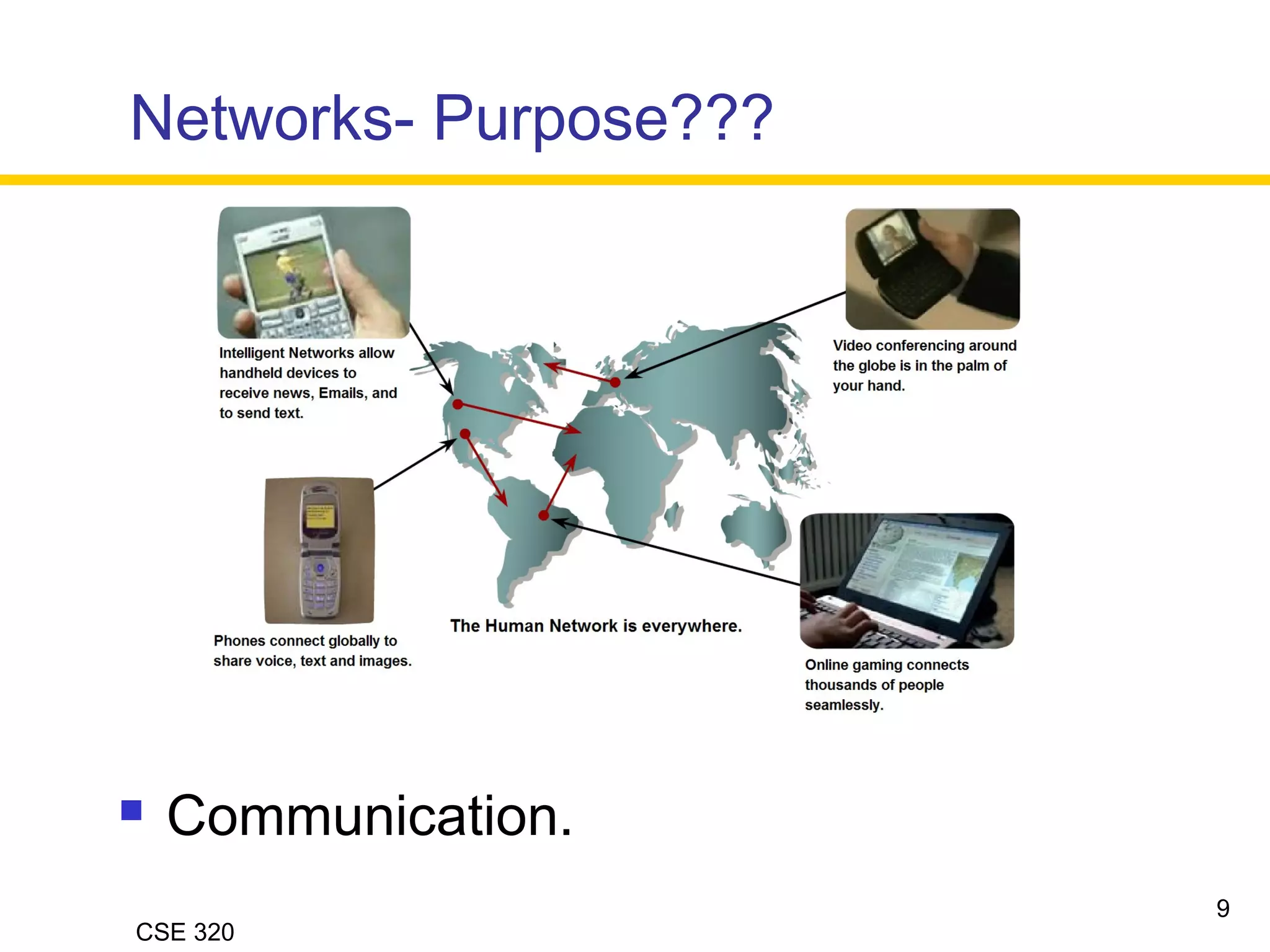
Networks- Purpose???
 Communication.
9
CSE 320
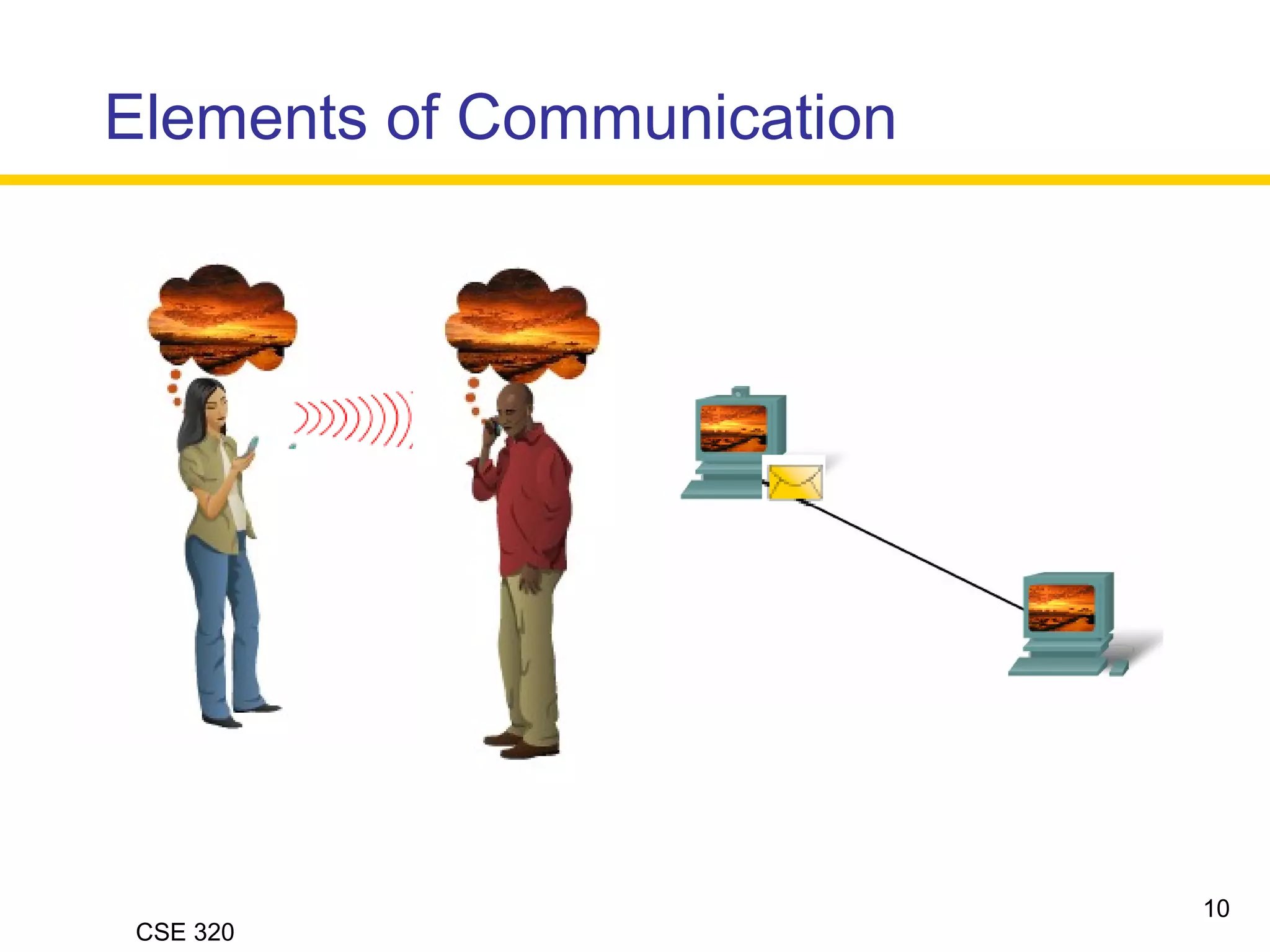
Elements of Communication
10
CSE 320
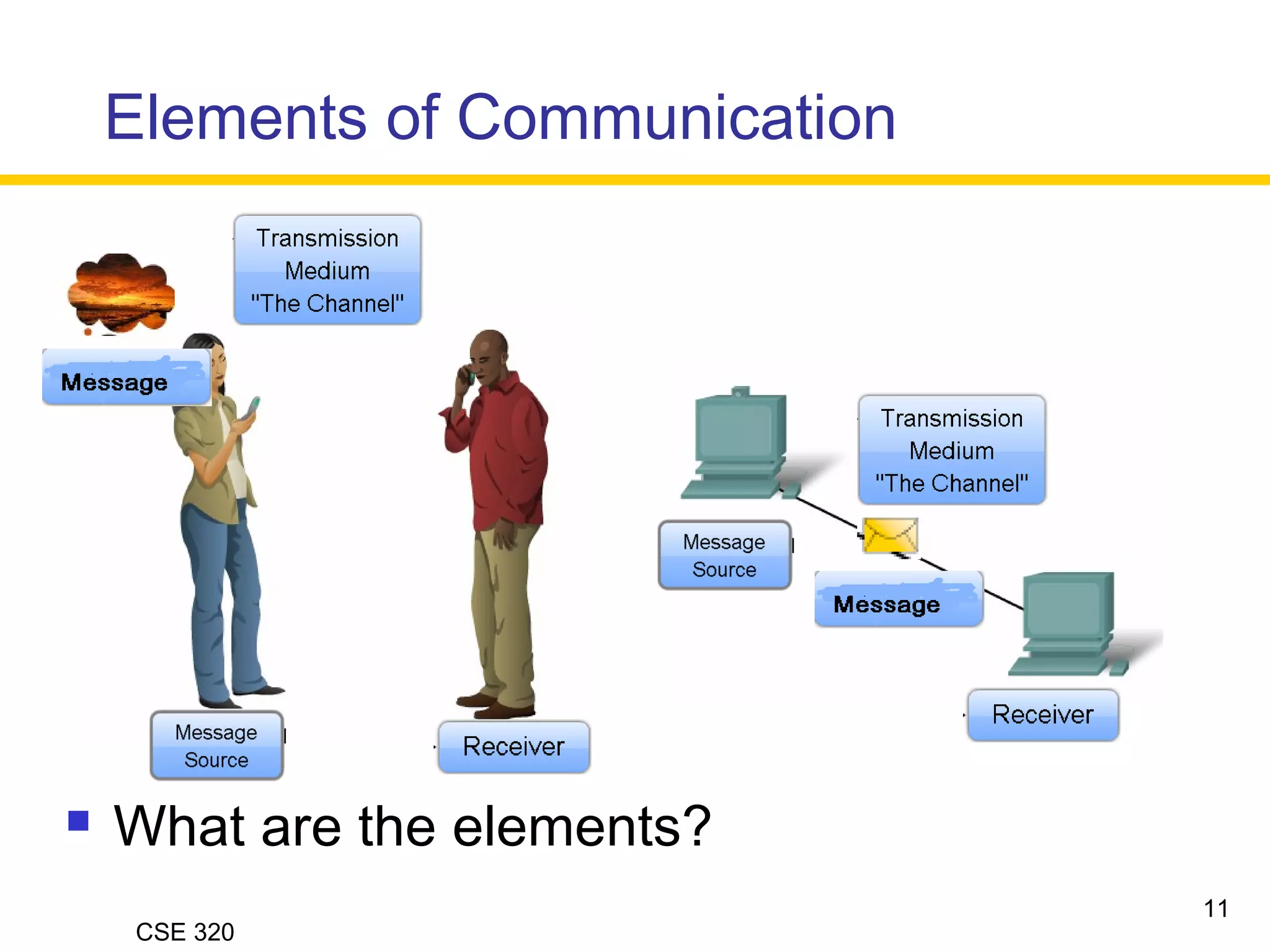
Elements of Communication
 What are the elements?
11
CSE 320
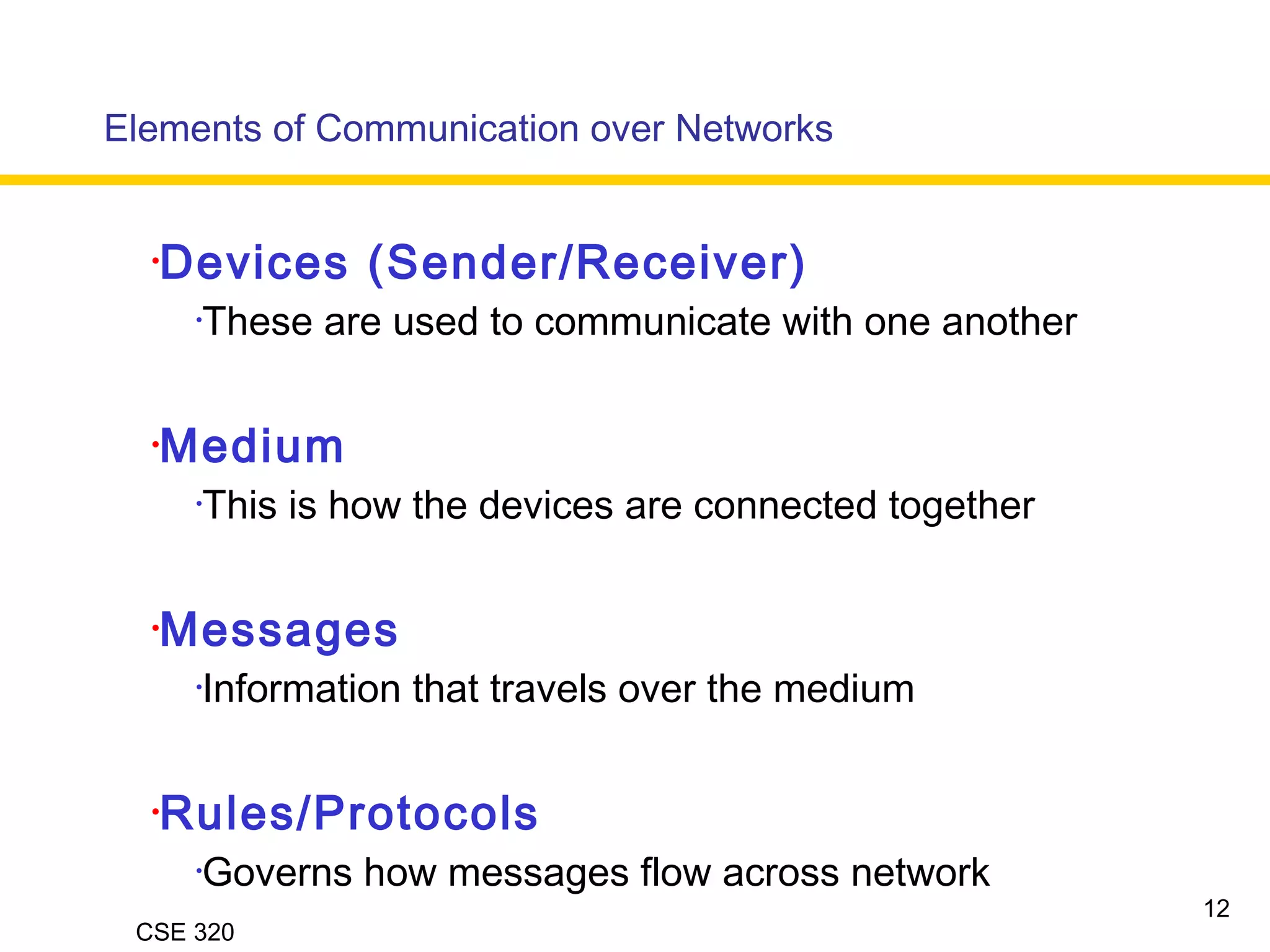
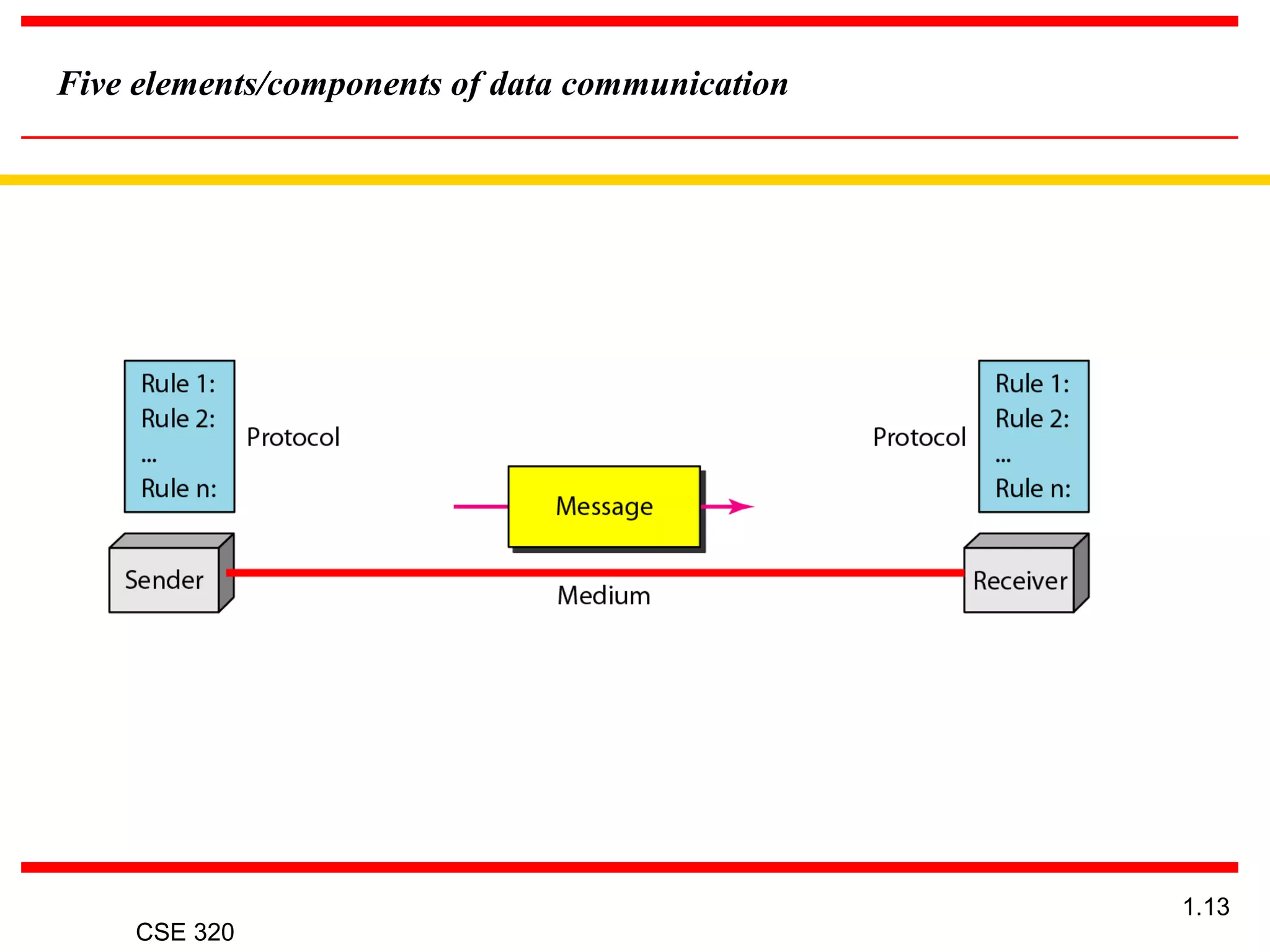
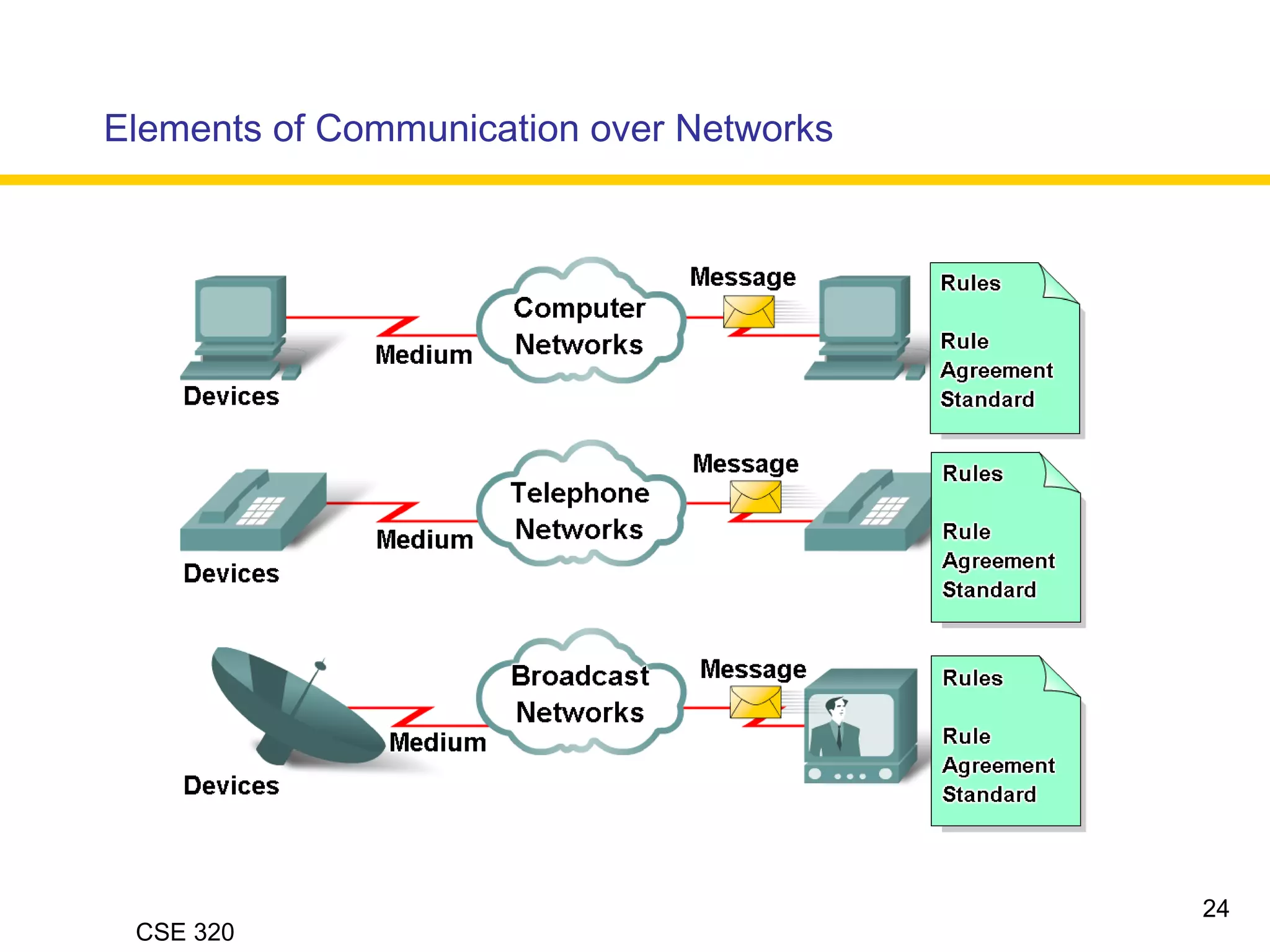
•Devices (Sender/Receiver)
•These are used to communicate with one another
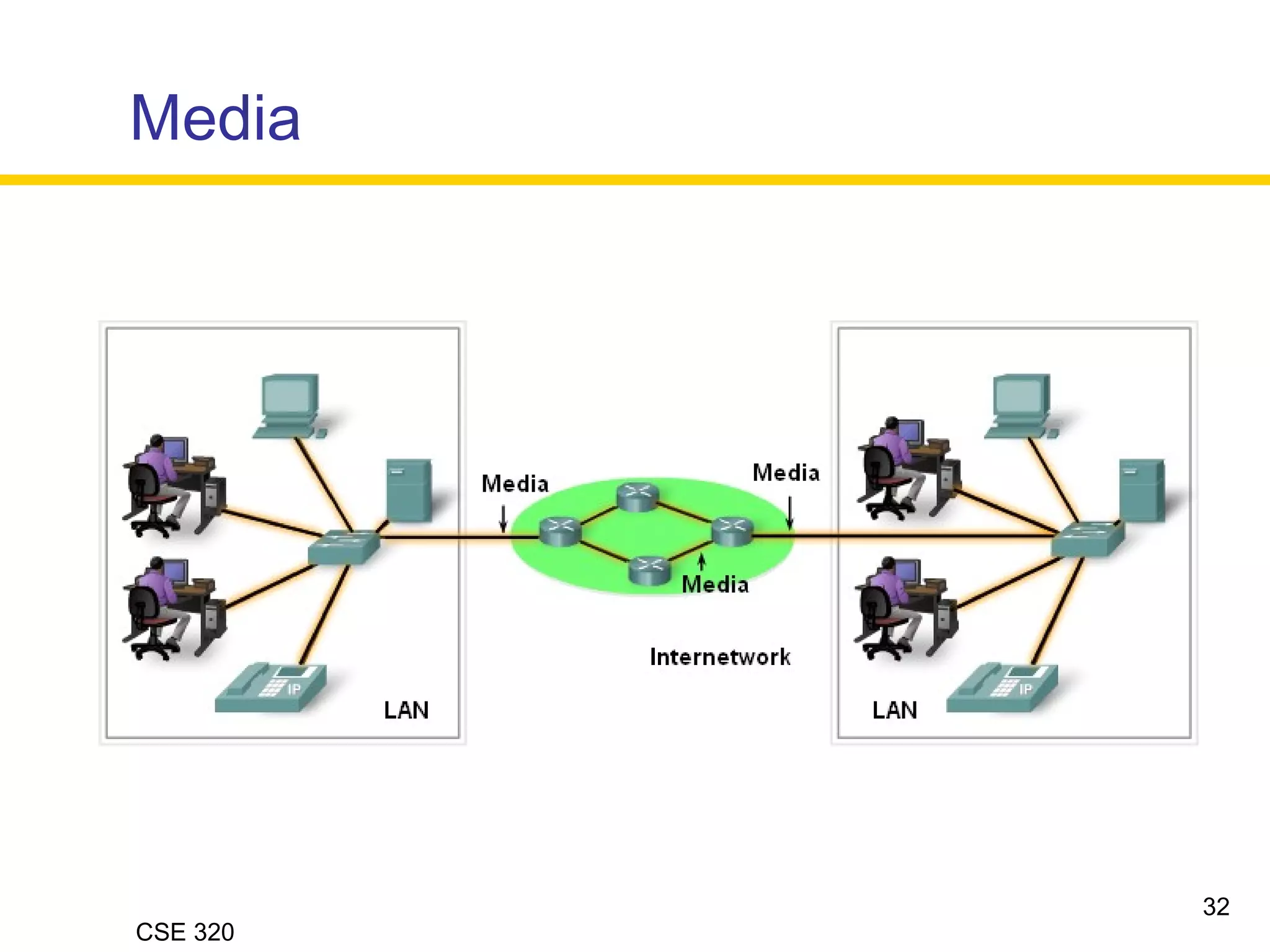
•Medium
•This is how the devices are connected together
•Messages
•Information that travels over the medium
•Rules/Protocols
•Governs how messages flow across network
Elements of Communication over Networks
12
CSE 320
1.13
Five elements/components of data communication
CSE 320
1.14
DATA COMMUNICATION vs TELECOMMUNICATIONDATA COMMUNICATION vs TELECOMMUNICATION
The termThe term telecommunicationtelecommunication means communication at ameans communication at a
distance. The worddistance. The word datadata refers to information presentedrefers to information presented
in whatever form is agreed upon by the parties creatingin whatever form is agreed upon by the parties creating
and using the data.and using the data. Data communicationsData communications are theare the
exchange of data between two devices via some form ofexchange of data between two devices via some form of
transmission medium such as a wire cable.transmission medium such as a wire cable.
CSE 320
1.15
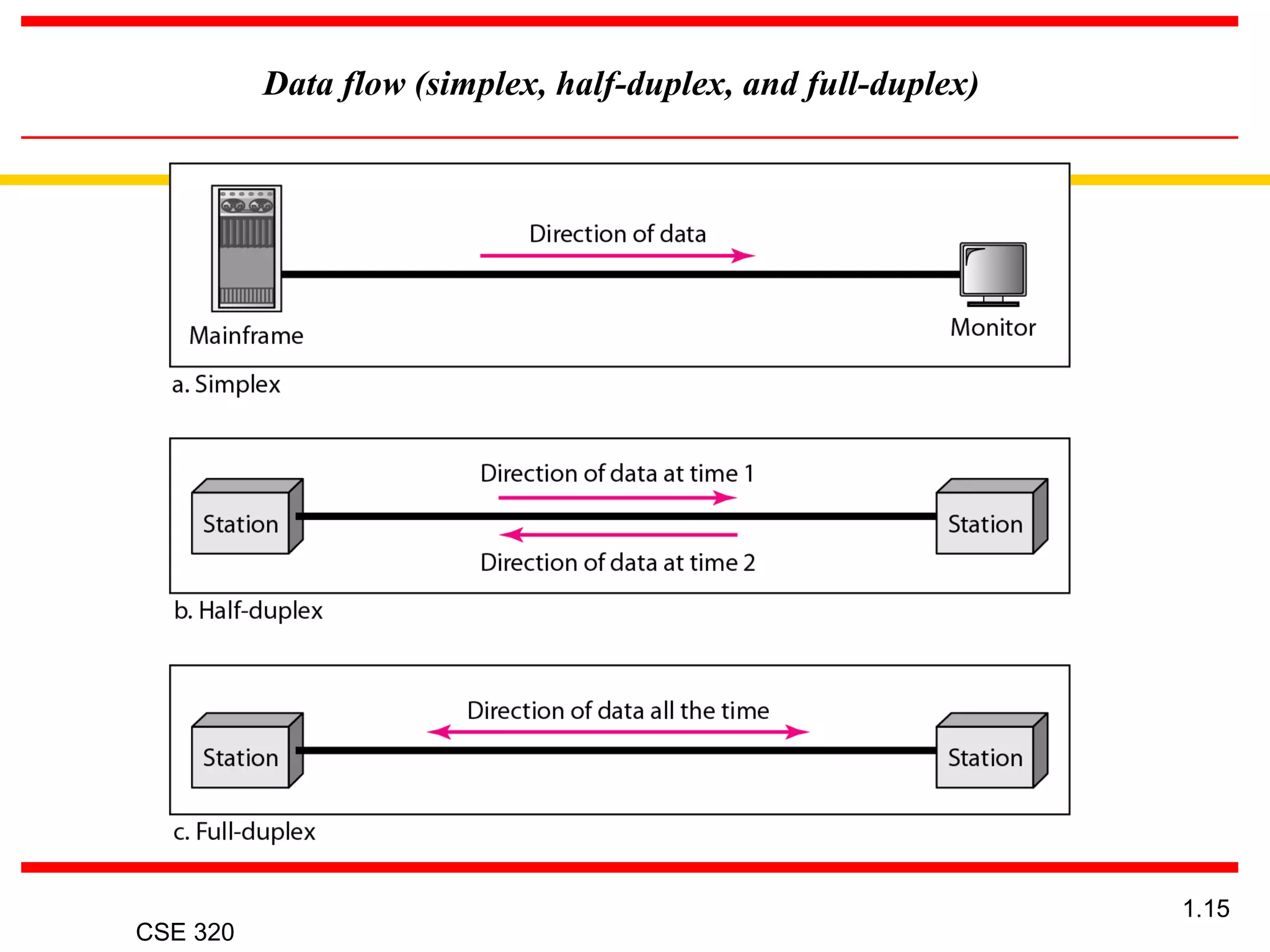
Data flow (simplex, half-duplex, and full-duplex)
CSE 320
1.16
NETWORKSNETWORKS
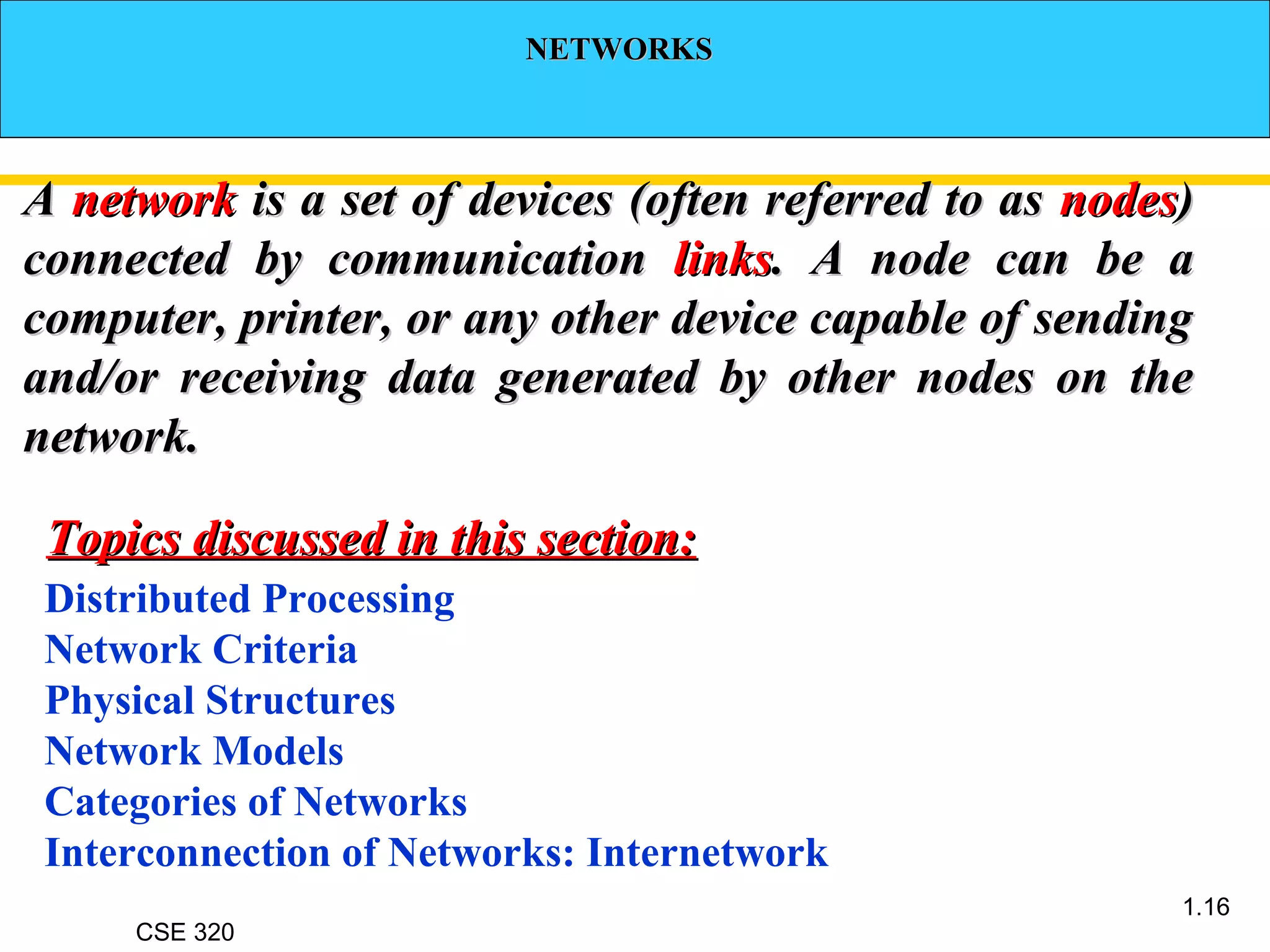
AA networknetwork is a set of devices (often referred to asis a set of devices (often referred to as nodesnodes))
connected by communicationconnected by communication linkslinks. A node can be a. A node can be a
computer, printer, or any other device capable of sendingcomputer, printer, or any other device capable of sending
and/or receiving data generated by other nodes on theand/or receiving data generated by other nodes on the
network.network.
Distributed Processing
Network Criteria
Physical Structures
Network Models
Categories of Networks
Interconnection of Networks: Internetwork
Topics discussed in this section:Topics discussed in this section:
CSE 320
1.17
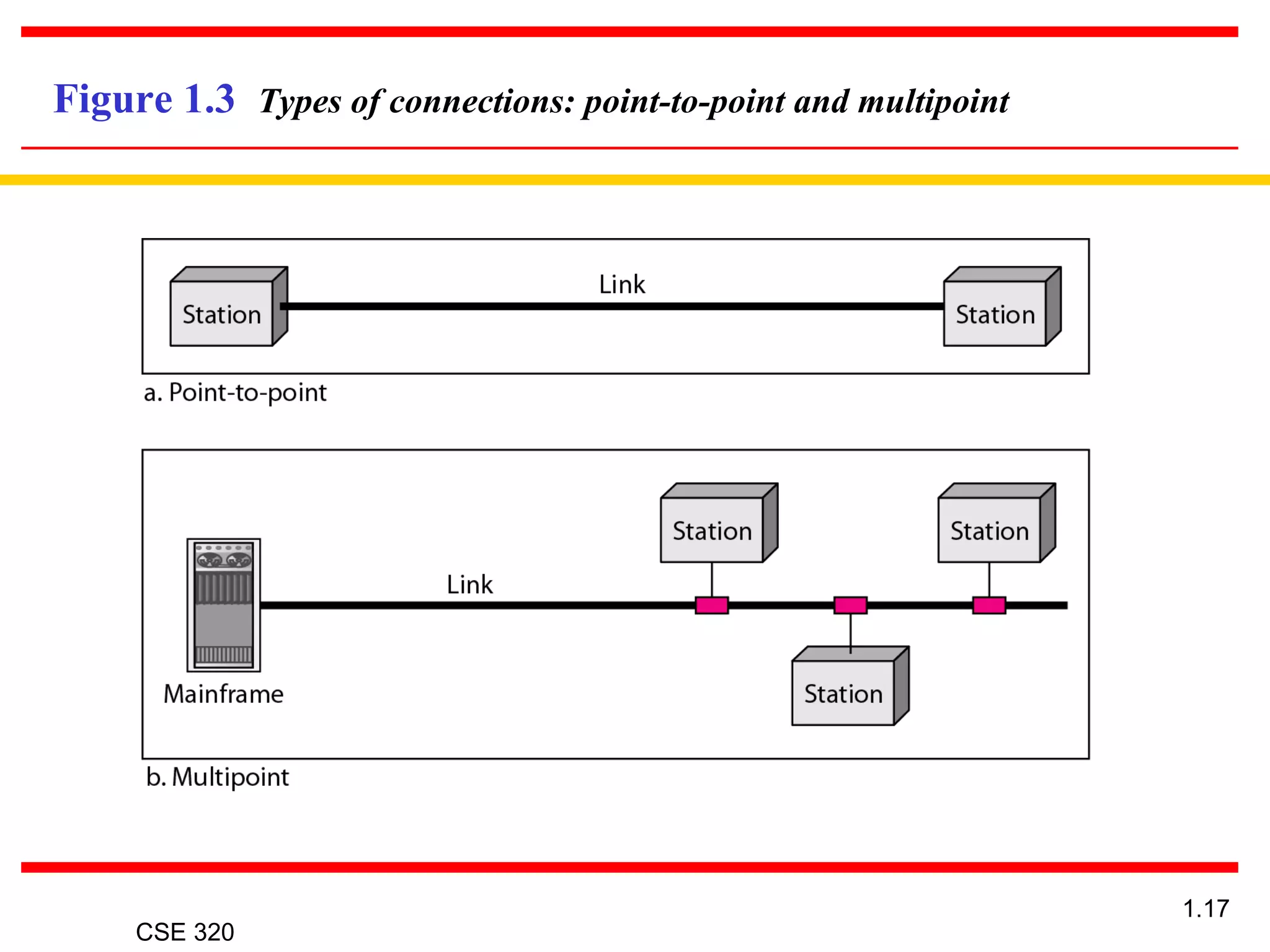
Figure 1.3 Types of connections: point-to-point and multipoint
CSE 320
1.18
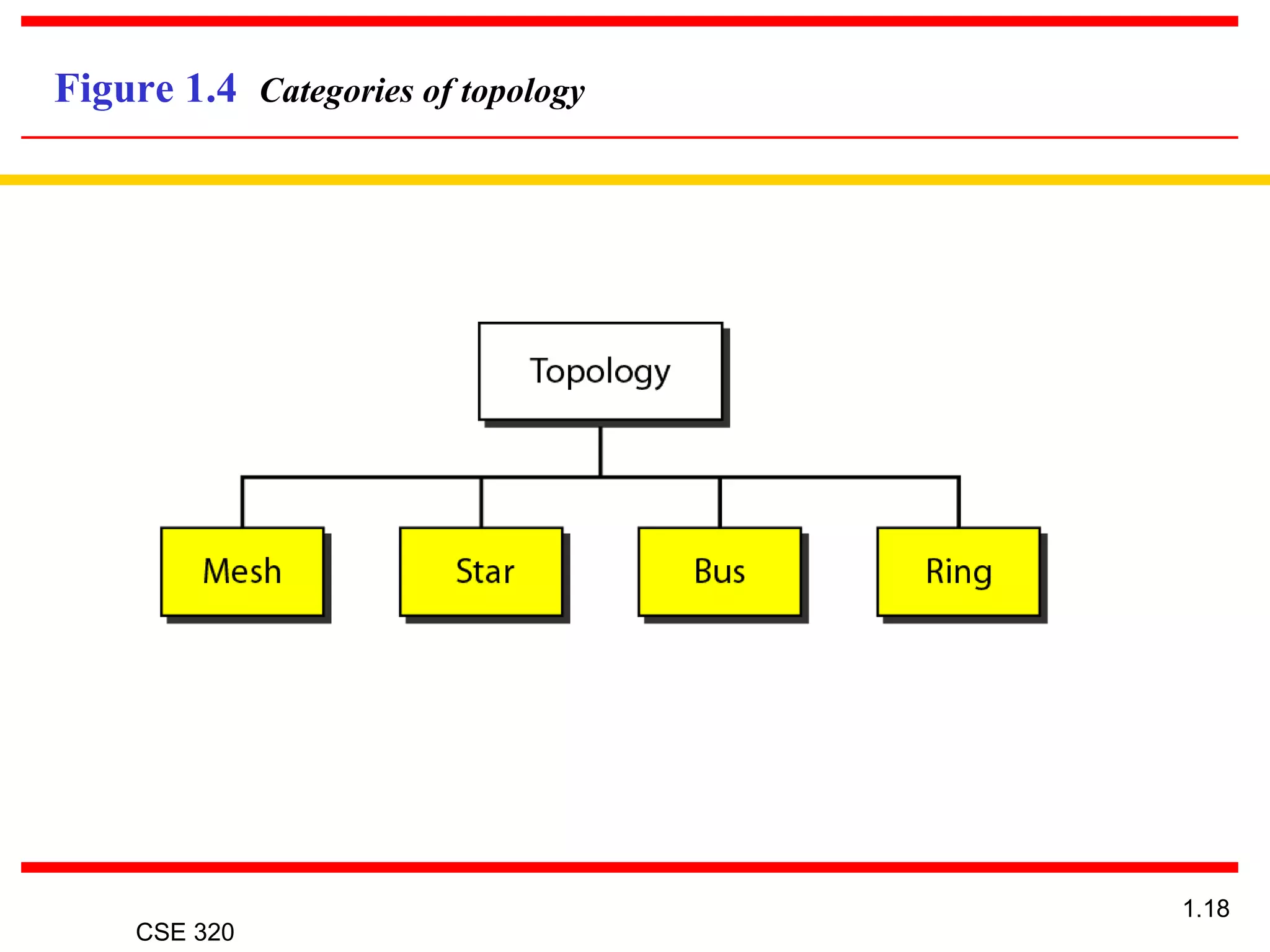
Figure 1.4 Categories of topology
CSE 320
1.19
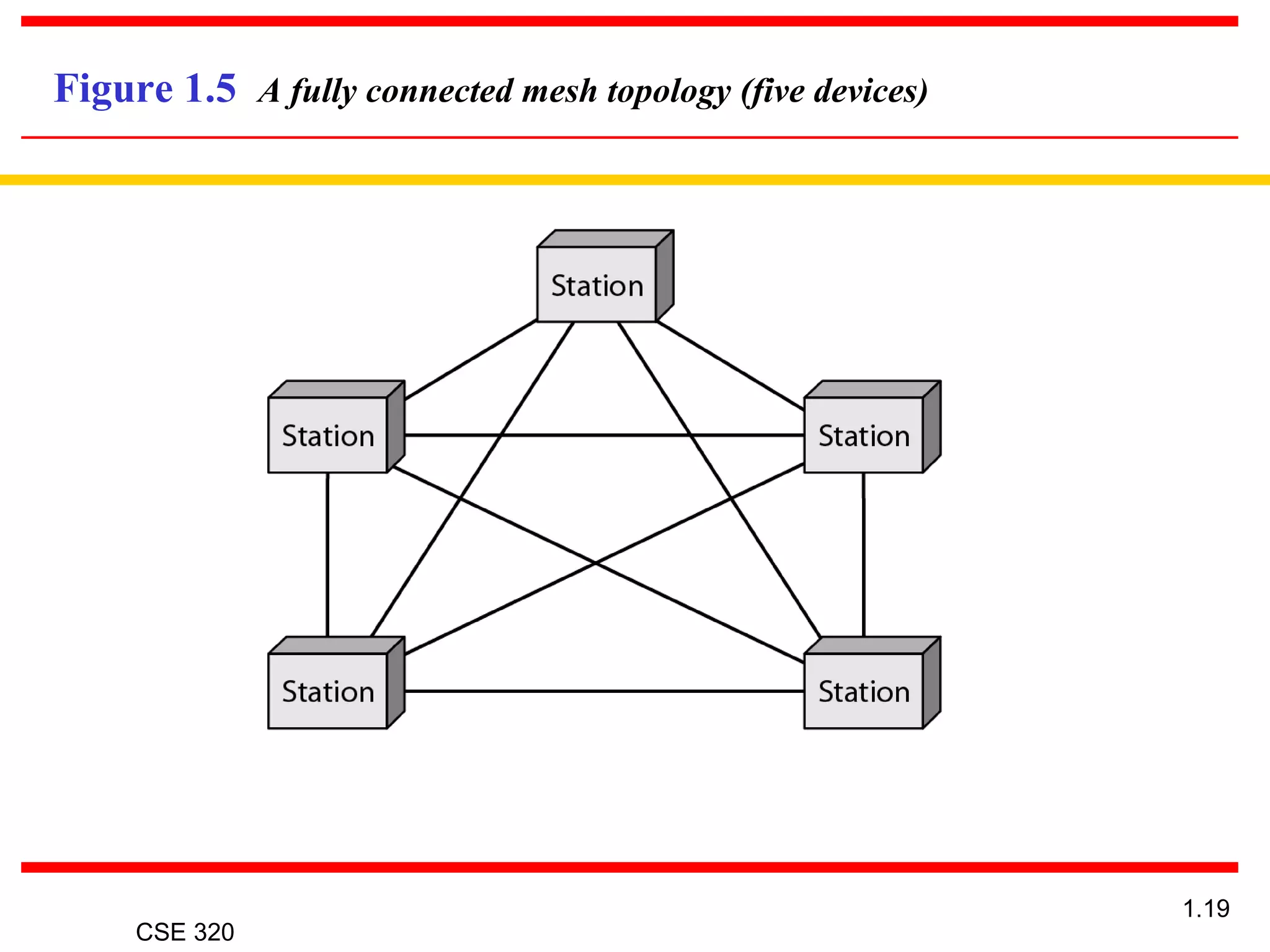
Figure 1.5 A fully connected mesh topology (five devices)
CSE 320
1.20
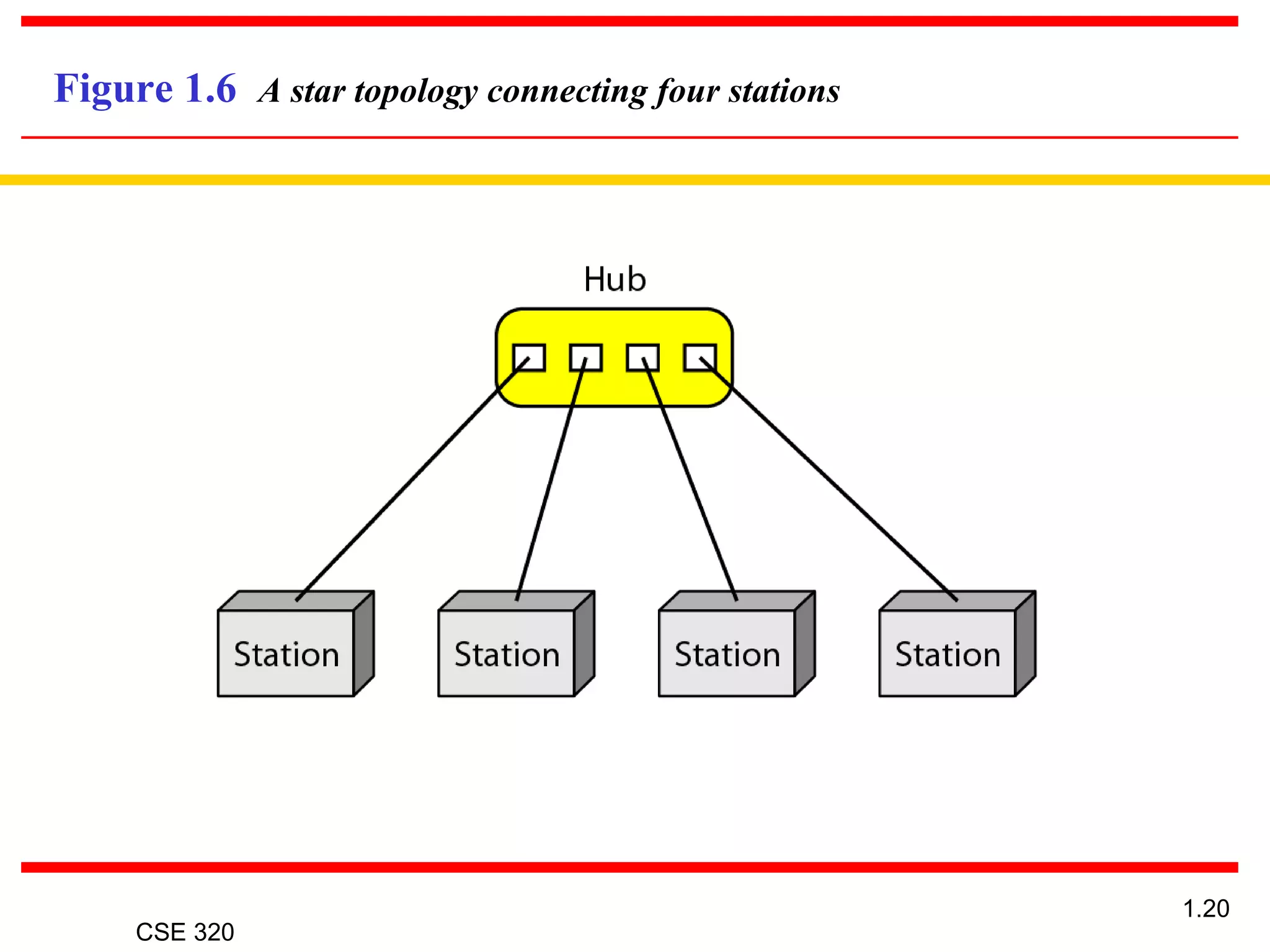
Figure 1.6 A star topology connecting four stations
CSE 320
1.21
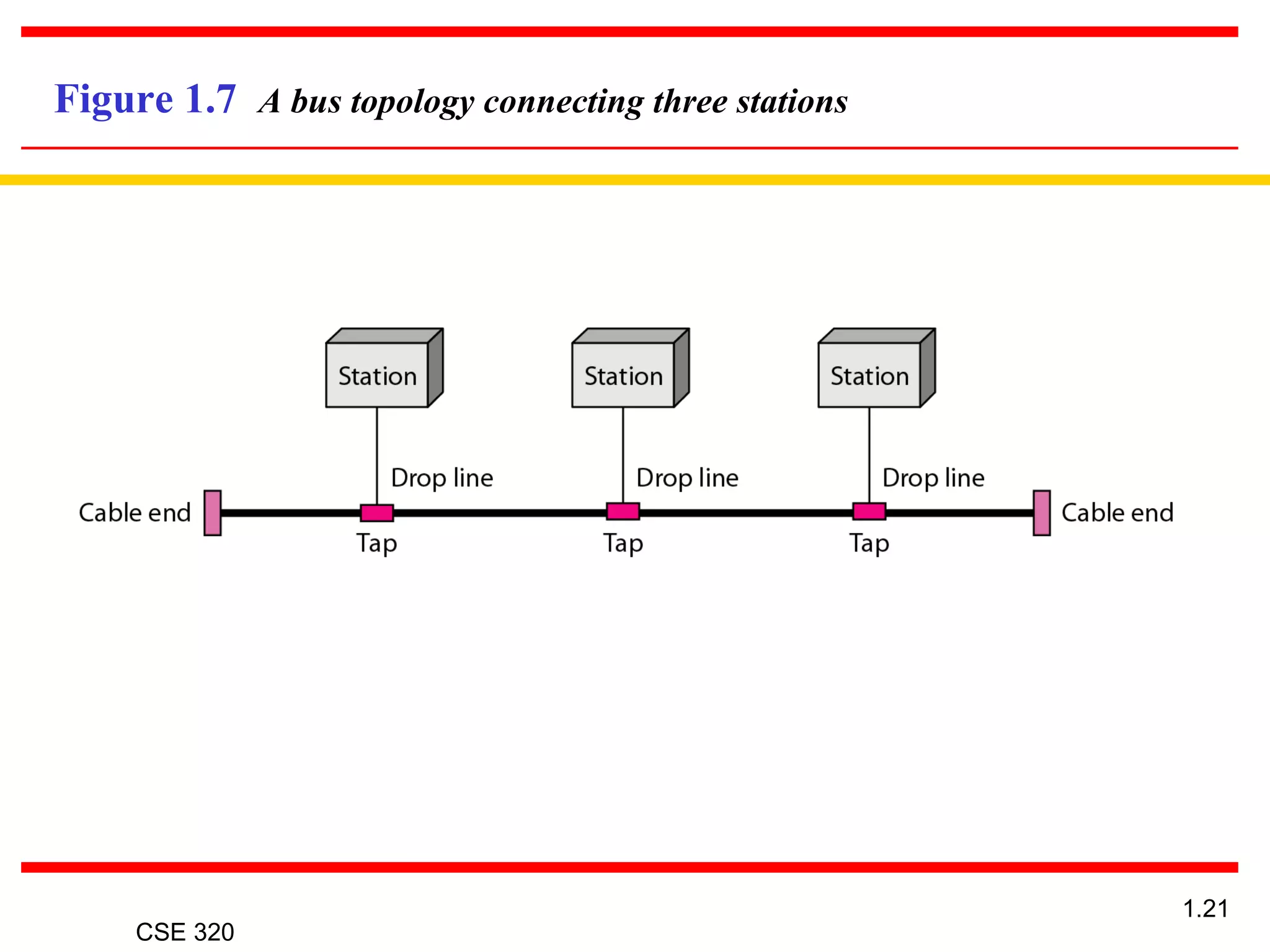
Figure 1.7 A bus topology connecting three stations
CSE 320
1.22
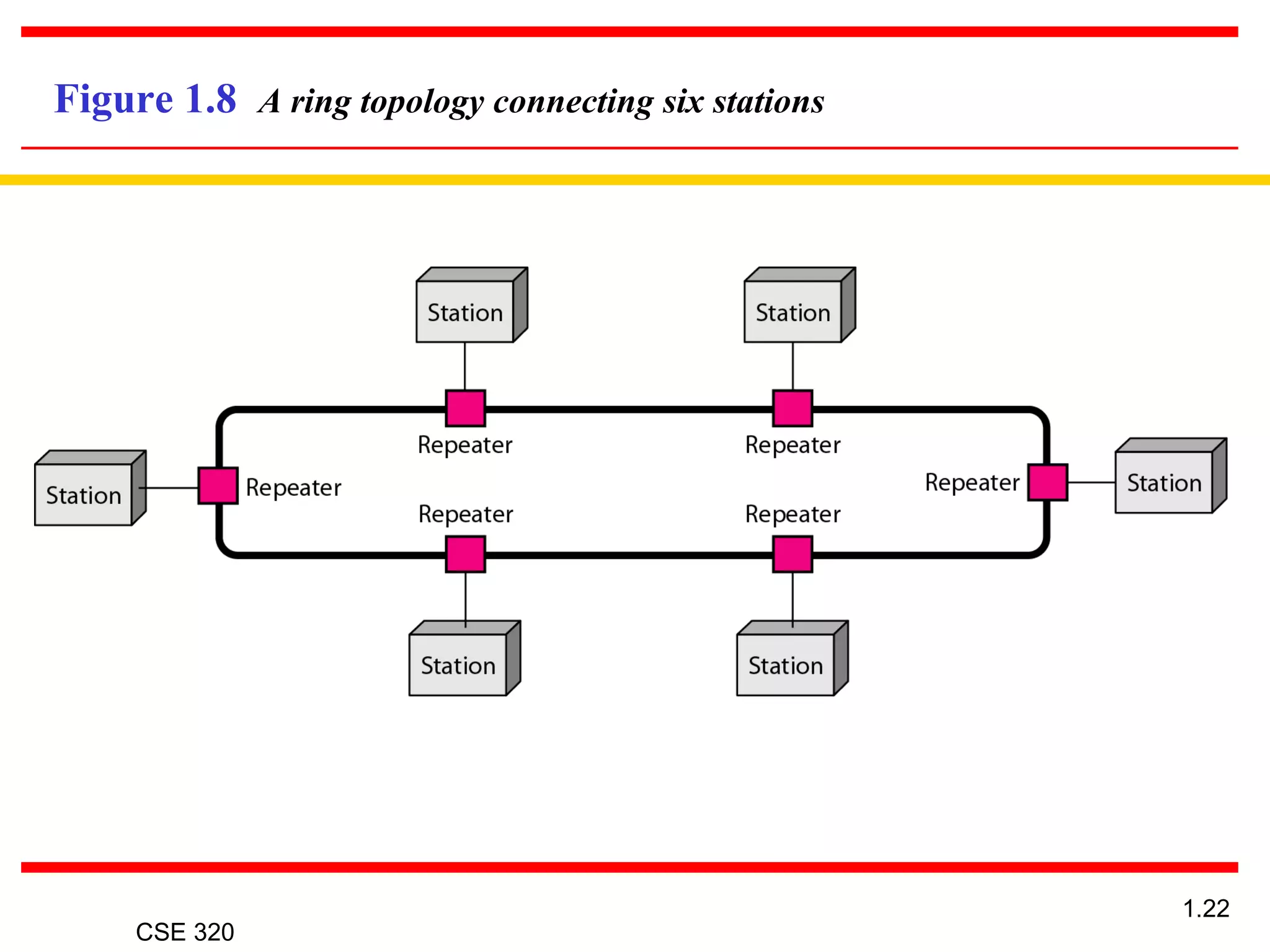
Figure 1.8 A ring topology connecting six stations
CSE 320
1.23
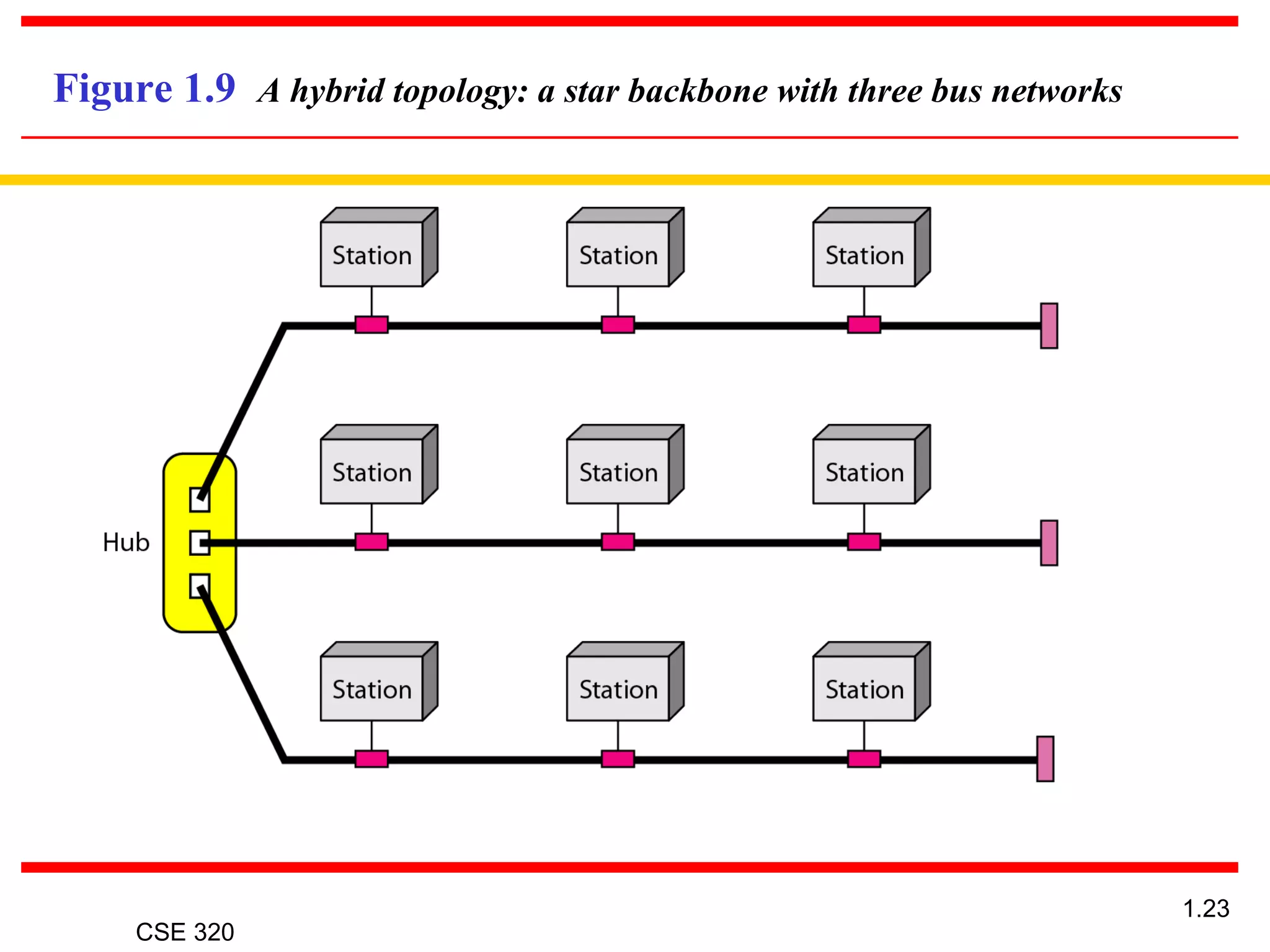
Figure 1.9 A hybrid topology: a star backbone with three bus networks
CSE 320
Elements of Communication over Networks
24
CSE 320
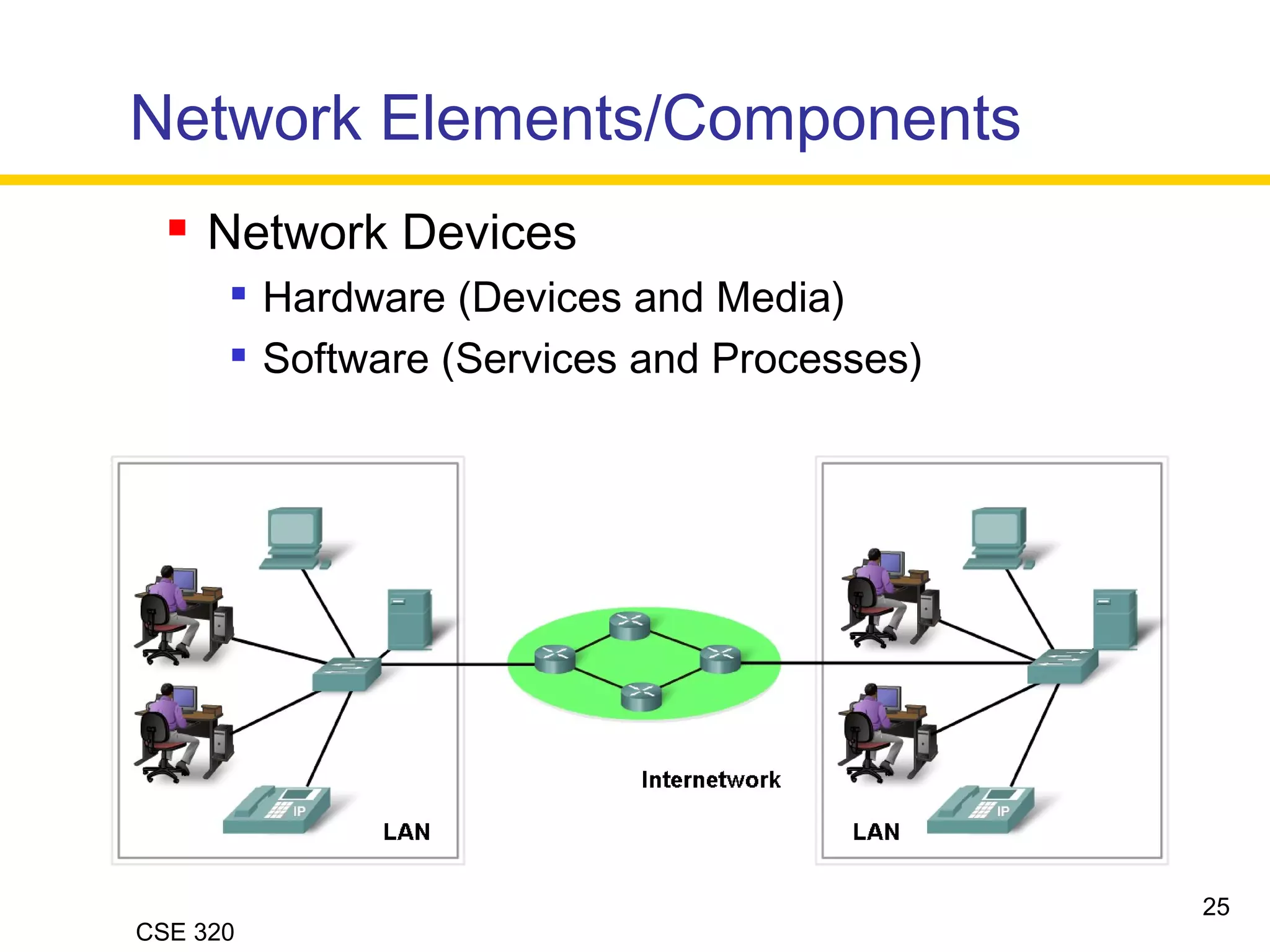
Network Elements/Components
 Network Devices

Hardware (Devices and Media)

Software (Services and Processes)
25
CSE 320
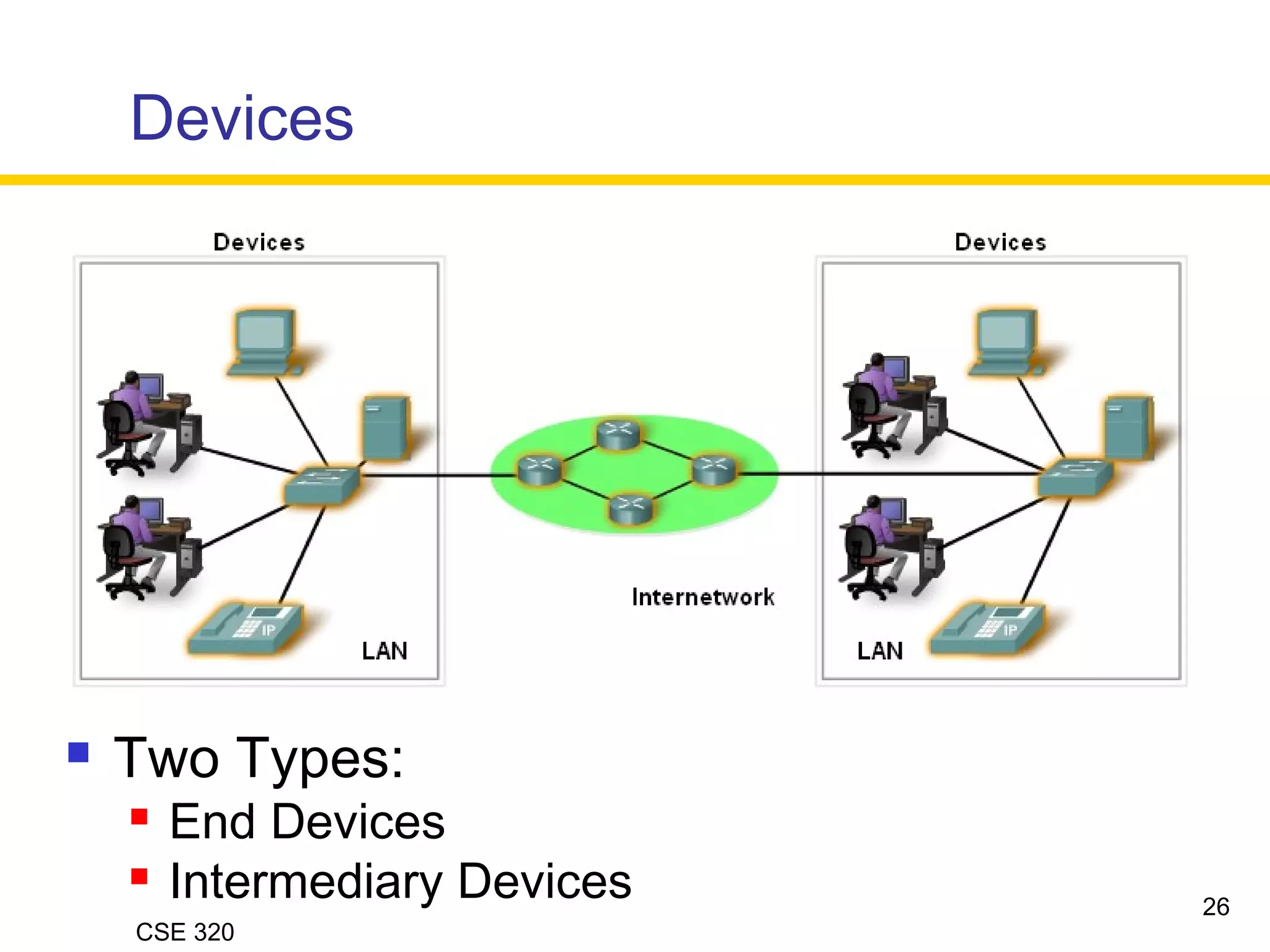
Devices
 Two Types:
 End Devices
 Intermediary Devices 26
CSE 320
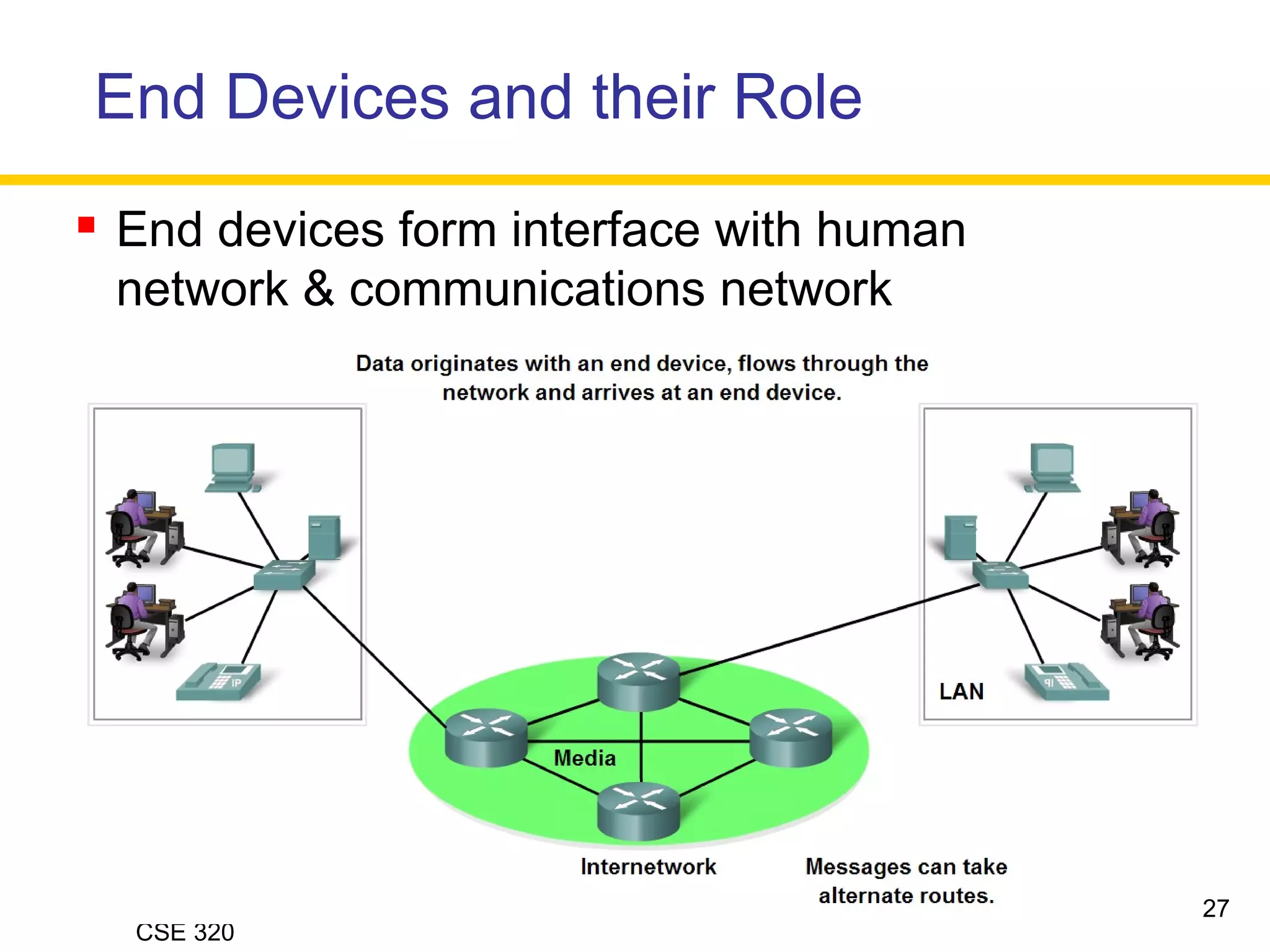
End Devices and their Role
 End devices form interface with human
network & communications network
27
CSE 320
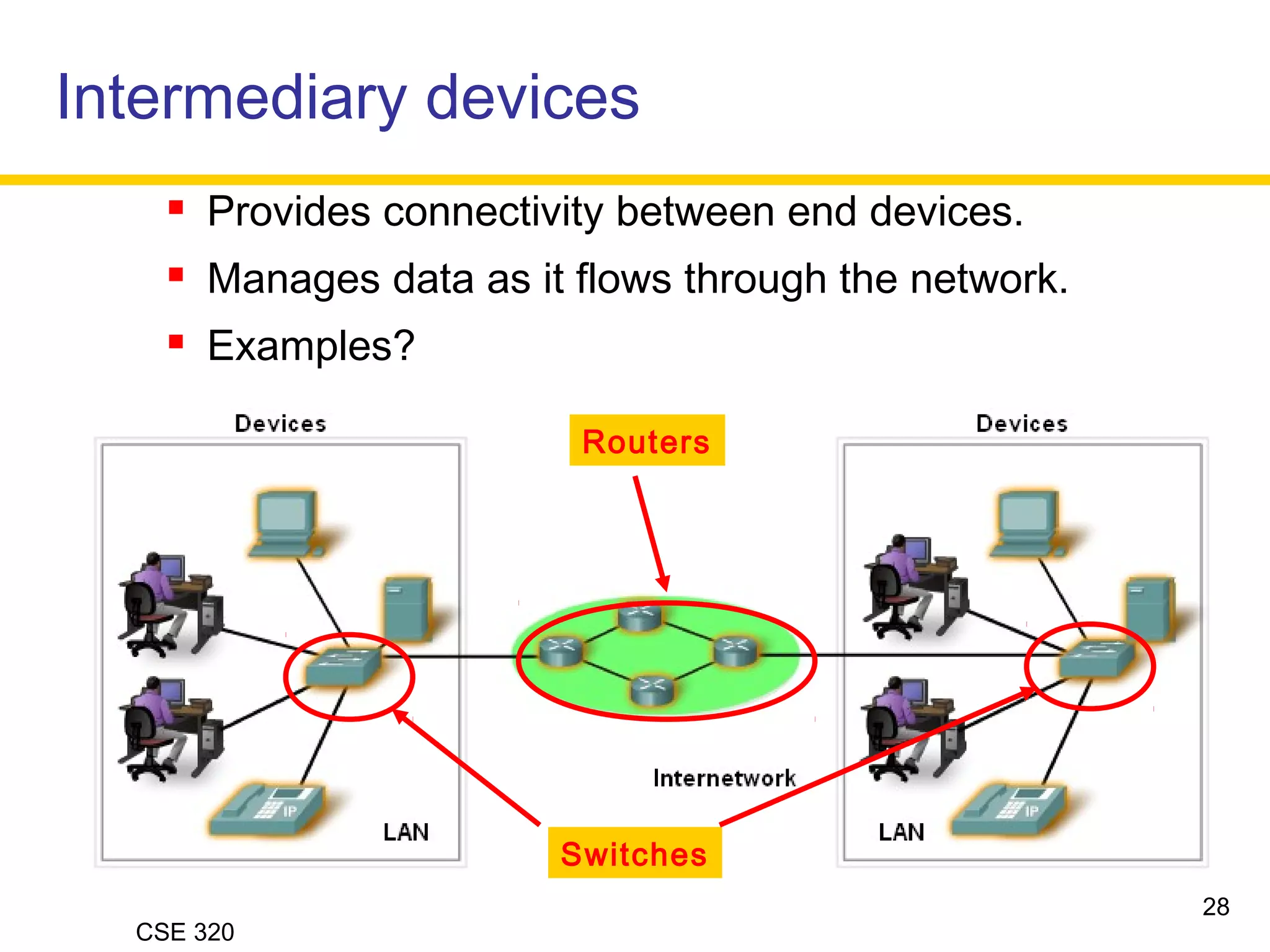
 Provides connectivity between end devices.
 Manages data as it flows through the network.
 Examples?
Switches
Routers
Intermediary devices
28
CSE 320
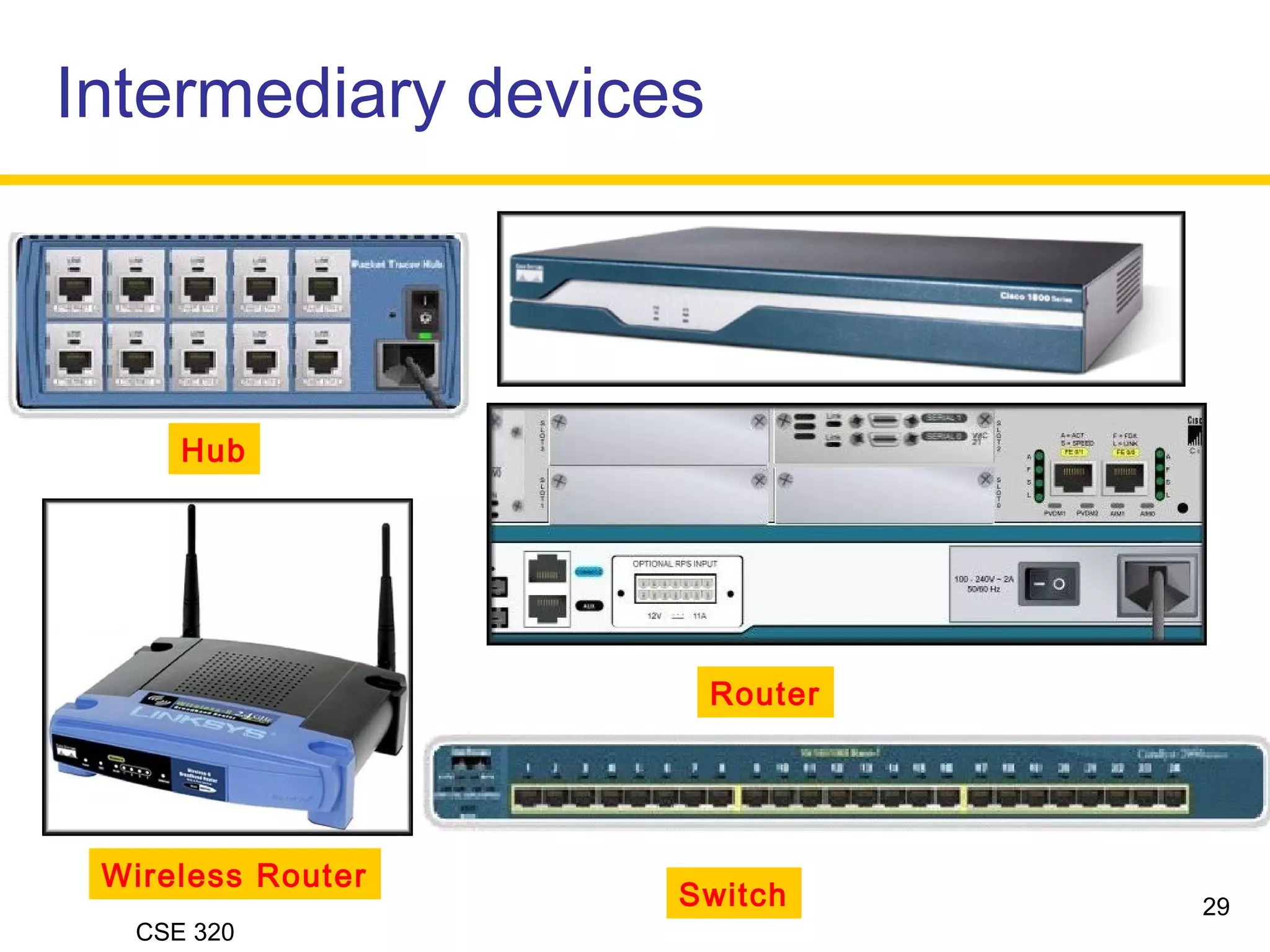
Intermediary devices
Switch
Router
Hub
Wireless Router
29
CSE 320
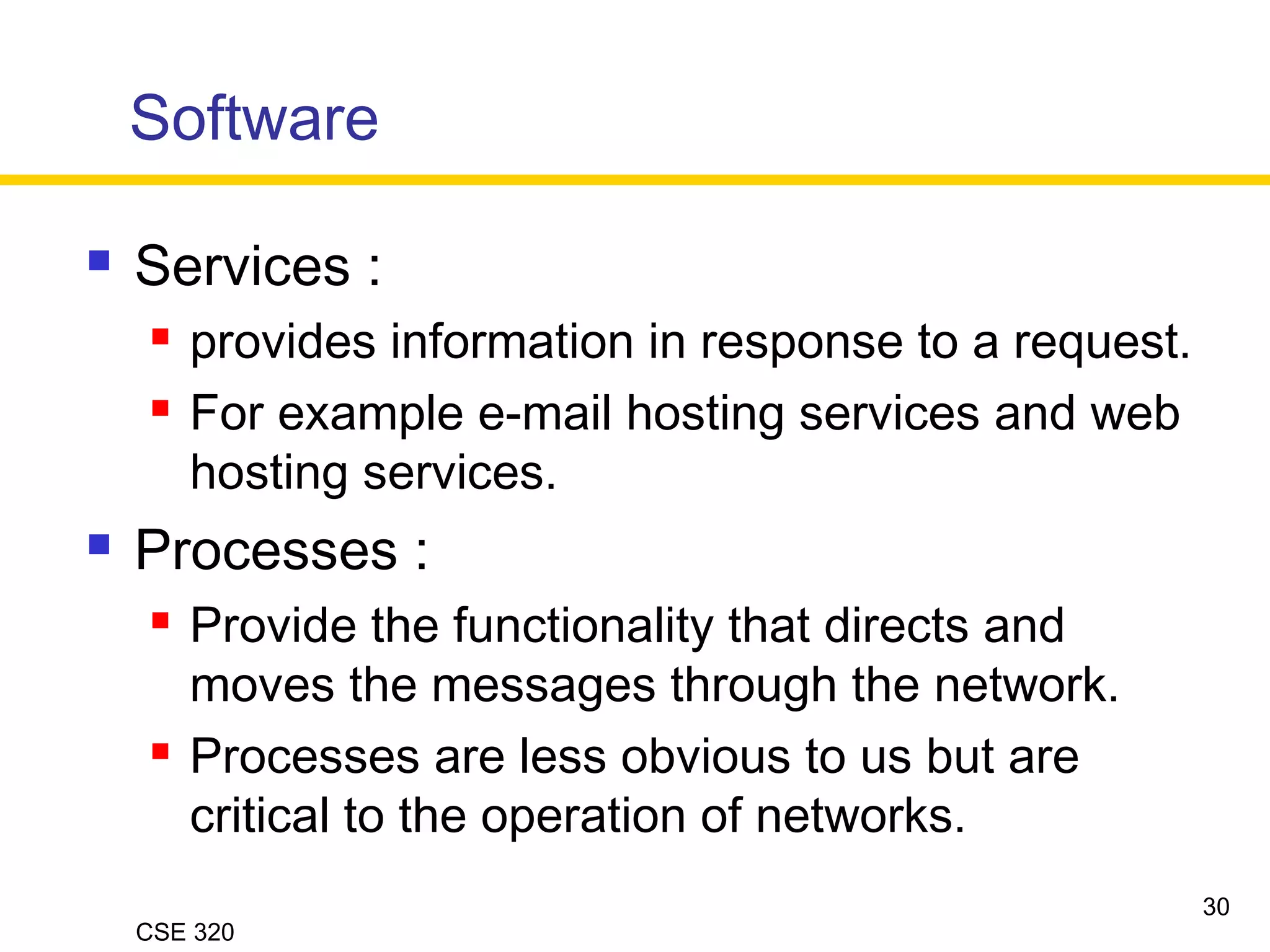
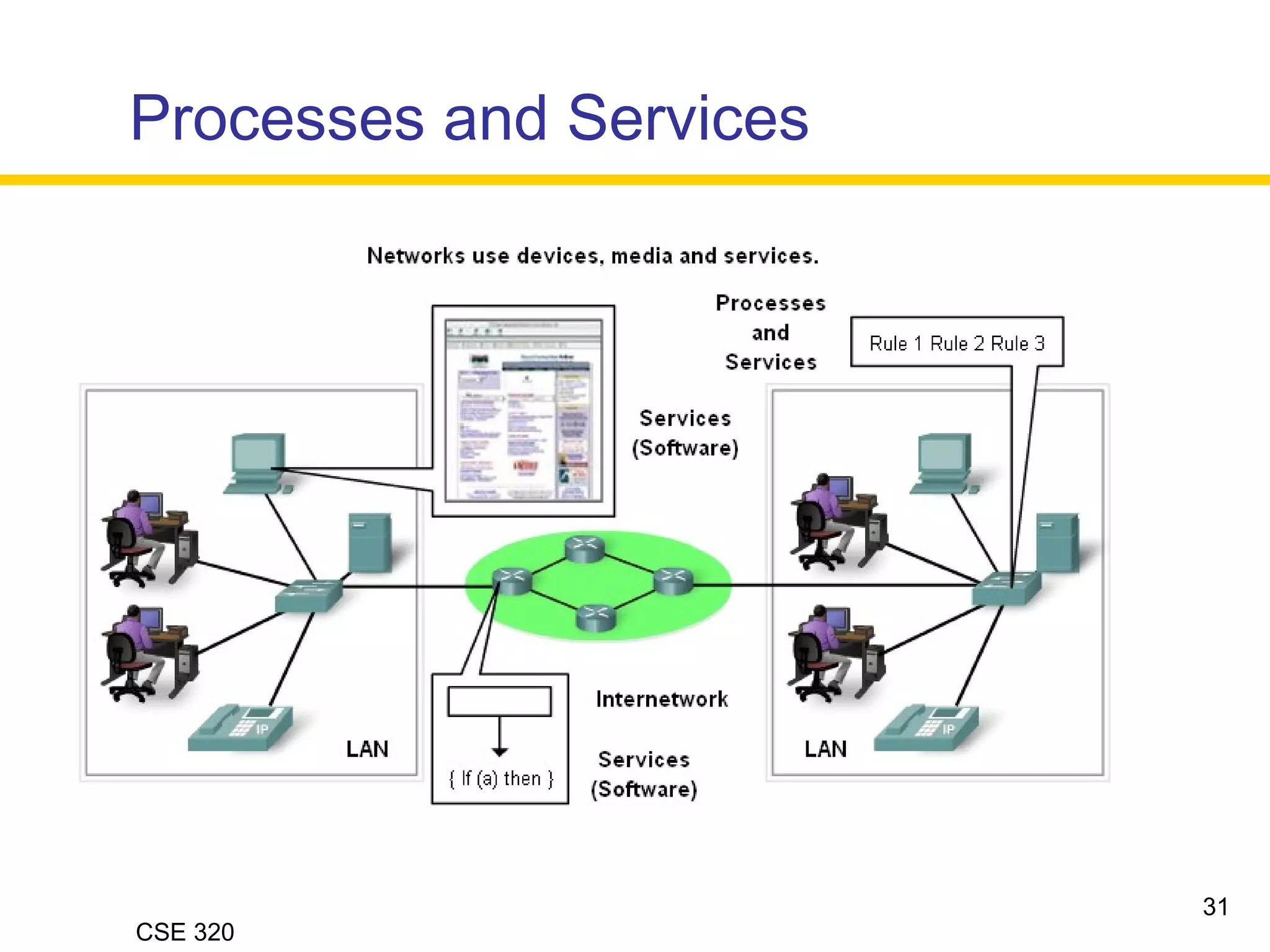
Software
 Services :
 provides information in response to a request.
 For example e-mail hosting services and web
hosting services.
 Processes :
 Provide the functionality that directs and
moves the messages through the network.
 Processes are less obvious to us but are
critical to the operation of networks.
30
CSE 320
Processes and Services
31
CSE 320
Media
32
CSE 320
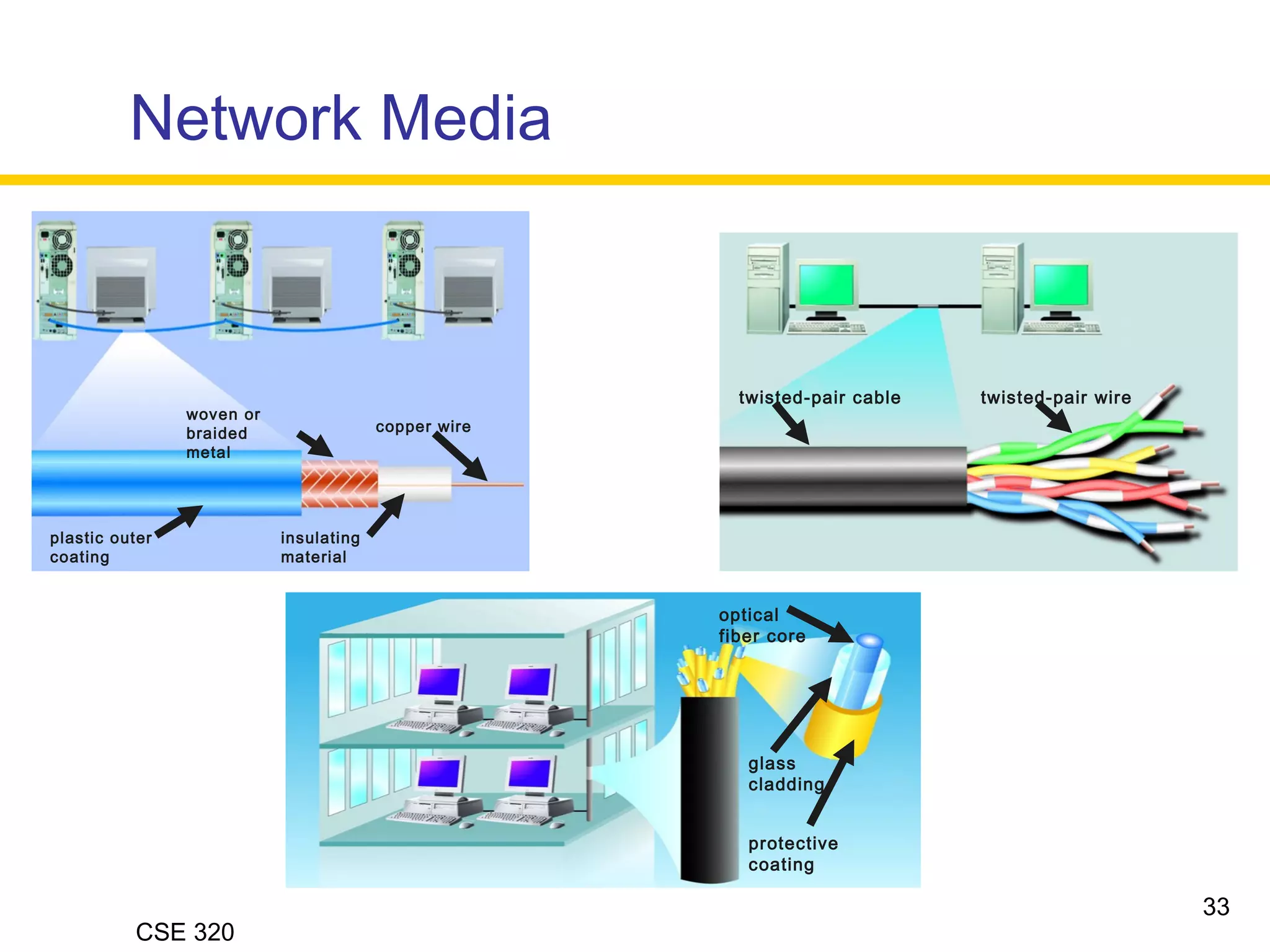
Network Media
33
plastic outer
coating
woven or
braided
metal
insulating
material
copper wire
twisted-pair cable twisted-pair wire
protective
coating
glass
cladding
optical
fiber core
CSE 320
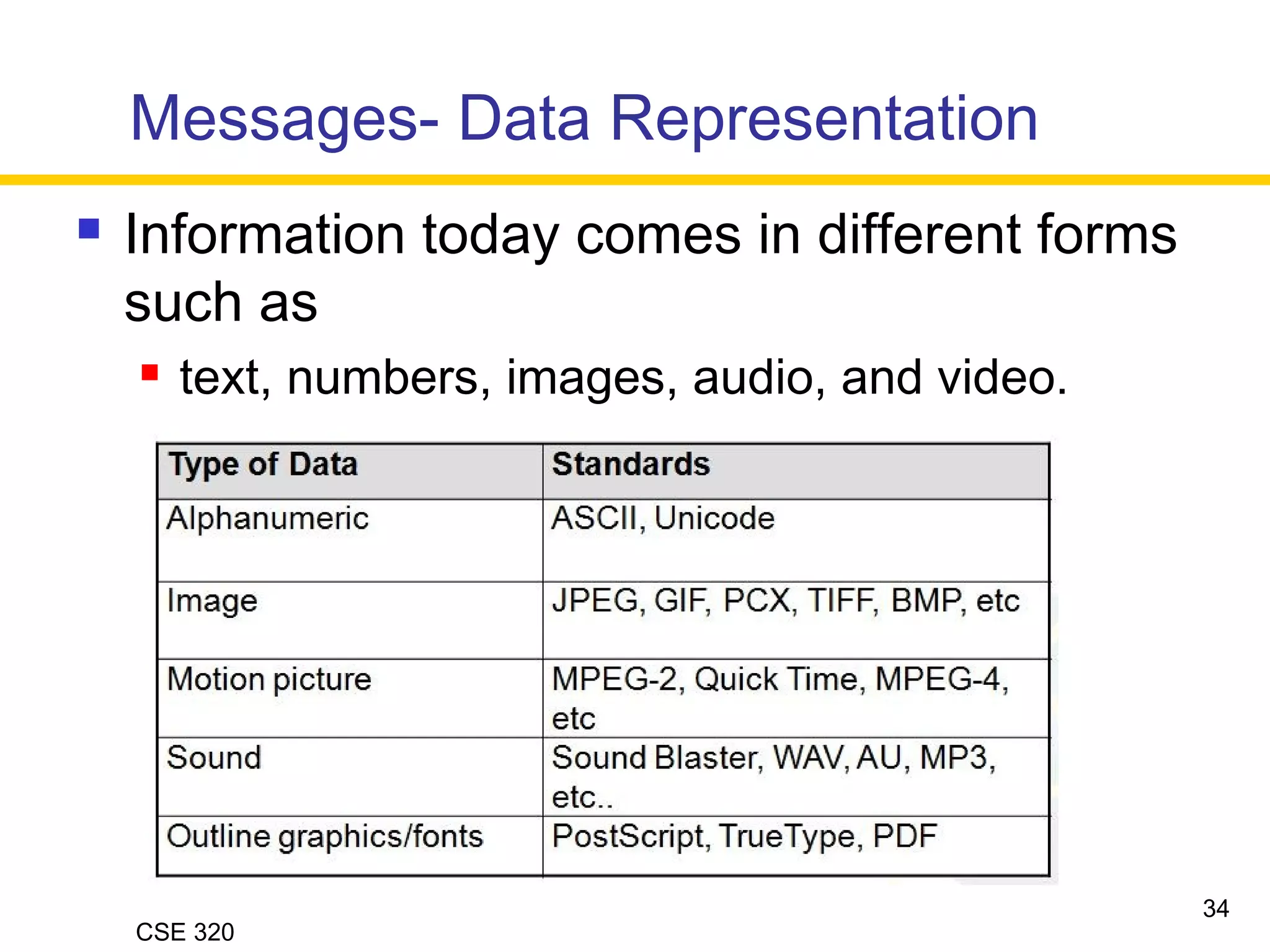
Messages- Data Representation
 Information today comes in different forms
such as
 text, numbers, images, audio, and video.
34
CSE 320
Data Representation-Text
 Text : Different sets of bit patterns are
designed to represent text symbols. Each
set is called a code.
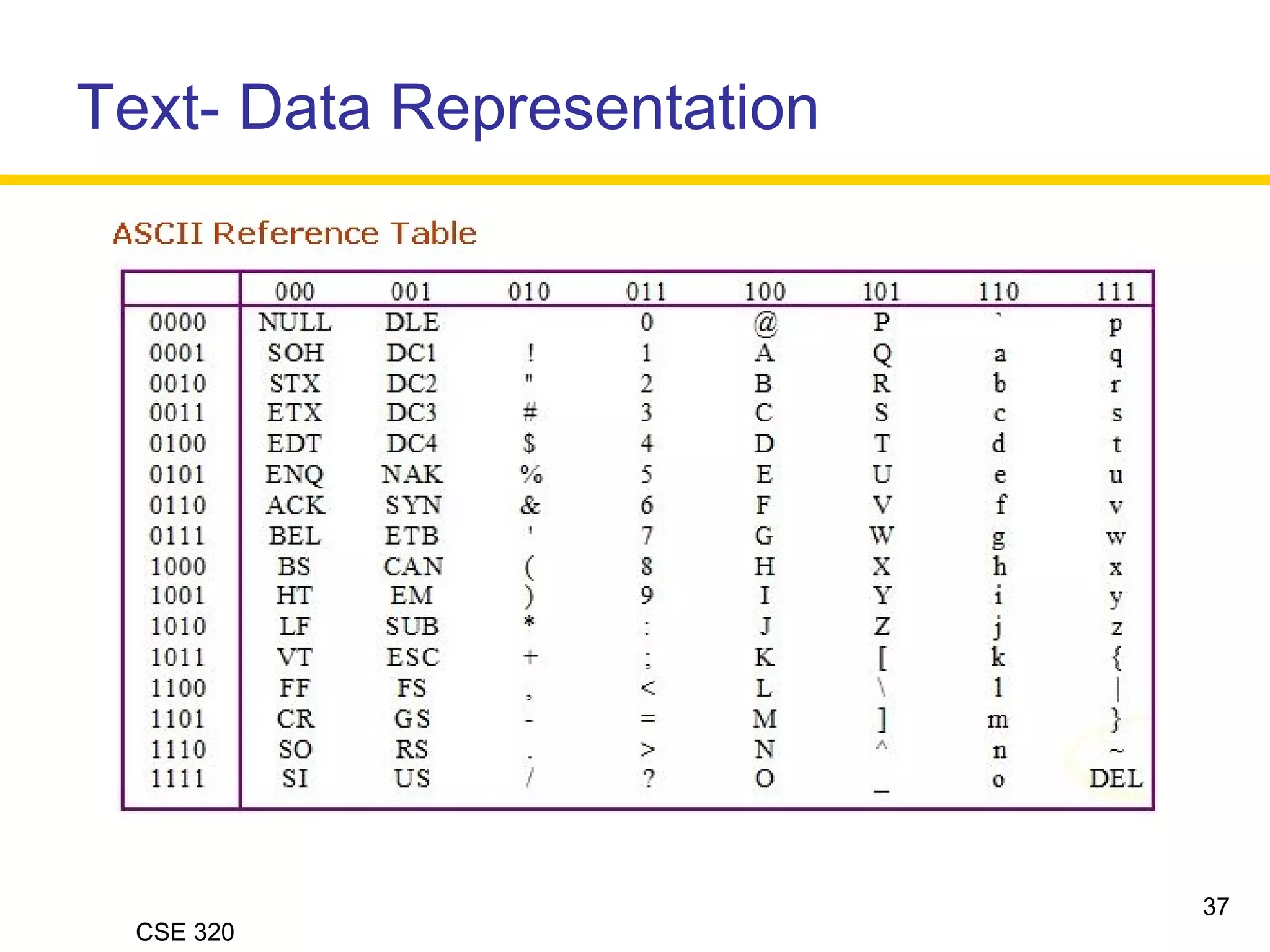
 ASCII

American Standard Code for Information
Interchange: 7-bit code/char, 1 bit for parity.
 Unicode - 16 bit codes to represent a symbol.
35
CSE 320
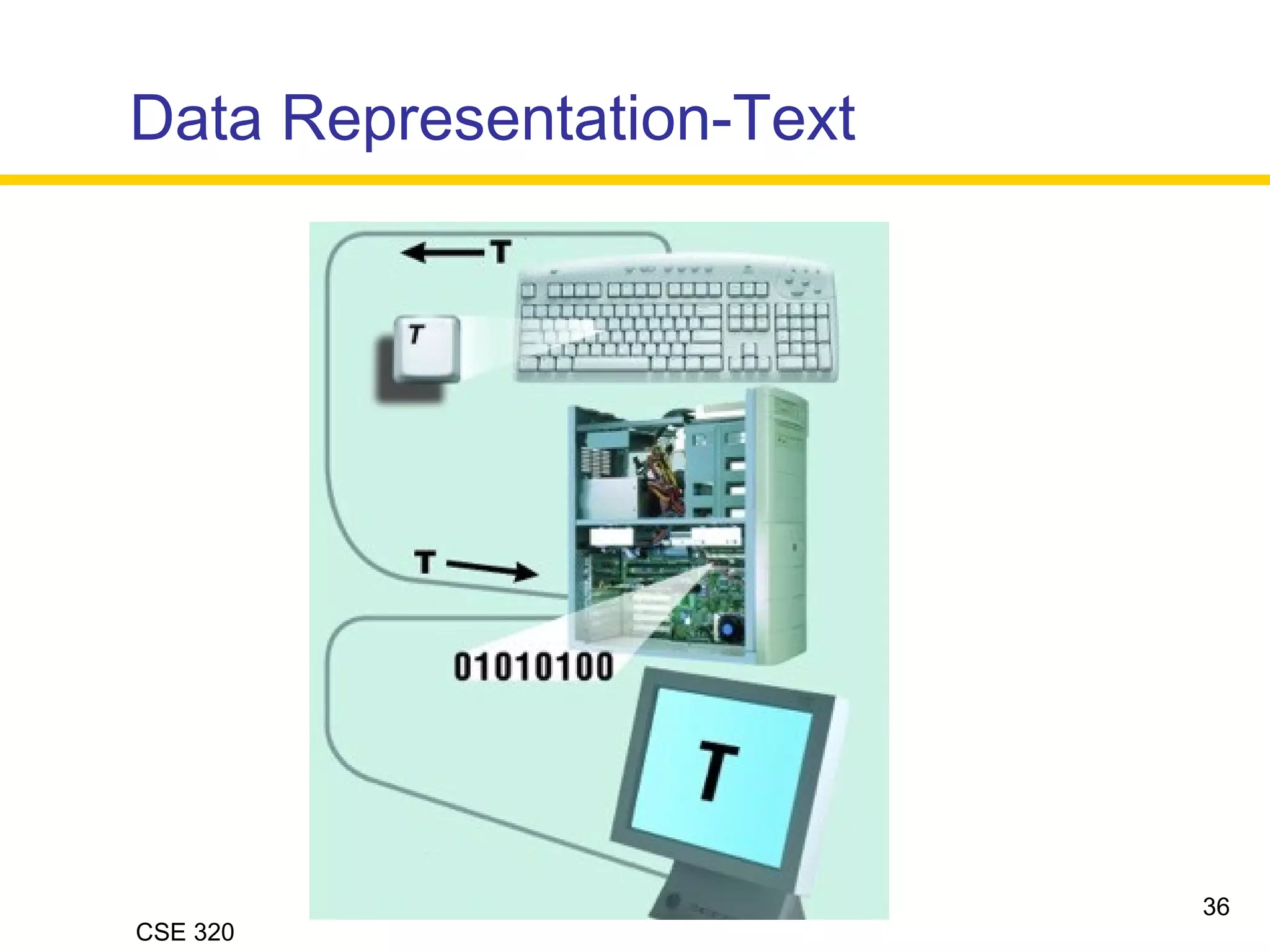
Data Representation-Text
36
CSE 320
Text- Data Representation
37
CSE 320
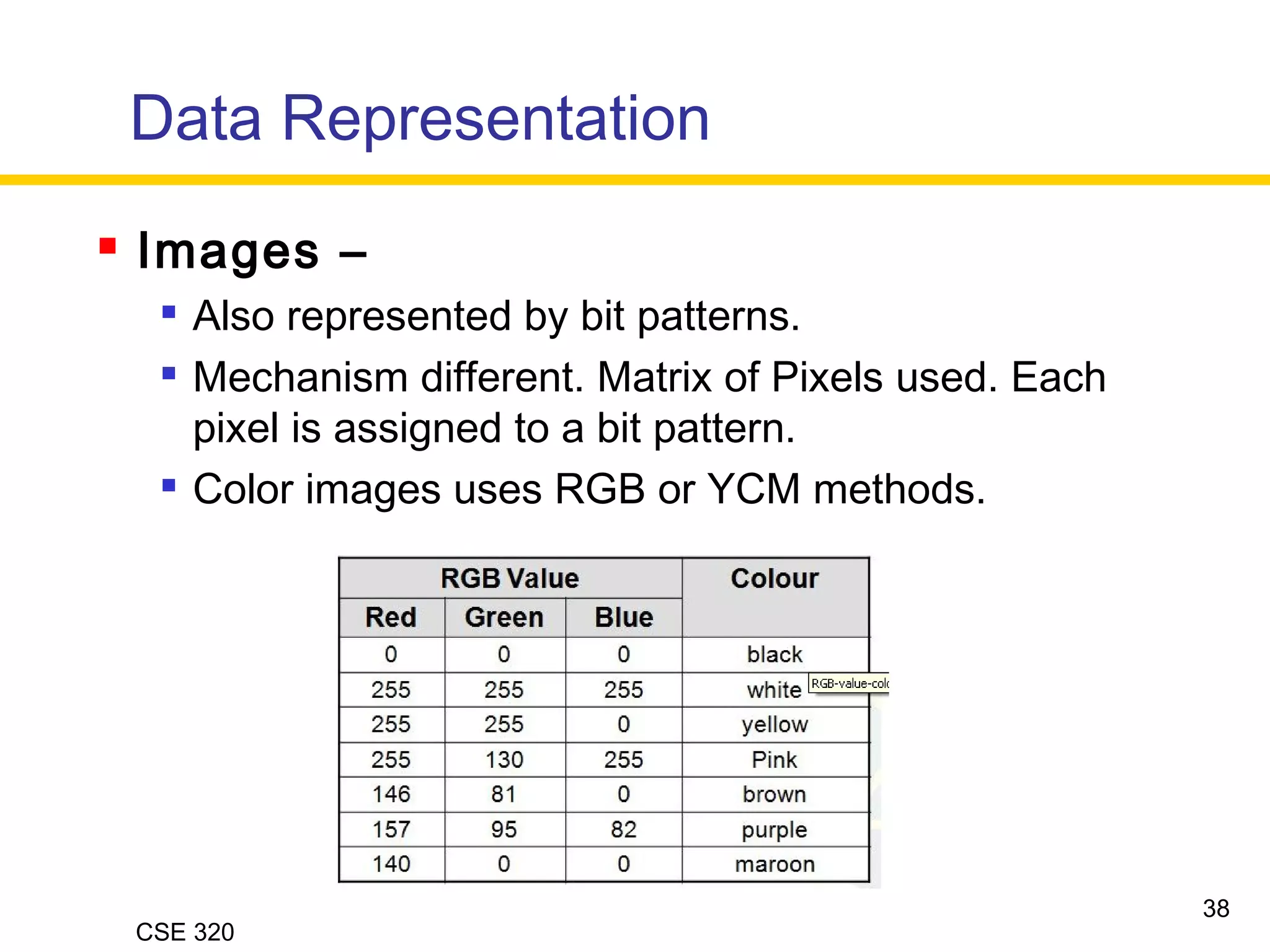
 Images –

Also represented by bit patterns.

Mechanism different. Matrix of Pixels used. Each
pixel is assigned to a bit pattern.

Color images uses RGB or YCM methods.
Data Representation
38
CSE 320
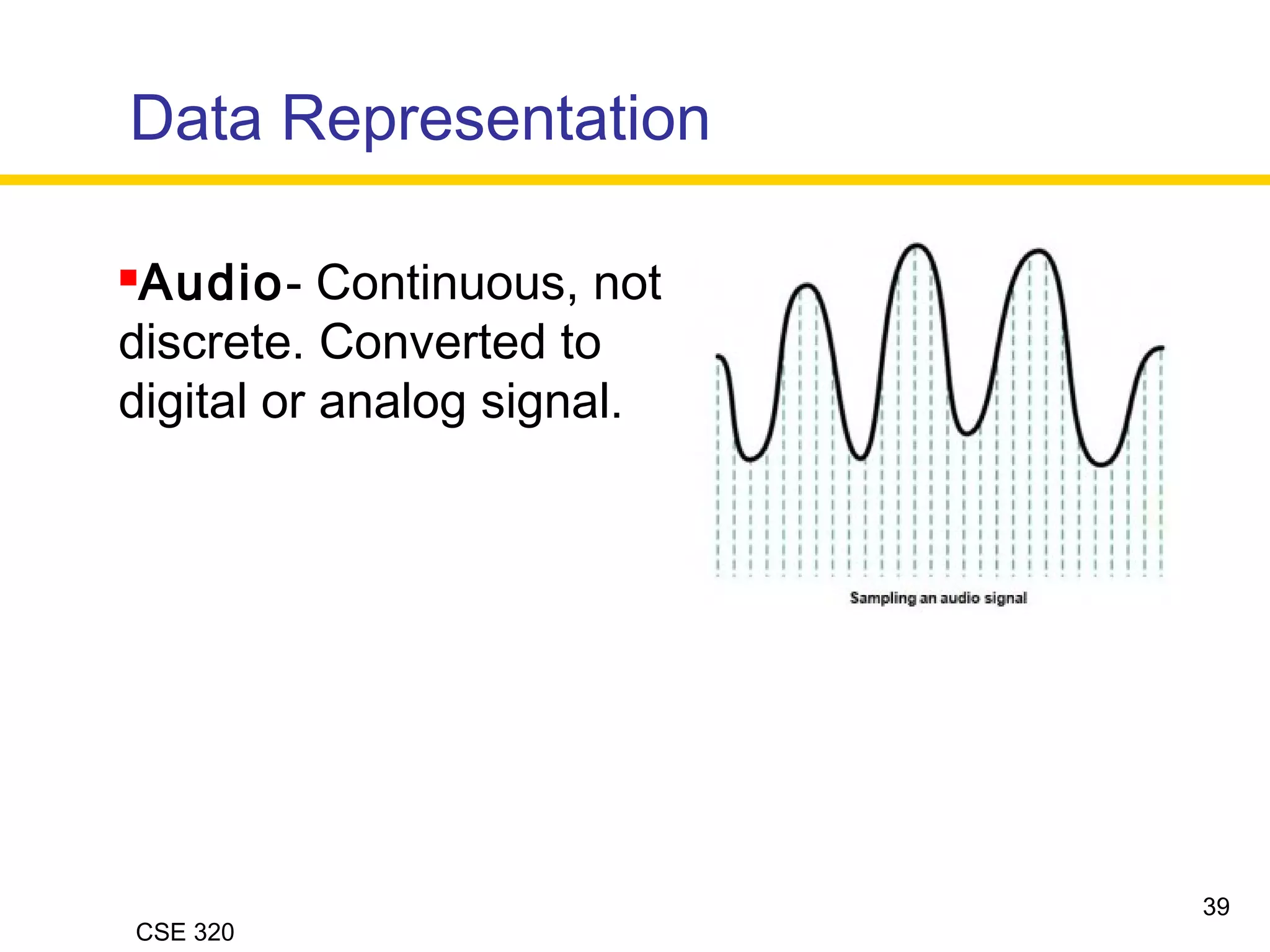
Audio- Continuous, not
discrete. Converted to
digital or analog signal.
Data Representation
39
CSE 320
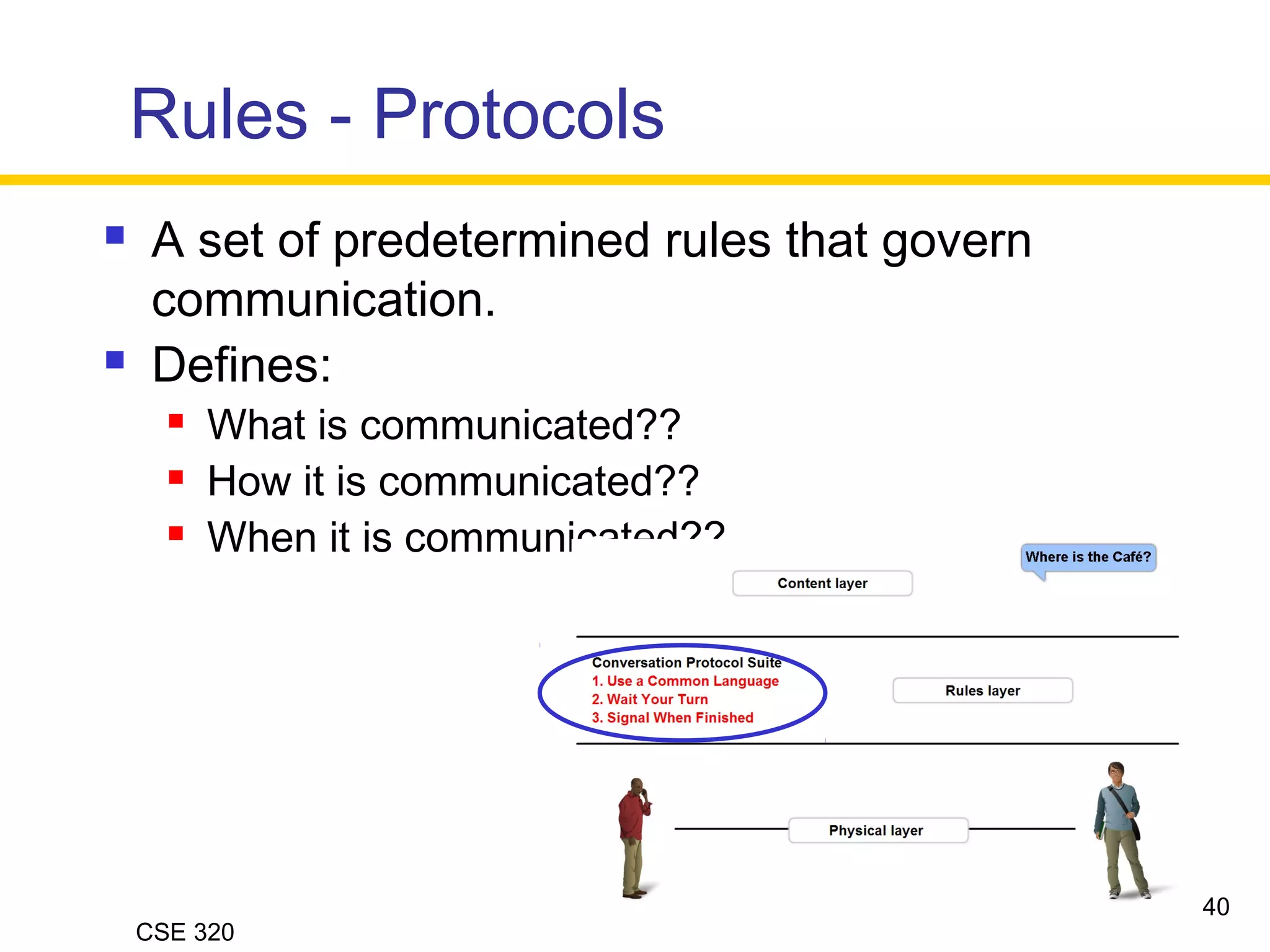
Rules - Protocols
 A set of predetermined rules that govern
communication.
 Defines:
 What is communicated??
 How it is communicated??
 When it is communicated??
40
CSE 320
Network Types
 PAN
 LAN
 MAN
 WAN
41
CSE 320
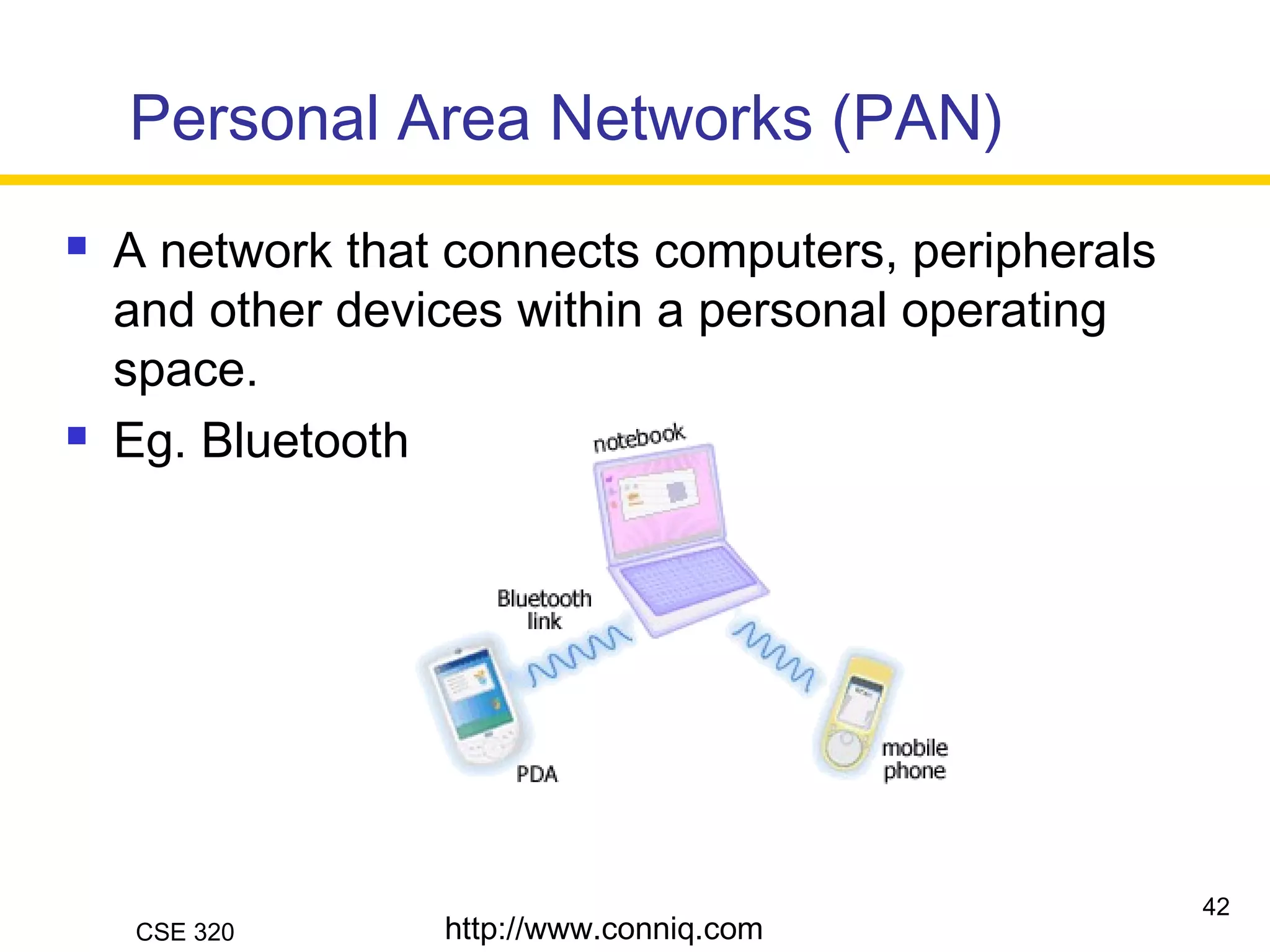
Personal Area Networks (PAN)
 A network that connects computers, peripherals
and other devices within a personal operating
space.
 Eg. Bluetooth
http://www.conniq.com
42
CSE 320
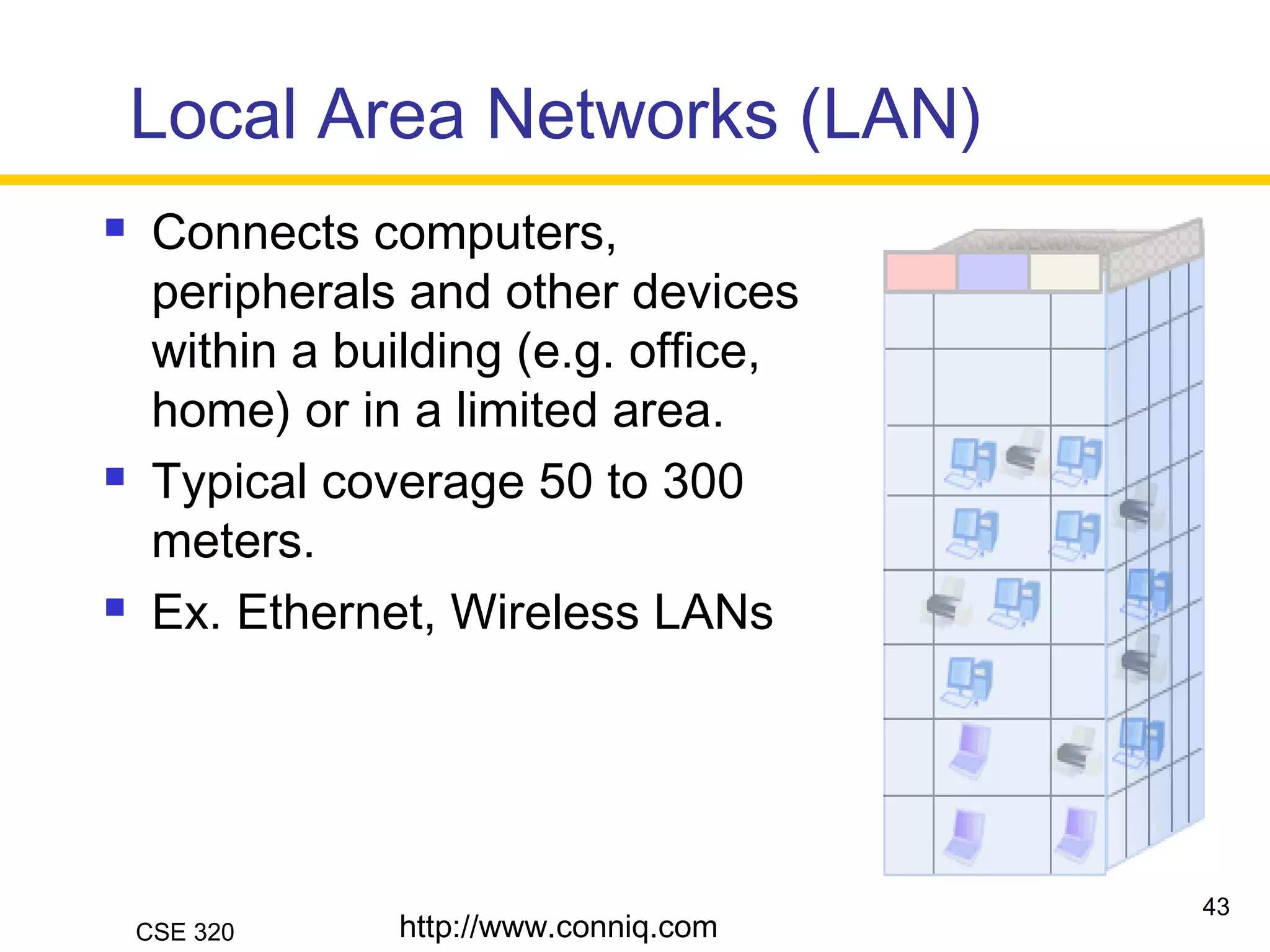
Local Area Networks (LAN)
 Connects computers,
peripherals and other devices
within a building (e.g. office,
home) or in a limited area.
 Typical coverage 50 to 300
meters.
 Ex. Ethernet, Wireless LANs
http://www.conniq.com
43
CSE 320
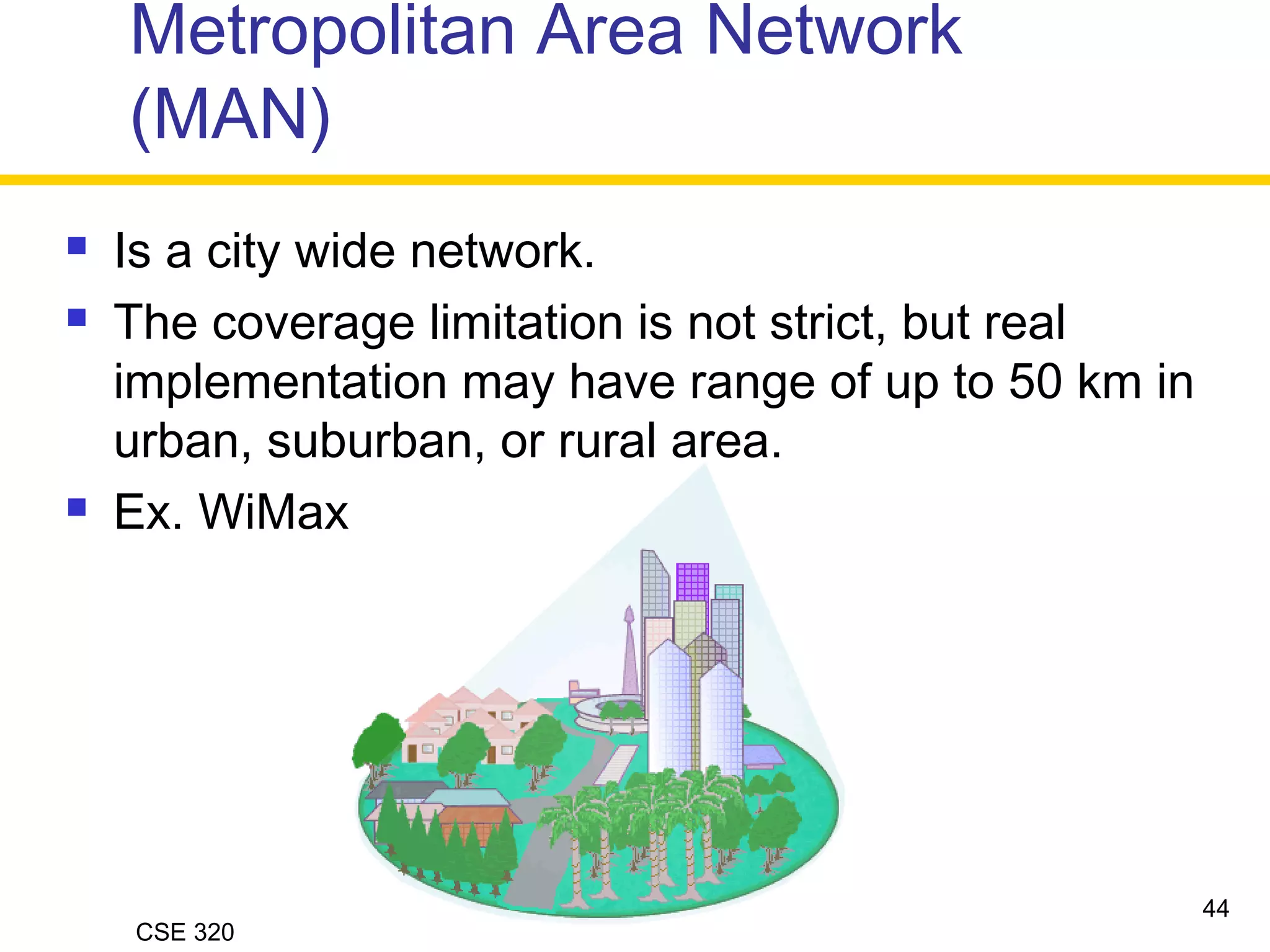
Metropolitan Area Network
(MAN)
 Is a city wide network.
 The coverage limitation is not strict, but real
implementation may have range of up to 50 km in
urban, suburban, or rural area.
 Ex. WiMax
44
CSE 320
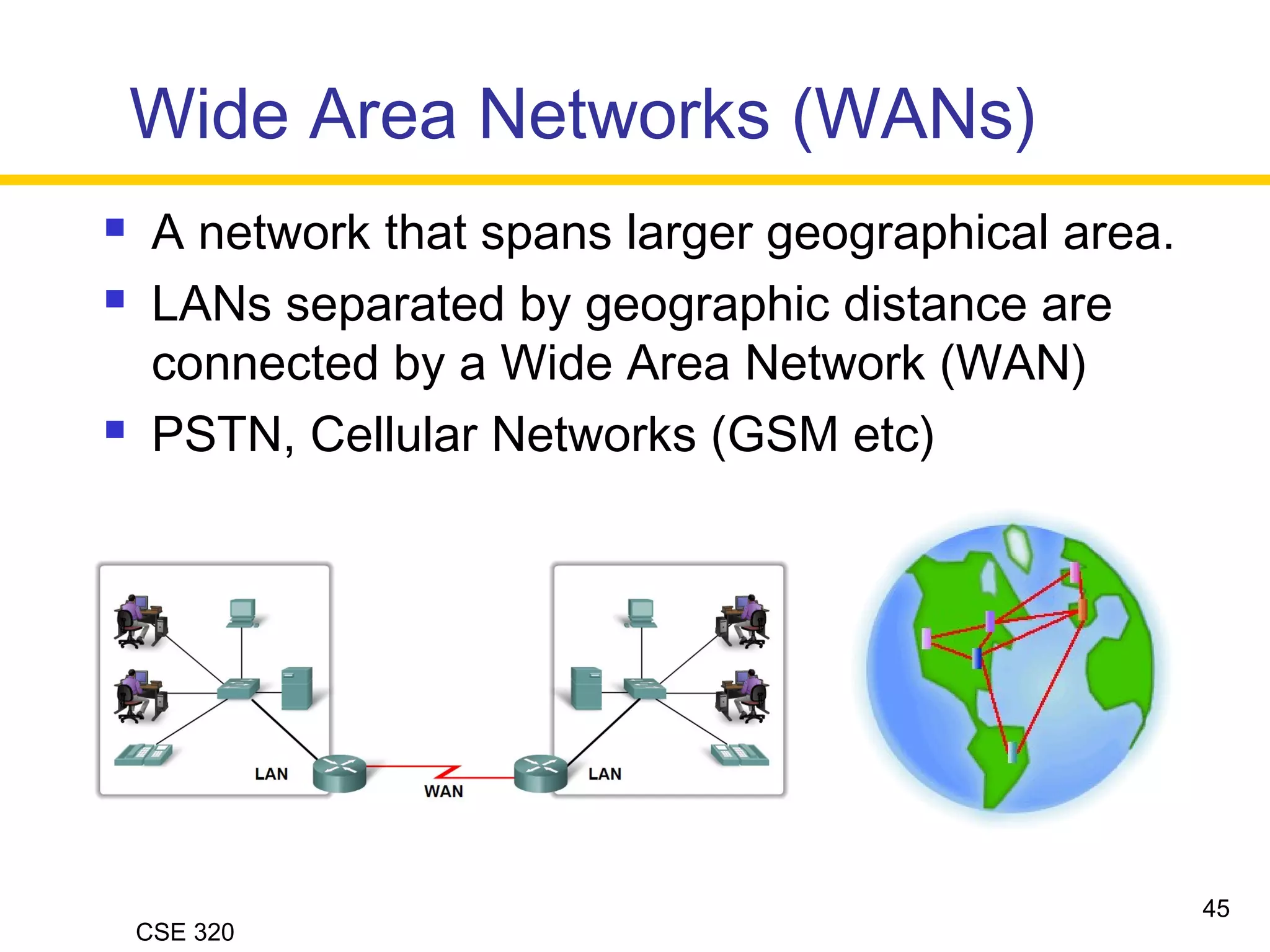
Wide Area Networks (WANs)
 A network that spans larger geographical area.
 LANs separated by geographic distance are
connected by a Wide Area Network (WAN)
 PSTN, Cellular Networks (GSM etc)
45
CSE 320
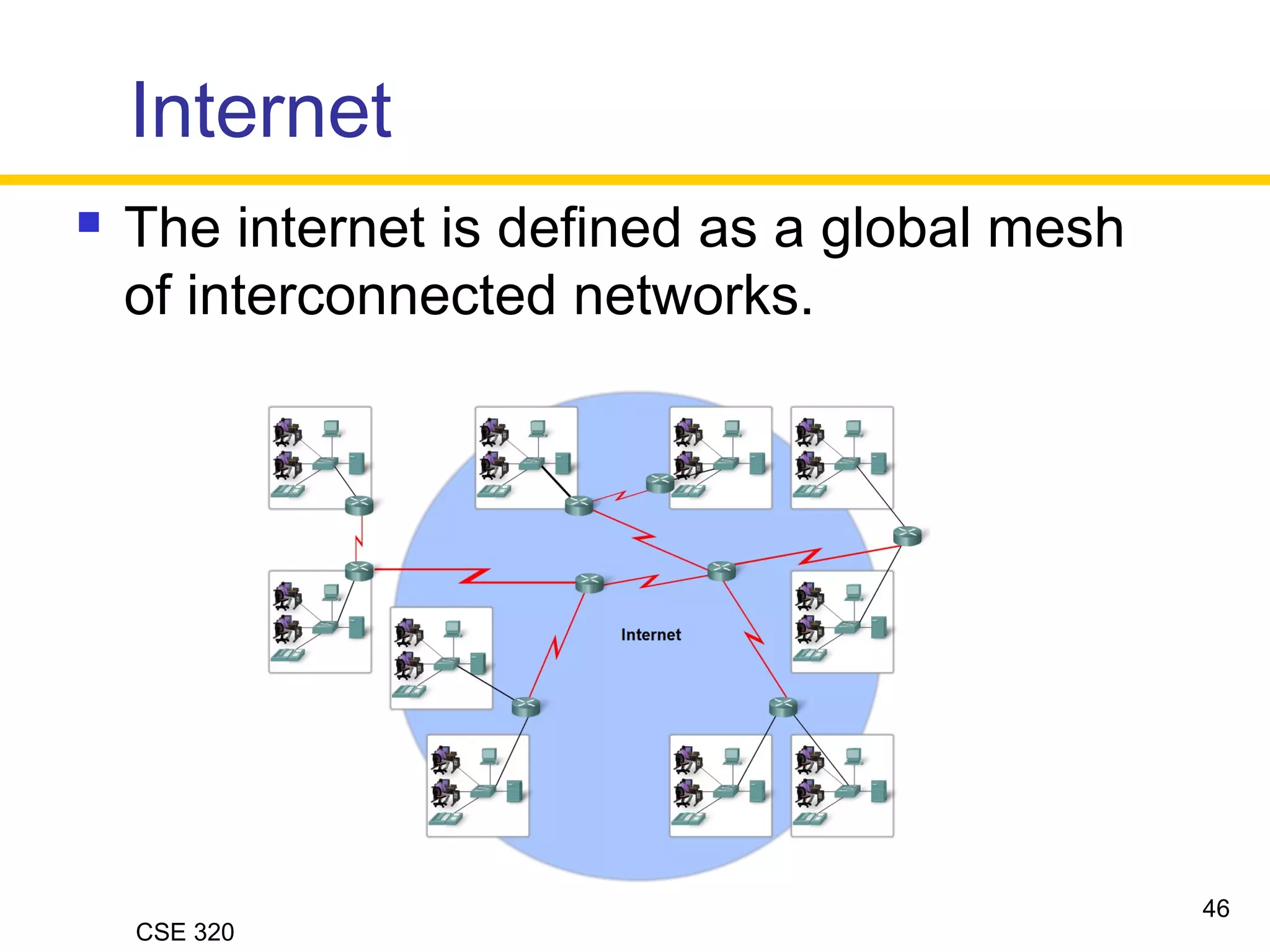
Internet
 The internet is defined as a global mesh
of interconnected networks.
46
CSE 320
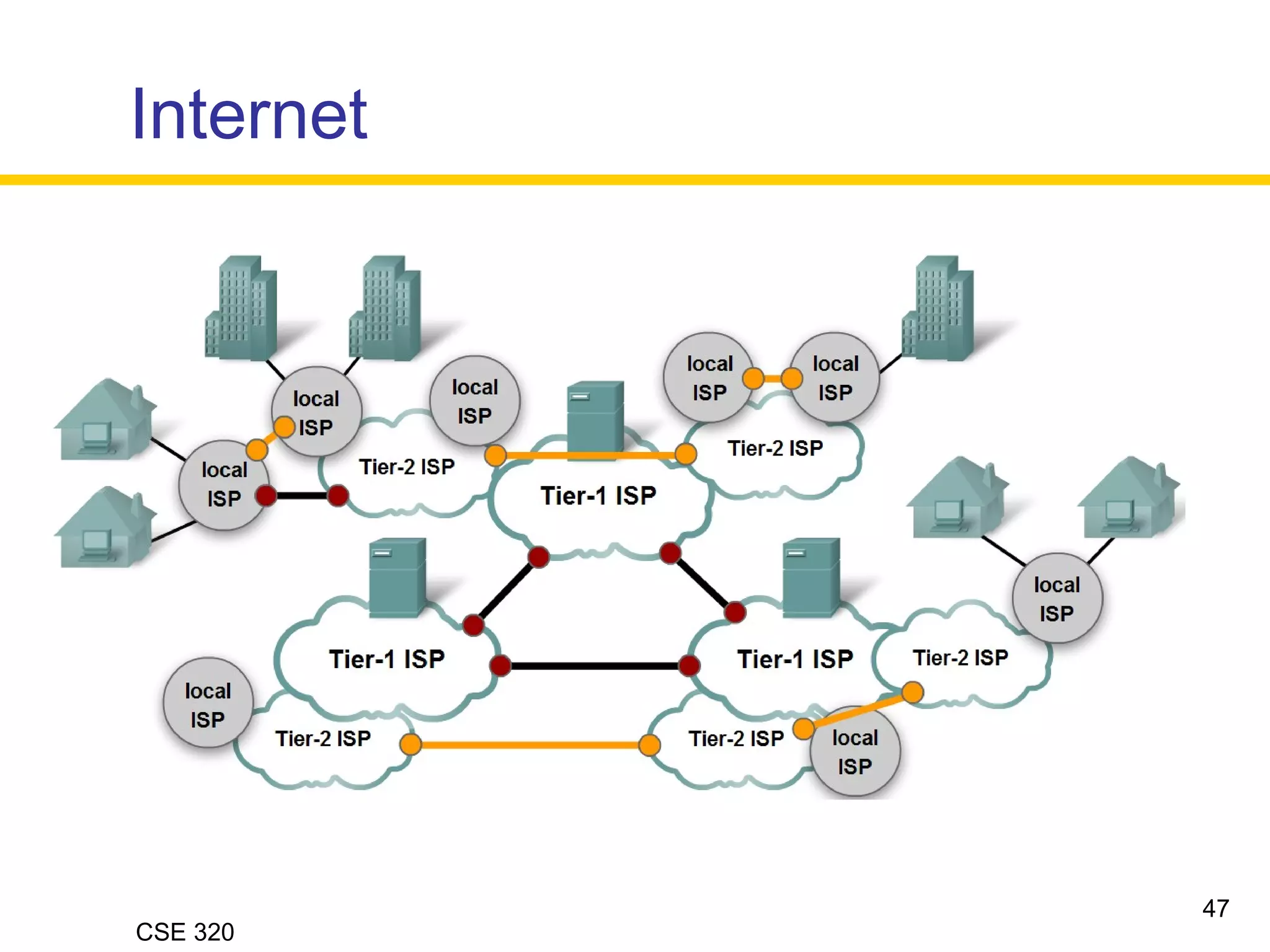
Internet
47
THE END

Introduction to Data Communication

  • 1.
  • 2.
    CSE 320 Data Communication 2 DataCommunication is the exchange of information from one entity to the other using a Transmission Medium.
  • 3.
    CSE 320 Data Communication 3 1883: Samuel Morse & Alfred Veil invent Morse Code Telegraph System  1876: Alexander Graham Bell invented Telephone  1930: Development of ASCII Transmission Code  1950: IBM releases its first computer IBM 710  1960: IBM releases the First Commercial Computer IBM 360
  • 4.
    CSE 320 Data CommunicationDefinition (Modified) 4 Data Communication is the exchange of data (in the form of 0’s and 1’s) between two devices (computers) via some form of the transmission medium.
  • 5.
    CSE 320 Networks supportingthe way we learn. 5
  • 6.
    CSE 320 Networks supportingthe way we learn. 6
  • 7.
    CSE 320 Networks supportingthe way we work. 7
  • 8.
    CSE 320 Networks supportingthe way we play. 8
  • 9.
  • 10.
    CSE 320 Elements ofCommunication 10
  • 11.
    CSE 320 Elements ofCommunication  What are the elements? 11
  • 12.
    CSE 320 •Devices (Sender/Receiver) •Theseare used to communicate with one another •Medium •This is how the devices are connected together •Messages •Information that travels over the medium •Rules/Protocols •Governs how messages flow across network Elements of Communication over Networks 12
  • 13.
  • 14.
    CSE 320 1.14 DATA COMMUNICATIONvs TELECOMMUNICATIONDATA COMMUNICATION vs TELECOMMUNICATION The termThe term telecommunicationtelecommunication means communication at ameans communication at a distance. The worddistance. The word datadata refers to information presentedrefers to information presented in whatever form is agreed upon by the parties creatingin whatever form is agreed upon by the parties creating and using the data.and using the data. Data communicationsData communications are theare the exchange of data between two devices via some form ofexchange of data between two devices via some form of transmission medium such as a wire cable.transmission medium such as a wire cable.
  • 15.
    CSE 320 1.15 Data flow(simplex, half-duplex, and full-duplex)
  • 16.
    CSE 320 1.16 NETWORKSNETWORKS AA networknetworkis a set of devices (often referred to asis a set of devices (often referred to as nodesnodes)) connected by communicationconnected by communication linkslinks. A node can be a. A node can be a computer, printer, or any other device capable of sendingcomputer, printer, or any other device capable of sending and/or receiving data generated by other nodes on theand/or receiving data generated by other nodes on the network.network. Distributed Processing Network Criteria Physical Structures Network Models Categories of Networks Interconnection of Networks: Internetwork Topics discussed in this section:Topics discussed in this section:
  • 17.
    CSE 320 1.17 Figure 1.3Types of connections: point-to-point and multipoint
  • 18.
    CSE 320 1.18 Figure 1.4Categories of topology
  • 19.
    CSE 320 1.19 Figure 1.5A fully connected mesh topology (five devices)
  • 20.
    CSE 320 1.20 Figure 1.6A star topology connecting four stations
  • 21.
    CSE 320 1.21 Figure 1.7A bus topology connecting three stations
  • 22.
    CSE 320 1.22 Figure 1.8A ring topology connecting six stations
  • 23.
    CSE 320 1.23 Figure 1.9A hybrid topology: a star backbone with three bus networks
  • 24.
    CSE 320 Elements ofCommunication over Networks 24
  • 25.
    CSE 320 Network Elements/Components Network Devices  Hardware (Devices and Media)  Software (Services and Processes) 25
  • 26.
    CSE 320 Devices  TwoTypes:  End Devices  Intermediary Devices 26
  • 27.
    CSE 320 End Devicesand their Role  End devices form interface with human network & communications network 27
  • 28.
    CSE 320  Providesconnectivity between end devices.  Manages data as it flows through the network.  Examples? Switches Routers Intermediary devices 28
  • 29.
  • 30.
    CSE 320 Software  Services:  provides information in response to a request.  For example e-mail hosting services and web hosting services.  Processes :  Provide the functionality that directs and moves the messages through the network.  Processes are less obvious to us but are critical to the operation of networks. 30
  • 31.
  • 32.
  • 33.
    CSE 320 Network Media 33 plasticouter coating woven or braided metal insulating material copper wire twisted-pair cable twisted-pair wire protective coating glass cladding optical fiber core
  • 34.
    CSE 320 Messages- DataRepresentation  Information today comes in different forms such as  text, numbers, images, audio, and video. 34
  • 35.
    CSE 320 Data Representation-Text Text : Different sets of bit patterns are designed to represent text symbols. Each set is called a code.  ASCII  American Standard Code for Information Interchange: 7-bit code/char, 1 bit for parity.  Unicode - 16 bit codes to represent a symbol. 35
  • 36.
  • 37.
    CSE 320 Text- DataRepresentation 37
  • 38.
    CSE 320  Images–  Also represented by bit patterns.  Mechanism different. Matrix of Pixels used. Each pixel is assigned to a bit pattern.  Color images uses RGB or YCM methods. Data Representation 38
  • 39.
    CSE 320 Audio- Continuous,not discrete. Converted to digital or analog signal. Data Representation 39
  • 40.
    CSE 320 Rules -Protocols  A set of predetermined rules that govern communication.  Defines:  What is communicated??  How it is communicated??  When it is communicated?? 40
  • 41.
    CSE 320 Network Types PAN  LAN  MAN  WAN 41
  • 42.
    CSE 320 Personal AreaNetworks (PAN)  A network that connects computers, peripherals and other devices within a personal operating space.  Eg. Bluetooth http://www.conniq.com 42
  • 43.
    CSE 320 Local AreaNetworks (LAN)  Connects computers, peripherals and other devices within a building (e.g. office, home) or in a limited area.  Typical coverage 50 to 300 meters.  Ex. Ethernet, Wireless LANs http://www.conniq.com 43
  • 44.
    CSE 320 Metropolitan AreaNetwork (MAN)  Is a city wide network.  The coverage limitation is not strict, but real implementation may have range of up to 50 km in urban, suburban, or rural area.  Ex. WiMax 44
  • 45.
    CSE 320 Wide AreaNetworks (WANs)  A network that spans larger geographical area.  LANs separated by geographic distance are connected by a Wide Area Network (WAN)  PSTN, Cellular Networks (GSM etc) 45
  • 46.
    CSE 320 Internet  Theinternet is defined as a global mesh of interconnected networks. 46
  • 47.
  • 48.