A key concept to keep in mind
is that the curriculum is only
that part of the plan
that directly affects students.
Anything in the plan that does
not reach the students
constitutes an educational
wish, but not a curriculum.
Curriculum refers to all
the activities, planned
and unplanned
happening under
school guidance.
Curriculum refers to all
that is taught in a school
including the timetabled
subjects and all those
aspects of its life that
exercise an influence in
the life of the children.
Ensure that pupils’ education
is effective and efficient
 Determine that learning will
be beneficial to pupils
 Ensure that learning is
achieved under the direction
of able teachers
 To transmit the society’s
values and priorities
The purpose of the curriculum
is to prepare the student to
thrive within the society as it is
and that includes the capacity
for positive change and growth.
There are essentially four
curriculums at work in
most educational settings:
- the explicit,
- implicit,
- null,
- extra-, or cocurriculum.
 There are four curriculums:
 Explicit curriculum: subjects that will be taught,
the identified "mission" of the school, and the
and the knowledge and skills that the school
school expects successful students to acquire
acquire
 Implicit curriculum: lessons that arise from the
culture of the school and the behaviours,
attitudes, and expectations that characterize that
characterize that culture
 Null curriculum: topics or perspectives that are
specifically excluded from the curriculum
curriculum
 Extra curriculum: school-sponsored programs
that are intended to supplement the academic
academic aspect of the school experience
 Academic Curriculum
 Extra Curriculum
 Hidden Curriculum
 Refers to the formal or official where the
planned activities are highly structured
 Other Characteristics
- Has goals, aims and objectives
- Uses syllabuses, teachers’ guides, textbooks,
etc
- Is developed by the ministry officials
 Leads to certification
 Is the best curriculum for developing the
whole child
- All subjects taught in school should aim at
meeting the total child
 Is planned and loosely structured with
voluntary school activities
 Leaners participate in activities that appeal
to their interest
 Help in the physical, social, mental and
moral development of the learners
- Sports and games –physical & motor
development
- Games that involve thinking
- Drama & debates- mental, social, emotional
development
- Games in teams- cooperation, team spirit,
competition, leadership, respect, obedience
to rules, tolerance
 Is unplanned learning experiences
 Teachers and learners are not always aware
that learning is taking place
 Learners learn both positive and negative
things through this curriculum
 Respect
 Obedience
 Co-operation
 Personal values, opinions and beliefs
 Prejudices
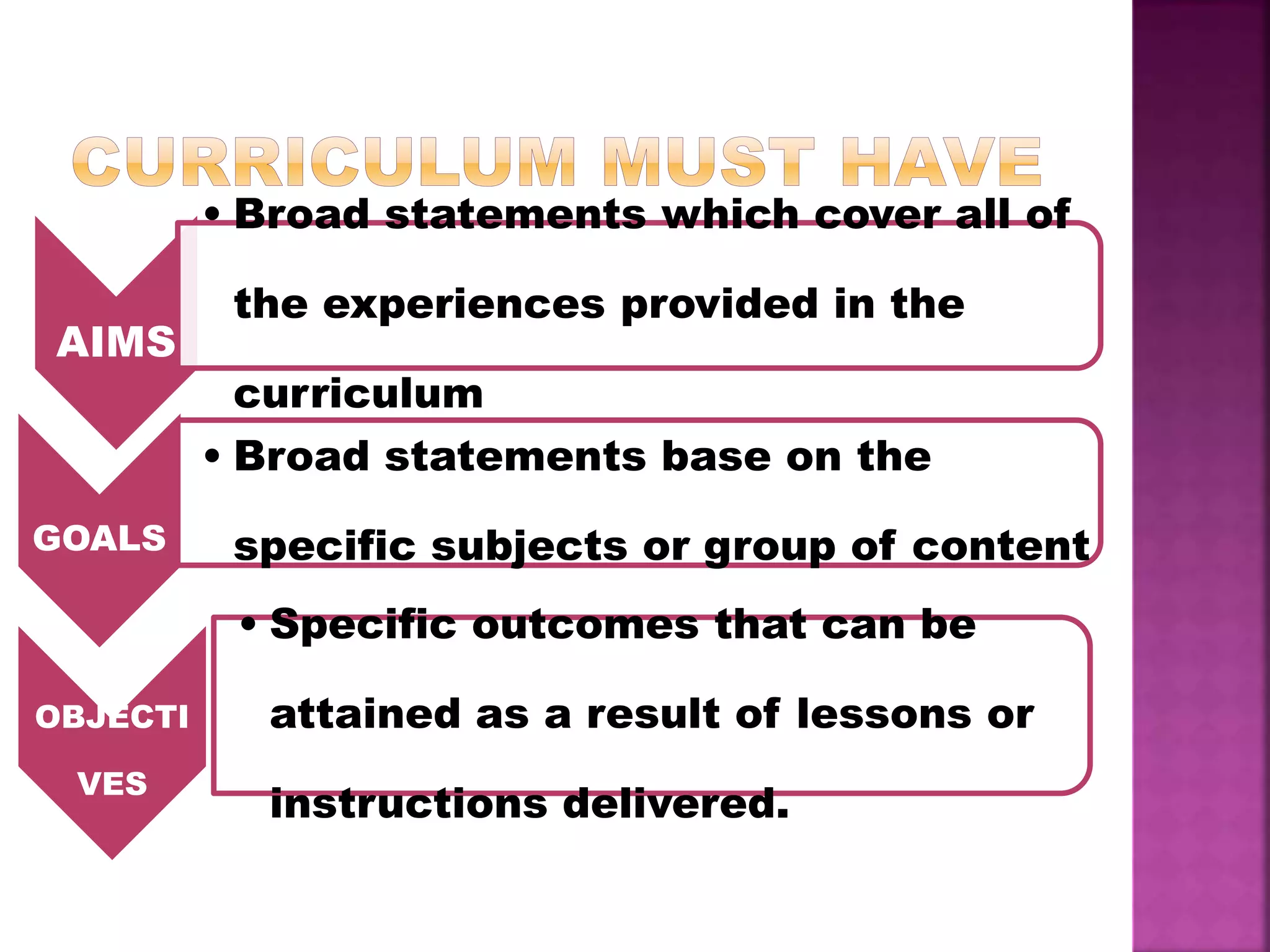
AIMS
• Broad statements which cover all of
the experiences provided in the
curriculum
GOALS
• Broad statements base on the
specific subjects or group of content
OBJECTI
VES
• Specific outcomes that can be
attained as a result of lessons or
instructions delivered.
Content
Instructional
strategies
Materials/Resources
Scope
Sequenc
e
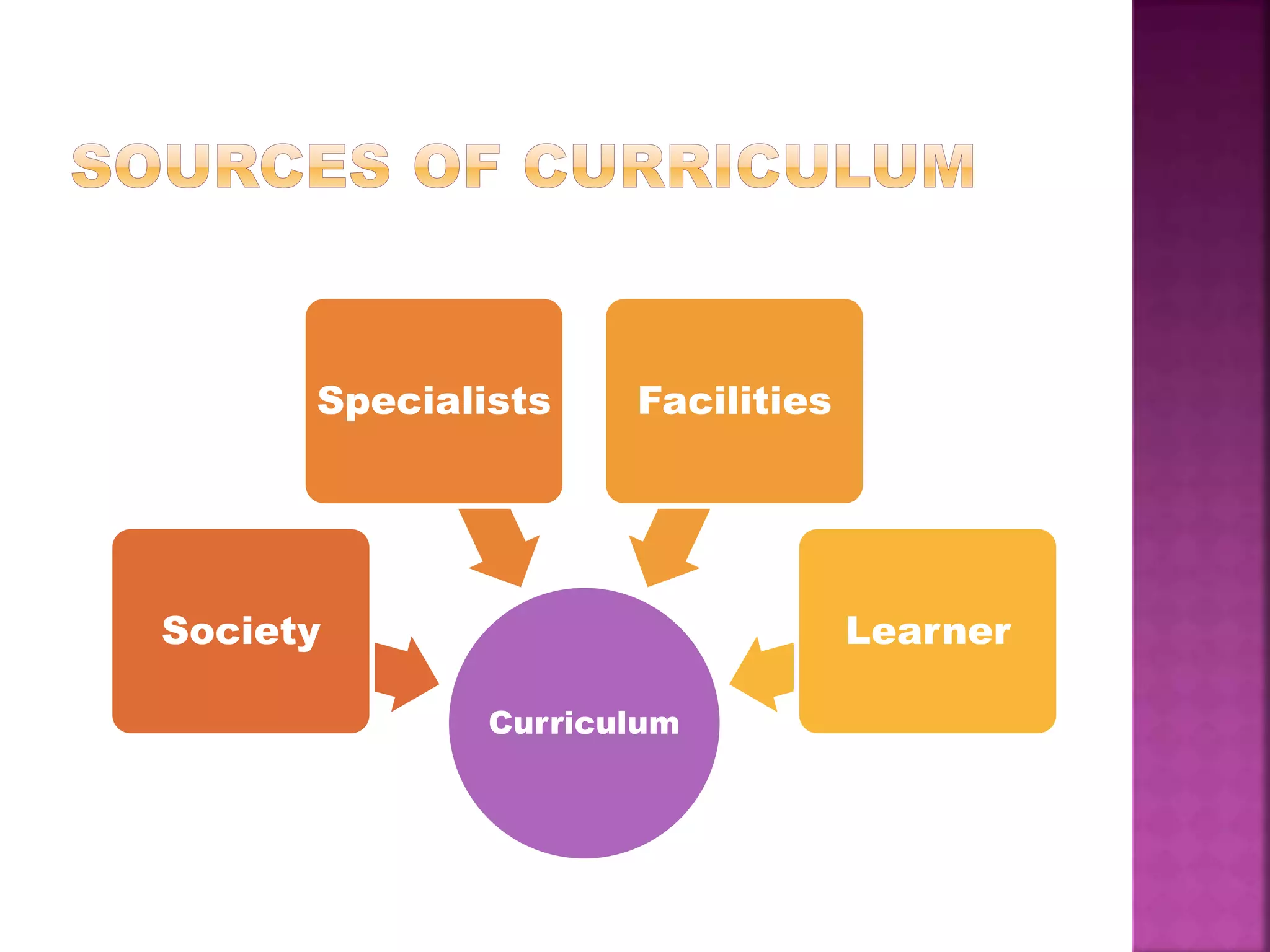
Curriculum
Society
Specialists Facilities
Learner

Introduction to Curriculum Planning and Theory.pptx

  • 2.
    A key conceptto keep in mind is that the curriculum is only that part of the plan that directly affects students. Anything in the plan that does not reach the students constitutes an educational wish, but not a curriculum.
  • 3.
    Curriculum refers toall the activities, planned and unplanned happening under school guidance.
  • 4.
    Curriculum refers toall that is taught in a school including the timetabled subjects and all those aspects of its life that exercise an influence in the life of the children.
  • 5.
    Ensure that pupils’education is effective and efficient  Determine that learning will be beneficial to pupils  Ensure that learning is achieved under the direction of able teachers  To transmit the society’s values and priorities
  • 6.
    The purpose ofthe curriculum is to prepare the student to thrive within the society as it is and that includes the capacity for positive change and growth.
  • 7.
    There are essentiallyfour curriculums at work in most educational settings: - the explicit, - implicit, - null, - extra-, or cocurriculum.
  • 8.
     There arefour curriculums:  Explicit curriculum: subjects that will be taught, the identified "mission" of the school, and the and the knowledge and skills that the school school expects successful students to acquire acquire  Implicit curriculum: lessons that arise from the culture of the school and the behaviours, attitudes, and expectations that characterize that characterize that culture  Null curriculum: topics or perspectives that are specifically excluded from the curriculum curriculum  Extra curriculum: school-sponsored programs that are intended to supplement the academic academic aspect of the school experience
  • 9.
     Academic Curriculum Extra Curriculum  Hidden Curriculum
  • 10.
     Refers tothe formal or official where the planned activities are highly structured  Other Characteristics - Has goals, aims and objectives - Uses syllabuses, teachers’ guides, textbooks, etc - Is developed by the ministry officials
  • 11.
     Leads tocertification  Is the best curriculum for developing the whole child - All subjects taught in school should aim at meeting the total child
  • 12.
     Is plannedand loosely structured with voluntary school activities  Leaners participate in activities that appeal to their interest  Help in the physical, social, mental and moral development of the learners - Sports and games –physical & motor development - Games that involve thinking
  • 13.
    - Drama &debates- mental, social, emotional development - Games in teams- cooperation, team spirit, competition, leadership, respect, obedience to rules, tolerance
  • 14.
     Is unplannedlearning experiences  Teachers and learners are not always aware that learning is taking place  Learners learn both positive and negative things through this curriculum
  • 15.
     Respect  Obedience Co-operation  Personal values, opinions and beliefs  Prejudices
  • 16.
    AIMS • Broad statementswhich cover all of the experiences provided in the curriculum GOALS • Broad statements base on the specific subjects or group of content OBJECTI VES • Specific outcomes that can be attained as a result of lessons or instructions delivered.
  • 17.
  • 18.
  • 19.