COMMUNITY HEALTH NURSING I
UNIT I : INTRODUCTION TO COMMUNITY
1
MD DANISH RIZVI
DEPT. COMMUNITY
2
INTRODUCTION
Human beings are social creatures. All of us, with rare
exception, live out our lives in the company of other people.
An Eskimo lives in a small, tightly knit community of close
relatives; a rural Mexican may live in a small village with
hardly more than 200 members. In contrast, someone from
New York City might be a member of many overlapping
communities, such as professional societies, a political party,
a religious group, a cultural society, a neighbourhood, and
the city itself. Even those who try to escape community
membership always begin their lives in some type of group,
and usually they continue to depend on groups for material
and emotional support. Communities are an essential and
permanent feature of the human experience.
3
OBJECTIVES:
In the end of this presentation the students will be
able to:
 Define community, community health, community
health nursing, urban & rural communities
 Discuss the concepts of health, wellness, illness
and disease.
 Discuss the historical background of Community
Health Nursing from Public Health Nursing.
 Enlist the essential functions of community health
nursing.
 Discuss the roles of the Community Health Nurse
in community settings.
4
COMMUNITY
a group of people living in the same place or
having a particular characteristic in common.
community refers to a collection of people who
interact with one another and whose common
interests or characteristics form the basis for a sense
of unity or belonging.
5
Cont…
It can be a society of people holding common rights and
privileges (e.g., citizens of a town), sharing common
interests (e.g., a community of farmers), or living under the
same laws and regulations (e.g., a prison community). The
function of any community includes its members’ collective
sense of belonging and their shared identity, values, norms,
communication, and common interests and concerns
(Anderson & McFarlane, 2004).
Although most communities of people share many aspects of
their experience, it is useful to identify three types of
communities that have relevance to community health
practice: geographic, common interest, and health problem
or solution.
6
COMMIUNITY HEALTH
Community Health is a discipline concerned
with the study and improvement of the health
different communities.
tends to focus on
characteristics
Community
geographical
of
health
areas, and includes primary,
secondary and tertiary healthcare.
7
PUBLIC HEALTH
Public health refers to all organized measures
(whether public or private) to prevent disease, promote
health, and prolong life among the population as a
whole. Its activities aim to provide conditions in which
people can be healthy and focus on entire populations,
not on individual patients or diseases.
Public Health includes community health. Public health is
"the science and art of preventing disease, prolonging life
and promoting health through the organized efforts and
informed choices of society, organizations, public and
private, communities and individuals”.
8
Cont…
It is concerned with threats to health based on
population health analysis. Public health
incorporates the interdisciplinary approaches of
epidemiology, biostatistics and health services,
environmental health, community health,
behavioural health, health economics, public
policy, insurance medicine and occupational
health (respectively occupational medicine) are
other important subfields.
A CH service might be responsible for delivery of a
range of interventions in a local community, while the
PH Service might be involved at a policy level
looking at quality of water, traffic calming, or budgets
for drugs.
9
COMMUNITY HEALTH NURSING
Community health nursing is to “assist the
Individual, family and community in attaining
their highest level of holistic health. To provide
and promote healthy life style choices through
education, public awareness and community
activities.”
10
URBAN & RURAL COMMUNITIES
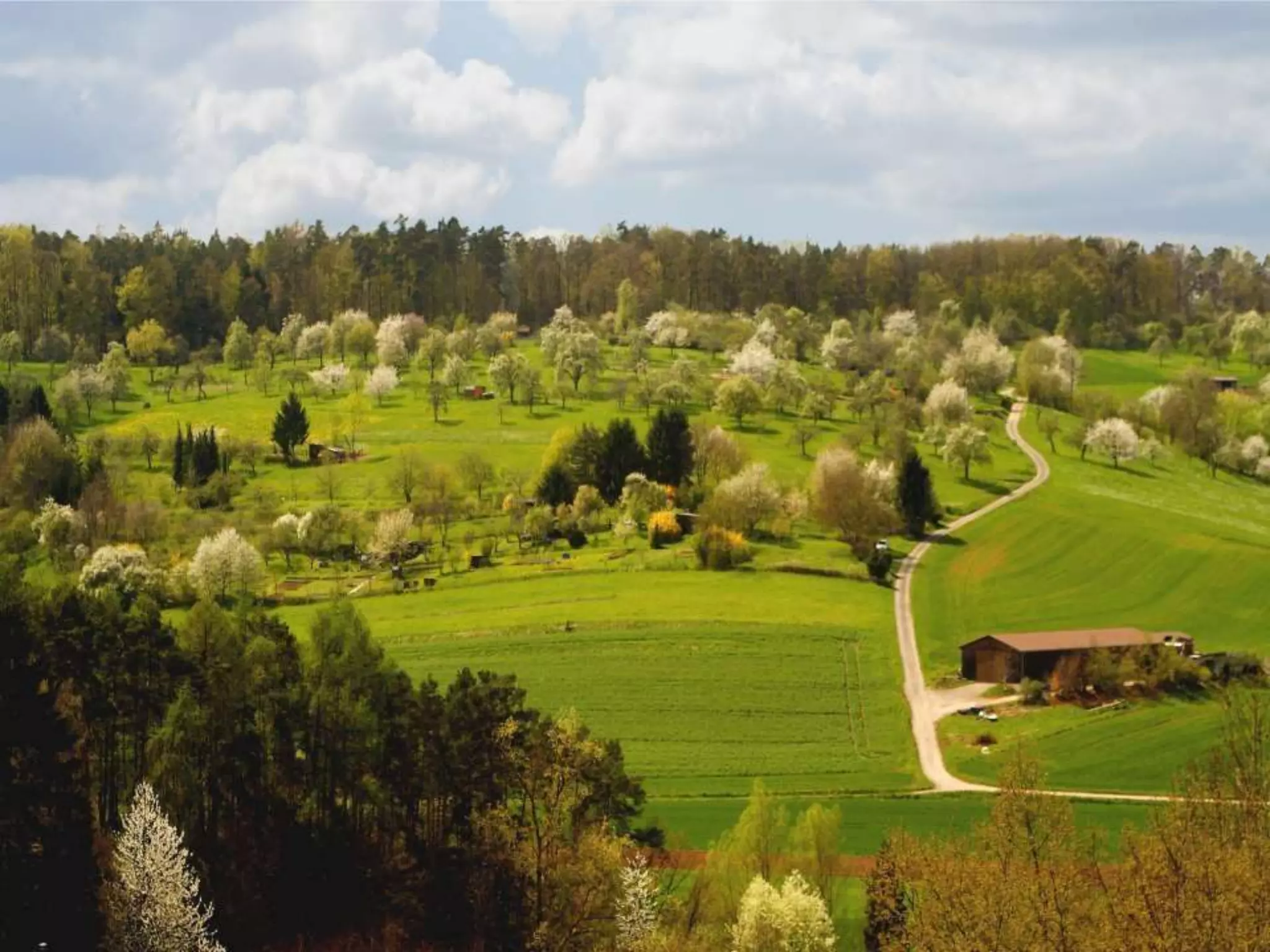
Rural community is a society that is in a rural
area ( country side ). An urban community is a
society that is in an urban area ( town or city )
URBAN COMMUNITY
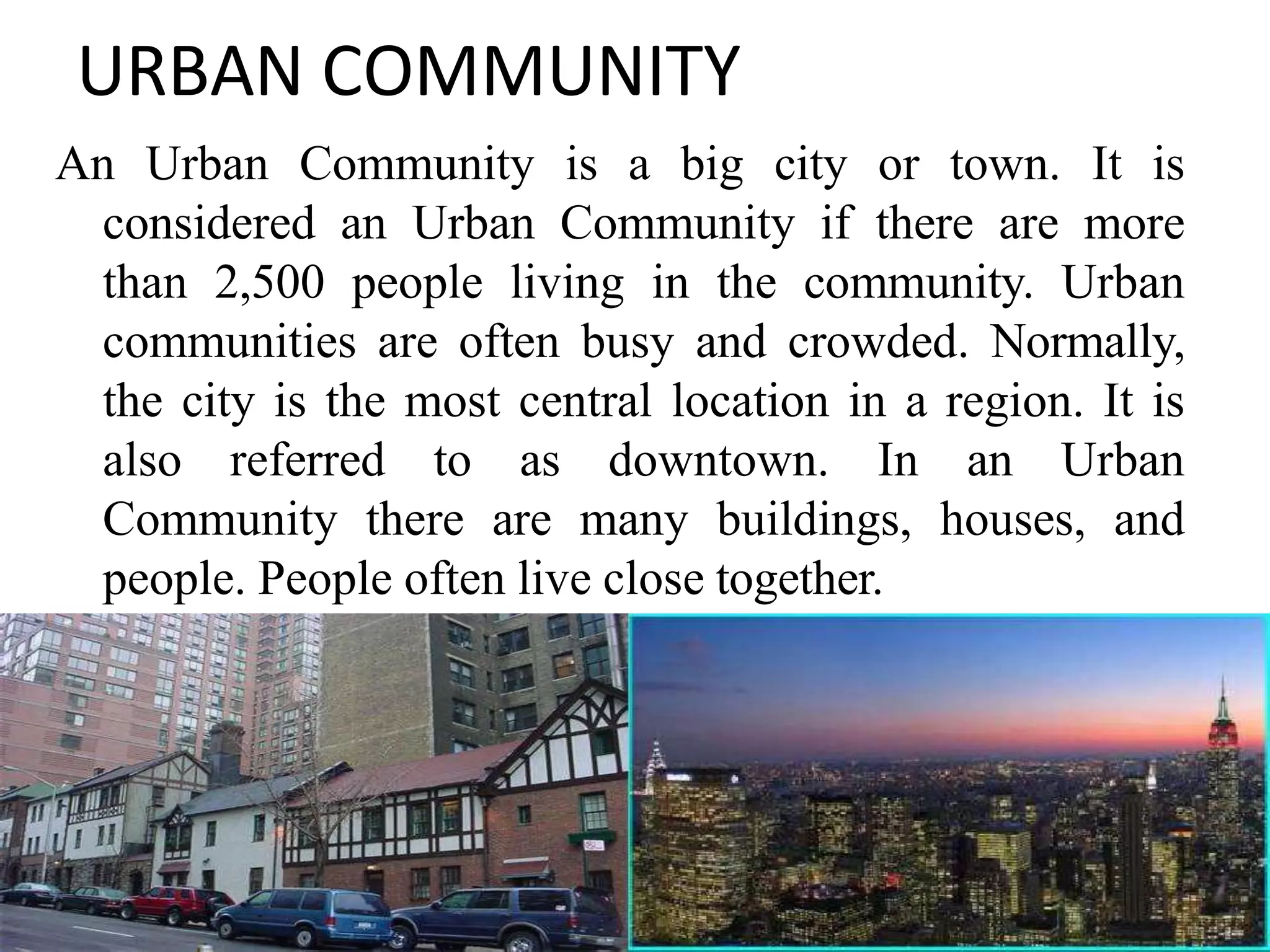
An Urban Community is a big city or town. It is
considered an Urban Community if there are more
than 2,500 people living in the community. Urban
communities are often busy and crowded. Normally,
the city is the most central location in a region. It is
also referred to as downtown. In an Urban
Community there are many buildings, houses, and
people. People often live close together.
11
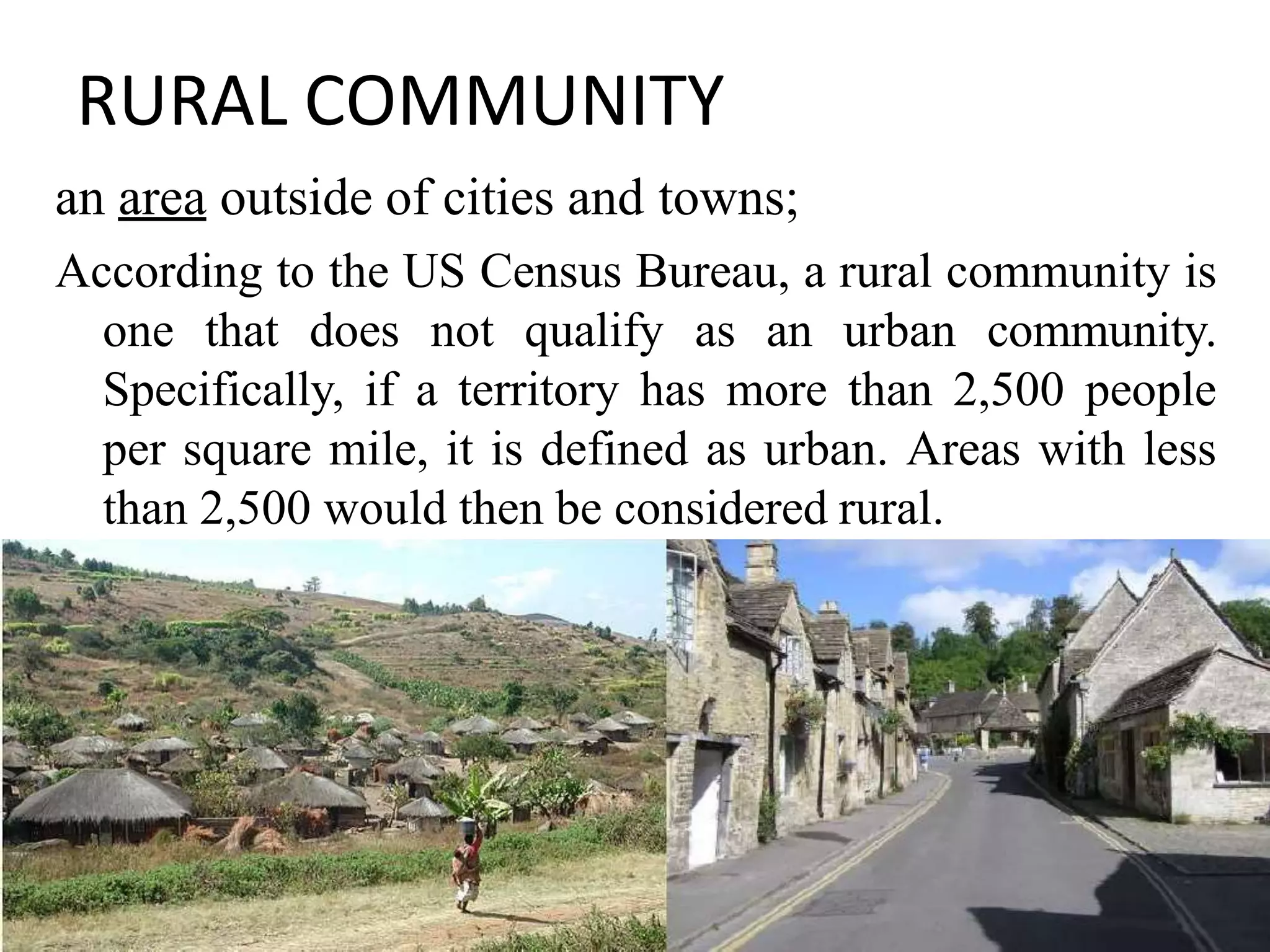
RURAL COMMUNITY
an area outside of cities and towns;
According to the US Census Bureau, a rural community is
one that does not qualify as an urban community.
Specifically, if a territory has more than 2,500 people
per square mile, it is defined as urban. Areas with less
than 2,500 would then be considered rural.
12
13
14
HEALTH
“a state of complete physical, mental, and social
well-being and not merely the absence of
disease or infirmity”
“World Health Organization”
ILLNESS:
A highly personal state in which the person feels
unhealthy, may or may not related to disease.
15
WELLNESS
An integrated method of functioning which is
oriented toward maximizing the potential of
which the individual is capable.
OR
progresses towards maximum
an active process by which an individual
potential
possible, regardless of current state of health
16
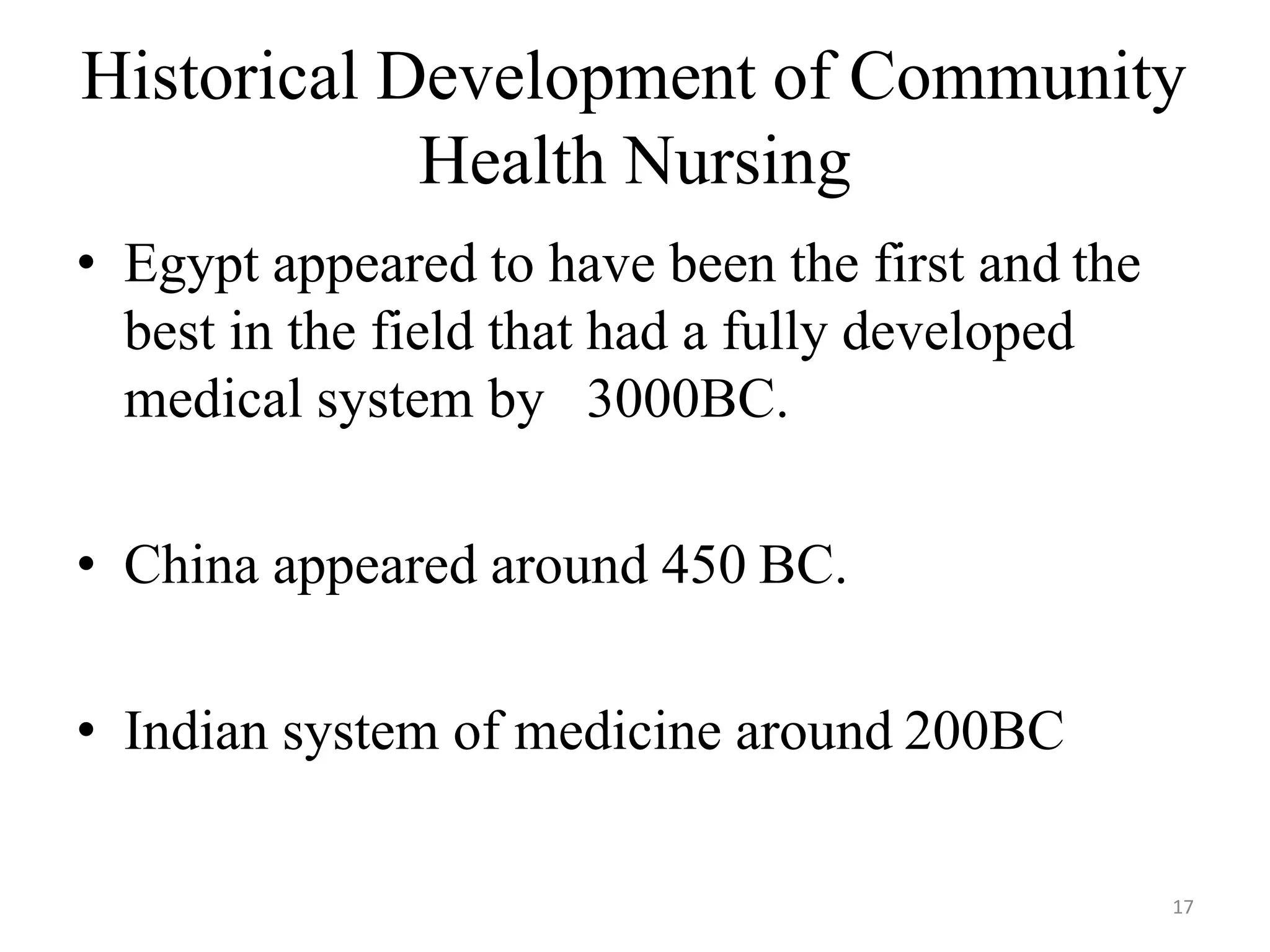
Historical Development of Community
Health Nursing
The modern concept of community health and
welfare is one which has taken many centuries
to evolve. All ancient civilization particularly
Egypt, India and China developed their own
specific team of medicine.
17
Historical Development of Community
Health Nursing
• Egypt appeared to have been the first and the
best in the field that had a fully developed
medical system by 3000BC.
• China appeared around 450 BC.
• Indian system of medicine around 200BC
18
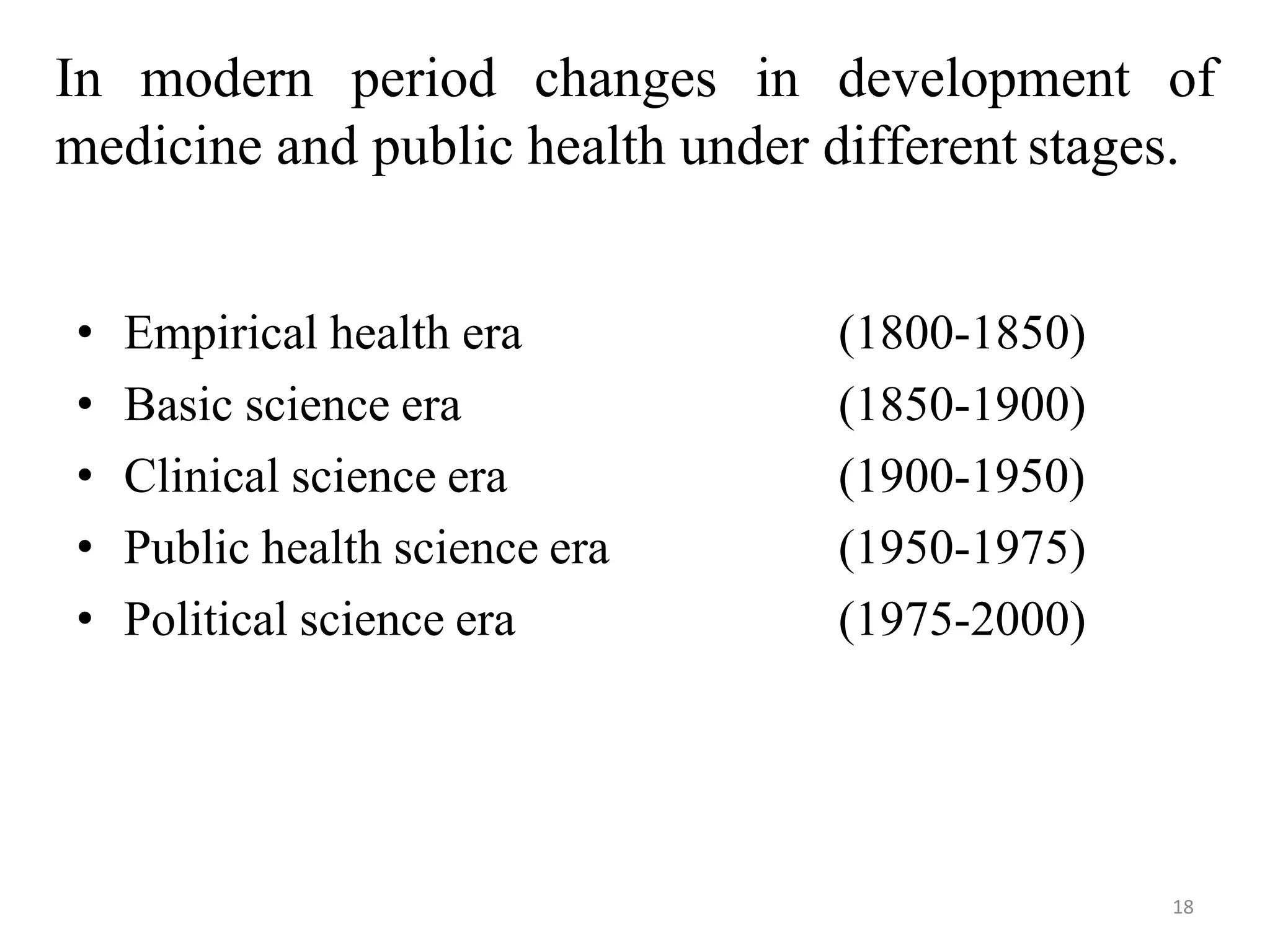
In modern period changes in development of
medicine and public health under different stages.
• Empirical health era
• Basic science era
• Clinical science era
• Public health science era
• Political science era
(1800-1850)
(1850-1900)
(1900-1950)
(1950-1975)
(1975-2000)
19
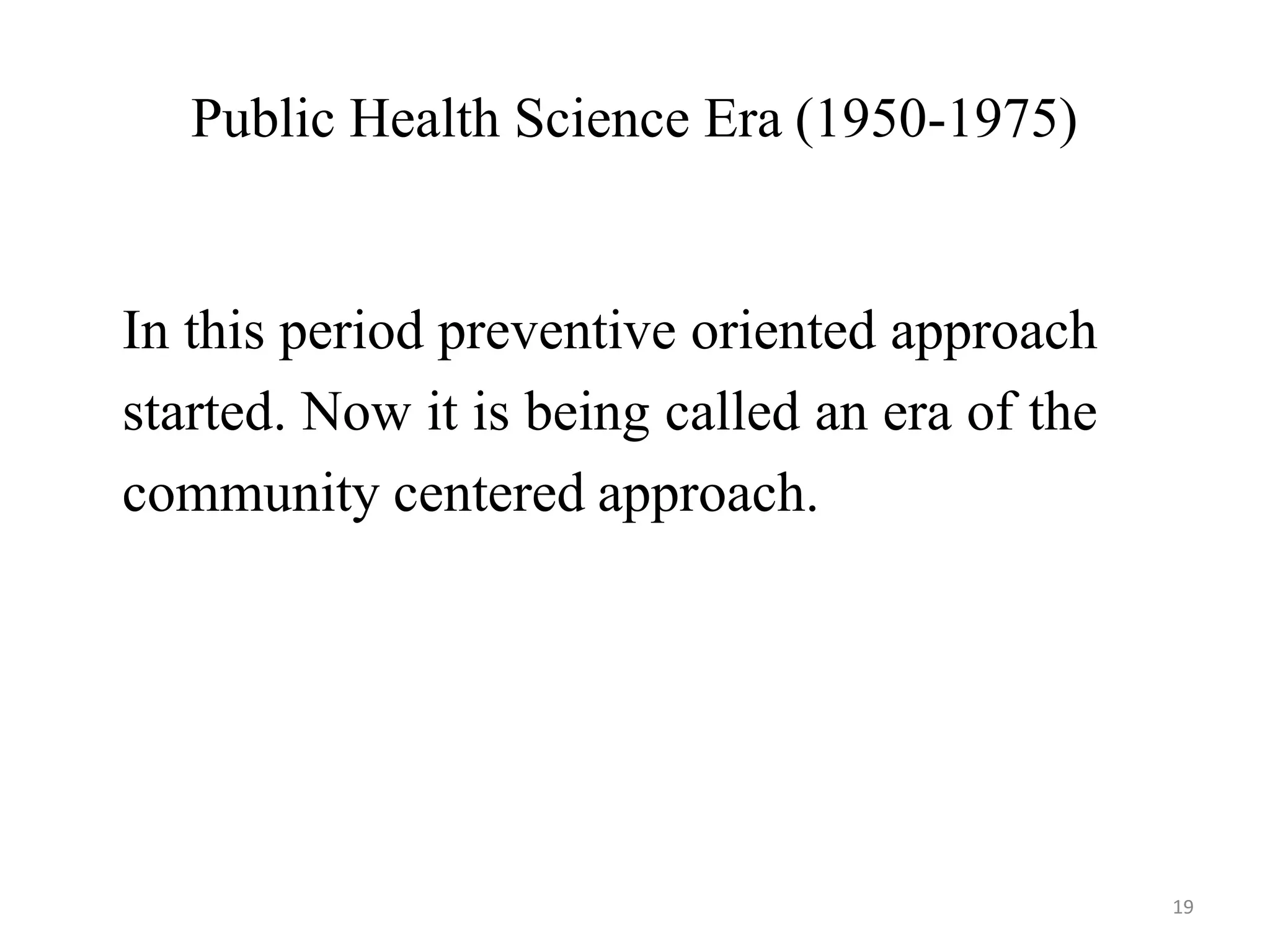
Public Health Science Era (1950-1975)
In this period preventive oriented approach
started. Now it is being called an era of the
community centered approach.
20
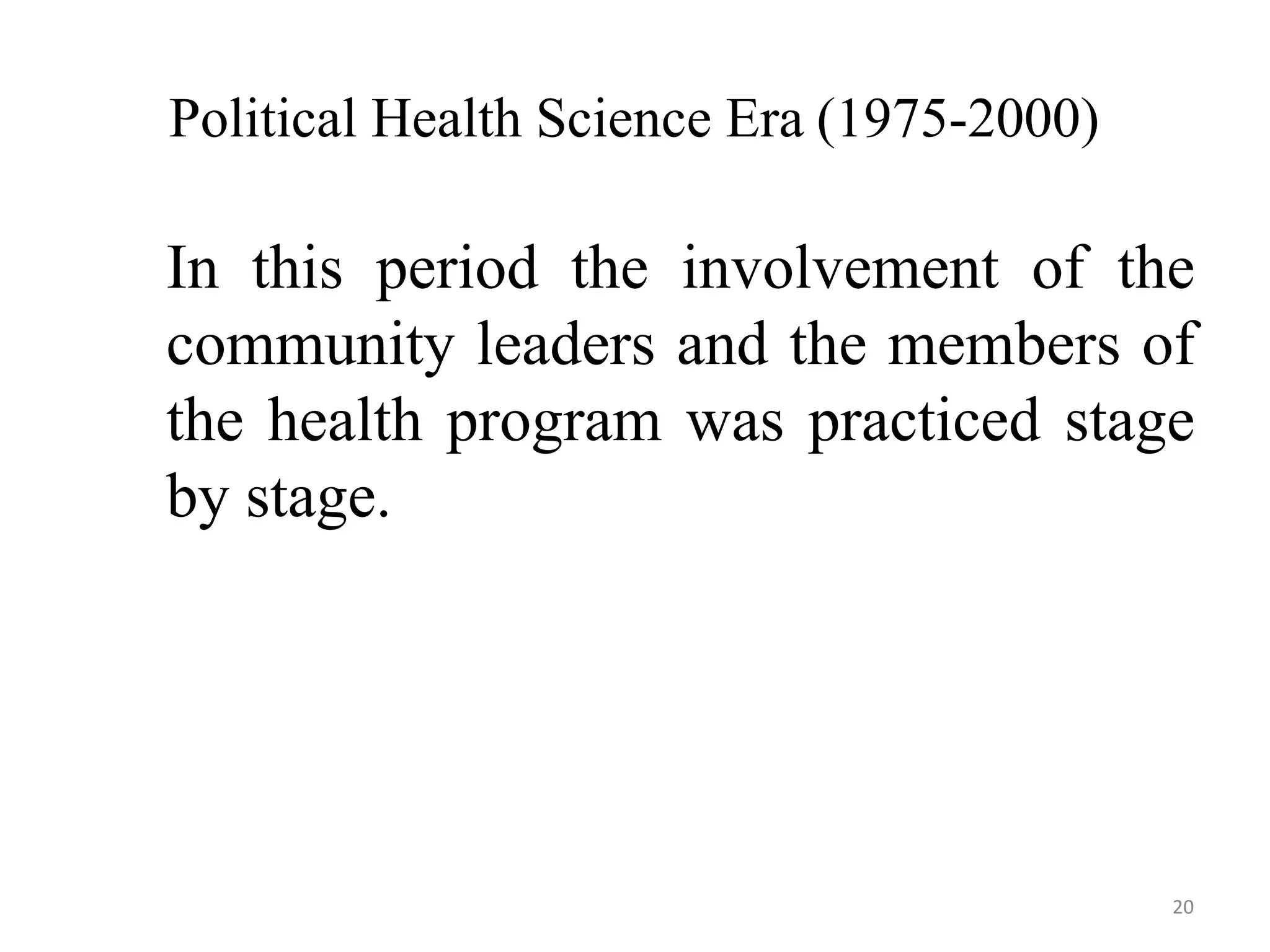
Political Health Science Era (1975-2000)
In this period the involvement of the
community leaders and the members of
the health program was practiced stage
by stage.
21
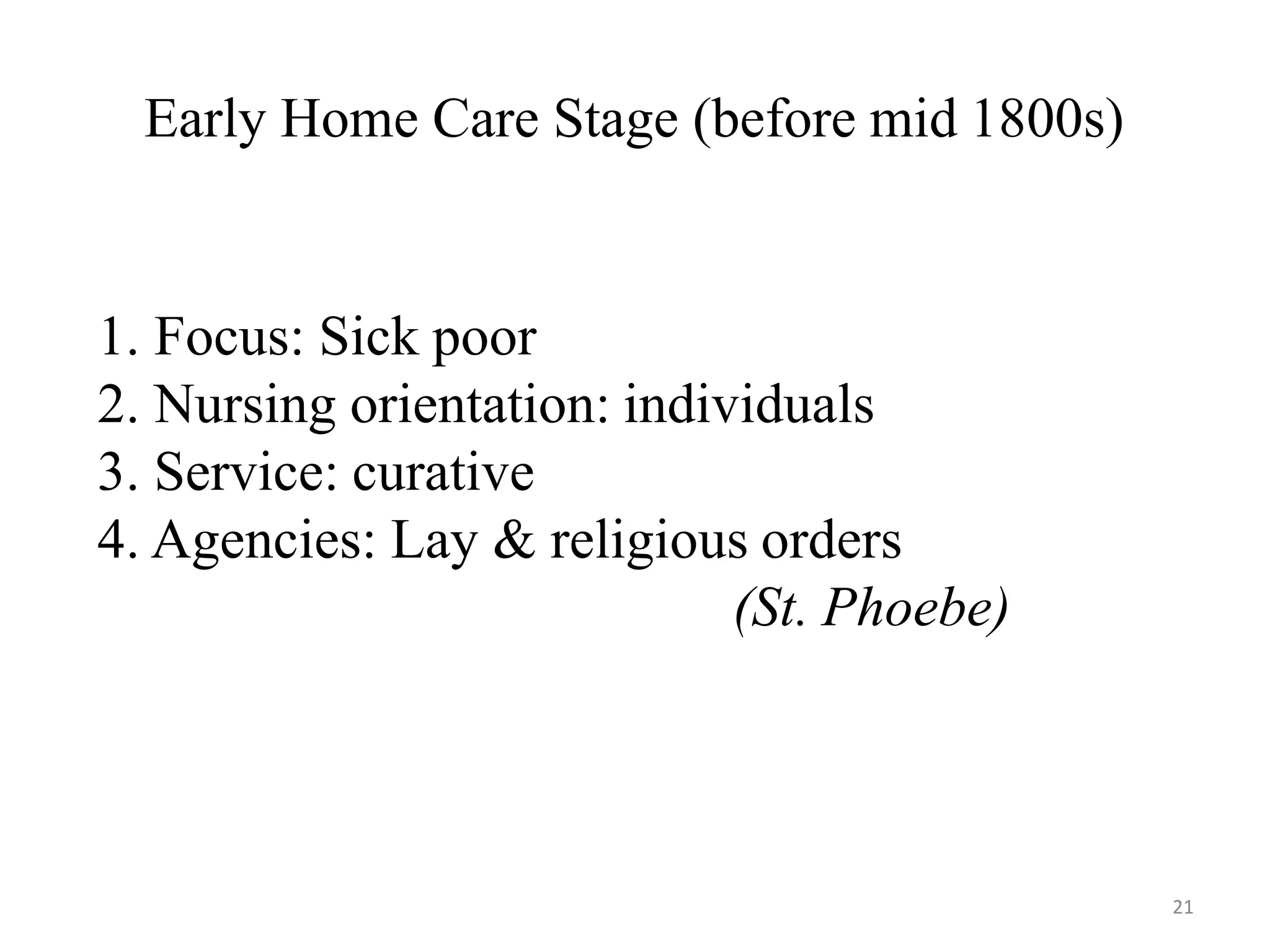
Early Home Care Stage (before mid 1800s)
1. Focus: Sick poor
2. Nursing orientation: individuals
3. Service: curative
4. Agencies: Lay & religious orders
(St. Phoebe)
22
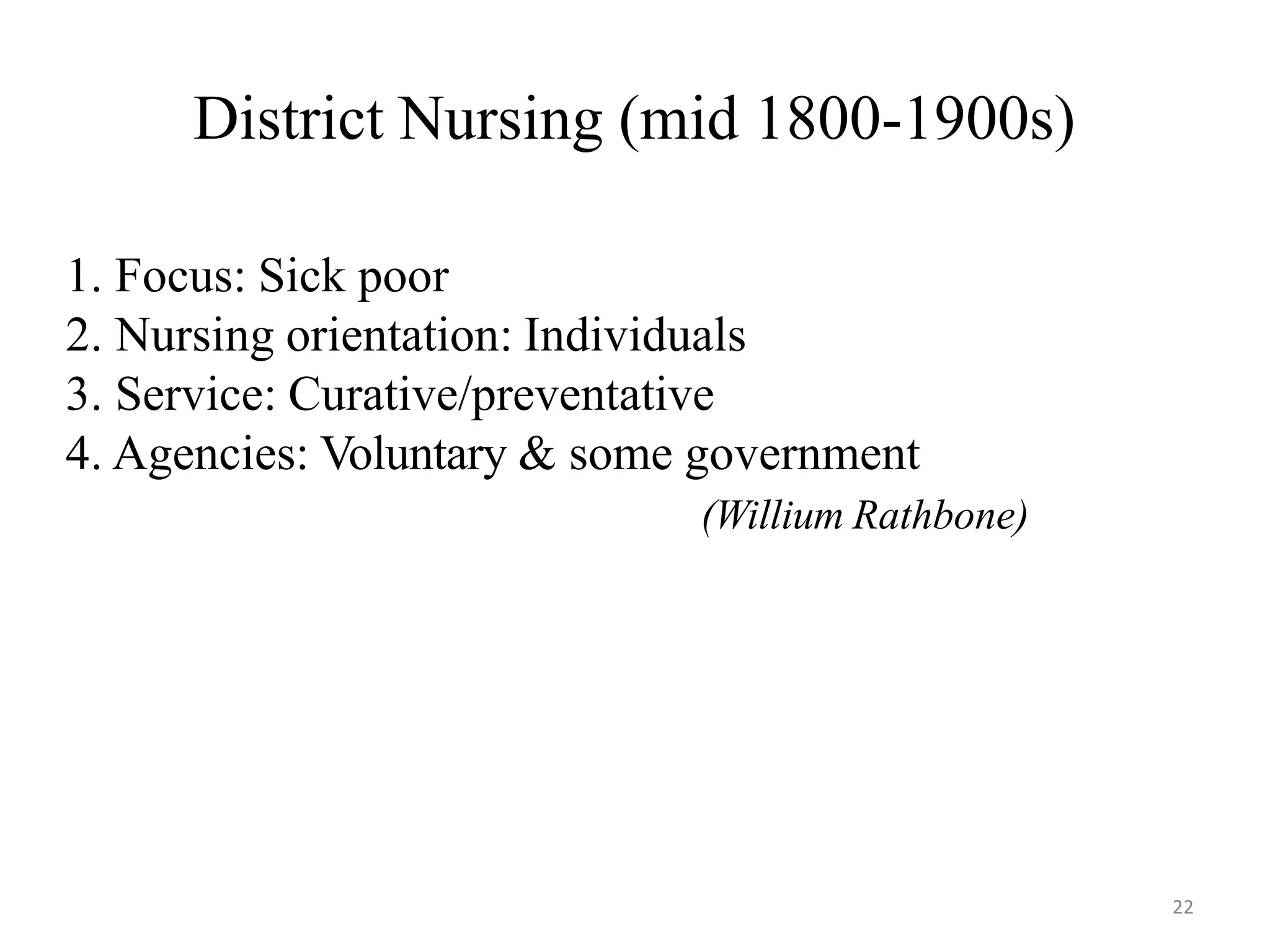
District Nursing (mid 1800-1900s)
1. Focus: Sick poor
2. Nursing orientation: Individuals
3. Service: Curative/preventative
4. Agencies: Voluntary & some government
(Willium Rathbone)
23
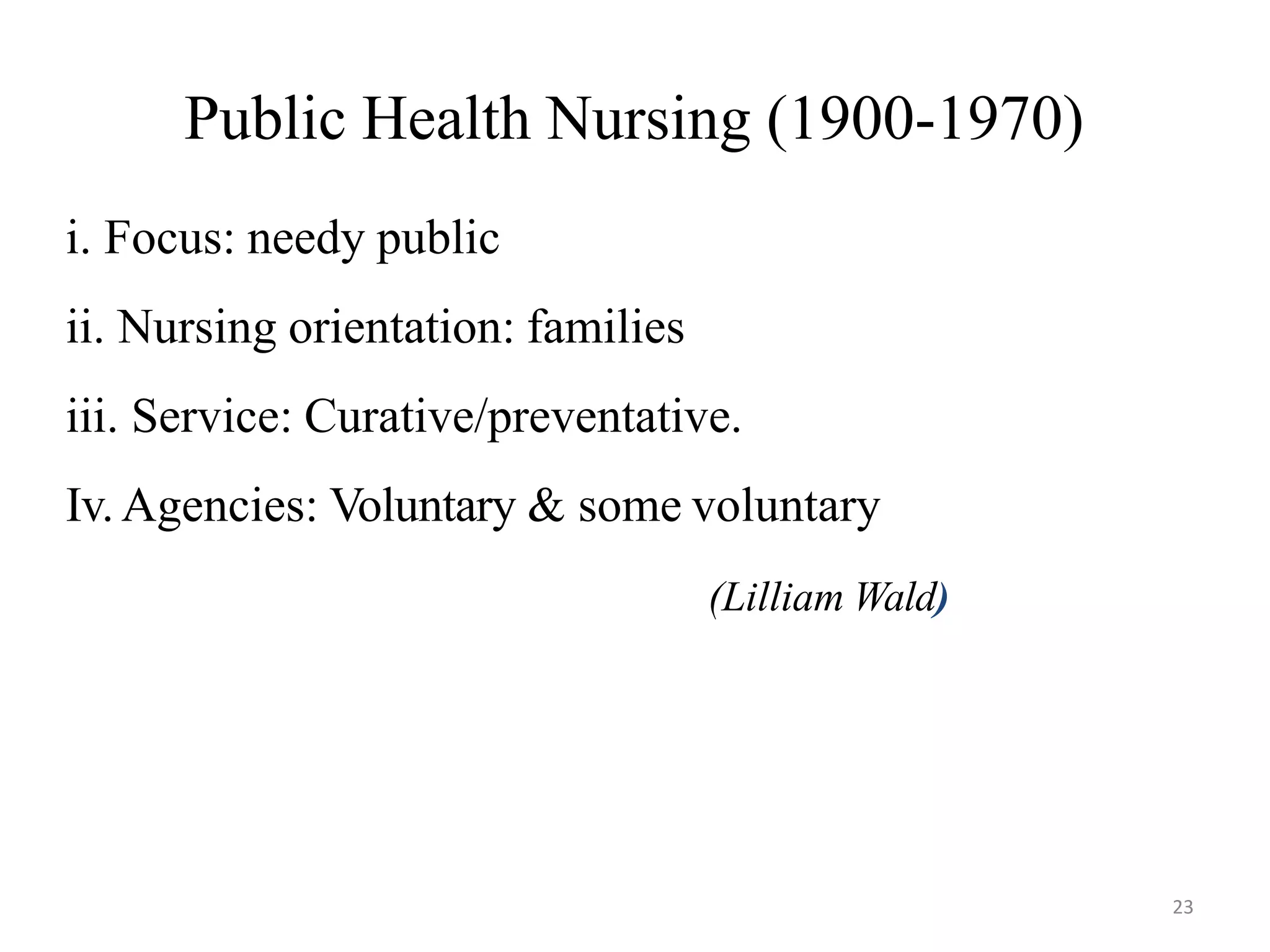
Public Health Nursing (1900-1970)
i. Focus: needy public
ii. Nursing orientation: families
iii. Service: Curative/preventative.
Iv.Agencies: Voluntary & some voluntary
(Lilliam Wald)
24
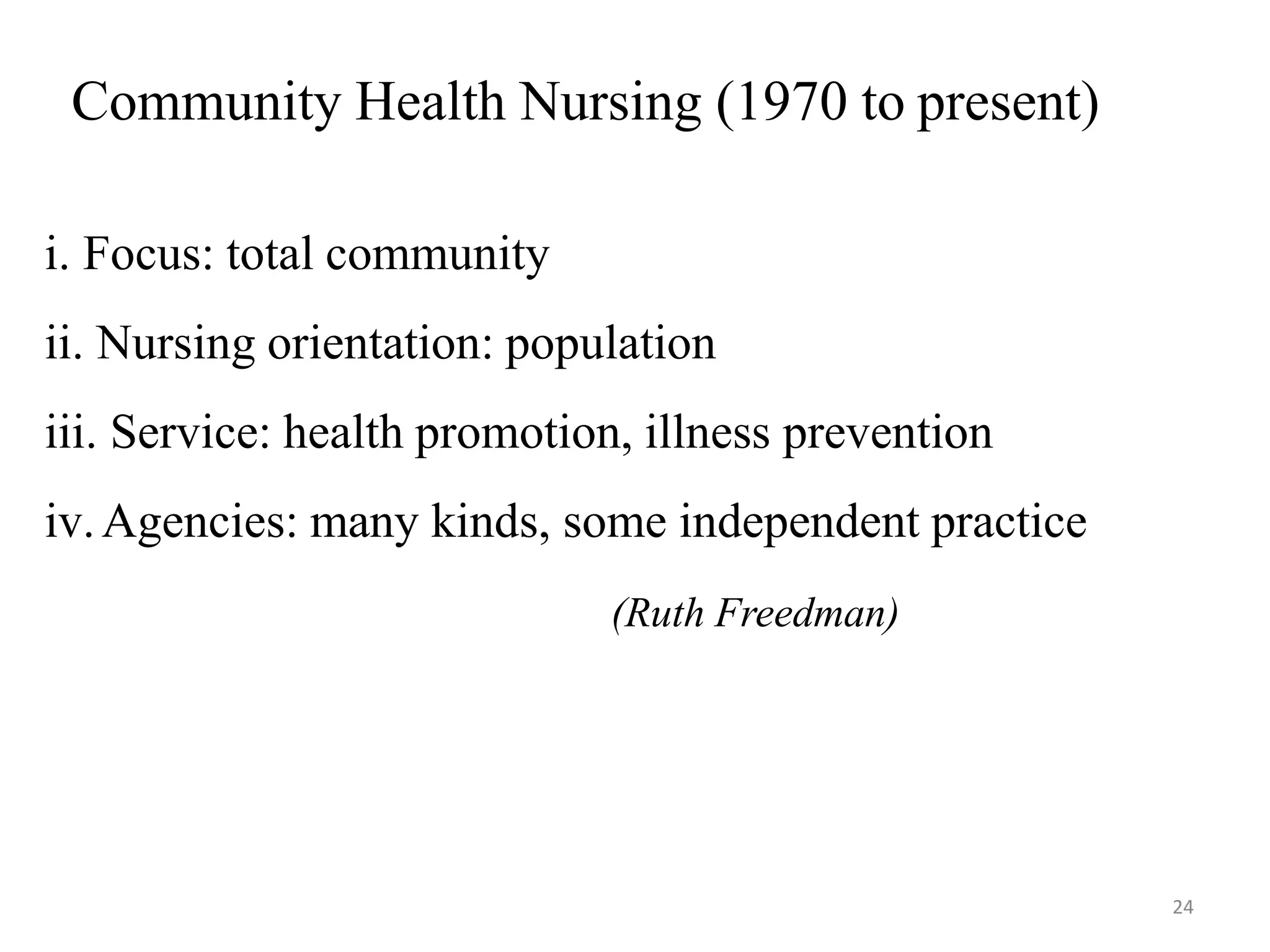
Community Health Nursing (1970 to present)
i. Focus: total community
ii. Nursing orientation: population
iii. Service: health promotion, illness prevention
iv.Agencies: many kinds, some independent practice
(Ruth Freedman)
25
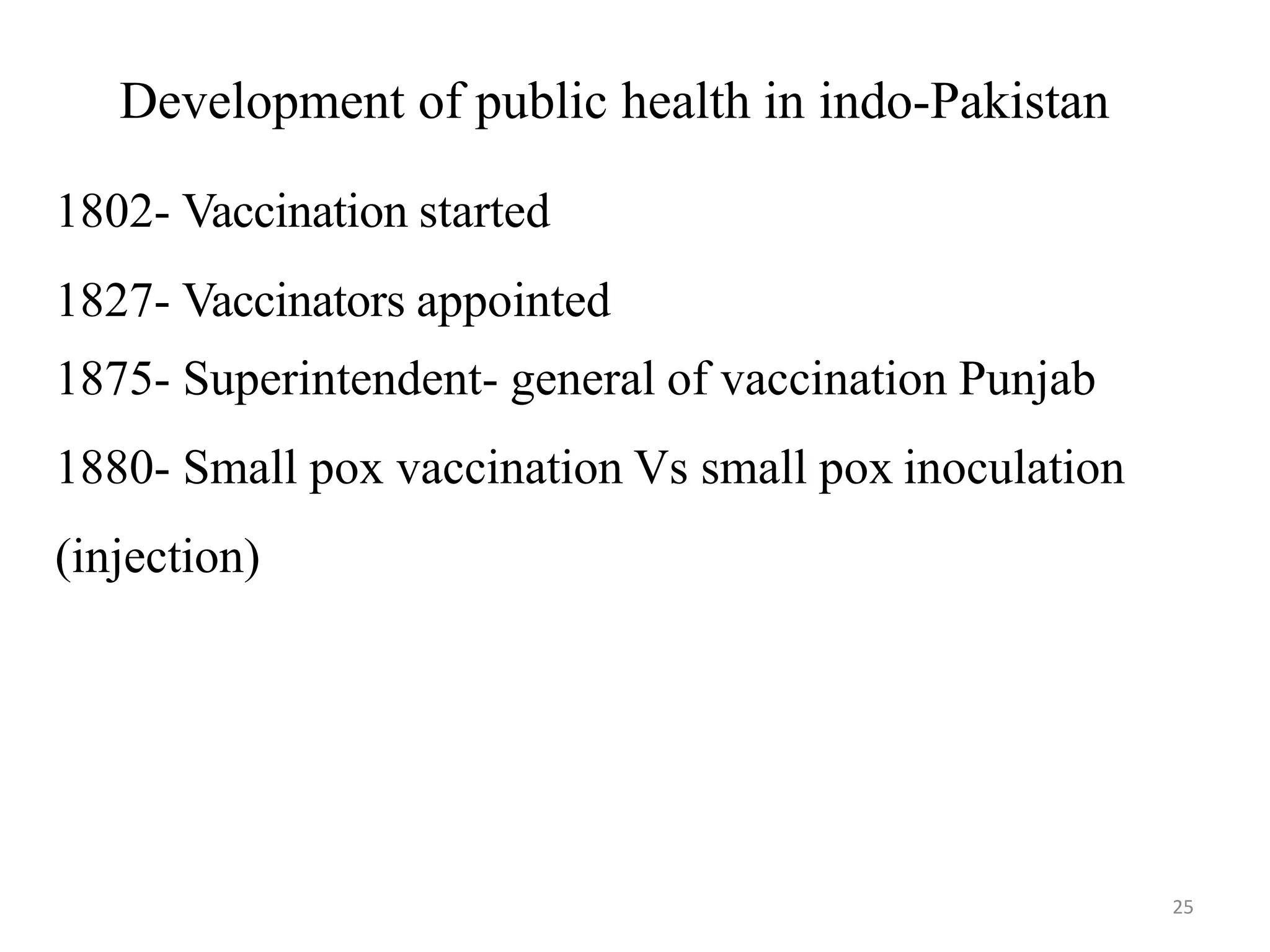
Development of public health in indo-Pakistan
1802- Vaccination started
1827- Vaccinators appointed
1875- Superintendent- general of vaccination Punjab
1880- Small pox vaccination Vs small pox inoculation
(injection)
26
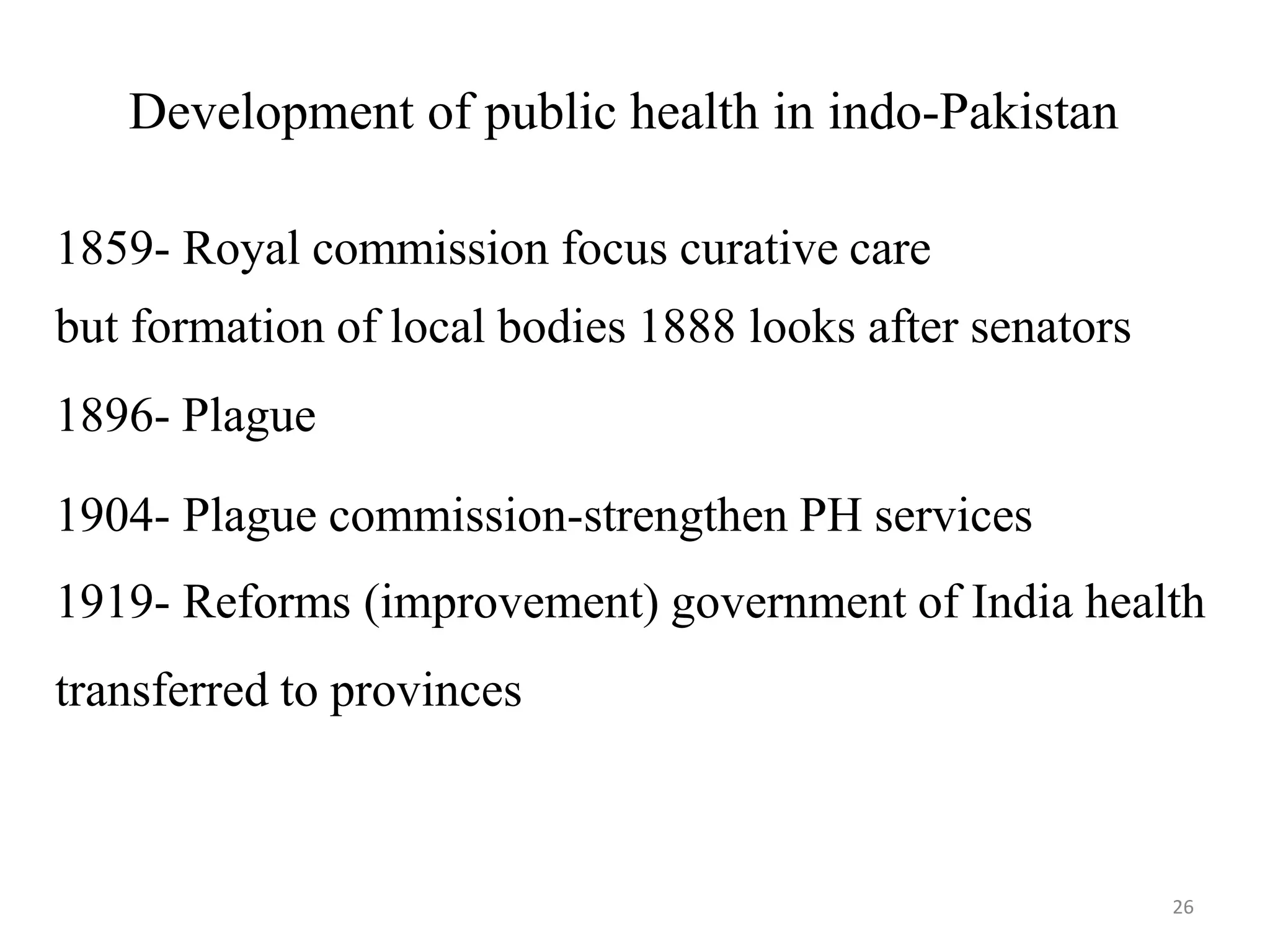
Development of public health in indo-Pakistan
1859- Royal commission focus curative care
but formation of local bodies 1888 looks after senators
1896- Plague
1904- Plague commission-strengthen PH services
1919- Reforms (improvement) government of India health
transferred to provinces
27
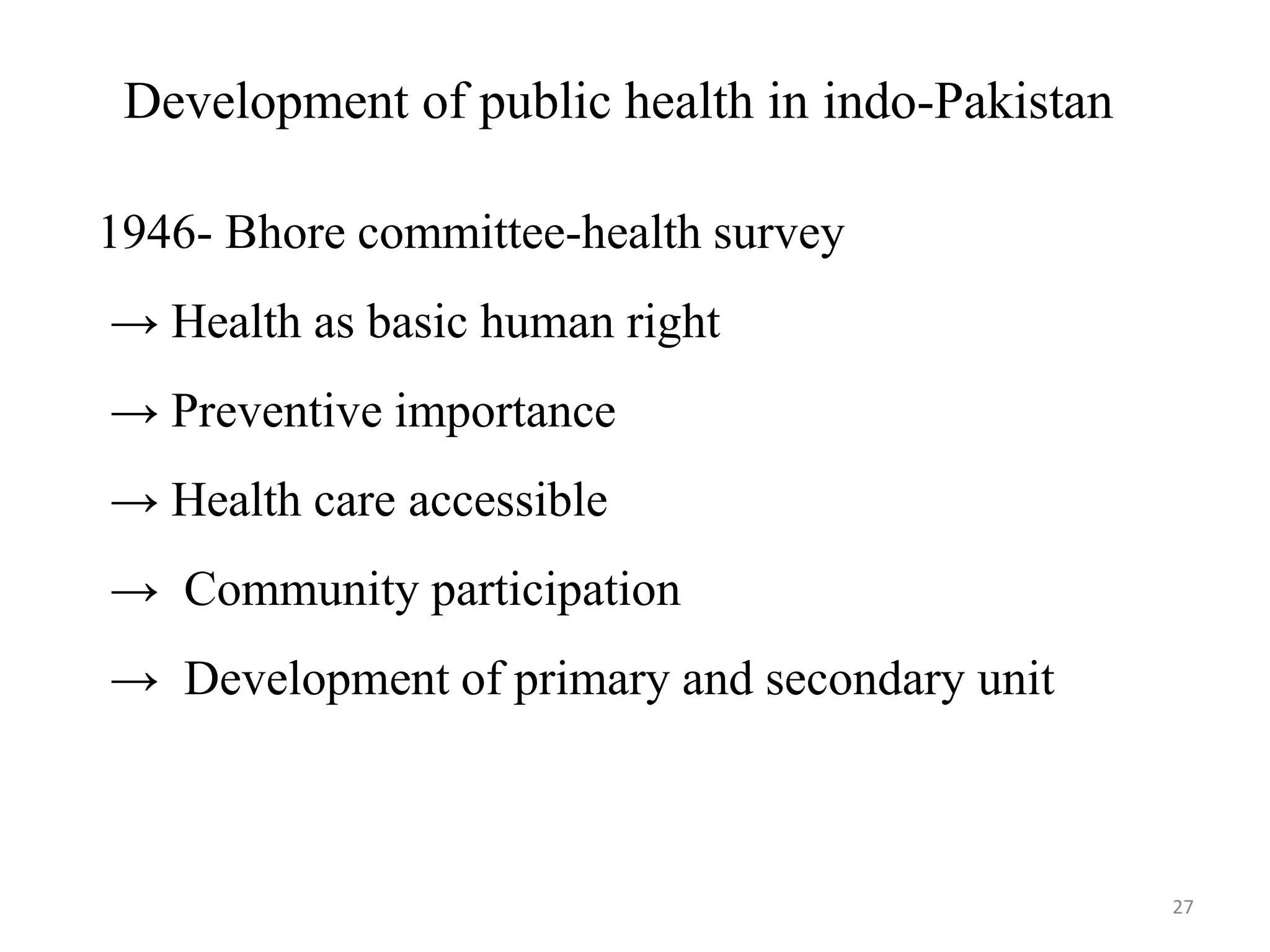
Development of public health in indo-Pakistan
1946- Bhore committee-health survey
→ Health as basic human right
→ Preventive importance
→ Health care accessible
→ Community participation
→ Development of primary and secondary unit
28
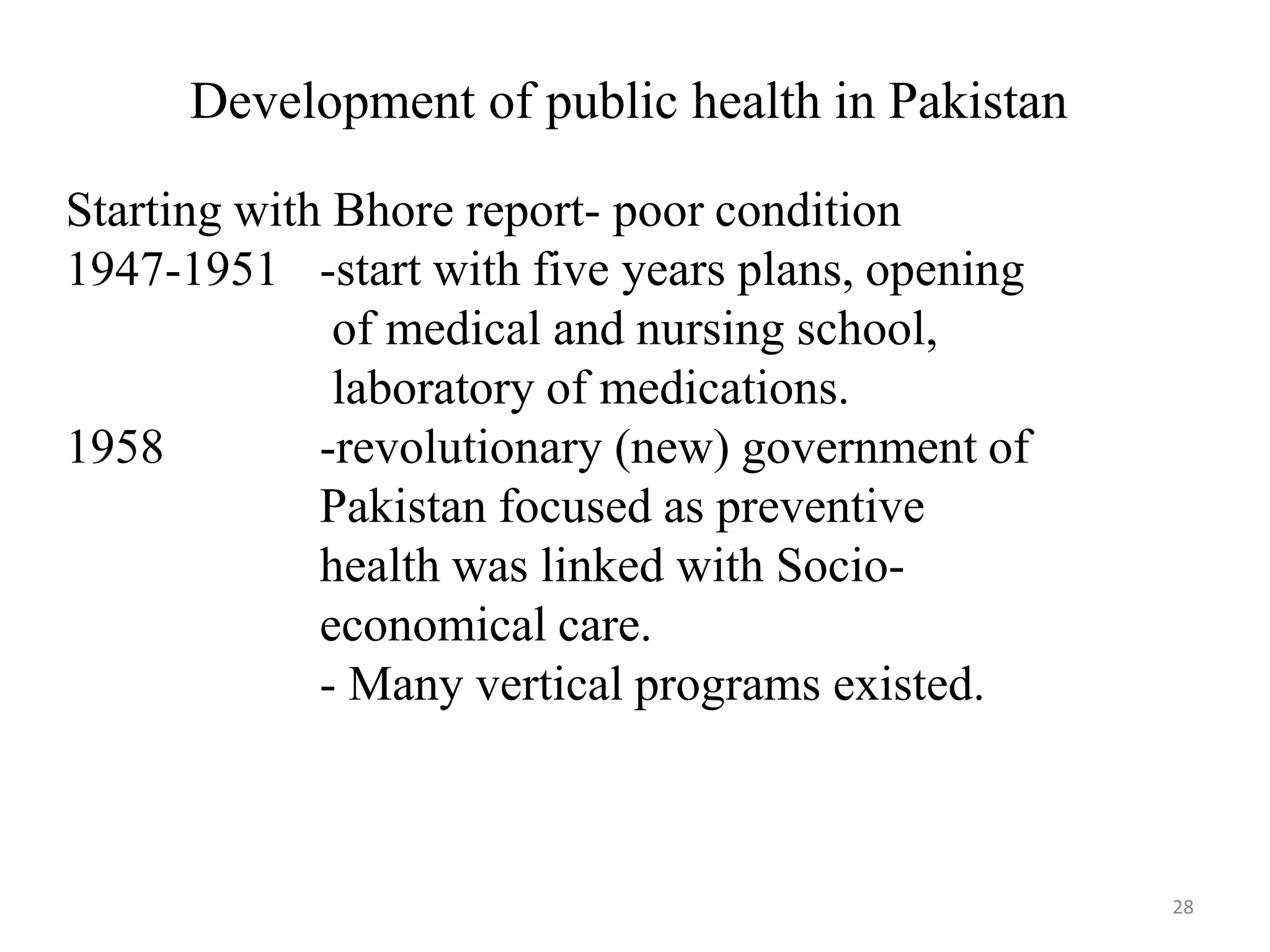
Development of public health in Pakistan
Starting with Bhore report- poor condition
1947-1951
1958
-start with five years plans, opening
of medical and nursing school,
laboratory of medications.
-revolutionary (new) government of
Pakistan focused as preventive
health was linked with Socio-
economical care.
- Many vertical programs existed.
29
Development of public health Pakistan
1978- HFA-2000 basic health science, PHC, RHC,
- Increase horizontal program
-School health, training, and other activities
took birth, health care workers
30
Communities:
Essential Functions
• Production, distribution or consumption of items
• Socialization
• Transmission of culture
• Provision of norms/social controls
• Provision of mutual respect
Communities:
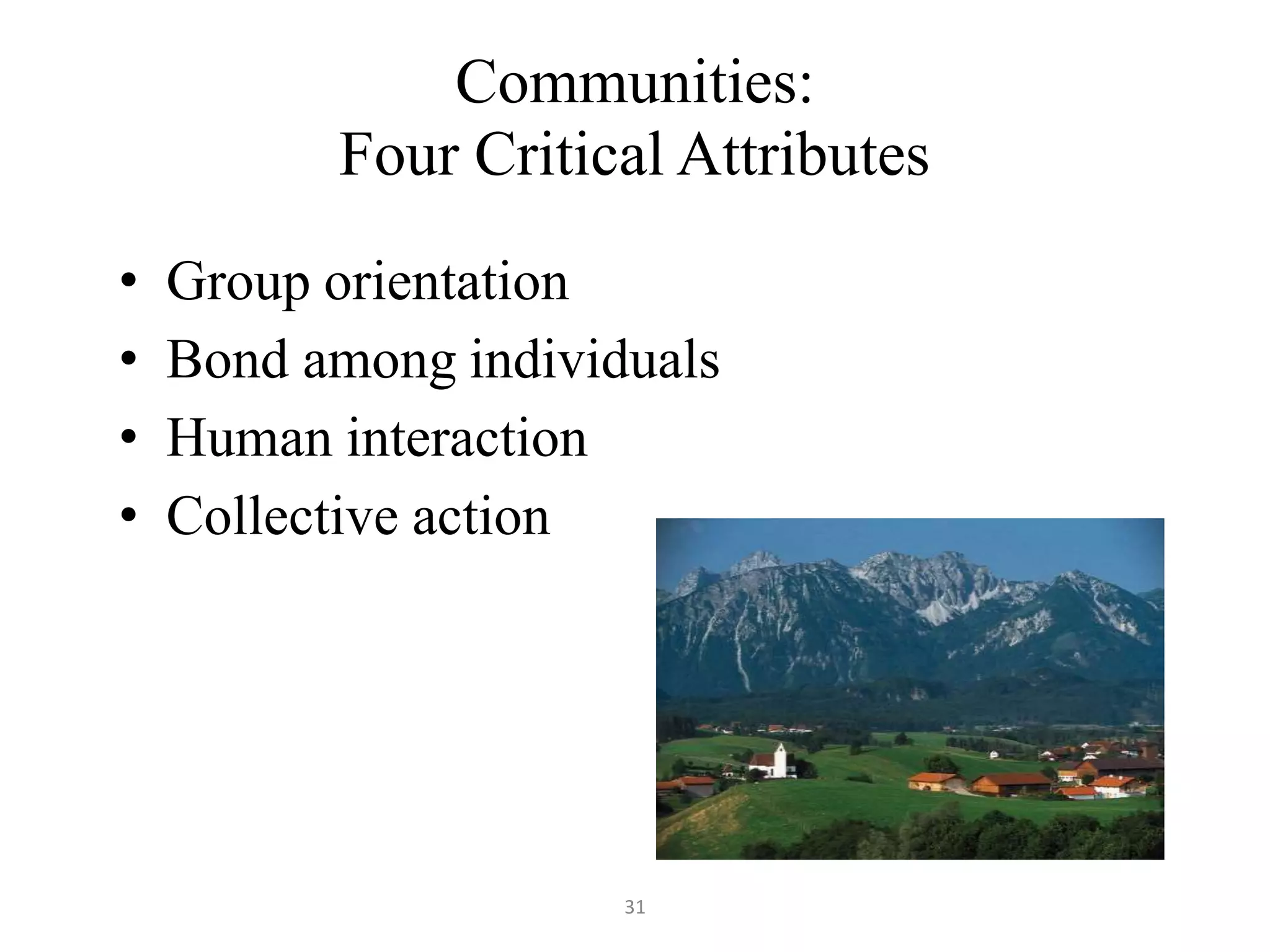
Four Critical Attributes
• Group orientation
• Bond among individuals
• Human interaction
• Collective action
31
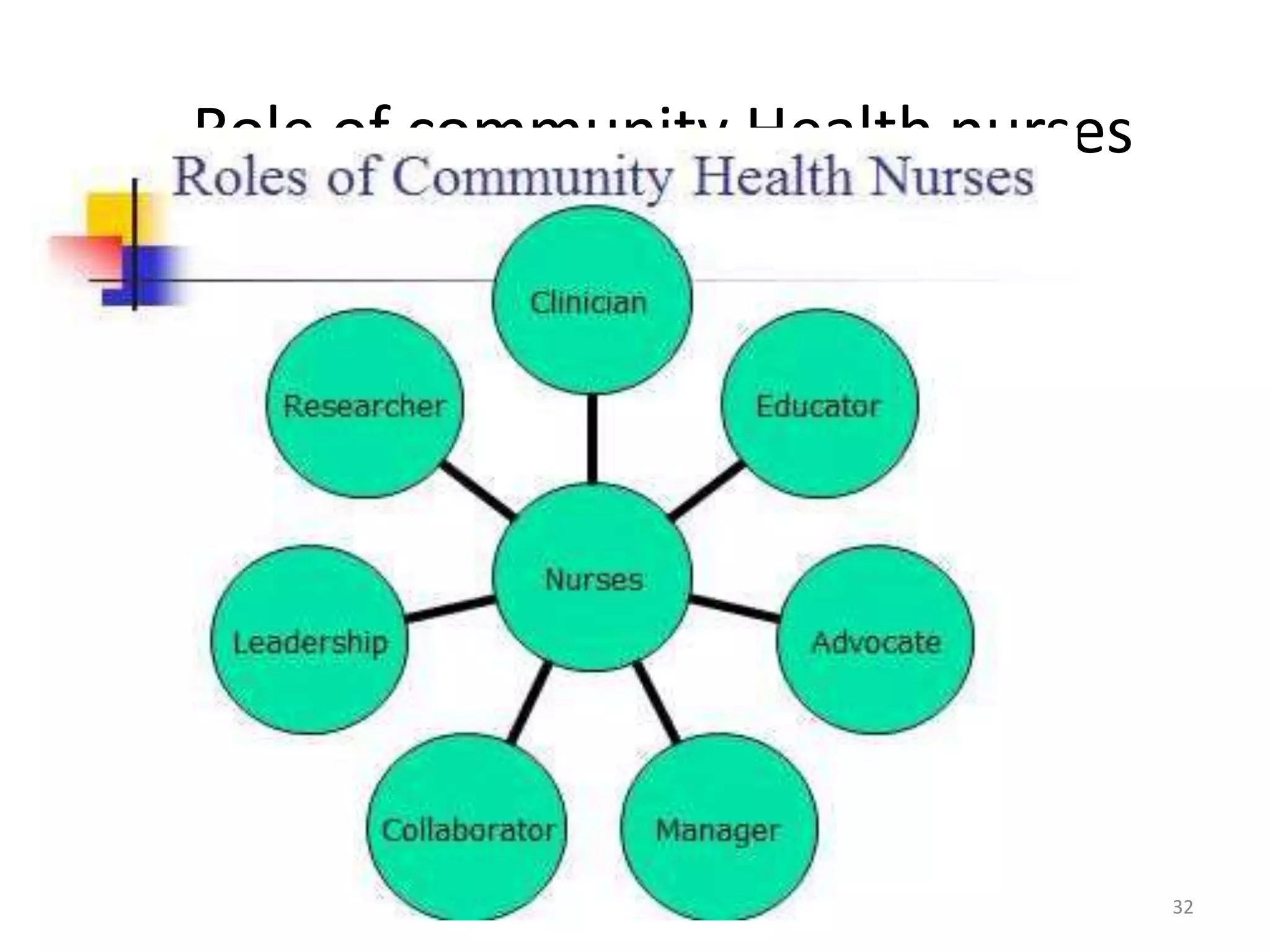
Role of community Health nurses
32
33
General roles Cont…
• Clinician/Care provider (Functional role)
In community health practice, providing nursing care
is different than in hospitals. This is because the target of
service expands beyond the individual to include
families, groups, and communities.
34
• Functional role:
• Case finding and referral of needed cases.
• Complete history taken about each individual.
• Assist in any examination done.
• Know the first aid measures to implement it in
emergency.
• Know the health services available in the
community and use the system of referral when
needed.
35
Cont..
Community health nurse provides care in following
forms:
• Provide Geriatric care
• Provide antenatal and post natal care
• Provide Neonatal care
• Conduct the deliveries in the communities
36
General role Cont…
• Provide formal exercises to the bed ridden
individuals having paralysis
• Provides the first aid
• Provide nursing procedures like cold sponging
if fever is observed in any member of family in
community
• Wound dressing
• Treats minor illnesses
37
• Educator:
Health teaching is part of good nursing care and
one of the major functions of the community
health nurse, mainly concerned with health
promotion.
38
Educator role Cont…
• As educator, community health nurse focus on
the following teaching:
• Educates individuals, family and community for
the principles and techniques of proper
prevention of communicable diseases
39
Health educator Cont…
• She teaches about the proper diet in quantity and
quality
• Teaches the personal, family and community
hygiene
• Teaches the handling of first aid techniques for
emergencies like snake bite
• Trains the traditional birth Attendants for normal
delivery and delivery in communities.
40
Manager role Cont…
• Organizes and manages various programs of
health and assume leadership of nursing team for
supervision of nursing and other staff.
To manage resources for health programs
and implement them effectively in the
community.
FINANCING
STAFFING
41
Role conti….
• Leader
• Community health work in the community
Guide them towards better health as leader.
• Researcher
The researcher's role is an integral part of the
community health nursing practice.
The researcher's role at all levels helps to determine
needs, evaluate effectiveness of care and develop
theoretical basis for community health nursing.
42
• Role in research and evaluation:
• Help in evaluating the health program.
• Must have knowledge about how to keep
records related to the people who utilize the
clinic.
• She must complete the questionnaire for
purpose of accurate study.
• Analysis and evaluation of nursing practices to
fulfill the statistical survey.
43
THE ROLE OF THE COMMUNITY HEALTH NURSE
IN THE CLINIC:
• Administrative role:
• Participate in the organization of health
program in the institution.
• Delegation of work.
• Plan of work hours.
• Cooperation with other health members.
• Systematic gathering of information for
evaluation.
44
• Supervisory role:
• Understanding the policy of her agent.
• Supervise the function of her staff.
• Give in-service education program to the other
health team.
• Guides group discussion with staff.
• Guides her staff to overcome their difficulties
in work.
45
• Advocate:
To speak in the community. She participates the
district Govt meeting and talks to
administration for the favor of talks for solution
of health care, social and financial problems
available in her constituency.
46
APPLYING THE ROLE OF COMMUNITY HEALTH
NURSE ACCORDING TO NURSING PROCESS
(role in home visit)
1.Assessment:
• Identifying the needs of the family before
making the visit. By analyzing data available in
the family records, know all family members;
whether there are any children, if so, what are
their ages; what the health problems of this
family are; the environment of the house. Then
actual visit.
47
2. Planning:
• Planning can be short term or long term, and
interventions can be implemented immediately
over a long period of time.
• Short term plans are those which can be met in
a few weeks time whereas long term plans are
accomplished over many weeks or perhaps
months or years.
48
• In planning, the following are done:
– Setting the goal / objectives for the visit.
– Identifying the needs and health problems of the family.
– Specifying the actions to be carried out by the nurse during
the home visit e.g. health teaching about nutrition,
– Select proper place and time for carrying the visit.
– Prepare necessary equipment, instruments and material
which the nurse will need during the home visit i.e. cotton,
eye drops, etc.
49
3. Implementation:
During the home visit, the nurse should:
 Identify the traditions & customs and healthful practices of the
family.
 Use effective therapeutic communication.
 Use audiovisual materials in teaching, also available home
utensils and materials.
 Emphasize to the family that this visit was made for them.
50
Cont….
 Tie the family with the center. Explain services
offered.
 Answer questions rose from family members
clearly.
 Do not record any word said by family
members in front of them.
4. Evaluation:
• Evaluate whether the objectives were fulfilled
or not. If not, should know the reasons and
correct it.
51
References
Sarah Coulter Danner.community helth.4th Ed.
Department of Nursing Oglala Lakota College
Japee tapa.Community health nursing.3rd Ed.1998
New Dehli,india.
52
QUESTIONS??
THANK YOU

Introduction to community

  • 1.
    COMMUNITY HEALTH NURSINGI UNIT I : INTRODUCTION TO COMMUNITY 1 MD DANISH RIZVI DEPT. COMMUNITY
  • 2.
    2 INTRODUCTION Human beings aresocial creatures. All of us, with rare exception, live out our lives in the company of other people. An Eskimo lives in a small, tightly knit community of close relatives; a rural Mexican may live in a small village with hardly more than 200 members. In contrast, someone from New York City might be a member of many overlapping communities, such as professional societies, a political party, a religious group, a cultural society, a neighbourhood, and the city itself. Even those who try to escape community membership always begin their lives in some type of group, and usually they continue to depend on groups for material and emotional support. Communities are an essential and permanent feature of the human experience.
  • 3.
    3 OBJECTIVES: In the endof this presentation the students will be able to:  Define community, community health, community health nursing, urban & rural communities  Discuss the concepts of health, wellness, illness and disease.  Discuss the historical background of Community Health Nursing from Public Health Nursing.  Enlist the essential functions of community health nursing.  Discuss the roles of the Community Health Nurse in community settings.
  • 4.
    4 COMMUNITY a group ofpeople living in the same place or having a particular characteristic in common. community refers to a collection of people who interact with one another and whose common interests or characteristics form the basis for a sense of unity or belonging.
  • 5.
    5 Cont… It can bea society of people holding common rights and privileges (e.g., citizens of a town), sharing common interests (e.g., a community of farmers), or living under the same laws and regulations (e.g., a prison community). The function of any community includes its members’ collective sense of belonging and their shared identity, values, norms, communication, and common interests and concerns (Anderson & McFarlane, 2004). Although most communities of people share many aspects of their experience, it is useful to identify three types of communities that have relevance to community health practice: geographic, common interest, and health problem or solution.
  • 6.
    6 COMMIUNITY HEALTH Community Healthis a discipline concerned with the study and improvement of the health different communities. tends to focus on characteristics Community geographical of health areas, and includes primary, secondary and tertiary healthcare.
  • 7.
    7 PUBLIC HEALTH Public healthrefers to all organized measures (whether public or private) to prevent disease, promote health, and prolong life among the population as a whole. Its activities aim to provide conditions in which people can be healthy and focus on entire populations, not on individual patients or diseases. Public Health includes community health. Public health is "the science and art of preventing disease, prolonging life and promoting health through the organized efforts and informed choices of society, organizations, public and private, communities and individuals”.
  • 8.
    8 Cont… It is concernedwith threats to health based on population health analysis. Public health incorporates the interdisciplinary approaches of epidemiology, biostatistics and health services, environmental health, community health, behavioural health, health economics, public policy, insurance medicine and occupational health (respectively occupational medicine) are other important subfields. A CH service might be responsible for delivery of a range of interventions in a local community, while the PH Service might be involved at a policy level looking at quality of water, traffic calming, or budgets for drugs.
  • 9.
    9 COMMUNITY HEALTH NURSING Communityhealth nursing is to “assist the Individual, family and community in attaining their highest level of holistic health. To provide and promote healthy life style choices through education, public awareness and community activities.”
  • 10.
    10 URBAN & RURALCOMMUNITIES Rural community is a society that is in a rural area ( country side ). An urban community is a society that is in an urban area ( town or city )
  • 11.
    URBAN COMMUNITY An UrbanCommunity is a big city or town. It is considered an Urban Community if there are more than 2,500 people living in the community. Urban communities are often busy and crowded. Normally, the city is the most central location in a region. It is also referred to as downtown. In an Urban Community there are many buildings, houses, and people. People often live close together. 11
  • 12.
    RURAL COMMUNITY an areaoutside of cities and towns; According to the US Census Bureau, a rural community is one that does not qualify as an urban community. Specifically, if a territory has more than 2,500 people per square mile, it is defined as urban. Areas with less than 2,500 would then be considered rural. 12
  • 13.
  • 14.
    14 HEALTH “a state ofcomplete physical, mental, and social well-being and not merely the absence of disease or infirmity” “World Health Organization” ILLNESS: A highly personal state in which the person feels unhealthy, may or may not related to disease.
  • 15.
    15 WELLNESS An integrated methodof functioning which is oriented toward maximizing the potential of which the individual is capable. OR progresses towards maximum an active process by which an individual potential possible, regardless of current state of health
  • 16.
    16 Historical Development ofCommunity Health Nursing The modern concept of community health and welfare is one which has taken many centuries to evolve. All ancient civilization particularly Egypt, India and China developed their own specific team of medicine.
  • 17.
    17 Historical Development ofCommunity Health Nursing • Egypt appeared to have been the first and the best in the field that had a fully developed medical system by 3000BC. • China appeared around 450 BC. • Indian system of medicine around 200BC
  • 18.
    18 In modern periodchanges in development of medicine and public health under different stages. • Empirical health era • Basic science era • Clinical science era • Public health science era • Political science era (1800-1850) (1850-1900) (1900-1950) (1950-1975) (1975-2000)
  • 19.
    19 Public Health ScienceEra (1950-1975) In this period preventive oriented approach started. Now it is being called an era of the community centered approach.
  • 20.
    20 Political Health ScienceEra (1975-2000) In this period the involvement of the community leaders and the members of the health program was practiced stage by stage.
  • 21.
    21 Early Home CareStage (before mid 1800s) 1. Focus: Sick poor 2. Nursing orientation: individuals 3. Service: curative 4. Agencies: Lay & religious orders (St. Phoebe)
  • 22.
    22 District Nursing (mid1800-1900s) 1. Focus: Sick poor 2. Nursing orientation: Individuals 3. Service: Curative/preventative 4. Agencies: Voluntary & some government (Willium Rathbone)
  • 23.
    23 Public Health Nursing(1900-1970) i. Focus: needy public ii. Nursing orientation: families iii. Service: Curative/preventative. Iv.Agencies: Voluntary & some voluntary (Lilliam Wald)
  • 24.
    24 Community Health Nursing(1970 to present) i. Focus: total community ii. Nursing orientation: population iii. Service: health promotion, illness prevention iv.Agencies: many kinds, some independent practice (Ruth Freedman)
  • 25.
    25 Development of publichealth in indo-Pakistan 1802- Vaccination started 1827- Vaccinators appointed 1875- Superintendent- general of vaccination Punjab 1880- Small pox vaccination Vs small pox inoculation (injection)
  • 26.
    26 Development of publichealth in indo-Pakistan 1859- Royal commission focus curative care but formation of local bodies 1888 looks after senators 1896- Plague 1904- Plague commission-strengthen PH services 1919- Reforms (improvement) government of India health transferred to provinces
  • 27.
    27 Development of publichealth in indo-Pakistan 1946- Bhore committee-health survey → Health as basic human right → Preventive importance → Health care accessible → Community participation → Development of primary and secondary unit
  • 28.
    28 Development of publichealth in Pakistan Starting with Bhore report- poor condition 1947-1951 1958 -start with five years plans, opening of medical and nursing school, laboratory of medications. -revolutionary (new) government of Pakistan focused as preventive health was linked with Socio- economical care. - Many vertical programs existed.
  • 29.
    29 Development of publichealth Pakistan 1978- HFA-2000 basic health science, PHC, RHC, - Increase horizontal program -School health, training, and other activities took birth, health care workers
  • 30.
    30 Communities: Essential Functions • Production,distribution or consumption of items • Socialization • Transmission of culture • Provision of norms/social controls • Provision of mutual respect
  • 31.
    Communities: Four Critical Attributes •Group orientation • Bond among individuals • Human interaction • Collective action 31
  • 32.
    Role of communityHealth nurses 32
  • 33.
    33 General roles Cont… •Clinician/Care provider (Functional role) In community health practice, providing nursing care is different than in hospitals. This is because the target of service expands beyond the individual to include families, groups, and communities.
  • 34.
    34 • Functional role: •Case finding and referral of needed cases. • Complete history taken about each individual. • Assist in any examination done. • Know the first aid measures to implement it in emergency. • Know the health services available in the community and use the system of referral when needed.
  • 35.
    35 Cont.. Community health nurseprovides care in following forms: • Provide Geriatric care • Provide antenatal and post natal care • Provide Neonatal care • Conduct the deliveries in the communities
  • 36.
    36 General role Cont… •Provide formal exercises to the bed ridden individuals having paralysis • Provides the first aid • Provide nursing procedures like cold sponging if fever is observed in any member of family in community • Wound dressing • Treats minor illnesses
  • 37.
    37 • Educator: Health teachingis part of good nursing care and one of the major functions of the community health nurse, mainly concerned with health promotion.
  • 38.
    38 Educator role Cont… •As educator, community health nurse focus on the following teaching: • Educates individuals, family and community for the principles and techniques of proper prevention of communicable diseases
  • 39.
    39 Health educator Cont… •She teaches about the proper diet in quantity and quality • Teaches the personal, family and community hygiene • Teaches the handling of first aid techniques for emergencies like snake bite • Trains the traditional birth Attendants for normal delivery and delivery in communities.
  • 40.
    40 Manager role Cont… •Organizes and manages various programs of health and assume leadership of nursing team for supervision of nursing and other staff. To manage resources for health programs and implement them effectively in the community. FINANCING STAFFING
  • 41.
    41 Role conti…. • Leader •Community health work in the community Guide them towards better health as leader. • Researcher The researcher's role is an integral part of the community health nursing practice. The researcher's role at all levels helps to determine needs, evaluate effectiveness of care and develop theoretical basis for community health nursing.
  • 42.
    42 • Role inresearch and evaluation: • Help in evaluating the health program. • Must have knowledge about how to keep records related to the people who utilize the clinic. • She must complete the questionnaire for purpose of accurate study. • Analysis and evaluation of nursing practices to fulfill the statistical survey.
  • 43.
    43 THE ROLE OFTHE COMMUNITY HEALTH NURSE IN THE CLINIC: • Administrative role: • Participate in the organization of health program in the institution. • Delegation of work. • Plan of work hours. • Cooperation with other health members. • Systematic gathering of information for evaluation.
  • 44.
    44 • Supervisory role: •Understanding the policy of her agent. • Supervise the function of her staff. • Give in-service education program to the other health team. • Guides group discussion with staff. • Guides her staff to overcome their difficulties in work.
  • 45.
    45 • Advocate: To speakin the community. She participates the district Govt meeting and talks to administration for the favor of talks for solution of health care, social and financial problems available in her constituency.
  • 46.
    46 APPLYING THE ROLEOF COMMUNITY HEALTH NURSE ACCORDING TO NURSING PROCESS (role in home visit) 1.Assessment: • Identifying the needs of the family before making the visit. By analyzing data available in the family records, know all family members; whether there are any children, if so, what are their ages; what the health problems of this family are; the environment of the house. Then actual visit.
  • 47.
    47 2. Planning: • Planningcan be short term or long term, and interventions can be implemented immediately over a long period of time. • Short term plans are those which can be met in a few weeks time whereas long term plans are accomplished over many weeks or perhaps months or years.
  • 48.
    48 • In planning,the following are done: – Setting the goal / objectives for the visit. – Identifying the needs and health problems of the family. – Specifying the actions to be carried out by the nurse during the home visit e.g. health teaching about nutrition, – Select proper place and time for carrying the visit. – Prepare necessary equipment, instruments and material which the nurse will need during the home visit i.e. cotton, eye drops, etc.
  • 49.
    49 3. Implementation: During thehome visit, the nurse should:  Identify the traditions & customs and healthful practices of the family.  Use effective therapeutic communication.  Use audiovisual materials in teaching, also available home utensils and materials.  Emphasize to the family that this visit was made for them.
  • 50.
    50 Cont….  Tie thefamily with the center. Explain services offered.  Answer questions rose from family members clearly.  Do not record any word said by family members in front of them. 4. Evaluation: • Evaluate whether the objectives were fulfilled or not. If not, should know the reasons and correct it.
  • 51.
    51 References Sarah Coulter Danner.communityhelth.4th Ed. Department of Nursing Oglala Lakota College Japee tapa.Community health nursing.3rd Ed.1998 New Dehli,india.
  • 52.