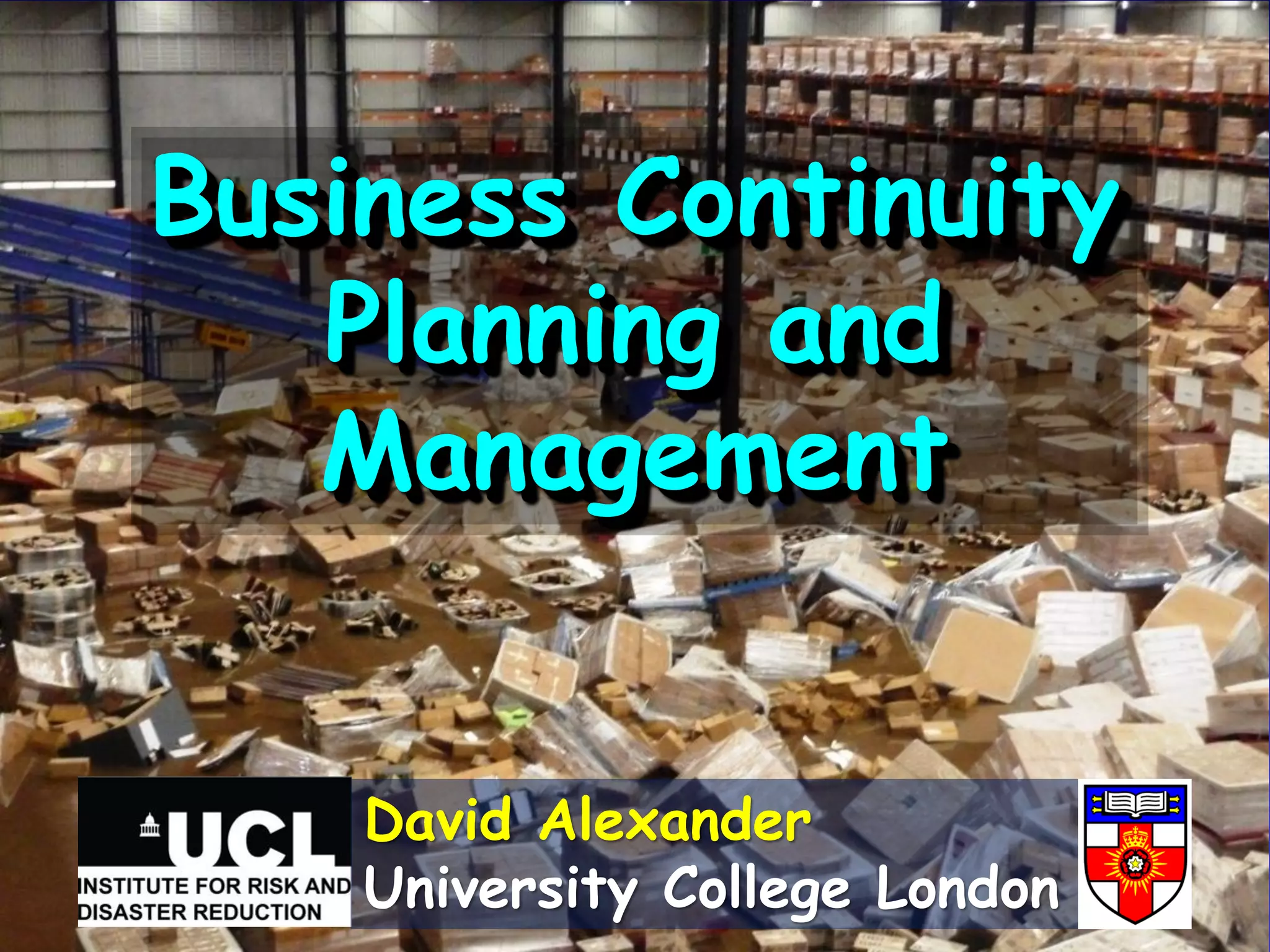
Business Continuity
   Planning and
   Management


    David Alexander
    University College London
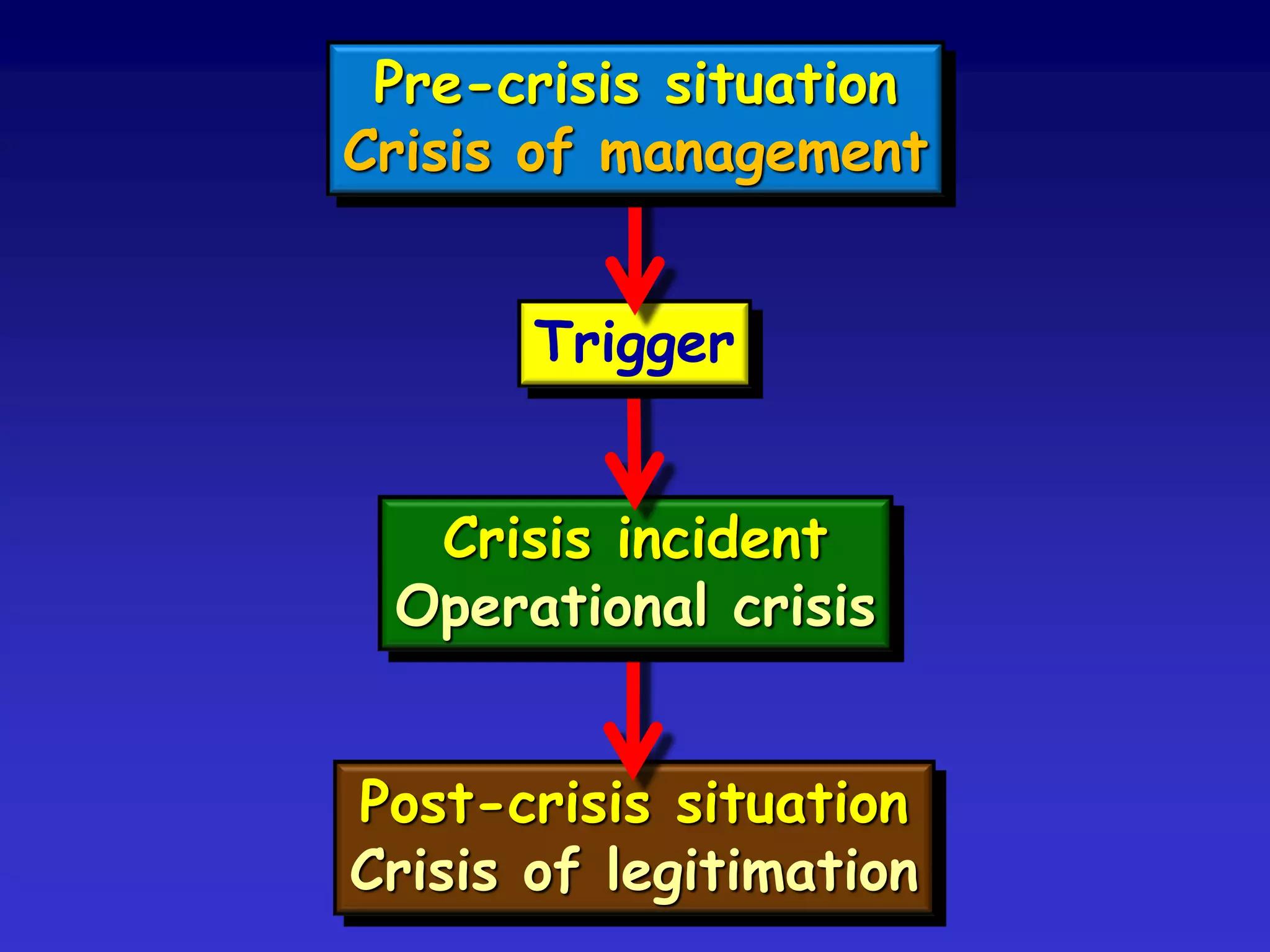
Pre-crisis situation
Crisis of management


       Trigger


  Crisis incident
 Operational crisis


Post-crisis situation
Crisis of legitimation
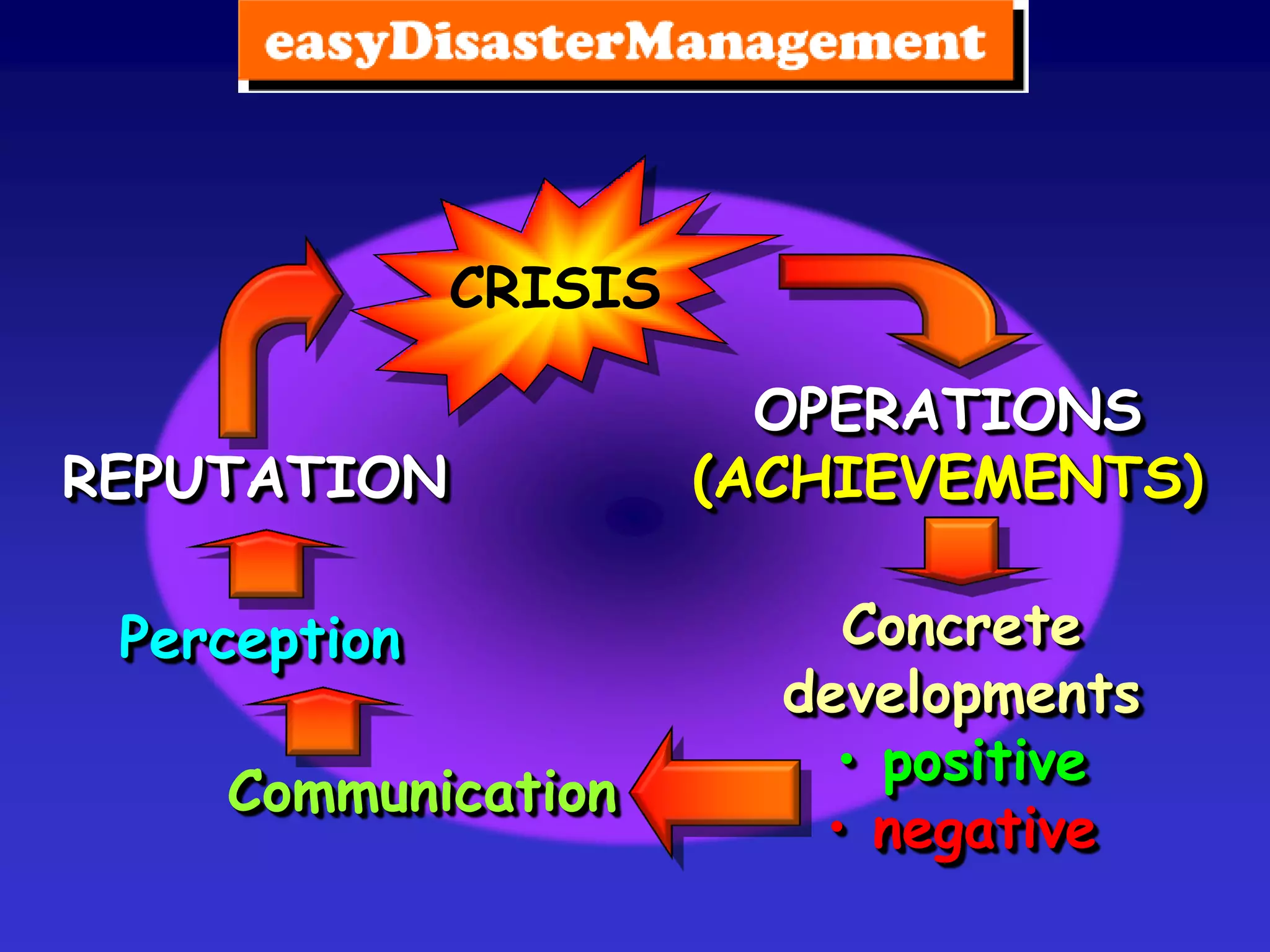
CRISIS

                         OPERATIONS
REPUTATION             (ACHIEVEMENTS)

 Perception                Concrete
                         developments
                           • positive
    Communication
                          • negative
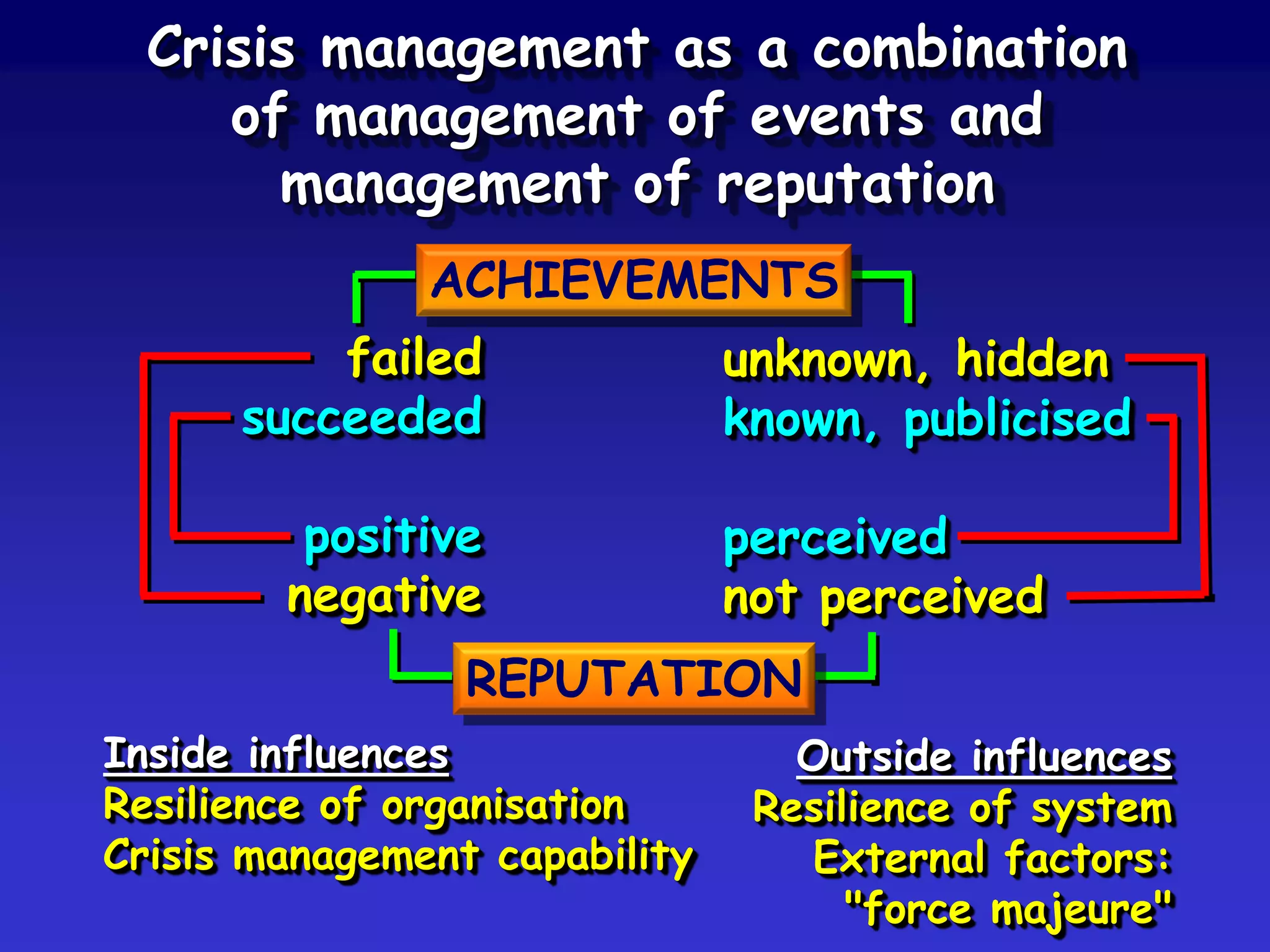
Crisis management as a combination
     of management of events and
       management of reputation
               ACHIEVEMENTS
          failed               unknown, hidden
      succeeded                known, publicised

         positive              perceived
        negative               not perceived
                 REPUTATION
Inside influences                 Outside influences
Resilience of organisation      Resilience of system
Crisis management capability      External factors:
                                     "force majeure"
"The interim goal of the planning
     process is to develop a business
  continuity plan (or set of plans) that
 can be evoked (i.e. used) in the event
    of an interruption. Planning marks
  neither the start nor the end of the
  BCM process. Its ultimate goal is to
      improve the resilience of the
organisation's business to interruptions,
   thereby protecting its operating or
             trading position."
                        Elliott et al. 2001.
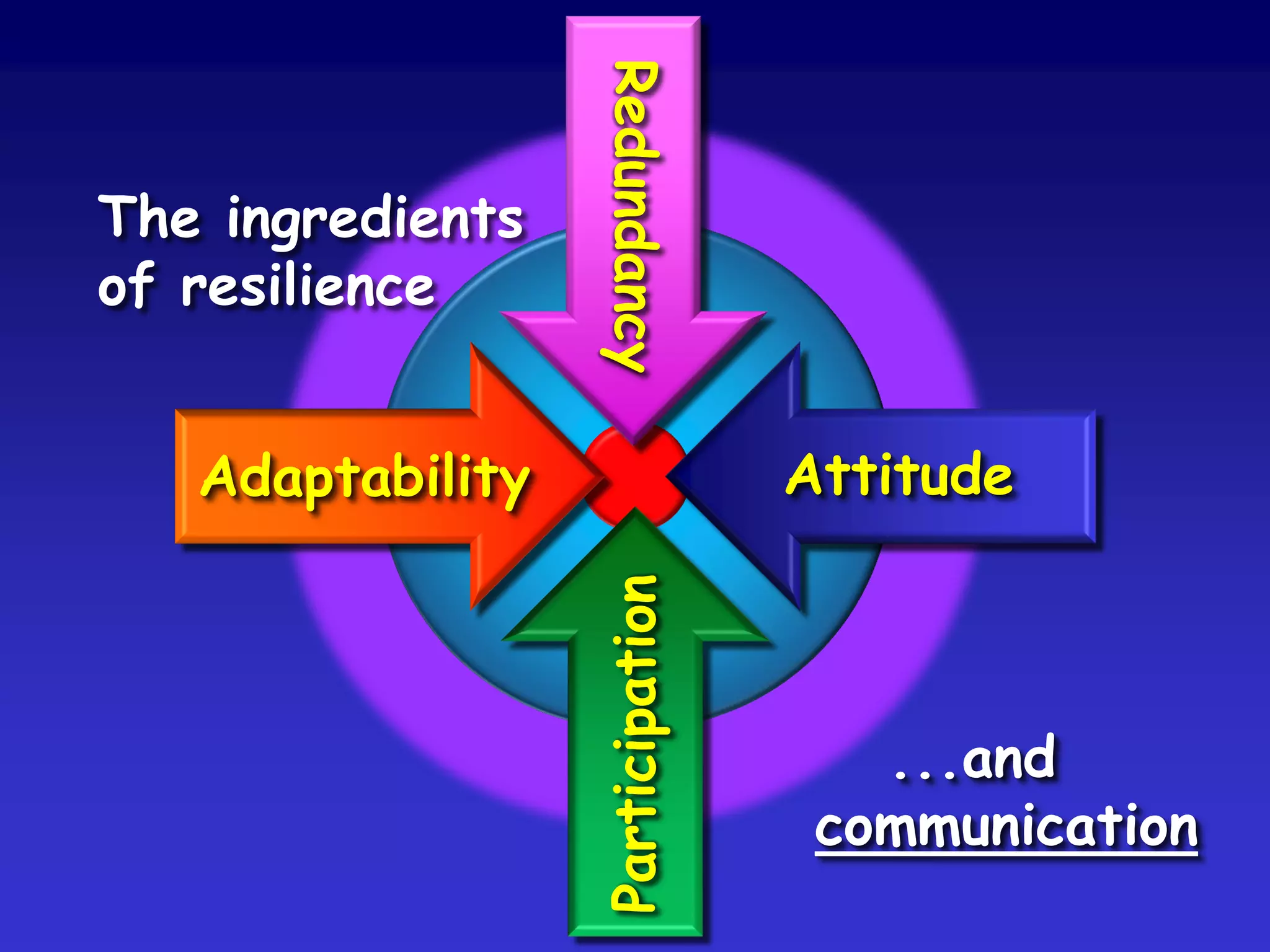
Redundancy
The ingredients
of resilience


   Adaptability                   Attitude

                  Participation

                                     ...and
                                   communication
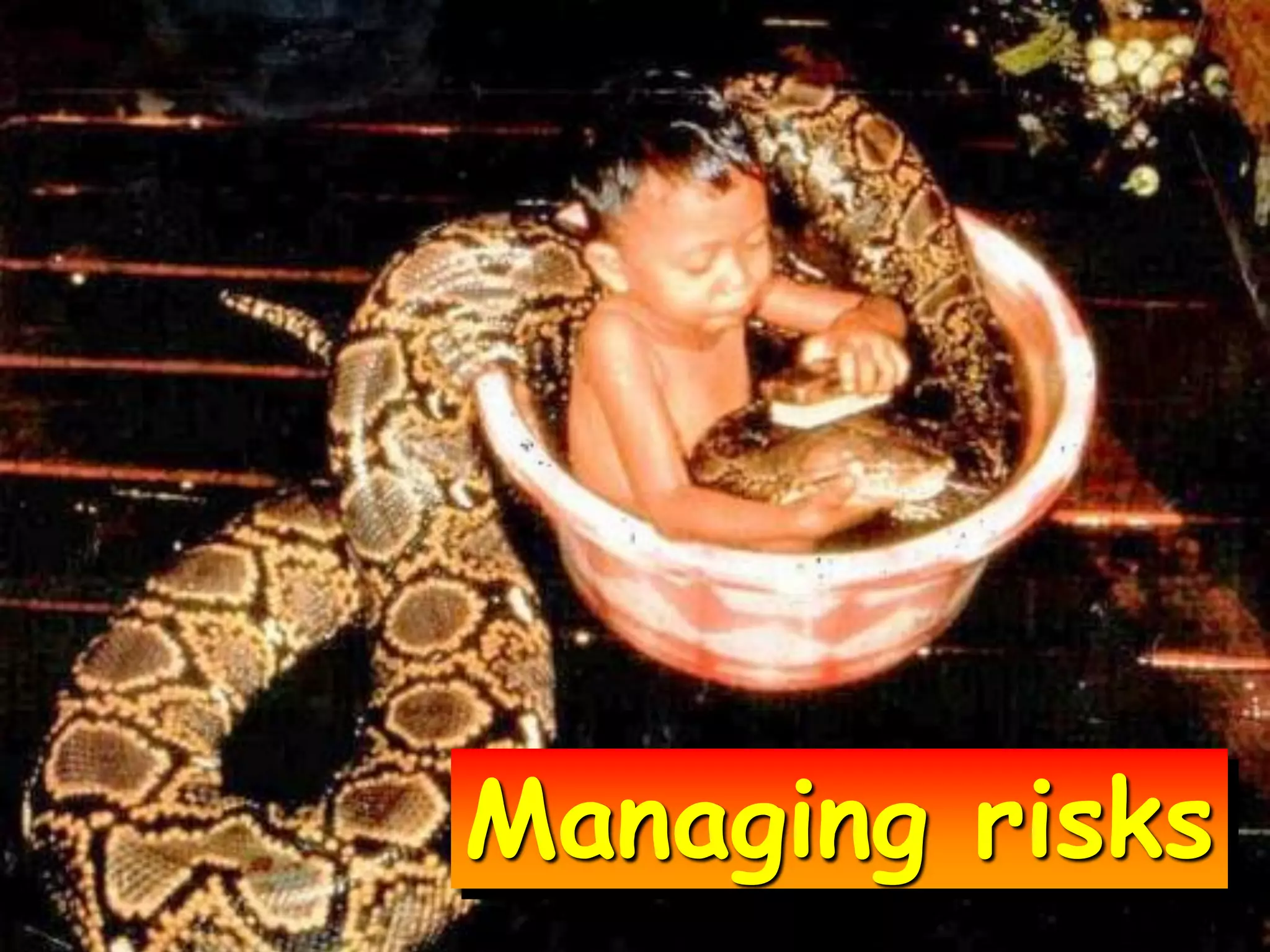
Managing risks
Some typical risks:-

• loss of customer records
• breakdown of the supply chain
• failure of essential services on which
  production or customer support depends
• inability to deliver the product for a
  significant period of time for any reason
• negative perceptions of the company by
  clients, customers or the public.
Some reasons why supply chains fail:-

• industrial action halts production

• faulty components leads to product recall

• supplier ceases trading (goes
  into bankruptcy or receivership)

• fire, flood or natural disaster
  strikes supplier's premises

• computer systems fail.
Possible impact of interruptions
       to supplies and suppliers:-
•   loss of independence
•   inability to fulfill orders
•   loss of confidential or sensitive info.
•   increased exposure to fraud
    and unauthorised transactions
•   loss of data
•   loss of audit trail
•   failure of purchasing and
    scheduling software systems
•   legal liability due to failure to
    fulfill contractual obligations.
To what extent should
 business continuity management
focus on managing the event itself
   and to what extent should it
     focus on protecting the
    organisation's reputation?

 A poorly managed crisis cannot
 completely be compensated for
  by a slick publicity offensive.
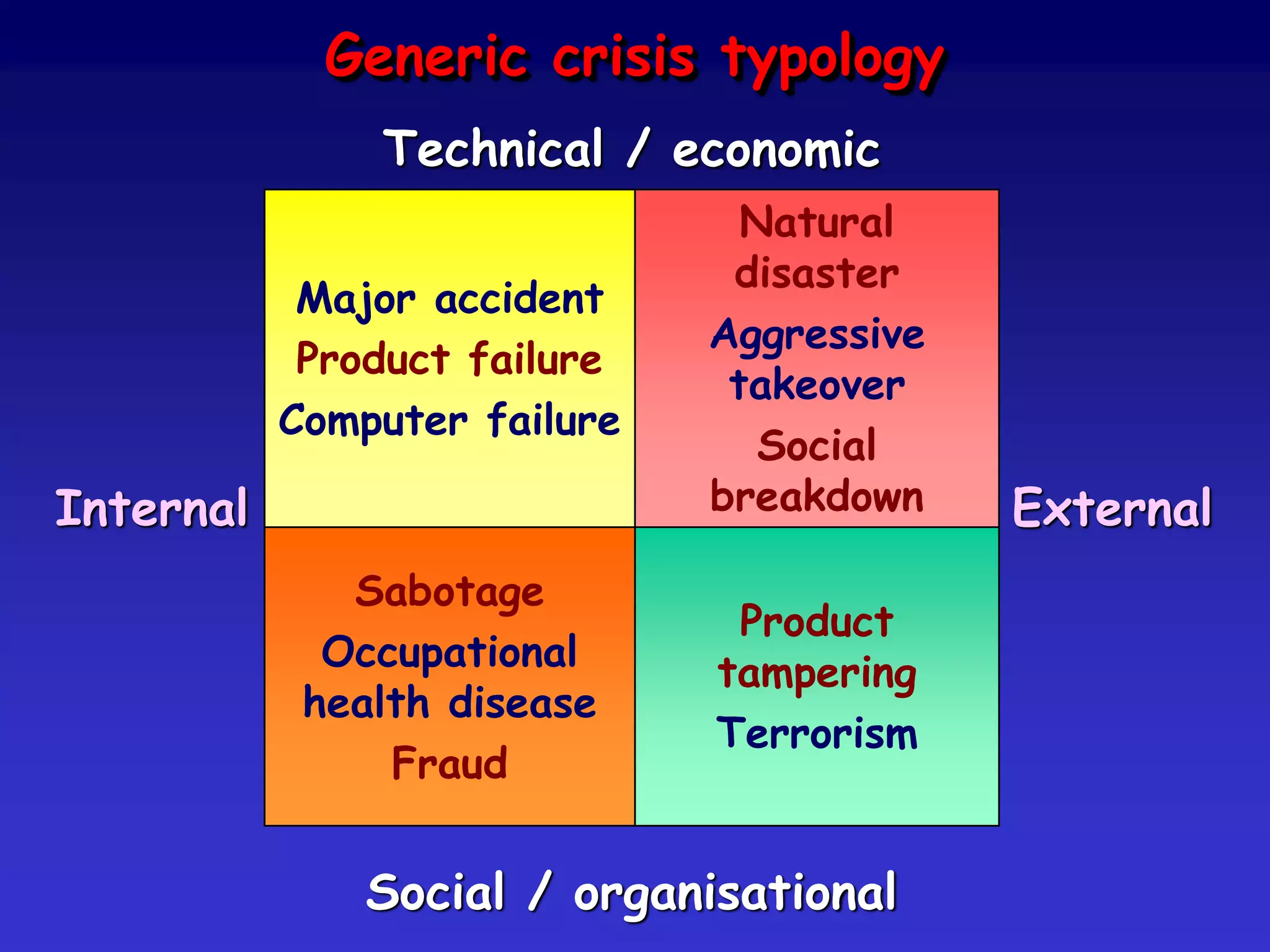
Generic crisis typology
               Technical / economic
                                Natural
                               disaster
            Major accident
                              Aggressive
            Product failure
                               takeover
           Computer failure
                                 Social
Internal                      breakdown    External
              Sabotage
                               Product
             Occupational     tampering
            health disease
                              Terrorism
                Fraud


               Social / organisational
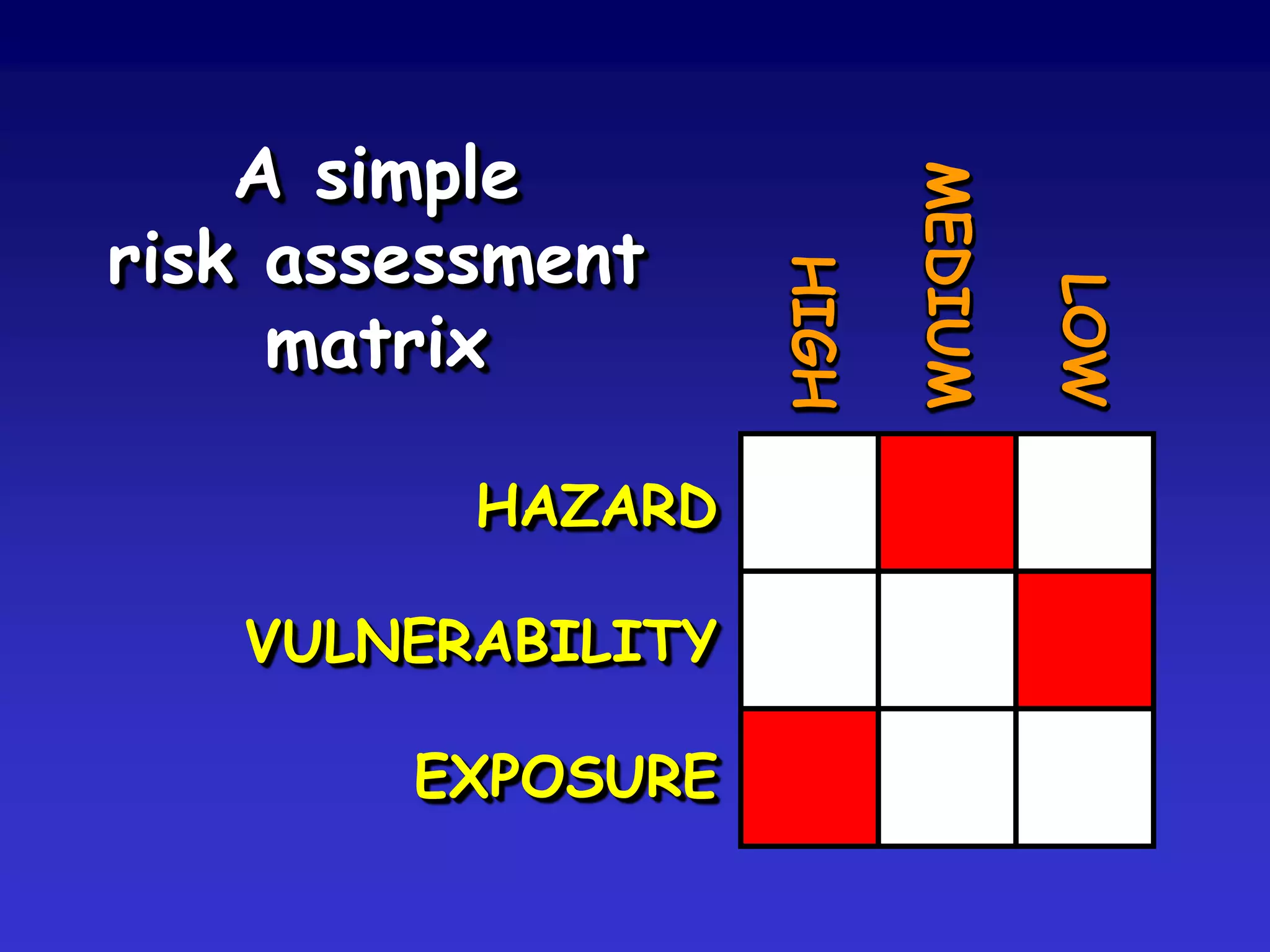
A simple
risk assessment
     matrix

          HAZARD

   VULNERABILITY

        EXPOSURE
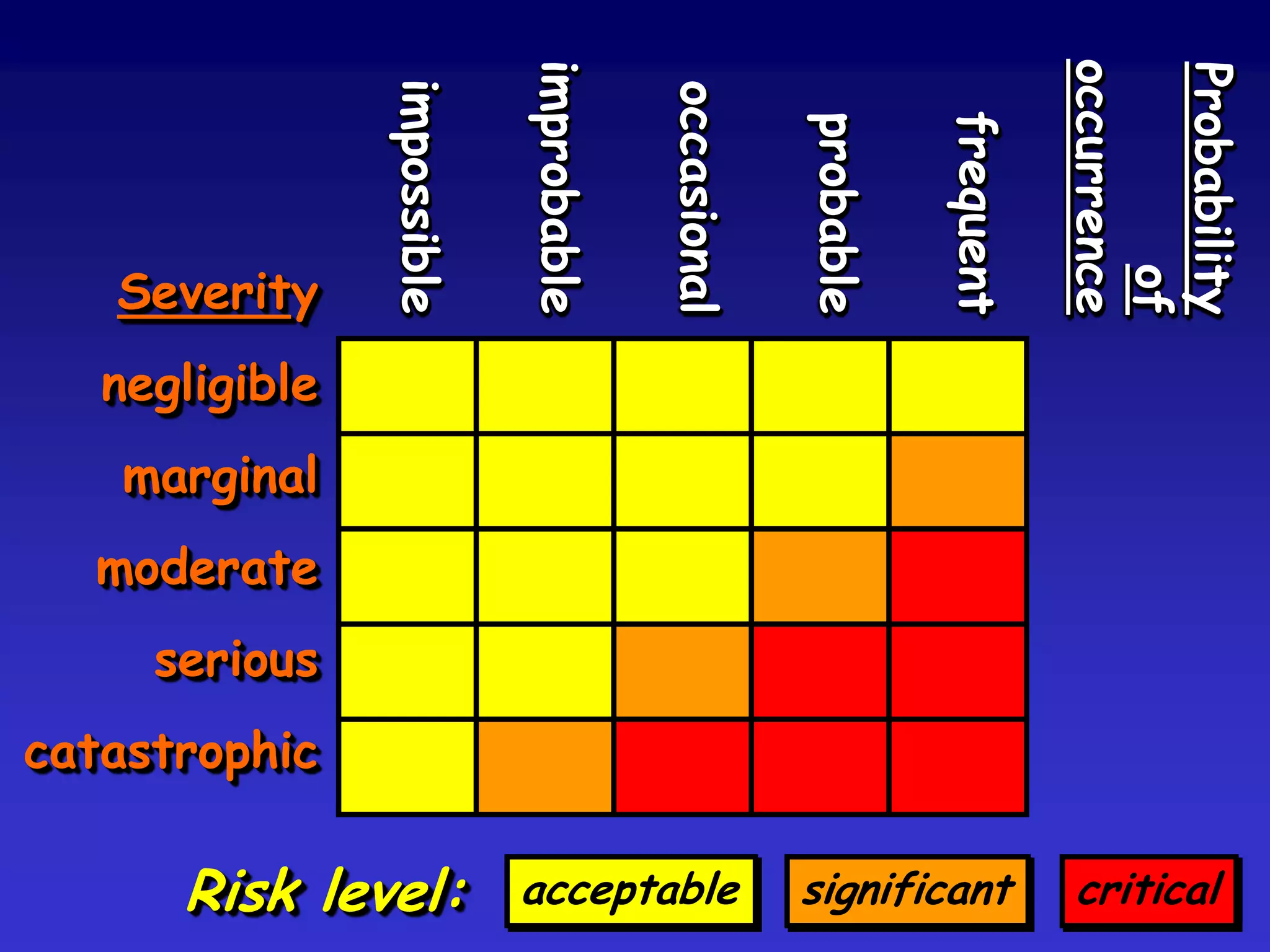
occurrence
                             improbable


                                                                             Probability
                impossible


                                          occasional


                                                                  frequent
                                                       probable
   Severity


                                                                                      of
   negligible
    marginal
  moderate
     serious
catastrophic

      Risk level:            acceptable                significant           critical
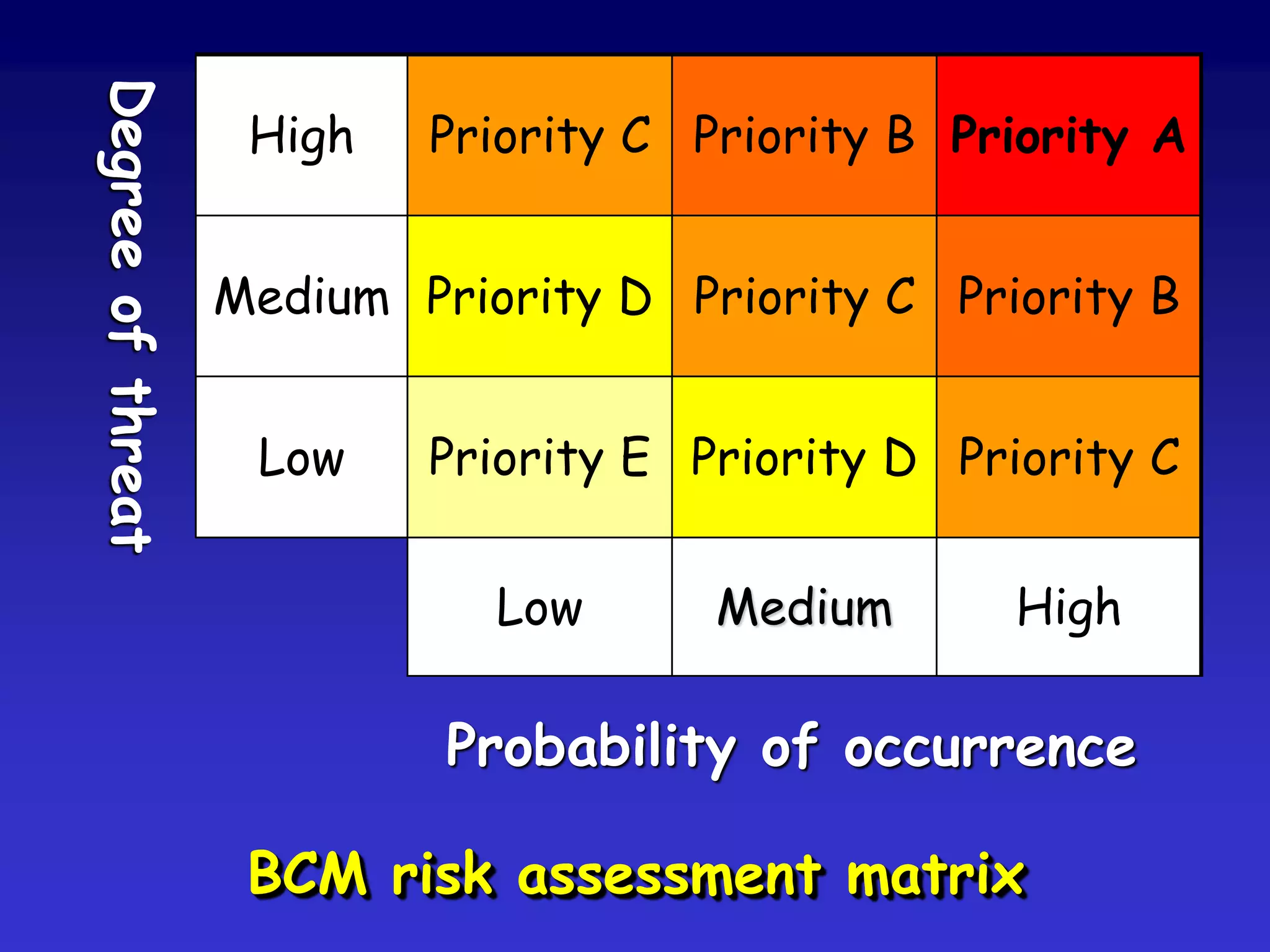
Degree of threat
                    High   Priority C Priority B Priority A


                   Medium Priority D Priority C Priority B


                    Low    Priority E Priority D Priority C


                              Low      Medium       High

                            Probability of occurrence

                    BCM risk assessment matrix
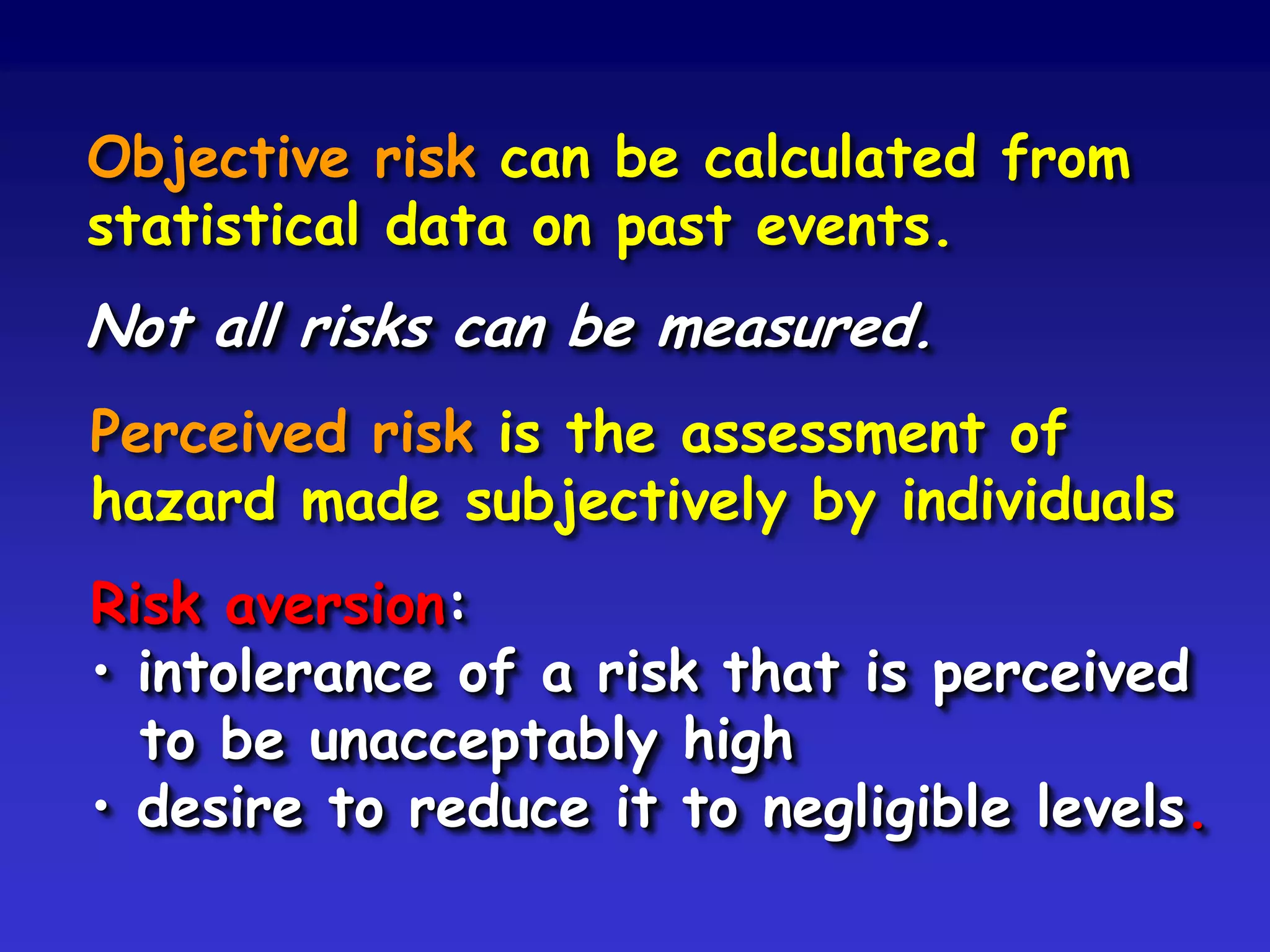
Objective risk can be calculated from
statistical data on past events.
Not all risks can be measured.
Perceived risk is the assessment of
hazard made subjectively by individuals
Risk aversion:
• intolerance of a risk that is perceived
  to be unacceptably high
• desire to reduce it to negligible levels.
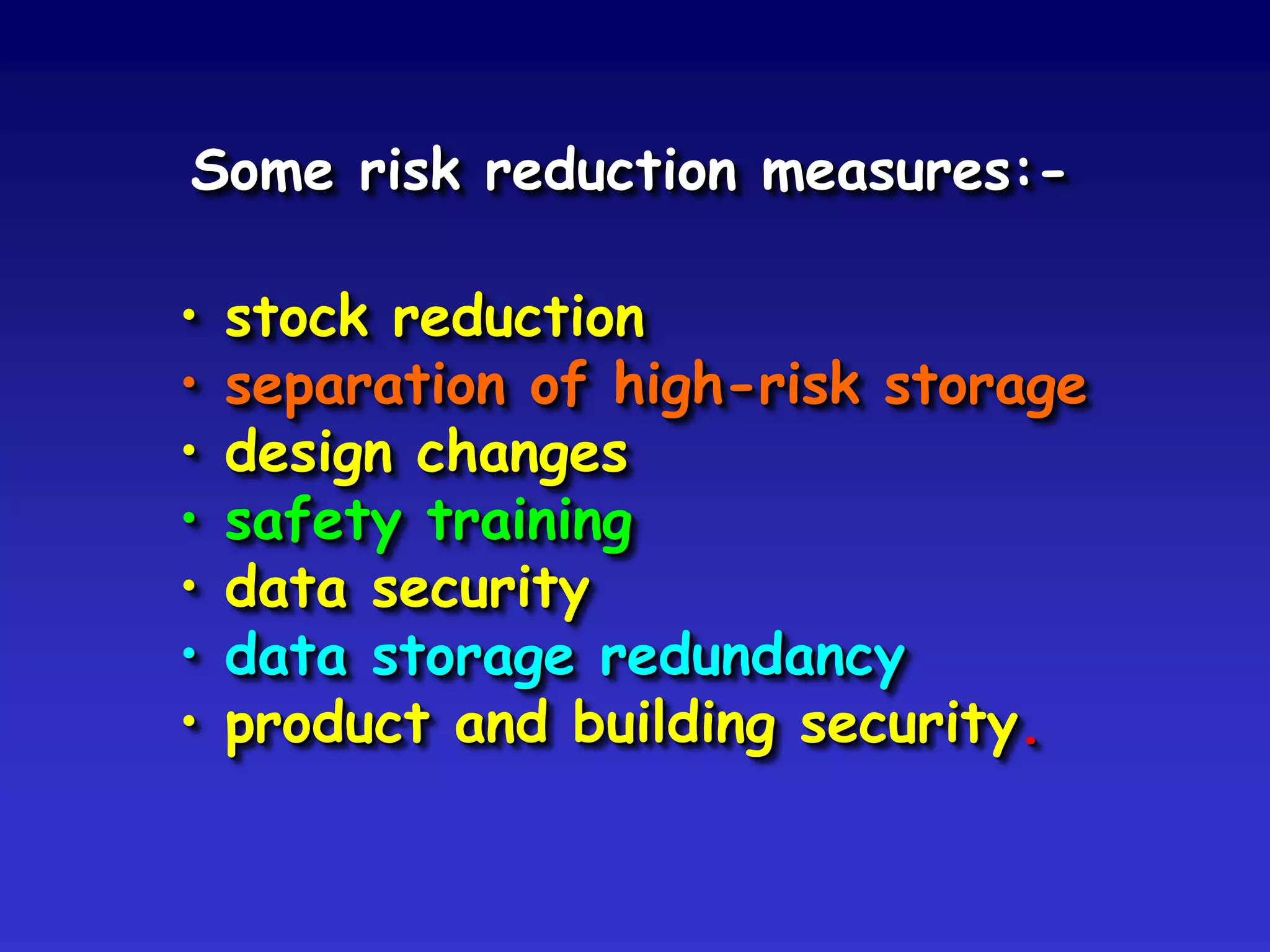
Some risk reduction measures:-

•   stock reduction
•   separation of high-risk storage
•   design changes
•   safety training
•   data security
•   data storage redundancy
•   product and building security.
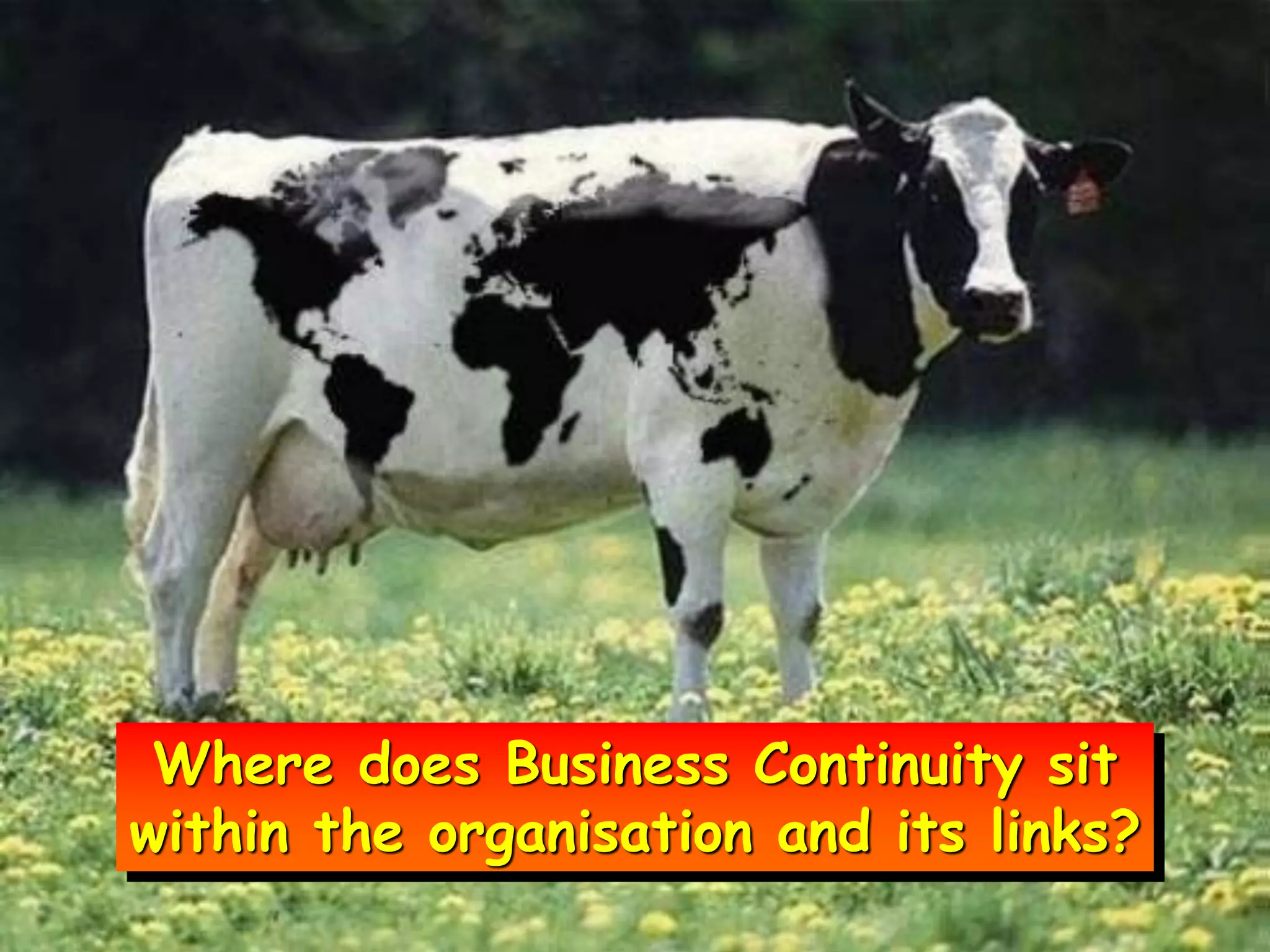
Where does Business Continuity sit
within the organisation and its links?
Company Board and CEO

 Business continuity management board

     BCM project team (and leader)
            • direct project
     •ensure appropriate resources
            • ensure quality

                   Risk
[Departmental]   register   [Departmental]
 working group               working group
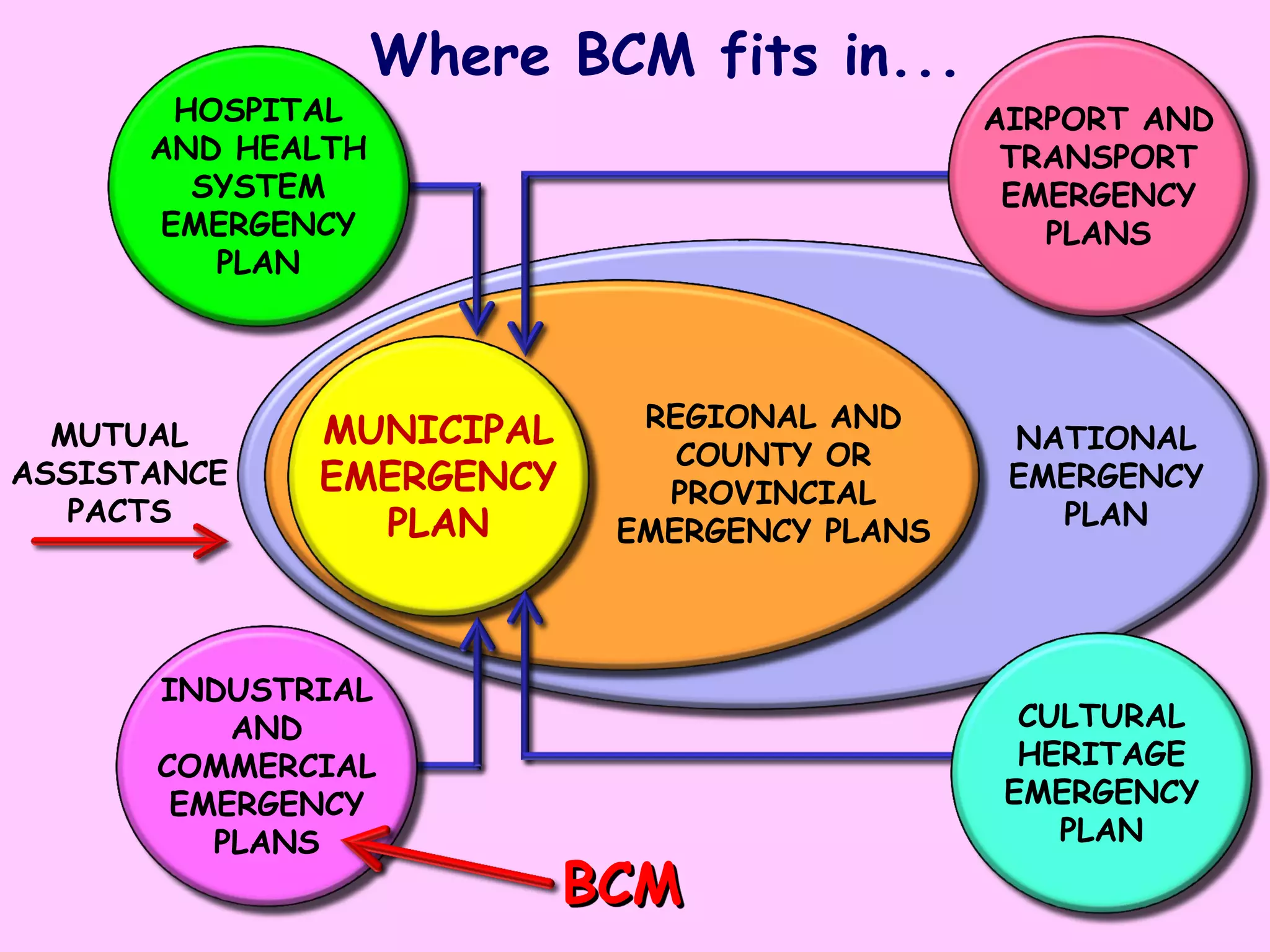
Where BCM fits in...
       HOSPITAL                              AIRPORT AND
      AND HEALTH                              TRANSPORT
        SYSTEM                                EMERGENCY
      EMERGENCY                                 PLANS
         PLAN


             MUNICIPAL      REGIONAL AND
  MUTUAL                                      NATIONAL
                              COUNTY OR
ASSISTANCE   EMERGENCY       PROVINCIAL
                                              EMERGENCY
   PACTS       PLAN                             PLAN
                           EMERGENCY PLANS


      INDUSTRIAL
          AND                                  CULTURAL
      COMMERCIAL                               HERITAGE
       EMERGENCY                              EMERGENCY
         PLANS                                   PLAN
                         BCM
Constructing a BCM plan
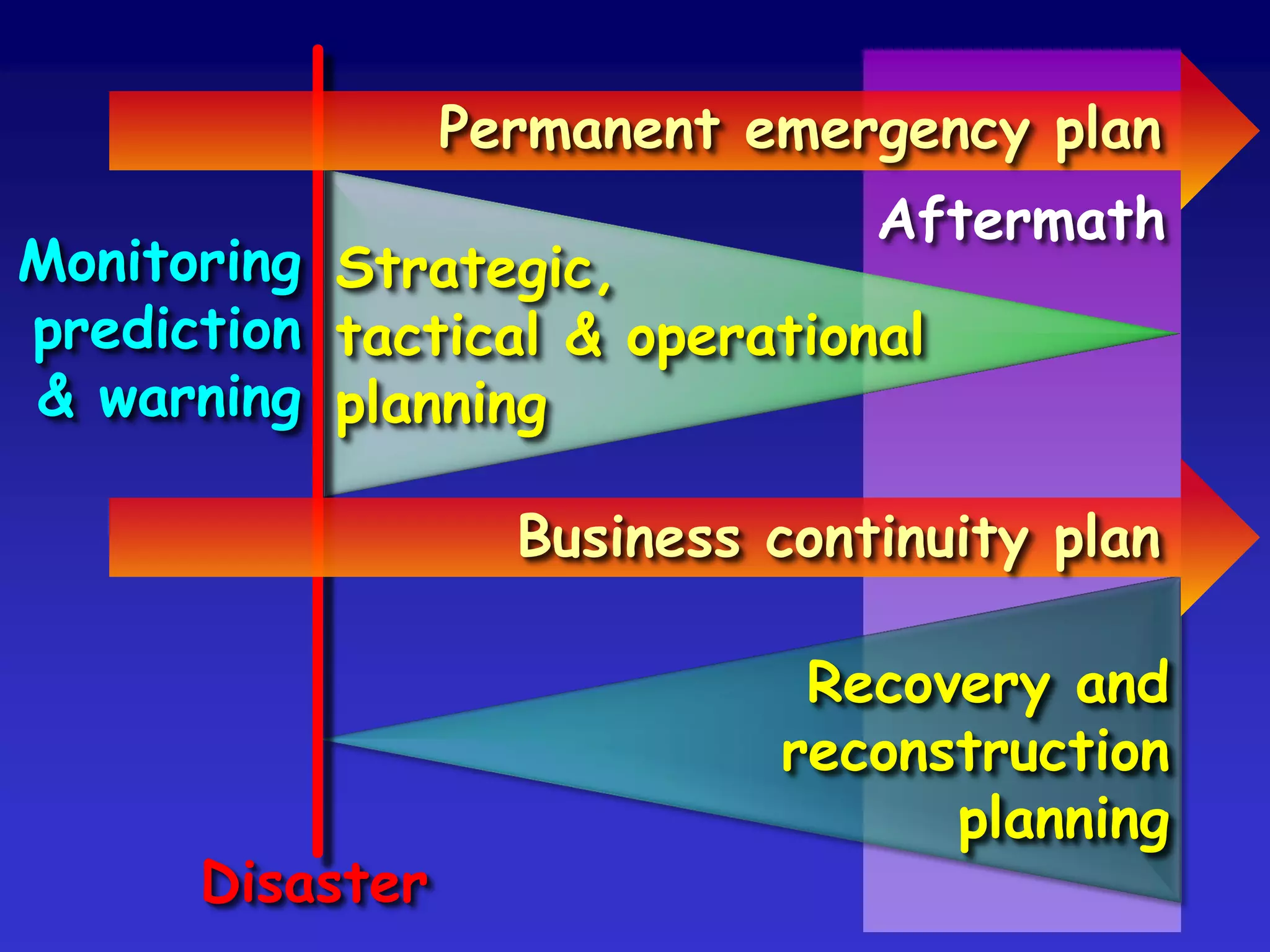
Permanent emergency plan
                                Aftermath
Monitoring Strategic,
prediction tactical & operational
& warning planning

                   Business continuity plan

                             Recovery and
                            reconstruction
                                  planning
      Disaster
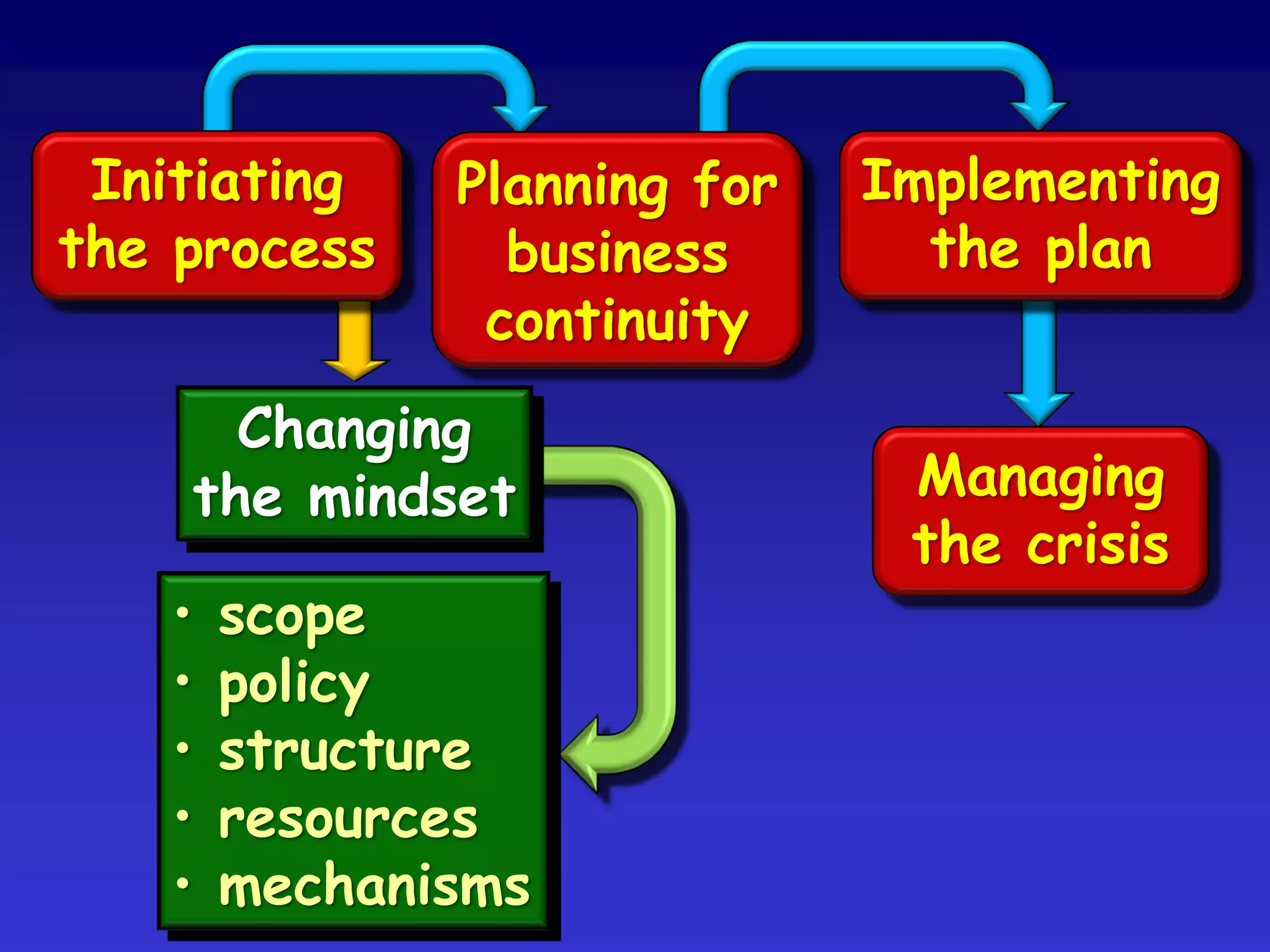
Initiating   Planning for   Implementing
the process     business       the plan
               continuity
      Changing
    the mindset               Managing
                              the crisis
   •   scope
   •   policy
   •   structure
   •   resources
   •   mechanisms
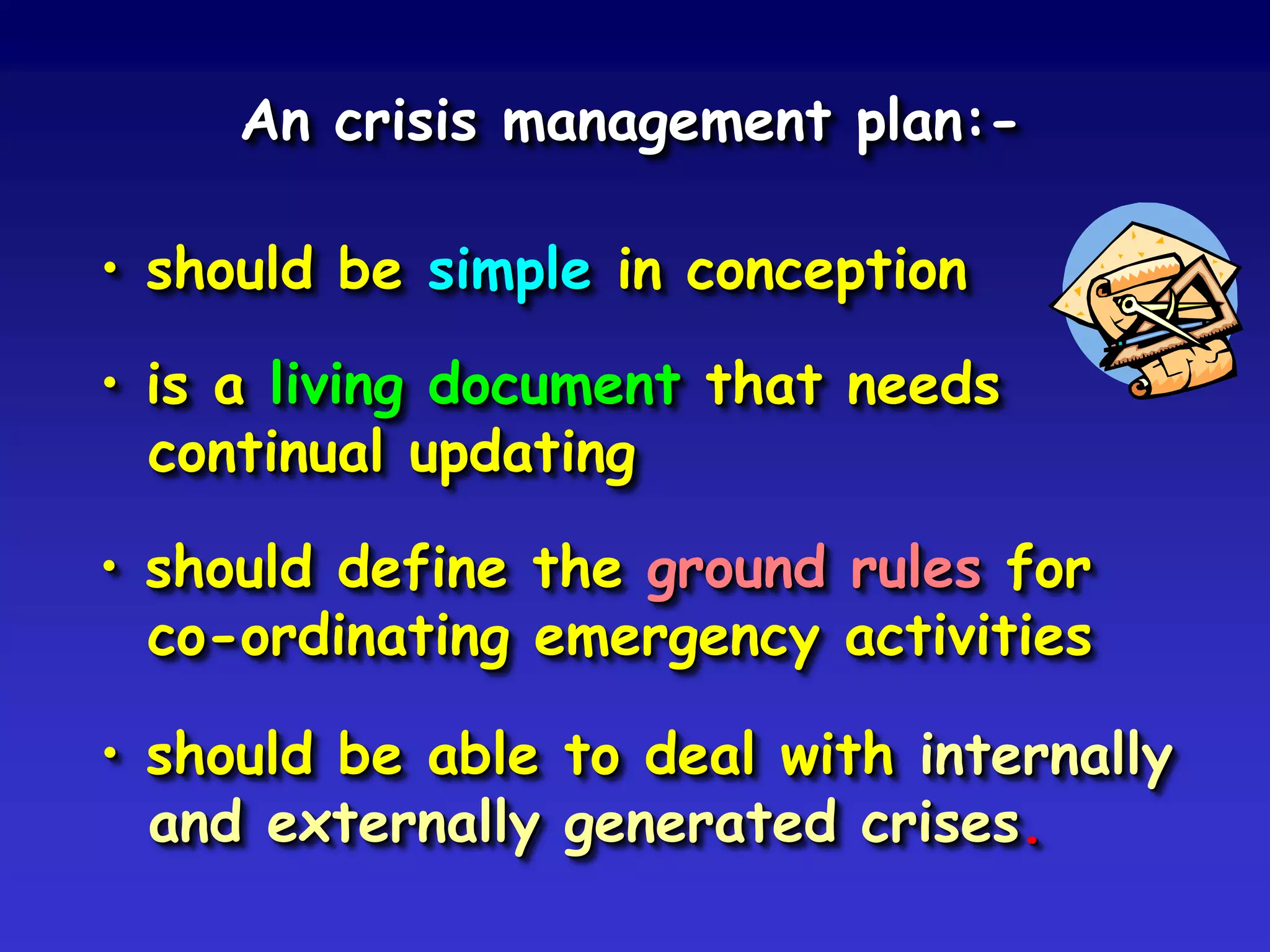
An crisis management plan:-

• should be simple in conception

• is a living document that needs
  continual updating

• should define the ground rules for
  co-ordinating emergency activities

• should be able to deal with internally
  and externally generated crises.
Crisis management planning
        for business continuity:-

• should focus on recovery and prevention
• should seek to discover what is not known
• requires the support of top management
• is dependent on context: organisations
  cannot necessarily be changed drastically
• is conditioned by managers' perceptions
  of the risks the organisation faces.
Constructing a risk register

• all employees should be encouraged
  to contribute to the identification,
  discussion and exploration of risks
• institute a "no fault, no blame"
  culture for the identification of risks
• appoint and train a risk manager
  in each department of the organisation
• have frequent and open discussions
  about how to manage the risks.
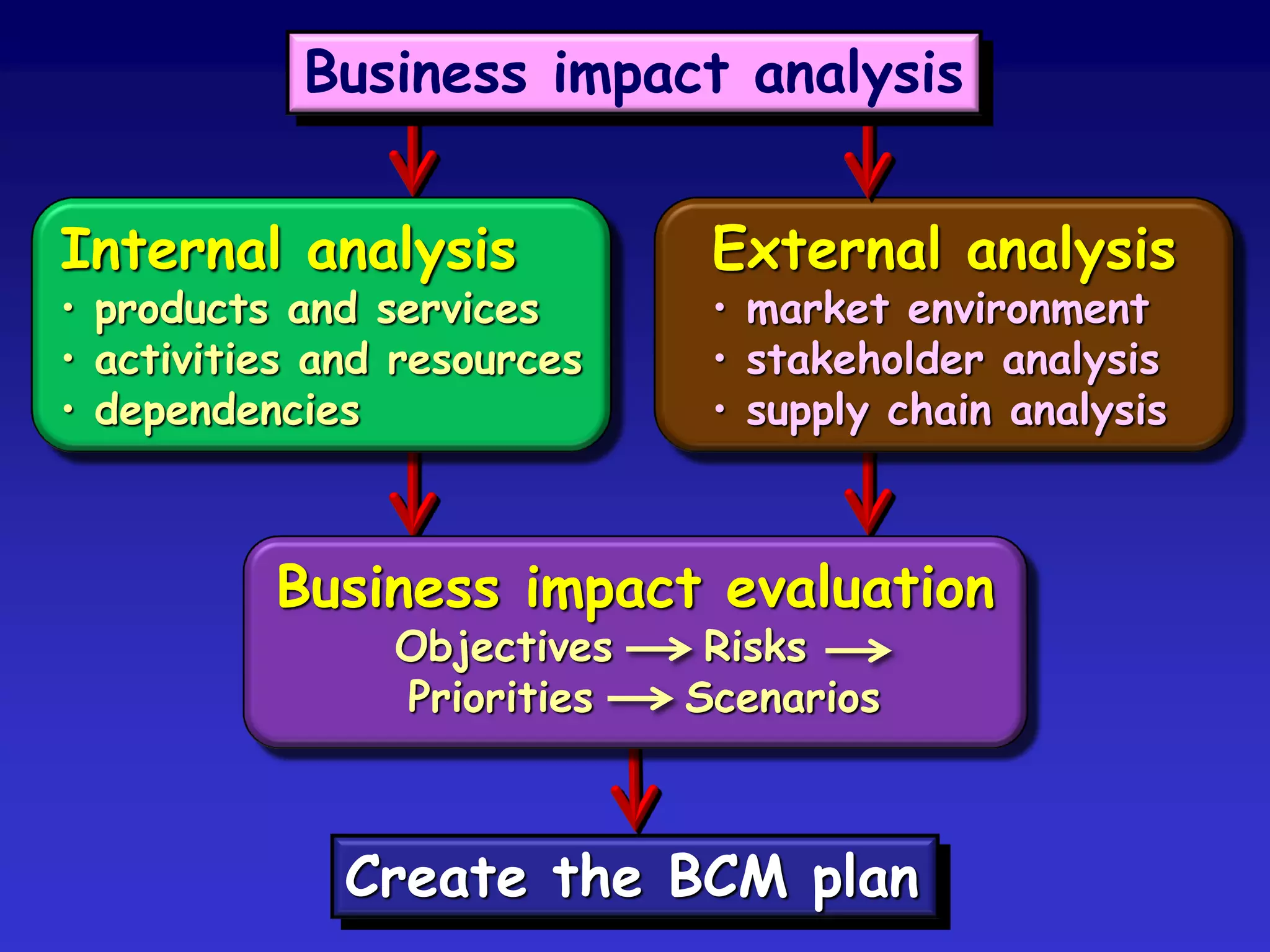
Business impact analysis


Internal analysis             External analysis
• products and services       • market environment
• activities and resources    • stakeholder analysis
• dependencies                • supply chain analysis


          Business impact evaluation
                Objectives    Risks
                Priorities   Scenarios


              Create the BCM plan
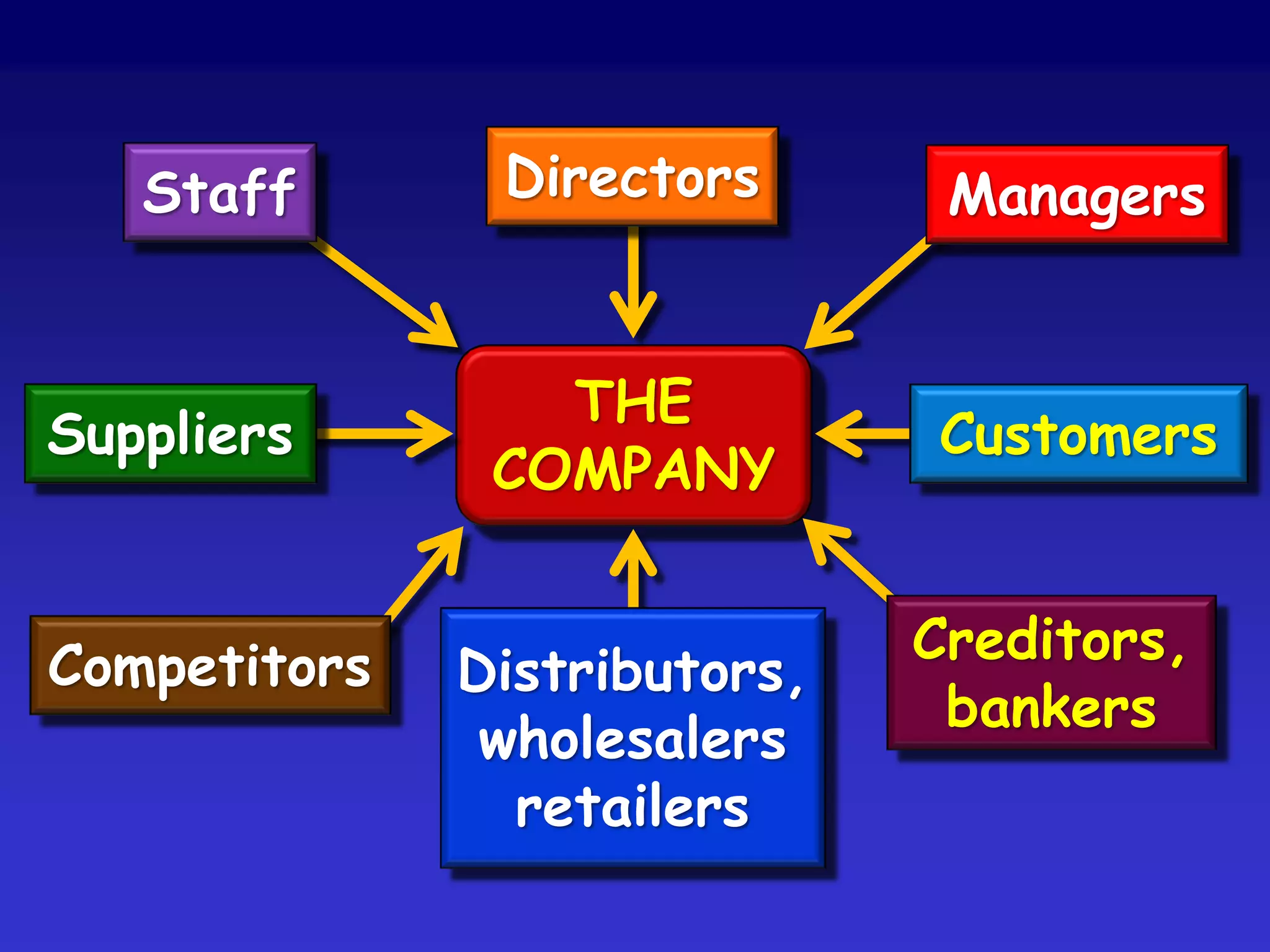
Staff       Directors       Managers


                 THE
Suppliers                     Customers
               COMPANY


Competitors                   Creditors,
              Distributors,
                               bankers
               wholesalers
                retailers
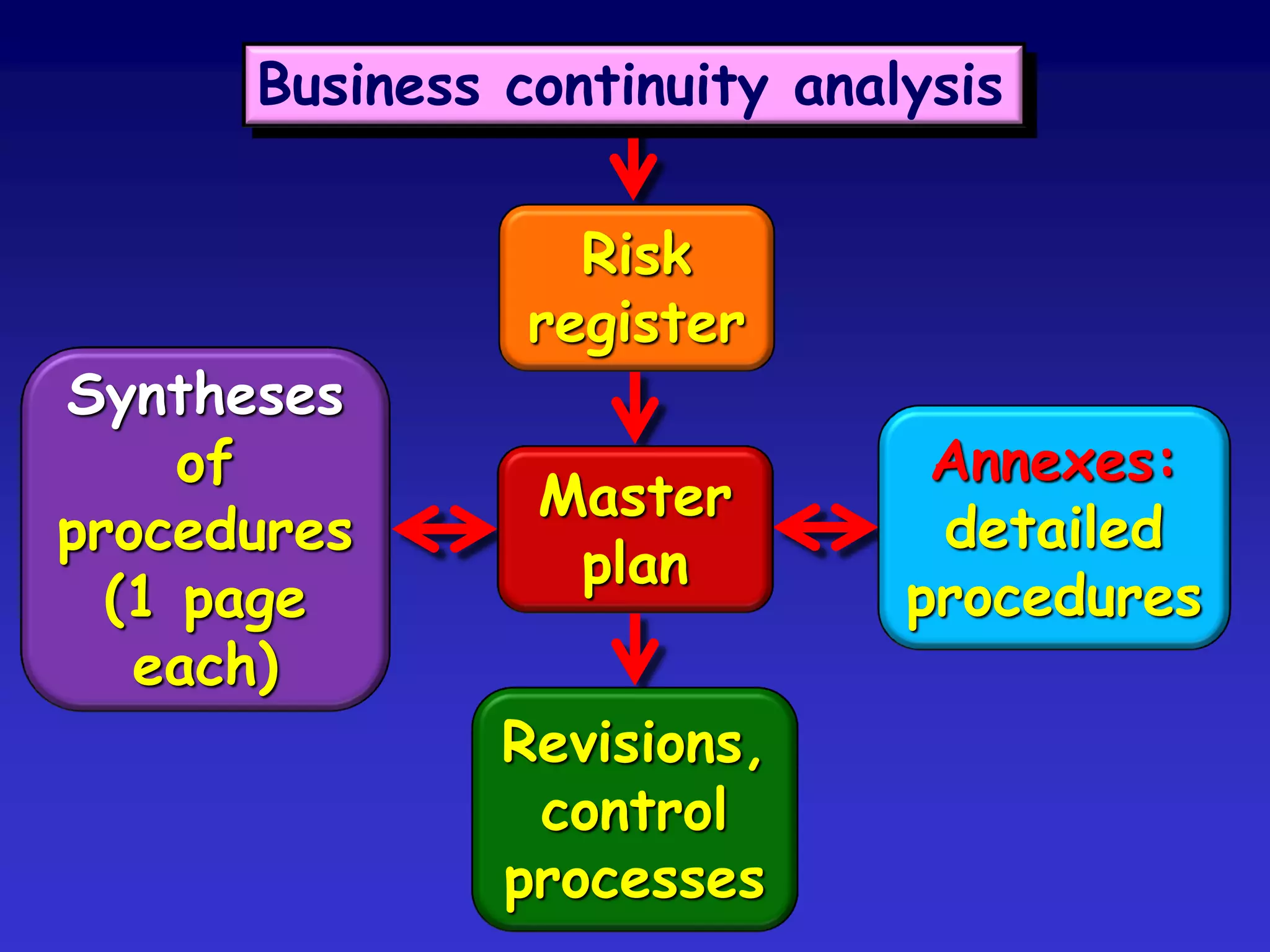
Business continuity analysis

                  Risk
                register
Syntheses
     of                        Annexes:
                Master
procedures                     detailed
                 plan
  (1 page                     procedures
   each)
               Revisions,
                control
               processes
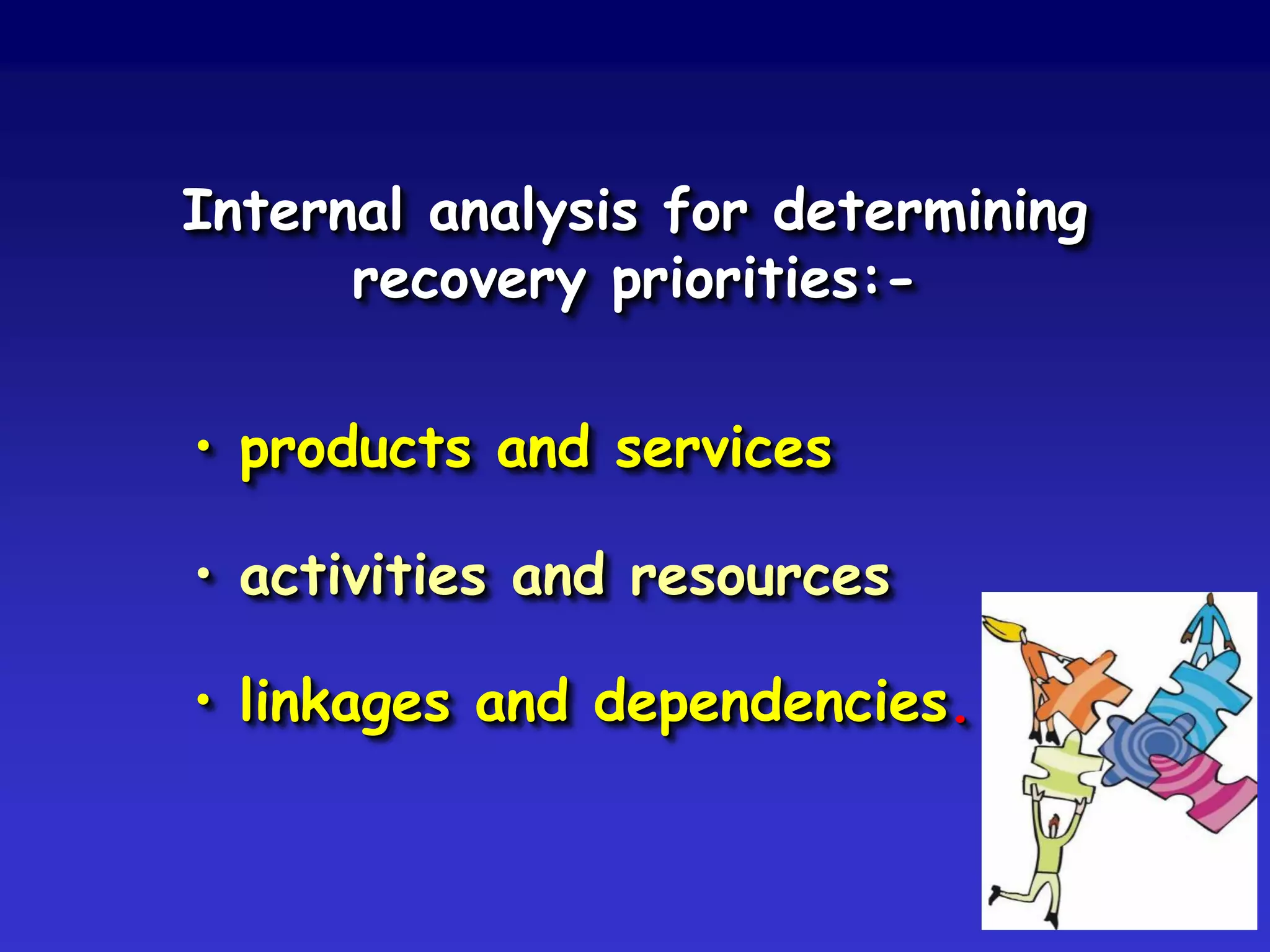
Internal analysis for determining
      recovery priorities:-

• products and services

• activities and resources

• linkages and dependencies.
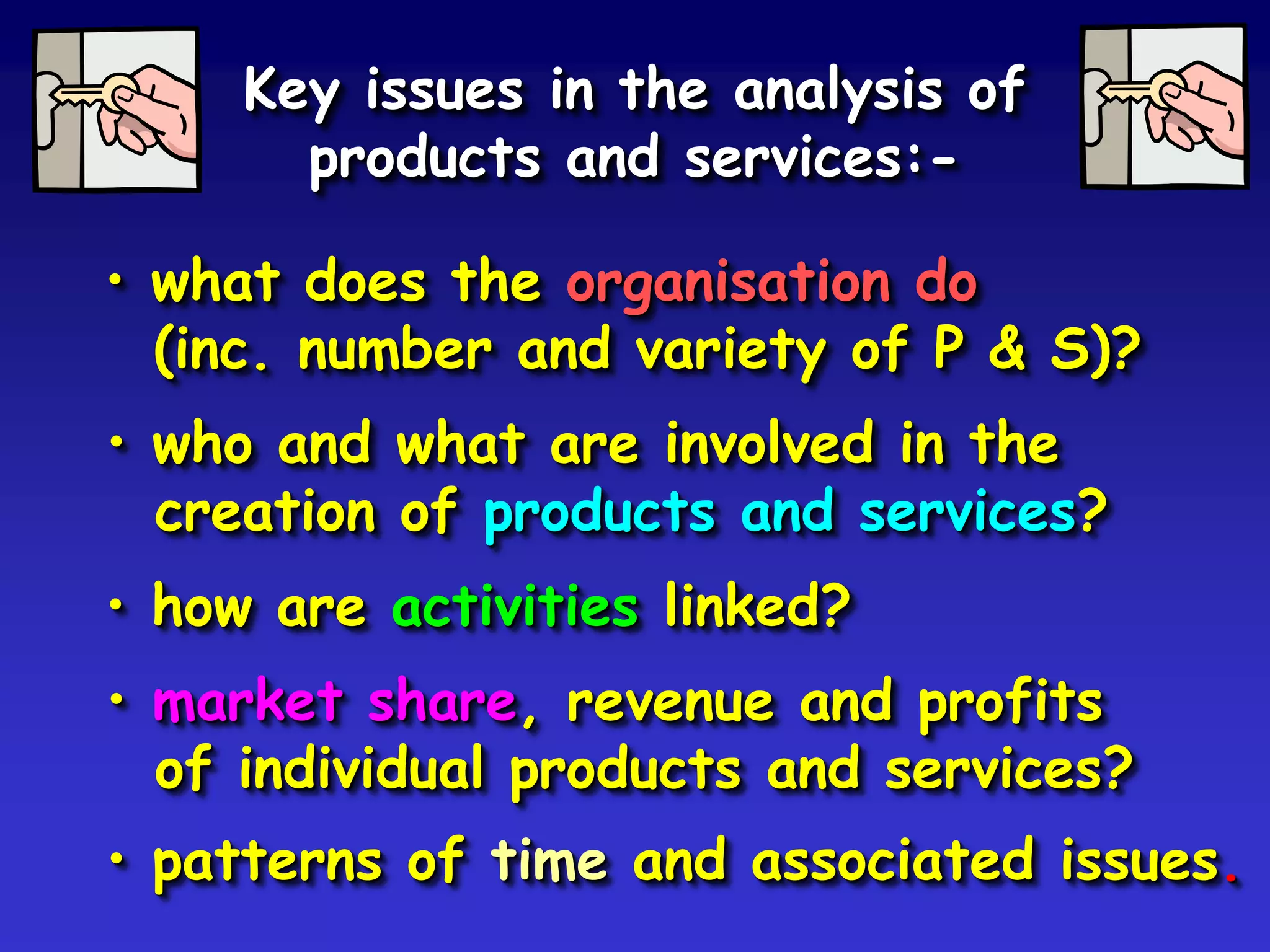
Key issues in the analysis of
       products and services:-

• what does the organisation do
  (inc. number and variety of P & S)?
• who and what are involved in the
  creation of products and services?
• how are activities linked?
• market share, revenue and profits
  of individual products and services?
• patterns of time and associated issues.
An audit of company resources
         (and their vulnerability):-
•   physical manufacturing equipment
•   information technology systems
•   transportation, storage and logistics
•   telecommunications systems
•   financial resources
•   intellectual property
•   employees (human resources)
•   buildings and facilities
•   subsidiaries and divisions which produce
    components, parts or materials.
Some pertinent issues:-
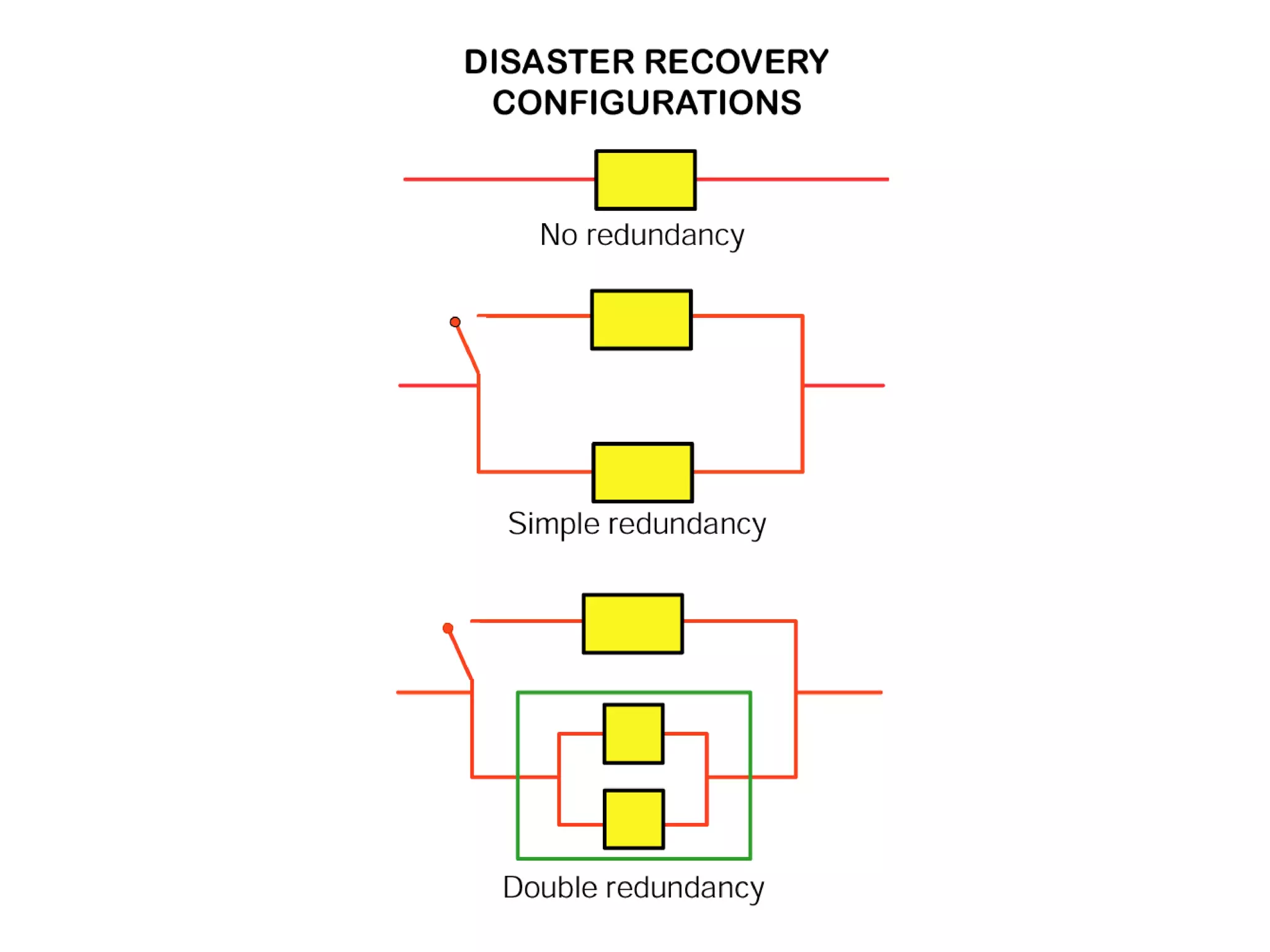
• what is the correct level of duplication
  and redundancy of resources?
• what is under-reaction, over-reaction
  and the right reaction?
• how to evaluate a situation
  quickly in order to know
  the right measures to take
• what balance between managing
  the crisis and managing
  the company's reputation?
Issues for BCM planning:-

• prevention of overlapping response

• eliminating gaps in response
• ensuring response is robust and durable
• analysing needs, auditing resources
• ensuring a compatible response
• training people to do it.
Specifying an incident
        management structure:-

• call-out arrangements
• means of co-ordinating groups and teams
• command and control structures
• communications channels & media contact
• inter-departmental and inter-
  organisational co-ordination measures.
Sub-routines of the BCM plan:-
• emergency operations centres
• information gathering and data storage
• evacuation plans
• public warning and alerting systems
• resource procurement
• press and public relations arrangements
• welfare plans for victims and staff
• communications plans
• continuity of service
• long term recovery plans.
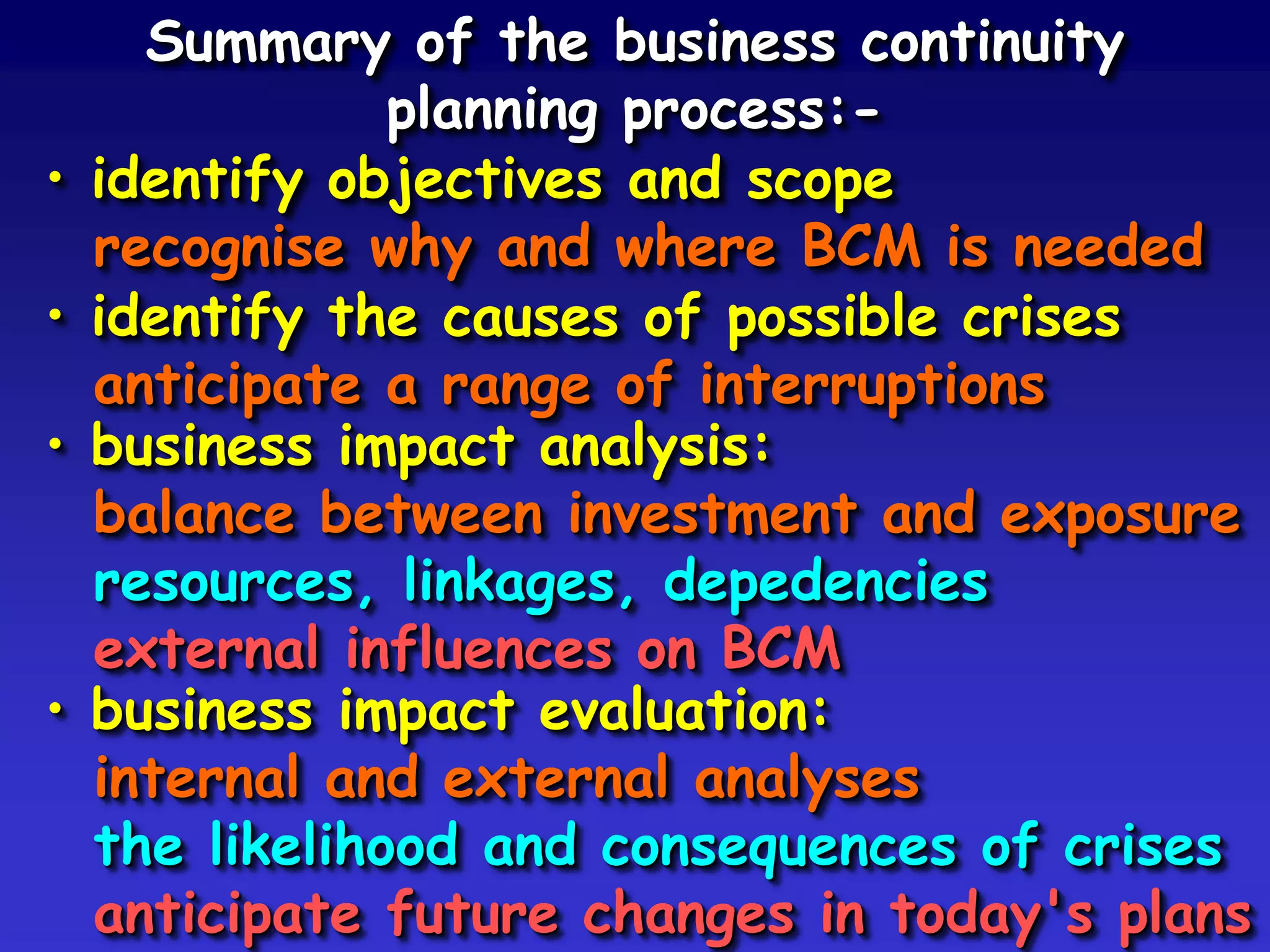
Summary of the business continuity
                planning process:-
•   identify objectives and scope
    recognise why and where BCM is needed
•   identify the causes of possible crises
    anticipate a range of interruptions
•   business impact analysis:
    balance between investment and exposure
    resources, linkages, depedencies
    external influences on BCM
•   business impact evaluation:
    internal and external analyses
    the likelihood and consequences of crises
    anticipate future changes in today's plans
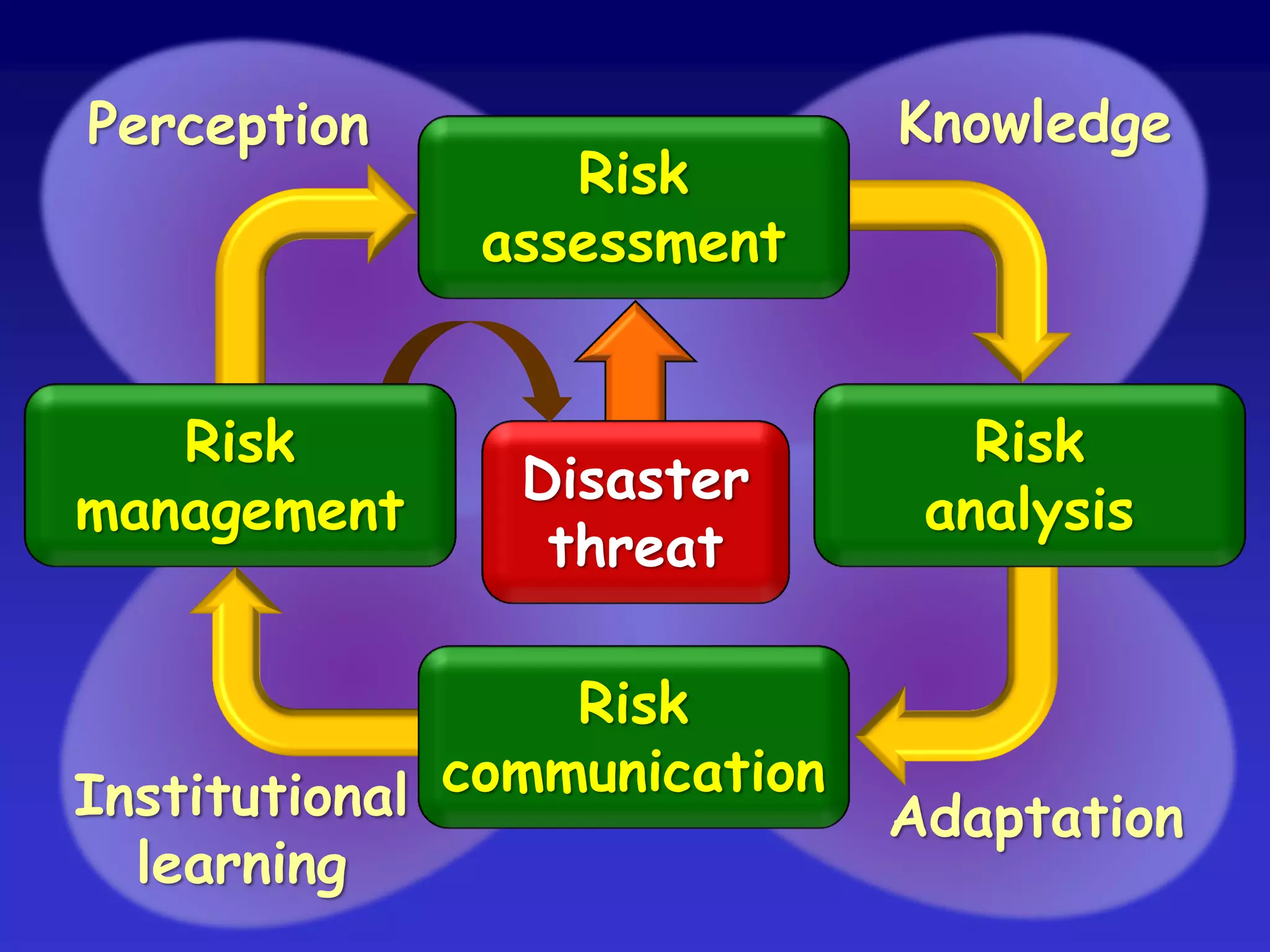
Perception                    Knowledge
                 Risk
              assessment


   Risk                          Risk
                Disaster
management                     analysis
                 threat

                  Risk
Institutional communication   Adaptation
  learning
Good luck with your plans!

Introduction to Business Continuity Management

  • 1.
    Business Continuity Planning and Management David Alexander University College London
  • 2.
    Pre-crisis situation Crisis ofmanagement Trigger Crisis incident Operational crisis Post-crisis situation Crisis of legitimation
  • 3.
    CRISIS OPERATIONS REPUTATION (ACHIEVEMENTS) Perception Concrete developments • positive Communication • negative
  • 4.
    Crisis management asa combination of management of events and management of reputation ACHIEVEMENTS failed unknown, hidden succeeded known, publicised positive perceived negative not perceived REPUTATION Inside influences Outside influences Resilience of organisation Resilience of system Crisis management capability External factors: "force majeure"
  • 5.
    "The interim goalof the planning process is to develop a business continuity plan (or set of plans) that can be evoked (i.e. used) in the event of an interruption. Planning marks neither the start nor the end of the BCM process. Its ultimate goal is to improve the resilience of the organisation's business to interruptions, thereby protecting its operating or trading position." Elliott et al. 2001.
  • 6.
    Redundancy The ingredients of resilience Adaptability Attitude Participation ...and communication
  • 8.
  • 9.
    Some typical risks:- •loss of customer records • breakdown of the supply chain • failure of essential services on which production or customer support depends • inability to deliver the product for a significant period of time for any reason • negative perceptions of the company by clients, customers or the public.
  • 10.
    Some reasons whysupply chains fail:- • industrial action halts production • faulty components leads to product recall • supplier ceases trading (goes into bankruptcy or receivership) • fire, flood or natural disaster strikes supplier's premises • computer systems fail.
  • 11.
    Possible impact ofinterruptions to supplies and suppliers:- • loss of independence • inability to fulfill orders • loss of confidential or sensitive info. • increased exposure to fraud and unauthorised transactions • loss of data • loss of audit trail • failure of purchasing and scheduling software systems • legal liability due to failure to fulfill contractual obligations.
  • 12.
    To what extentshould business continuity management focus on managing the event itself and to what extent should it focus on protecting the organisation's reputation? A poorly managed crisis cannot completely be compensated for by a slick publicity offensive.
  • 13.
    Generic crisis typology Technical / economic Natural disaster Major accident Aggressive Product failure takeover Computer failure Social Internal breakdown External Sabotage Product Occupational tampering health disease Terrorism Fraud Social / organisational
  • 14.
    A simple risk assessment matrix HAZARD VULNERABILITY EXPOSURE
  • 15.
    occurrence improbable Probability impossible occasional frequent probable Severity of negligible marginal moderate serious catastrophic Risk level: acceptable significant critical
  • 16.
    Degree of threat High Priority C Priority B Priority A Medium Priority D Priority C Priority B Low Priority E Priority D Priority C Low Medium High Probability of occurrence BCM risk assessment matrix
  • 17.
    Objective risk canbe calculated from statistical data on past events. Not all risks can be measured. Perceived risk is the assessment of hazard made subjectively by individuals Risk aversion: • intolerance of a risk that is perceived to be unacceptably high • desire to reduce it to negligible levels.
  • 18.
    Some risk reductionmeasures:- • stock reduction • separation of high-risk storage • design changes • safety training • data security • data storage redundancy • product and building security.
  • 19.
    Where does BusinessContinuity sit within the organisation and its links?
  • 20.
    Company Board andCEO Business continuity management board BCM project team (and leader) • direct project •ensure appropriate resources • ensure quality Risk [Departmental] register [Departmental] working group working group
  • 21.
    Where BCM fitsin... HOSPITAL AIRPORT AND AND HEALTH TRANSPORT SYSTEM EMERGENCY EMERGENCY PLANS PLAN MUNICIPAL REGIONAL AND MUTUAL NATIONAL COUNTY OR ASSISTANCE EMERGENCY PROVINCIAL EMERGENCY PACTS PLAN PLAN EMERGENCY PLANS INDUSTRIAL AND CULTURAL COMMERCIAL HERITAGE EMERGENCY EMERGENCY PLANS PLAN BCM
  • 22.
  • 23.
    Permanent emergency plan Aftermath Monitoring Strategic, prediction tactical & operational & warning planning Business continuity plan Recovery and reconstruction planning Disaster
  • 24.
    Initiating Planning for Implementing the process business the plan continuity Changing the mindset Managing the crisis • scope • policy • structure • resources • mechanisms
  • 25.
    An crisis managementplan:- • should be simple in conception • is a living document that needs continual updating • should define the ground rules for co-ordinating emergency activities • should be able to deal with internally and externally generated crises.
  • 26.
    Crisis management planning for business continuity:- • should focus on recovery and prevention • should seek to discover what is not known • requires the support of top management • is dependent on context: organisations cannot necessarily be changed drastically • is conditioned by managers' perceptions of the risks the organisation faces.
  • 27.
    Constructing a riskregister • all employees should be encouraged to contribute to the identification, discussion and exploration of risks • institute a "no fault, no blame" culture for the identification of risks • appoint and train a risk manager in each department of the organisation • have frequent and open discussions about how to manage the risks.
  • 28.
    Business impact analysis Internalanalysis External analysis • products and services • market environment • activities and resources • stakeholder analysis • dependencies • supply chain analysis Business impact evaluation Objectives Risks Priorities Scenarios Create the BCM plan
  • 29.
    Staff Directors Managers THE Suppliers Customers COMPANY Competitors Creditors, Distributors, bankers wholesalers retailers
  • 30.
    Business continuity analysis Risk register Syntheses of Annexes: Master procedures detailed plan (1 page procedures each) Revisions, control processes
  • 31.
    Internal analysis fordetermining recovery priorities:- • products and services • activities and resources • linkages and dependencies.
  • 32.
    Key issues inthe analysis of products and services:- • what does the organisation do (inc. number and variety of P & S)? • who and what are involved in the creation of products and services? • how are activities linked? • market share, revenue and profits of individual products and services? • patterns of time and associated issues.
  • 33.
    An audit ofcompany resources (and their vulnerability):- • physical manufacturing equipment • information technology systems • transportation, storage and logistics • telecommunications systems • financial resources • intellectual property • employees (human resources) • buildings and facilities • subsidiaries and divisions which produce components, parts or materials.
  • 34.
    Some pertinent issues:- •what is the correct level of duplication and redundancy of resources? • what is under-reaction, over-reaction and the right reaction? • how to evaluate a situation quickly in order to know the right measures to take • what balance between managing the crisis and managing the company's reputation?
  • 35.
    Issues for BCMplanning:- • prevention of overlapping response • eliminating gaps in response • ensuring response is robust and durable • analysing needs, auditing resources • ensuring a compatible response • training people to do it.
  • 36.
    Specifying an incident management structure:- • call-out arrangements • means of co-ordinating groups and teams • command and control structures • communications channels & media contact • inter-departmental and inter- organisational co-ordination measures.
  • 37.
    Sub-routines of theBCM plan:- • emergency operations centres • information gathering and data storage • evacuation plans • public warning and alerting systems • resource procurement • press and public relations arrangements • welfare plans for victims and staff • communications plans • continuity of service • long term recovery plans.
  • 38.
    Summary of thebusiness continuity planning process:- • identify objectives and scope recognise why and where BCM is needed • identify the causes of possible crises anticipate a range of interruptions • business impact analysis: balance between investment and exposure resources, linkages, depedencies external influences on BCM • business impact evaluation: internal and external analyses the likelihood and consequences of crises anticipate future changes in today's plans
  • 39.
    Perception Knowledge Risk assessment Risk Risk Disaster management analysis threat Risk Institutional communication Adaptation learning
  • 40.
    Good luck withyour plans!