Definition- Scope
Archaeology
• The word archelogy comes from a Greek word
Archaia/ archaeos (ancient things)
Logos ( theory or science)
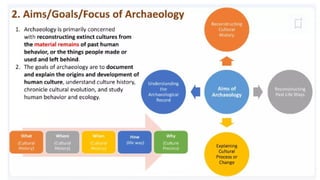
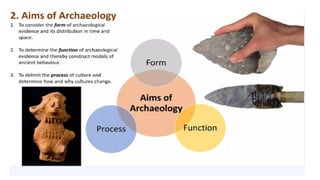
• The archaeology is a science involving the study of
the human past through material remains.
Definitions
• The study of human history and prehistory through
excavating sites and analyzing artifacts and other
physical remains.
• The scientific study of material remains (such as
tools, pottery, jewelry, stone walls, and
monuments) of past human life and activities
• The science that deals with past human life as
shown by fossil relics and the monuments and tools
left by ancient peoples
• Grahame Clarke noted that “ Archaeology seeks to
discover how we became human beings endowed with
minds and souls before we had learned to write."
• Mortimer Wheeler insisted that the “archaeologist
is digging up, not things, but people”. This view
was strengthened by Bruce Trigger when he
commented that "Archaeology is the only discipline
that seeks to study human behavior and thought without
having any direct contact with either”
• Archaeology, is the scientific study of the
material remains of past human life and activities.
These include human artifacts from the very
earliest stone tools to the man-made objects that
are buried or thrown away in the present day:
everything made by human beings—from simple
tools to complex machines, from the earliest
houses and temples and tombs to palaces,
cathedrals, and pyramids. Archaeological
investigations are a principal source of knowledge
of prehistoric, ancient, and extinct culture.
Definitions:
•1. The study of the human past through
the recovery, documentation, and
analysis of material remains and end
environmental data, including
architecture, artifacts, biofacts, human
remains, and landscape.
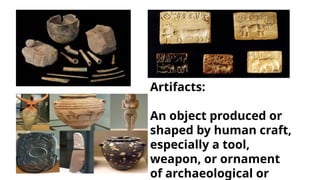
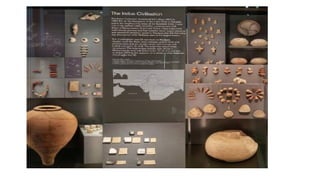
Artifacts:
An object produced or
shaped by human craft,
especially a tool,
weapon, or ornament
of archaeological or
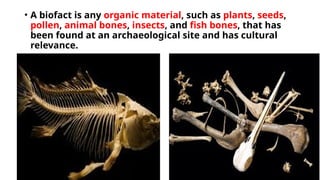
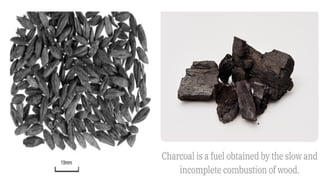
• A biofact is any organic material, such as plants, seeds,
pollen, animal bones, insects, and fish bones, that has
been found at an archaeological site and has cultural
relevance.
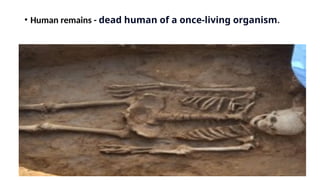
• Human remains - dead human of a once-living organism.
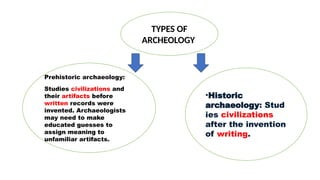
•Historic
archaeology: Stud
ies civilizations
after the invention
of writing.
Prehistoric archaeology:
Studies civilizations and
their artifacts before
written records were
invented. Archaeologists
may need to make
educated guesses to
assign meaning to
unfamiliar artifacts.
TYPES OF
ARCHEOLOGY
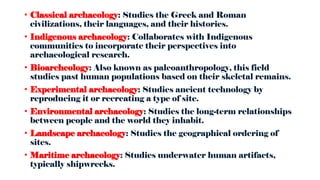
• Classical archaeology: Studies the Greek and Roman
civilizations, their languages, and their histories.
• Indigenous archaeology: Collaborates with Indigenous
communities to incorporate their perspectives into
archaeological research.
• Bioarcheology: Also known as paleoanthropology, this field
studies past human populations based on their skeletal remains.
• Experimental archaeology: Studies ancient technology by
reproducing it or recreating a type of site.
• Environmental archaeology: Studies the long-term relationships
between people and the world they inhabit.
• Landscape archaeology: Studies the geographical ordering of
sites.
• Maritime archaeology: Studies underwater human artifacts,
typically shipwrecks.
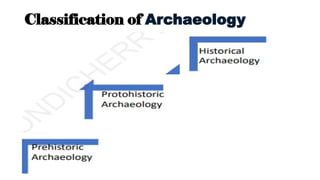
Classification of Archaeology
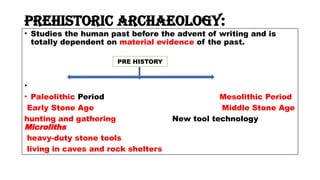
Prehistoric archaeology:
• Studies the human past before the advent of writing and is
totally dependent on material evidence of the past.
•
• Paleolithic Period Mesolithic Period
Early Stone Age Middle Stone Age
hunting and gathering New tool technology
Microliths
heavy-duty stone tools
living in caves and rock shelters
PRE HISTORY
Protohistoric period
1. Neolithic period
2. Chalcolithic Period (Harappan Civilization)
3. Iron Age
Neolithic period (10000 BCE)
• New Stone Age
• The cognitive development of the human brain attained
new heights
• Transition from Hunting to gathering- food producer
• Animal domestication
• built houses, buried their dead, and made pottery for
storage and eating
Chalcolithic Cultures (4500- 2000 BC)
• Advent of the first metal i.e. copper in India
• significant features and cultures were named after the
prominent pottery types such as Ochre color Pottery
Culture, Ahar culture, Jorwe culture, Malwa culture
• Black and red-ware pottery, Black and red-ware pottery,
black-on-red ware, and ochre-colored pottery
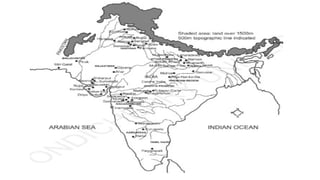
Harappan Civilization 3300 BC and 1500 BC
• More than 1500 sites have been discovered in India and Pakistan
• Chanhudara, Lothal, Kalibangan, Rakhigarhi, Dholavira.
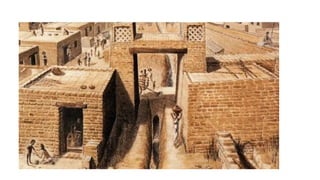
• common town planning with roads and drainage systems
• grid system with roads cutting at right angles
• two-storied houses
• The Indus script is found in seals and sealings. The script is not yet
deciphered
• The evidence for religious belief is noticed in the seals of the Harappan
people
• The burial practices also throw light on their belief system
• An exquisite art and craft production indicates a high level of labour
organization
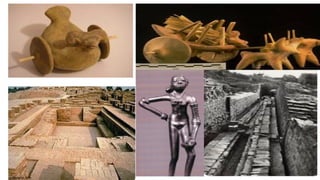
• Polished Ware, Ochre colored potteryHarappa Burial Pottery, Ochre
colored pottery (OCP), Black-grey burnished ware, Black-on-red ware,
Grey-ware, and Painted grey-ware
Iron Age
• beginning of iron usage in the Indian subcontinent.
• In the northern part of India, the Iron Age is
associated with Painted Grey Ware culture, while in
southern India, it is found with the megalithic burials.
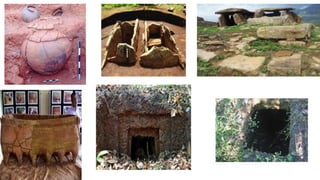
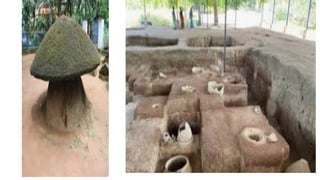
• The megalithic burials are constructed to bury the
dead in different types of burials.
• There was a distinction between the living space and
the dead space. The megalithic burial types include
urns, cists, dolmens, sarcophagus, rock-cut chambers,
umbrella stones, stone alignment, and hood stones.
• Usually, Black and Redware pottery is found to be
associated with megalithic pottery
• Historical Archaeology The advent of writing marked the
historical period.
• Early Historical: 300 BCE and 300 CE: The rise of towns,
the emergence of trade, and the use of scripts. In India,
the rule of Mahajanapadas and the rise of the Mauryans.
• Early Medieval: 600 CE and 900 CE, rise and fall of
various dynasties. The rule of dynasties with the
political and socioeconomic conditions
• Late Medieval: foreign powers and establishment of the
rule by Delhi Sultans in the north and the rule by many
kings in other parts.
• Modern: This marked the beginning of the emergence of
European colonialism. The arrival of imperial powers
such as the Portuguese, the Dutch, the French, and the
English changed the course of history in India.
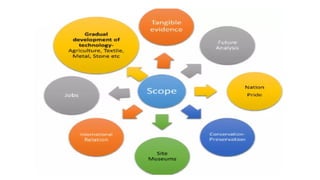
SCOPE
• Historical monuments
• Employment opportunities
• Interdisciplinary
• Contributions to science
• Reconstructing biodiversity
• Understanding technology
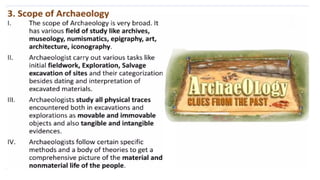
• The scope of archaeology is as diversified as the
fields of study it tries to focus on.
• From science to humanities, archaeology transcends
time and space.
• The temporal scope of the subject starts from the
time when human ancestors appeared on earth and
probably ends when the human race becomes extinct.
• The spatial scope of the subjects covers almost
everything on land along with the marine area. Almost
all the countries in the world have some evidence of
our past cultural ways.
• Archaeology becomes interdisciplinary in nature to
understand the entire processes of human evolution
and existence.
INTRODUCTION TO ARECHEALOGY, DEFENITION, BASIC THEAMES

INTRODUCTION TO ARECHEALOGY, DEFENITION, BASIC THEAMES

  • 1.
  • 2.
    • The wordarchelogy comes from a Greek word Archaia/ archaeos (ancient things) Logos ( theory or science) • The archaeology is a science involving the study of the human past through material remains.
  • 3.
    Definitions • The studyof human history and prehistory through excavating sites and analyzing artifacts and other physical remains. • The scientific study of material remains (such as tools, pottery, jewelry, stone walls, and monuments) of past human life and activities • The science that deals with past human life as shown by fossil relics and the monuments and tools left by ancient peoples
  • 4.
    • Grahame Clarkenoted that “ Archaeology seeks to discover how we became human beings endowed with minds and souls before we had learned to write." • Mortimer Wheeler insisted that the “archaeologist is digging up, not things, but people”. This view was strengthened by Bruce Trigger when he commented that "Archaeology is the only discipline that seeks to study human behavior and thought without having any direct contact with either”
  • 5.
    • Archaeology, isthe scientific study of the material remains of past human life and activities. These include human artifacts from the very earliest stone tools to the man-made objects that are buried or thrown away in the present day: everything made by human beings—from simple tools to complex machines, from the earliest houses and temples and tombs to palaces, cathedrals, and pyramids. Archaeological investigations are a principal source of knowledge of prehistoric, ancient, and extinct culture.
  • 6.
    Definitions: •1. The studyof the human past through the recovery, documentation, and analysis of material remains and end environmental data, including architecture, artifacts, biofacts, human remains, and landscape.
  • 8.
    Artifacts: An object producedor shaped by human craft, especially a tool, weapon, or ornament of archaeological or
  • 10.
    • A biofactis any organic material, such as plants, seeds, pollen, animal bones, insects, and fish bones, that has been found at an archaeological site and has cultural relevance.
  • 12.
    • Human remains- dead human of a once-living organism.
  • 13.
    •Historic archaeology: Stud ies civilizations afterthe invention of writing. Prehistoric archaeology: Studies civilizations and their artifacts before written records were invented. Archaeologists may need to make educated guesses to assign meaning to unfamiliar artifacts. TYPES OF ARCHEOLOGY
  • 14.
    • Classical archaeology:Studies the Greek and Roman civilizations, their languages, and their histories. • Indigenous archaeology: Collaborates with Indigenous communities to incorporate their perspectives into archaeological research. • Bioarcheology: Also known as paleoanthropology, this field studies past human populations based on their skeletal remains. • Experimental archaeology: Studies ancient technology by reproducing it or recreating a type of site. • Environmental archaeology: Studies the long-term relationships between people and the world they inhabit. • Landscape archaeology: Studies the geographical ordering of sites. • Maritime archaeology: Studies underwater human artifacts, typically shipwrecks.
  • 15.
  • 16.
    Prehistoric archaeology: • Studiesthe human past before the advent of writing and is totally dependent on material evidence of the past. • • Paleolithic Period Mesolithic Period Early Stone Age Middle Stone Age hunting and gathering New tool technology Microliths heavy-duty stone tools living in caves and rock shelters PRE HISTORY
  • 18.
    Protohistoric period 1. Neolithicperiod 2. Chalcolithic Period (Harappan Civilization) 3. Iron Age
  • 19.
    Neolithic period (10000BCE) • New Stone Age • The cognitive development of the human brain attained new heights • Transition from Hunting to gathering- food producer • Animal domestication • built houses, buried their dead, and made pottery for storage and eating
  • 20.
    Chalcolithic Cultures (4500-2000 BC) • Advent of the first metal i.e. copper in India • significant features and cultures were named after the prominent pottery types such as Ochre color Pottery Culture, Ahar culture, Jorwe culture, Malwa culture • Black and red-ware pottery, Black and red-ware pottery, black-on-red ware, and ochre-colored pottery
  • 21.
    Harappan Civilization 3300BC and 1500 BC • More than 1500 sites have been discovered in India and Pakistan • Chanhudara, Lothal, Kalibangan, Rakhigarhi, Dholavira. • common town planning with roads and drainage systems • grid system with roads cutting at right angles • two-storied houses • The Indus script is found in seals and sealings. The script is not yet deciphered • The evidence for religious belief is noticed in the seals of the Harappan people • The burial practices also throw light on their belief system • An exquisite art and craft production indicates a high level of labour organization • Polished Ware, Ochre colored potteryHarappa Burial Pottery, Ochre colored pottery (OCP), Black-grey burnished ware, Black-on-red ware, Grey-ware, and Painted grey-ware
  • 23.
    Iron Age • beginningof iron usage in the Indian subcontinent. • In the northern part of India, the Iron Age is associated with Painted Grey Ware culture, while in southern India, it is found with the megalithic burials. • The megalithic burials are constructed to bury the dead in different types of burials. • There was a distinction between the living space and the dead space. The megalithic burial types include urns, cists, dolmens, sarcophagus, rock-cut chambers, umbrella stones, stone alignment, and hood stones. • Usually, Black and Redware pottery is found to be associated with megalithic pottery
  • 26.
    • Historical ArchaeologyThe advent of writing marked the historical period. • Early Historical: 300 BCE and 300 CE: The rise of towns, the emergence of trade, and the use of scripts. In India, the rule of Mahajanapadas and the rise of the Mauryans. • Early Medieval: 600 CE and 900 CE, rise and fall of various dynasties. The rule of dynasties with the political and socioeconomic conditions • Late Medieval: foreign powers and establishment of the rule by Delhi Sultans in the north and the rule by many kings in other parts. • Modern: This marked the beginning of the emergence of European colonialism. The arrival of imperial powers such as the Portuguese, the Dutch, the French, and the English changed the course of history in India.
  • 31.
    SCOPE • Historical monuments •Employment opportunities • Interdisciplinary • Contributions to science • Reconstructing biodiversity • Understanding technology
  • 32.
    • The scopeof archaeology is as diversified as the fields of study it tries to focus on. • From science to humanities, archaeology transcends time and space. • The temporal scope of the subject starts from the time when human ancestors appeared on earth and probably ends when the human race becomes extinct. • The spatial scope of the subjects covers almost everything on land along with the marine area. Almost all the countries in the world have some evidence of our past cultural ways. • Archaeology becomes interdisciplinary in nature to understand the entire processes of human evolution and existence.