Introduction of Biotechnology.
Mahedy Hassan
Roll – 1917002
Department of Biotechnology and Genetic Engineering.
Islamic University Kushtia.
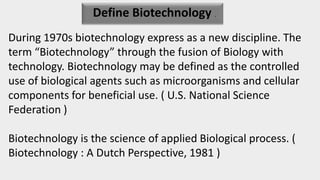
Define Biotechnology .
During 1970s biotechnology express as a new discipline. The
term “Biotechnology” through the fusion of Biology with
technology. Biotechnology may be defined as the controlled
use of biological agents such as microorganisms and cellular
components for beneficial use. ( U.S. National Science
Federation )
Biotechnology is the science of applied Biological process. (
Biotechnology : A Dutch Perspective, 1981 )
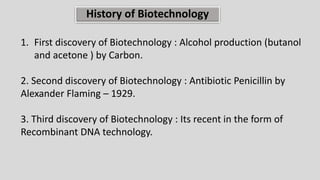
History of Biotechnology
1. First discovery of Biotechnology : Alcohol production (butanol
and acetone ) by Carbon.
2. Second discovery of Biotechnology : Antibiotic Penicillin by
Alexander Flaming – 1929.
3. Third discovery of Biotechnology : Its recent in the form of
Recombinant DNA technology.
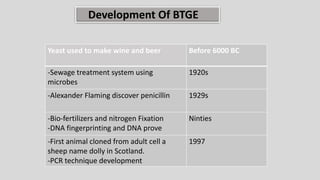
Development Of BTGE
Yeast used to make wine and beer Before 6000 BC
-Sewage treatment system using
microbes
1920s
-Alexander Flaming discover penicillin 1929s
-Bio-fertilizers and nitrogen Fixation
-DNA fingerprinting and DNA prove
Ninties
-First animal cloned from adult cell a
sheep name dolly in Scotland.
-PCR technique development
1997
Old and New Biotechnology
= Old Biotechnology : Fermentation by some micro-organisms, formation of
yoghurt and cheese from milk, vinegar from molasses. Production of antibiotics
like penicillin from certain from fungi, the processes of backing and brewing are
often included in describing what is called old Biotechnology.
New Biotechnology : The other example of biological process involving the
techniques of Recombinant DNA and polymerase chain reaction (PCR), cell
culture and fusion and Bio-processing which become possible through only the
researchers in molecular biology has been described on new Biotechnology.
Achievements of Biotechnology
A. Genome map : In Genetic Engineering programs . It has become possible to map the whole
genome of an organism. To find out the function of Gene. Cut and transfer into another
organisms.
B. Gene cloning : The success achieved from gene cloning many products have been obtained
through genetically engineered cells.
C. Gene Bank : Gene bank and DNA clone bank have been constracted to make available
differents types of genes of its known function.
D. Recombinant DNA Technology : RDT has made it easier to detect the genetic diseases and
cure before the birth of a child. RDT has made it possible to develop vaccines against viral and
malarial diseases growth hormones and interferon.
Achievements of Biotechnology
E. Agricultural Science : Biotechnology has caused revolution agricultural science. For better
yield of agricultural crops use of bio fertilizers has become an alternative tool for synthetic
chemical fertilizers.
F. Cell Culture : Cell culture and protoplast fusion tecniques have resulted in Hybrid/Cybrid
Plants. Through Cell culture technique, Industrial production of essential oils, alkaloids, pigments
etc have been boosted up.
G. Horticulture : Many more works are to be done on Horticulture and forestry plants.
H. Bio-Industries : Biotechnology has helped the bio-industries in producing the novel
compounds and optimization and scale of products. For ex- Alcohols, Antibiotics, Enzymes and
Single cell protein etc.
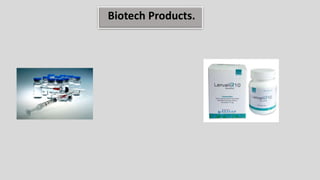
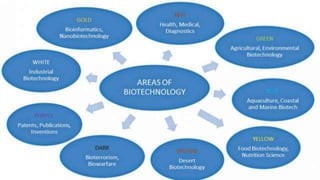
Biotech Products.
Applications of Biotechnology
The main areas of application of Biotechnology –
1. Bioprocess technology : Historically, the most important area of
biotechnology, namely brewing, antibiotics, mammalian cell culture etc.
extensive development of progress with new products namely
polisaccharides medically important drugs, solvents protein- enhanced
foods, novel fermenter design to optimize productivity.
2. Enzyme Technology : used for the Catalysis of extremely specific chemical
reactions, immobilization of enzymes to create specific molecular bioreactors.
Products formed include L-amino acid, high fructose syrup, semi synthetic
penicillin, starch and cellulose hydrolysis etc enzyme probe.
3. Waste technology : Long Historical importance but more emphasis now
being made to couple these processes with the conservation and recycling of
resources foods and fertilizers and Biological fuels.
4. Environmental Technology : Great scope exists for the application of
biotechnological concepts for solving many environmental problems –
pollution control, removing toxic wastes =, recovery of metal from mining
waste and low grade ores
5. Renewable resources technology : The use of renewable energy sources in
particular lingocellulose to generate new sources of chemical raw materials
and energy ethanol, methane and hydrozen total utilization of plants and
animal material clean technology, sustainable technology.
6. Plant and animal agriculture : Genetically engineered plant for improved
nutrition, disease resistance , keeping quality, improved yields, and stress
tolerance will become increasingly commercially available improved
productivity etc. for animal farming. Improved food quality, flavor , taste and
microbial safety.
7. Health Care : New drugs and better treatment for delivering medicines to
diseased parts. Improved Disease diagnosis, Understanding of the human
genome- genomics and proteomics information technology.
Thank You

Introduction of Biotechnology presentation

  • 1.
    Introduction of Biotechnology. MahedyHassan Roll – 1917002 Department of Biotechnology and Genetic Engineering. Islamic University Kushtia.
  • 2.
    Define Biotechnology . During1970s biotechnology express as a new discipline. The term “Biotechnology” through the fusion of Biology with technology. Biotechnology may be defined as the controlled use of biological agents such as microorganisms and cellular components for beneficial use. ( U.S. National Science Federation ) Biotechnology is the science of applied Biological process. ( Biotechnology : A Dutch Perspective, 1981 )
  • 3.
    History of Biotechnology 1.First discovery of Biotechnology : Alcohol production (butanol and acetone ) by Carbon. 2. Second discovery of Biotechnology : Antibiotic Penicillin by Alexander Flaming – 1929. 3. Third discovery of Biotechnology : Its recent in the form of Recombinant DNA technology.
  • 4.
    Development Of BTGE Yeastused to make wine and beer Before 6000 BC -Sewage treatment system using microbes 1920s -Alexander Flaming discover penicillin 1929s -Bio-fertilizers and nitrogen Fixation -DNA fingerprinting and DNA prove Ninties -First animal cloned from adult cell a sheep name dolly in Scotland. -PCR technique development 1997
  • 5.
    Old and NewBiotechnology = Old Biotechnology : Fermentation by some micro-organisms, formation of yoghurt and cheese from milk, vinegar from molasses. Production of antibiotics like penicillin from certain from fungi, the processes of backing and brewing are often included in describing what is called old Biotechnology. New Biotechnology : The other example of biological process involving the techniques of Recombinant DNA and polymerase chain reaction (PCR), cell culture and fusion and Bio-processing which become possible through only the researchers in molecular biology has been described on new Biotechnology.
  • 6.
    Achievements of Biotechnology A.Genome map : In Genetic Engineering programs . It has become possible to map the whole genome of an organism. To find out the function of Gene. Cut and transfer into another organisms. B. Gene cloning : The success achieved from gene cloning many products have been obtained through genetically engineered cells. C. Gene Bank : Gene bank and DNA clone bank have been constracted to make available differents types of genes of its known function. D. Recombinant DNA Technology : RDT has made it easier to detect the genetic diseases and cure before the birth of a child. RDT has made it possible to develop vaccines against viral and malarial diseases growth hormones and interferon.
  • 7.
    Achievements of Biotechnology E.Agricultural Science : Biotechnology has caused revolution agricultural science. For better yield of agricultural crops use of bio fertilizers has become an alternative tool for synthetic chemical fertilizers. F. Cell Culture : Cell culture and protoplast fusion tecniques have resulted in Hybrid/Cybrid Plants. Through Cell culture technique, Industrial production of essential oils, alkaloids, pigments etc have been boosted up. G. Horticulture : Many more works are to be done on Horticulture and forestry plants. H. Bio-Industries : Biotechnology has helped the bio-industries in producing the novel compounds and optimization and scale of products. For ex- Alcohols, Antibiotics, Enzymes and Single cell protein etc.
  • 8.
  • 9.
    Applications of Biotechnology Themain areas of application of Biotechnology – 1. Bioprocess technology : Historically, the most important area of biotechnology, namely brewing, antibiotics, mammalian cell culture etc. extensive development of progress with new products namely polisaccharides medically important drugs, solvents protein- enhanced foods, novel fermenter design to optimize productivity. 2. Enzyme Technology : used for the Catalysis of extremely specific chemical reactions, immobilization of enzymes to create specific molecular bioreactors. Products formed include L-amino acid, high fructose syrup, semi synthetic penicillin, starch and cellulose hydrolysis etc enzyme probe.
  • 10.
    3. Waste technology: Long Historical importance but more emphasis now being made to couple these processes with the conservation and recycling of resources foods and fertilizers and Biological fuels. 4. Environmental Technology : Great scope exists for the application of biotechnological concepts for solving many environmental problems – pollution control, removing toxic wastes =, recovery of metal from mining waste and low grade ores 5. Renewable resources technology : The use of renewable energy sources in particular lingocellulose to generate new sources of chemical raw materials and energy ethanol, methane and hydrozen total utilization of plants and animal material clean technology, sustainable technology.
  • 11.
    6. Plant andanimal agriculture : Genetically engineered plant for improved nutrition, disease resistance , keeping quality, improved yields, and stress tolerance will become increasingly commercially available improved productivity etc. for animal farming. Improved food quality, flavor , taste and microbial safety. 7. Health Care : New drugs and better treatment for delivering medicines to diseased parts. Improved Disease diagnosis, Understanding of the human genome- genomics and proteomics information technology.
  • 13.