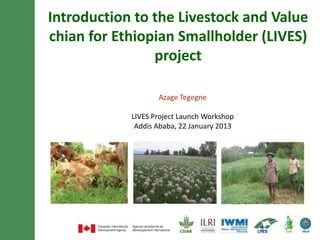
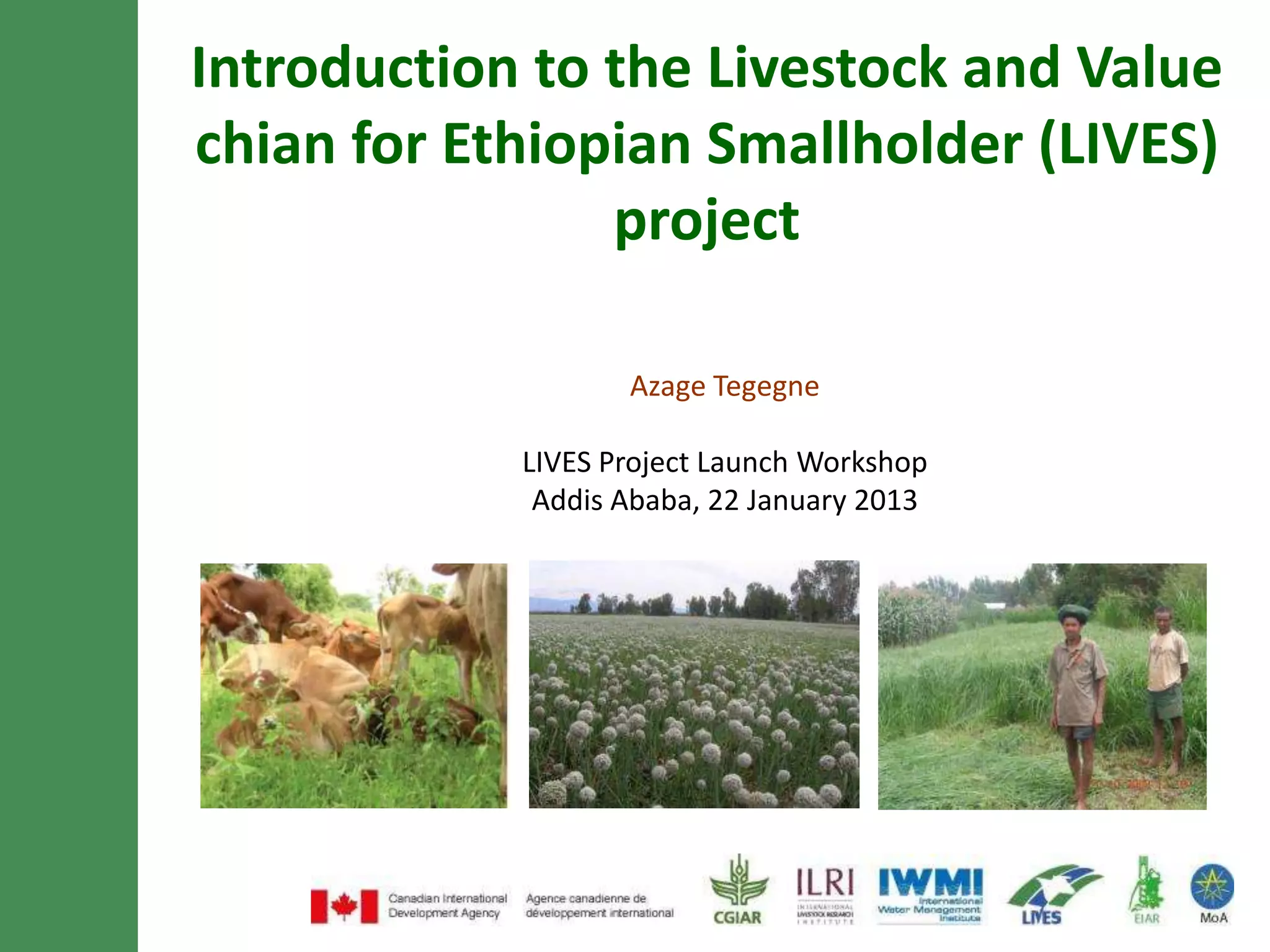
Introduction to Livestock and Irrigation Value
  chains for Ethiopian Smallholders (LIVES)
                   project


                     Azage Tegegne

              LIVES Project Launch Workshop
               Addis Ababa, 22 January 2013
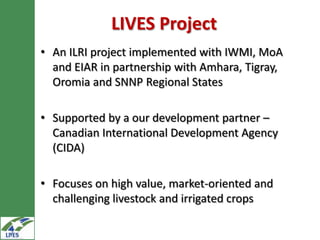
LIVES Project
• An ILRI project implemented with IWMI, MoA
  and EIAR in partnership with Amhara, Tigray,
  Oromia and SNNP Regional States

• Supported by a our development partner –
  Canadian International Development Agency
  (CIDA)

• Focuses on high value, market-oriented and
  challenging livestock and irrigated crops
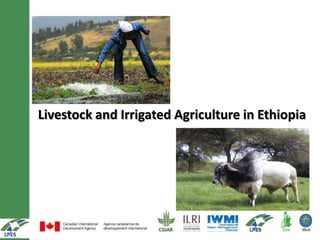
Livestock and Irrigated Agriculture in Ethiopia
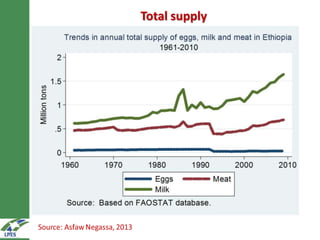
Total supply
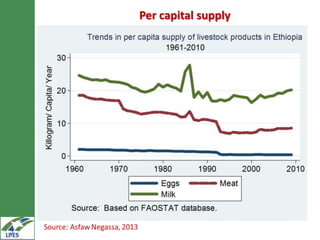
Per capital supply
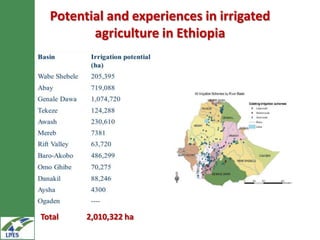
Potential and experiences in irrigated
         agriculture in Ethiopia


Total   2,010,322 ha
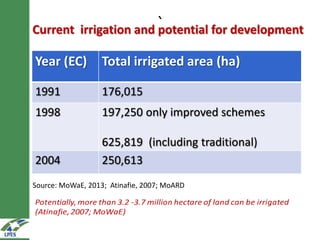
Current irrigation and `
                       potential for development

Year (EC)          Total irrigated area (ha)

1991               176,015
1998               197,250 only improved schemes

                   625,819 (including traditional)
2004               250,613
Source: MoWaE, 2013; Atinafie, 2007; MoARD
WHY LIVES?
• In line with GoE priorities for agriculture–led
  industrialization

• In line with the GTP and AGP and other programs of the
  GoE

• Livestock and irrigated agriculture are high value
  commodities with huge potential and promise to
  transform smallholders from subsistence to market-
  orientation

• Piloting for learning and scaling up
What is special about LIVES?
•   A unique model for partnerships between CGIAR centers, MoA, NARS and
    development institutions to work on developmental outcomes

•   Helps to integrate high value irrigated crops and livestock production for
    system intensification

•   Provides opportunity for testing and developing irrigated fodder production

•   Creates a chance to improve water use efficiency

•   A model for enhanced nutrient management and cycling system through
    use of manure for horticultural crops

•   A platform to test water governance through water users associations
LIVES – Goal and Ultimate Outcome


Goal
• To contribute to enhanced income and gender equitable wealth
  creation for smallholders and other value chains actors through
  increased and sustained market-off-take of high value livestock and
  irrigated crop commodities.


Ultimate Outcome
• Increased economic well-being for male and female smallholder
  producers in 30 districts in 10 target Zones in Amhara, Oromia,
  Tigray, and SNNPR through the development of livestock and
  irrigated value chains
Intermediate Outcomes
• Increased use of improved knowledge and capacity by
  male and female livestock and irrigated agriculture value
  chains and service providers to develop gender sensitive
  and environmentally friendly sustainable market-
  oriented livestock and irrigated value chains.

• Increased adoption of gender sensitive and
  environmentally sustainable market-oriented value
  chain interventions by male and female livestock and
  irrigated agriculture value chain actors and service
  providers.
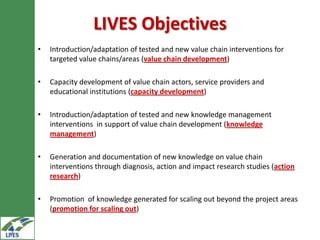
LIVES Objectives
•   Introduction/adaptation of tested and new value chain interventions for
    targeted value chains/areas (value chain development)

•   Capacity development of value chain actors, service providers and
    educational institutions (capacity development)

•   Introduction/adaptation of tested and new knowledge management
    interventions in support of value chain development (knowledge
    management)

•   Generation and documentation of new knowledge on value chain
    interventions through diagnosis, action and impact research studies (action
    research)

•   Promotion of knowledge generated for scaling out beyond the project areas
    (promotion for scaling out)
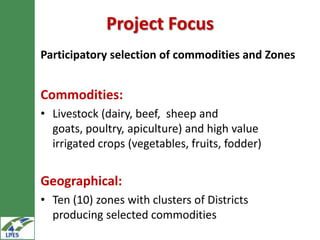
Project Focus
Participatory selection of commodities and Zones


Commodities:
• Livestock (dairy, beef, sheep and goats, poultry,
  apiculture) and high value irrigated crops
  (vegetables, fruits, fodder)


Geographical:
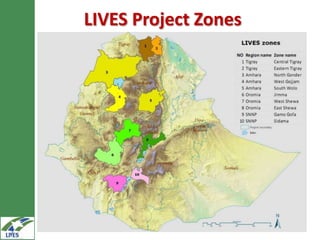
• Ten (10) zones with clusters of Districts
  producing selected commodities
LIVES Project Zones
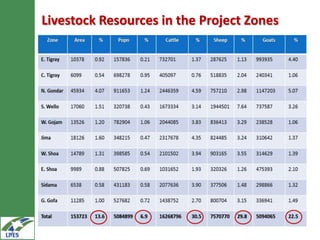
Livestock Resources in the Project Zones
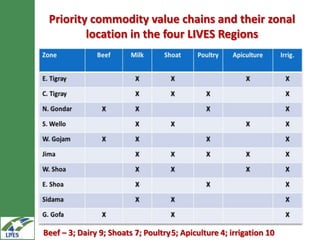
Priority commodity value chains and their zonal
         location in the four LIVES Regions


Beef – 3; Dairy 9; Shoats 7; Poultry5; Apiculture 4; irrigation 10
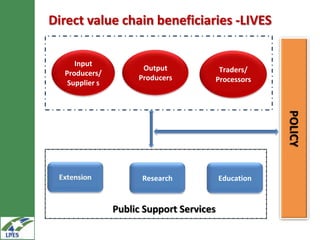
Direct value chain beneficiaries -LIVES

     Input
                      Output           Traders/
  Producers/
                     Producers        Processors
   Supplier s


                                                      POLICY
                      Research            Education


                Public Support Services
Indirect beneficiaries

• Producers and service providers in AGP, HABP,
  PSNP programs through (joint) capacity
  development, field visits, learning events.

• Producers and service providers in adjoining
  districts which form part of natural clusters –
  milk shed, irrigation schemes and watersheds
  through learning events, capacity development
  and field visits.
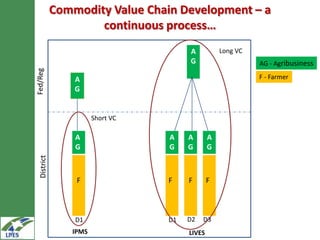
Commodity Value Chain Development – a
                     continuous process…
                                       A           Long VC
                                       G                     AG - Agribusiness
Fed/Reg


                 A                                           F - Farmer
                 G


                       Short VC

                 A                A    A       A
                 G                G    G       G
  District


                 F                F    F       F


                 D1               D1   D2   D3
                IPMS                   LIVES
What are the possible interventions?

• Technological: eg. seeds, animal genetics, drugs,
  fertilizers, pumps, e-readers, computers


• Organizational: eg. organizational forms (public,
  private, individual, cooperative, government, PLCs)


• Institutional: eg. rules & regulations, behavior, linkages
Capacity Development
Strengthening capacity public sector staff through
MSc/BSc education

In service training based on TOT/BDS approach: regional –
zone/district (eg)

      Rapid value chain assessment for potential interventions -teams
      Participatory market oriented extension – extension staff
      Gender mainstreaming – extension staff
      Knowledge management – extension staff
      Results based monitoring – specialist staff
      Irrigation technologies – specialist staff
      Irrigated crop value chain development – specialist staff
      Livestock value chain development – specialist staff
Knowledge Management
Federal level

      Strengthening EAP
      National learning events/conferences
      Video production
      e-extension


Regional/zonal/District level

      Knowledge center development
      Learning events/conferences/workshops
      Study tours
      Exhibitions
      Field days
      New IT technologies
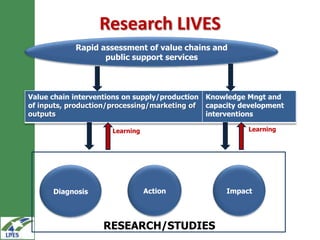
Research LIVES
            Rapid assessment of value chains and
                   public support services


Value chain interventions on supply/production Knowledge Mngt and
of inputs, production/processing/marketing of capacity development
outputs                                        interventions

                     Learning                           Learning


      Diagnosis                 Action             Impact


                   RESEARCH/STUDIES
Promotion for scaling up
• Facilitate project visits by key policy makers and donors

• Participation in government/non- government national, regional
  learning platforms, conferences and workshops

• Use of mass media

• Publications

• Newsletters

• Promotional materials

• Leveraging new investment into value chain development.
Cross-cutting Issues

In both livestock and irrigated agriculture

  – Gender

  – Environment
Project Management
•   Coordinating Team – (MoA, EIAR, LIVES, IWMI)

•   Steering Committee – (MoA, MoWE, EIAR, BoA, BoWE, LA, LIVES, IWMI,
    CIDA)

•   Regional Project Implementation Committee (RPIC)

•   Project staffing – HQ, Regional, Zonal

•   Counterpart staff at Federal, Regional and Zonal level

•   Project team meetings

•   Project Advisory committee meetings

•   Project technical committee meetings
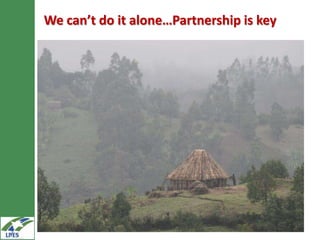
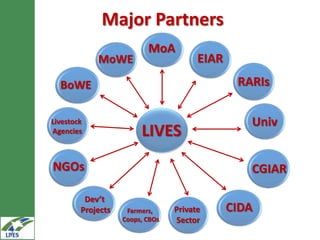
We can’t do it alone…Partnership is key
Major Partners
                          MoA
            MoWE                       EIAR
  BoWE                                         RARIs

Livestock                                        Univ
Agencies                LIVES
NGOs                                             CGIAR

         Dev’t
        Projects    Farmers,     Private      CIDA
                   Coops, CBOs   Sector
Thank You!

www.lives-ethiopia.org

Introduction to Livestock and Irrigation Value chains for Ethiopian Smallholders (LIVES) project

  • 1.
    Introduction to Livestockand Irrigation Value chains for Ethiopian Smallholders (LIVES) project Azage Tegegne LIVES Project Launch Workshop Addis Ababa, 22 January 2013
  • 2.
    LIVES Project • AnILRI project implemented with IWMI, MoA and EIAR in partnership with Amhara, Tigray, Oromia and SNNP Regional States • Supported by a our development partner – Canadian International Development Agency (CIDA) • Focuses on high value, market-oriented and challenging livestock and irrigated crops
  • 3.
    Livestock and IrrigatedAgriculture in Ethiopia
  • 4.
  • 5.
  • 6.
    Potential and experiencesin irrigated agriculture in Ethiopia Total 2,010,322 ha
  • 7.
    Current irrigation and` potential for development Year (EC) Total irrigated area (ha) 1991 176,015 1998 197,250 only improved schemes 625,819 (including traditional) 2004 250,613 Source: MoWaE, 2013; Atinafie, 2007; MoARD
  • 8.
    WHY LIVES? • Inline with GoE priorities for agriculture–led industrialization • In line with the GTP and AGP and other programs of the GoE • Livestock and irrigated agriculture are high value commodities with huge potential and promise to transform smallholders from subsistence to market- orientation • Piloting for learning and scaling up
  • 9.
    What is specialabout LIVES? • A unique model for partnerships between CGIAR centers, MoA, NARS and development institutions to work on developmental outcomes • Helps to integrate high value irrigated crops and livestock production for system intensification • Provides opportunity for testing and developing irrigated fodder production • Creates a chance to improve water use efficiency • A model for enhanced nutrient management and cycling system through use of manure for horticultural crops • A platform to test water governance through water users associations
  • 10.
    LIVES – Goaland Ultimate Outcome Goal • To contribute to enhanced income and gender equitable wealth creation for smallholders and other value chains actors through increased and sustained market-off-take of high value livestock and irrigated crop commodities. Ultimate Outcome • Increased economic well-being for male and female smallholder producers in 30 districts in 10 target Zones in Amhara, Oromia, Tigray, and SNNPR through the development of livestock and irrigated value chains
  • 11.
    Intermediate Outcomes • Increaseduse of improved knowledge and capacity by male and female livestock and irrigated agriculture value chains and service providers to develop gender sensitive and environmentally friendly sustainable market- oriented livestock and irrigated value chains. • Increased adoption of gender sensitive and environmentally sustainable market-oriented value chain interventions by male and female livestock and irrigated agriculture value chain actors and service providers.
  • 12.
    LIVES Objectives • Introduction/adaptation of tested and new value chain interventions for targeted value chains/areas (value chain development) • Capacity development of value chain actors, service providers and educational institutions (capacity development) • Introduction/adaptation of tested and new knowledge management interventions in support of value chain development (knowledge management) • Generation and documentation of new knowledge on value chain interventions through diagnosis, action and impact research studies (action research) • Promotion of knowledge generated for scaling out beyond the project areas (promotion for scaling out)
  • 13.
    Project Focus Participatory selectionof commodities and Zones Commodities: • Livestock (dairy, beef, sheep and goats, poultry, apiculture) and high value irrigated crops (vegetables, fruits, fodder) Geographical: • Ten (10) zones with clusters of Districts producing selected commodities
  • 14.
  • 15.
    Livestock Resources inthe Project Zones
  • 16.
    Priority commodity valuechains and their zonal location in the four LIVES Regions Beef – 3; Dairy 9; Shoats 7; Poultry5; Apiculture 4; irrigation 10
  • 17.
    Direct value chainbeneficiaries -LIVES Input Output Traders/ Producers/ Producers Processors Supplier s POLICY Research Education Public Support Services
  • 18.
    Indirect beneficiaries • Producersand service providers in AGP, HABP, PSNP programs through (joint) capacity development, field visits, learning events. • Producers and service providers in adjoining districts which form part of natural clusters – milk shed, irrigation schemes and watersheds through learning events, capacity development and field visits.
  • 19.
    Commodity Value ChainDevelopment – a continuous process… A Long VC G AG - Agribusiness Fed/Reg A F - Farmer G Short VC A A A A G G G G District F F F F D1 D1 D2 D3 IPMS LIVES
  • 20.
    What are thepossible interventions? • Technological: eg. seeds, animal genetics, drugs, fertilizers, pumps, e-readers, computers • Organizational: eg. organizational forms (public, private, individual, cooperative, government, PLCs) • Institutional: eg. rules & regulations, behavior, linkages
  • 21.
    Capacity Development Strengthening capacitypublic sector staff through MSc/BSc education In service training based on TOT/BDS approach: regional – zone/district (eg)  Rapid value chain assessment for potential interventions -teams  Participatory market oriented extension – extension staff  Gender mainstreaming – extension staff  Knowledge management – extension staff  Results based monitoring – specialist staff  Irrigation technologies – specialist staff  Irrigated crop value chain development – specialist staff  Livestock value chain development – specialist staff
  • 22.
    Knowledge Management Federal level  Strengthening EAP  National learning events/conferences  Video production  e-extension Regional/zonal/District level  Knowledge center development  Learning events/conferences/workshops  Study tours  Exhibitions  Field days  New IT technologies
  • 23.
    Research LIVES Rapid assessment of value chains and public support services Value chain interventions on supply/production Knowledge Mngt and of inputs, production/processing/marketing of capacity development outputs interventions Learning Learning Diagnosis Action Impact RESEARCH/STUDIES
  • 24.
    Promotion for scalingup • Facilitate project visits by key policy makers and donors • Participation in government/non- government national, regional learning platforms, conferences and workshops • Use of mass media • Publications • Newsletters • Promotional materials • Leveraging new investment into value chain development.
  • 25.
    Cross-cutting Issues In bothlivestock and irrigated agriculture – Gender – Environment
  • 26.
    Project Management • Coordinating Team – (MoA, EIAR, LIVES, IWMI) • Steering Committee – (MoA, MoWE, EIAR, BoA, BoWE, LA, LIVES, IWMI, CIDA) • Regional Project Implementation Committee (RPIC) • Project staffing – HQ, Regional, Zonal • Counterpart staff at Federal, Regional and Zonal level • Project team meetings • Project Advisory committee meetings • Project technical committee meetings
  • 27.
    We can’t doit alone…Partnership is key
  • 28.
    Major Partners MoA MoWE EIAR BoWE RARIs Livestock Univ Agencies LIVES NGOs CGIAR Dev’t Projects Farmers, Private CIDA Coops, CBOs Sector
  • 29.