Introduction to E-learning(cont.)Kate BoardmanFebruary 19th, 2010
Learning
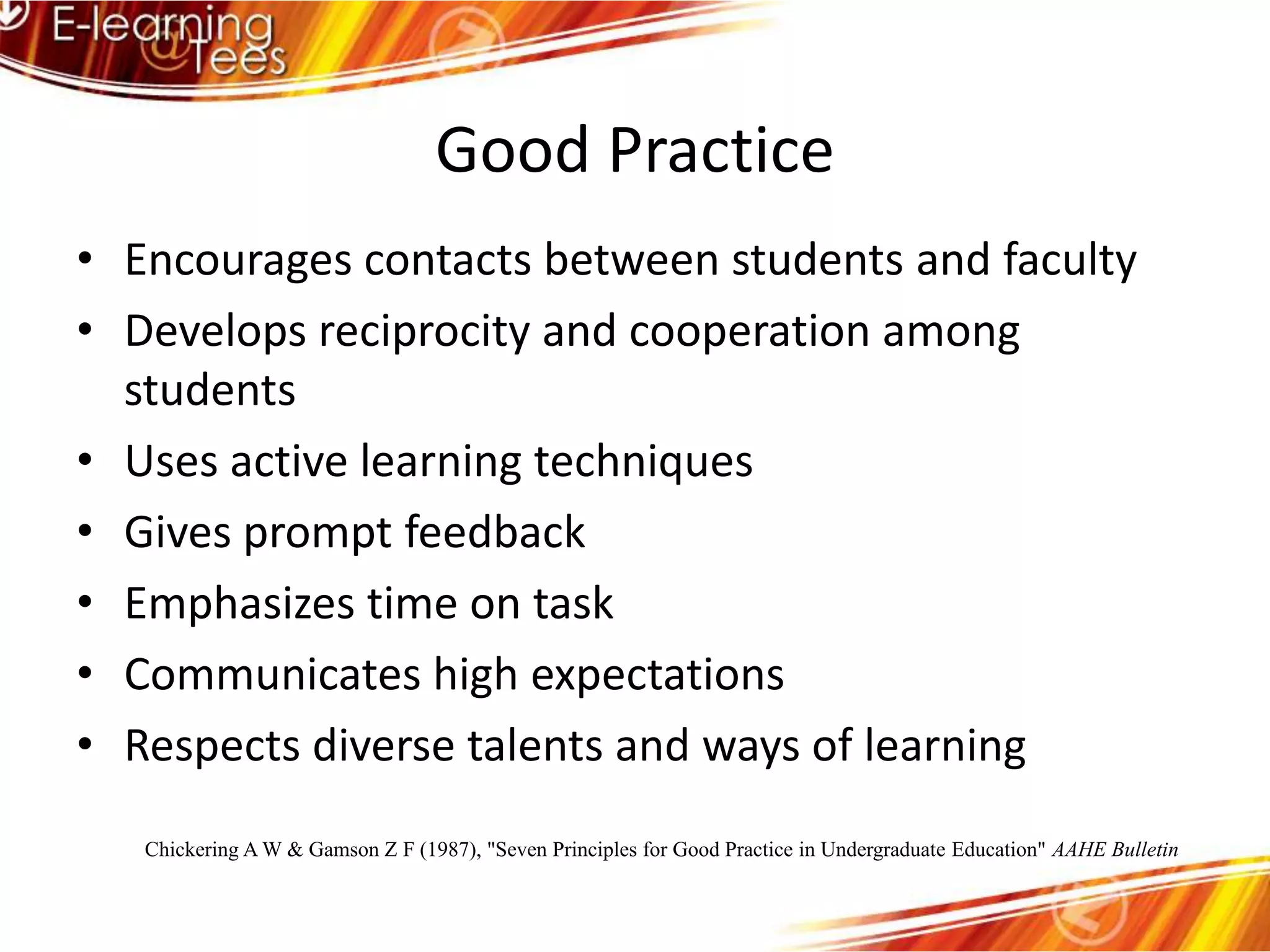
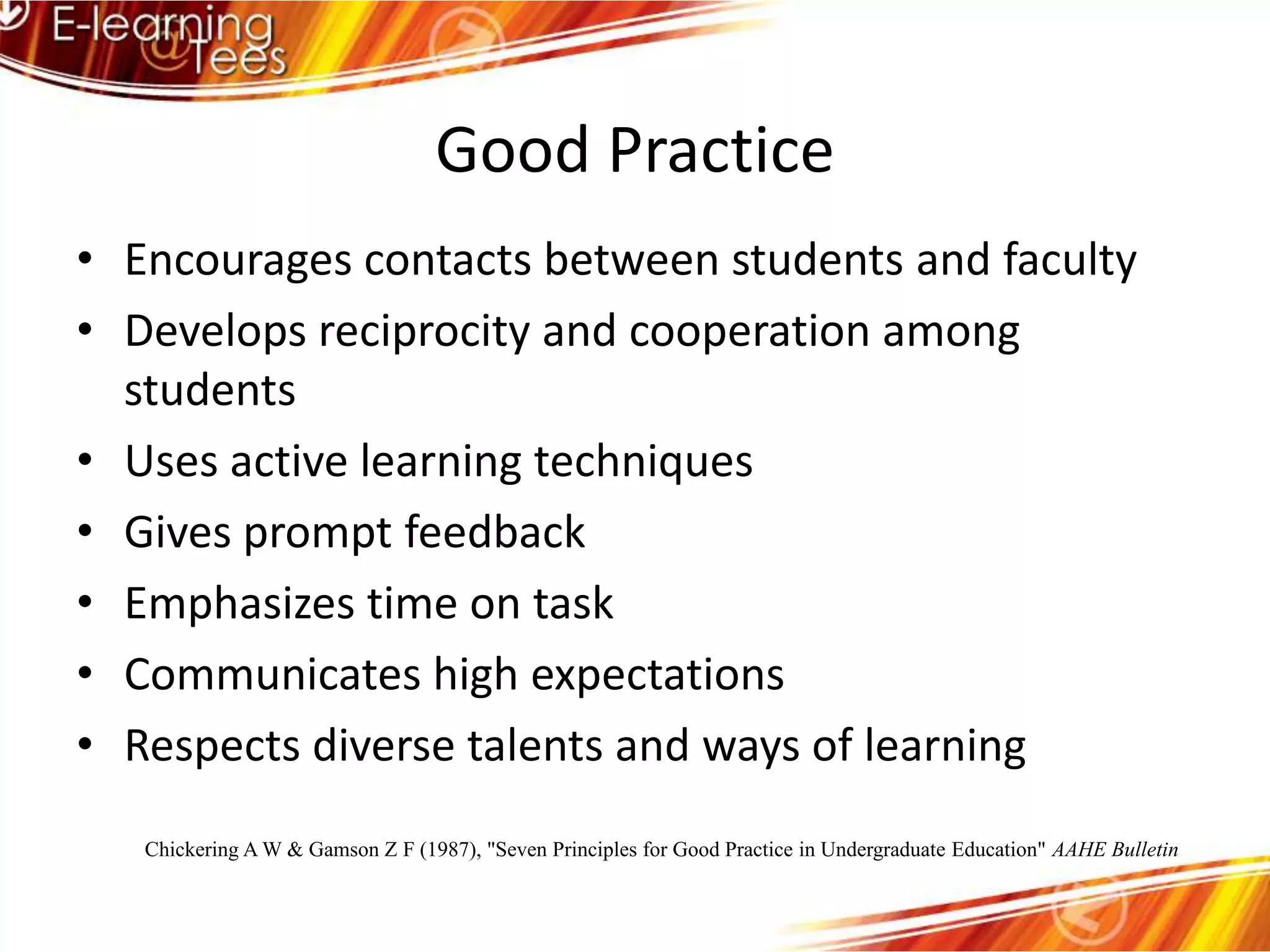
Good PracticeEncourages contacts between students and facultyDevelops reciprocity and cooperation among studentsUses active learning techniquesGives prompt feedbackEmphasizes time on taskCommunicates high expectationsRespects diverse talents and ways of learningChickering A W & Gamson Z F (1987), "Seven Principles for Good Practice in Undergraduate Education" AAHE Bulletin
E-learning
ExerciseDiscuss your own module outline/handbook, teaching methods/practices. Consider:What kind of thing can go online?What kind of thing can't?What should?What shouldn't?What can you think of you can use online for that you can't do face to face?What advantages and disadvantages can you see?
Pros & ConsHelpFlexibleFeedbackCollaborative learningRange of resources accommodates different learning stylesHinderInvestment of time and skillsEquipmentIsolation for some students
E-learning in practiceE-learning:A new way of delivering teaching and learningVLE is just a delivery systemSome new skills to masterConventional approaches can transfer onlineOnline courses/material should be developed:According to course/learner needIn line with current approachesUsing the medium to support teaching and learningTo support/enhance existing methods
Virtual Learning EnvironmentCourse content – resource distributionGroup communication and collaborationAssessmentStudent managementCustomisable
Valuable Learning ExperiencePromotion of learning through discussion groupsSelf-test assessment with feedbackMedia-rich contentEnhanced use of existing CAL applicationsDevelopment of ‘e-tivities’/PBL
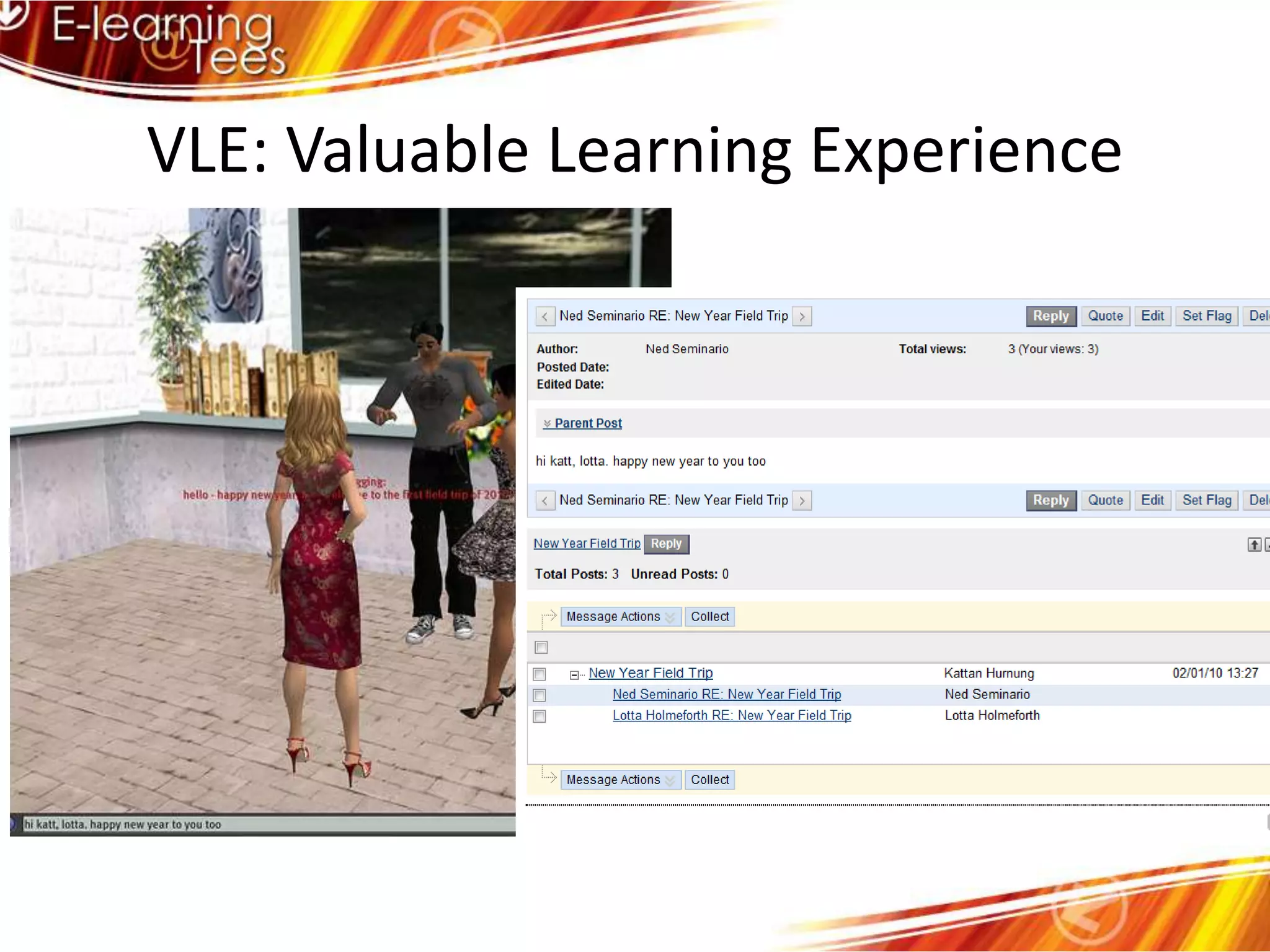
VLE: Valuable Learning ExperiencePromotion of learning through discussion groups – discussion boards/wikis/blogs
Discussion UsesNoticeboard / General queriesFrequently Asked QuestionsSocial discussionSeminar workBook reviewsFeedback on courseRole play exercises‘E-tivities’
VLE: Valuable Learning ExperiencePromotion of learning through discussion groupsSelf-test assessment with feedback
Giving and Receiving FeedbackCombination of online assessmentProgress, self-tests with feedbackRegular collection of feedback from studentsRegular distribution of feedback to studentsInteractive online seminar prep/follow-upProvision of last year’s evaluation results
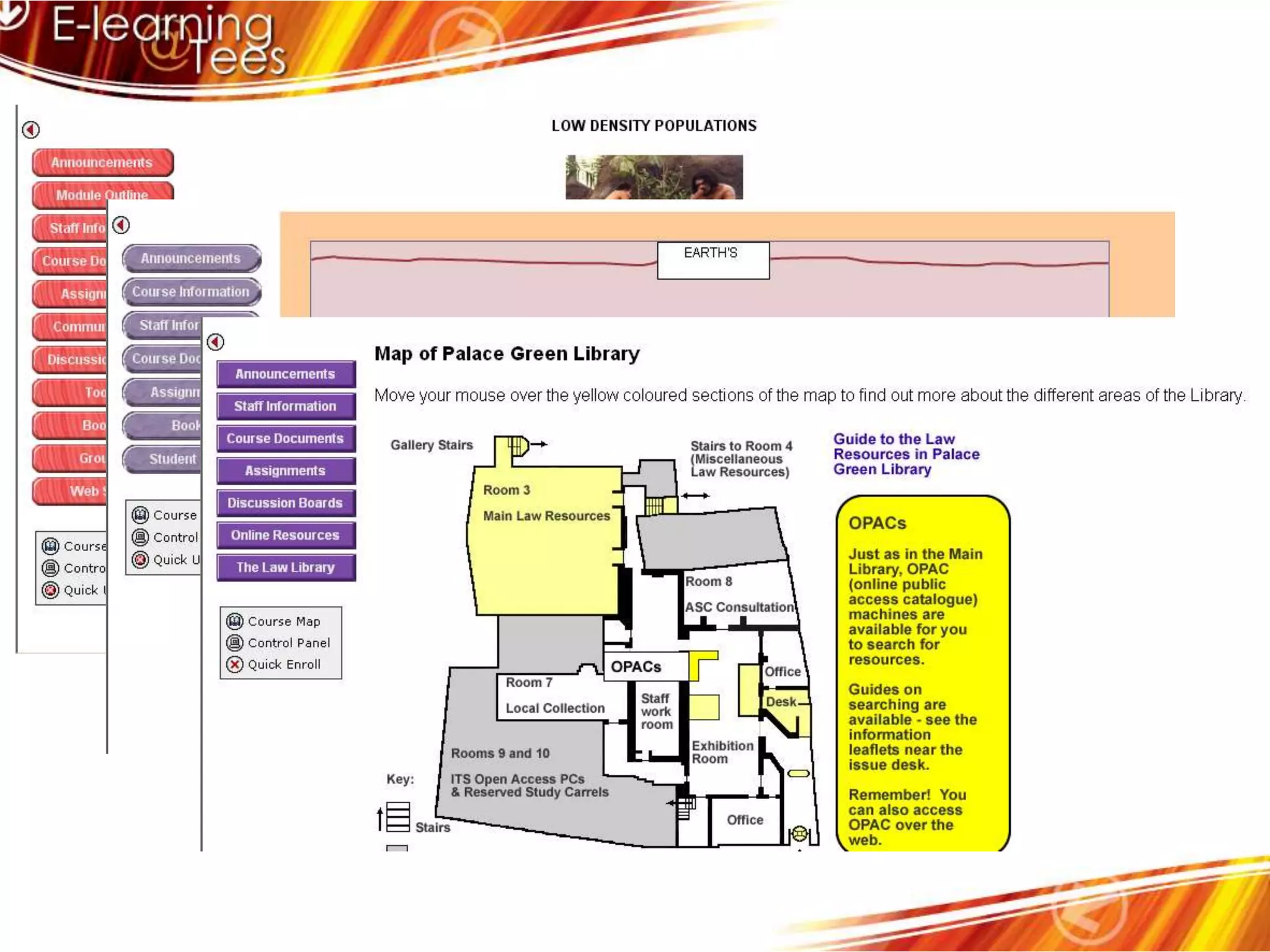
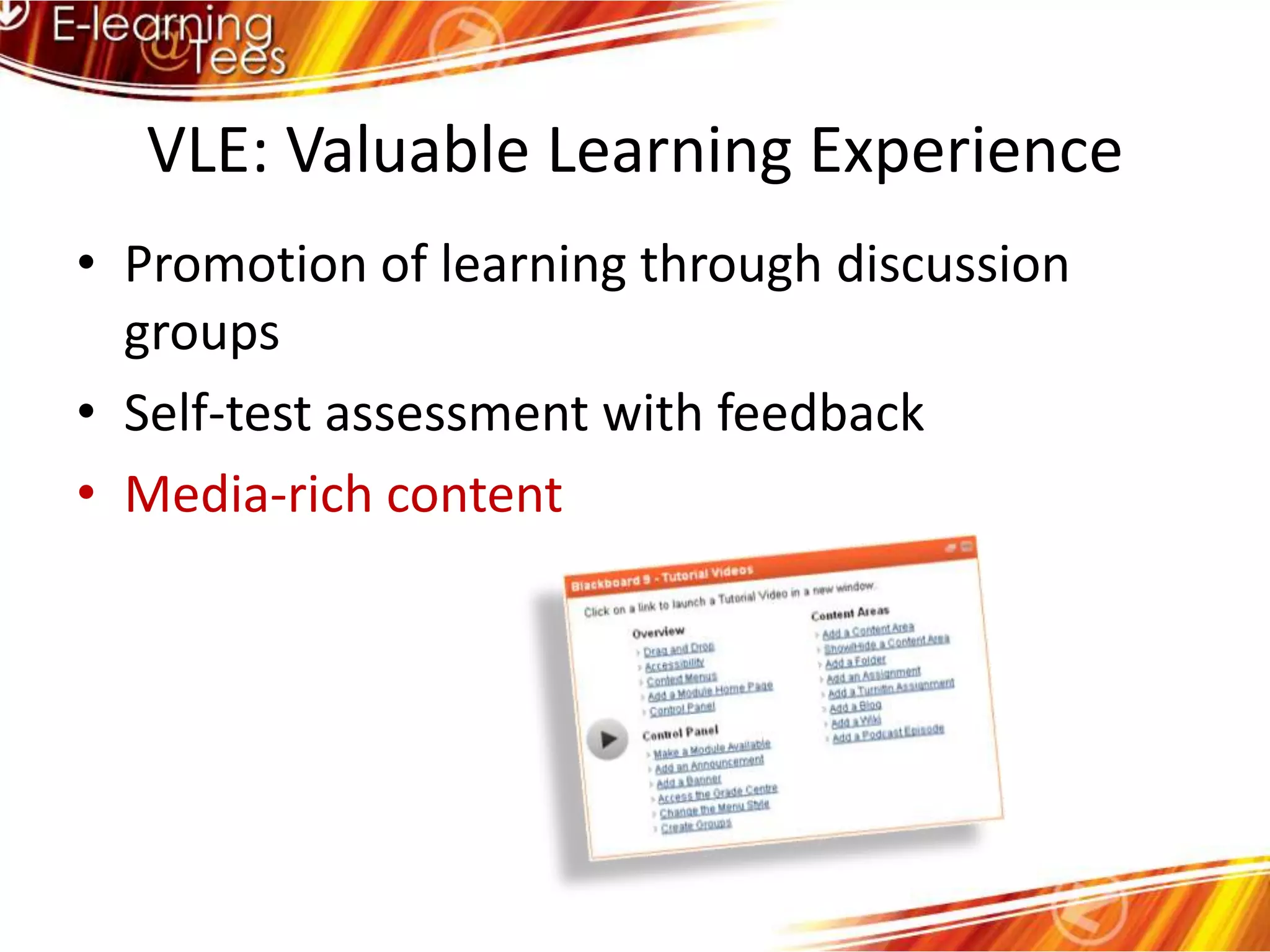
VLE: Valuable Learning ExperiencePromotion of learning through discussion groupsSelf-test assessment with feedbackMedia-rich content
VLE: Valuable Learning ExperiencePromotion of learning through discussion groupsSelf-test assessment with feedbackMedia-rich contentDevelopment of ‘e-tivities’/Problem-Based Learning
VLE: Valuable Learning Experience
What level of VLE use?Web enhancedAs a supplement or additional resource for courseMainly pre-determined and stable content materialsWeb focussedUsed as a required element of courseSome pre-determined contentSome created by learners - research findings etcWeb drivenUsed as primary course delivery mechanismFluid and dynamic contentMore determined by individual/group
Decisions?CoverageNavigation structureFolder structureContent planningCommunication – e-moderatingAssessment – self-assessed formativeLearning paths – adaptive releaseRich media – interaction & extension
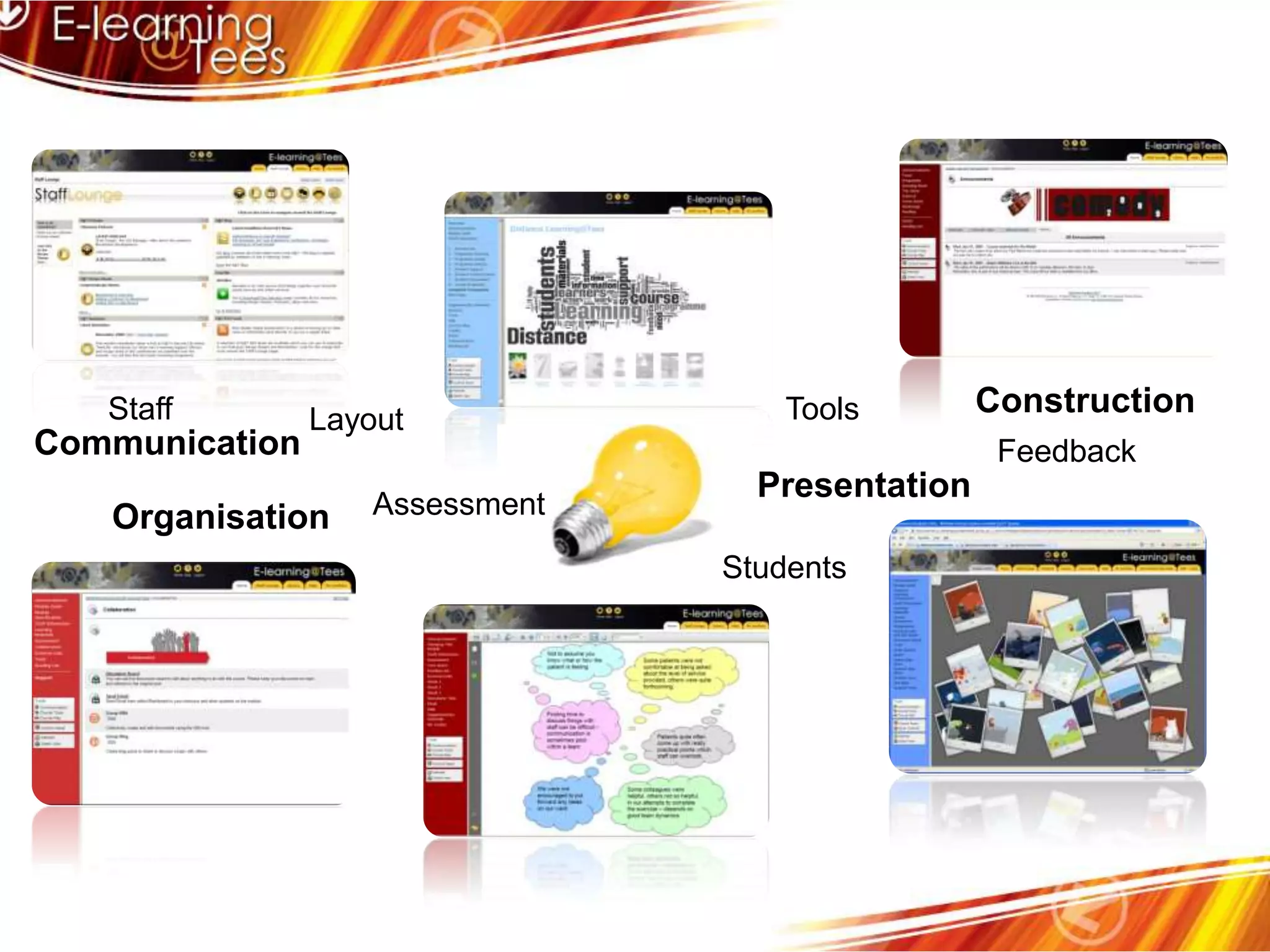
ConstructionStaffToolsLayoutCommunicationFeedbackPresentationAssessmentOrganisationStudents
Good PracticeEncourages contacts between students and facultyDevelops reciprocity and cooperation among studentsUses active learning techniquesGives prompt feedbackEmphasizes time on taskCommunicates high expectationsRespects diverse talents and ways of learningChickering A W & Gamson Z F (1987), "Seven Principles for Good Practice in Undergraduate Education" AAHE Bulletin
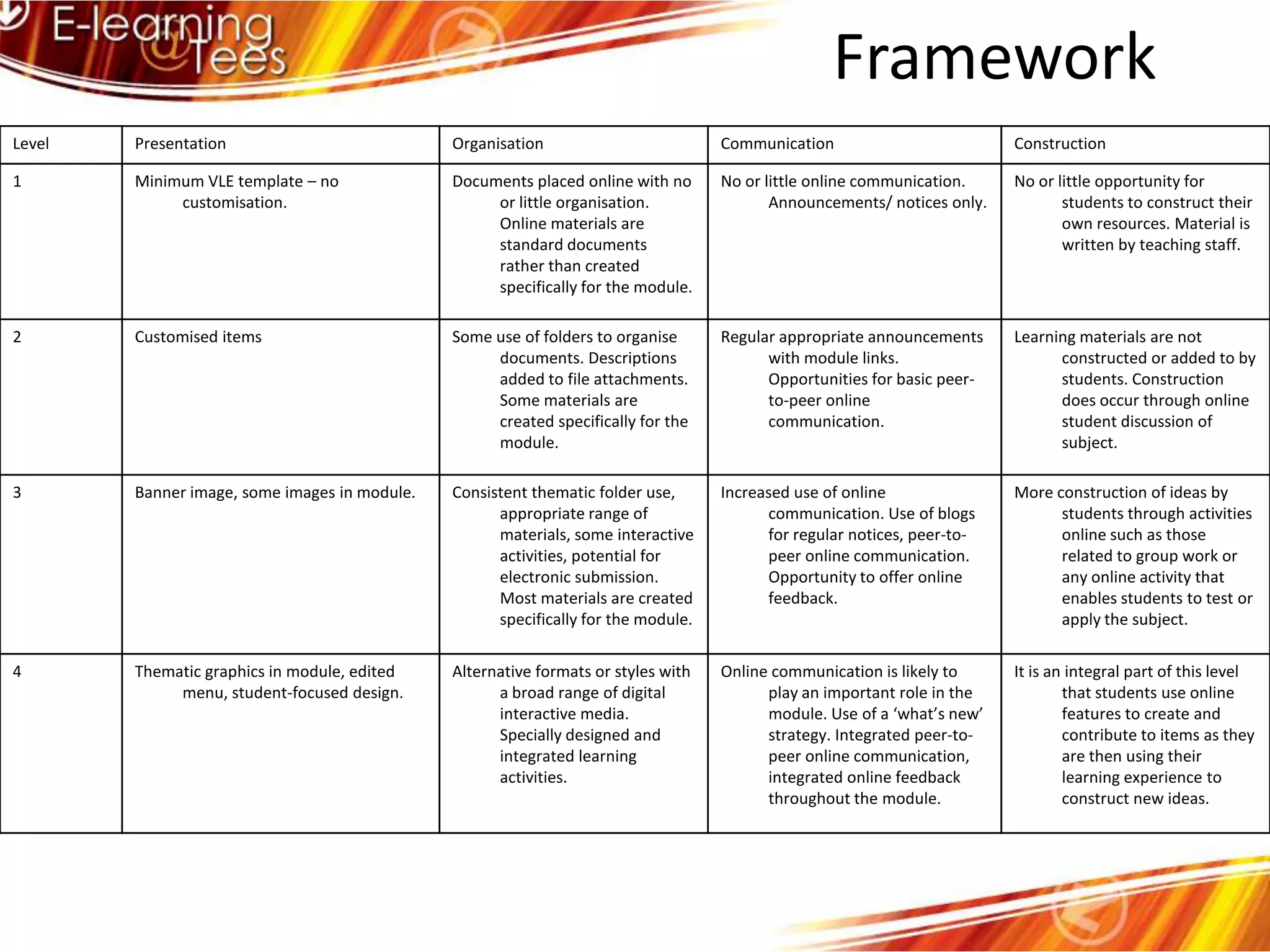
Framework

Intro to Technology Enhanced Learning (part 2)

  • 1.
    Introduction to E-learning(cont.)KateBoardmanFebruary 19th, 2010
  • 2.
  • 3.
    Good PracticeEncourages contactsbetween students and facultyDevelops reciprocity and cooperation among studentsUses active learning techniquesGives prompt feedbackEmphasizes time on taskCommunicates high expectationsRespects diverse talents and ways of learningChickering A W & Gamson Z F (1987), "Seven Principles for Good Practice in Undergraduate Education" AAHE Bulletin
  • 4.
  • 5.
    ExerciseDiscuss your ownmodule outline/handbook, teaching methods/practices. Consider:What kind of thing can go online?What kind of thing can't?What should?What shouldn't?What can you think of you can use online for that you can't do face to face?What advantages and disadvantages can you see?
  • 6.
    Pros & ConsHelpFlexibleFeedbackCollaborativelearningRange of resources accommodates different learning stylesHinderInvestment of time and skillsEquipmentIsolation for some students
  • 7.
    E-learning in practiceE-learning:Anew way of delivering teaching and learningVLE is just a delivery systemSome new skills to masterConventional approaches can transfer onlineOnline courses/material should be developed:According to course/learner needIn line with current approachesUsing the medium to support teaching and learningTo support/enhance existing methods
  • 8.
    Virtual Learning EnvironmentCoursecontent – resource distributionGroup communication and collaborationAssessmentStudent managementCustomisable
  • 9.
    Valuable Learning ExperiencePromotionof learning through discussion groupsSelf-test assessment with feedbackMedia-rich contentEnhanced use of existing CAL applicationsDevelopment of ‘e-tivities’/PBL
  • 10.
    VLE: Valuable LearningExperiencePromotion of learning through discussion groups – discussion boards/wikis/blogs
  • 11.
    Discussion UsesNoticeboard /General queriesFrequently Asked QuestionsSocial discussionSeminar workBook reviewsFeedback on courseRole play exercises‘E-tivities’
  • 12.
    VLE: Valuable LearningExperiencePromotion of learning through discussion groupsSelf-test assessment with feedback
  • 13.
    Giving and ReceivingFeedbackCombination of online assessmentProgress, self-tests with feedbackRegular collection of feedback from studentsRegular distribution of feedback to studentsInteractive online seminar prep/follow-upProvision of last year’s evaluation results
  • 14.
    VLE: Valuable LearningExperiencePromotion of learning through discussion groupsSelf-test assessment with feedbackMedia-rich content
  • 16.
    VLE: Valuable LearningExperiencePromotion of learning through discussion groupsSelf-test assessment with feedbackMedia-rich content
  • 17.
    VLE: Valuable LearningExperiencePromotion of learning through discussion groupsSelf-test assessment with feedbackMedia-rich content
  • 18.
    VLE: Valuable LearningExperiencePromotion of learning through discussion groupsSelf-test assessment with feedbackMedia-rich contentDevelopment of ‘e-tivities’/Problem-Based Learning
  • 19.
  • 20.
    What level ofVLE use?Web enhancedAs a supplement or additional resource for courseMainly pre-determined and stable content materialsWeb focussedUsed as a required element of courseSome pre-determined contentSome created by learners - research findings etcWeb drivenUsed as primary course delivery mechanismFluid and dynamic contentMore determined by individual/group
  • 21.
    Decisions?CoverageNavigation structureFolder structureContentplanningCommunication – e-moderatingAssessment – self-assessed formativeLearning paths – adaptive releaseRich media – interaction & extension
  • 22.
  • 23.
    Good PracticeEncourages contactsbetween students and facultyDevelops reciprocity and cooperation among studentsUses active learning techniquesGives prompt feedbackEmphasizes time on taskCommunicates high expectationsRespects diverse talents and ways of learningChickering A W & Gamson Z F (1987), "Seven Principles for Good Practice in Undergraduate Education" AAHE Bulletin
  • 24.