Organizational Project Management
Maturity Model (OPM3)
Rabbani Lutfur, MBA, PMP
OPM3 Program Co Lead
2
Agenda
OPM3™ Concepts
The OPM3 Standard
Categorization
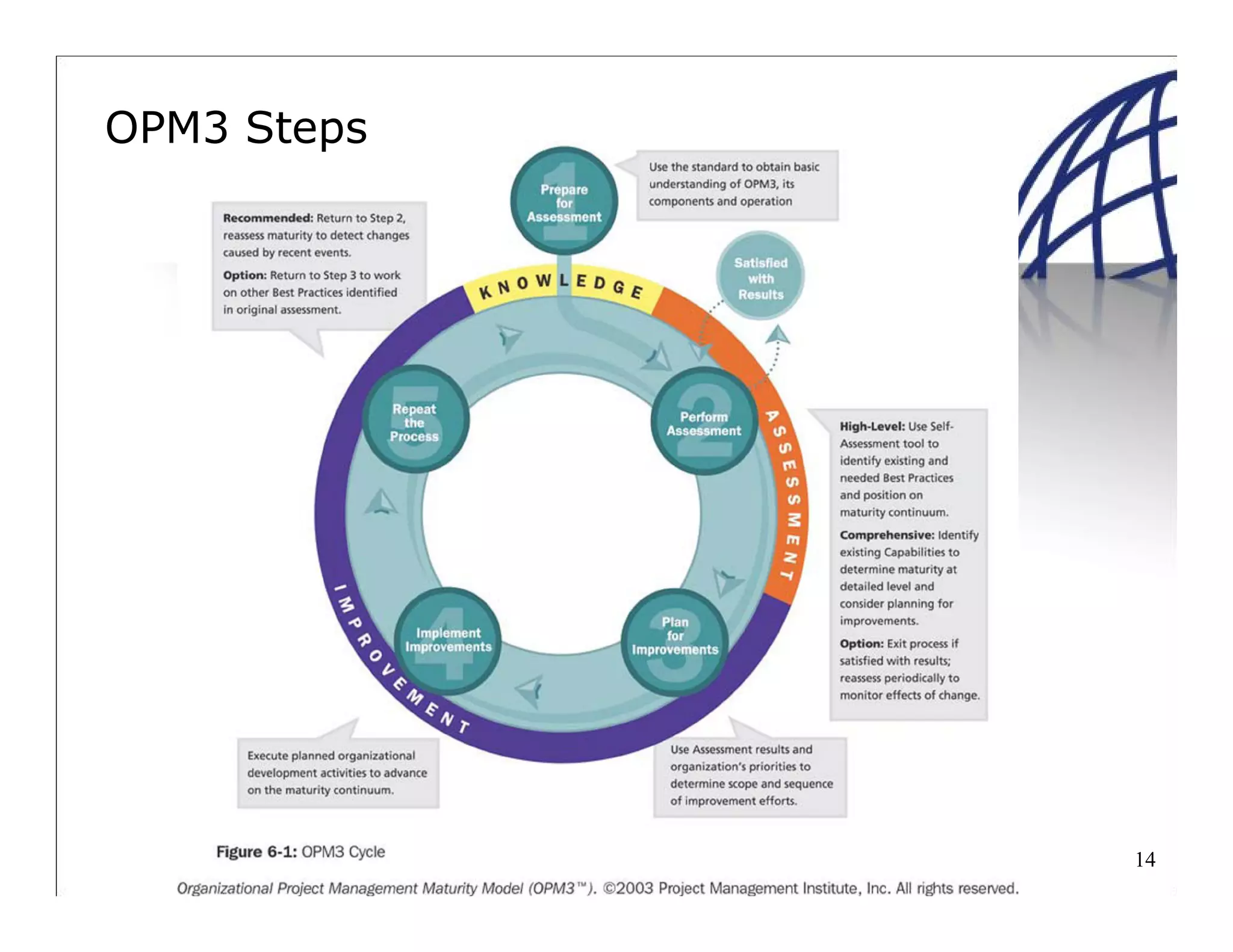
OPM3 Steps
Summary
Questions and Discussion
3
OPM3 Concepts – Introduction
• Maturity implies a state
of being fully developed
• A Model is a framework
organizations may use to
identify, establish, and
maintain required
capabilities
4
OPM3 Concepts – Introduction (continued)
• A maturity model may
include:
methods to facilitate
assessment
methods to identify
deficiencies
representations of
improvement paths
5
OPM3 Concepts – Introduction (continued)
• OPM3 can enable you to do the right projects the
right way in a dynamic and global economy
• OPM3 may be applied to organizations of diverse
industries
sizes
geographical locations
6
OPM3 Concepts - The Benefits of OPM3
• Provide answers to very important questions related
to the organization’s current maturity
• Assess maturity of different parts of the organization
• Identify specific areas that need improvement
• Promote organizational maturity awareness among
senior management
• Attribute organizational success to project
management
The challenge is to link organizational strategy to successful,
consistent, predictable project completion...
7
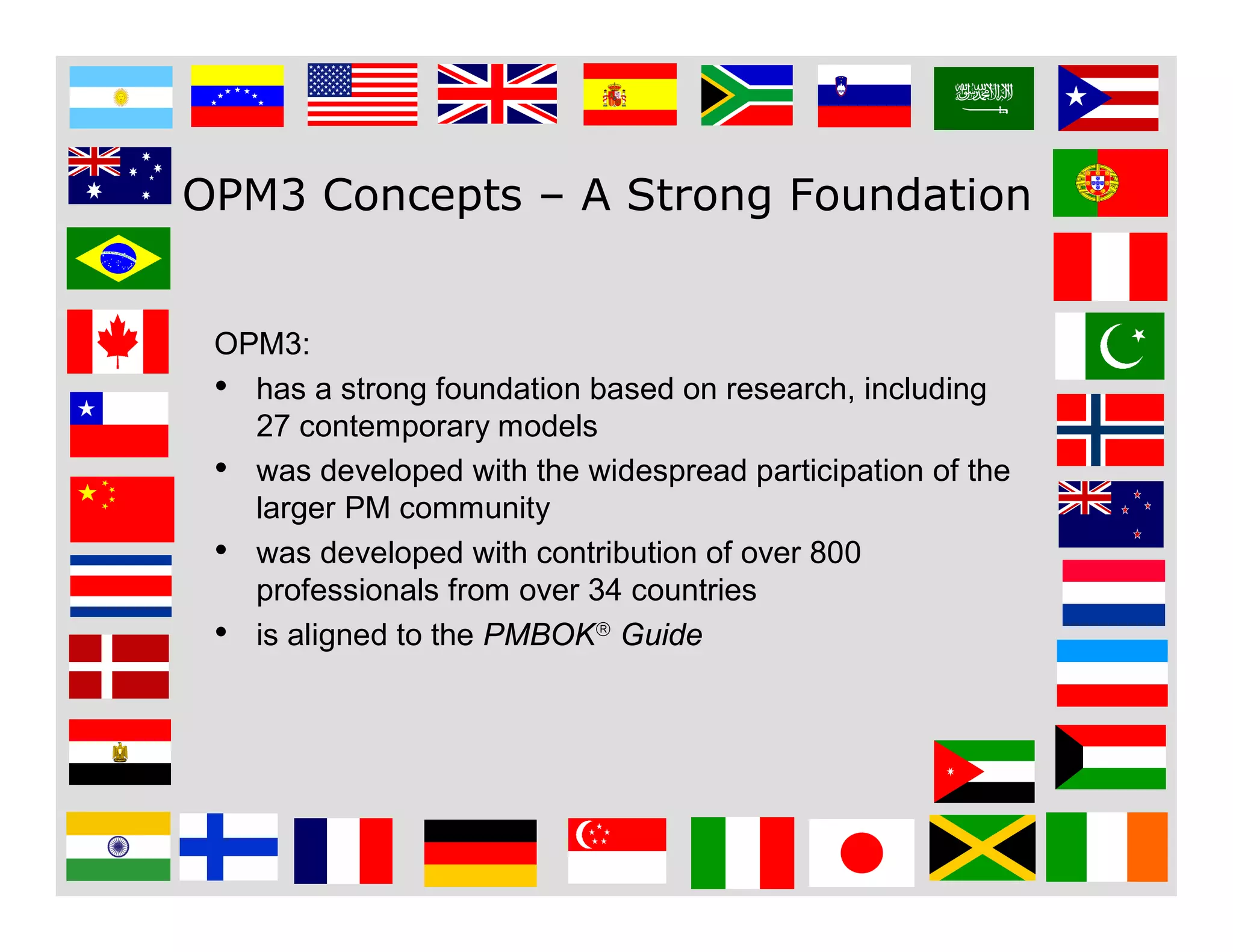
OPM3 Concepts – A Strong Foundation
OPM3:
• has a strong foundation based on research, including
27 contemporary models
• was developed with the widespread participation of the
larger PM community
• was developed with contribution of over 800
professionals from over 34 countries
• is aligned to the PMBOK Guide
8
OPM3 Concepts – Beyond Single Projects
OPM3 defines organizational project management as:
“the consistent application of knowledge, skills,
tools and techniques to organizational and
project activities to achieve the aims of an
organization through projects”
9
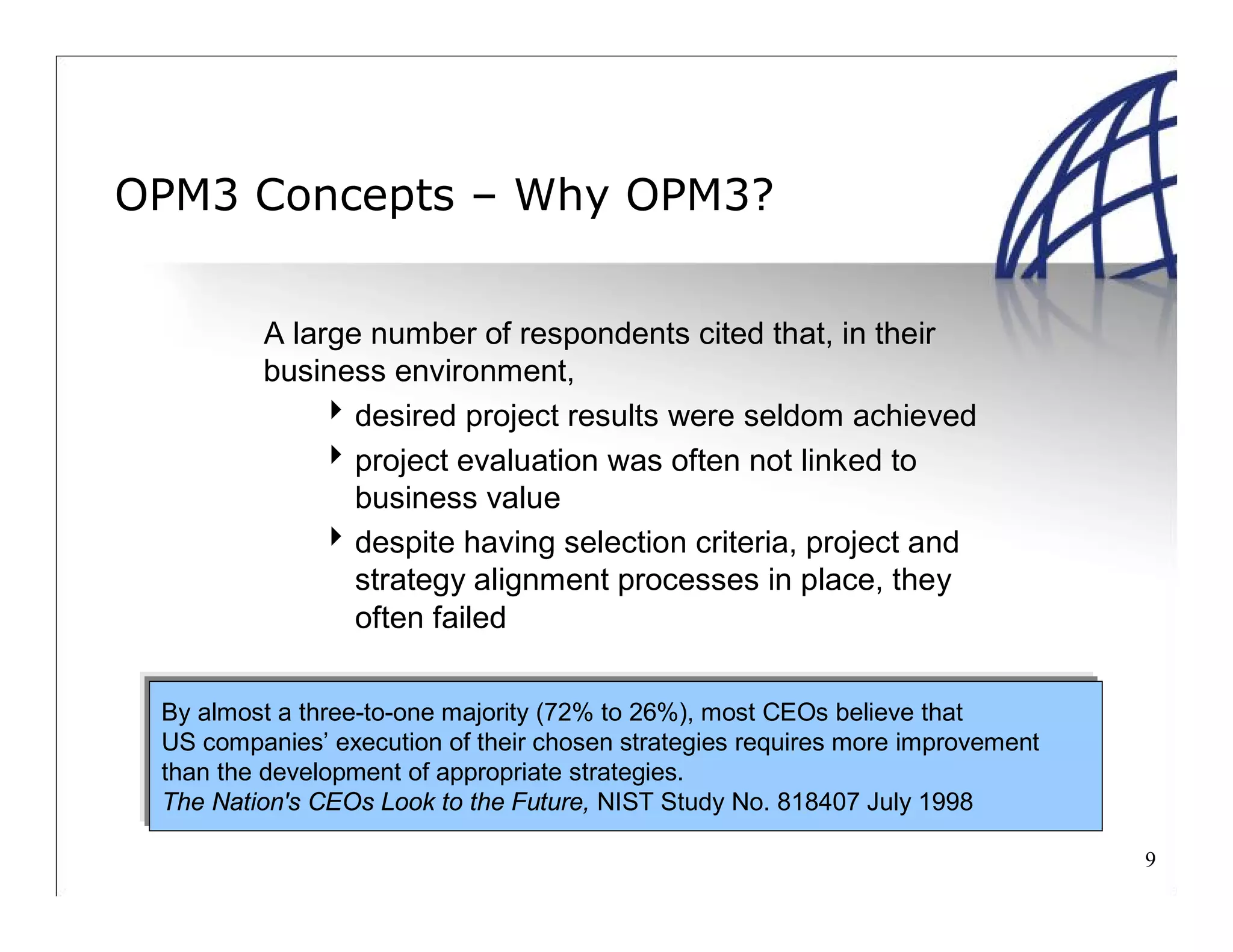
OPM3 Concepts – Why OPM3?
A large number of respondents cited that, in their
business environment,
desired project results were seldom achieved
project evaluation was often not linked to
business value
despite having selection criteria, project and
strategy alignment processes in place, they
often failed
By almost a three-to-one majority (72% to 26%), most CEOs believe that
US companies’ execution of their chosen strategies requires more improvement
than the development of appropriate strategies.
The Nation's CEOs Look to the Future, NIST Study No. 818407 July 1998
10
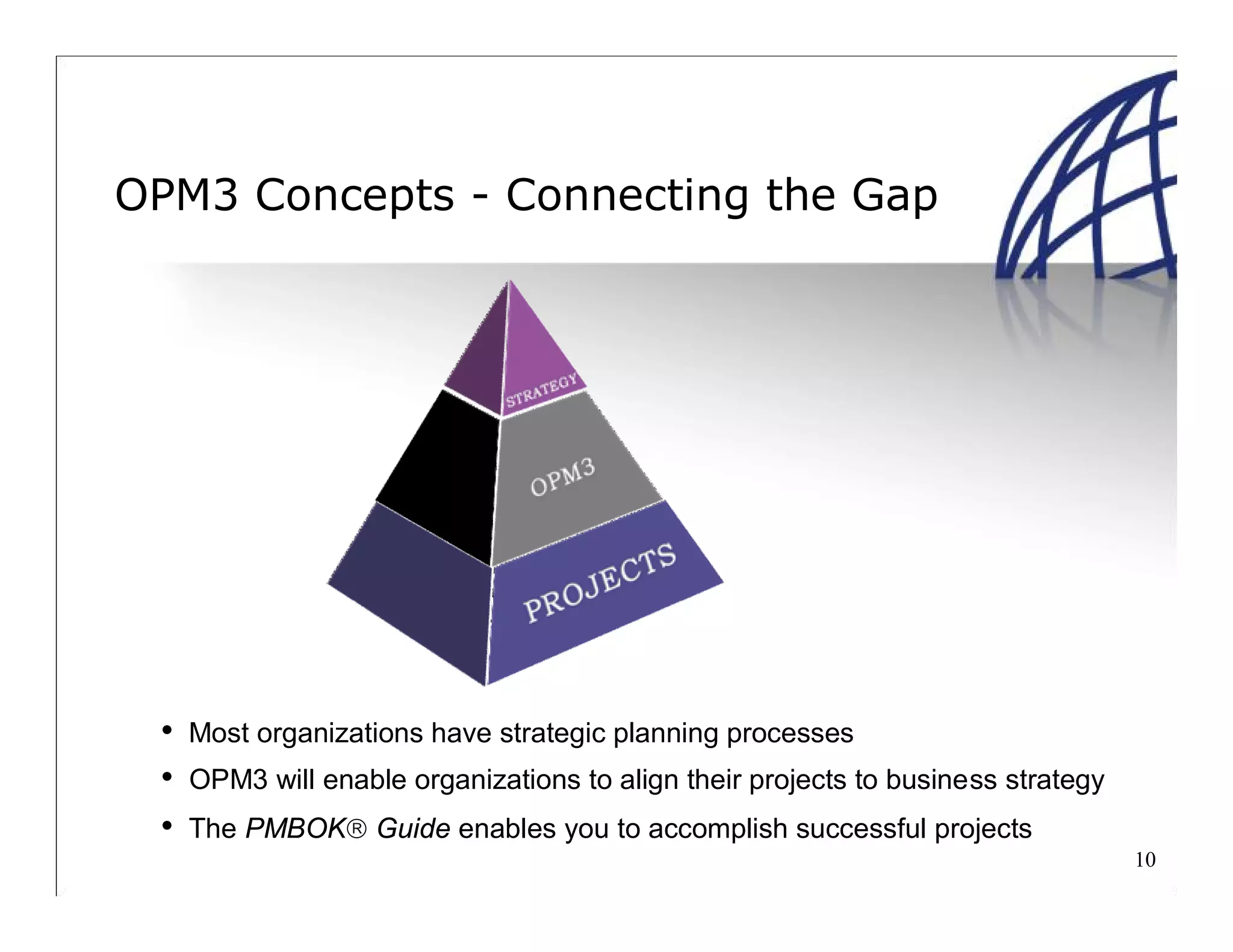
• OPM3 will enable organizations to align their projects to business strategy
OPM3 Concepts - Connecting the Gap
• Most organizations have strategic planning processes
• The PMBOK Guide enables you to accomplish successful projects
11
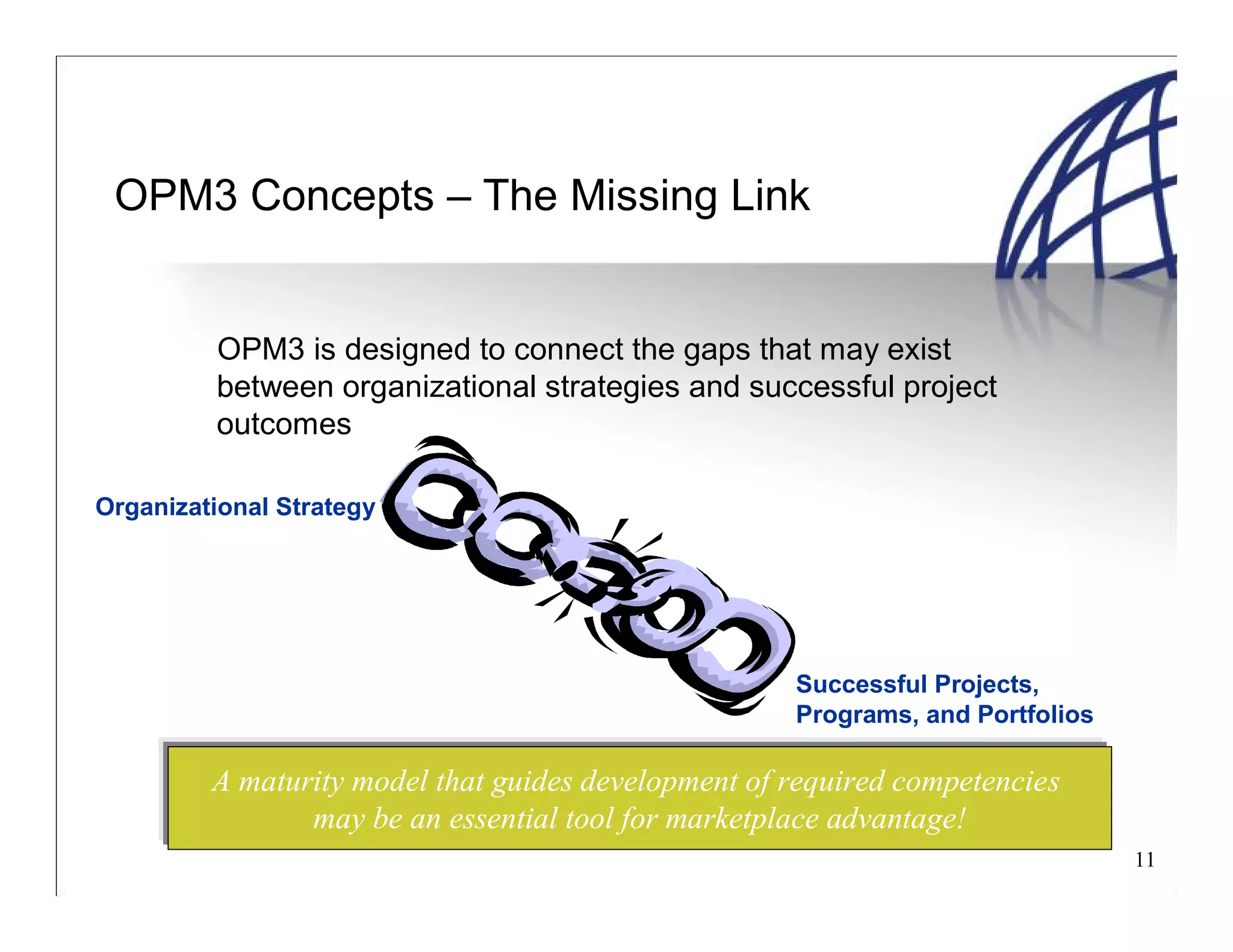
OPM3 Concepts – The Missing Link
OPM3 is designed to connect the gaps that may exist
between organizational strategies and successful project
outcomes
Organizational Strategy
Successful Projects,
Programs, and Portfolios
A maturity model that guides development of required competencies
may be an essential tool for marketplace advantage!
12
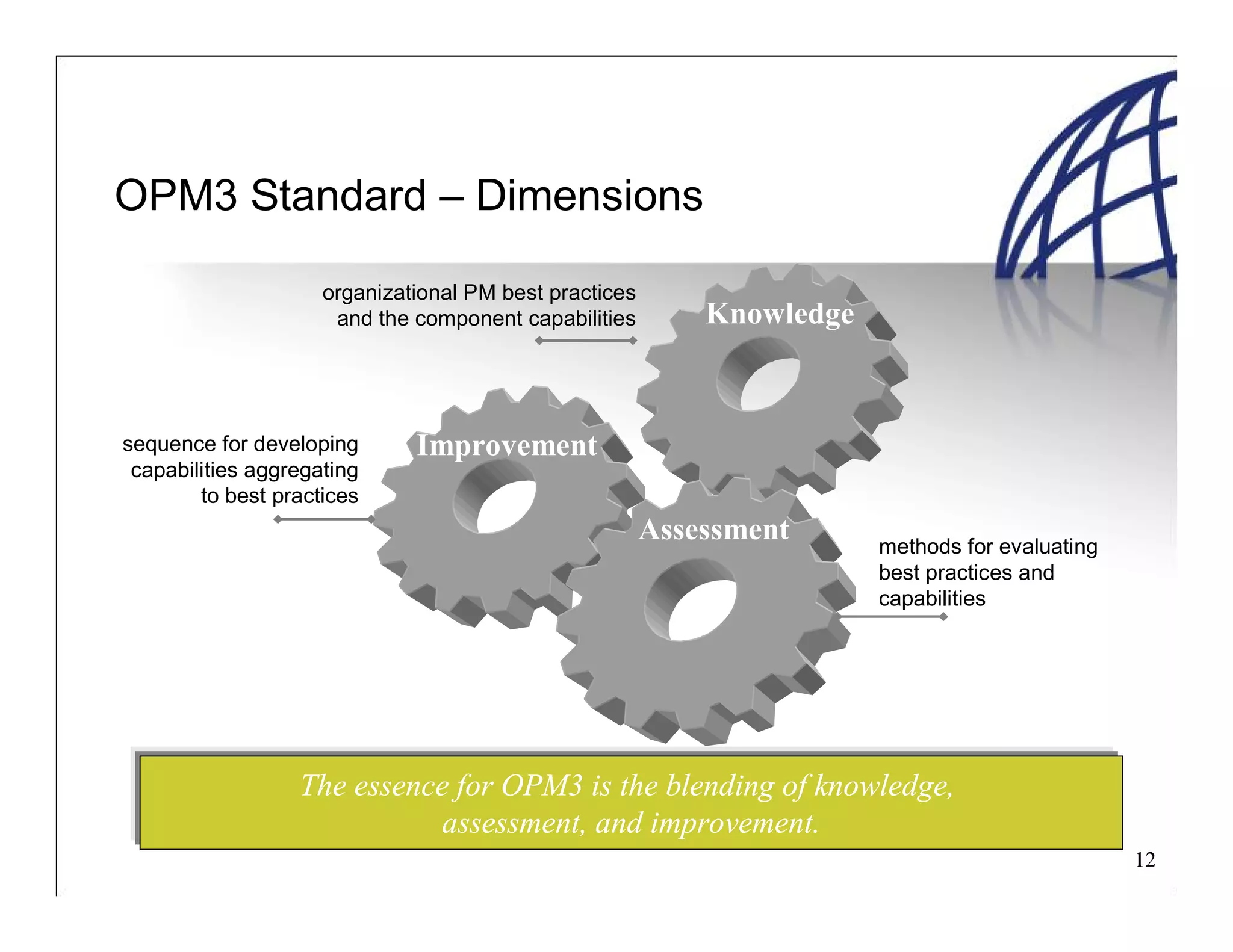
OPM3 Standard – Dimensions
The essence for OPM3 is the blending of knowledge,
assessment, and improvement.
Knowledge
Improvement
organizational PM best practices
and the component capabilities
sequence for developing
capabilities aggregating
to best practices
methods for evaluating
best practices and
capabilities
Assessment
13
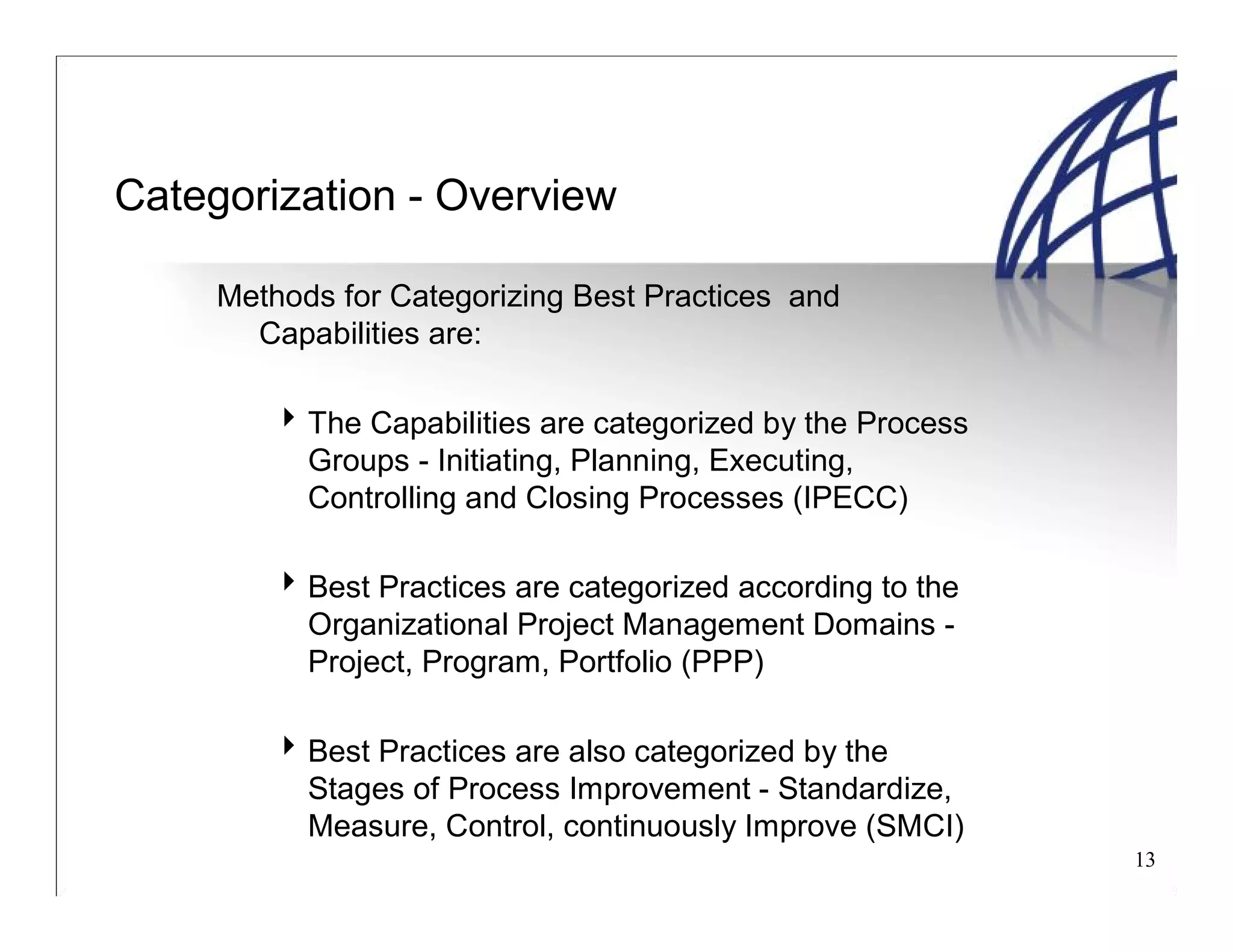
Categorization - Overview
Methods for Categorizing Best Practices and
Capabilities are:
The Capabilities are categorized by the Process
Groups - Initiating, Planning, Executing,
Controlling and Closing Processes (IPECC)
Best Practices are categorized according to the
Organizational Project Management Domains -
Project, Program, Portfolio (PPP)
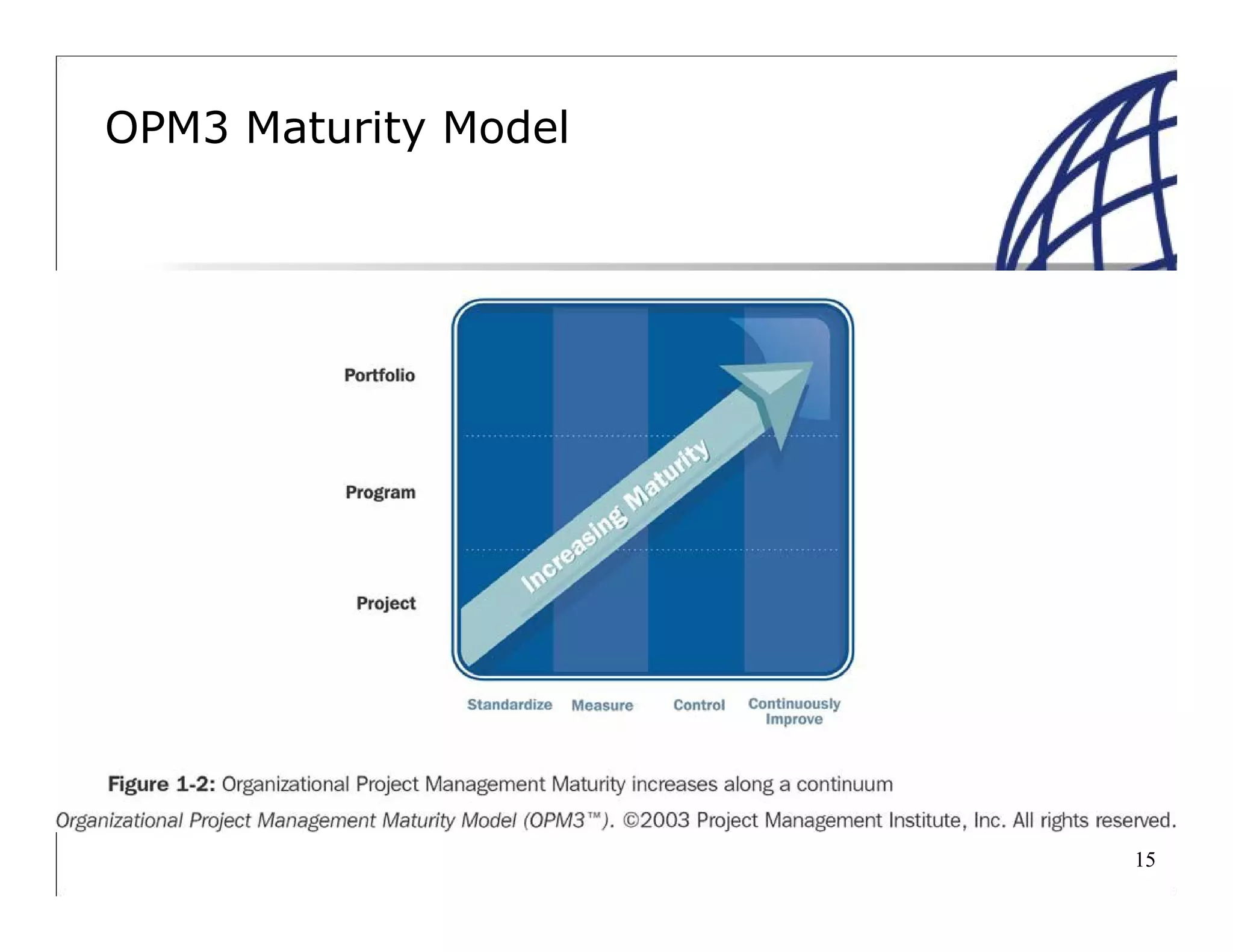
Best Practices are also categorized by the
Stages of Process Improvement - Standardize,
Measure, Control, continuously Improve (SMCI)
14
OPM3 Steps
15
OPM3 Maturity Model
16
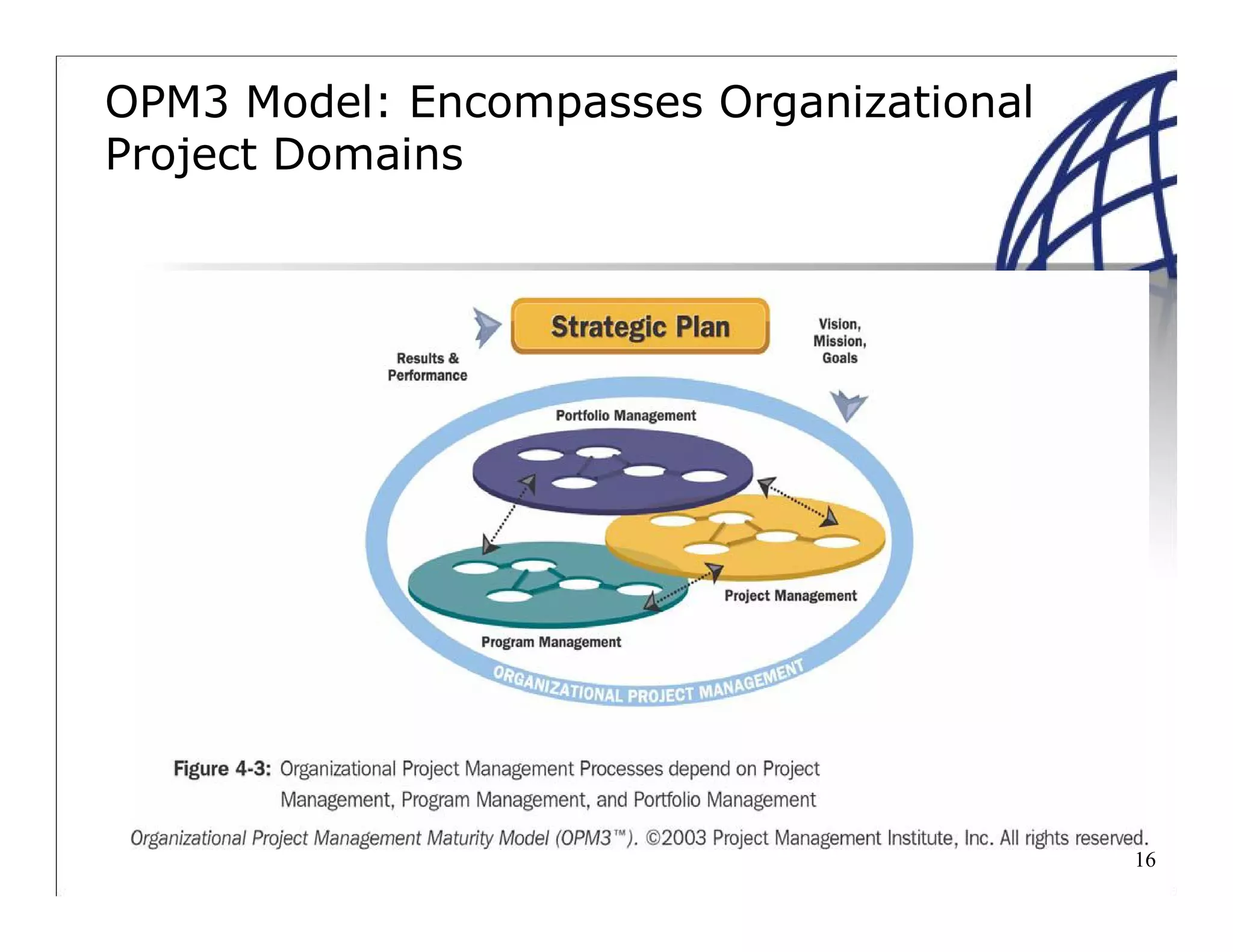
OPM3 Model: Encompasses Organizational
Project Domains
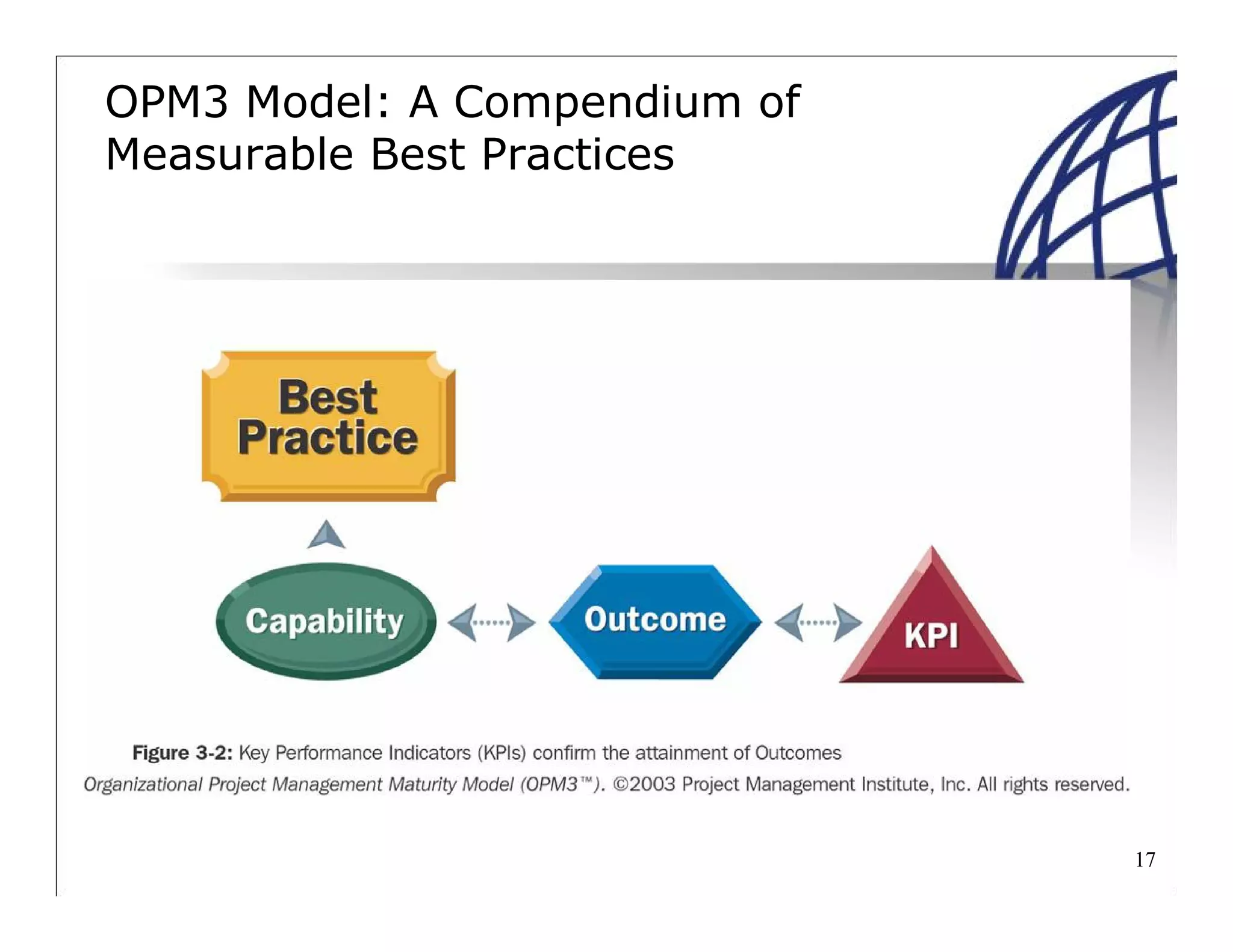
17
OPM3 Model: A Compendium of
Measurable Best Practices
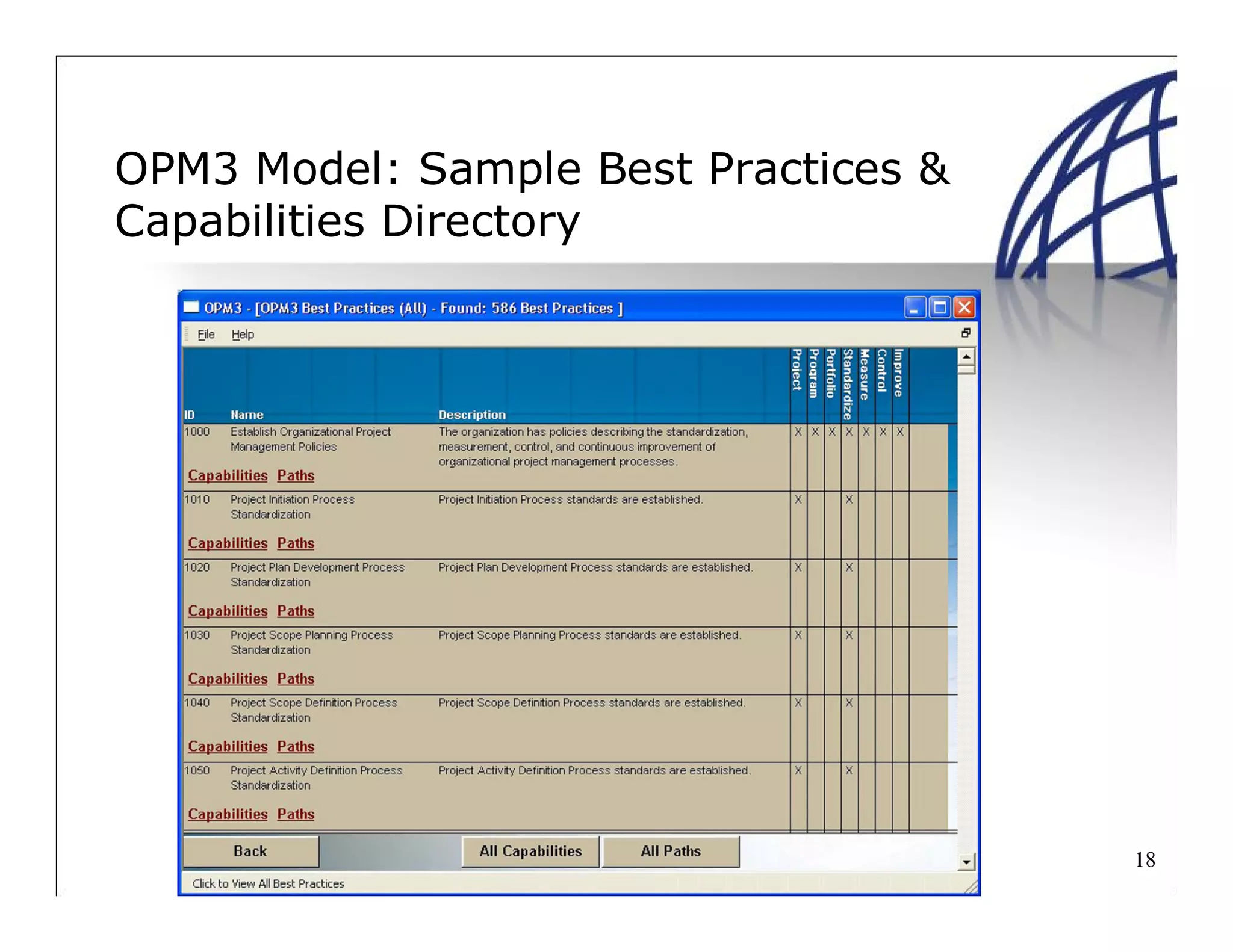
18
OPM3 Model: Sample Best Practices &
Capabilities Directory
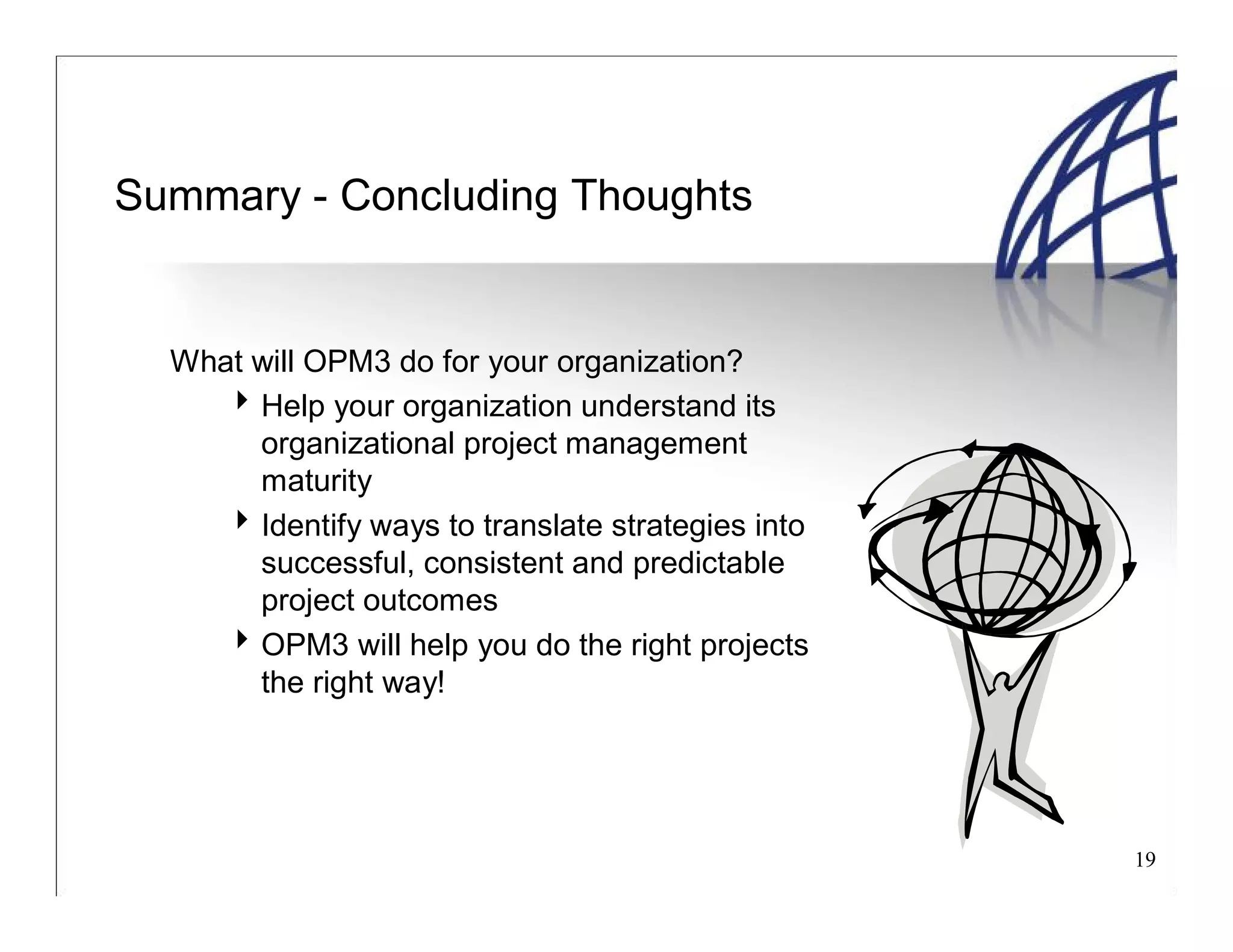
19
Summary - Concluding Thoughts
What will OPM3 do for your organization?
Help your organization understand its
organizational project management
maturity
Identify ways to translate strategies into
successful, consistent and predictable
project outcomes
OPM3 will help you do the right projects
the right way!
20
Summary – Significance of OPM3
• The beginning of a journey
• Goes beyond immediate implications
• Forms a strong foundation for future work
21
The OPM3 Standard will be available in December 2003!
Summary – When Will It Become Available?
22
Questions & Discussion
23
Questions?
For more information contact:
Lisa M. Kruszewski
Standards Project Specialist
Project Management Institute
E-mail: lisa.kruszewski@pmi.org
Phone: +610-356-4600 extension 1033

Intro to OPM3

  • 1.
    Organizational Project Management MaturityModel (OPM3) Rabbani Lutfur, MBA, PMP OPM3 Program Co Lead
  • 2.
    2 Agenda OPM3™ Concepts The OPM3Standard Categorization OPM3 Steps Summary Questions and Discussion
  • 3.
    3 OPM3 Concepts –Introduction • Maturity implies a state of being fully developed • A Model is a framework organizations may use to identify, establish, and maintain required capabilities
  • 4.
    4 OPM3 Concepts –Introduction (continued) • A maturity model may include: methods to facilitate assessment methods to identify deficiencies representations of improvement paths
  • 5.
    5 OPM3 Concepts –Introduction (continued) • OPM3 can enable you to do the right projects the right way in a dynamic and global economy • OPM3 may be applied to organizations of diverse industries sizes geographical locations
  • 6.
    6 OPM3 Concepts -The Benefits of OPM3 • Provide answers to very important questions related to the organization’s current maturity • Assess maturity of different parts of the organization • Identify specific areas that need improvement • Promote organizational maturity awareness among senior management • Attribute organizational success to project management The challenge is to link organizational strategy to successful, consistent, predictable project completion...
  • 7.
    7 OPM3 Concepts –A Strong Foundation OPM3: • has a strong foundation based on research, including 27 contemporary models • was developed with the widespread participation of the larger PM community • was developed with contribution of over 800 professionals from over 34 countries • is aligned to the PMBOK Guide
  • 8.
    8 OPM3 Concepts –Beyond Single Projects OPM3 defines organizational project management as: “the consistent application of knowledge, skills, tools and techniques to organizational and project activities to achieve the aims of an organization through projects”
  • 9.
    9 OPM3 Concepts –Why OPM3? A large number of respondents cited that, in their business environment, desired project results were seldom achieved project evaluation was often not linked to business value despite having selection criteria, project and strategy alignment processes in place, they often failed By almost a three-to-one majority (72% to 26%), most CEOs believe that US companies’ execution of their chosen strategies requires more improvement than the development of appropriate strategies. The Nation's CEOs Look to the Future, NIST Study No. 818407 July 1998
  • 10.
    10 • OPM3 willenable organizations to align their projects to business strategy OPM3 Concepts - Connecting the Gap • Most organizations have strategic planning processes • The PMBOK Guide enables you to accomplish successful projects
  • 11.
    11 OPM3 Concepts –The Missing Link OPM3 is designed to connect the gaps that may exist between organizational strategies and successful project outcomes Organizational Strategy Successful Projects, Programs, and Portfolios A maturity model that guides development of required competencies may be an essential tool for marketplace advantage!
  • 12.
    12 OPM3 Standard –Dimensions The essence for OPM3 is the blending of knowledge, assessment, and improvement. Knowledge Improvement organizational PM best practices and the component capabilities sequence for developing capabilities aggregating to best practices methods for evaluating best practices and capabilities Assessment
  • 13.
    13 Categorization - Overview Methodsfor Categorizing Best Practices and Capabilities are: The Capabilities are categorized by the Process Groups - Initiating, Planning, Executing, Controlling and Closing Processes (IPECC) Best Practices are categorized according to the Organizational Project Management Domains - Project, Program, Portfolio (PPP) Best Practices are also categorized by the Stages of Process Improvement - Standardize, Measure, Control, continuously Improve (SMCI)
  • 14.
  • 15.
  • 16.
    16 OPM3 Model: EncompassesOrganizational Project Domains
  • 17.
    17 OPM3 Model: ACompendium of Measurable Best Practices
  • 18.
    18 OPM3 Model: SampleBest Practices & Capabilities Directory
  • 19.
    19 Summary - ConcludingThoughts What will OPM3 do for your organization? Help your organization understand its organizational project management maturity Identify ways to translate strategies into successful, consistent and predictable project outcomes OPM3 will help you do the right projects the right way!
  • 20.
    20 Summary – Significanceof OPM3 • The beginning of a journey • Goes beyond immediate implications • Forms a strong foundation for future work
  • 21.
    21 The OPM3 Standardwill be available in December 2003! Summary – When Will It Become Available?
  • 22.
  • 23.
    23 Questions? For more informationcontact: Lisa M. Kruszewski Standards Project Specialist Project Management Institute E-mail: lisa.kruszewski@pmi.org Phone: +610-356-4600 extension 1033