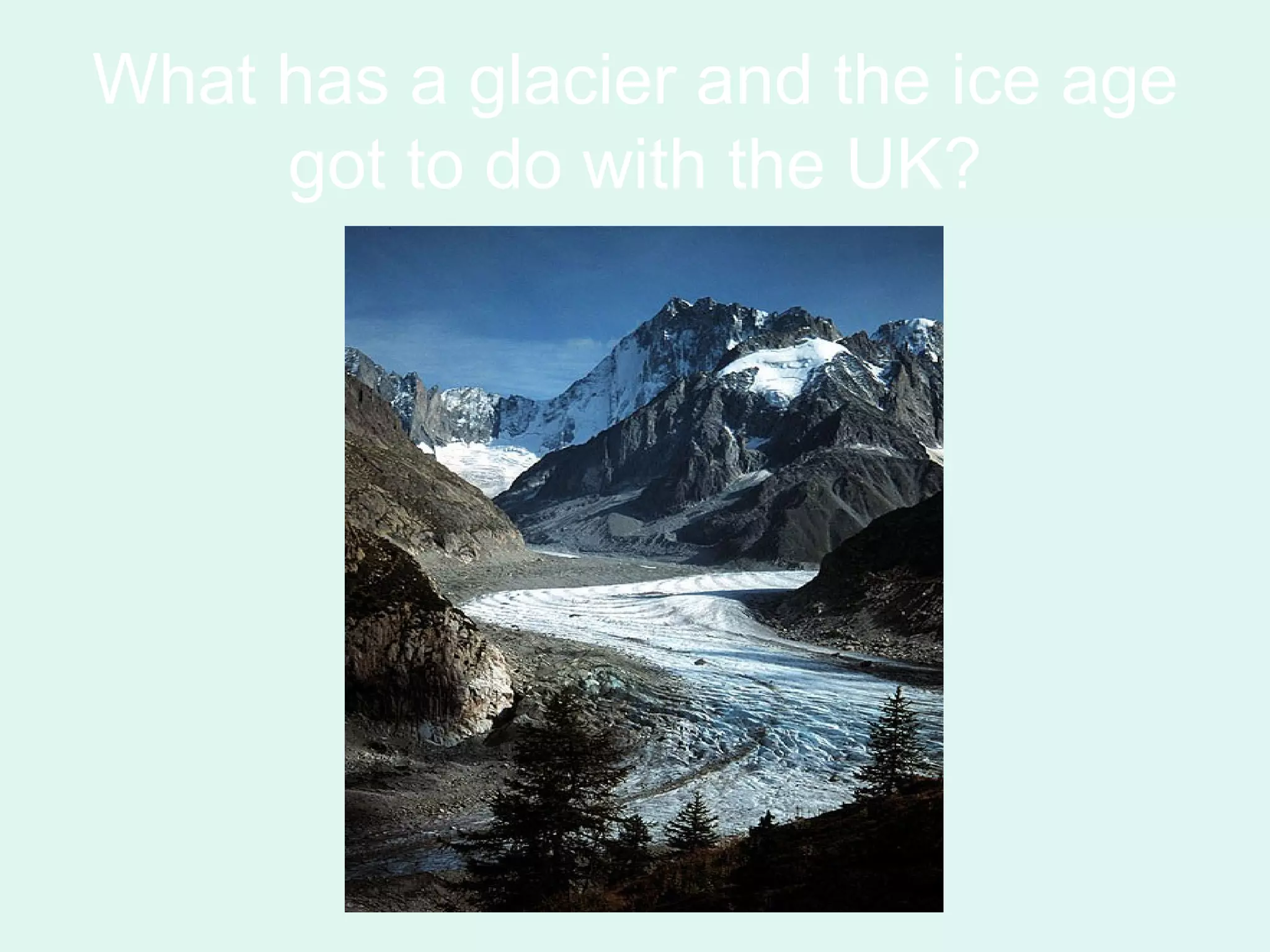
What has a glacier and the ice age got to do with the UK?
What would happen if it snowed all winter in this country and then the snow didn’t melt in the summer? Would different parts of the country be affected differently? Why?
http://uk.youtube.com/watch?v=GoVPRJbvg1w
 
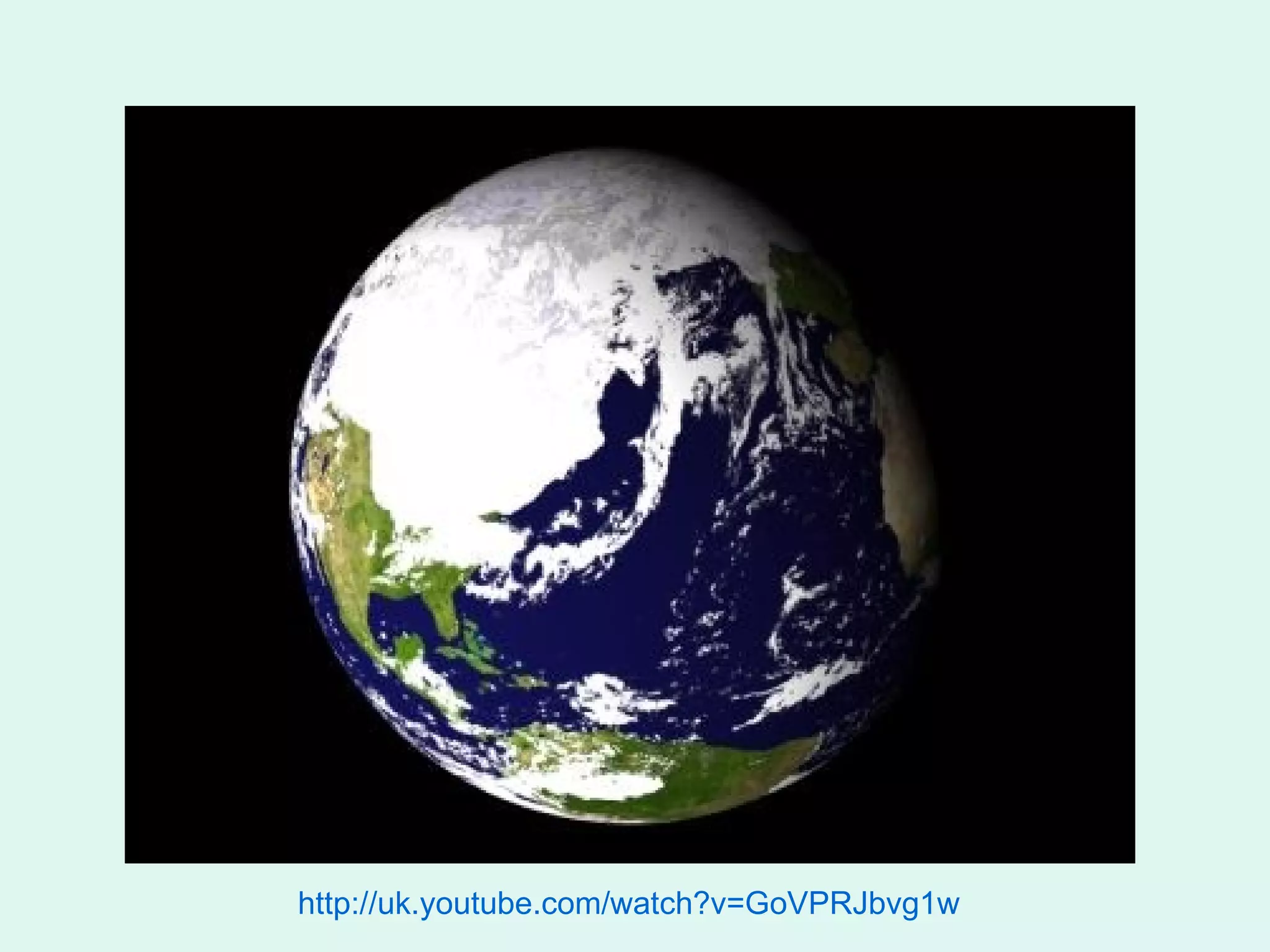
The ice age At present there are two ice sheets in the world It is suggested that the Ice Age began between 2.5 and 3 million years ago.
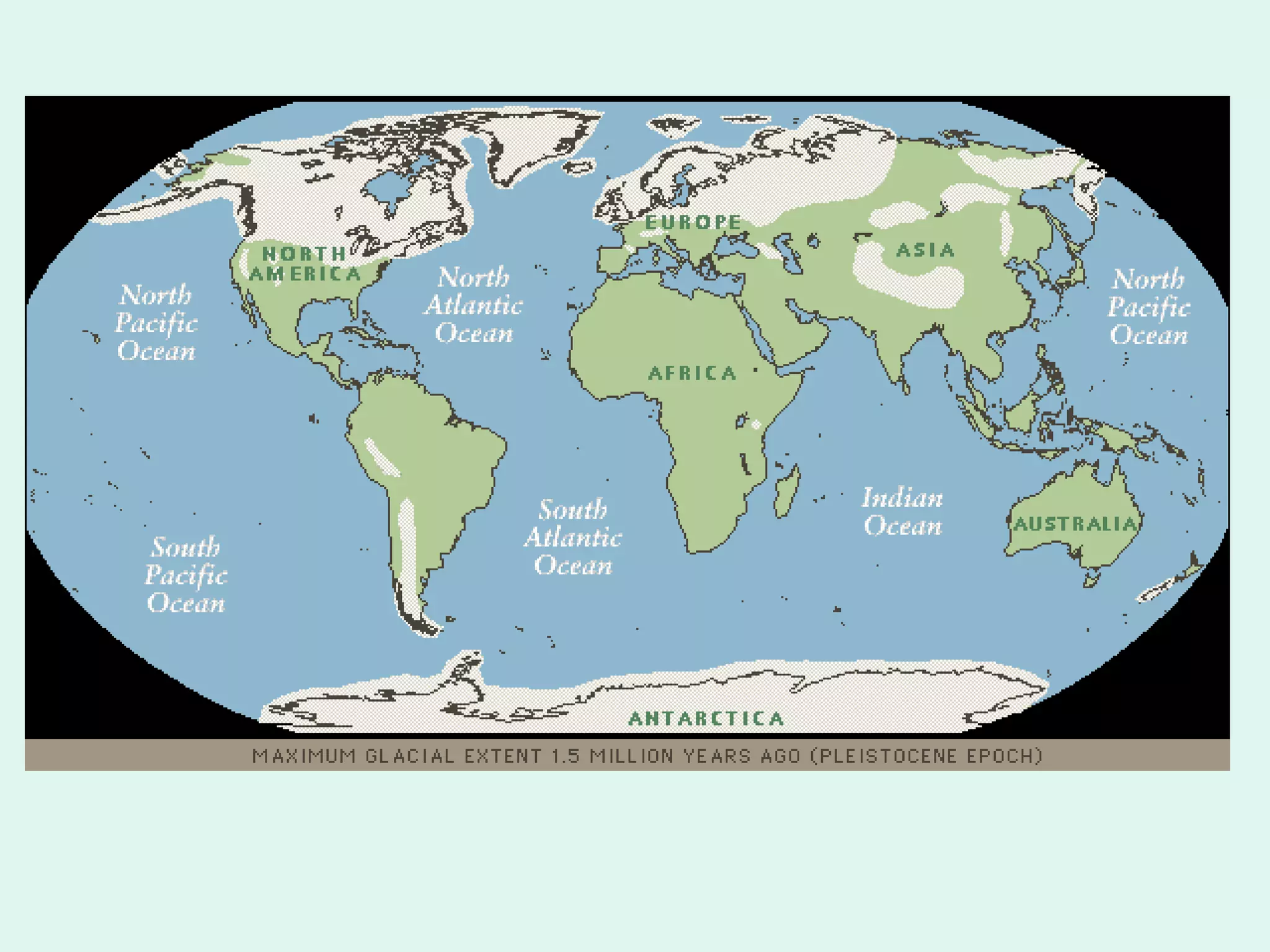
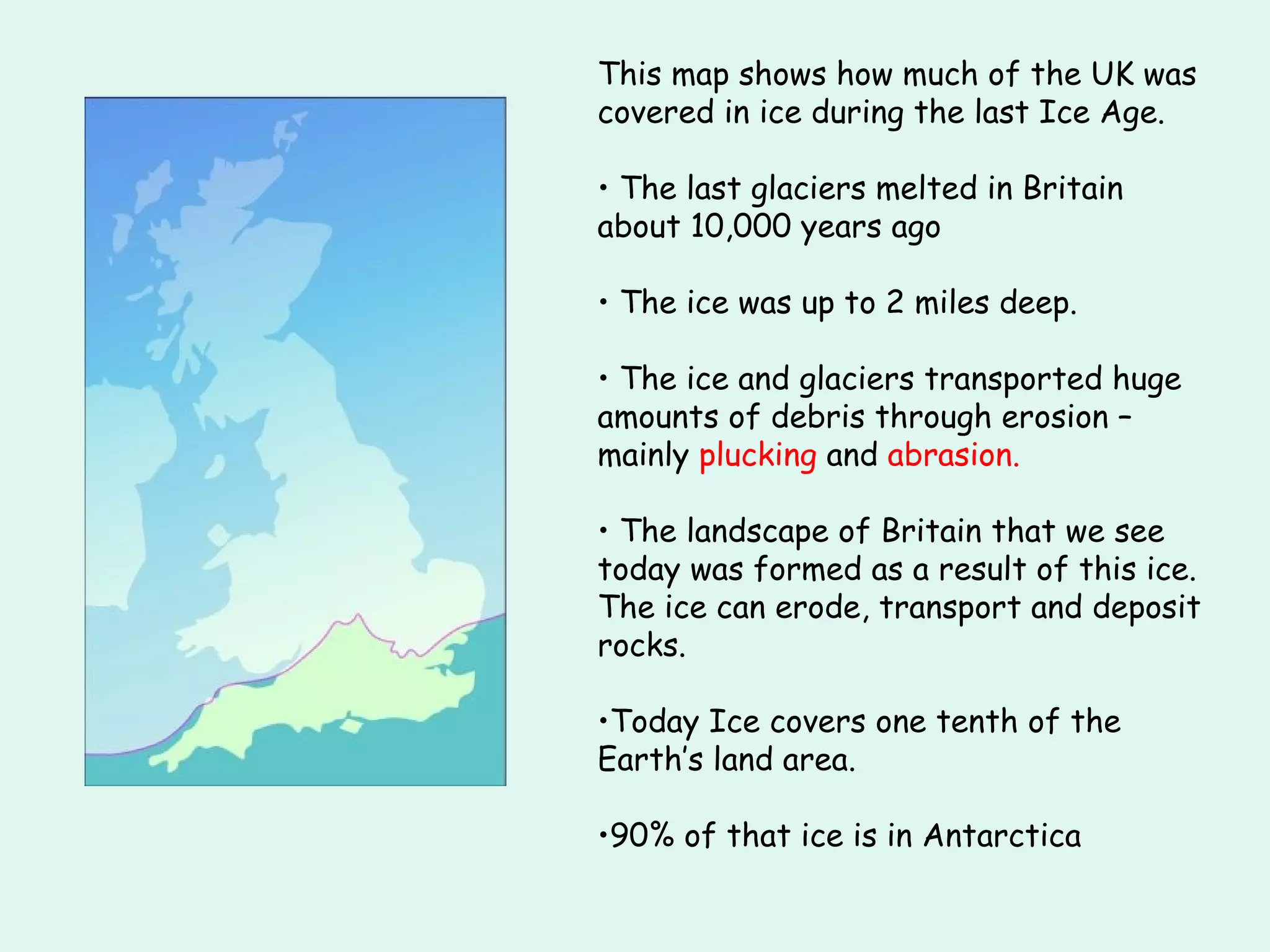
This map shows how much of the UK was covered in ice during the last Ice Age. The last glaciers melted in Britain about 10,000 years ago The ice was up to 2 miles deep. The ice and glaciers transported huge amounts of debris through erosion – mainly  plucking  and  abrasion. The landscape of Britain that we see today was formed as a result of this ice. The ice can erode, transport and deposit rocks. Today Ice covers one tenth of the Earth’s land area. 90% of that ice is in Antarctica
The Ice Age has not ended. There are periods called  interglacials The ice retreats and it becomes warmer during an interglacial It is likely that we are in an interglacial period now.
Just out of interest … what causes an ice age? The following are possible factors: 1. Changes in the circulation of the atmosphere and the oceans. Winds and ocean currents help to circulate heat from the equator towards the poles.  It is thought that massive earth movements could change the heat circulation.  This could reduce temperatures and increase snowfall in polar regions
An  ice sheet  is a moving mass of ice which covers a large land surface area. In Antarctica the ice is 4000m thick. Only the highest peaks emerge through the surface of the ice.  These are called  nunataks Smaller areas of ice called  ice caps  are found in Iceland (Vatnajokull) and Norway A  valley glacier  is a moving mass of ice in which movement is contained within a valley.  It begins in an upland area and follows the route of a pre-existing river valley.  Examples can be found in the fold mountains – Alps, Andes, Rockies etc Mer de Glace near Chamonix Franz Joseph, Fox Glacier, New Zealand
2.  The Earth sometimes receives less heat from the sun due to: A decrease in the sun’s energy output caused by sun spots An increase in cloud cover An increase in atmospheric dust caused by volcanic eruptions A change in the angle of tilt of the Earth’s N-S axis A change in the Earth’s orbit taking it further from the sun

Intro To Glaciation

  • 1.
    What has aglacier and the ice age got to do with the UK?
  • 2.
    What would happenif it snowed all winter in this country and then the snow didn’t melt in the summer? Would different parts of the country be affected differently? Why?
  • 3.
  • 4.
  • 5.
    The ice ageAt present there are two ice sheets in the world It is suggested that the Ice Age began between 2.5 and 3 million years ago.
  • 6.
    This map showshow much of the UK was covered in ice during the last Ice Age. The last glaciers melted in Britain about 10,000 years ago The ice was up to 2 miles deep. The ice and glaciers transported huge amounts of debris through erosion – mainly plucking and abrasion. The landscape of Britain that we see today was formed as a result of this ice. The ice can erode, transport and deposit rocks. Today Ice covers one tenth of the Earth’s land area. 90% of that ice is in Antarctica
  • 7.
    The Ice Agehas not ended. There are periods called interglacials The ice retreats and it becomes warmer during an interglacial It is likely that we are in an interglacial period now.
  • 8.
    Just out ofinterest … what causes an ice age? The following are possible factors: 1. Changes in the circulation of the atmosphere and the oceans. Winds and ocean currents help to circulate heat from the equator towards the poles. It is thought that massive earth movements could change the heat circulation. This could reduce temperatures and increase snowfall in polar regions
  • 9.
    An icesheet is a moving mass of ice which covers a large land surface area. In Antarctica the ice is 4000m thick. Only the highest peaks emerge through the surface of the ice. These are called nunataks Smaller areas of ice called ice caps are found in Iceland (Vatnajokull) and Norway A valley glacier is a moving mass of ice in which movement is contained within a valley. It begins in an upland area and follows the route of a pre-existing river valley. Examples can be found in the fold mountains – Alps, Andes, Rockies etc Mer de Glace near Chamonix Franz Joseph, Fox Glacier, New Zealand
  • 10.
    2. TheEarth sometimes receives less heat from the sun due to: A decrease in the sun’s energy output caused by sun spots An increase in cloud cover An increase in atmospheric dust caused by volcanic eruptions A change in the angle of tilt of the Earth’s N-S axis A change in the Earth’s orbit taking it further from the sun