
Downloaded 40 times
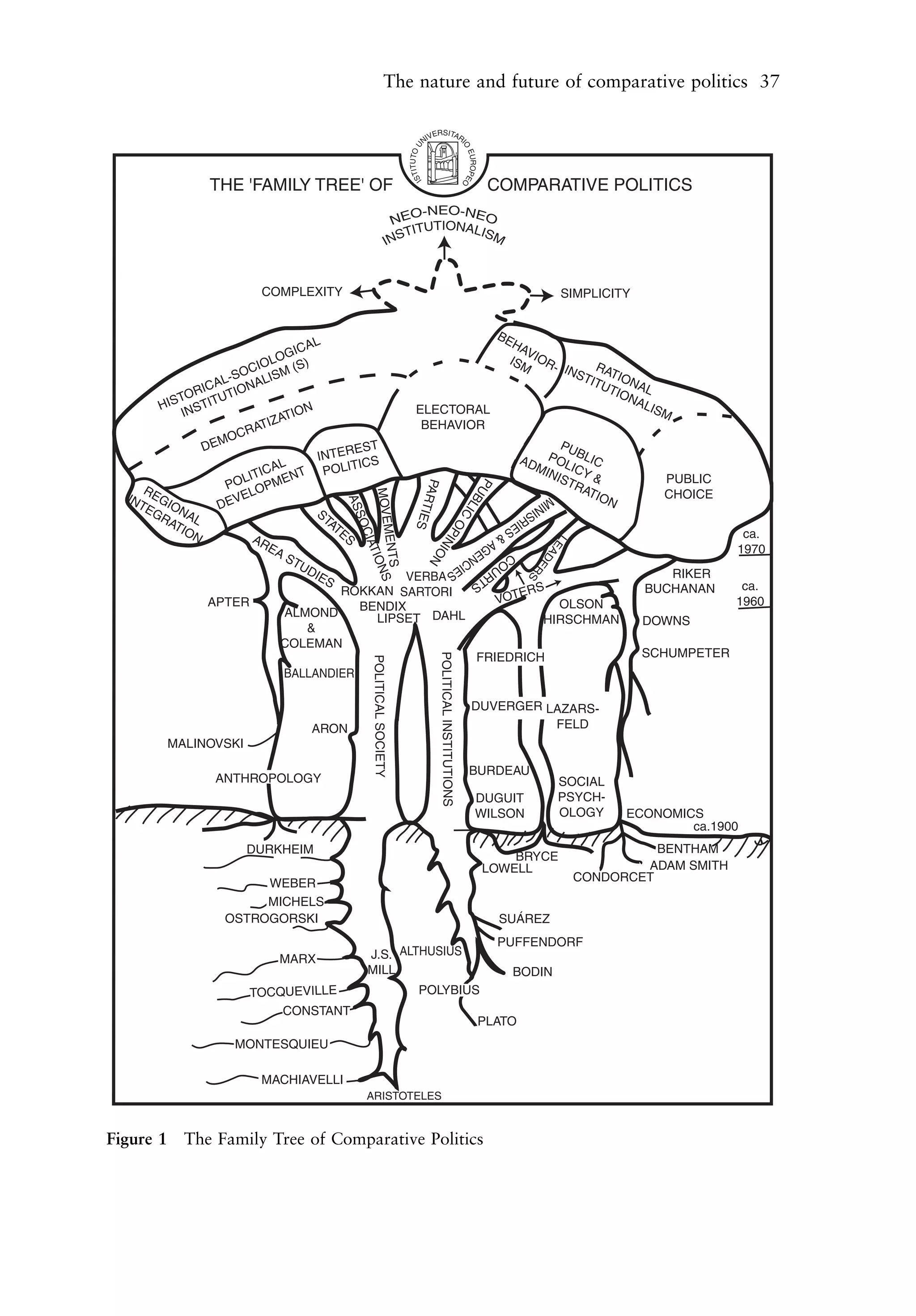



Comparative politics faces an uncertain future as it reaches a crossroads. It must decide whether to continue following institutionalism and rational choice approaches or simplify. Alternatively, it could embrace the complex interdependence of today's world and conduct research accordingly. The author argues comparative politics should take the latter approach to remain innovative rather than conform to American trends. It has made gains in methodology but further progress is needed to build on past work cumulatively.


