POL 302
Spring 2018
What words, concepts, ideas, etc. come to mind
when you see the following words?
“politics”
“power”
“comparative politics”
 Many definitions of politics:
 Lasswell: “Who gets what, when and how”
 Characteristics of Politics:
 (1) Power
 (2) Decision Making
 Political scientists study power as it relates to
political communities.
 Power:
 Ability to influence others or impose will on them
 How do you know if you have power?
 Subfield of political science that compares
the pursuit of power across countries
 Examples of Power Imbalances:
 State Control vs. Individual Freedom
 Plutocracy vs. Egalitarianism
 Institutions
 Interests
 Ideas
 Individuals
 International Environment
 Interactions
 Government Performance
 Unemployment and Inflation
 Constitutional Structures
(and resulting institutions)
 “Behavioral Revolution” in Political Science
 Lasswell Definition of Politics
 How do individuals and groups define their
interests?
 Politically
 Economically
 Socially
 Political Culture
 What do people think about politics?
 Opinion Polling
(e.g. Gallup Poll, WorldValues Survey, etc.)
 Equality, Loyalty, Freedom, Justice,Trust
 Impact of ideas change over time
 Why?
PEOPLE AS SUBJECTS
 Authoritarian Systems
 Definition of “Subjects”
 No Rights or Freedoms
 Obligations to State
PEOPLE AS CITIZENS
 Democratic Systems
 Definition of “Citizens”
 General Characteristics:
 Sovereignty
 Consent of Governed
 Government  People
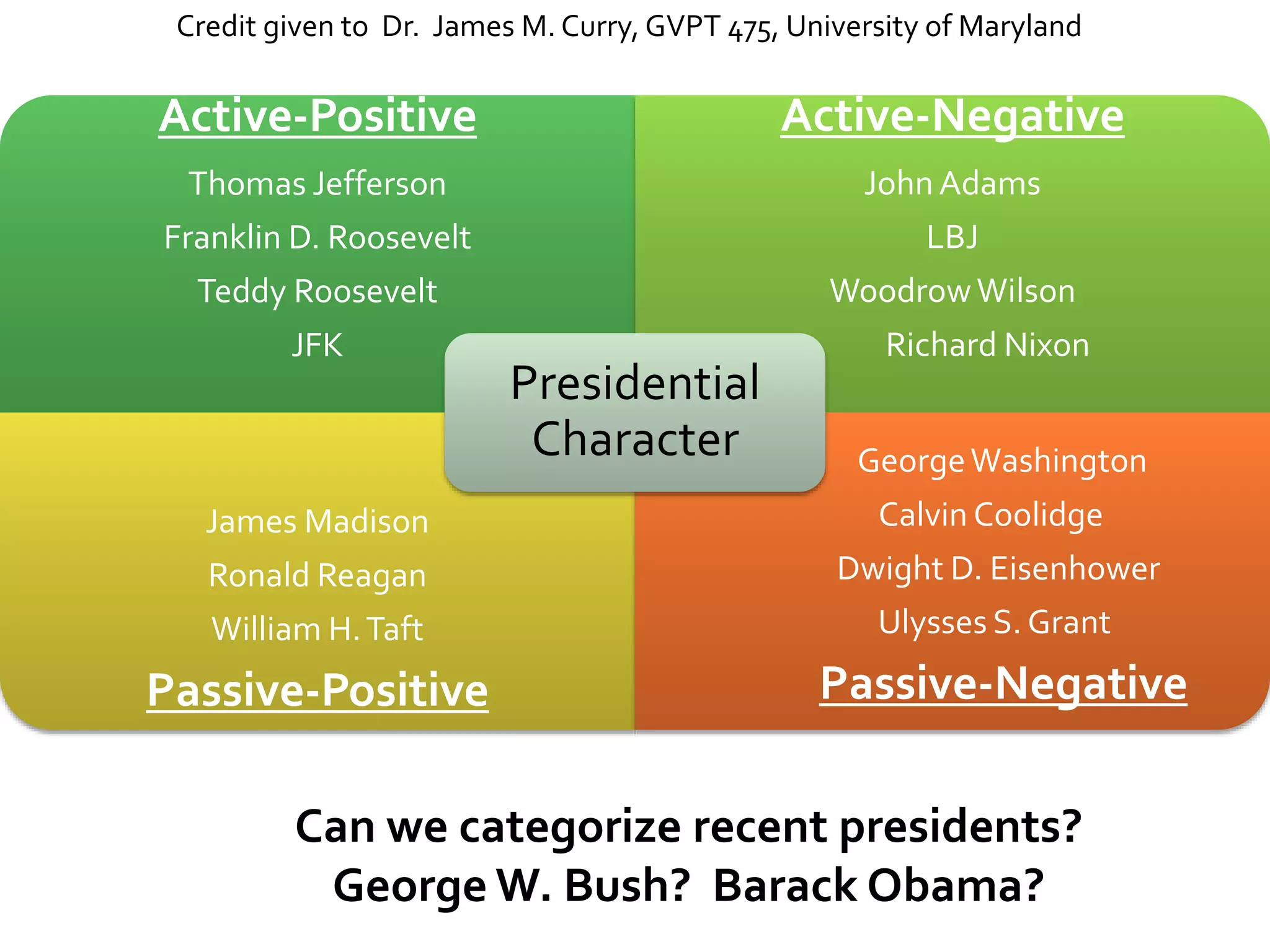
James David Barber
ACTIVE-PASSIVE
 How much energy does
the president invest in
their job?
POSITIVE-NEGATIVE
 How much does the
president enjoy their job?
Can we categorize recent presidents?
George W. Bush? Barack Obama?
Active-Positive
Thomas Jefferson
Franklin D. Roosevelt
Teddy Roosevelt
JFK
Active-Negative
JohnAdams
LBJ
WoodrowWilson
Richard Nixon
James Madison
Ronald Reagan
William H.Taft
Passive-Positive
G GeorgeWashington
Calvin Coolidge
Dwight D. Eisenhower
Ulysses S. Grant
Passive-Negative
Presidential
Character
Credit given to Dr. James M. Curry, GVPT 475, University of Maryland
 IndividualCountry Focus
 Why problematic?
 International Influences
 European Union as Case Study
How do EU member
states balance
individual history,
culture, etc. while part
of a large continental
organization?
 Individuals are rational and self-interested
with sincere preferences
 What does this mean?
 Borrowed from economics
 Example: Building a Road in Jacksonville
 Rep. Lawson vs. Other Members in Congress
 Attitudes, values, beliefs, and symbols
 Gives people a way to understand politics
 Culture of location can change
 Slow—since it becomes ingrained in society
 Endures because of political socialization
 Cultural values can influence forms of power
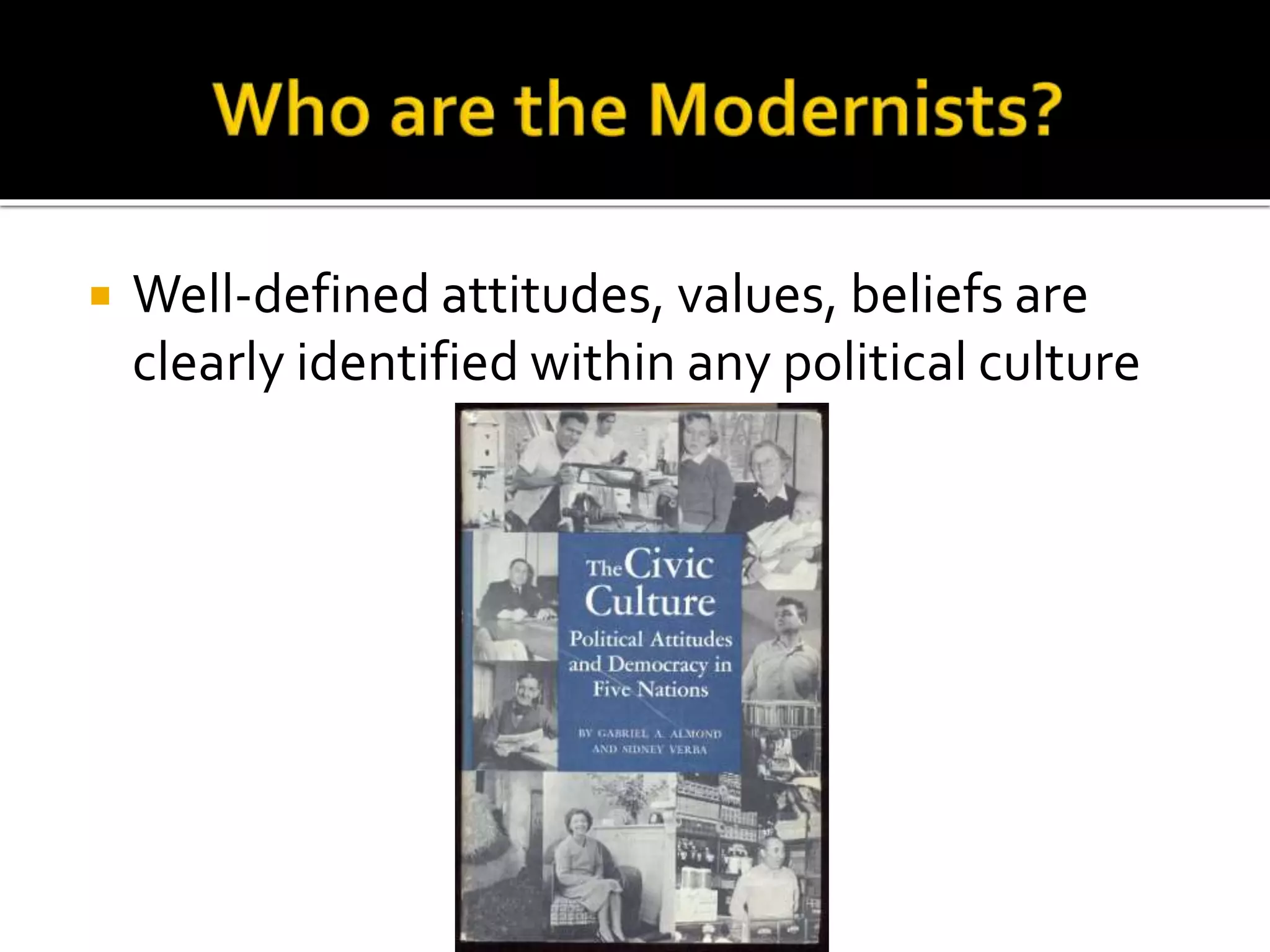
 Well-defined attitudes, values, beliefs are
clearly identified within any political culture
 Question Modernists’ argument
 Cultures NOT fixed with set values;
subject to interpretation
 Societies have subcultures
(e.g. South and Northeast in U.S.)
 Importance of political discourse
 Example: Meaning of “family values”
 Organizations where govt. power is
exercised
 Constitution defines institutions of govt.
 Legislative, Executive, Judicial Branches
 Different arrangements in other countries
 Parliament, Ruler, or Council
 Goal: Prosperous political environment
 How we get the things we want in politics
 Peaceful elections or violent revolutions
 Who decides on the rules is important.
 Elite (Aristocracy)
 Wealthy (Plutocracy)
 Royalty (Monarchy)
 People (Democracy)
 Who rules in the United States?
 Democratically-elected political actors
▪ Presidents, legislators, justices
 Voters
 Who rules in other countries?
 A dictator
 The military
 Council
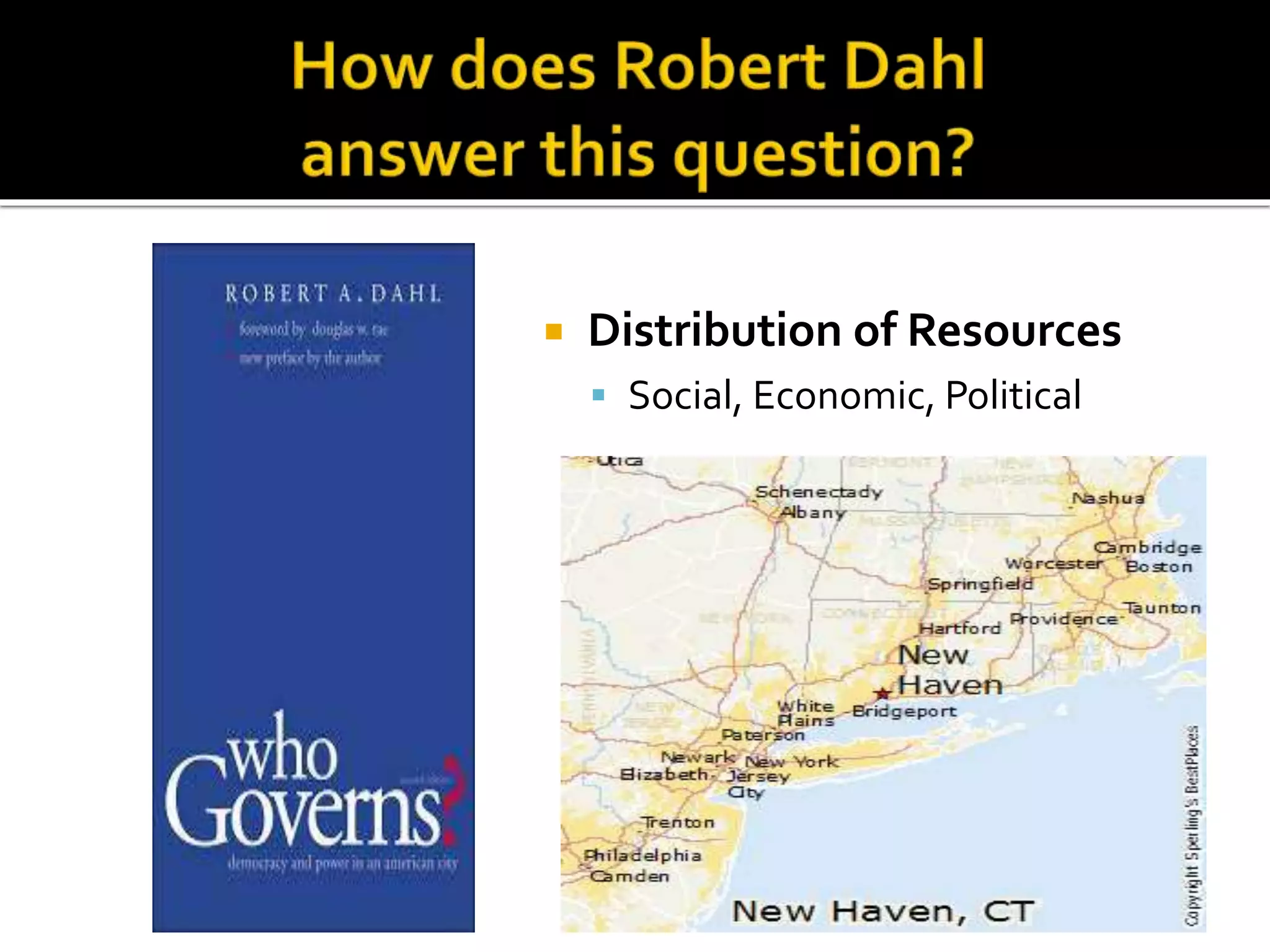
 Distribution of Resources
 Social, Economic, Political
 Division of Society into Groups (e.g. Divergent)
 Dispersion of Power
 Policy = Compromise
 Power and InfluenceVaries
 Example: Democrats and U.S. House
 Societies are ruled by elite; effective
monopoly on power
C. Wright Mills
Elite groups control
society.
Includes notable
families, celebrities,
CEO’s of companies,
stockholders, etc.
 Who is in formal position of power?
 Who has influence in governmental-
decision-making?
 Who benefits from decisions made?

Introduction to Comparative Politics

  • 1.
  • 4.
    What words, concepts,ideas, etc. come to mind when you see the following words? “politics” “power” “comparative politics”
  • 5.
     Many definitionsof politics:  Lasswell: “Who gets what, when and how”  Characteristics of Politics:  (1) Power  (2) Decision Making  Political scientists study power as it relates to political communities.
  • 6.
     Power:  Abilityto influence others or impose will on them  How do you know if you have power?
  • 8.
     Subfield ofpolitical science that compares the pursuit of power across countries  Examples of Power Imbalances:  State Control vs. Individual Freedom  Plutocracy vs. Egalitarianism
  • 10.
     Institutions  Interests Ideas  Individuals  International Environment  Interactions
  • 12.
     Government Performance Unemployment and Inflation  Constitutional Structures (and resulting institutions)  “Behavioral Revolution” in Political Science
  • 14.
     Lasswell Definitionof Politics  How do individuals and groups define their interests?  Politically  Economically  Socially
  • 16.
     Political Culture What do people think about politics?  Opinion Polling (e.g. Gallup Poll, WorldValues Survey, etc.)  Equality, Loyalty, Freedom, Justice,Trust  Impact of ideas change over time  Why?
  • 18.
    PEOPLE AS SUBJECTS Authoritarian Systems  Definition of “Subjects”  No Rights or Freedoms  Obligations to State PEOPLE AS CITIZENS  Democratic Systems  Definition of “Citizens”  General Characteristics:  Sovereignty  Consent of Governed  Government  People
  • 19.
  • 20.
    ACTIVE-PASSIVE  How muchenergy does the president invest in their job? POSITIVE-NEGATIVE  How much does the president enjoy their job?
  • 21.
    Can we categorizerecent presidents? George W. Bush? Barack Obama? Active-Positive Thomas Jefferson Franklin D. Roosevelt Teddy Roosevelt JFK Active-Negative JohnAdams LBJ WoodrowWilson Richard Nixon James Madison Ronald Reagan William H.Taft Passive-Positive G GeorgeWashington Calvin Coolidge Dwight D. Eisenhower Ulysses S. Grant Passive-Negative Presidential Character Credit given to Dr. James M. Curry, GVPT 475, University of Maryland
  • 23.
     IndividualCountry Focus Why problematic?  International Influences  European Union as Case Study
  • 24.
    How do EUmember states balance individual history, culture, etc. while part of a large continental organization?
  • 30.
     Individuals arerational and self-interested with sincere preferences  What does this mean?  Borrowed from economics  Example: Building a Road in Jacksonville  Rep. Lawson vs. Other Members in Congress
  • 32.
     Attitudes, values,beliefs, and symbols  Gives people a way to understand politics  Culture of location can change  Slow—since it becomes ingrained in society  Endures because of political socialization  Cultural values can influence forms of power
  • 33.
     Well-defined attitudes,values, beliefs are clearly identified within any political culture
  • 34.
     Question Modernists’argument  Cultures NOT fixed with set values; subject to interpretation  Societies have subcultures (e.g. South and Northeast in U.S.)  Importance of political discourse  Example: Meaning of “family values”
  • 37.
     Organizations wheregovt. power is exercised  Constitution defines institutions of govt.  Legislative, Executive, Judicial Branches  Different arrangements in other countries  Parliament, Ruler, or Council  Goal: Prosperous political environment
  • 39.
     How weget the things we want in politics  Peaceful elections or violent revolutions  Who decides on the rules is important.  Elite (Aristocracy)  Wealthy (Plutocracy)  Royalty (Monarchy)  People (Democracy)
  • 40.
     Who rulesin the United States?  Democratically-elected political actors ▪ Presidents, legislators, justices  Voters  Who rules in other countries?  A dictator  The military  Council
  • 41.
     Distribution ofResources  Social, Economic, Political
  • 43.
     Division ofSociety into Groups (e.g. Divergent)  Dispersion of Power  Policy = Compromise  Power and InfluenceVaries  Example: Democrats and U.S. House
  • 45.
     Societies areruled by elite; effective monopoly on power C. Wright Mills Elite groups control society. Includes notable families, celebrities, CEO’s of companies, stockholders, etc.
  • 47.
     Who isin formal position of power?  Who has influence in governmental- decision-making?  Who benefits from decisions made?