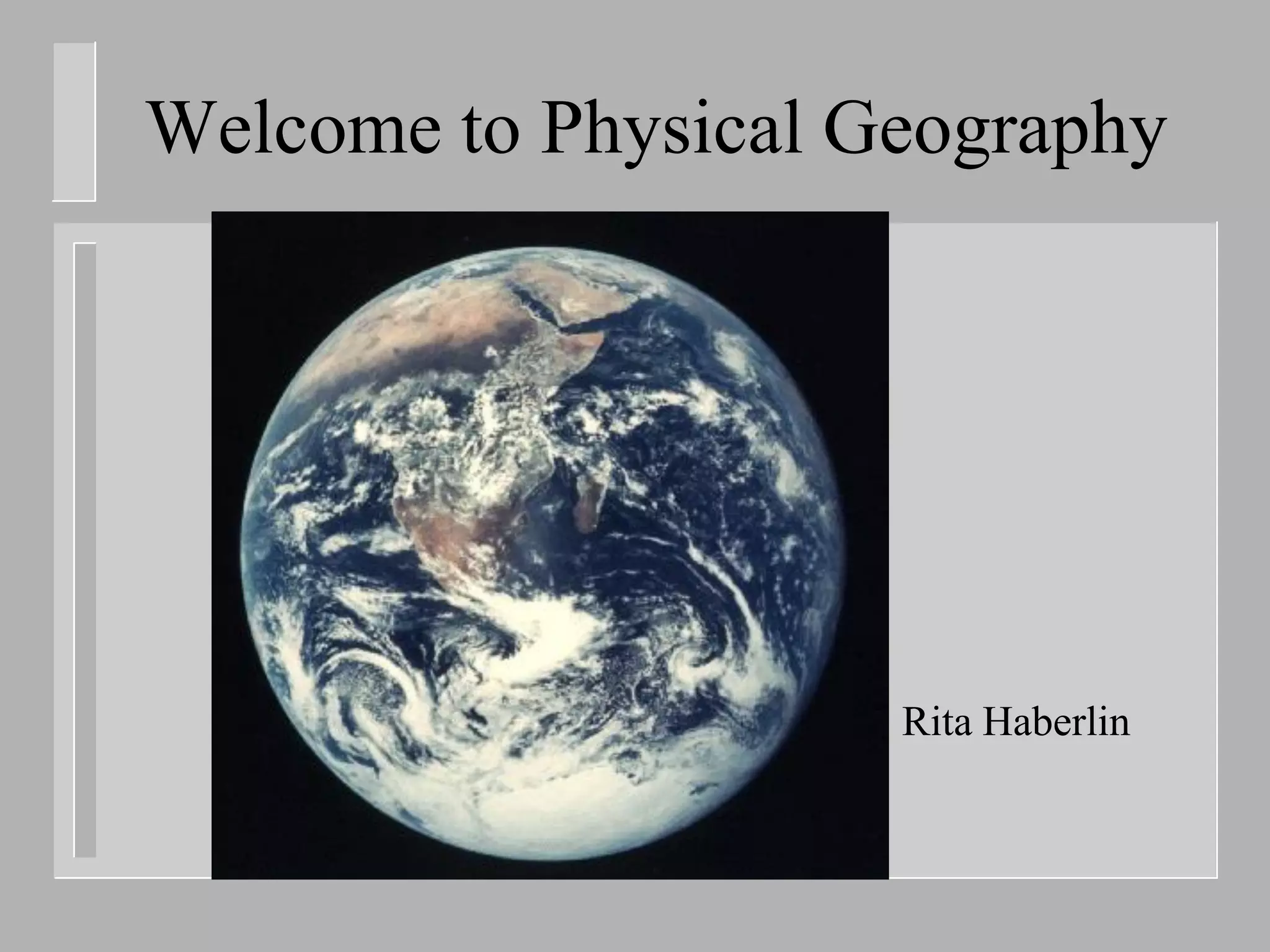
Welcome to Physical Geography


                     Rita Haberlin
While You Wait …..
   Introduce yourself to a student that you do not
    already know
   Discuss with that student some answers to the
    following questions
     – Why are you taking this class?
     – Have you taken any other geography classes?
     – What else takes up your time?
     – Are you hoping to transfer?
     – What is your major?
Purpose of Today’s Class:


 Introduce   physical geography

 Providebasic information about   A

 the course
What is Geography?


  Discussion
Some Myths About Geography

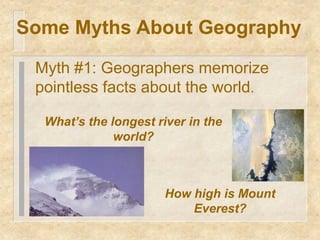
 Myth #1: Geographers memorize
 pointless facts about the world.

  What’s the longest river in the
              world?


                       How high is Mount
                           Everest?
Myth #2. Geography is all about
maps and globes
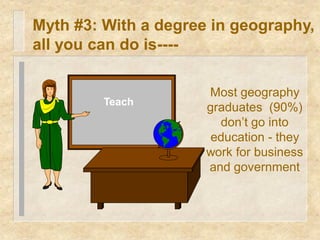
Myth #3: With a degree in geography,
all you can do is----

                      Most geography
         Teach
                      graduates (90%)
                        don’t go into
                       education - they
                      work for business
                      and government
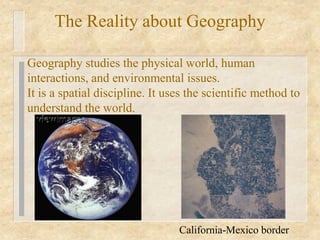
The Reality about Geography

Geography studies the physical world, human
interactions, and environmental issues.
It is a spatial discipline. It uses the scientific method to
understand the world.


                                 California-Mexico border
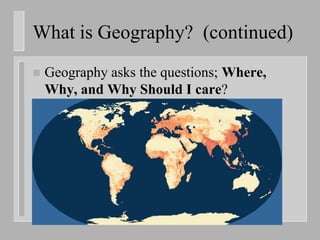
What is Geography? (continued)
   Geography asks the questions; Where,
    Why, and Why Should I care?
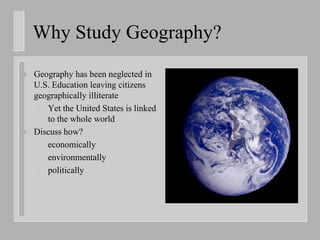
Why Study Geography?
   Geography has been neglected in
    U.S. Education leaving citizens
    geographically illiterate
     – Yet the United States is linked
       to the whole world
   Discuss how?
     – economically
     – environmentally
     – politically
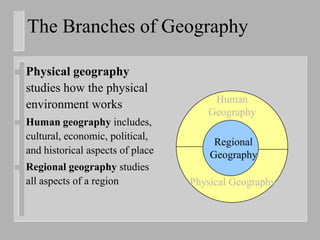
The Branches of Geography

   Physical geography
    studies how the physical
                                          Human
    environment works
                                         Geography
   Human geography includes,
    cultural, economic, political,
                                           Regional
    and historical aspects of place       Geography
   Regional geography studies
    all aspects of a region           Physical Geography
What is Geography? (continued)

 Cultural geography focuses on people
 Physical geography focuses on the
   physical environment
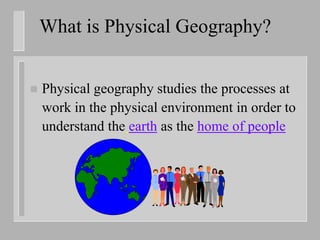
What is Physical Geography?


   Physical geography studies the processes at
    work in the physical environment in order to
    understand the earth as the home of people
Physical Geography and Other
       Natural Sciences

 Why  physical science credit?
 Geography is the mother of the sciences.
 What are the sciences which have
  evolved from study of the natural
  environment
Physical Geography and the
           Natural Sciences
   Rocks and Landforms              Geology
   Clouds and fog - weather         Meteorology
   Grass and trees -vegetation      Botany
   Oceans and waves                 Oceanography
   Water resources                  Hydrology
   Sun                              Astronomy
   Soils                            Pedology
   Ecosystems                       Ecology
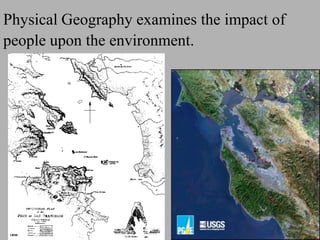
Physical Geography examines the impact of
people upon the environment.
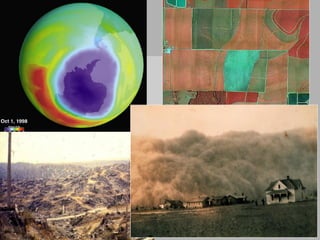
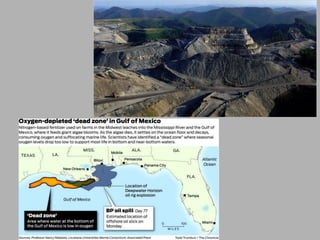
How do people impact the environment?

   Agriculture
   Urbanization
   Deforestation
   Dam building
   River diversion
   Air Pollution
   Global warming
   Loss of habitat
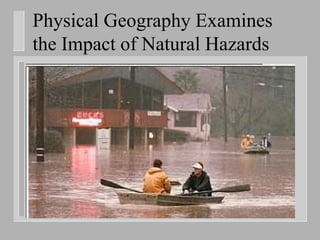
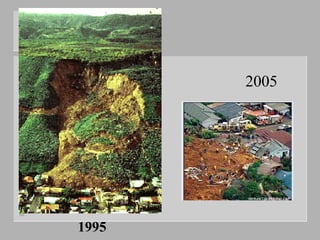
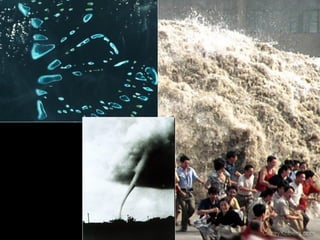
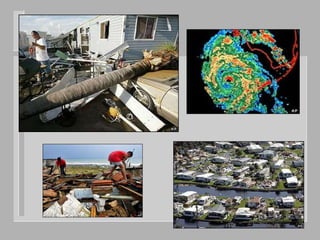
Physical Geography Examines
the Impact of Natural Hazards
2005


1995
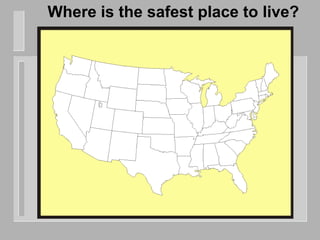
Where is the safest place to live?
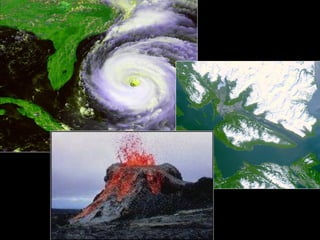
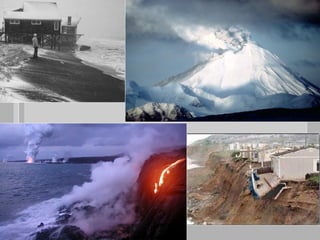
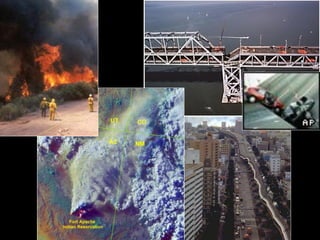
What Natural Hazards Occur in
California?
   Earthquakes and Tsunami
   Volcanoes
   Coastal Erosion
   Flooding
   Landslides and Mudflows
   Wildfires
   Subsidence
   Hurricanes and Tornadoes
   Winter Storms
Course Information

 How are you evaluated?
 – Frequent quizzes or in-class exercises
 – Assignments – in class and homework
 – Two midterms and a final
 – Class participation
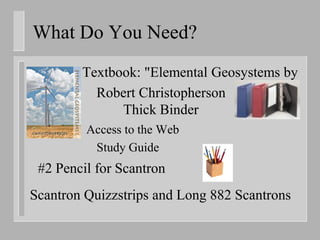
What Do You Need?
        Textbook: "Elemental Geosystems by
          Robert Christopherson
              Thick Binder
         Access to the Web
          Study Guide
 #2 Pencil for Scantron
Scantron Quizzstrips and Long 882 Scantrons
Online Study Aids
   www.mygeoscienceplace.com
           Use Access code from textbook
    –      Choose text: Elemental Geosystems


 Web Learning Modules and Practice Quizzes
 Moodle – www.eperalta.org/fall2010
 Login using Passport User ID, e.g.12345678
 Password – Login password. e.g. John Dart =
  joda5678
Learning Modules
berkeleycitycollege.edu/faculty/rhaberlin/pg4.
  htm
Assignment. Please go to this address and
  explore the learning modules.
Read the course information and expect to
  answer questions about the way the course
  works in the next class
Study groups or study buddy

 Study techniques - classroom research
 Repetition-repetition-repetition

Intro geogbcc2010

  • 1.
    Welcome to PhysicalGeography Rita Haberlin
  • 2.
    While You Wait…..  Introduce yourself to a student that you do not already know  Discuss with that student some answers to the following questions – Why are you taking this class? – Have you taken any other geography classes? – What else takes up your time? – Are you hoping to transfer? – What is your major?
  • 3.
    Purpose of Today’sClass:  Introduce physical geography  Providebasic information about A the course
  • 4.
  • 5.
    Some Myths AboutGeography Myth #1: Geographers memorize pointless facts about the world. What’s the longest river in the world? How high is Mount Everest?
  • 6.
    Myth #2. Geographyis all about maps and globes
  • 7.
    Myth #3: Witha degree in geography, all you can do is---- Most geography Teach graduates (90%) don’t go into education - they work for business and government
  • 8.
    The Reality aboutGeography Geography studies the physical world, human interactions, and environmental issues. It is a spatial discipline. It uses the scientific method to understand the world. California-Mexico border
  • 9.
    What is Geography?(continued)  Geography asks the questions; Where, Why, and Why Should I care?
  • 10.
    Why Study Geography?  Geography has been neglected in U.S. Education leaving citizens geographically illiterate – Yet the United States is linked to the whole world  Discuss how? – economically – environmentally – politically
  • 11.
    The Branches ofGeography  Physical geography studies how the physical Human environment works Geography  Human geography includes, cultural, economic, political, Regional and historical aspects of place Geography  Regional geography studies all aspects of a region Physical Geography
  • 12.
    What is Geography?(continued) Cultural geography focuses on people Physical geography focuses on the physical environment
  • 13.
    What is PhysicalGeography?  Physical geography studies the processes at work in the physical environment in order to understand the earth as the home of people
  • 14.
    Physical Geography andOther Natural Sciences  Why physical science credit?  Geography is the mother of the sciences.  What are the sciences which have evolved from study of the natural environment
  • 15.
    Physical Geography andthe Natural Sciences  Rocks and Landforms  Geology  Clouds and fog - weather  Meteorology  Grass and trees -vegetation  Botany  Oceans and waves  Oceanography  Water resources  Hydrology  Sun  Astronomy  Soils  Pedology  Ecosystems  Ecology
  • 16.
    Physical Geography examinesthe impact of people upon the environment.
  • 17.
    How do peopleimpact the environment? Agriculture Urbanization Deforestation Dam building River diversion Air Pollution Global warming Loss of habitat
  • 20.
    Physical Geography Examines theImpact of Natural Hazards
  • 24.
  • 27.
    Where is thesafest place to live?
  • 28.
    What Natural HazardsOccur in California?  Earthquakes and Tsunami  Volcanoes  Coastal Erosion  Flooding  Landslides and Mudflows  Wildfires  Subsidence  Hurricanes and Tornadoes  Winter Storms
  • 29.
    Course Information  Howare you evaluated? – Frequent quizzes or in-class exercises – Assignments – in class and homework – Two midterms and a final – Class participation
  • 30.
    What Do YouNeed? Textbook: "Elemental Geosystems by Robert Christopherson Thick Binder Access to the Web Study Guide #2 Pencil for Scantron Scantron Quizzstrips and Long 882 Scantrons
  • 31.
    Online Study Aids  www.mygeoscienceplace.com Use Access code from textbook – Choose text: Elemental Geosystems  Web Learning Modules and Practice Quizzes  Moodle – www.eperalta.org/fall2010  Login using Passport User ID, e.g.12345678  Password – Login password. e.g. John Dart = joda5678
  • 32.
    Learning Modules berkeleycitycollege.edu/faculty/rhaberlin/pg4. htm Assignment. Please go to this address and explore the learning modules. Read the course information and expect to answer questions about the way the course works in the next class
  • 33.
    Study groups orstudy buddy  Study techniques - classroom research  Repetition-repetition-repetition