Introduction to Democratization and
Democratic Constitution
Presented by
Aung Ko Ko Toe
Knowledge Propagation Society
Mandalay
• Transitional Process
1. Transition
2. Liberalization
3. Consolidation
• Definition of Democratization
1. transition to a more democratic political regime.
2. transition from an authoritarian regime to a full
democracy
3. transition from an authoritarian political system to a
semi-democracy
4. transition from a semi-authoritarian political system to
a democratic political system.
Democratization
- Political Science approach
Democratic transitions are the change from the original non-
democratic regime (dictatorship) to a democratic regime.
A successful transition to democracy involves
- removing the old non-democratic regime;
- creation of democratic institutions and
- establishment of democratic procedures.
Democratization
- Political Science approach
Democratic consolidation means stabilization of these
democratic institutions and procedures and achieving their
acceptance by all important actors in a given country
- political parties,
- the army,
- religious institutions,
- various important non-governmental organizations,
etc
 It is important to be aware that
democratic transition may or may not
end in democratic consolidation.
Two Condition;
- a risk of returning to a non-democratic type of regime.
- a hybrid form of semi-authoritarianism.
• Pre-Conditions Necessary for Successful
Democratization
Wealth
Education
The Resource Curse
Civil Society
Middle Class
Social Equality
Culture
Homogenous Population
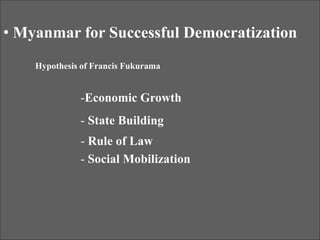
• Myanmar for Successful Democratization
Hypothesis of Francis Fukurama
-Economic Growth
- State Building
- Rule of Law
- Social Mobilization
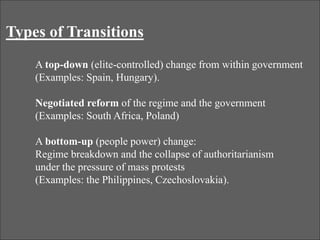
Types of Transitions
A top-down (elite-controlled) change from within government
(Examples: Spain, Hungary).
Negotiated reform of the regime and the government
(Examples: South Africa, Poland)
A bottom-up (people power) change:
Regime breakdown and the collapse of authoritarianism
under the pressure of mass protests
(Examples: the Philippines, Czechoslovakia).
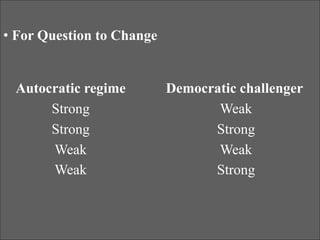
• For Question to Change
Autocratic regime
Strong
Strong
Weak
Weak
Democratic challenger
Weak
Strong
Weak
Strong
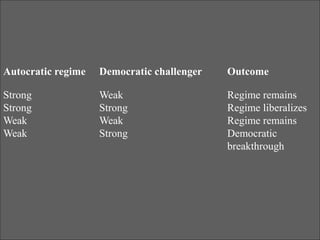
Autocratic regime Democratic challenger Outcome
Strong Weak Regime remains
Strong Strong Regime liberalizes
Weak Weak Regime remains
Weak Strong Democratic
breakthrough
Democratic Constitution
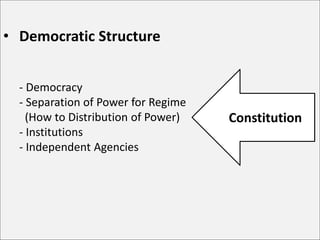
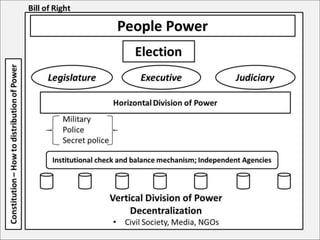
• Democratic Structure
- Democracy
- Separation of Power for Regime
(How to Distribution of Power)
- Institutions
- Independent Agencies
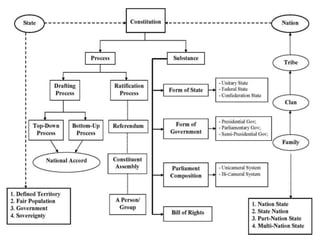
Constitution
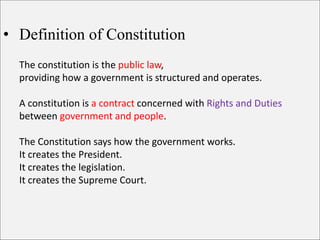
• Definition of Constitution
The constitution is the public law,
providing how a government is structured and operates.
A constitution is a contract concerned with Rights and Duties
between government and people.
The Constitution says how the government works.
It creates the President.
It creates the legislation.
It creates the Supreme Court.
• Organ of Constitution
there are three organs
- how various agencies are organized
- what power is entrusted to those agencies
- in what manner such power is to be exercised
• Make up the Constitution
the 7 basis ideas
1. Popular Sovereignty
2. Limited Government
3. Separation of Powers
4. Checks and Balances
5. Judicial Review
6. Individual rights
7. Federalism
Popular Sovereignty
- Leadership succession though election
- Elections ensure that key position in government will be
contested at periodic intervals and that the transfer of governmental
authority is accomplished in a peaceful and orderly process.
Majority rules but not rules by majority.
Minority rights must be protected from the tyranny of the
Majority.
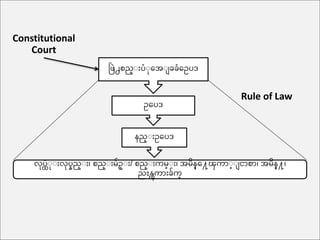
ဖ ြဲ႕စည္း ပံးအေး ခခံအေပဒ
ေအပဒ
နည္း ေအပဒ
လပထံးး လပနည္း ၊ စည္း မ်ေ္း / စည္း ကမ္း ၊ ေမိန္အေၾကက း္း င စ ၊ ေမိန္ေ၊
ညႊန္ၾက ခ်က္
Rule of Law
Constitutional
Court
Judicial Review
Judicial branch interprets the law (Courts)
The interpreter or final judge on what the Constitution says and
means.
The powers of a court to determine the constitutionality of a
governmental action.
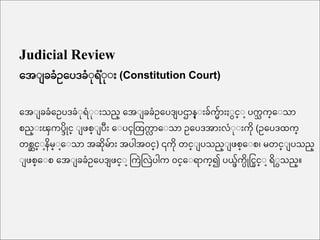
Judicial Review
အေး ခခံေအပဒခံးရံ ံးး (Constitution Court)
အေး ခခံအေပဒခံးရံးး သည္ အေး ခခံေအပဒ ပဌ န္း ခ်က် ်ားႏးငင္း ပကသ က္အးသ
စည္း ၾကကပ္ိိုင္ း စ္း ပ အးပၚထြကလ အးသ ေအပဒေ လံးး ကိ (ေအပဒြက္
တစဆင္းနိမ္းအးသ ေဆိမ် ေပါေဝင္) ၎ကိ တင္း ပသည္း စ္အးစ၊ မတင္း ပသည္
း စ္အးစ အေး ခခံေအပဒ င္း ကကြဲကလြဲပါက ဝင္အးရ က္၍ ပယ္ဖ်က္ိိုင္ငြင္း ရိးငသည္။
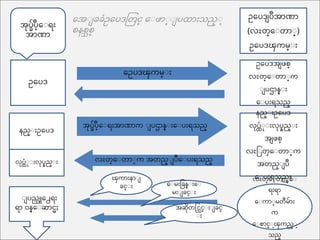
ေပြ် ်ဳပ္အးရ
ေ ဏ
ေအပဒ
နည္း ေအပဒ
လပထံးး လပနည္း
း း ပည္သူအ႕ရ
ရ ဝန္အးဆ ငႈ
ေအပဒ ပ်ဳေ ဏ
(လႊတ္အးတ း္)
ေအပဒၾကကမ္း
ေအပဒေ စ္
လႊတ္အးတ း္က
း ပဌ န္း
အးပ ရသည္
နည္း ေအပဒ
လပထံးး လပနည္း
ေ စ္
လႊြးတ္အးတ း္က
ေတည္း ပ်ဳ
အးပ ရသည္။လႊတ္အးတ း္အး
ရ ရ
အးက း္မတမ်
က
အးစ င္းၾကကည္း
သည္
အေပဒၾကကမ္း
ေပြ် ်ဳပ္အးရ ေ ဏ က း ပဌ န္း အးပ ရသည္
လႊတ္အးတ း္က ေတည္း ပ်ဳအးပ ရသည္
ၾကက န း
ခင္း အးမ ြခန္း အး
မ း ခင္း
ေဆိတင္ငသင္း း ခင္
း
အေး ခခံေအပဒထတင္ အး း္း ပြ သည္း
စနစသစ္
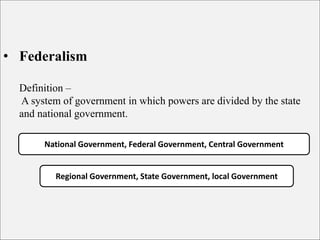
• Federalism
Definition –
A system of government in which powers are divided by the state
and national government.
National Government, Federal Government, Central Government
Regional Government, State Government, local Government
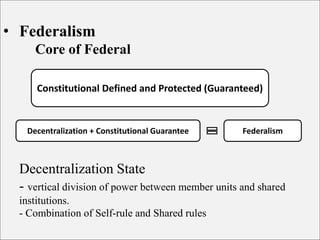
• Federalism
Core of Federal
Decentralization State
- vertical division of power between member units and shared
institutions.
- Combination of Self-rule and Shared rules
Constitutional Defined and Protected (Guaranteed)
Decentralization + Constitutional Guarantee Federalism
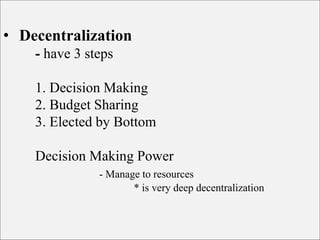
• Decentralization
- have 3 steps
1. Decision Making
2. Budget Sharing
3. Elected by Bottom
Decision Making Power
- Manage to resources
* is very deep decentralization
• Federalism
Why Federalism
- Big Territories & Large Population
- Pluralism of Society
- Lower Level of Government Check and Balance
- Foster Peace
- Economic Reasons
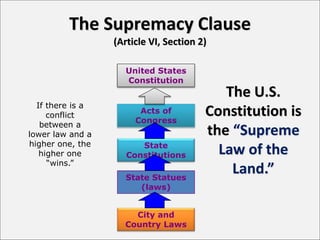
The Supremacy Clause
(Article VI, Section 2)
City and
Country Laws
State Statues
(laws)
State
Constitutions
Acts of
Congress
United States
Constitution
The U.S.
Constitution is
the “Supreme
Law of the
Land.”
If there is a
conflict
between a
lower law and a
higher one, the
higher one
“wins.”
Thank….

Introduction to democratization

  • 1.
    Introduction to Democratizationand Democratic Constitution Presented by Aung Ko Ko Toe Knowledge Propagation Society Mandalay
  • 2.
    • Transitional Process 1.Transition 2. Liberalization 3. Consolidation
  • 3.
    • Definition ofDemocratization 1. transition to a more democratic political regime. 2. transition from an authoritarian regime to a full democracy 3. transition from an authoritarian political system to a semi-democracy 4. transition from a semi-authoritarian political system to a democratic political system.
  • 4.
    Democratization - Political Scienceapproach Democratic transitions are the change from the original non- democratic regime (dictatorship) to a democratic regime. A successful transition to democracy involves - removing the old non-democratic regime; - creation of democratic institutions and - establishment of democratic procedures.
  • 5.
    Democratization - Political Scienceapproach Democratic consolidation means stabilization of these democratic institutions and procedures and achieving their acceptance by all important actors in a given country - political parties, - the army, - religious institutions, - various important non-governmental organizations, etc
  • 6.
     It isimportant to be aware that democratic transition may or may not end in democratic consolidation. Two Condition; - a risk of returning to a non-democratic type of regime. - a hybrid form of semi-authoritarianism.
  • 7.
    • Pre-Conditions Necessaryfor Successful Democratization Wealth Education The Resource Curse Civil Society Middle Class Social Equality Culture Homogenous Population
  • 8.
    • Myanmar forSuccessful Democratization Hypothesis of Francis Fukurama -Economic Growth - State Building - Rule of Law - Social Mobilization
  • 9.
    Types of Transitions Atop-down (elite-controlled) change from within government (Examples: Spain, Hungary). Negotiated reform of the regime and the government (Examples: South Africa, Poland) A bottom-up (people power) change: Regime breakdown and the collapse of authoritarianism under the pressure of mass protests (Examples: the Philippines, Czechoslovakia).
  • 10.
    • For Questionto Change Autocratic regime Strong Strong Weak Weak Democratic challenger Weak Strong Weak Strong
  • 11.
    Autocratic regime Democraticchallenger Outcome Strong Weak Regime remains Strong Strong Regime liberalizes Weak Weak Regime remains Weak Strong Democratic breakthrough
  • 12.
  • 13.
    • Democratic Structure -Democracy - Separation of Power for Regime (How to Distribution of Power) - Institutions - Independent Agencies Constitution
  • 15.
    • Definition ofConstitution The constitution is the public law, providing how a government is structured and operates. A constitution is a contract concerned with Rights and Duties between government and people. The Constitution says how the government works. It creates the President. It creates the legislation. It creates the Supreme Court.
  • 16.
    • Organ ofConstitution there are three organs - how various agencies are organized - what power is entrusted to those agencies - in what manner such power is to be exercised
  • 18.
    • Make upthe Constitution the 7 basis ideas 1. Popular Sovereignty 2. Limited Government 3. Separation of Powers 4. Checks and Balances 5. Judicial Review 6. Individual rights 7. Federalism
  • 19.
    Popular Sovereignty - Leadershipsuccession though election - Elections ensure that key position in government will be contested at periodic intervals and that the transfer of governmental authority is accomplished in a peaceful and orderly process. Majority rules but not rules by majority. Minority rights must be protected from the tyranny of the Majority.
  • 20.
    ဖ ြဲ႕စည္း ပံးအေးခခံအေပဒ ေအပဒ နည္း ေအပဒ လပထံးး လပနည္း ၊ စည္း မ်ေ္း / စည္း ကမ္း ၊ ေမိန္အေၾကက း္း င စ ၊ ေမိန္ေ၊ ညႊန္ၾက ခ်က္ Rule of Law Constitutional Court
  • 21.
    Judicial Review Judicial branchinterprets the law (Courts) The interpreter or final judge on what the Constitution says and means. The powers of a court to determine the constitutionality of a governmental action.
  • 22.
    Judicial Review အေး ခခံေအပဒခံးရံံးး (Constitution Court) အေး ခခံအေပဒခံးရံးး သည္ အေး ခခံေအပဒ ပဌ န္း ခ်က် ်ားႏးငင္း ပကသ က္အးသ စည္း ၾကကပ္ိိုင္ း စ္း ပ အးပၚထြကလ အးသ ေအပဒေ လံးး ကိ (ေအပဒြက္ တစဆင္းနိမ္းအးသ ေဆိမ် ေပါေဝင္) ၎ကိ တင္း ပသည္း စ္အးစ၊ မတင္း ပသည္ း စ္အးစ အေး ခခံေအပဒ င္း ကကြဲကလြဲပါက ဝင္အးရ က္၍ ပယ္ဖ်က္ိိုင္ငြင္း ရိးငသည္။
  • 23.
    ေပြ် ်ဳပ္အးရ ေ ဏ ေအပဒ နည္းေအပဒ လပထံးး လပနည္း း း ပည္သူအ႕ရ ရ ဝန္အးဆ ငႈ ေအပဒ ပ်ဳေ ဏ (လႊတ္အးတ း္) ေအပဒၾကကမ္း ေအပဒေ စ္ လႊတ္အးတ း္က း ပဌ န္း အးပ ရသည္ နည္း ေအပဒ လပထံးး လပနည္း ေ စ္ လႊြးတ္အးတ း္က ေတည္း ပ်ဳ အးပ ရသည္။လႊတ္အးတ း္အး ရ ရ အးက း္မတမ် က အးစ င္းၾကကည္း သည္ အေပဒၾကကမ္း ေပြ် ်ဳပ္အးရ ေ ဏ က း ပဌ န္း အးပ ရသည္ လႊတ္အးတ း္က ေတည္း ပ်ဳအးပ ရသည္ ၾကက န း ခင္း အးမ ြခန္း အး မ း ခင္း ေဆိတင္ငသင္း း ခင္ း အေး ခခံေအပဒထတင္ အး း္း ပြ သည္း စနစသစ္
  • 24.
    • Federalism Definition – Asystem of government in which powers are divided by the state and national government. National Government, Federal Government, Central Government Regional Government, State Government, local Government
  • 25.
    • Federalism Core ofFederal Decentralization State - vertical division of power between member units and shared institutions. - Combination of Self-rule and Shared rules Constitutional Defined and Protected (Guaranteed) Decentralization + Constitutional Guarantee Federalism
  • 26.
    • Decentralization - have3 steps 1. Decision Making 2. Budget Sharing 3. Elected by Bottom Decision Making Power - Manage to resources * is very deep decentralization
  • 27.
    • Federalism Why Federalism -Big Territories & Large Population - Pluralism of Society - Lower Level of Government Check and Balance - Foster Peace - Economic Reasons
  • 28.
    The Supremacy Clause (ArticleVI, Section 2) City and Country Laws State Statues (laws) State Constitutions Acts of Congress United States Constitution The U.S. Constitution is the “Supreme Law of the Land.” If there is a conflict between a lower law and a higher one, the higher one “wins.”
  • 29.