INTRODUCTION :
CAD/CAM/CIM
Payal SINGH
DEPT. OF MECHANICAL ENGG.
Learning Objectives
 Design, Disciplines
 Definition of CAD
 Definition of CAM
 Definition of CIM
 Need of CAD/CAM/CIM
 Scope of CAD/CAM/CIM
Design
 What is Design ?
 Design is the human power to conceive, plan, and
realize products that serve human beings, in the
accomplishment of any individual or collective
Design Disciplines
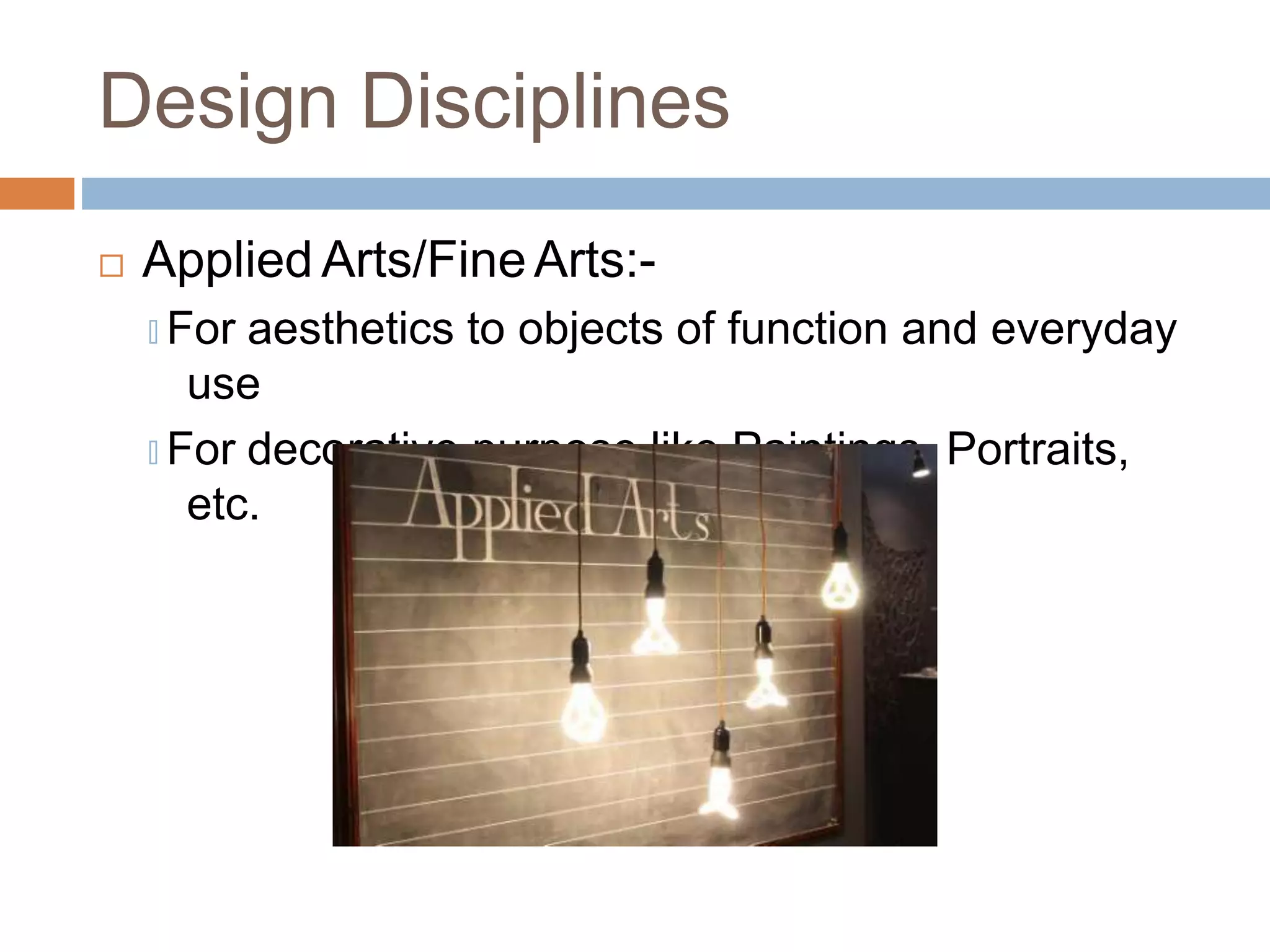
 Applied Arts/FineArts:-
🞑 For aesthetics to objects of function and everyday
use
🞑 For decorative purpose like Paintings, Portraits,
etc.
Design Disciplines
 Architecture:-
🞑 Usually of buildings and other physical structures
🞑 For aesthetics of objects
Design Disciplines
 Fashion:-
🞑 For aesthetics or natural beauty to clothing
and accessories
🞑 Influenced by cultural and social latitudes
🞑 For Garments, Texture, etc.
Design Disciplines
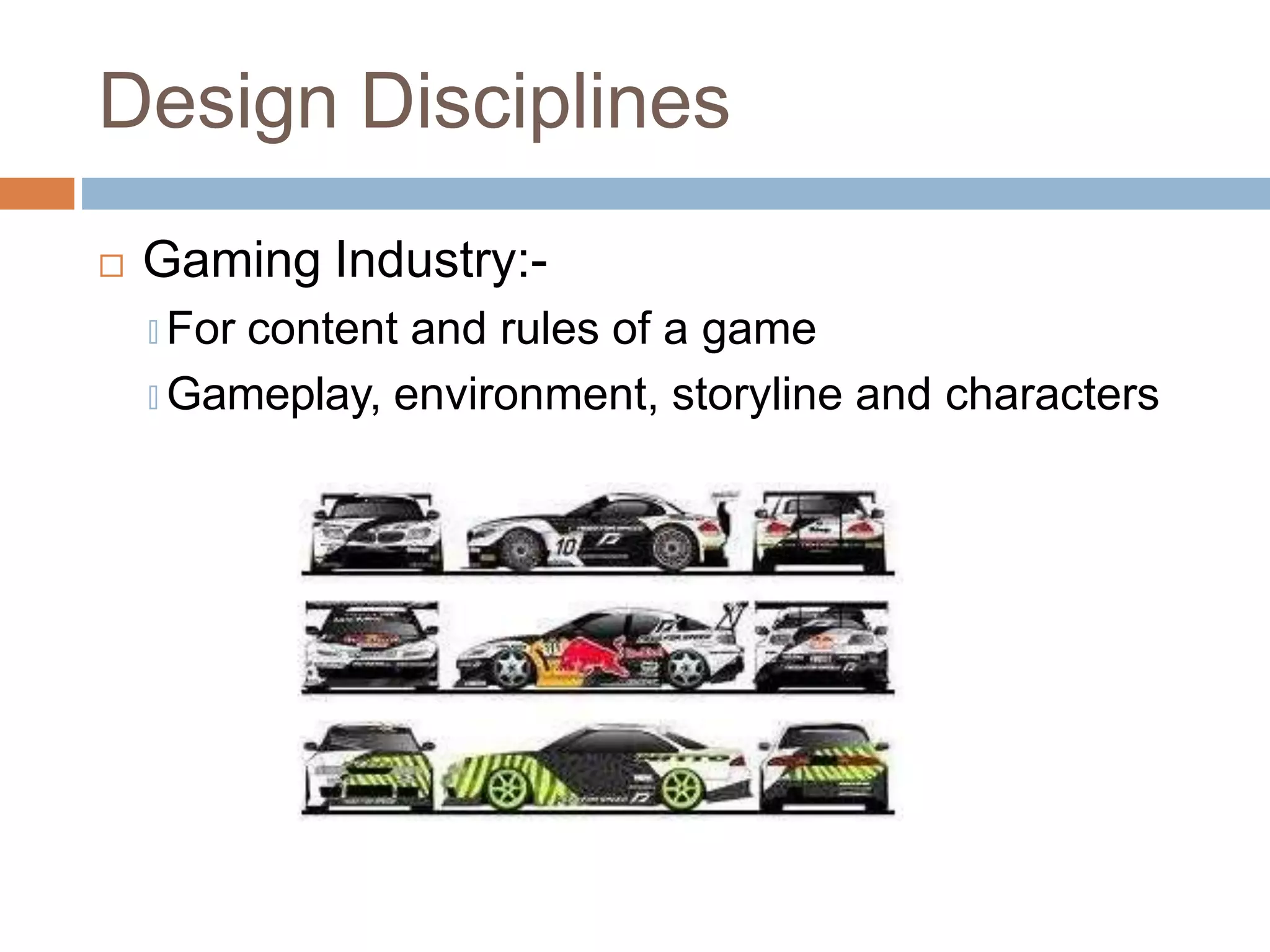
 Gaming Industry:-
🞑 For content and rules of a game
🞑 Gameplay, environment, storyline and characters
Design Disciplines
 Engg. Design:-
🞑 Preliminary design
 Schematics, diagrams, layouts of the project
🞑 Detailed design
 Operating parameters, Test, Materials, Packaging
🞑 Production planning and tool design
 Jigs, fixtures, and tooling
🞑 Production
Design Disciplines
 Mechanical Design
🞑 For Machines like Lathe, Drill,
🞑 For Turbo-machines like Turbine, Propeller
🞑 ForAutomobile like Chassis, Transmission
🞑 For Components like Gears, Shafts, Joints, etc.
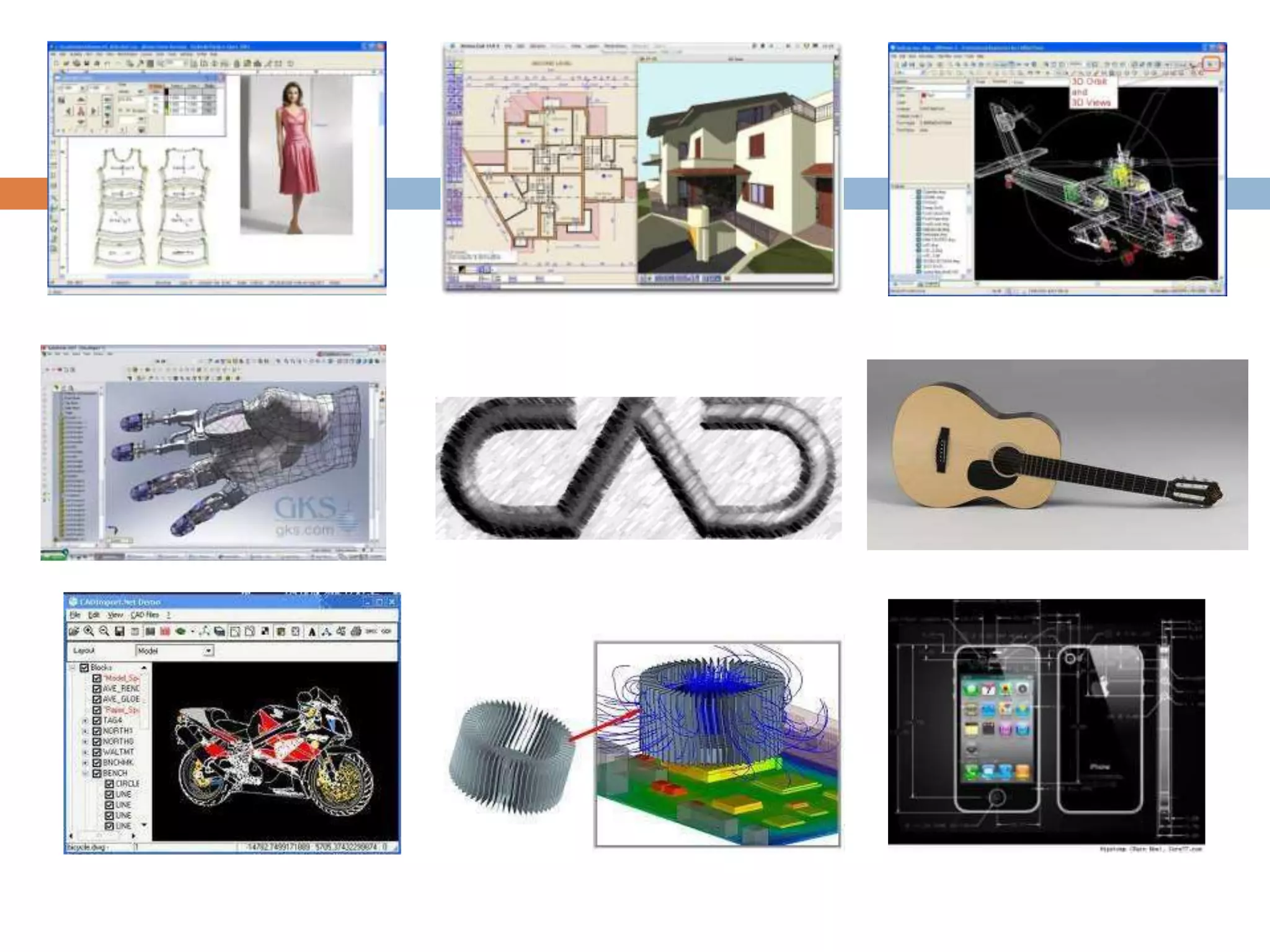
Computer Aided Design
 Use of computer systems to assist in creation,
modification, analysis and optimization of a
design.
 Computer assistance, while a designer
converts his or her ideas and knowledge, into
a mathematical and graphical model
represented in a computer.
Manufacturing
 What is Manufacturing?
Manufacturing
 Process of production of objects from metals
or non-metals, with or without application of
force, with or without application of heat, with
or without use of machines, joining or
removing of excess material.
Manufacturing Processes
 Chemical Process
 Mechanical Process as Bending
 NC/CNC Process as Turning, Facing
 Casting
 Molding
 Forming
 Machining
 Joining
 Rapid manufacturing
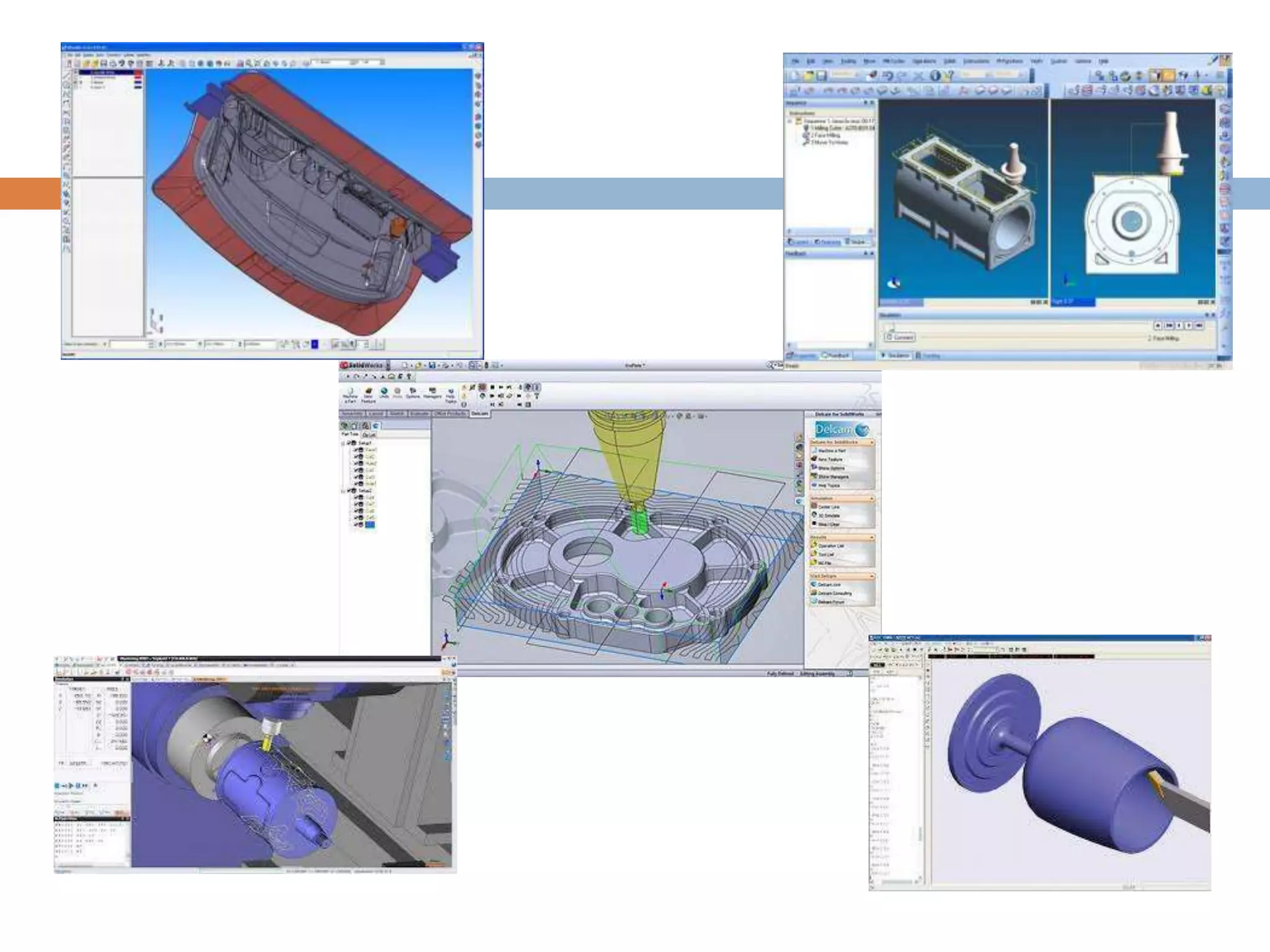
Computer Aided Manufacturing
 Use of computers systems to plan, manage
and control the operations of a manufacturing
plant through either direct or indirect computer
interface with plant’s production resources.
 Manufacturing support applications –Use of
computers in process planning, scheduling,
shop floor control, work study, tool design,
quality control etc.
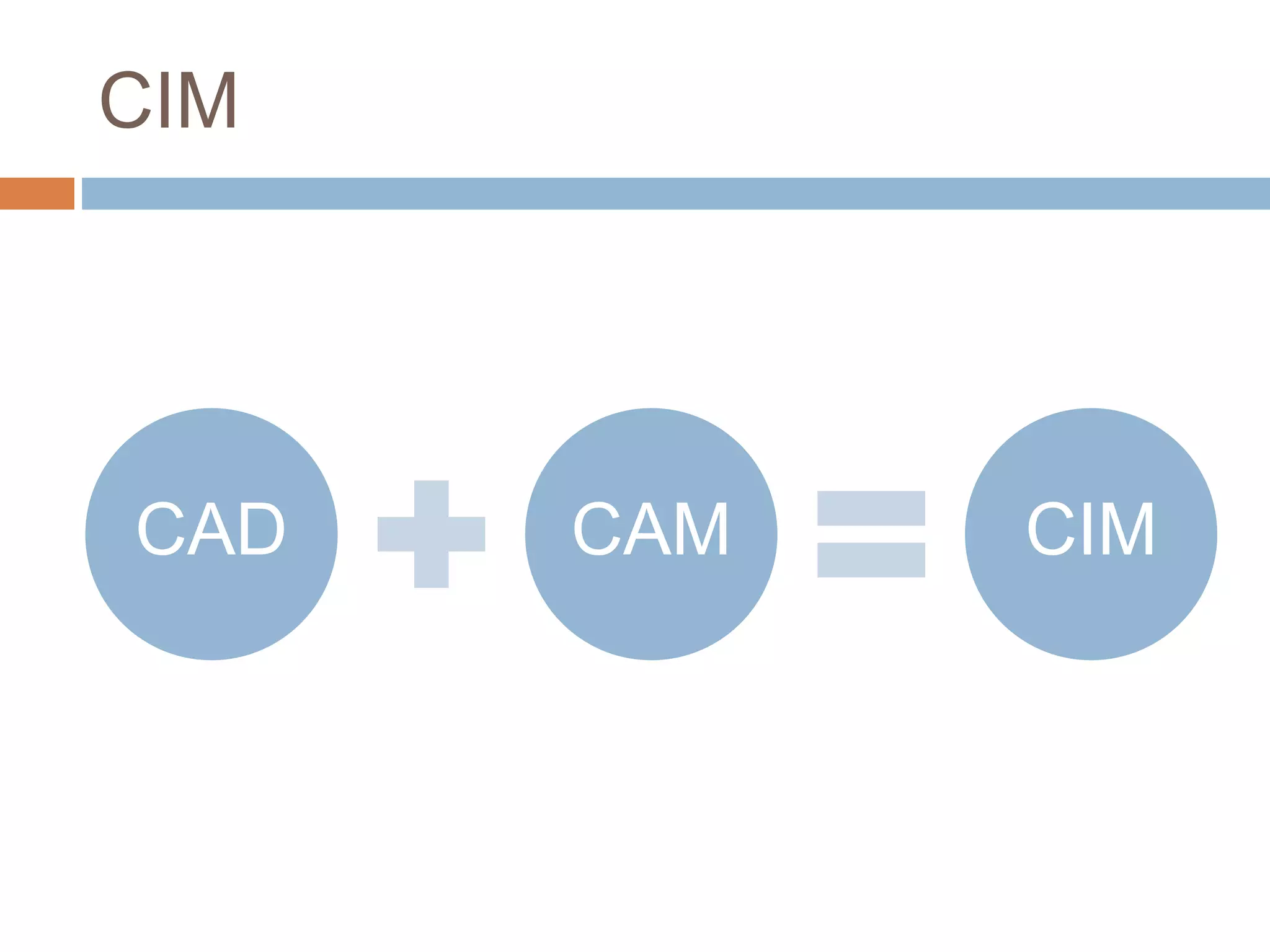
Computer Integrated
Manufacturing
 A process of integration of CAD, CAM and
business aspects of a factory. It attempts
complete automation with all processes
functioning under computer control.
CIM
CAD CAM CIM
Need for CAD/CAM/CIM
• To increase productivity of the designer
• To improve quality of the design
• To improve communications
• To create a manufacturing database
• To create and test tool paths and optimize them
• To help in production scheduling and MRP
models
• To have effective shop floor control
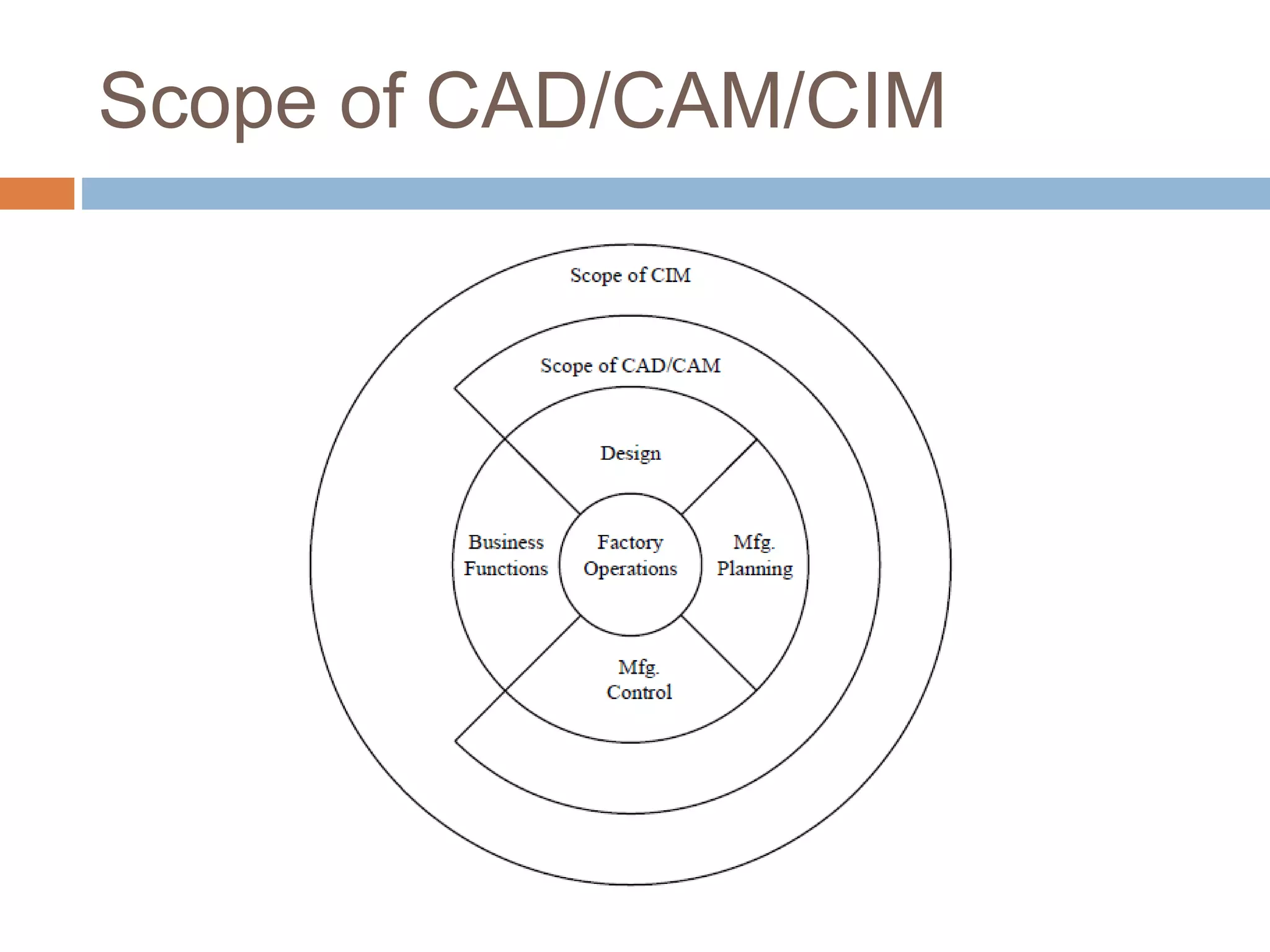
Scope of CAD/CAM/CIM
SAQ
1. What is CAD?
2. What are the application of CAD ?
3. What is CAM?
4. What are the application of CAM ?
5. What is meant by the concept of CAD/CAM?
6. What is CIM?
7. What is need of CAD/CAM/CIM ?
8. What is scope of CIM ?
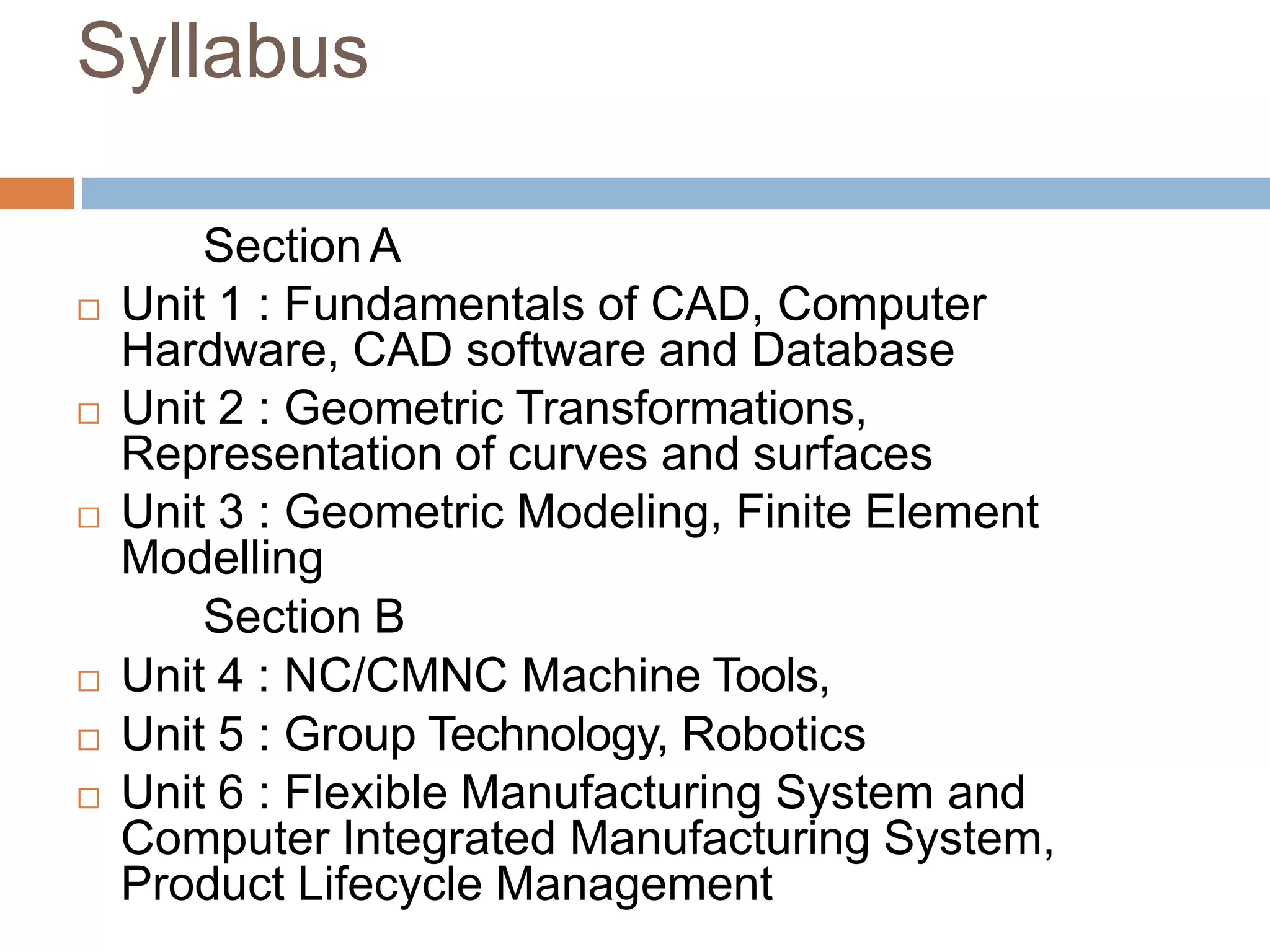
Syllabus
Section A
 Unit 1 : Fundamentals of CAD, Computer
Hardware, CAD software and Database
 Unit 2 : Geometric Transformations,
Representation of curves and surfaces
 Unit 3 : Geometric Modeling, Finite Element
Modelling
Section B
 Unit 4 : NC/CMNC Machine Tools,
 Unit 5 : Group Technology, Robotics
 Unit 6 : Flexible Manufacturing System and
Computer Integrated Manufacturing System,
Product Lifecycle Management

Intro cad cam

  • 1.
  • 2.
    Learning Objectives  Design,Disciplines  Definition of CAD  Definition of CAM  Definition of CIM  Need of CAD/CAM/CIM  Scope of CAD/CAM/CIM
  • 3.
  • 4.
     Design isthe human power to conceive, plan, and realize products that serve human beings, in the accomplishment of any individual or collective
  • 5.
    Design Disciplines  AppliedArts/FineArts:- 🞑 For aesthetics to objects of function and everyday use 🞑 For decorative purpose like Paintings, Portraits, etc.
  • 6.
    Design Disciplines  Architecture:- 🞑Usually of buildings and other physical structures 🞑 For aesthetics of objects
  • 7.
    Design Disciplines  Fashion:- 🞑For aesthetics or natural beauty to clothing and accessories 🞑 Influenced by cultural and social latitudes 🞑 For Garments, Texture, etc.
  • 8.
    Design Disciplines  GamingIndustry:- 🞑 For content and rules of a game 🞑 Gameplay, environment, storyline and characters
  • 9.
    Design Disciplines  Engg.Design:- 🞑 Preliminary design  Schematics, diagrams, layouts of the project 🞑 Detailed design  Operating parameters, Test, Materials, Packaging 🞑 Production planning and tool design  Jigs, fixtures, and tooling 🞑 Production
  • 10.
    Design Disciplines  MechanicalDesign 🞑 For Machines like Lathe, Drill, 🞑 For Turbo-machines like Turbine, Propeller 🞑 ForAutomobile like Chassis, Transmission 🞑 For Components like Gears, Shafts, Joints, etc.
  • 11.
    Computer Aided Design Use of computer systems to assist in creation, modification, analysis and optimization of a design.  Computer assistance, while a designer converts his or her ideas and knowledge, into a mathematical and graphical model represented in a computer.
  • 13.
  • 14.
    Manufacturing  Process ofproduction of objects from metals or non-metals, with or without application of force, with or without application of heat, with or without use of machines, joining or removing of excess material.
  • 15.
    Manufacturing Processes  ChemicalProcess  Mechanical Process as Bending  NC/CNC Process as Turning, Facing  Casting  Molding  Forming  Machining  Joining  Rapid manufacturing
  • 16.
    Computer Aided Manufacturing Use of computers systems to plan, manage and control the operations of a manufacturing plant through either direct or indirect computer interface with plant’s production resources.  Manufacturing support applications –Use of computers in process planning, scheduling, shop floor control, work study, tool design, quality control etc.
  • 18.
    Computer Integrated Manufacturing  Aprocess of integration of CAD, CAM and business aspects of a factory. It attempts complete automation with all processes functioning under computer control.
  • 19.
  • 20.
    Need for CAD/CAM/CIM •To increase productivity of the designer • To improve quality of the design • To improve communications • To create a manufacturing database • To create and test tool paths and optimize them • To help in production scheduling and MRP models • To have effective shop floor control
  • 21.
  • 22.
    SAQ 1. What isCAD? 2. What are the application of CAD ? 3. What is CAM? 4. What are the application of CAM ? 5. What is meant by the concept of CAD/CAM? 6. What is CIM? 7. What is need of CAD/CAM/CIM ? 8. What is scope of CIM ?
  • 23.
    Syllabus Section A  Unit1 : Fundamentals of CAD, Computer Hardware, CAD software and Database  Unit 2 : Geometric Transformations, Representation of curves and surfaces  Unit 3 : Geometric Modeling, Finite Element Modelling Section B  Unit 4 : NC/CMNC Machine Tools,  Unit 5 : Group Technology, Robotics  Unit 6 : Flexible Manufacturing System and Computer Integrated Manufacturing System, Product Lifecycle Management