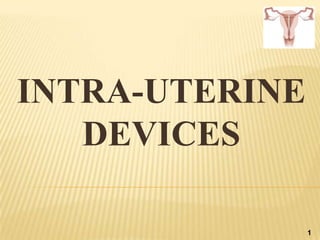
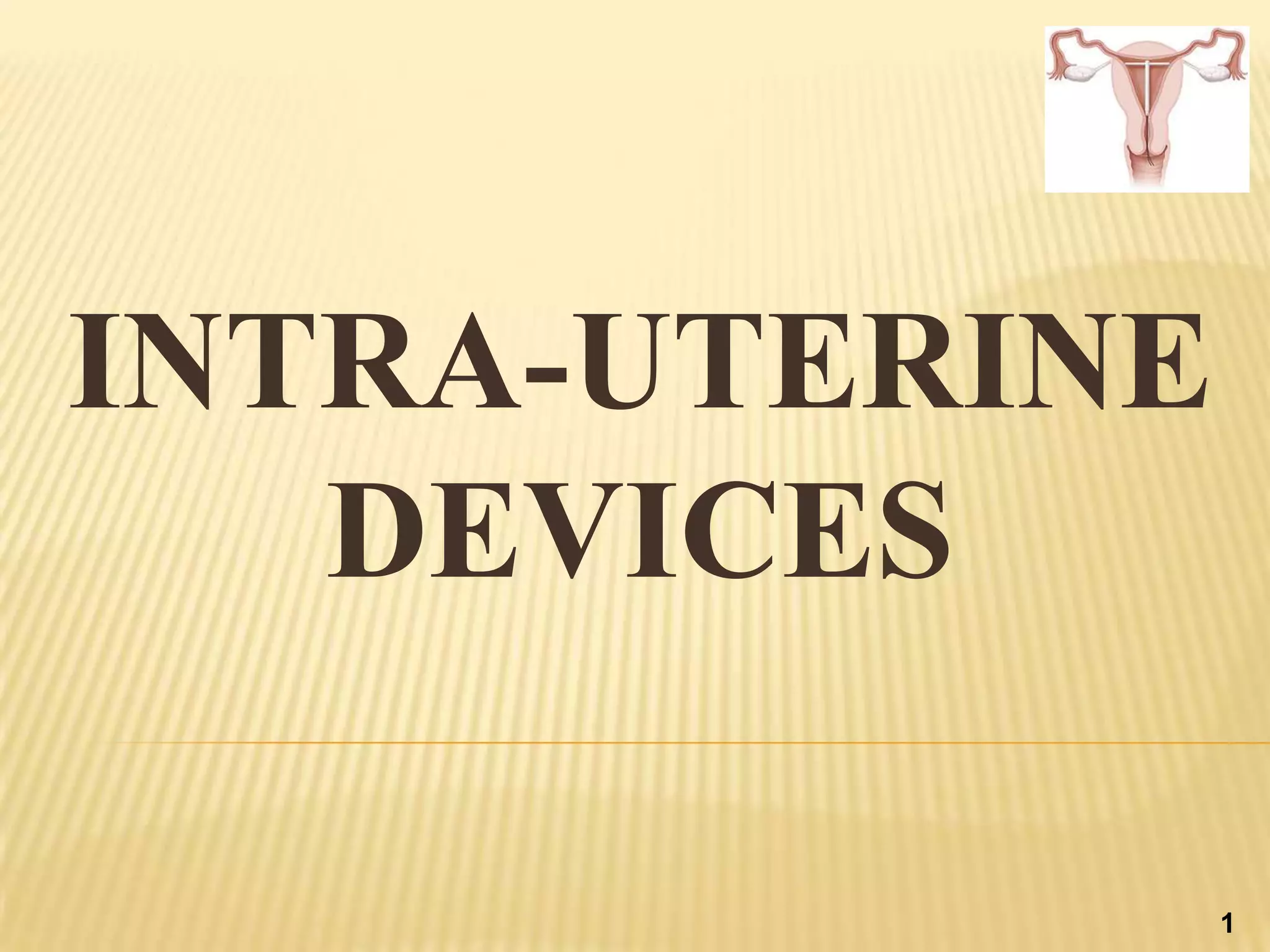

INTRA-UTERINE
DEVICES
1
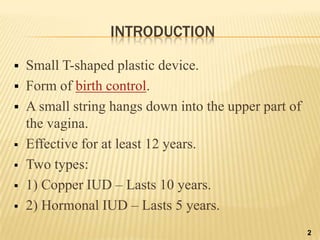
INTRODUCTION
 Small T-shaped plastic device.
 Form of birth control.
 A small string hangs down into the upper part of
the vagina.
 Effective for at least 12 years.
 Two types:
 1) Copper IUD – Lasts 10 years.
 2) Hormonal IUD – Lasts 5 years.
2
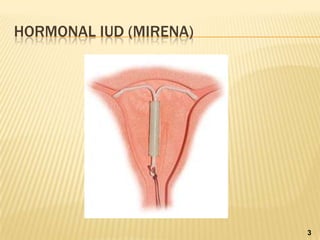
HORMONAL IUD (MIRENA)
3
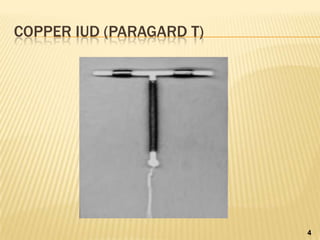
COPPER IUD (PARAGARD T)
4
MECHANISM OF ACTION (GENERAL)
 Affect the movements of eggs and sperm.
 Also change the lining of the uterus and
prevent implantation.
 Also creates a mild inflammation, which
prevents sperm from fertilizing eggs.
5
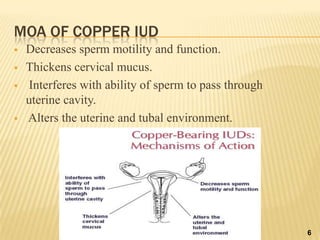
MOA OF COPPER IUD
 Decreases sperm motility and function.
 Thickens cervical mucus.
 Interferes with ability of sperm to pass through
uterine cavity.
 Alters the uterine and tubal environment.
6
MOA OF HORMONAL IUD
 Delivers a very small amount of progestin
directly on the inner wall of the uterus.
 The main way an IUD works is to stop sperm
reaching an egg. It does this by preventing sperm
from surviving in the cervix, uterus or fallopian
tube.
 It may also work by stopping a fertilised egg
from implanting in the uterus.
7
MERITS
 Does not interrupt intercourse
 No other contraceptive supplies needed
 It works for 5–10 years depending on type
 Your fertility returns to normal as soon as the IUD is taken out
 It is not affected by other medicines
 Can be inserted immediately after childbirth and while breastfeeding
 Proven safe
 Long lasting
 Hormone free also available
 Over 99% effective
 Hormonal IUD decreases menstrual pain and heavy menstrual bleeding
 Can be used by women who cannot use Estrogen containing birth control pills
 Can be used as Emergency Contraception. To work for Emergency
Contraception, it must be inserted within about 72 hours of unprotected
intercourse
 Reduces the rate of Ectopic Pregnancy
8
DEMERITS
 The copper IUD may cause your periods to become heavier and more painful.
 Does not protect you from sexually transmitted infections, so use of condoms is must. If
you get an infection when an IUD is in place this could lead to a pelvic infection if it is
not treated.
 Pelvic inflammatory disease (PID): The IUD itself does not increase the risk of
PID, however PID may occur if infection is present during insertion or you are
participating in sexual activity which increases your risk of a sexually transmitted
infection (STI) exposure.
 An IUD in a pregnant woman increases the risk of miscarriage
 Menstrual problems. The copper IUD may increase menstrual bleeding or cramps.
 Vaginal dryness, flushing, headaches, nausea and acne occurs.
 Perforation. IUD will get stuck in or puncture (perforate) the uterus.3
 Expulsion. About 2 to 10 out of 100 IUDs are pushed out (expelled) from the uterus into
the vagina during the first year. This usually happens in the first few months of use.
 The hormonal IUD may cause noncancerous (benign) growths called ovarian cysts.
Sometimes irregular and heavier bleeding with spotting occurs
 Breast tenderness, mood swings, headaches, and acne occurs sometimes.
9
APPLICATIONS
 No birth control method is fool-proof – except
not having sex at all.
 Most effective form of birth control available.
 1 in 100 women using IUD become pregnant.
10
REMEMBER
IUDS are only
CONTRACEPTIVES
not
ABORTIFACIENTS
11
REFERENCES
 The American College of Obstetricians and
Gynaecologists
 Alberta Government on Contraceptive Health
 California State University – Northridge
 USAID – United States Agency International
Development – IUD guide for family
planning, 3rd Edition
 University of California – Berkeley, Patient
Information on IUD
 My great search engine – GOOGLE :p
12

Intrauterine devices

  • 1.
  • 2.
    INTRODUCTION  Small T-shapedplastic device.  Form of birth control.  A small string hangs down into the upper part of the vagina.  Effective for at least 12 years.  Two types:  1) Copper IUD – Lasts 10 years.  2) Hormonal IUD – Lasts 5 years. 2
  • 3.
  • 4.
  • 5.
    MECHANISM OF ACTION(GENERAL)  Affect the movements of eggs and sperm.  Also change the lining of the uterus and prevent implantation.  Also creates a mild inflammation, which prevents sperm from fertilizing eggs. 5
  • 6.
    MOA OF COPPERIUD  Decreases sperm motility and function.  Thickens cervical mucus.  Interferes with ability of sperm to pass through uterine cavity.  Alters the uterine and tubal environment. 6
  • 7.
    MOA OF HORMONALIUD  Delivers a very small amount of progestin directly on the inner wall of the uterus.  The main way an IUD works is to stop sperm reaching an egg. It does this by preventing sperm from surviving in the cervix, uterus or fallopian tube.  It may also work by stopping a fertilised egg from implanting in the uterus. 7
  • 8.
    MERITS  Does notinterrupt intercourse  No other contraceptive supplies needed  It works for 5–10 years depending on type  Your fertility returns to normal as soon as the IUD is taken out  It is not affected by other medicines  Can be inserted immediately after childbirth and while breastfeeding  Proven safe  Long lasting  Hormone free also available  Over 99% effective  Hormonal IUD decreases menstrual pain and heavy menstrual bleeding  Can be used by women who cannot use Estrogen containing birth control pills  Can be used as Emergency Contraception. To work for Emergency Contraception, it must be inserted within about 72 hours of unprotected intercourse  Reduces the rate of Ectopic Pregnancy 8
  • 9.
    DEMERITS  The copperIUD may cause your periods to become heavier and more painful.  Does not protect you from sexually transmitted infections, so use of condoms is must. If you get an infection when an IUD is in place this could lead to a pelvic infection if it is not treated.  Pelvic inflammatory disease (PID): The IUD itself does not increase the risk of PID, however PID may occur if infection is present during insertion or you are participating in sexual activity which increases your risk of a sexually transmitted infection (STI) exposure.  An IUD in a pregnant woman increases the risk of miscarriage  Menstrual problems. The copper IUD may increase menstrual bleeding or cramps.  Vaginal dryness, flushing, headaches, nausea and acne occurs.  Perforation. IUD will get stuck in or puncture (perforate) the uterus.3  Expulsion. About 2 to 10 out of 100 IUDs are pushed out (expelled) from the uterus into the vagina during the first year. This usually happens in the first few months of use.  The hormonal IUD may cause noncancerous (benign) growths called ovarian cysts. Sometimes irregular and heavier bleeding with spotting occurs  Breast tenderness, mood swings, headaches, and acne occurs sometimes. 9
  • 10.
    APPLICATIONS  No birthcontrol method is fool-proof – except not having sex at all.  Most effective form of birth control available.  1 in 100 women using IUD become pregnant. 10
  • 11.
  • 12.
    REFERENCES  The AmericanCollege of Obstetricians and Gynaecologists  Alberta Government on Contraceptive Health  California State University – Northridge  USAID – United States Agency International Development – IUD guide for family planning, 3rd Edition  University of California – Berkeley, Patient Information on IUD  My great search engine – GOOGLE :p 12