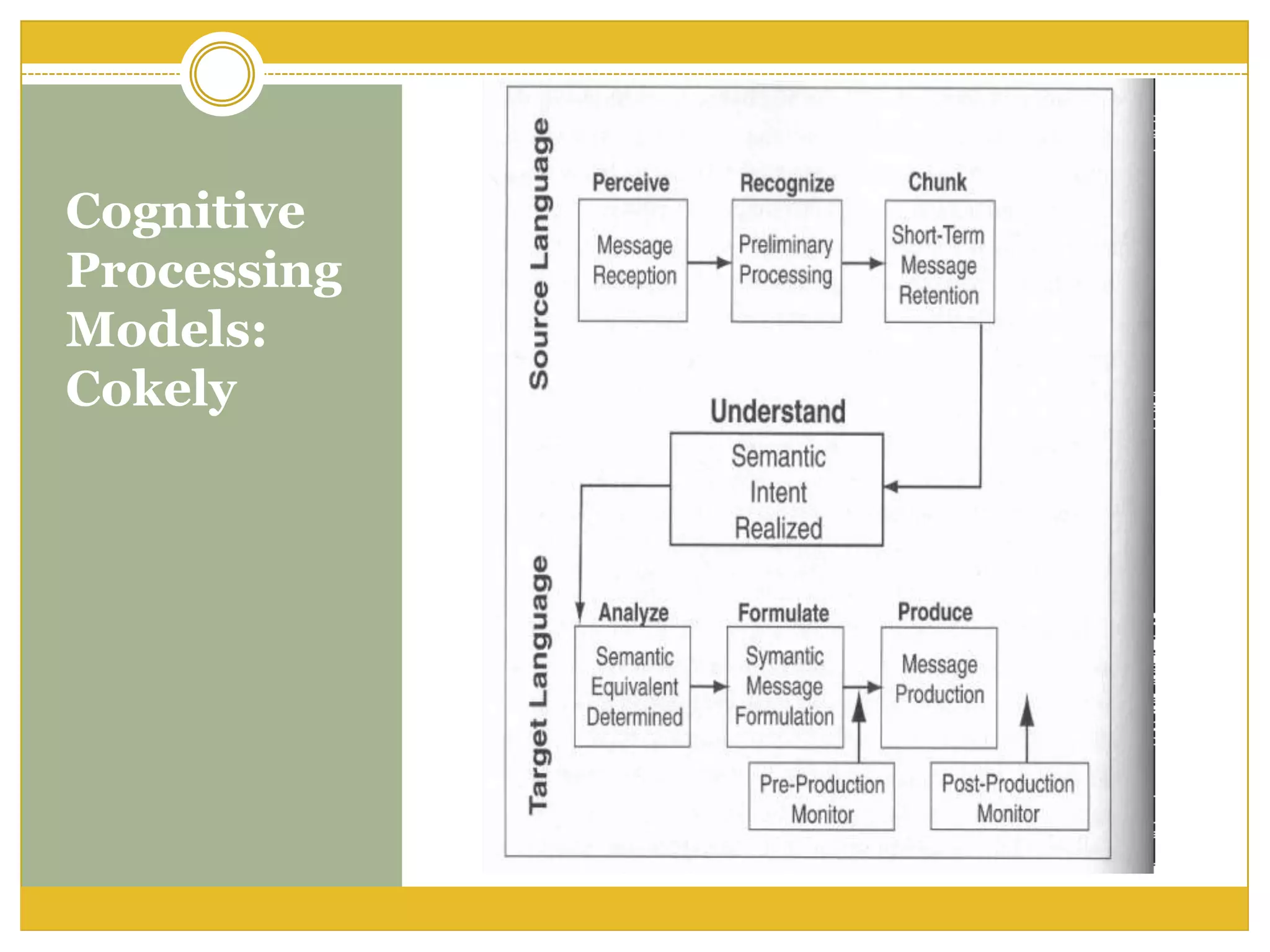
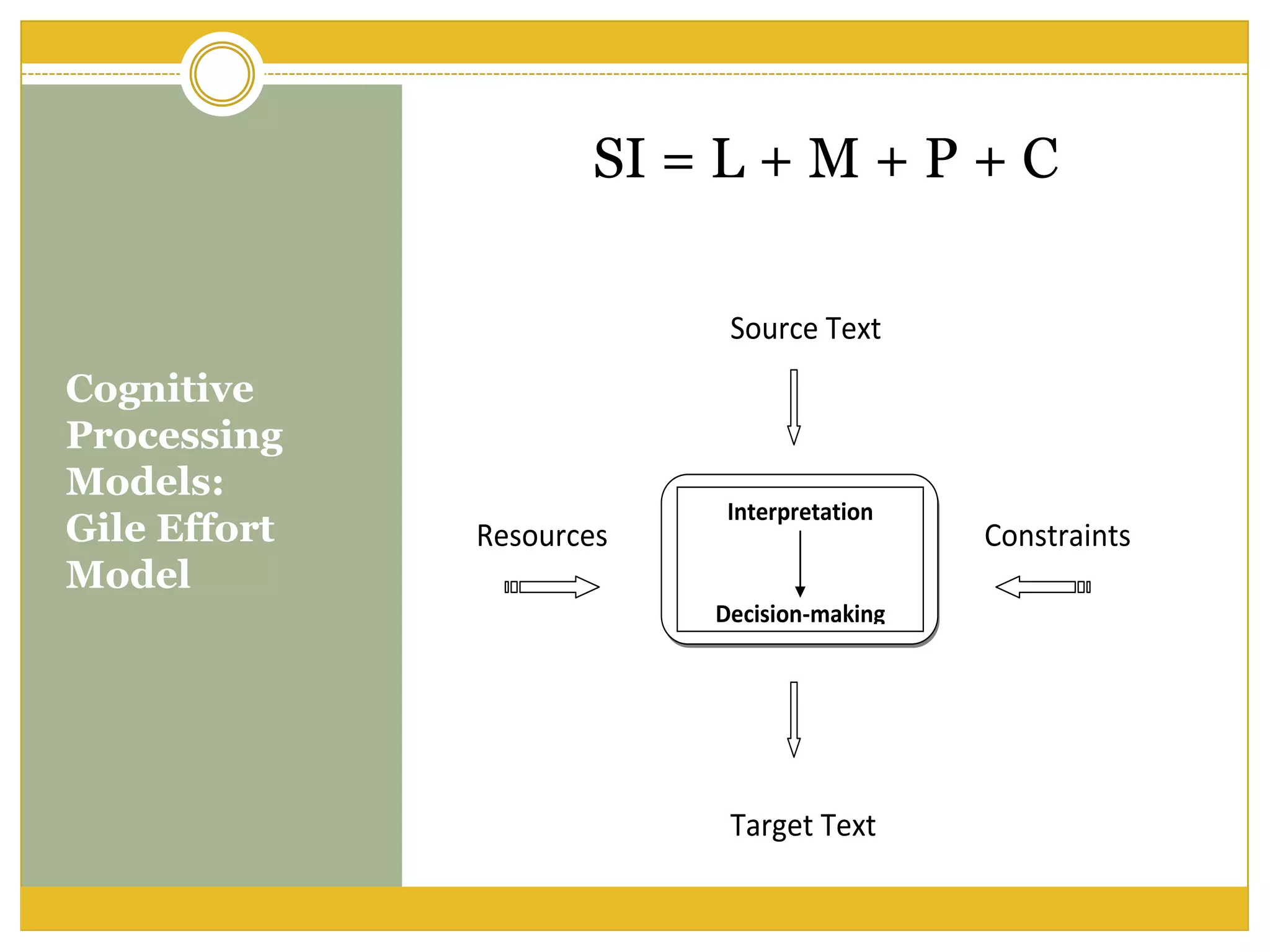
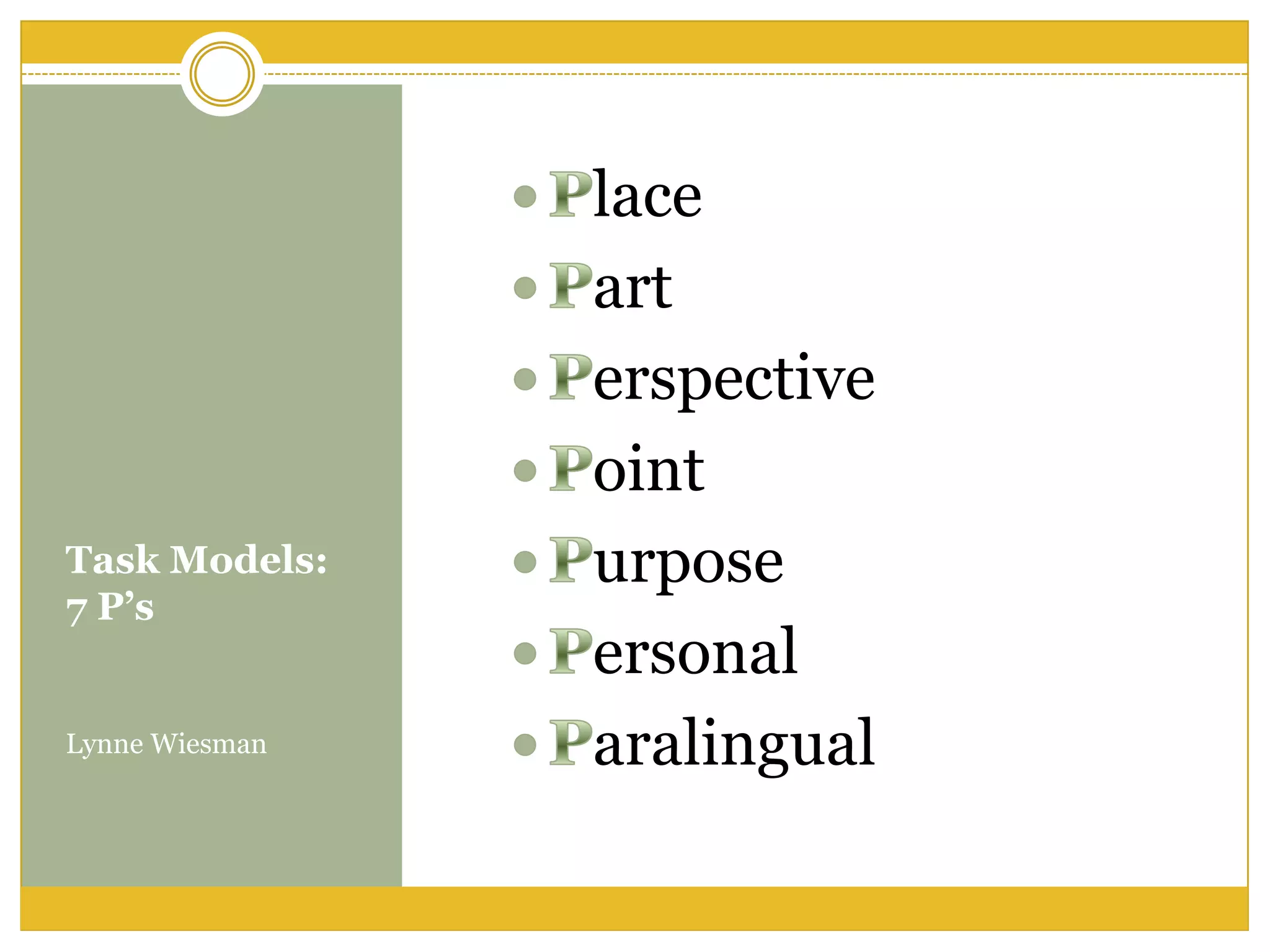
There are three main types of interpreting models: socio-cultural models, cognitive processing models, and task models. Socio-cultural models reflect the historical evolution of interpreting and include models like the helper, machine, and bicultural models. Cognitive processing models describe what happens in interpreters' brains during work, such as the Colonomos, Cokely, Gile Effort, and Russell Meaning-Based models. Task models are prescriptive and show how interpreters should approach work, including the Gish, Demand-Control-Schema, and Weisman P's models.
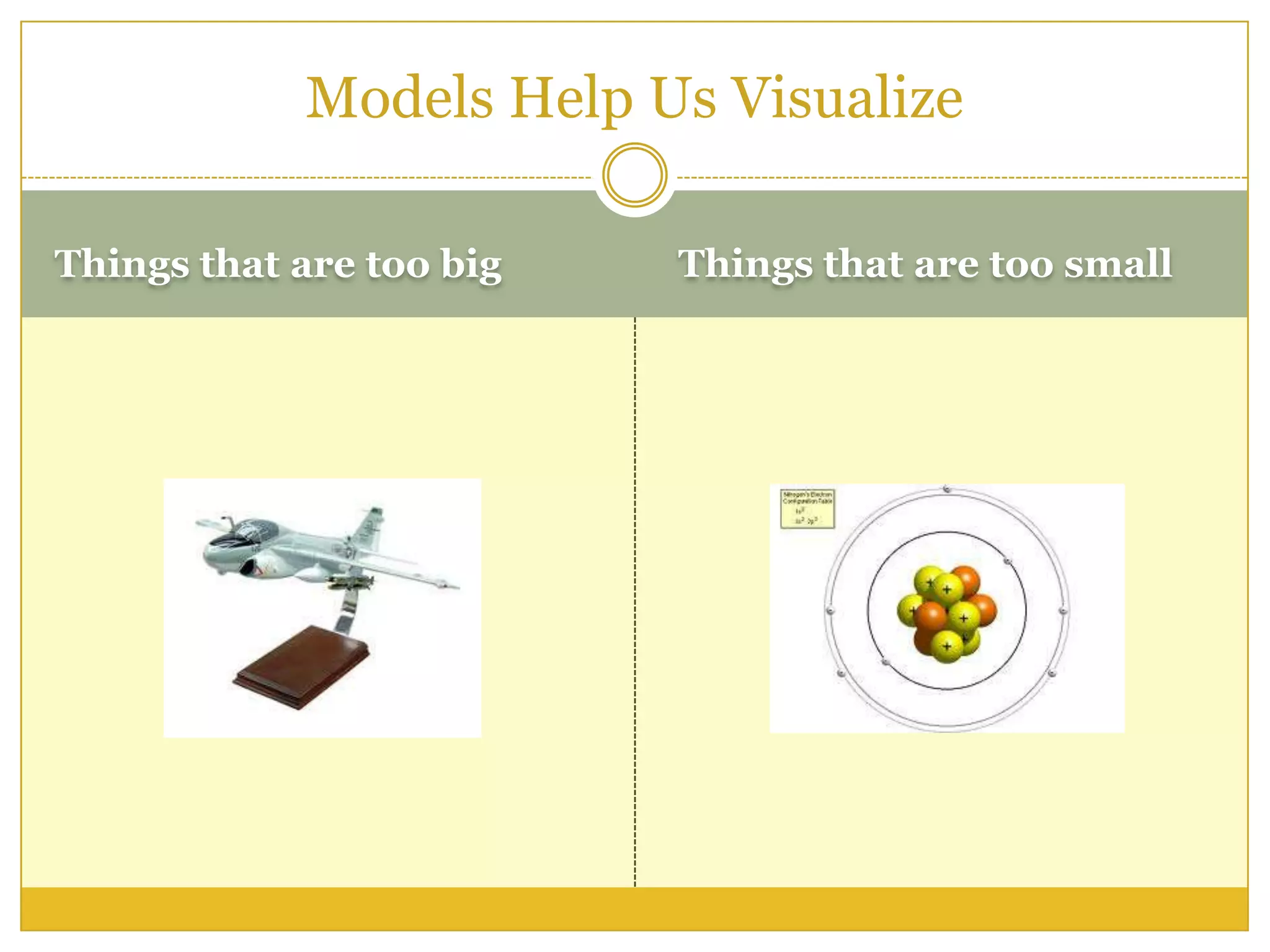
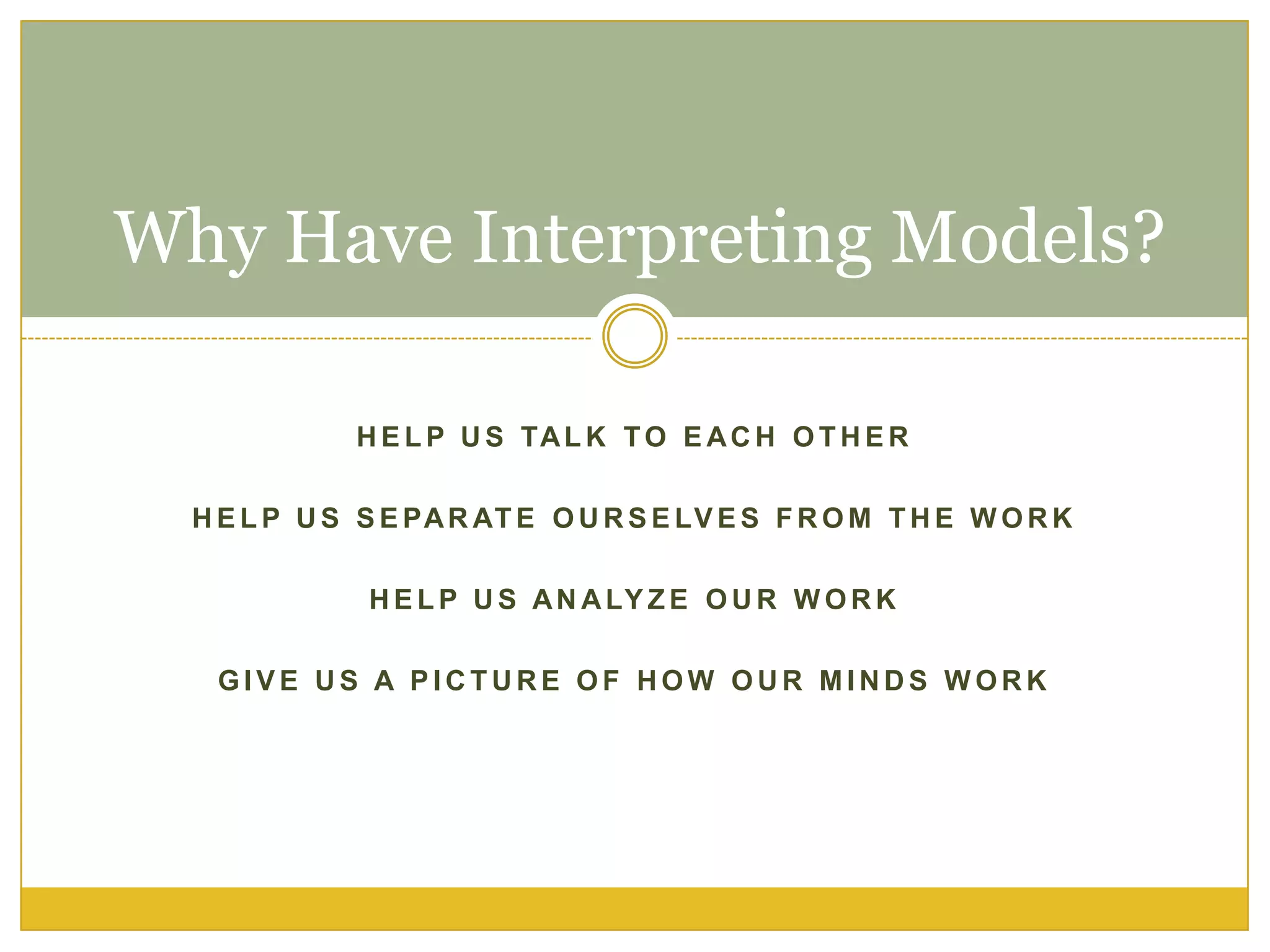
H E LP U S TAL K TO E AC H O T H E R
H E L P U S S E PAR AT E O U R S E LV E S F R O M T H E W O R K
H E L P U S AN ALY Z E O U R W O R K
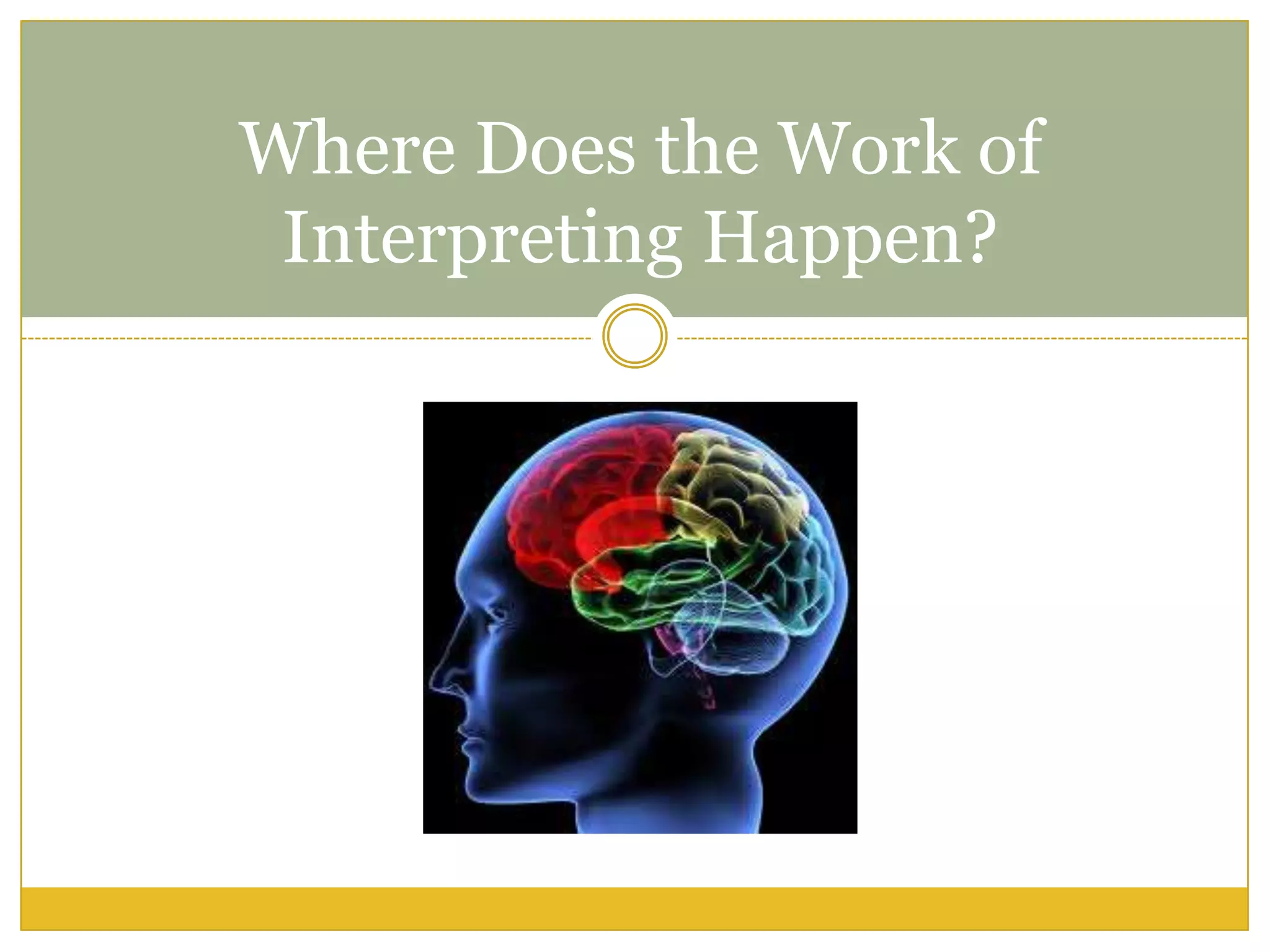
G I V E U S A P I C T U R E O F H O W O U R M I N D S W O R K
Why Have Interpreting Models?
10.
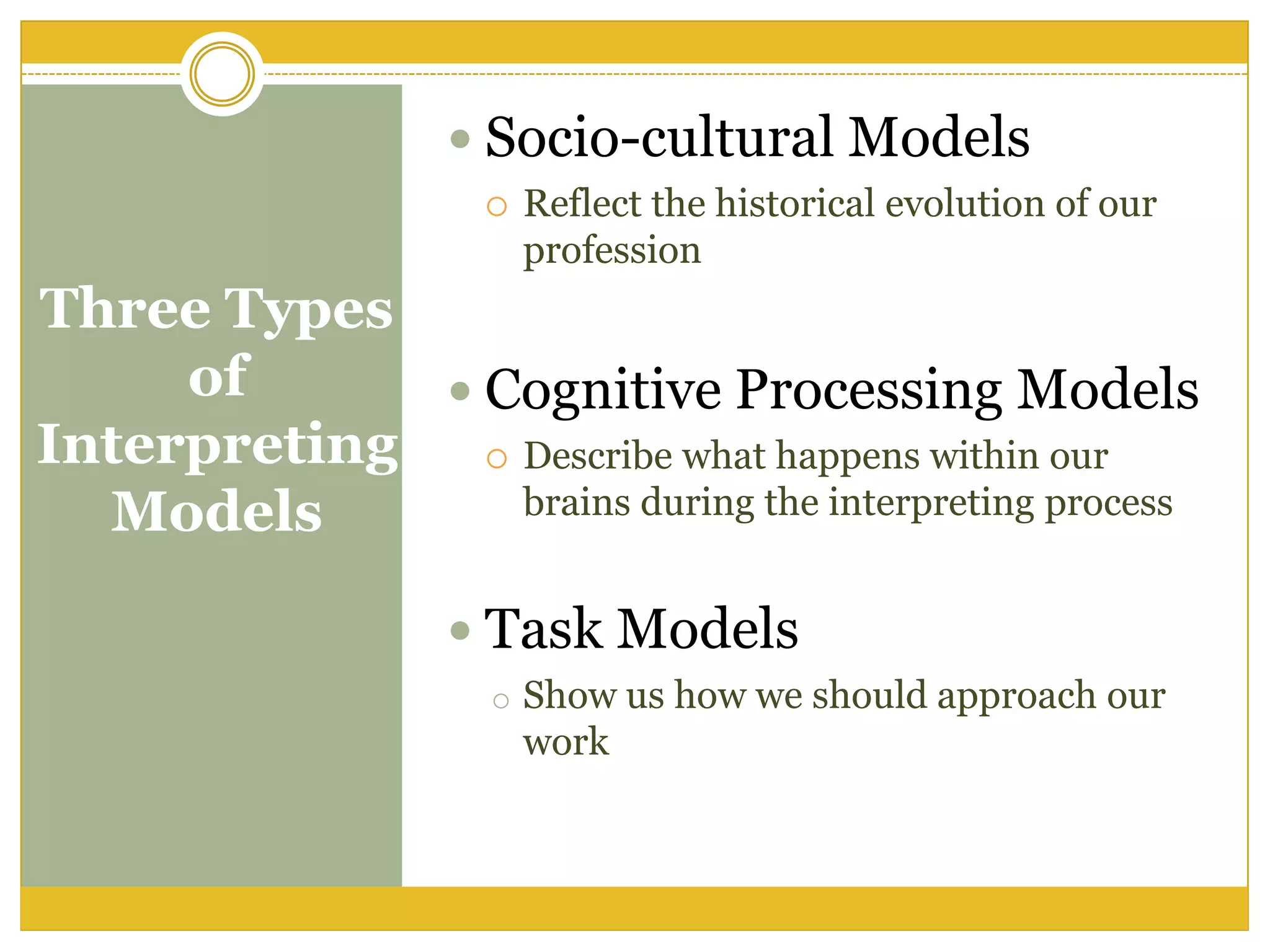
Three Types
of
Interpreting
Models
Socio-culturalModels
Reflect the historical evolution of our
profession
Cognitive Processing Models
Describe what happens within our
brains during the interpreting process
Task Models
o Show us how we should approach our
work
11.
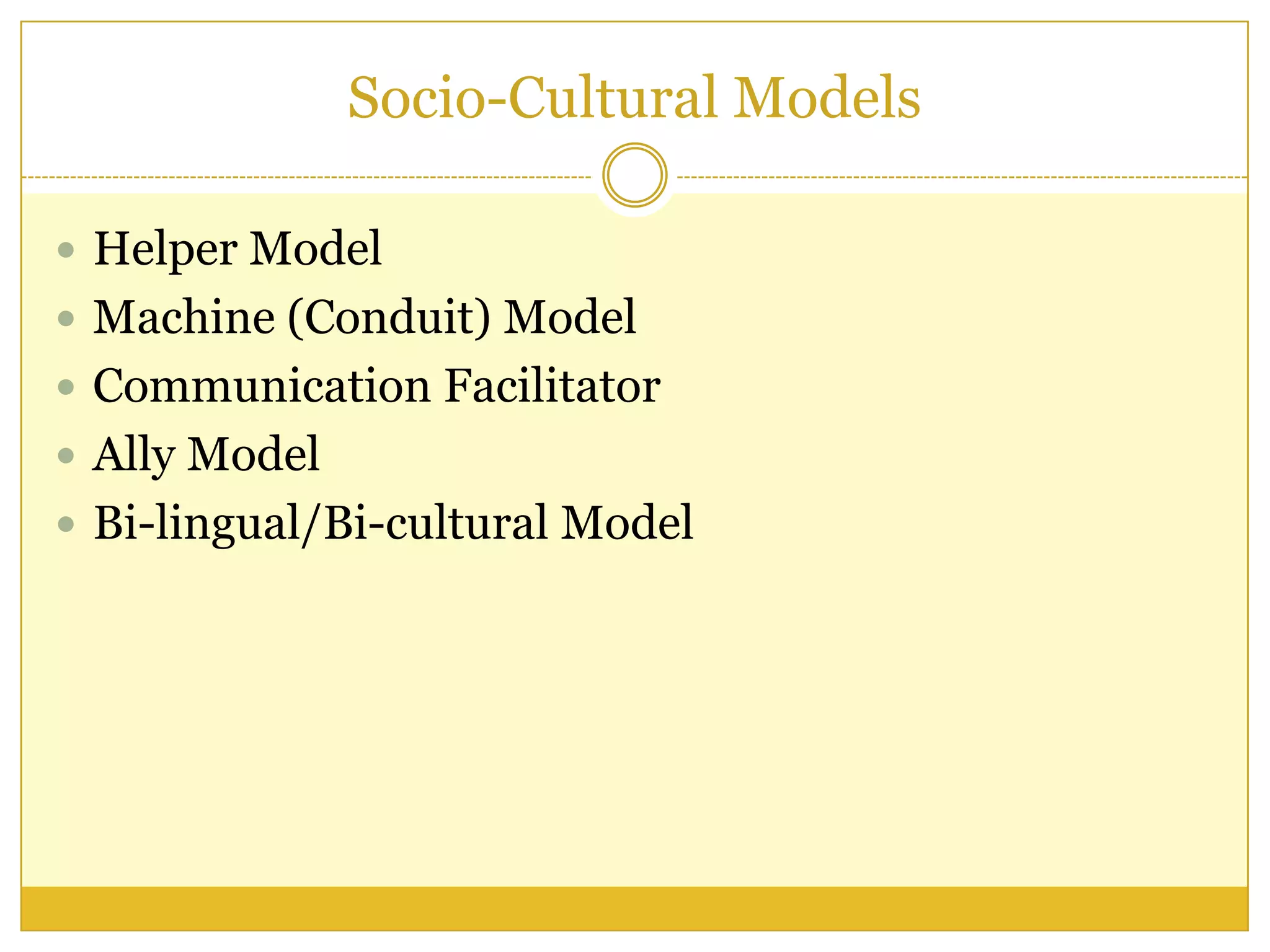
Socio-Cultural Models
HelperModel
Machine (Conduit) Model
Communication Facilitator
Ally Model
Bi-lingual/Bi-cultural Model
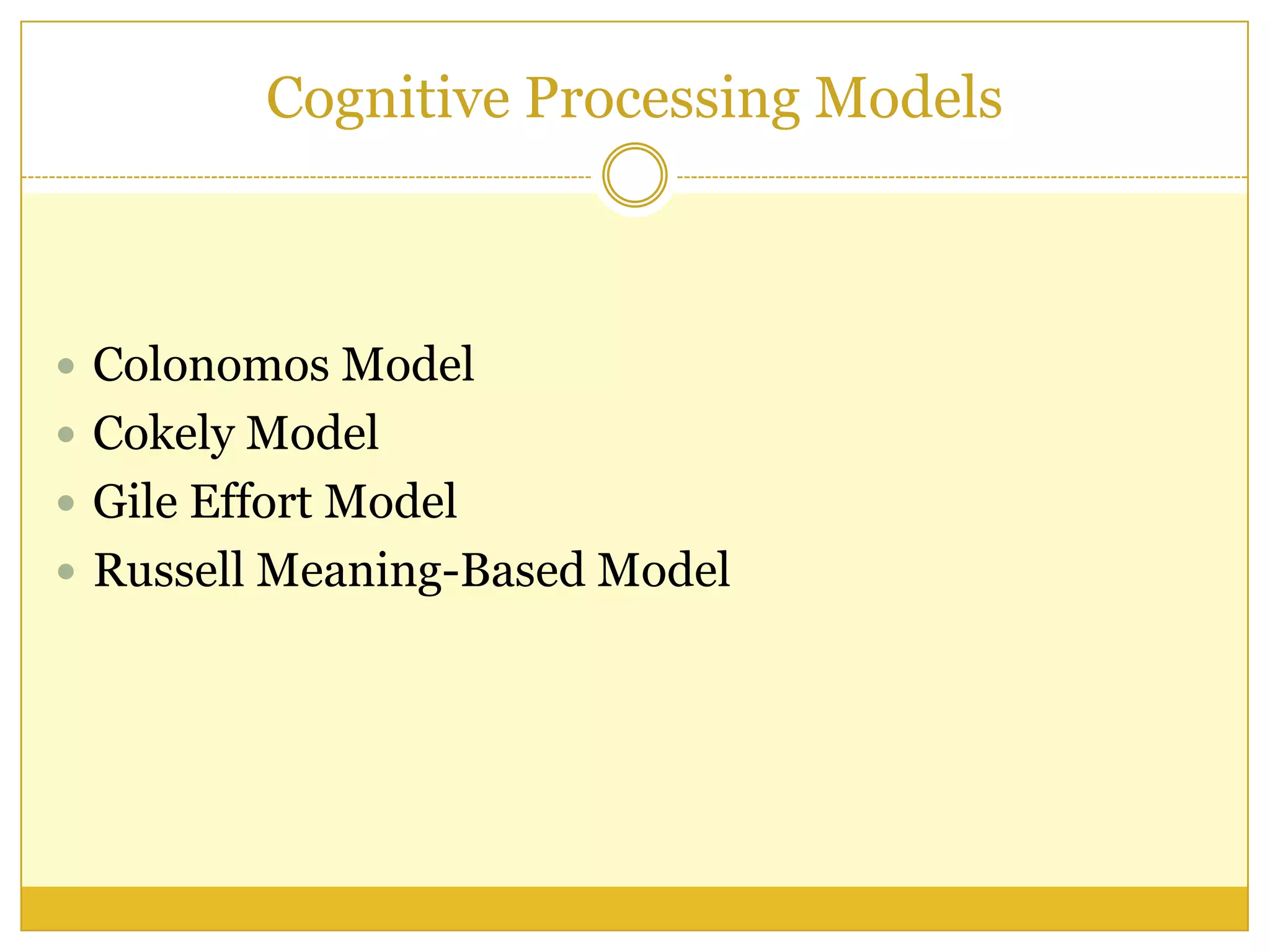
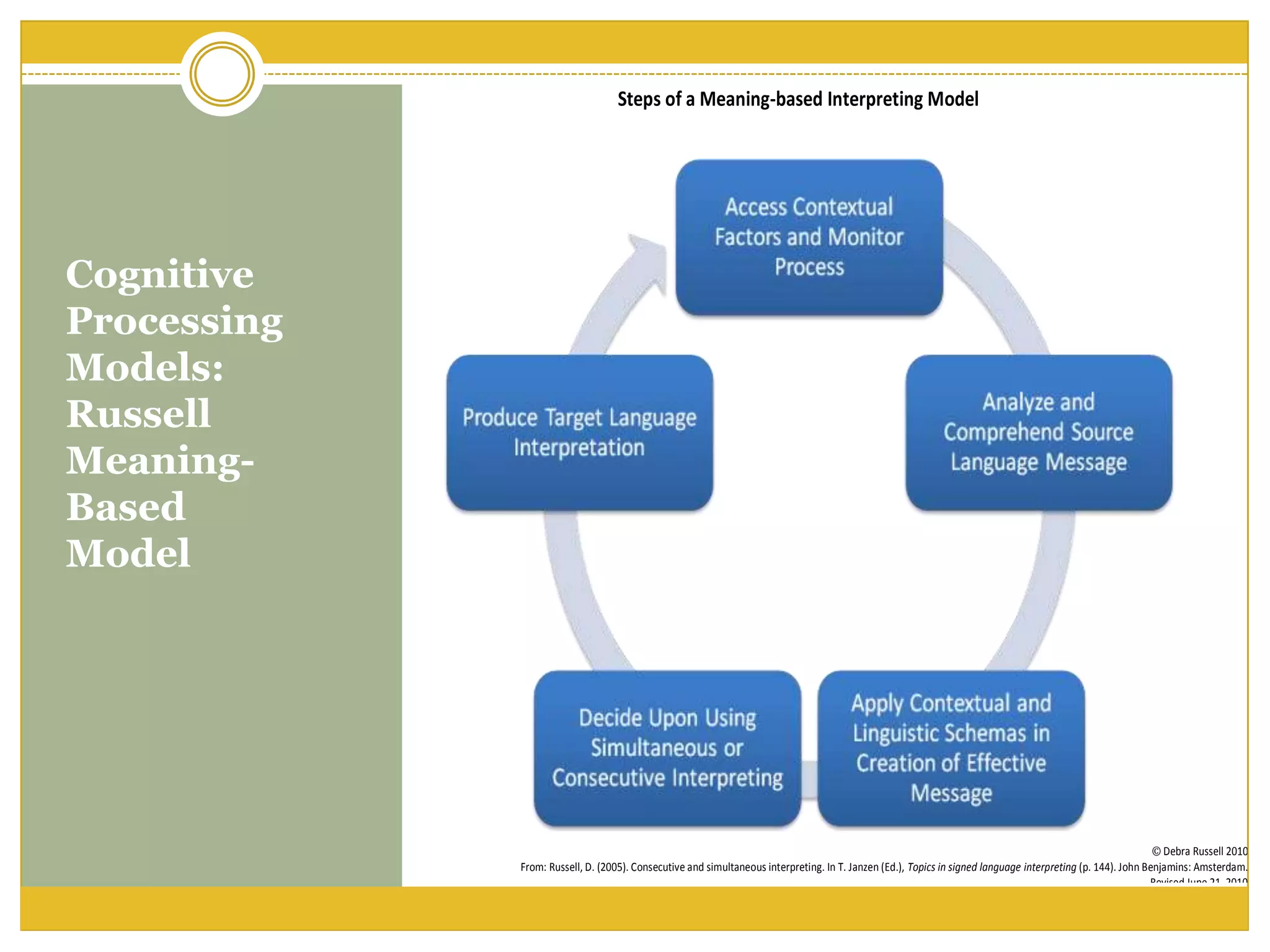
Cognitive
Processing
Models:
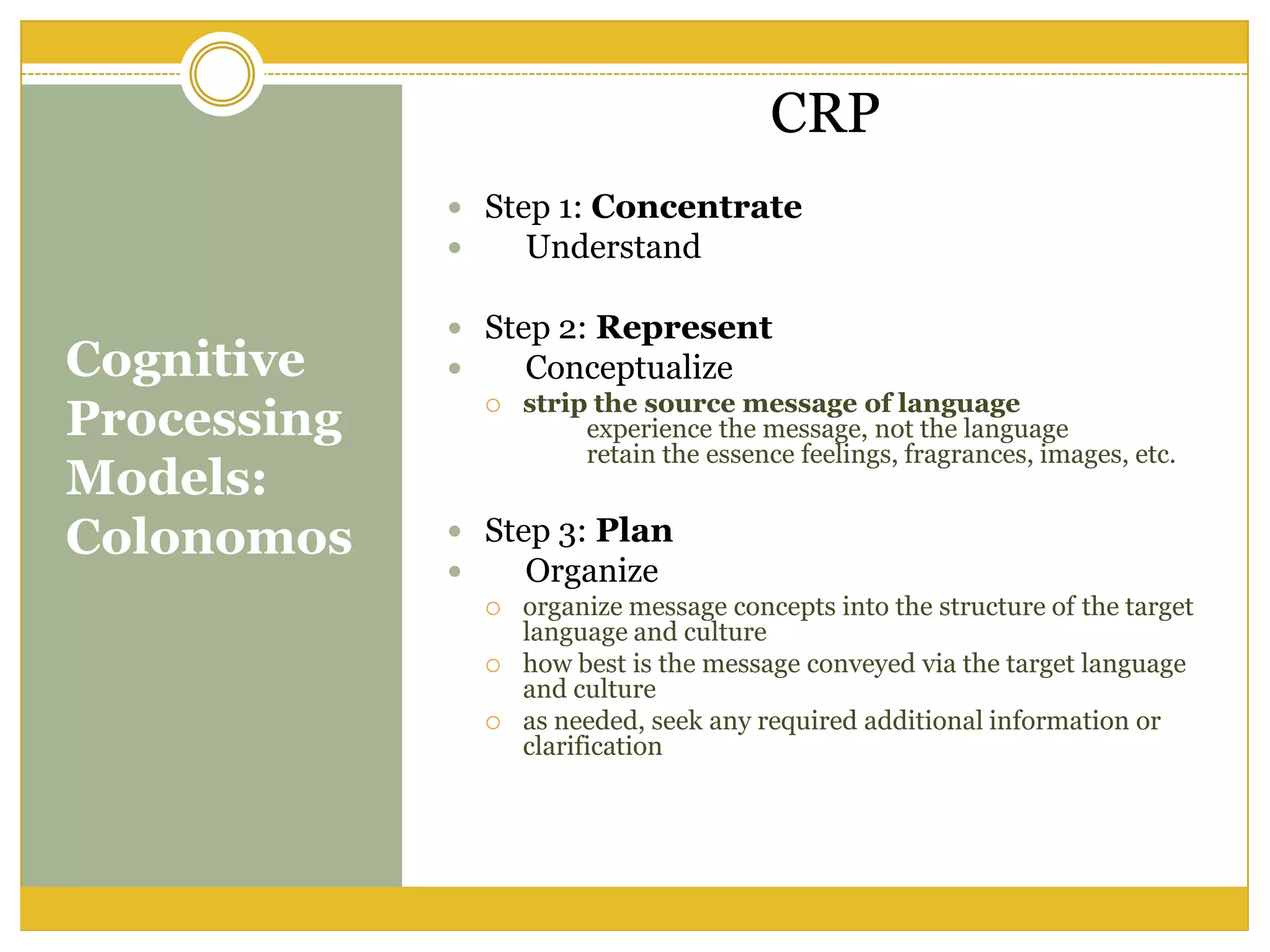
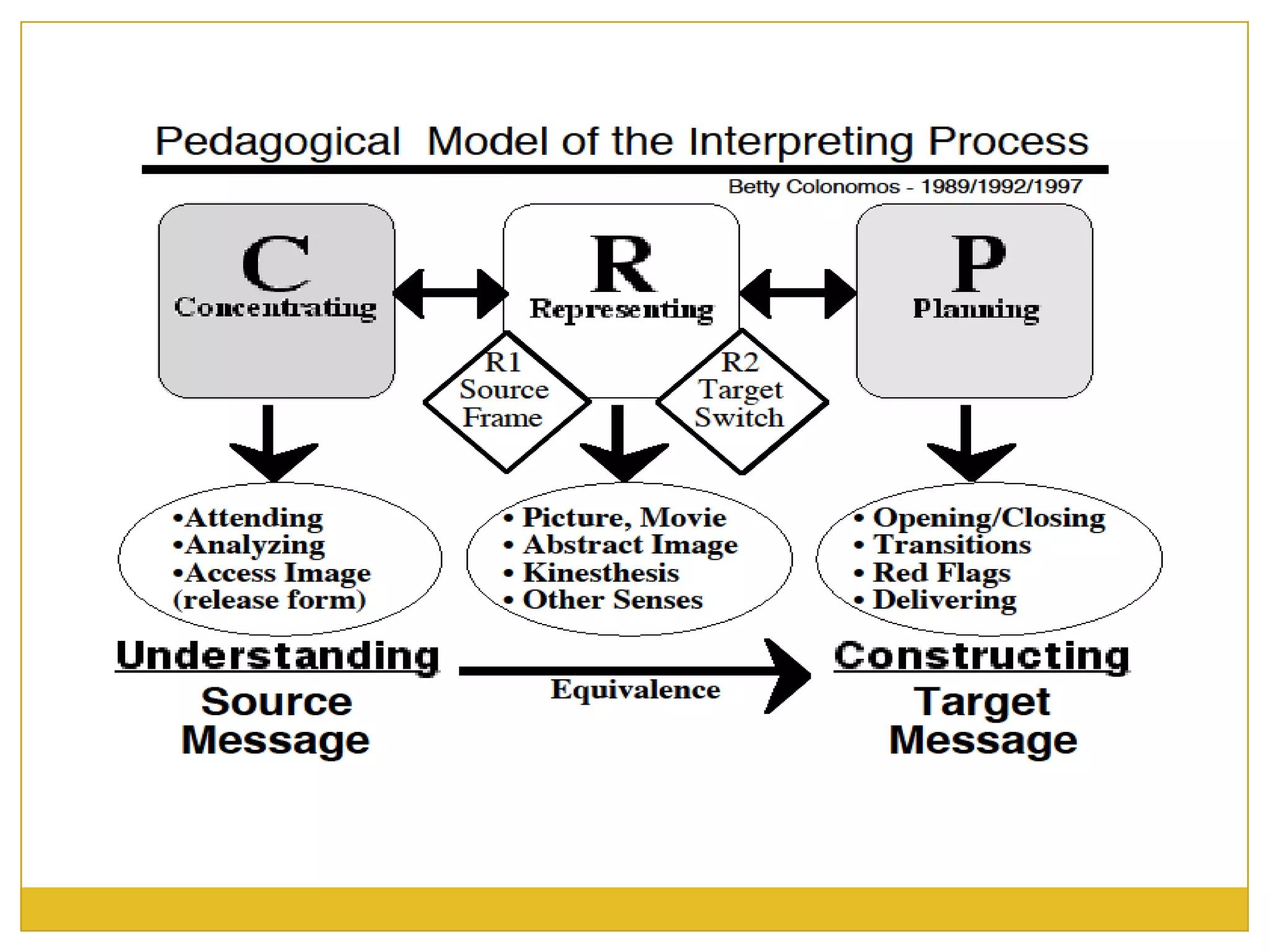
Colonomos
CRP
Step 1:Concentrate
Understand
Step 2: Represent
Conceptualize
strip the source message of language
experience the message, not the language
retain the essence feelings, fragrances, images, etc.
Step 3: Plan
Organize
organize message concepts into the structure of the target
language and culture
how best is the message conveyed via the target language
and culture
as needed, seek any required additional information or
clarification
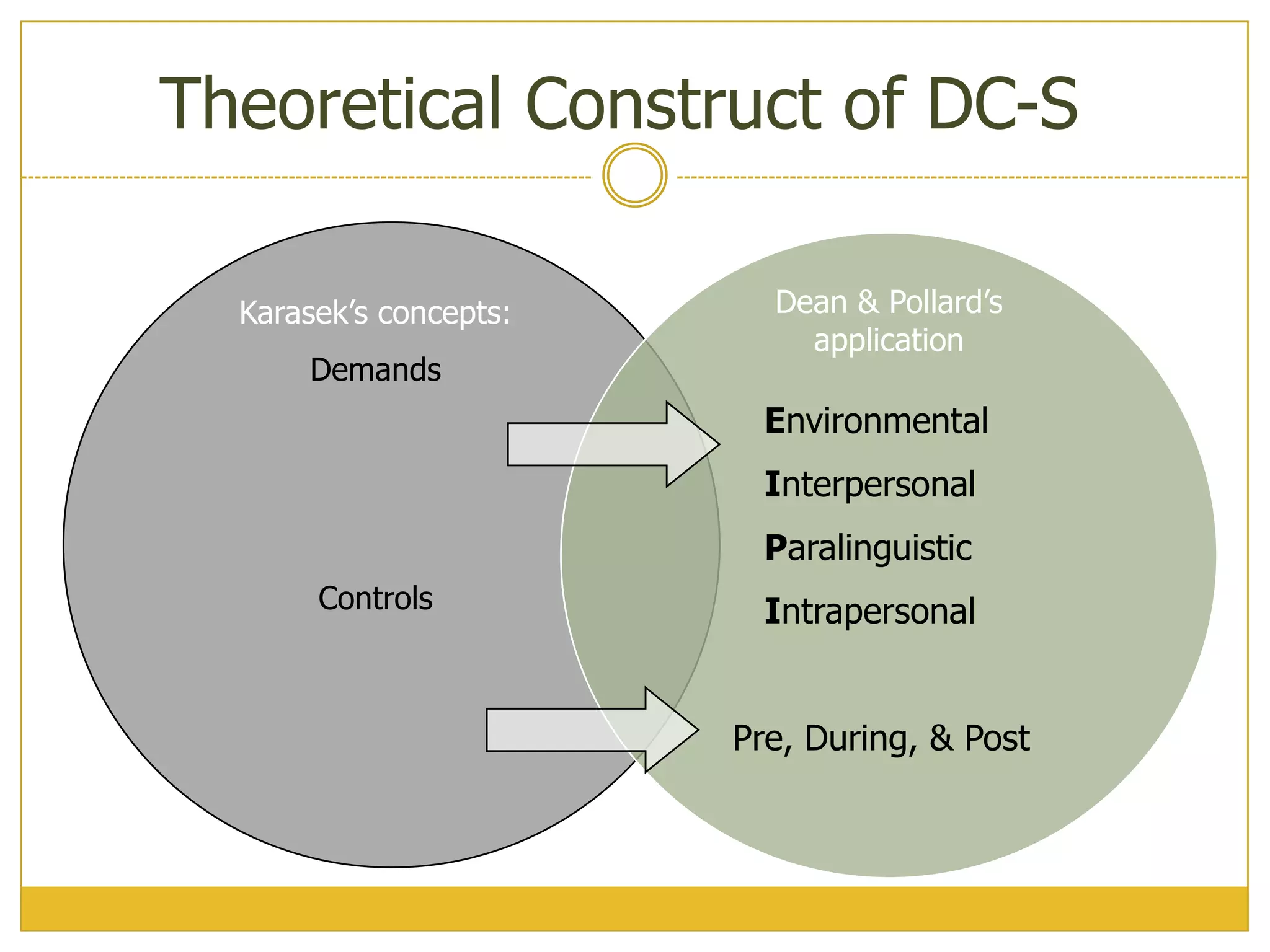
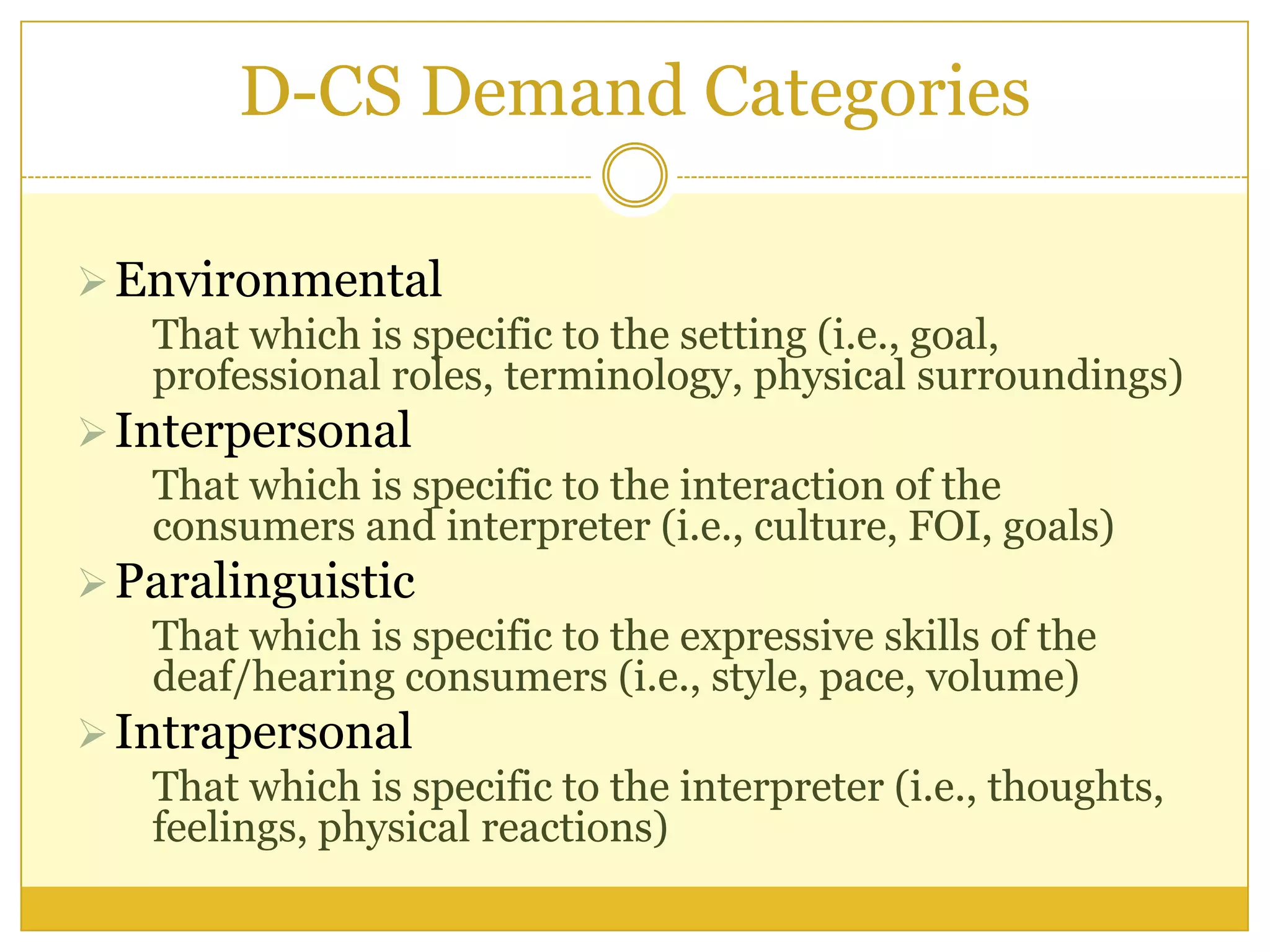
D-CS Demand Categories
Environmental
Thatwhich is specific to the setting (i.e., goal,
professional roles, terminology, physical surroundings)
Interpersonal
That which is specific to the interaction of the
consumers and interpreter (i.e., culture, FOI, goals)
Paralinguistic
That which is specific to the expressive skills of the
deaf/hearing consumers (i.e., style, pace, volume)
Intrapersonal
That which is specific to the interpreter (i.e., thoughts,
feelings, physical reactions)
23.
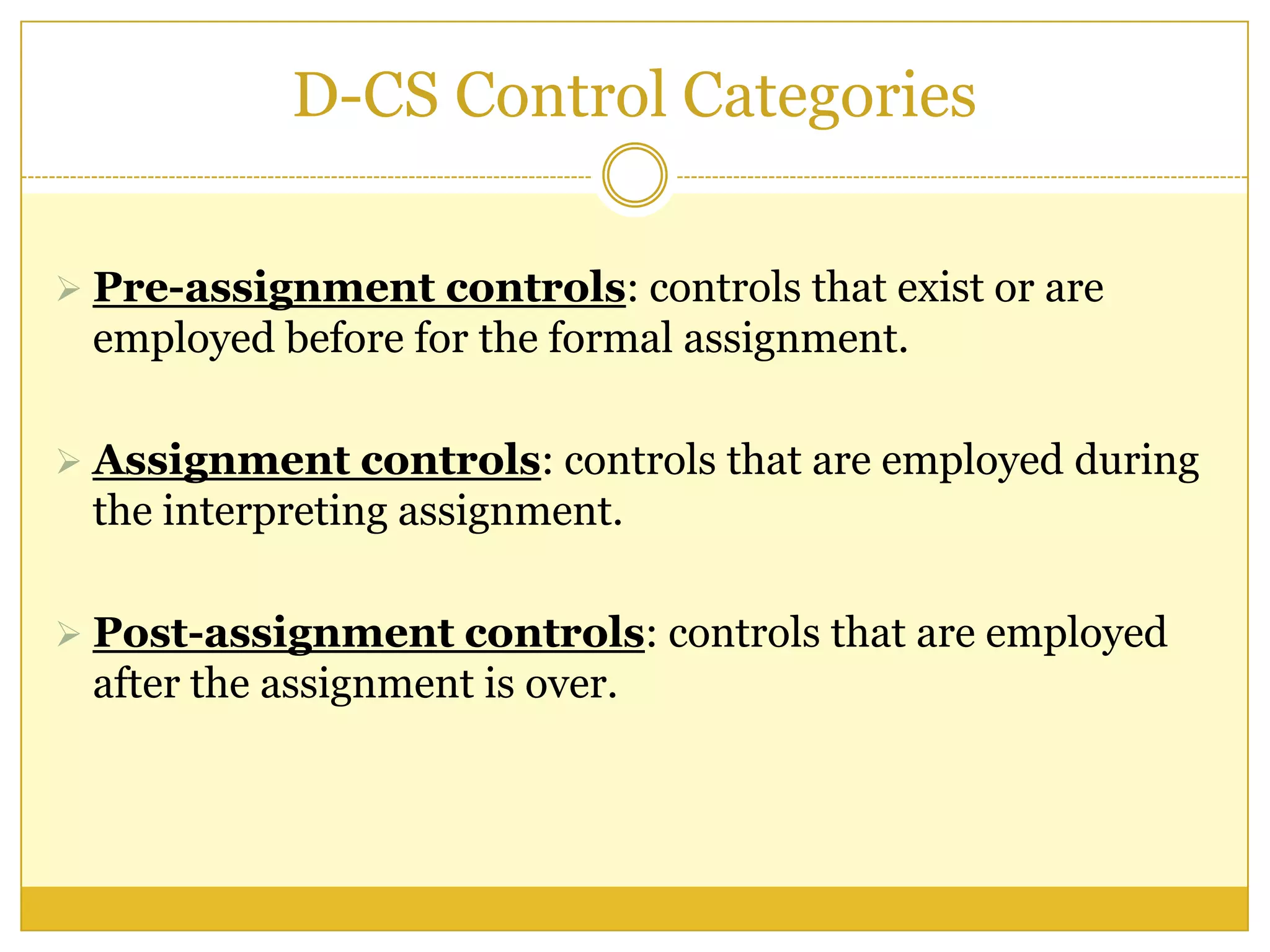
D-CS Control Categories
Pre-assignment controls: controls that exist or are
employed before for the formal assignment.
Assignment controls: controls that are employed during
the interpreting assignment.
Post-assignment controls: controls that are employed
after the assignment is over.


![[TEFL] Language Teaching Methods/ Approaches](https://cdn.slidesharecdn.com/ss_thumbnails/tefl1-150402185109-conversion-gate01-thumbnail.jpg?width=640&height=640&fit=bounds)


![Vibe Coding vs. Spec-Driven Development [Free Meetup]](https://cdn.slidesharecdn.com/ss_thumbnails/vibecodingvsspecdrivendevelopment-251209105622-43f455e7-thumbnail.jpg?width=640&height=640&fit=bounds)


