Interpersonal Understanding and Comforting
Empathy is the process of identifying with the feelings of others.
Approaches to Empathy Empathic Responsiveness Perspective Taking Sympathetic Responsiveness
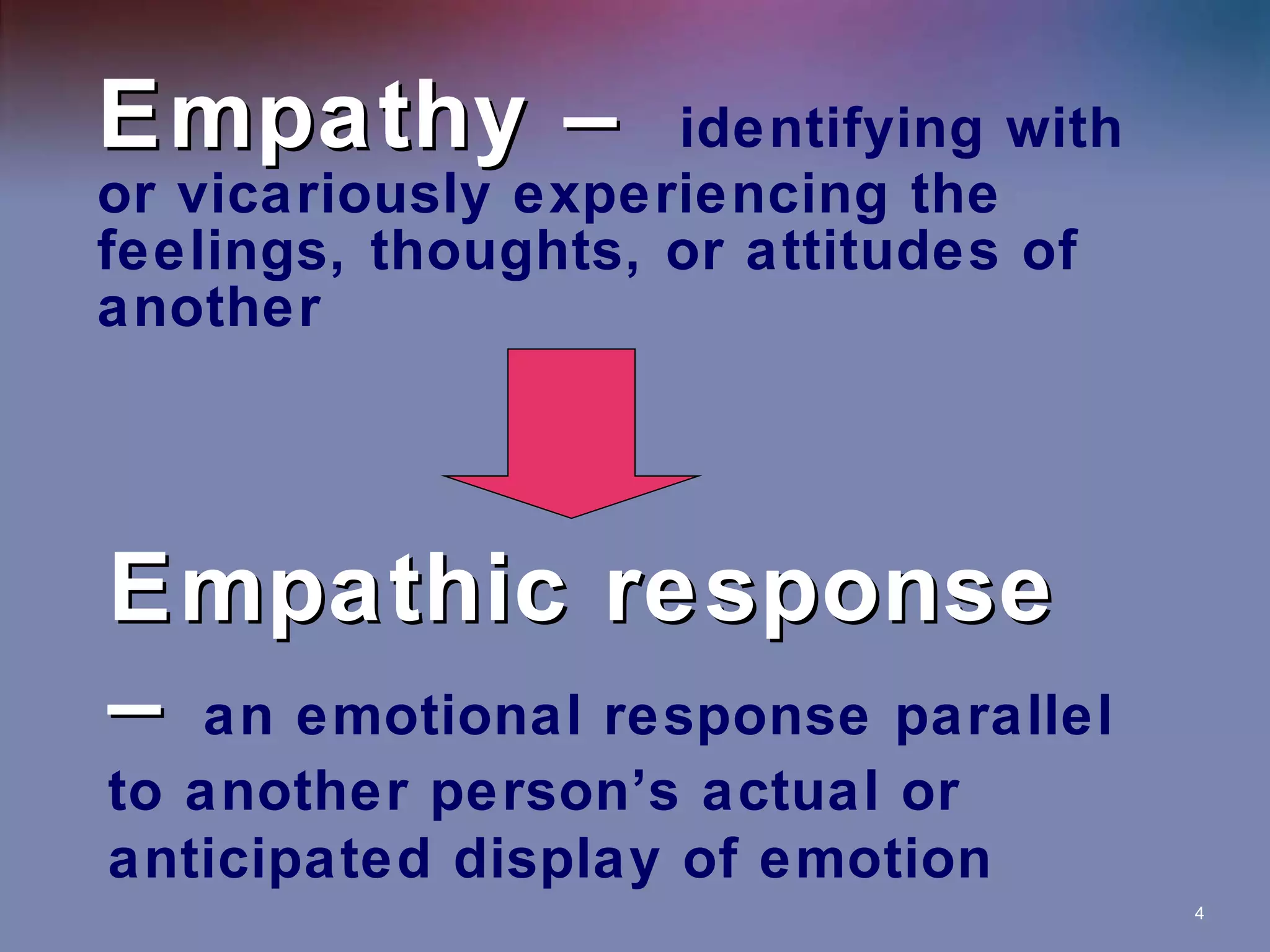
Empathy –  identifying with or vicariously experiencing the feelings, thoughts, or attitudes of another Empathic response –  an emotional response parallel to another person’s actual or anticipated display of emotion
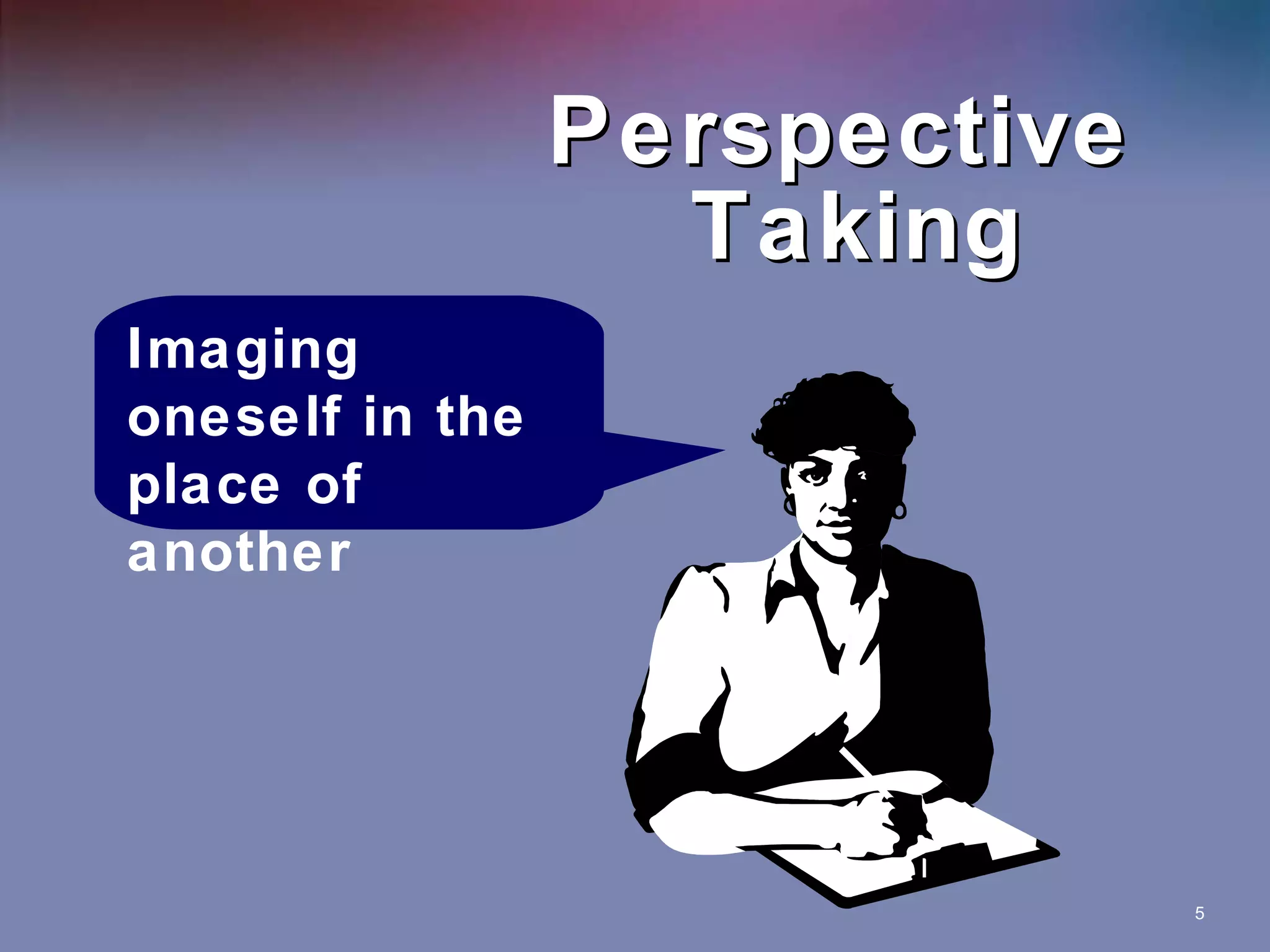
Perspective  Taking Imaging oneself in the place of another
Sympathetic Responsiveness Feeling concern, compassion, or sorrow for another because of the other’s situation or plight
How do we Empathize? Actively attend to what the person is saying. Observe and understand both verbal and nonverbal messages, using paraphrases and perception checking to help you. Draw on your experience to understand the situation.
Paraphrasing Put your understanding of a message into words to clarify meaning. Content – conveys understanding of the denotative meaning Feeling – conveys your understanding of the speaker’s connotative meaning
Empathizing Can be particularly difficult across cultures. Cross-cultural communication requires us to be even more attentive to verbal and non-verbal clues than we normally would.
Supporting –  a   statement whose goal is to show approval, bolster, encourage, soothe, console, or cheer up Recognize others’ good feelings and affirm their right to have them. Give comfort when a person has negative feelings.
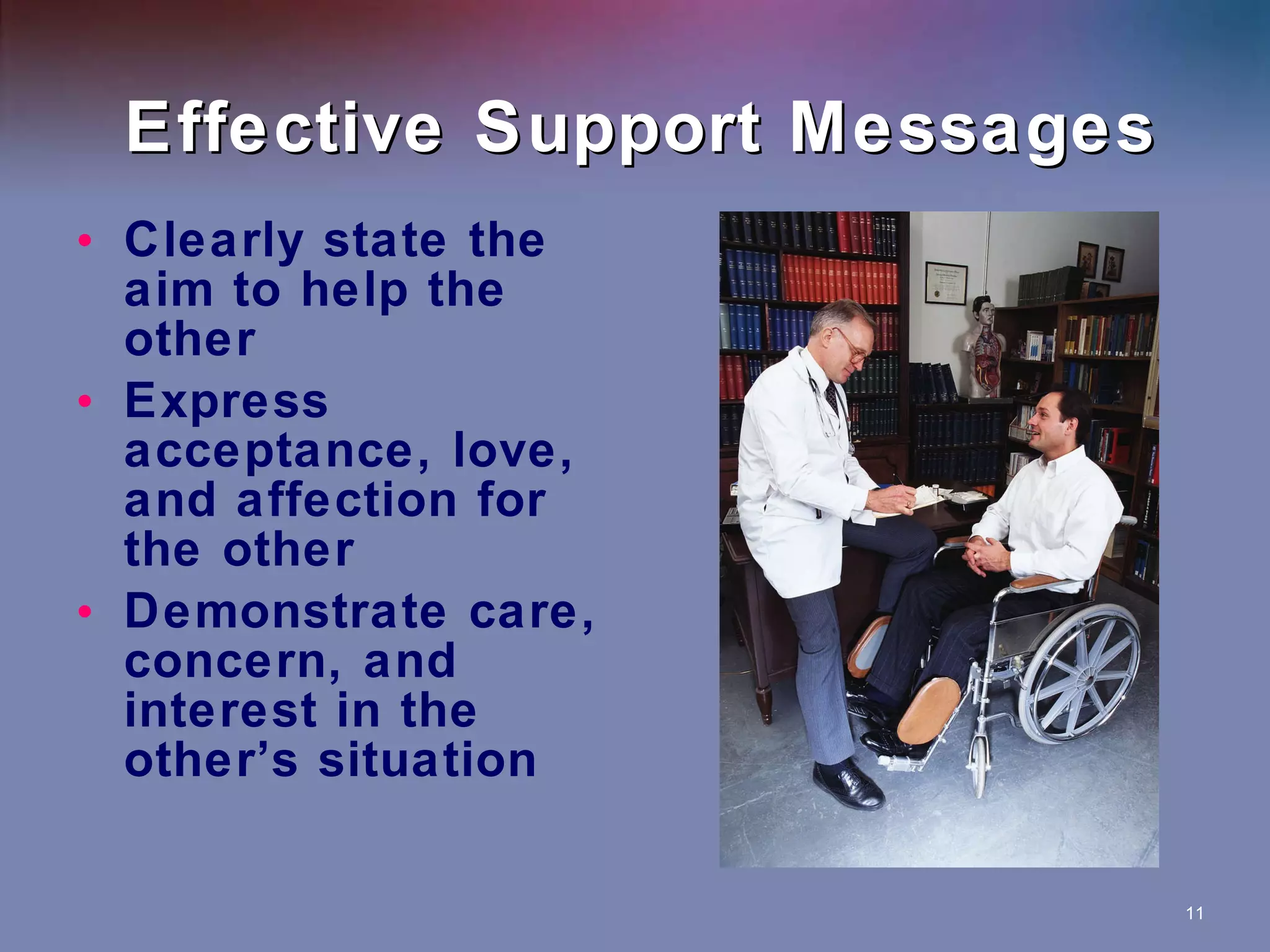
Effective Support Messages Clearly state the aim to help the other Express acceptance, love, and affection for the other Demonstrate care, concern, and interest in the other’s situation
Effective Support Messages (2) Indicate that the speaker is available to listen and support the other State that the speaker is an ally Acknowledge the other’s feelings and situation and express sincere sympathy Assure the other that feelings are legitimate Encourage the other to elaborate
Ineffective Support Messages Condemn and criticize the other’s feelings and behavior Imply that the other’s feelings are not warranted Tell the other how to feel Focus attention on the speaker Intrude by representing a level of concern greater than is appropriate within the relationship
Supportive Message Skills We can all benefit from training in the six supportive message skills (identified by Brian Burleson): Clarifying supportive intentions Buffering face threats (negative and positive) Using Other-centered messages Framing messages Giving advice
Clarifying Supportive Intentions Directly state your intentions by emphasizing your desire to help Remind your partner of your commitment to the relationship Indicate that helping is your only motive Phrase your clarification in a way that reflects helpfulness.
Buffering Face Threats Positive Facework messages protect the partner’s need to be respected, liked, and valued. Describe and convey positive feelings about what the other has said and done Express your admiration for their courage Acknowledge the difficulty of the situation Express your belief that the other has the qualities and skills needed to endure
Buffering Face Threats (2) Negative facework messages support the partner’s need for independence and autonomy. Ask for permission before giving advice Verbally defer to the opinions and preferences of the other person Use tentative language to hedge and qualify opinions and advice
Using Other-Centered Messages Ask questions that prompt the person to elaborate on what happened Emphasize your willingness to listen to an extended story Use vocalized encouragement and non-verbal behavior to communicate continued interest Affirm, legitimize, and encourage exploration of feelings expressed by partner Demonstrate the you understand but avoid changing the focus to you.
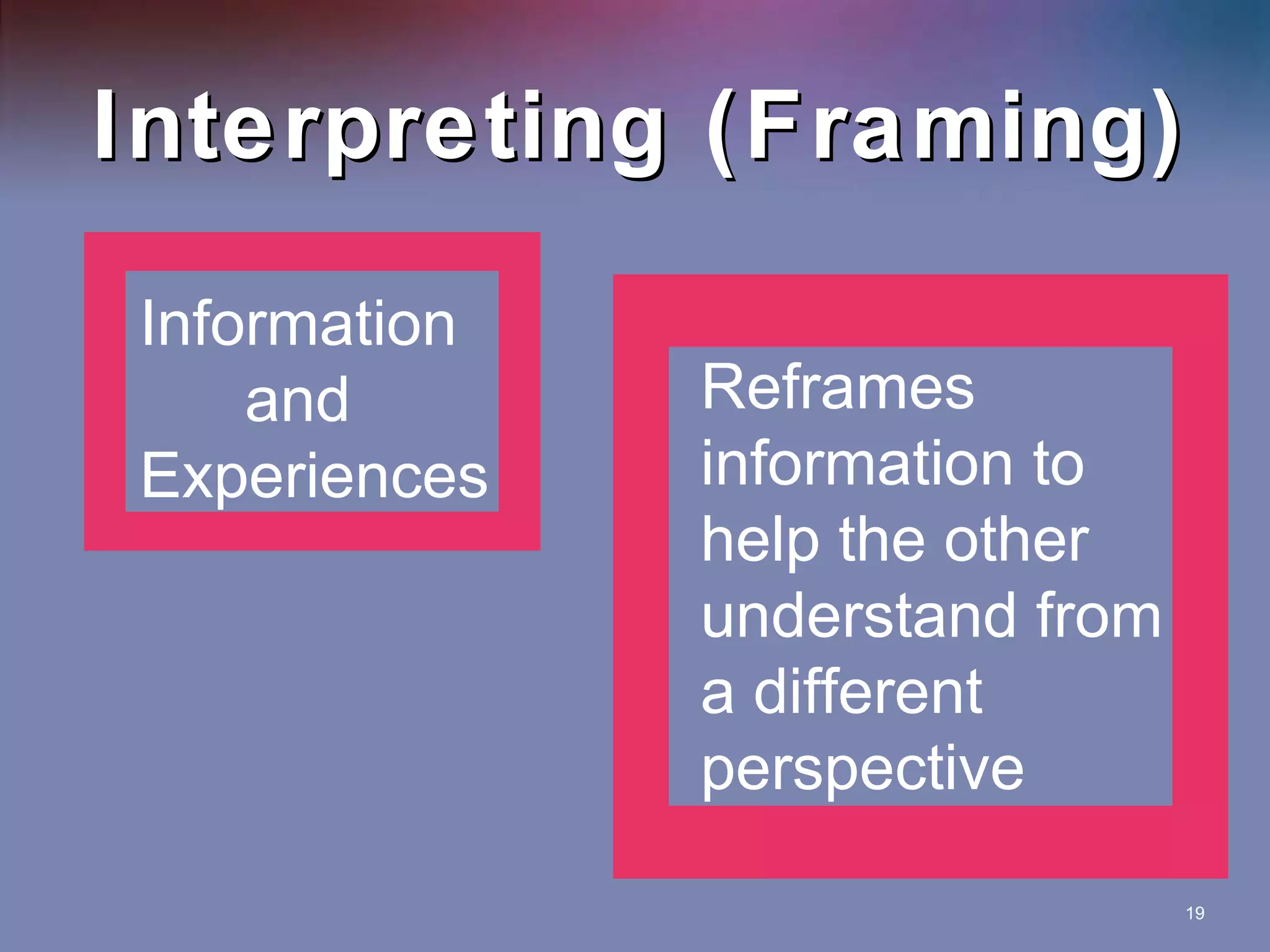
Interpreting (Framing) Information  and Experiences Reframes information to help the other understand from a different perspective
Giving Advice Advice giving messages present relevant suggestions that a person could use to satisfactorily resolve a situation. In general, advice messages should not be expressed until our supportive intentions are fully understood.
 

Interpersonal Understanding and Comforting

  • 1.
  • 2.
    Empathy is theprocess of identifying with the feelings of others.
  • 3.
    Approaches to EmpathyEmpathic Responsiveness Perspective Taking Sympathetic Responsiveness
  • 4.
    Empathy – identifying with or vicariously experiencing the feelings, thoughts, or attitudes of another Empathic response – an emotional response parallel to another person’s actual or anticipated display of emotion
  • 5.
    Perspective TakingImaging oneself in the place of another
  • 6.
    Sympathetic Responsiveness Feelingconcern, compassion, or sorrow for another because of the other’s situation or plight
  • 7.
    How do weEmpathize? Actively attend to what the person is saying. Observe and understand both verbal and nonverbal messages, using paraphrases and perception checking to help you. Draw on your experience to understand the situation.
  • 8.
    Paraphrasing Put yourunderstanding of a message into words to clarify meaning. Content – conveys understanding of the denotative meaning Feeling – conveys your understanding of the speaker’s connotative meaning
  • 9.
    Empathizing Can beparticularly difficult across cultures. Cross-cultural communication requires us to be even more attentive to verbal and non-verbal clues than we normally would.
  • 10.
    Supporting – a statement whose goal is to show approval, bolster, encourage, soothe, console, or cheer up Recognize others’ good feelings and affirm their right to have them. Give comfort when a person has negative feelings.
  • 11.
    Effective Support MessagesClearly state the aim to help the other Express acceptance, love, and affection for the other Demonstrate care, concern, and interest in the other’s situation
  • 12.
    Effective Support Messages(2) Indicate that the speaker is available to listen and support the other State that the speaker is an ally Acknowledge the other’s feelings and situation and express sincere sympathy Assure the other that feelings are legitimate Encourage the other to elaborate
  • 13.
    Ineffective Support MessagesCondemn and criticize the other’s feelings and behavior Imply that the other’s feelings are not warranted Tell the other how to feel Focus attention on the speaker Intrude by representing a level of concern greater than is appropriate within the relationship
  • 14.
    Supportive Message SkillsWe can all benefit from training in the six supportive message skills (identified by Brian Burleson): Clarifying supportive intentions Buffering face threats (negative and positive) Using Other-centered messages Framing messages Giving advice
  • 15.
    Clarifying Supportive IntentionsDirectly state your intentions by emphasizing your desire to help Remind your partner of your commitment to the relationship Indicate that helping is your only motive Phrase your clarification in a way that reflects helpfulness.
  • 16.
    Buffering Face ThreatsPositive Facework messages protect the partner’s need to be respected, liked, and valued. Describe and convey positive feelings about what the other has said and done Express your admiration for their courage Acknowledge the difficulty of the situation Express your belief that the other has the qualities and skills needed to endure
  • 17.
    Buffering Face Threats(2) Negative facework messages support the partner’s need for independence and autonomy. Ask for permission before giving advice Verbally defer to the opinions and preferences of the other person Use tentative language to hedge and qualify opinions and advice
  • 18.
    Using Other-Centered MessagesAsk questions that prompt the person to elaborate on what happened Emphasize your willingness to listen to an extended story Use vocalized encouragement and non-verbal behavior to communicate continued interest Affirm, legitimize, and encourage exploration of feelings expressed by partner Demonstrate the you understand but avoid changing the focus to you.
  • 19.
    Interpreting (Framing) Information and Experiences Reframes information to help the other understand from a different perspective
  • 20.
    Giving Advice Advicegiving messages present relevant suggestions that a person could use to satisfactorily resolve a situation. In general, advice messages should not be expressed until our supportive intentions are fully understood.
  • 21.