



Internet Safety Resources to help keep your kids safe
93% of teens use the Internet A 2009 report from Pew Research Center's Internet & American Life Project states that
73% of online teens use social network sites 14% of online teens keep blogs 54% read blogs A 2009 report from Pew Research Center's Internet & American Life Project states that
70% of teens have digital cameras 60% post photos online A 2009 report from Pew Research Center's Internet & American Life Project states that
40% have video cameras 25% have uploaded video 75% view videos on the Internet A 2009 report from Pew Research Center's Internet & American Life Project states that
84% of 8-18 year-olds have internet access in their homes 31% of 8-10 year-olds own a cell phone 17% have a laptop 65% have a handheld gaming device A 2009 report from the Kaiser Family Foundation: Generation M 2
71% reported receiving messages online from someone they don’t know.  45% have been asked for personal information by someone they don’t know.  30% have considered meeting someone that they’ve only talked to online  14% have actually met a person face-to-face they they’ve only spoken to over the Internet (9% of 13-15s; 22% of 16-17s). A survey (2006) commissioned by Cox Communications and National Center for Missing & Exploited Children® found that
 
KidZui KidDesktop
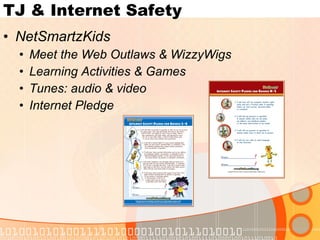
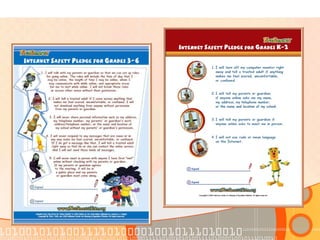
TJ & Internet Safety NetSmartzKids Meet the Web Outlaws & WizzyWigs Learning Activities & Games Tunes: audio & video Internet Pledge
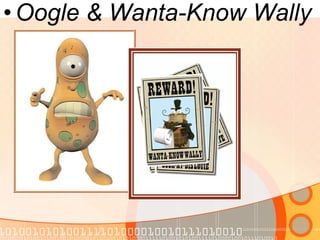
Oogle & Wanta-Know Wally
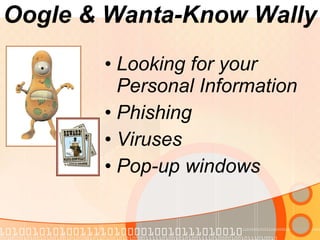
Looking for your Personal Information Phishing Viruses Pop-up windows Oogle & Wanta-Know Wally
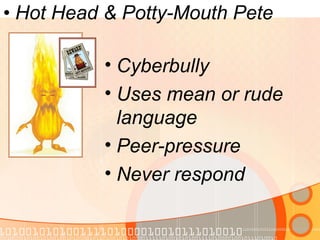
Hot Head & Potty-Mouth Pete
Hot Head & Potty-Mouth Pete Cyberbully Uses mean or rude language Peer-pressure Never respond
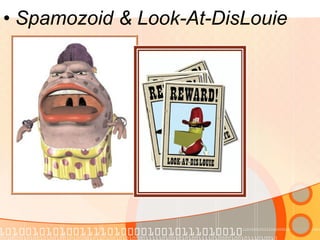
Spamozoid & Look-At-DisLouie
Spamozoid & Look-At-DisLouie SPAM E-mail Viruses Never open unless you know the sender
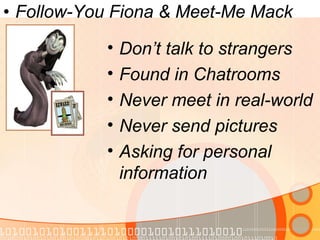
Follow-You Fiona & Meet-Me Mack
Follow-You Fiona & Meet-Me Mack Don’t talk to strangers Found in Chatrooms Never meet in real-world Never send pictures Asking for personal information
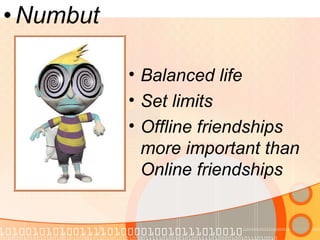
Numbut Balanced life Set limits Offline friendships more important than Online friendships
 
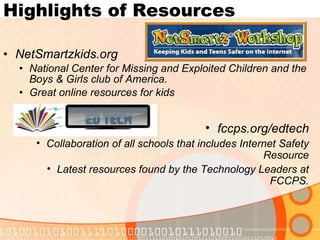
Highlights of Resources NetSmartzkids.org National Center for Missing and Exploited Children and the Boys & Girls club of America. Great online resources for kids fccps.org/edtech Collaboration of all schools that includes Internet Safety Resource Latest resources found by the Technology Leaders at FCCPS.
Highlights of Resources Online @ fccps.org/edtech & www.onguardonline.gov/
Do you feel you don’t know enough about the dangers? iSafe  (http://www.isafe.org/) iLearn Online  (http://ilearn.isafe.org/index.php) Register for Free Online Videos  (includes basics of Chat Rooms, Instant Messaging, Social Networking –MySpace, FaceBook, etc., Blogging) Paper-based manuals and activities

Internet Safety Spring 2010

  • 1.
    Internet Safety Resourcesto help keep your kids safe
  • 2.
    93% of teensuse the Internet A 2009 report from Pew Research Center's Internet & American Life Project states that
  • 3.
    73% of onlineteens use social network sites 14% of online teens keep blogs 54% read blogs A 2009 report from Pew Research Center's Internet & American Life Project states that
  • 4.
    70% of teenshave digital cameras 60% post photos online A 2009 report from Pew Research Center's Internet & American Life Project states that
  • 5.
    40% have videocameras 25% have uploaded video 75% view videos on the Internet A 2009 report from Pew Research Center's Internet & American Life Project states that
  • 6.
    84% of 8-18year-olds have internet access in their homes 31% of 8-10 year-olds own a cell phone 17% have a laptop 65% have a handheld gaming device A 2009 report from the Kaiser Family Foundation: Generation M 2
  • 7.
    71% reported receivingmessages online from someone they don’t know. 45% have been asked for personal information by someone they don’t know. 30% have considered meeting someone that they’ve only talked to online 14% have actually met a person face-to-face they they’ve only spoken to over the Internet (9% of 13-15s; 22% of 16-17s). A survey (2006) commissioned by Cox Communications and National Center for Missing & Exploited Children® found that
  • 8.
  • 9.
  • 10.
    TJ & InternetSafety NetSmartzKids Meet the Web Outlaws & WizzyWigs Learning Activities & Games Tunes: audio & video Internet Pledge
  • 11.
  • 12.
    Looking for yourPersonal Information Phishing Viruses Pop-up windows Oogle & Wanta-Know Wally
  • 13.
    Hot Head &Potty-Mouth Pete
  • 14.
    Hot Head &Potty-Mouth Pete Cyberbully Uses mean or rude language Peer-pressure Never respond
  • 15.
  • 16.
    Spamozoid & Look-At-DisLouieSPAM E-mail Viruses Never open unless you know the sender
  • 17.
    Follow-You Fiona &Meet-Me Mack
  • 18.
    Follow-You Fiona &Meet-Me Mack Don’t talk to strangers Found in Chatrooms Never meet in real-world Never send pictures Asking for personal information
  • 19.
    Numbut Balanced lifeSet limits Offline friendships more important than Online friendships
  • 20.
  • 21.
    Highlights of ResourcesNetSmartzkids.org National Center for Missing and Exploited Children and the Boys & Girls club of America. Great online resources for kids fccps.org/edtech Collaboration of all schools that includes Internet Safety Resource Latest resources found by the Technology Leaders at FCCPS.
  • 22.
    Highlights of ResourcesOnline @ fccps.org/edtech & www.onguardonline.gov/
  • 23.
    Do you feelyou don’t know enough about the dangers? iSafe (http://www.isafe.org/) iLearn Online (http://ilearn.isafe.org/index.php) Register for Free Online Videos (includes basics of Chat Rooms, Instant Messaging, Social Networking –MySpace, FaceBook, etc., Blogging) Paper-based manuals and activities