IoT
?
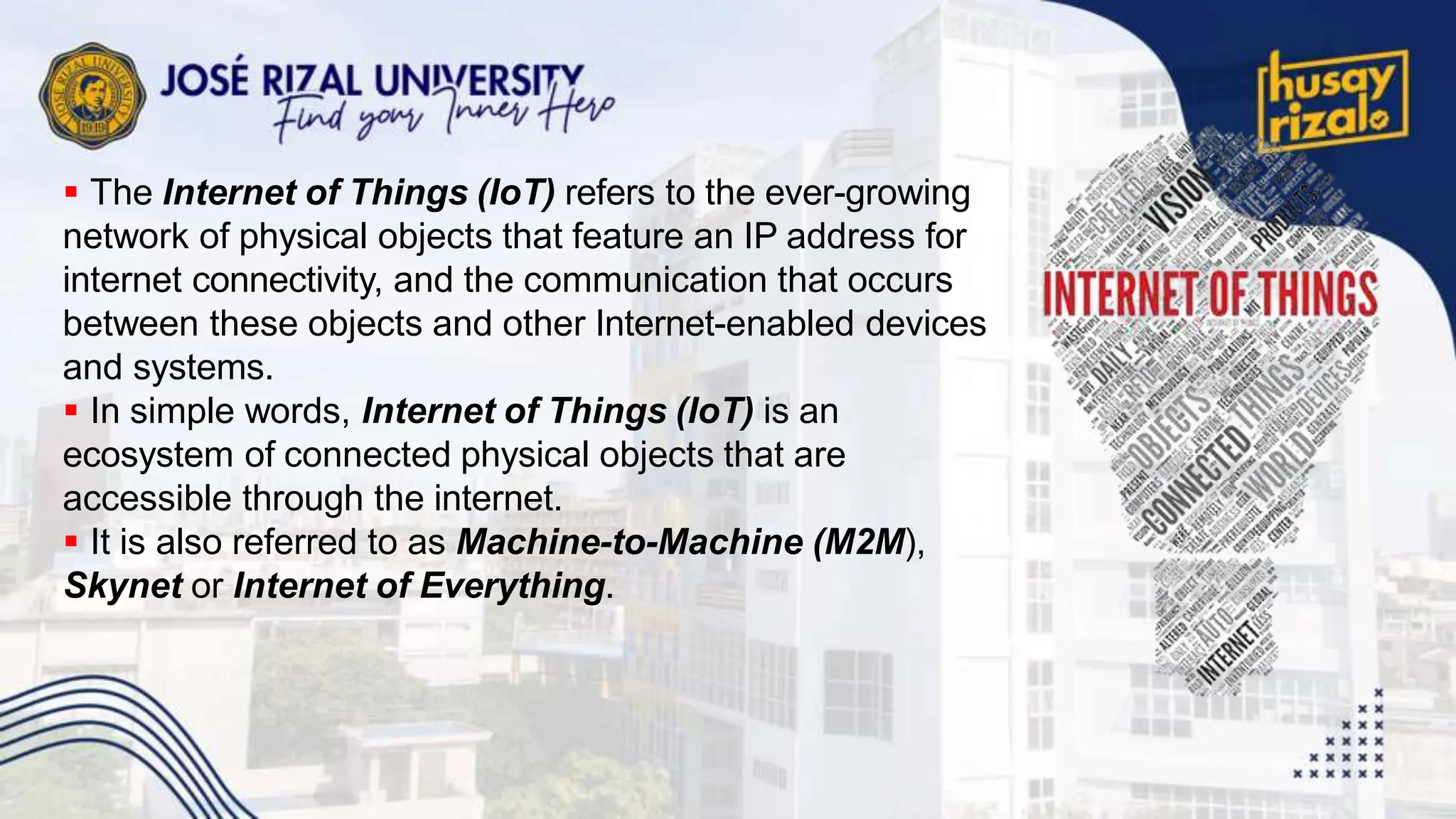
 The Internet of Things (IoT) refers to the ever-growing
network of physical objects that feature an IP address for
internet connectivity, and the communication that occurs
between these objects and other Internet-enabled devices
and systems.
 In simple words, Internet of Things (IoT) is an
ecosystem of connected physical objects that are
accessible through the internet.
 It is also referred to as Machine-to-Machine (M2M),
Skynet or Internet of Everything.
Components of IoT
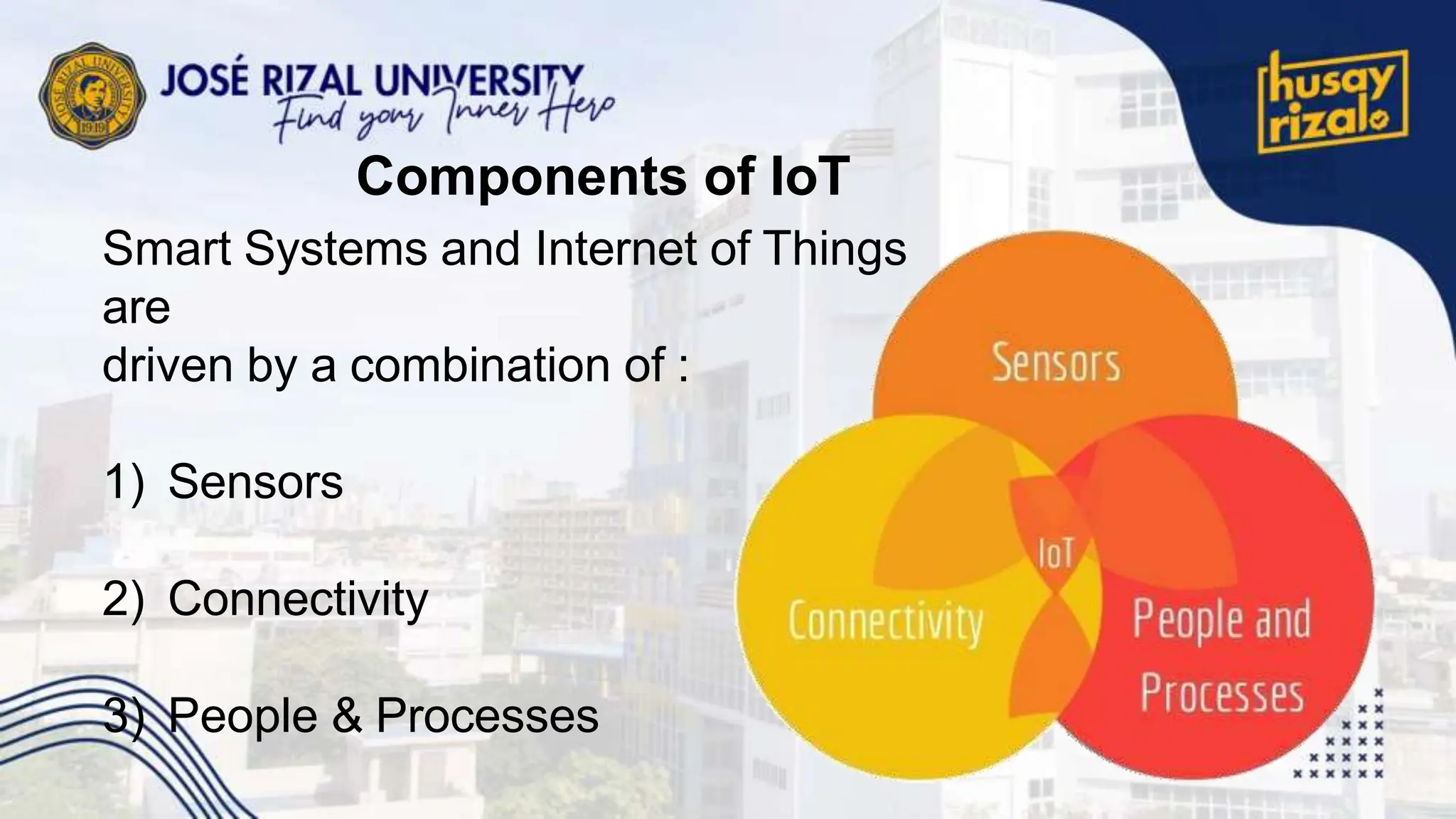
Smart Systems and Internet of Things
are
driven by a combination of :
1) Sensors
2) Connectivity
3) People & Processes
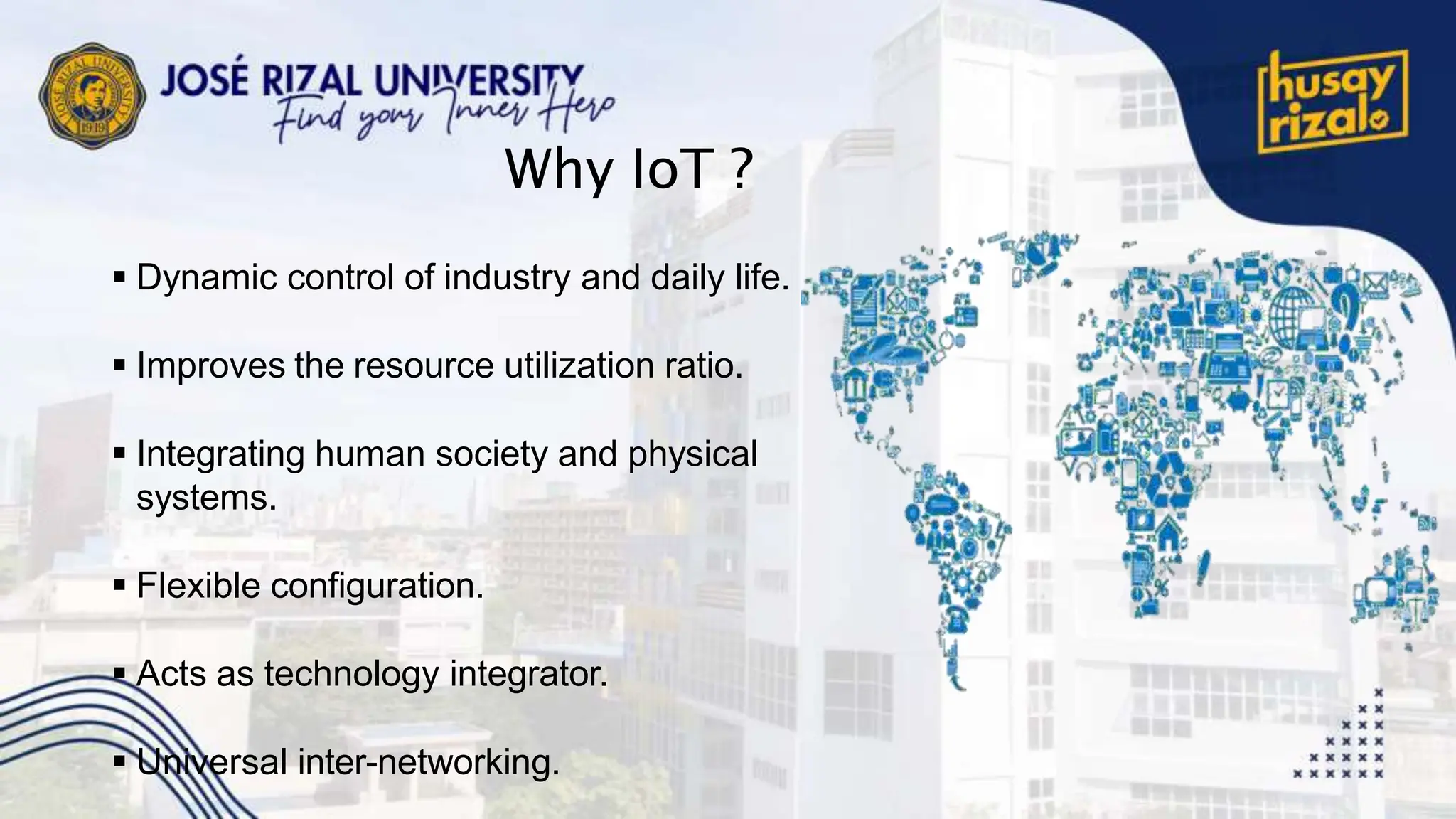
Why IoT ?
 Dynamic control of industry and daily life.
 Improves the resource utilization ratio.
 Integrating human society and physical
systems.
 Flexible configuration.
 Acts as technology integrator.
 Universal inter-networking.
What is the scope of IoT ?
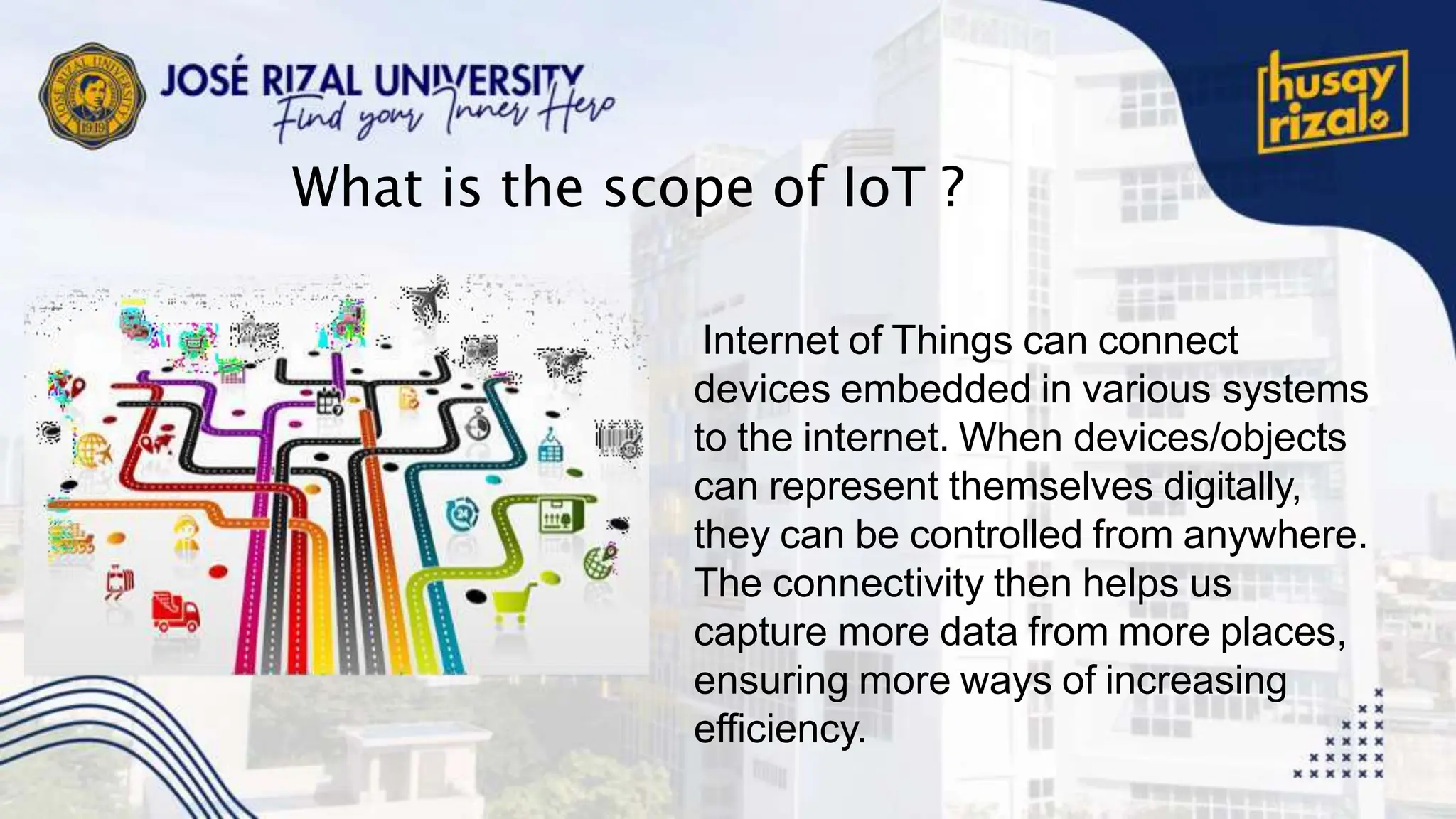
Internet of Things can connect
devices embedded in various systems
to the internet. When devices/objects
can represent themselves digitally,
they can be controlled from anywhere.
The connectivity then helps us
capture more data from more places,
ensuring more ways of increasing
efficiency.
Corporate aspect
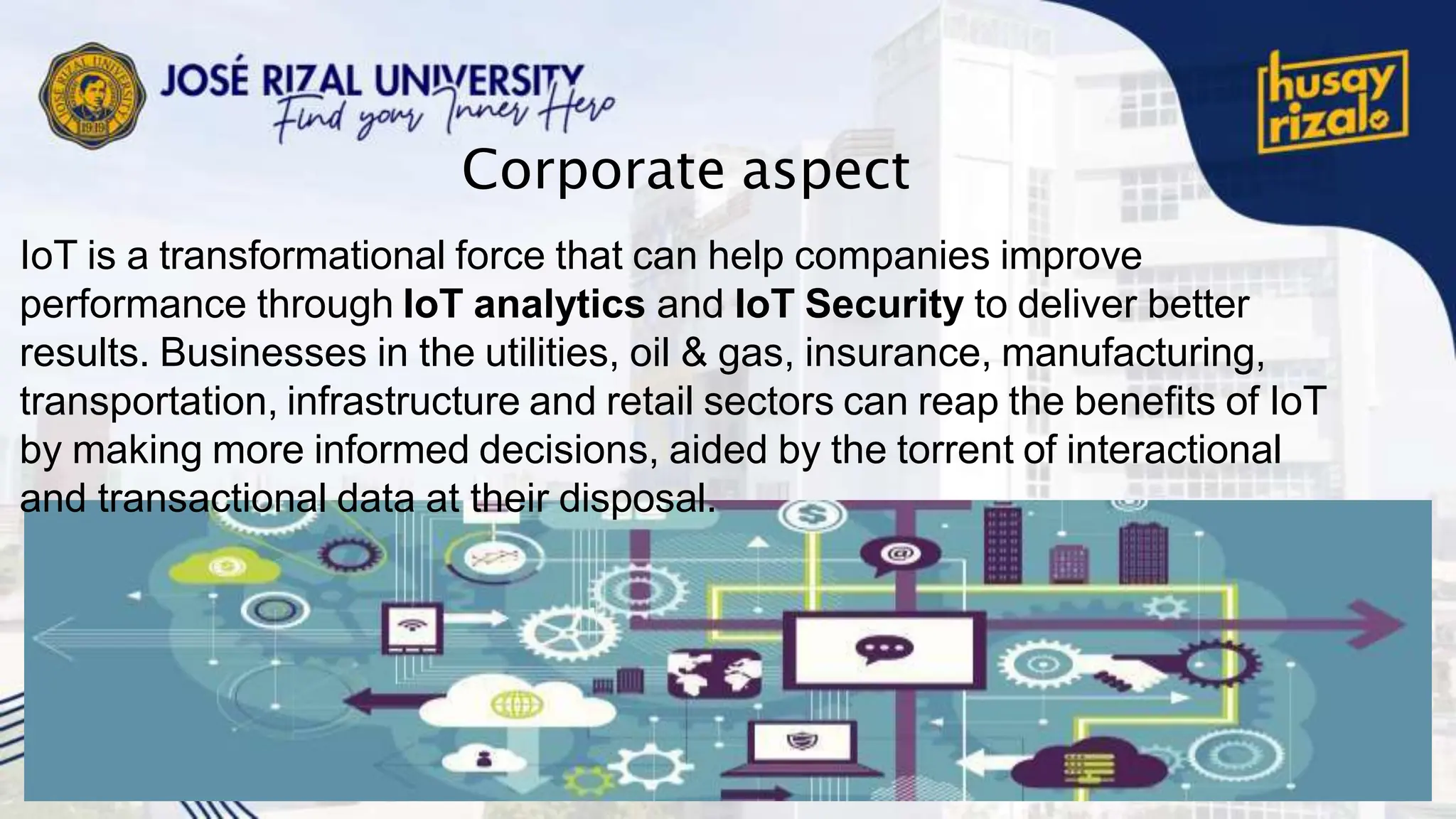
IoT is a transformational force that can help companies improve
performance through IoT analytics and IoT Security to deliver better
results. Businesses in the utilities, oil & gas, insurance, manufacturing,
transportation, infrastructure and retail sectors can reap the benefits of IoT
by making more informed decisions, aided by the torrent of interactional
and transactional data at their disposal.
How can IoT help ?
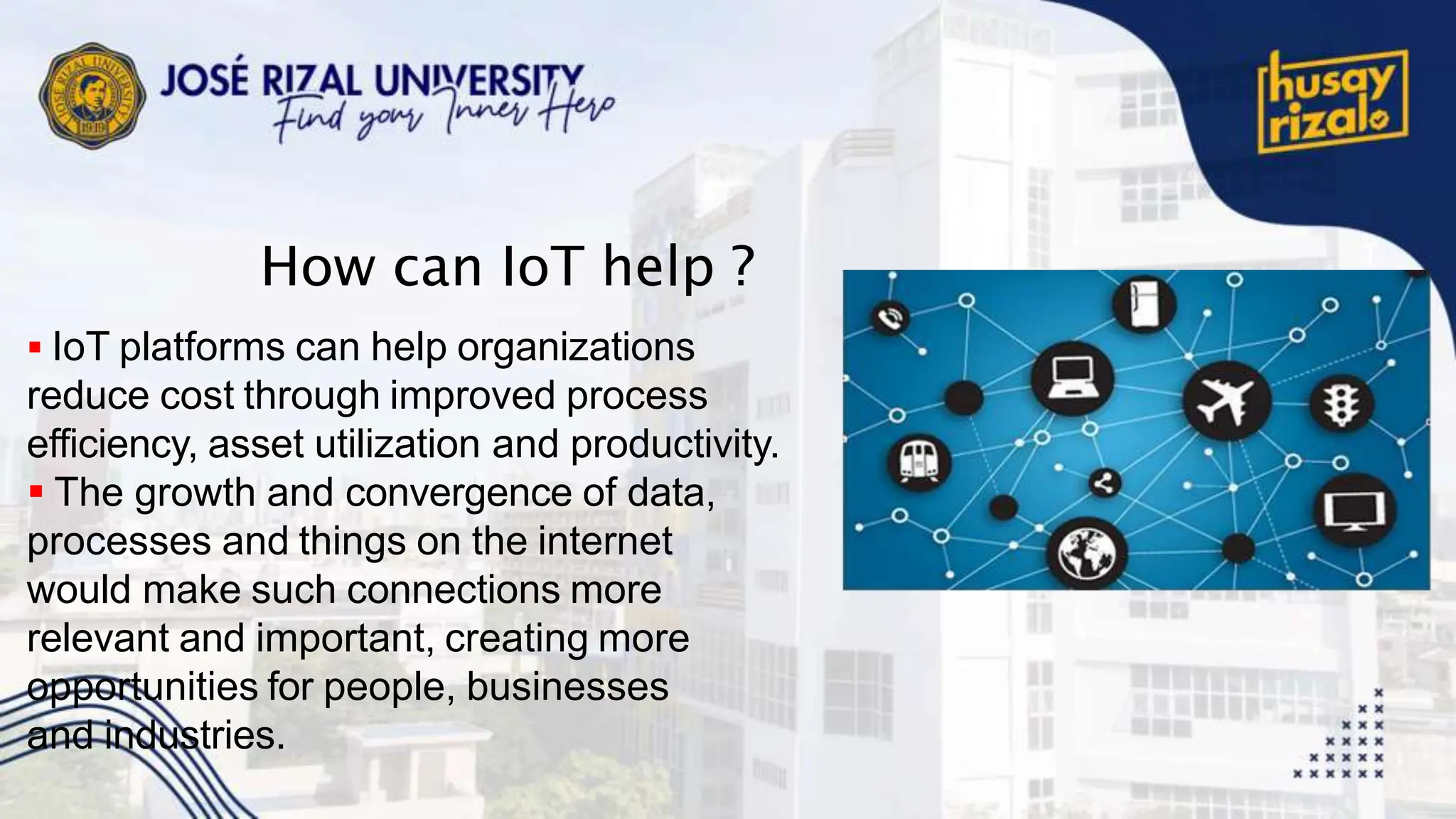
 IoT platforms can help organizations
reduce cost through improved process
efficiency, asset utilization and productivity.
 The growth and convergence of data,
processes and things on the internet
would make such connections more
relevant and important, creating more
opportunities for people, businesses
and industries.
Current status & future prospect of IoT
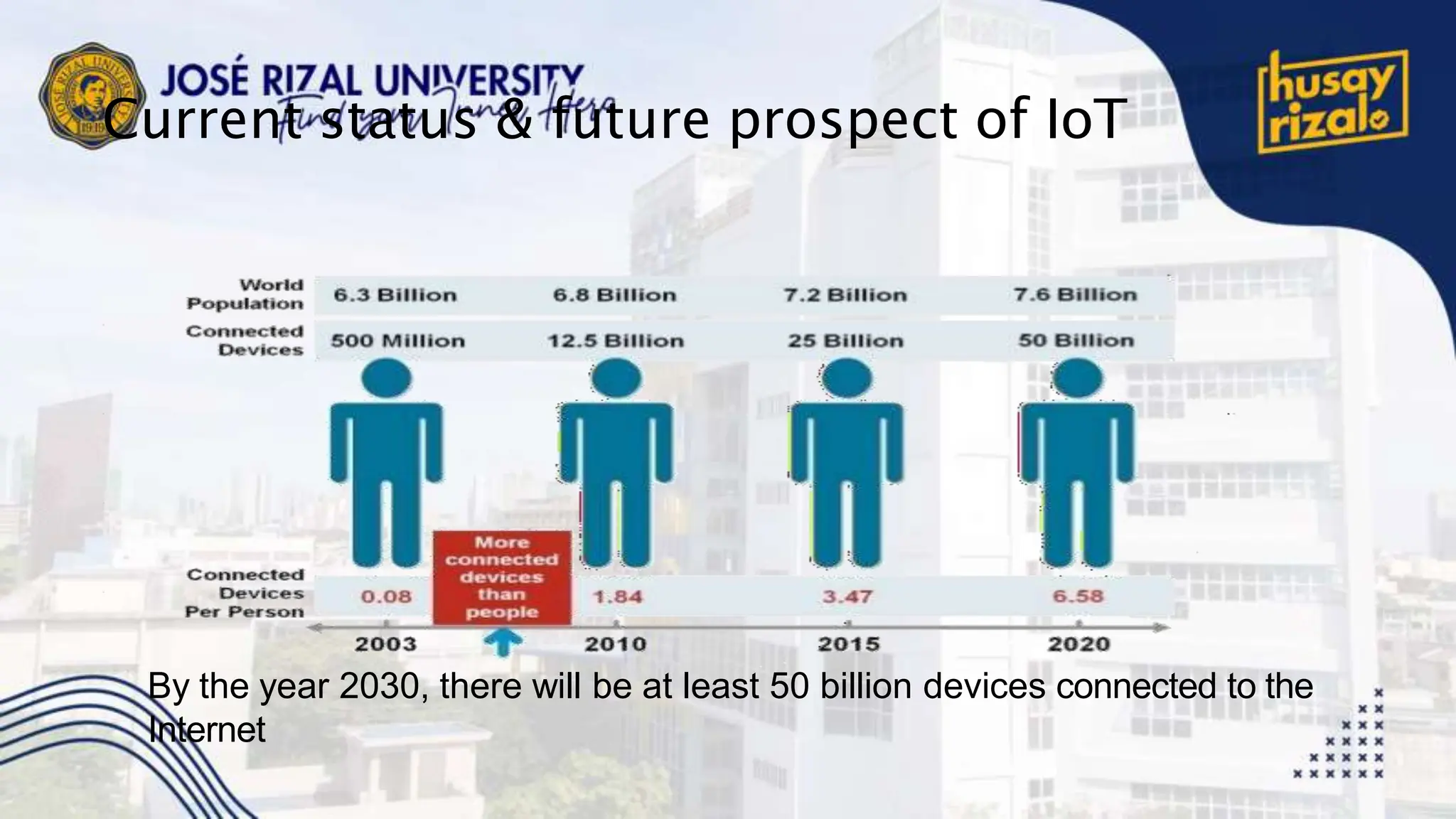
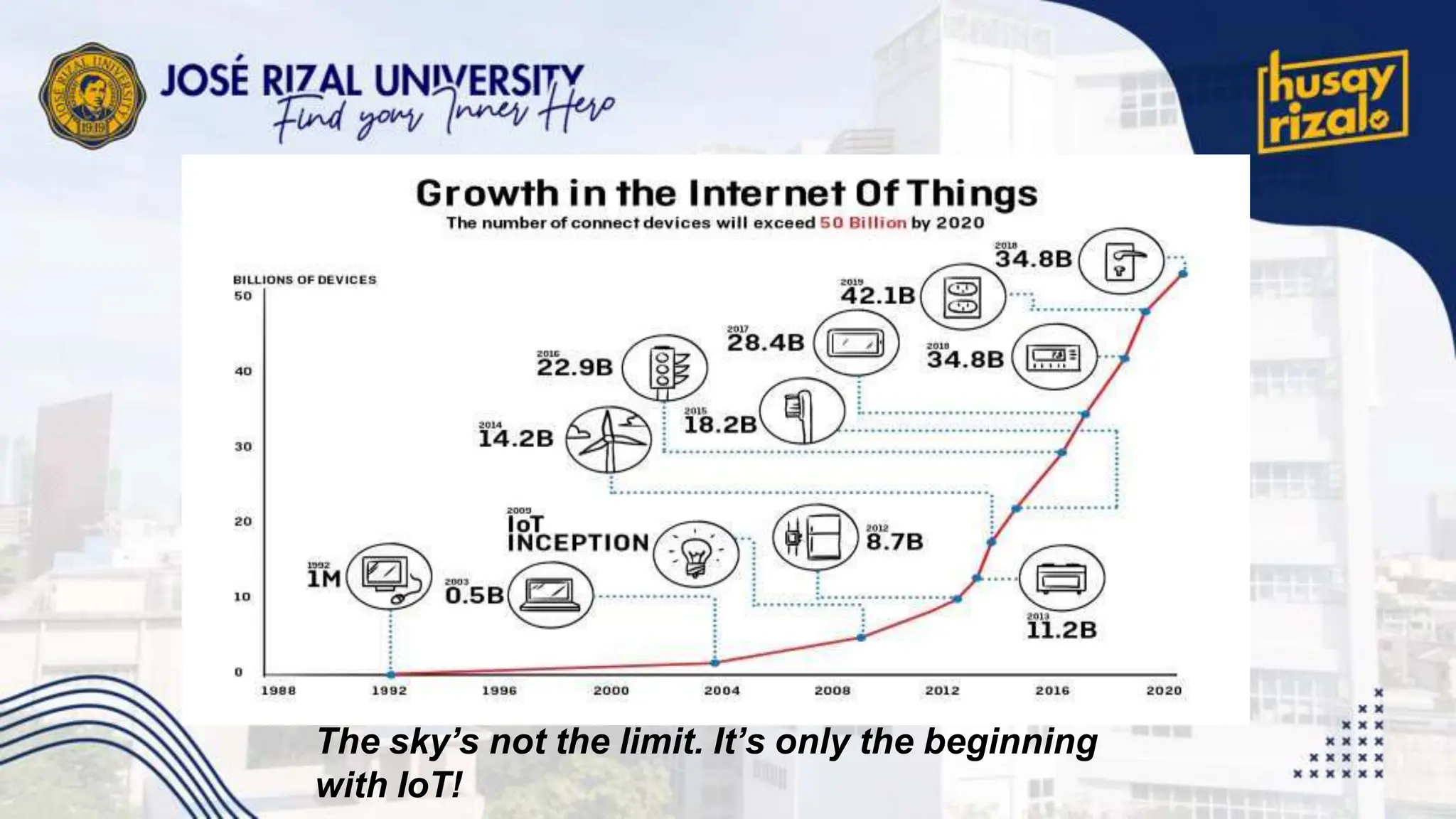
By the year 2030, there will be at least 50 billion devices connected to the
Internet
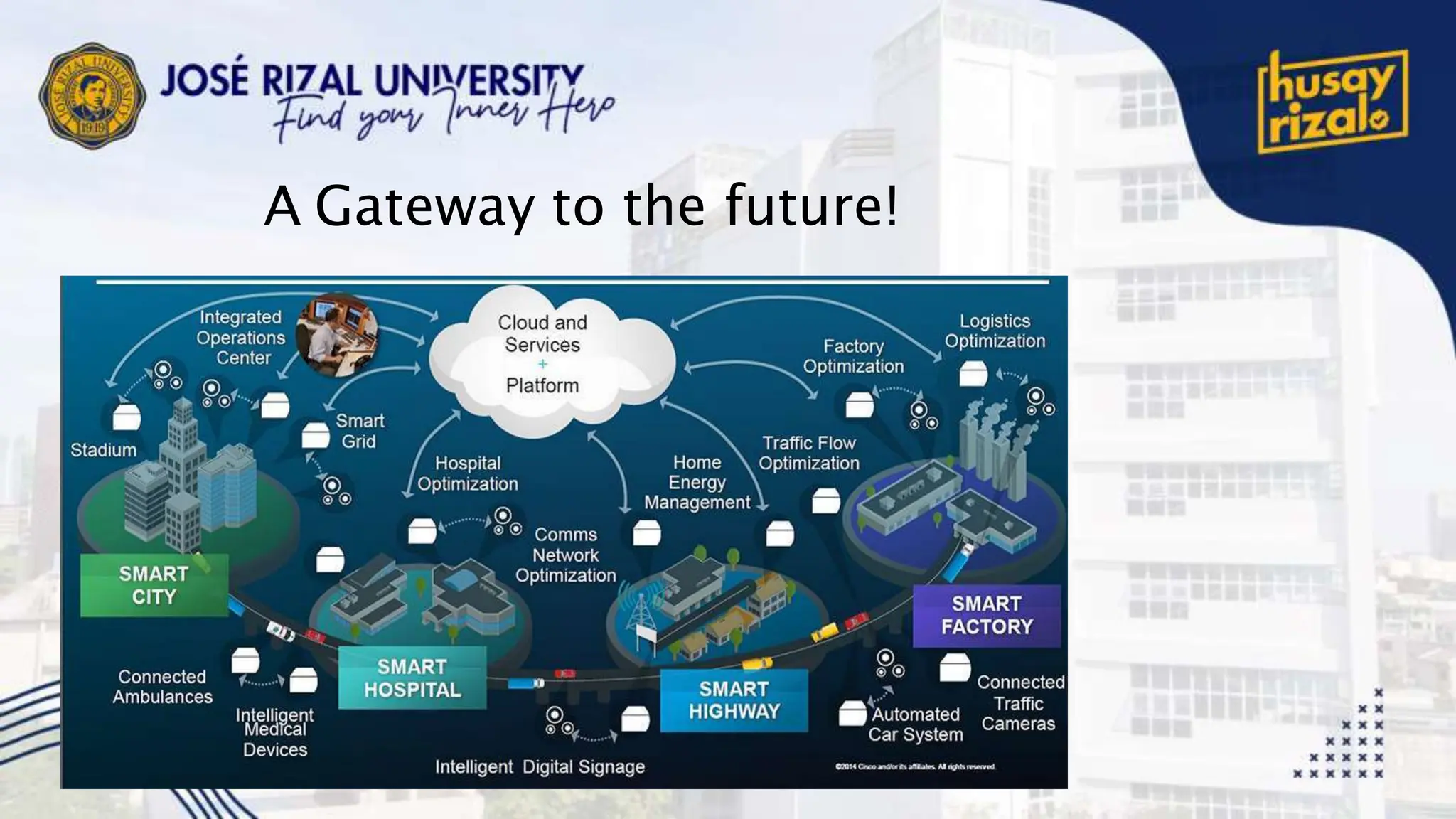
A Gateway to the future!
The sky’s not the limit. It’s only the beginning
with IoT!
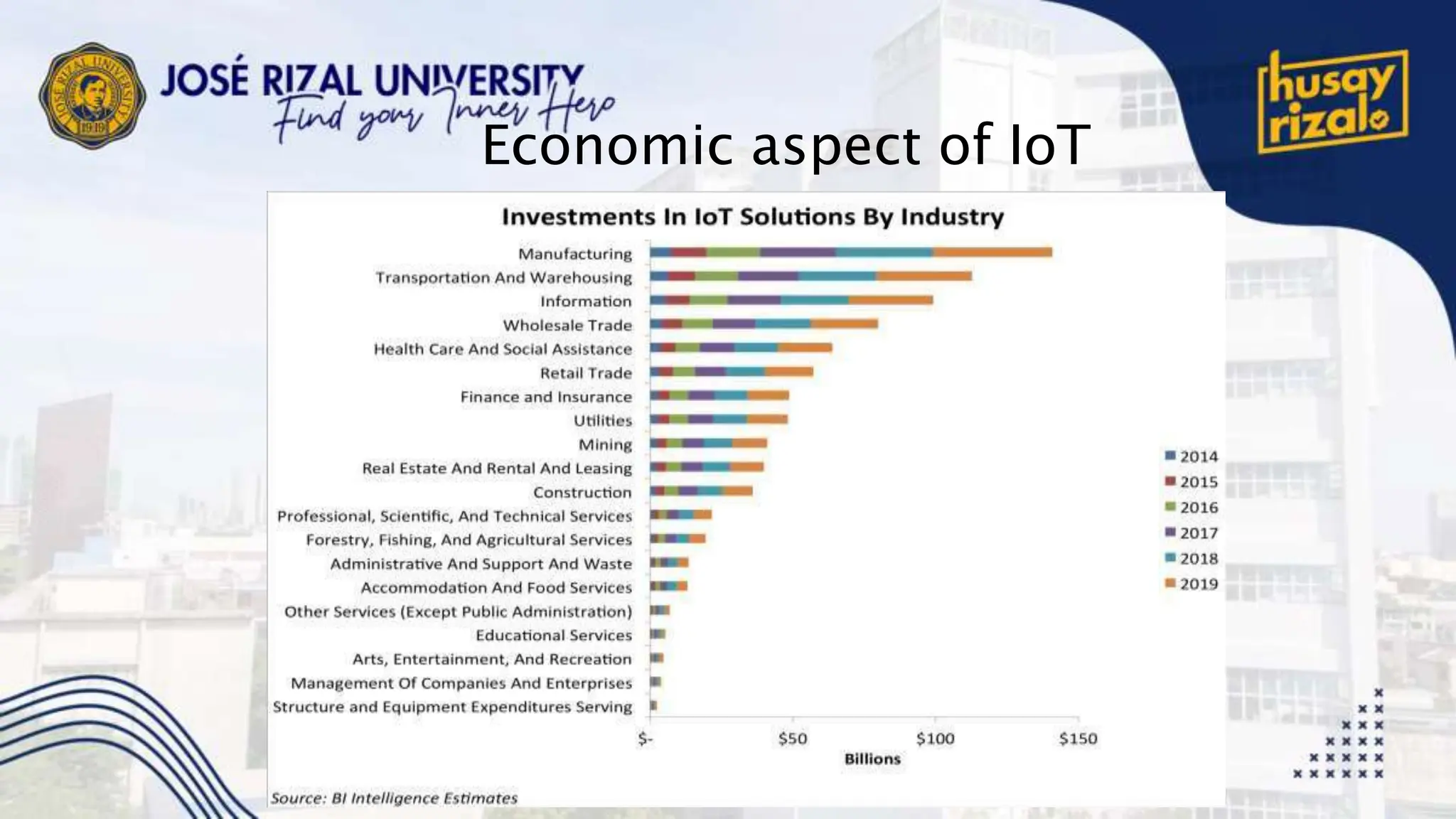
Economic aspect of IoT
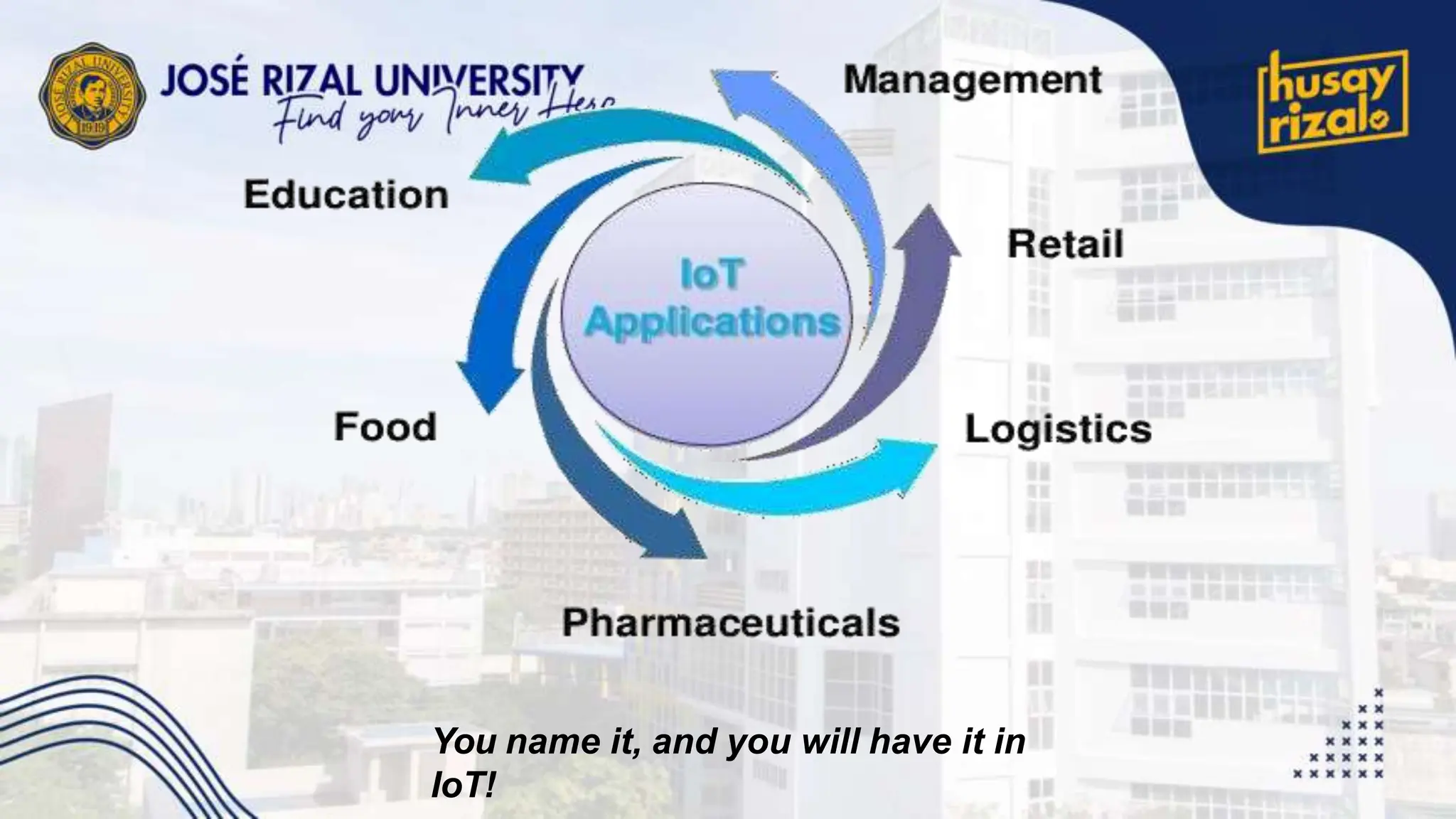
You name it, and you will have it in
IoT!
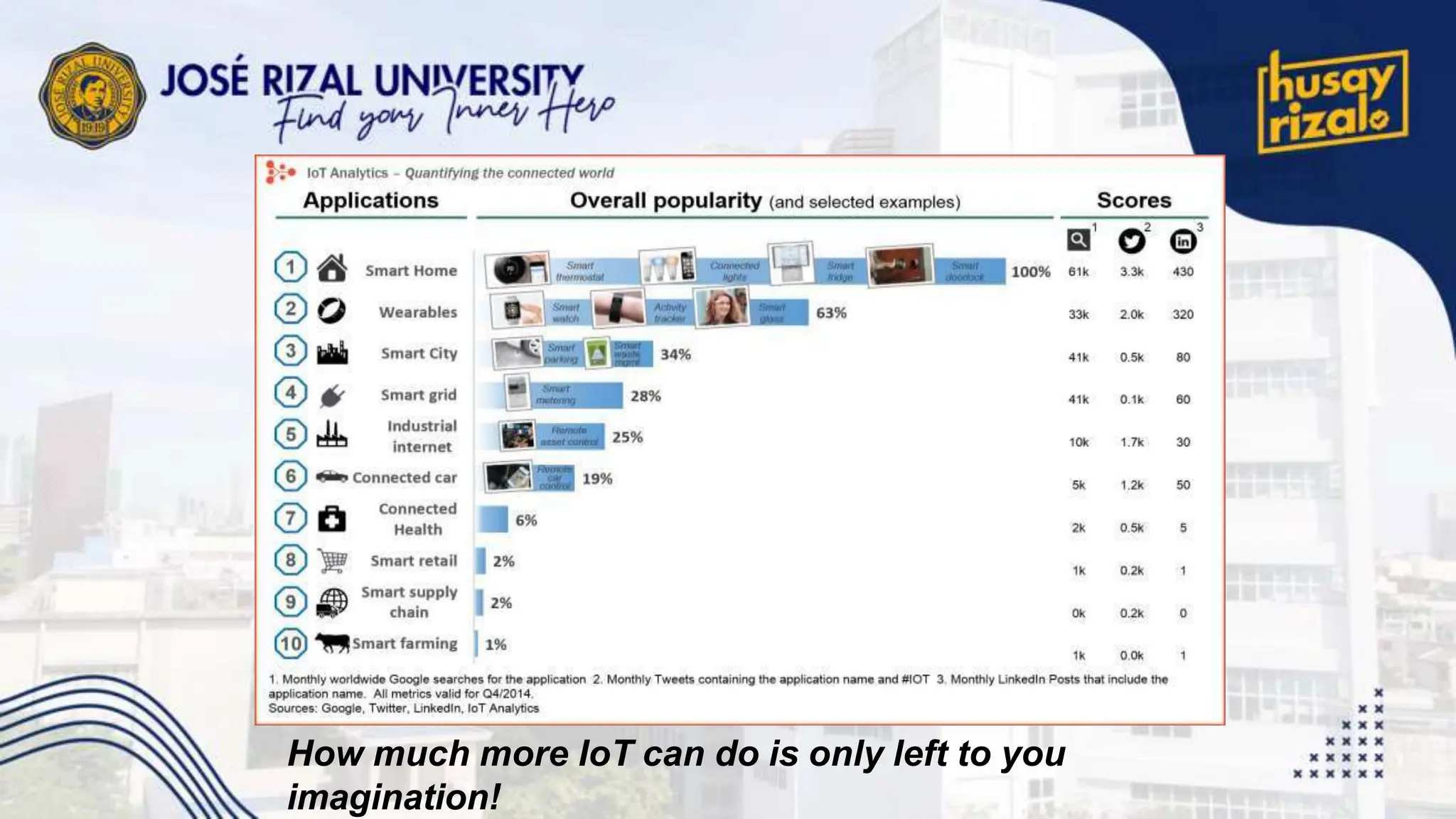
How much more IoT can do is only left to you
imagination!
Challenges faced by IoT
At present IoT is faced with many challenges,
like -
 Scalability
 Security
 Technical requirements
 Technological standardization
 Software complexity
Solutions to the challenges
Several solutions are proposed to
overcome the problems. Some of
them are :
 Overcoming compatibility issues is a significant IoT
hurdle, but emerging companies are starting to enable
increased interoperability through open-source
development.
 Governments and industry bodies need to set standards
and regulations for the
various industries to ensure that data is not misused.
 IoT needs strong authentication methods, encrypted data
Conclusion
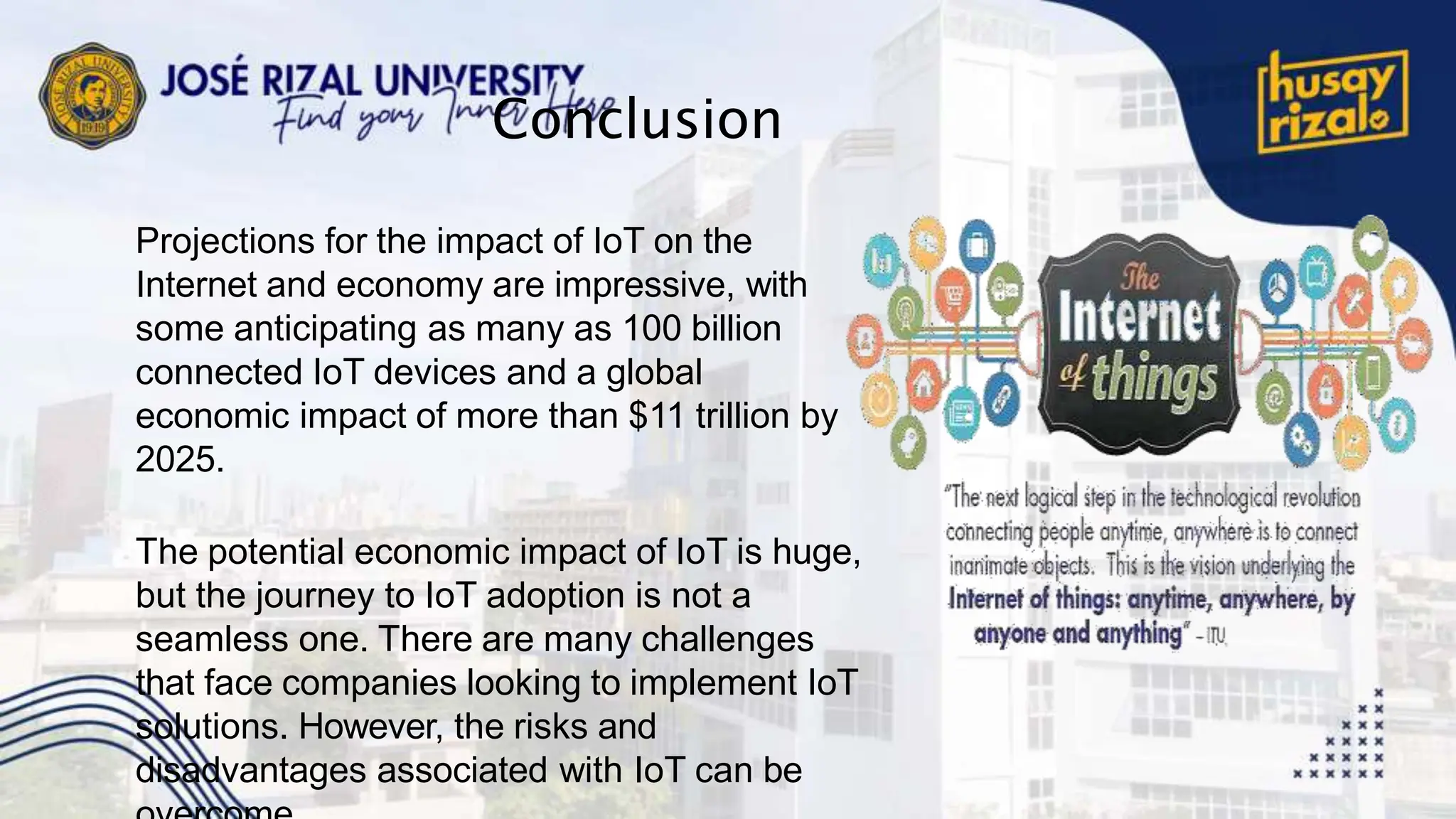
Projections for the impact of IoT on the
Internet and economy are impressive, with
some anticipating as many as 100 billion
connected IoT devices and a global
economic impact of more than $11 trillion by
2025.
The potential economic impact of IoT is huge,
but the journey to IoT adoption is not a
seamless one. There are many challenges
that face companies looking to implement IoT
solutions. However, the risks and
disadvantages associated with IoT can be
References
https://www.nebula.co.za/2016/11/11/risks-
disadvantages-iot-overcome/
https://www.internetsociety.org/doc/iot-overview
http://www.happiestminds.com/Insights/internet-of-
things/
http://www.webopedia.com/TERM/I/internet_of_things.ht
ml
https://www.sap.com/india/solution/internet-of-
THANK YOU
How to Implement
IoT
• Microcontroller
• Internet connectivity
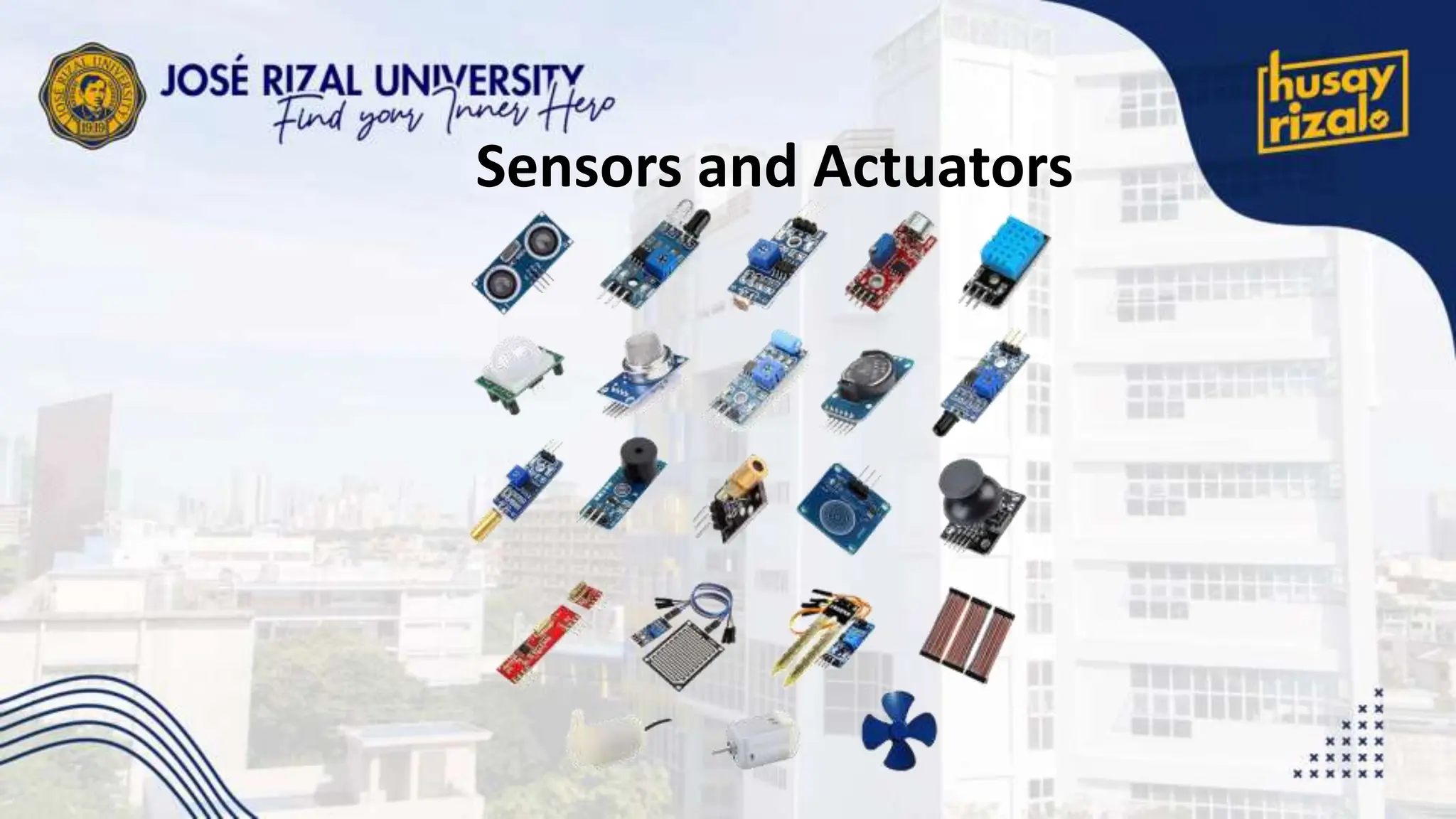
• Sensor/ Sensor network and/or Actuators
• Cloud Service
• APIs
Microcontroller
• Arduino
• Raspberry Pi
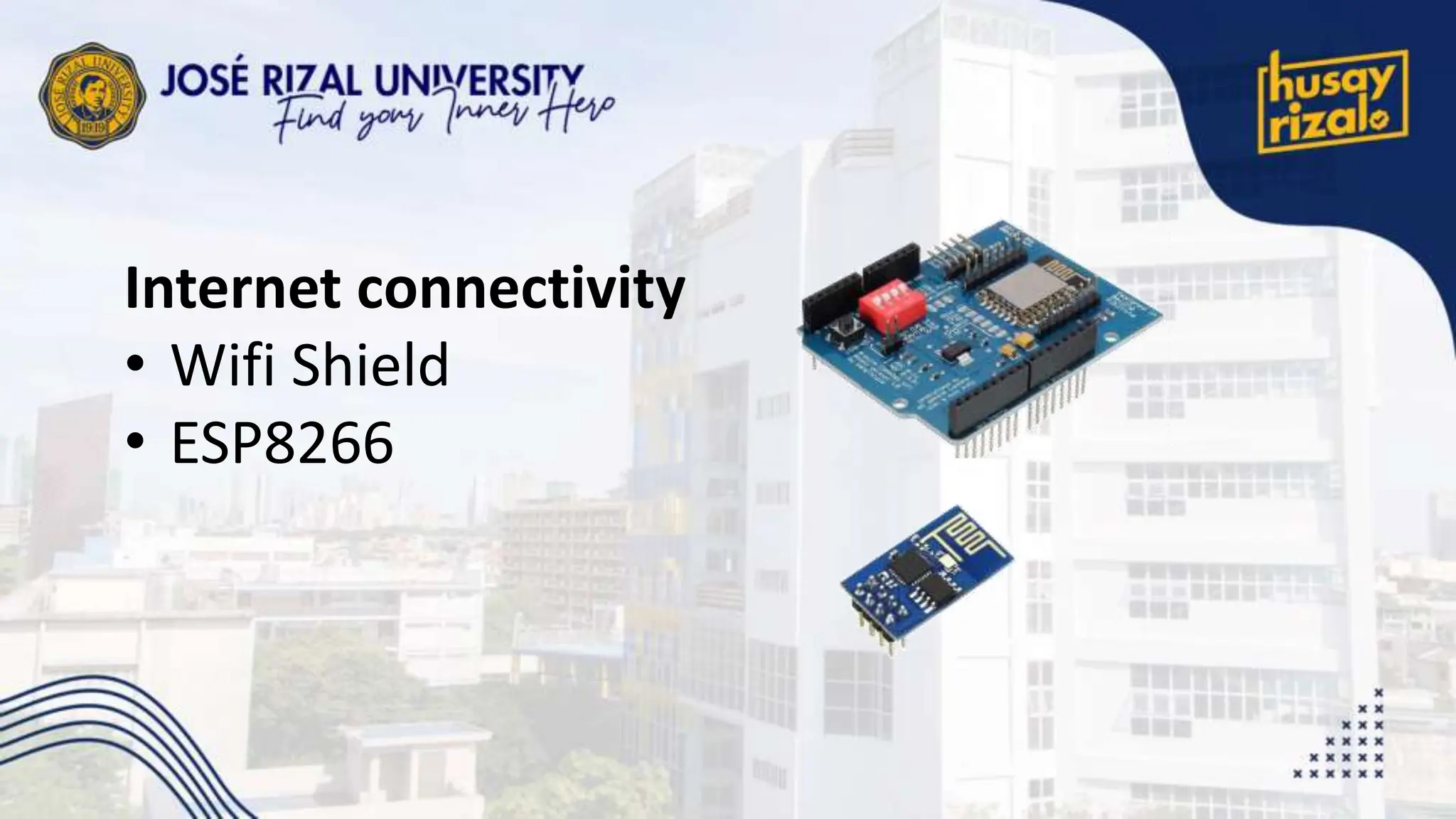
Internet connectivity
• Wifi Shield
• ESP8266
Sensors and Actuators
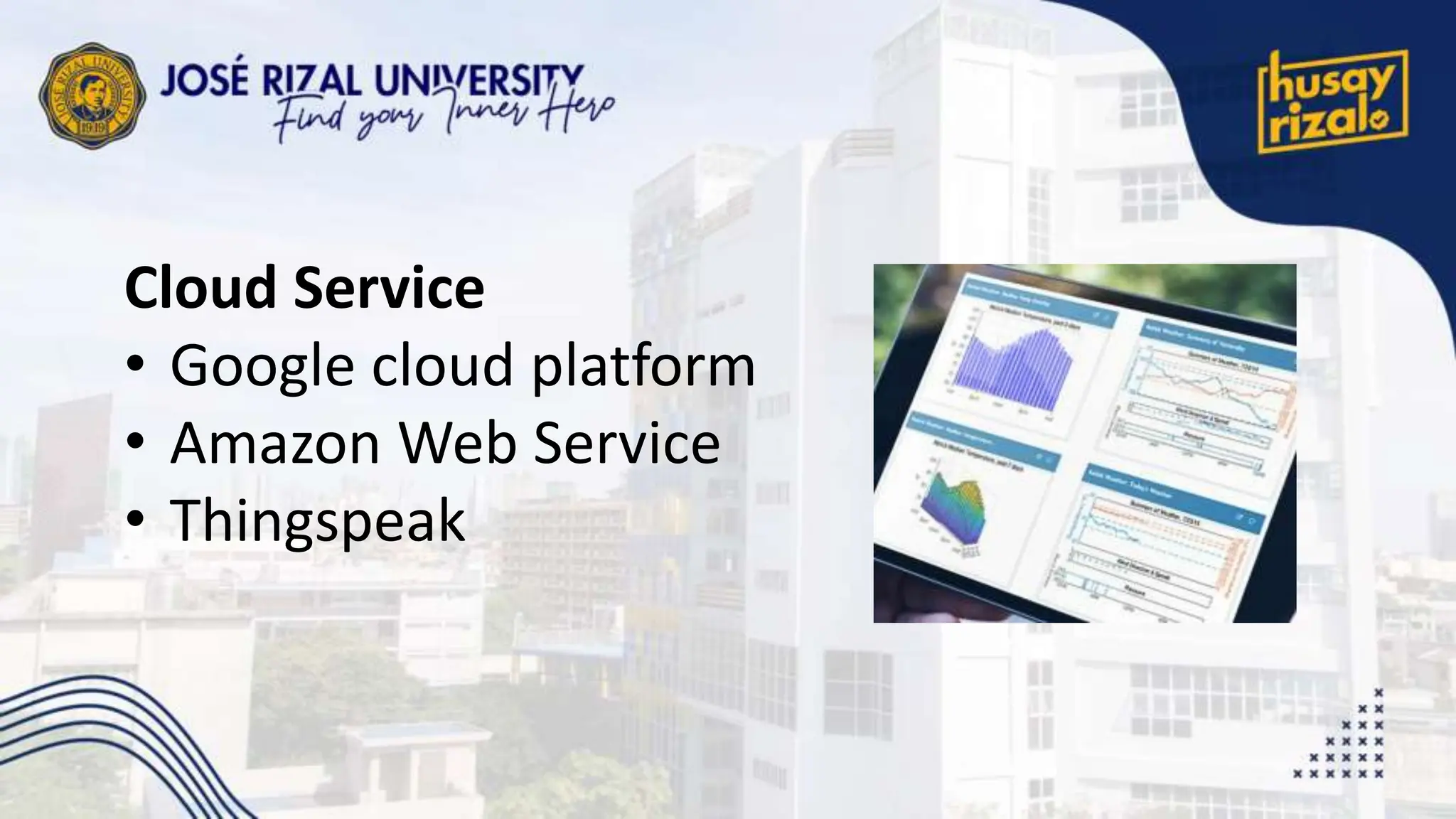
Cloud Service
• Google cloud platform
• Amazon Web Service
• Thingspeak
API
API stands for Application Programming Interface. In the context of APIs,
the word Application refers to any software with a distinct function. Interface
can be thought of as a contract of service between two applications.
APIs are mechanisms that enable two software components to
communicate with each other using a set of definitions and protocols. For
example, the weather bureau’s software system contains daily weather
data. The weather app on your phone “talks” to this system via APIs and
shows you daily weather updates on your phone.
Thank You

jose rizal univeristy internet of things

  • 2.
  • 3.
     The Internetof Things (IoT) refers to the ever-growing network of physical objects that feature an IP address for internet connectivity, and the communication that occurs between these objects and other Internet-enabled devices and systems.  In simple words, Internet of Things (IoT) is an ecosystem of connected physical objects that are accessible through the internet.  It is also referred to as Machine-to-Machine (M2M), Skynet or Internet of Everything.
  • 4.
    Components of IoT SmartSystems and Internet of Things are driven by a combination of : 1) Sensors 2) Connectivity 3) People & Processes
  • 5.
    Why IoT ? Dynamic control of industry and daily life.  Improves the resource utilization ratio.  Integrating human society and physical systems.  Flexible configuration.  Acts as technology integrator.  Universal inter-networking.
  • 6.
    What is thescope of IoT ? Internet of Things can connect devices embedded in various systems to the internet. When devices/objects can represent themselves digitally, they can be controlled from anywhere. The connectivity then helps us capture more data from more places, ensuring more ways of increasing efficiency.
  • 7.
    Corporate aspect IoT isa transformational force that can help companies improve performance through IoT analytics and IoT Security to deliver better results. Businesses in the utilities, oil & gas, insurance, manufacturing, transportation, infrastructure and retail sectors can reap the benefits of IoT by making more informed decisions, aided by the torrent of interactional and transactional data at their disposal.
  • 8.
    How can IoThelp ?  IoT platforms can help organizations reduce cost through improved process efficiency, asset utilization and productivity.  The growth and convergence of data, processes and things on the internet would make such connections more relevant and important, creating more opportunities for people, businesses and industries.
  • 9.
    Current status &future prospect of IoT By the year 2030, there will be at least 50 billion devices connected to the Internet
  • 10.
    A Gateway tothe future!
  • 11.
    The sky’s notthe limit. It’s only the beginning with IoT!
  • 12.
  • 14.
    You name it,and you will have it in IoT!
  • 15.
    How much moreIoT can do is only left to you imagination!
  • 16.
    Challenges faced byIoT At present IoT is faced with many challenges, like -  Scalability  Security  Technical requirements  Technological standardization  Software complexity
  • 17.
    Solutions to thechallenges Several solutions are proposed to overcome the problems. Some of them are :  Overcoming compatibility issues is a significant IoT hurdle, but emerging companies are starting to enable increased interoperability through open-source development.  Governments and industry bodies need to set standards and regulations for the various industries to ensure that data is not misused.  IoT needs strong authentication methods, encrypted data
  • 18.
    Conclusion Projections for theimpact of IoT on the Internet and economy are impressive, with some anticipating as many as 100 billion connected IoT devices and a global economic impact of more than $11 trillion by 2025. The potential economic impact of IoT is huge, but the journey to IoT adoption is not a seamless one. There are many challenges that face companies looking to implement IoT solutions. However, the risks and disadvantages associated with IoT can be
  • 19.
  • 20.
  • 21.
  • 22.
    • Microcontroller • Internetconnectivity • Sensor/ Sensor network and/or Actuators • Cloud Service • APIs
  • 23.
  • 24.
  • 25.
  • 26.
    Cloud Service • Googlecloud platform • Amazon Web Service • Thingspeak
  • 27.
    API API stands forApplication Programming Interface. In the context of APIs, the word Application refers to any software with a distinct function. Interface can be thought of as a contract of service between two applications. APIs are mechanisms that enable two software components to communicate with each other using a set of definitions and protocols. For example, the weather bureau’s software system contains daily weather data. The weather app on your phone “talks” to this system via APIs and shows you daily weather updates on your phone.
  • 28.